Shoe Storage Bag vs Shoe Wash Bag: Which Type Should Buyers Choose?
Shoe storage bags and shoe wash bags may appear similar, but they are designed for different tasks.
A shoe storage bag mainly protects footwear from dust, surface scratches, contact with clothing, and disorganization during storage or travel. A shoe wash bag is designed to hold shoes securely during machine washing while allowing water and detergent to pass through the material.
For B2B buyers, choosing between them should not depend only on appearance or unit price. The correct option depends on:
- How the end user will use the bag
- Whether the bag will enter a washing machine
- The type and weight of footwear
- Required airflow and drainage
- Closure strength
- Protection requirements
- Retail positioning
- Custom logo and packaging plans
Choosing the wrong structure can lead to poor product performance. A soft fabric storage pouch may not withstand repeated machine washing, while a coarse mesh wash bag may not provide the surface protection expected for premium shoes.
This guide compares the two product types and explains which one is more suitable for different markets, buyers, and custom product programs.
Quick Comparison: Shoe Storage Bag vs Shoe Wash Bag
| Feature |
Shoe Storage Bag |
Shoe Wash Bag |
| Primary purpose |
Storage, travel, dust protection and organization |
Machine washing and shoe protection |
| Typical material |
Flannel, cotton, polyester, non-woven fabric, Oxford fabric |
Polyester mesh, sandwich mesh or honeycomb mesh |
| Water flow |
Usually limited |
High water and detergent flow |
| Closure |
Drawstring, zipper, flap or hook-and-loop closure |
Reinforced zipper with protective cover |
| Internal protection |
Soft lining or divided compartments available |
Padding or structured mesh may be used |
| Typical shoe types |
Dress shoes, heels, sneakers, slippers and casual shoes |
Sneakers, canvas shoes and selected washable footwear |
| Main sales channels |
Travel, footwear, fashion, hotel and gift markets |
Laundry, home care, sports and household retail |
| Branding options |
Printing, embroidery, woven labels and metal accessories |
Printed labels, woven labels, zipper pull and retail packaging |
| Machine-wash function |
Not always suitable |
Specifically designed for washing |
| Main purchasing concern |
Surface protection and presentation |
Water flow, zipper security and wash durability |
The most important distinction is simple:
A storage bag protects shoes while they are being stored or transported. A wash bag protects shoes and the washing machine during the cleaning process.
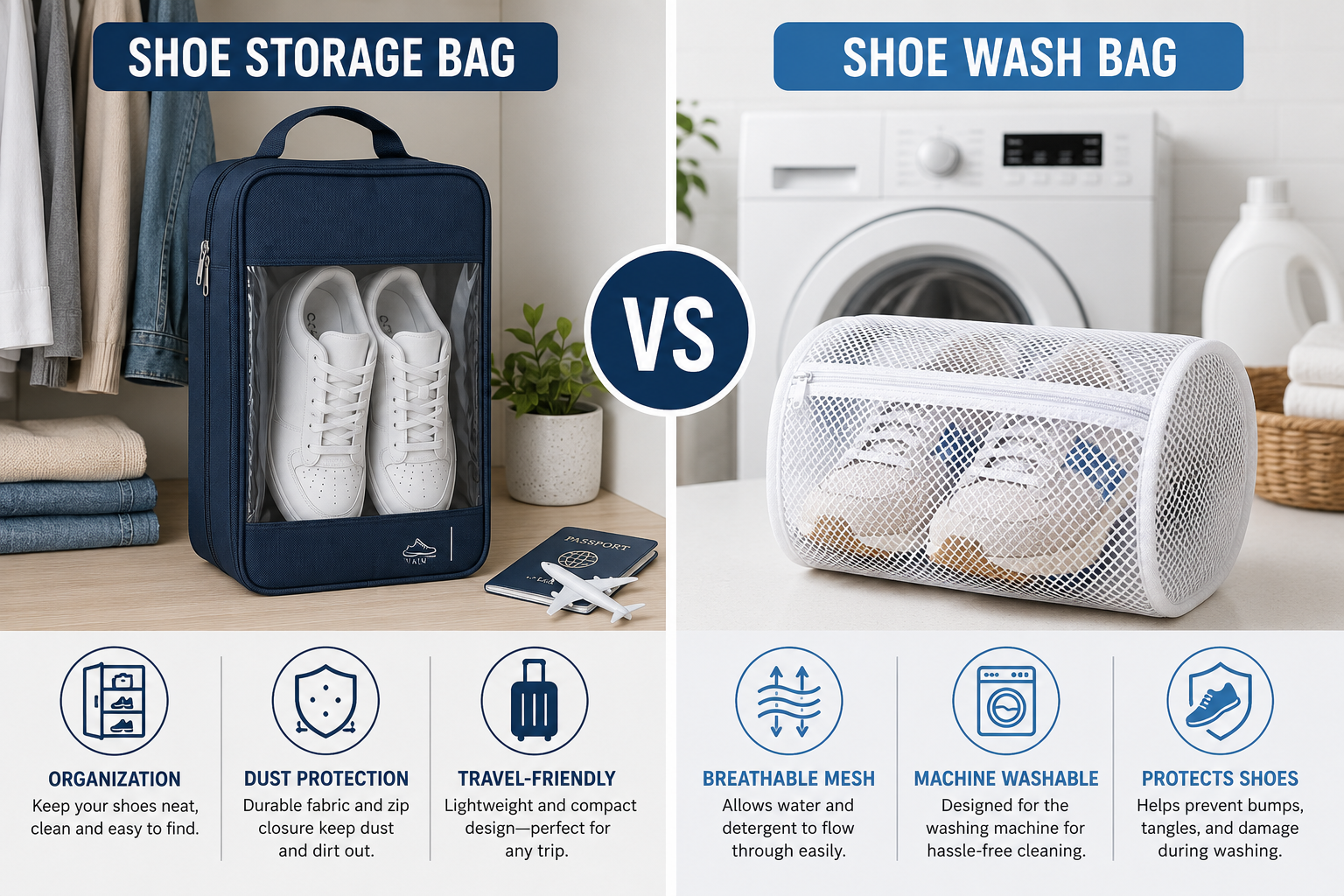
What Is a Shoe Storage Bag?
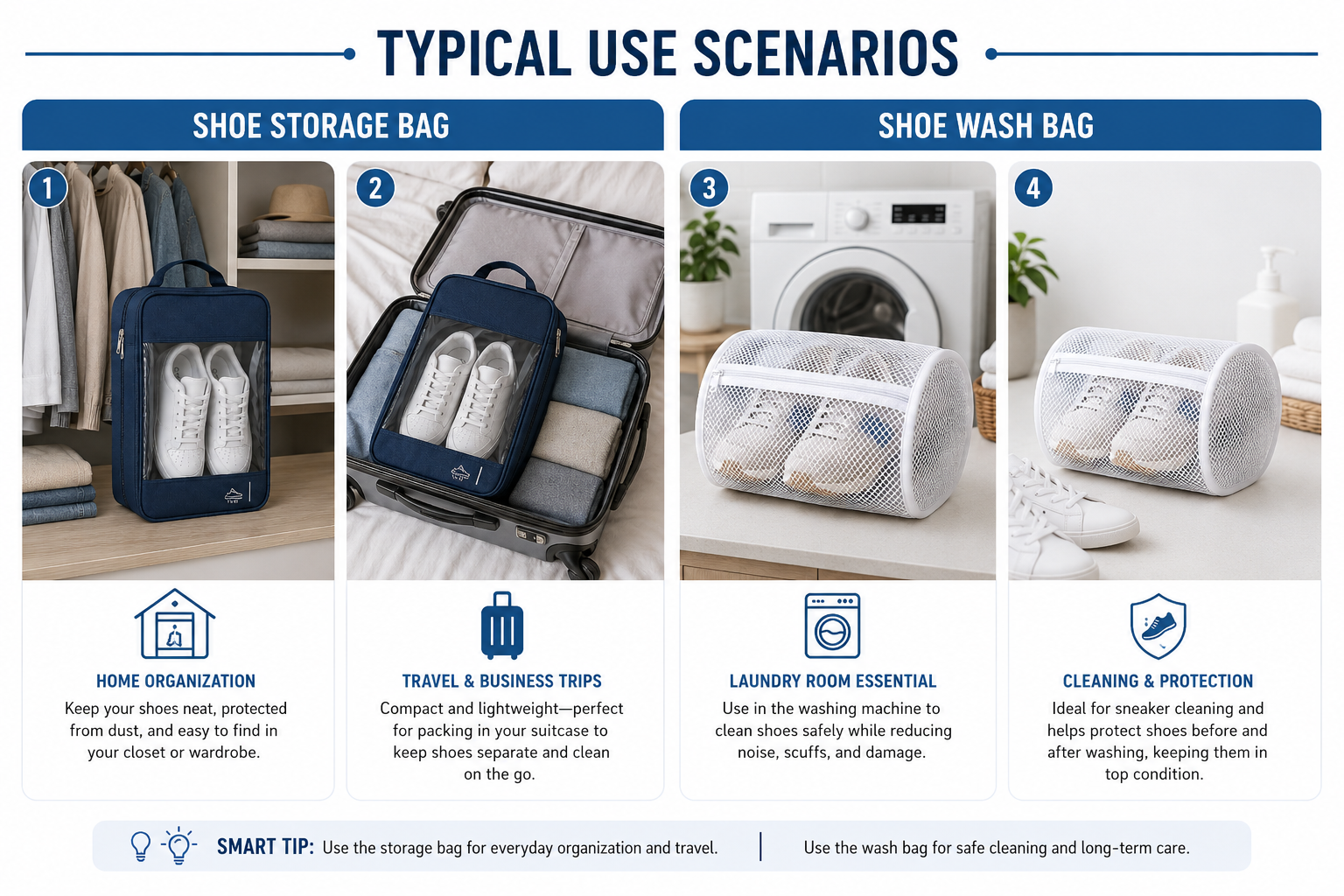
A shoe storage bag is a reusable pouch or organizer designed to separate footwear from other items.
It may be used inside:
- Suitcases
- Wardrobes
- Shoe cabinets
- Gym bags
- Hotel rooms
- Retail packaging
- Bridal footwear sets
- Promotional gift kits
Its main purpose is to prevent dust, dirt, and shoe soles from contacting clothing or other belongings.
Storage bags can be produced from soft flannel, cotton, polyester, Oxford fabric, non-woven material, RPET fabric, or other lightweight textiles. Drawstring closures are common because they are simple, lightweight, and easy to pack.
Premium versions may include:
- Separate internal compartments
- Soft microfiber surfaces
- Reinforced bottoms
- Carry handles
- Transparent identification windows
- Embroidered logos
- Decorative cords
- Custom lining
- Individual retail packaging
For example, a flannel shoe storage bag with a split internal compartment can keep two shoes from rubbing against each other. This type of structure is more suitable for dress shoes, heels, bridal shoes, and footwear that requires careful surface protection.
What Is a Shoe Wash Bag?
A shoe wash bag is designed to hold footwear during machine washing.
Unlike an ordinary storage pouch, it normally uses open mesh or another water-permeable material so that water and detergent can circulate around the shoes.
A practical shoe wash bag commonly includes:
- Polyester mesh fabric
- Reinforced zipper closure
- Zipper cover or elastic guard
- Durable edge binding
- Strong seam construction
- Hanging loop or carry handle
- Optional internal padding
- Optional dividers or fixing straps
The zipper must remain closed during the wash cycle. A protective zipper cover can reduce the risk of the zipper opening or contacting the washing machine drum.
Some shoe wash bags use a thicker three-dimensional mesh structure. This can provide greater cushioning than a basic flat mesh pouch, although it may also increase material usage, packing volume, and unit cost.
Shoe wash bags are generally positioned alongside laundry bags, garment protection bags, and other home-care accessories. INITI’s current laundry category includes mesh laundry bags, zipper wash bags, shoe wash bags, drawstring laundry bags, and related storage products.
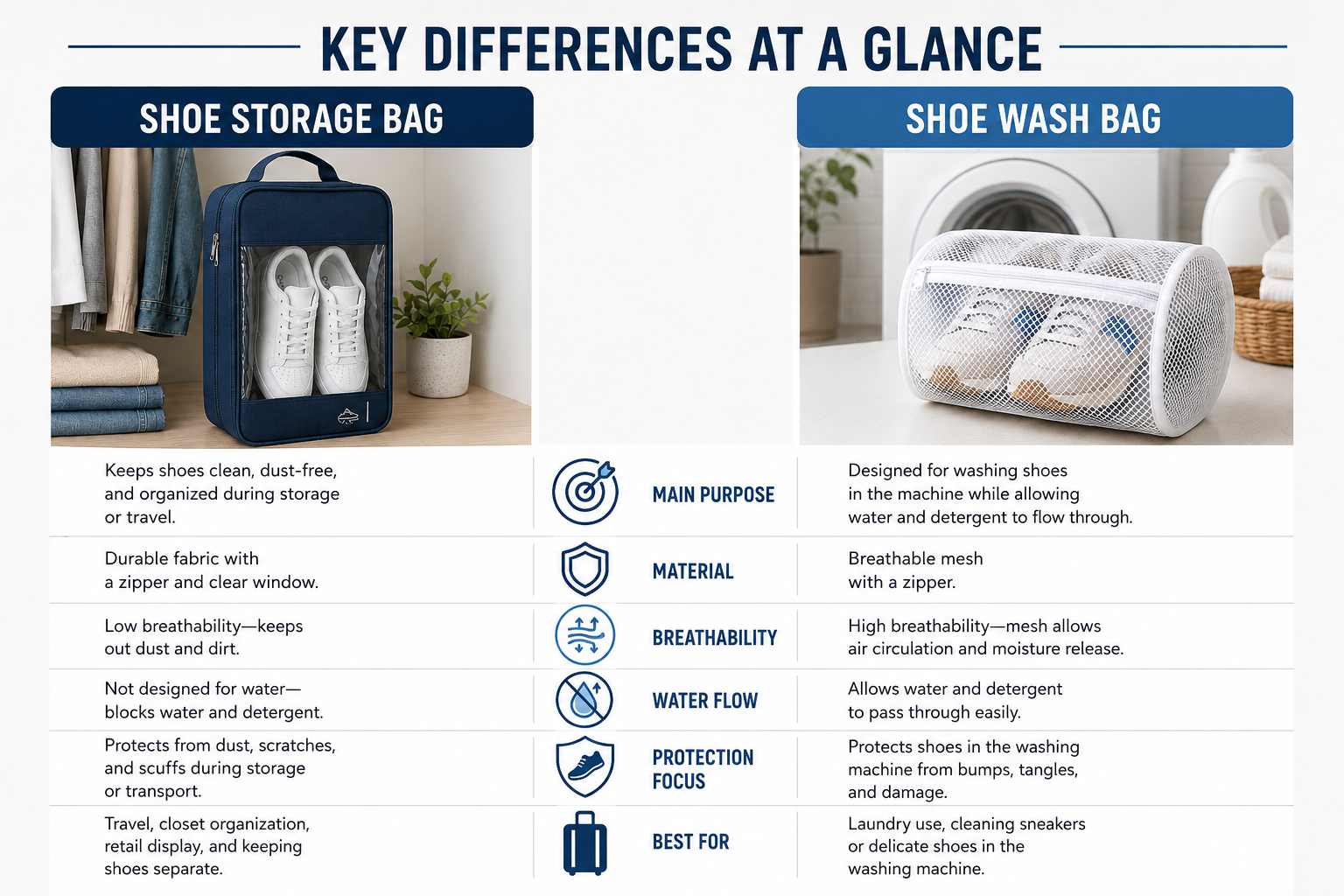
The Main Functional Difference
The difference between the two products is not simply whether one has mesh.
The complete product structure must match its intended use.
Shoe Storage Bag Requirements
A storage bag should focus on:
- Preventing surface scratches
- Separating clean clothing from shoe soles
- Reducing dust exposure
- Supporting travel organization
- Presenting the footwear attractively
- Remaining lightweight and foldable
- Protecting decorative shoe surfaces
Water circulation is normally not a priority.
Shoe Wash Bag Requirements
A wash bag should focus on:
- Allowing water and detergent to circulate
- Preventing shoes from moving freely in the machine
- Keeping laces and small components contained
- Reducing direct contact with the drum
- Maintaining zipper security
- Withstanding repeated wet use
- Drying efficiently after washing
Soft appearance and luxury presentation are usually secondary to washing performance.
Which Buyers Should Choose Shoe Storage Bags?
Shoe storage bags are generally more suitable for buyers whose customers need organization, presentation, and surface protection.
1. Footwear Brands
Footwear brands can use custom storage bags as part of premium product packaging.
Suitable applications include:
- Leather shoes
- High heels
- Bridal shoes
- Limited-edition sneakers
- Handmade footwear
- Children’s footwear sets
- Slippers and indoor shoes
A branded fabric pouch can provide continued value after the original box is discarded. It also offers more visible branding space than plain protective tissue or a basic plastic bag.
For premium footwear, buyers should consider soft materials, clean stitching, controlled color matching, and separate compartments.
2. Travel Brands
Travel brands can position shoe storage bags as luggage accessories.
Important features may include:
- Lightweight construction
- Foldable shape
- Water-resistant outer fabric
- Carry handle
- Zipper closure
- Transparent identification area
- Separate clean and dirty compartments
- Multiple sizes sold as a set
Travel-oriented storage bags should fit common suitcase dimensions and avoid unnecessary thickness.
3. Hotels and Hospitality Buyers
Hotels, resorts, airlines, and serviced apartments may use simple shoe pouches as:
- Guest-room accessories
- Slipper packaging
- Laundry collection bags
- Travel amenity products
- VIP welcome gifts
These projects often prioritize clear branding, efficient packing, and predictable cost over complicated structures.
4. Promotional Gift Suppliers
Promotional companies may combine a shoe storage bag with:
- Travel organizers
- Garment bags
- Laundry pouches
- Toiletry bags
- Sports accessories
- Corporate travel kits
For promotional programs, a simple polyester or non-woven structure may be more cost-effective than premium flannel.
5. E-Commerce Sellers
Online retailers can offer shoe organizers individually or as part of packing cube sets.
Important considerations include:
- Product photography
- Folded shipping dimensions
- Retail packaging
- Size differentiation
- Color combinations
- Clear product instructions
- Review-related quality risks
E-commerce buyers should pay particular attention to zipper quality, fabric consistency, odor control, and finished dimensions.
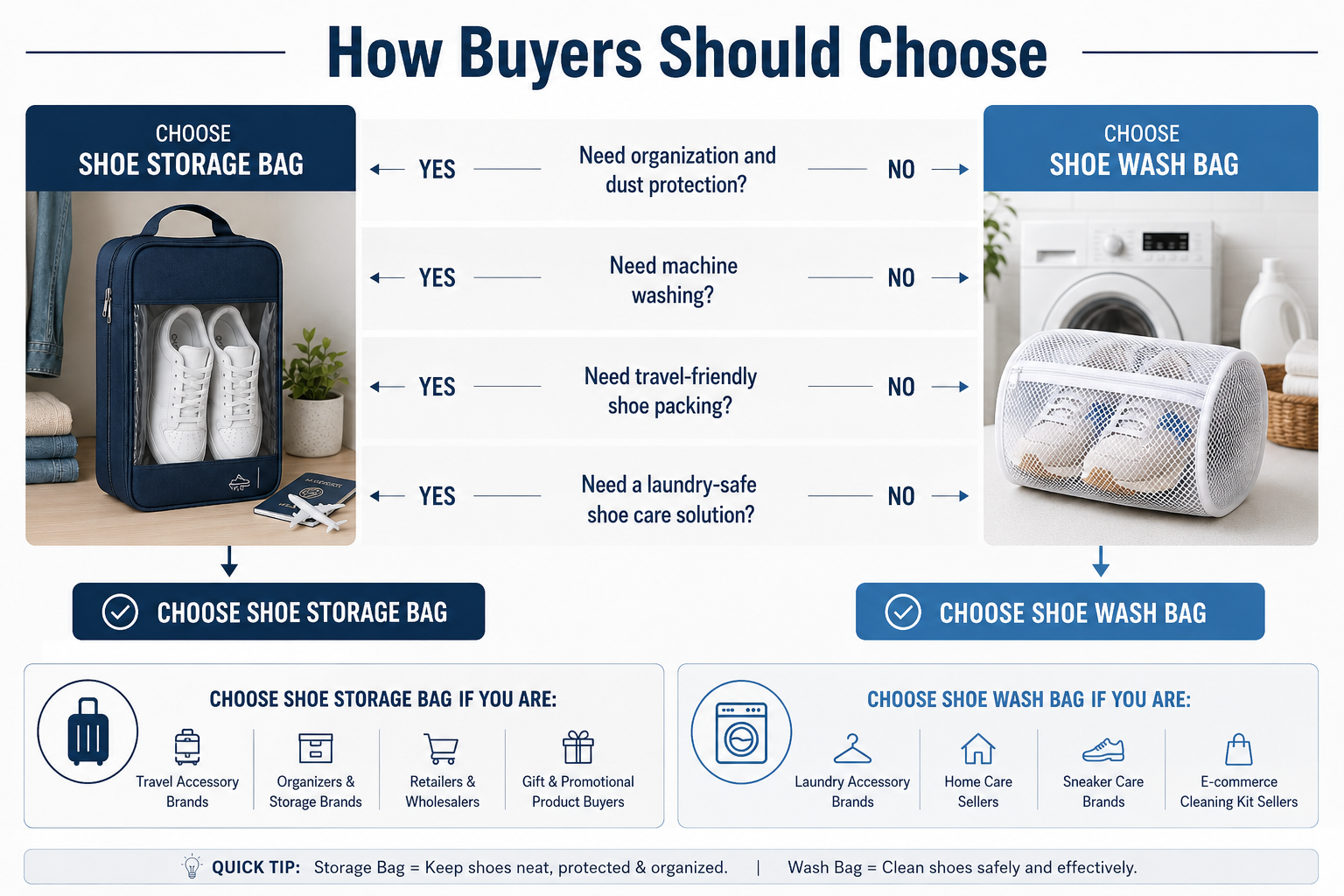
Which Buyers Should Choose Shoe Wash Bags?
Shoe wash bags are more appropriate when the main selling point is washable footwear care.
1. Laundry Product Brands
Laundry brands can add shoe wash bags to an existing range of:
- Garment wash bags
- Bra wash bags
- Delicates bags
- Laundry sorting bags
- Lint-control products
- Home cleaning accessories
Using related mesh materials and consistent packaging can help create a coordinated retail collection.
2. Supermarkets and Household Retailers
Supermarkets, department stores, and home-care retailers may sell shoe wash bags in laundry or household organization sections.
For these channels, buyers should consider:
- Easy-to-understand packaging
- Standard shoe capacity
- Durable zippers
- Hanging display packaging
- Clear use instructions
- Competitive retail price
- Compact carton packing
A technically advanced structure may not create enough additional value in price-sensitive retail channels. The design should remain understandable and commercially practical.
3. Sports and Fitness Brands
Sports brands may offer shoe wash bags for:
- Running shoes
- Training footwear
- Canvas sneakers
- Children’s sports shoes
- Selected washable athletic shoes
The product can also be included in gym, team, or tournament gift sets.
These buyers may require stronger mesh, larger dimensions, reinforced handles, or brand-colored binding.
4. Sneaker-Care Brands
Sneaker-care companies may position the wash bag as part of a cleaning kit containing:
- Cleaning brushes
- Shoe cleaning solution
- Microfiber cloths
- Deodorizing accessories
- Shoelace bags
- Drying accessories
For this market, the product should look more specialized than a standard laundry pouch.
5. Private-Label Home-Care Sellers
Private-label sellers can develop shoe wash bags with custom:
- Sizes
- Mesh density
- Zipper colors
- Woven labels
- Instruction cards
- Header cards
- Packaging boxes
- Product sets
Retail packaging and user instructions are especially important because not every shoe is suitable for machine washing.
Material Comparison
Material selection affects performance, appearance, price, drying speed, and product positioning.
Materials Commonly Used for Shoe Storage Bags
Flannel
Flannel provides a soft surface and a more premium presentation.
It is suitable for:
- Dress shoes
- Heels
- Bridal footwear
- Gift packaging
- Luxury footwear accessories
However, flannel may not be the best option for wet shoes or frequent washing.
Cotton
Cotton offers a natural appearance and works well for lifestyle, footwear, and reusable packaging programs.
Possible limitations include:
- Absorbing moisture
- Wrinkling
- Shrinkage if improperly processed
- Slower drying than open mesh
Buyers should specify fabric weight, colorfastness, and washing requirements when the bag itself needs to be washable.
Polyester
Polyester is lightweight, versatile, and available in many fabric constructions.
It can support:
- Printing
- Water-resistant coatings
- Zipper structures
- Travel-oriented designs
- Foldable storage
Polyester is often a practical choice when buyers need a balance between price, durability, and custom appearance.
Oxford Fabric
Oxford fabric provides more structure and abrasion resistance than thin polyester.
It is suitable for travel shoe organizers, sports bags, and products that require greater shape retention.
Non-Woven Fabric
Non-woven material can be used for economical retail packaging, promotional distribution, or lightweight shoe protection.
It is less suitable for premium footwear or long-term heavy use unless the material weight and seam construction are carefully selected.
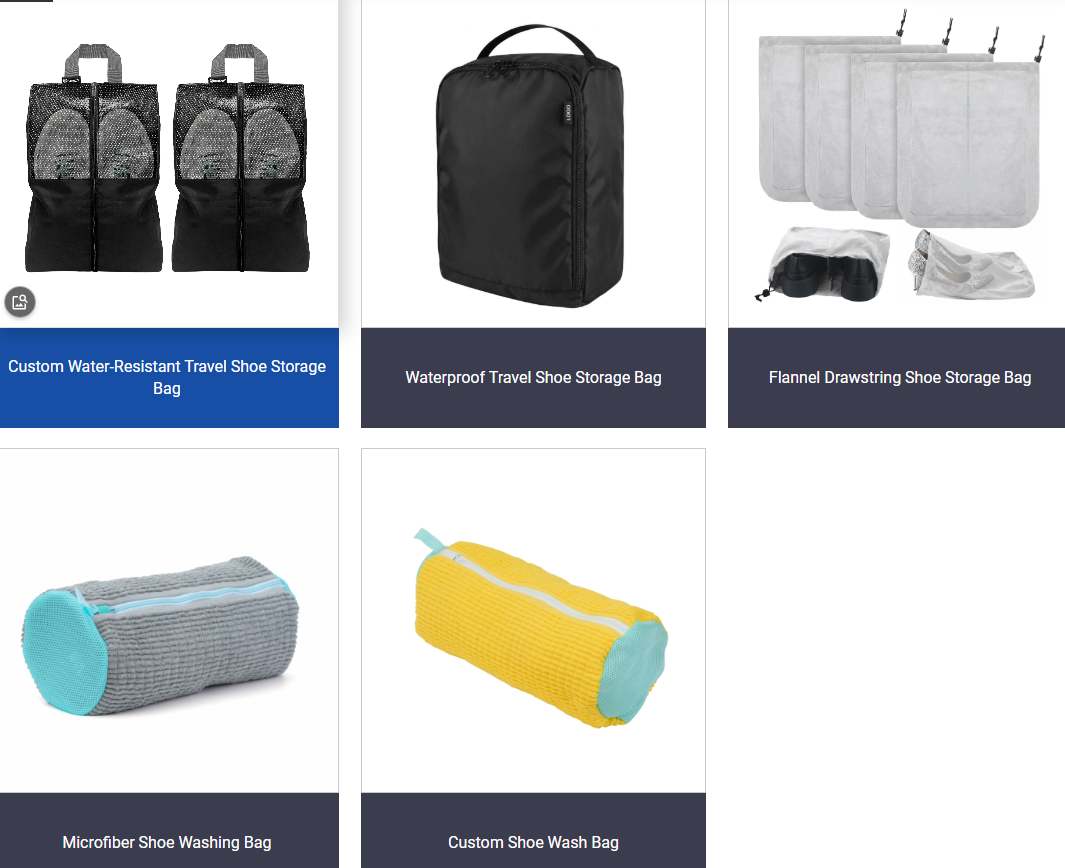
Materials Commonly Used for Shoe Wash Bags
Fine Polyester Mesh
Fine mesh provides good water flow while containing shoelaces and smaller components.
It is suitable for lightweight wash bags and price-sensitive retail products.
Honeycomb Mesh
Honeycomb mesh has a more visible open structure and may provide greater durability or airflow, depending on the construction.
Buyers should evaluate whether the openings are appropriate for the footwear and whether they could catch on decorative shoe components.
Sandwich Mesh
Sandwich mesh is thicker and more structured.
It may provide:
- Additional cushioning
- Better shape retention
- Greater separation from the washing machine drum
- More substantial product presentation
Its disadvantages can include higher material cost, increased drying time, and greater shipping volume.
Polyester Fabric with Mesh Panels
A combination structure can use solid polyester in high-stress areas and mesh panels for water circulation.
This approach may improve durability but requires more sewing operations and careful construction.
Closure and Structure Comparison
The closure is one of the most important differences between storage and wash bags.
Drawstring Closure
Drawstrings are common on shoe storage bags because they are:
- Lightweight
- Simple to operate
- Easy to customize
- Compact for packing
- Suitable for soft fabrics
However, a drawstring closure does not normally provide the security required during a machine wash cycle.
Standard Zipper
A zipper provides better containment and is appropriate for both storage and washing applications.
For wash bags, buyers should not evaluate the zipper only by appearance. They should check:
- Slider movement
- Tape strength
- Stitching
- Zipper end reinforcement
- Rust resistance
- Repeated opening performance
- Security during washing
Protective Zipper Cover
A zipper cover helps hold the zipper pull in place and can reduce direct contact between the pull and the washing machine.
This is a useful feature for shoe wash bags and other machine-wash laundry bags.
Internal Divider
A divider can prevent two shoes from rubbing against each other.
In storage bags, it protects shoe surfaces.
In wash bags, it may also reduce uncontrolled movement, but the divider must not obstruct water circulation.
Carry Handle
Handles are useful for travel, hanging storage, retail display, and post-wash drying.
The handle connection points should be reinforced when the bag is intended to carry heavier footwear.
Can One Bag Be Used for Both Storage and Washing?
A dual-purpose shoe bag is possible, but the specification needs to be developed carefully.
A basic drawstring flannel pouch should not be marketed as a machine-wash shoe bag. Similarly, a coarse open-mesh wash bag may not provide the protection or appearance expected from a premium storage pouch.
A combined storage-and-wash product may use:
- Fine polyester mesh
- Reinforced zipper closure
- Protective zipper cover
- Soft internal divider
- Carry or hanging handle
- Quick-drying binding
- Compact rectangular structure
This design may work for sports, travel, and household retail programs where convenience is more important than luxury presentation.
However, buyers should decide which function is primary.
When a product tries to provide storage protection, premium presentation, heavy cushioning, high water flow, fast drying, and low cost at the same time, the specification can become unnecessarily complicated.
A clearer product position usually produces better performance and more understandable retail communication.
How Product Positioning Affects Cost
The bag structure should match the target retail price and sales channel.
Economical Shoe Storage Bag
A basic model may use:
- Non-woven or lightweight polyester fabric
- Drawstring closure
- One-color printing
- Simple bulk packing
This is suitable for promotions, footwear packaging, and high-volume distribution.
Premium Shoe Storage Bag
A premium model may include:
- Flannel or microfiber material
- Split compartment
- Embroidery
- Decorative cord
- Reinforced bottom
- Custom box or branded sleeve
This is more appropriate for footwear brands, gift programs, and premium retail.
Economical Shoe Wash Bag
A basic model may use:
- Fine polyester mesh
- Standard rectangular structure
- Zipper closure
- Simple woven label
- Header card packaging
Premium Shoe Wash Bag
A premium model may use:
- Thick sandwich mesh
- Internal divider
- Strong binding
- Reinforced handle
- Protected zipper
- Printed instructions
- Retail box packaging
Buyers should avoid adding features that do not support the intended selling point. A technically complicated product may be difficult to price competitively if customers only expect a basic laundry accessory.
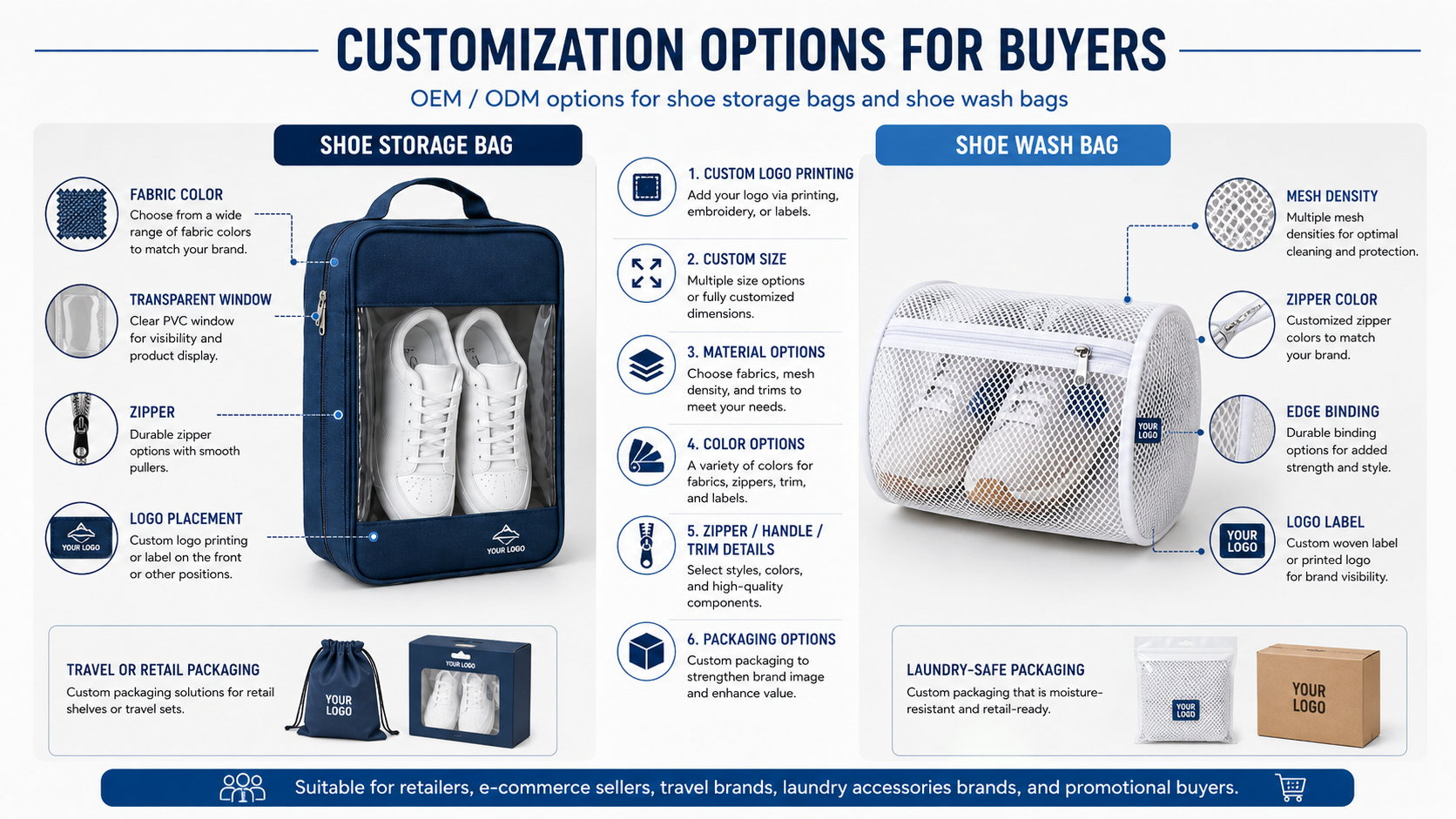
Customization Options for B2B Orders
Both product types can support OEM and private-label development.
Common customization options include:
Material
- Flannel
- Cotton
- Polyester
- RPET
- Oxford fabric
- Fine mesh
- Honeycomb mesh
- Sandwich mesh
- Non-woven fabric
Size
The size should be determined according to:
- Footwear category
- Maximum shoe length
- Shoe height
- Pair or single-shoe capacity
- Internal divider structure
- Retail packing limits
Buyers should provide actual shoe dimensions rather than relying only on regional shoe-size numbers.
Color
Custom colors can be applied to:
- Main fabric
- Mesh
- Binding
- Zipper tape
- Zipper pull
- Drawstring
- Handle
- Lining
Color matching should be confirmed using an approved physical reference or recognized color standard.
Logo
Possible branding methods include:
- Screen printing
- Heat transfer printing
- Embroidery
- Woven label
- Printed label
- Rubber label
- Custom zipper pull
- Hangtag
- Packaging sticker
The most suitable method depends on the material and expected washing conditions.
Packaging
Available packaging formats may include:
- Bulk packing
- Individual polybag
- Recycled polybag
- Paper sleeve
- Header card
- Paper box
- Printed instruction card
- Multi-piece retail set
Retail packaging should clearly explain whether the product is designed for storage, washing, or both.
Quality Checks for Shoe Storage Bags
Important inspection points include:
- Finished dimensions
- Fabric weight and hand feel
- Color consistency
- Drawstring strength
- Zipper operation
- Seam alignment
- Divider position
- Handle reinforcement
- Logo placement
- Surface cleanliness
- Individual packing
- Odor control
For bags used with leather or light-colored footwear, buyers should also evaluate whether dark fabric or decorative components could transfer color under damp conditions.
Quality Checks for Shoe Wash Bags
A shoe wash bag requires additional functional review.
Buyers should check:
- Mesh strength
- Water-flow performance
- Zipper security
- Zipper cover position
- Seam reinforcement
- Binding durability
- Handle strength
- Shape retention
- Drying performance
- Repeated washing durability
- Logo adhesion
- Packaging instructions
The sample should be tested under conditions that reflect the expected use.
However, buyers should avoid presenting the wash bag as making every type of shoe machine-washable. Whether footwear can enter a washing machine depends on the shoe manufacturer’s care instructions, materials, adhesives, decorations, and construction.
The bag can help contain and protect suitable washable footwear, but it cannot change the care requirements of the footwear itself.
Common Purchasing Mistakes
Mistake 1: Using an Ordinary Storage Pouch as a Wash Bag
A storage pouch may restrict water flow, retain detergent, or fail during machine movement.
Mistake 2: Selecting Mesh Only by Appearance
Mesh opening size, thickness, strength, softness, and recovery all affect performance.
Mistake 3: Ignoring Zipper Security
A low-cost zipper without a protective cover may open during washing or contact the machine drum.
Mistake 4: Using One Size for Every Shoe Type
Running shoes, boots, heels, and children’s shoes have very different dimensions.
Mistake 5: Adding Too Much Padding
Padding may reduce impact but can also restrict water circulation and increase drying time.
Mistake 6: Providing Unclear Retail Instructions
Consumers should understand the product’s purpose, capacity, closure method, and care limitations.
Mistake 7: Choosing a Material Before Defining the Market
A premium flannel bag and a basic mesh wash pouch serve different customers. Material selection should follow product positioning.
Mistake 8: Comparing Quotations with Different Specifications
Suppliers may quote different mesh types, zipper grades, dimensions, binding methods, and packaging formats. These quotations cannot be compared accurately until the specifications are aligned.
Buyer Selection Guide
Choose a shoe storage bag when the project mainly requires:
- Dust protection
- Travel organization
- Premium footwear presentation
- Separation from clothing
- Scratch prevention
- Lightweight reusable packaging
- Brand presentation
Choose a shoe wash bag when the project mainly requires:
- Machine-wash use
- Water and detergent circulation
- Secure zipper closure
- Shoe containment
- Laundry product positioning
- Quick drying
- Repeated wet use
Consider a dual-purpose mesh shoe bag when:
- The target market values travel and laundry convenience
- The footwear is suitable for machine washing
- Premium surface protection is not the primary requirement
- The structure can remain simple and easy to explain
-
The buyer wants one SKU to cover several practical uses
Questions to Ask Before Requesting a Quotation
B2B buyers should prepare the following information:
- Will the product be used for storage, washing, or both?
- What footwear types will it hold?
- What are the maximum shoe dimensions?
- Is the bag intended for one shoe or one pair?
- Which material is preferred?
- Is a divider or internal fixing structure required?
- Should the bag have a drawstring, zipper, or protected zipper?
- Is a handle or hanging loop required?
- What logo method is preferred?
- Will the logo need to withstand repeated washing?
- What is the target order quantity?
- What retail packaging is required?
- Which market or sales channel will receive the product?
- Is the target positioning economical, mid-range, or premium?
Providing this information allows the supplier to recommend a structure based on actual use rather than quoting a generic shoe bag.
Why Choose INITI for Custom Shoe Bags?
INITI develops customized shoe storage bags, shoe wash bags, laundry bags, travel organizers, and related functional bags for global B2B buyers. Current product capabilities include soft drawstring storage bags, mesh zipper wash bags, travel organization products, custom materials, private-label branding, retail packaging, sample development, and bulk production.
Our team can help buyers compare material, mesh density, size, closure, internal structure, logo process, and packaging before sampling. Instead of treating every shoe bag as the same product, we develop the specification around its intended footwear type, sales channel, retail price, and use environment.
OEM and ODM services are available for footwear brands, travel companies, laundry product suppliers, supermarkets, importers, distributors, promotional companies, and private-label retailers.
FAQ
Is a shoe storage bag washable?
Some shoe storage bags are washable, depending on their material, lining, logo method, and accessories. Being washable does not automatically mean the bag is suitable for holding shoes during a machine wash cycle.
Can a drawstring shoe bag be used in a washing machine?
It is generally better to use a zipper wash bag designed for machine washing. A drawstring may loosen, tangle, or fail to contain the footwear securely during the cycle.
Which mesh is best for a shoe wash bag?
The appropriate mesh depends on the shoe weight, required cushioning, water flow, target price, and drying requirements. Fine mesh is lightweight, while thicker sandwich mesh can provide more structure and cushioning.
Should a shoe wash bag have padding?
Padding can help reduce movement and contact, but excessive padding may restrict water flow and increase drying time. The specification should balance protection and washing performance.
Can leather shoes be placed in a shoe wash bag?
A wash bag does not make unsuitable footwear machine washable. Buyers and users should follow the shoe manufacturer’s care instructions.
What size should a shoe wash bag be?
The bag should hold the intended footwear without excessive compression or unused space. Buyers should provide actual shoe length, width, and height rather than only a shoe-size number.
Are shoe storage bags suitable for retail packaging?
Yes. Fabric shoe storage bags can replace or complement disposable inner packaging and can provide additional branding and reuse value.
Can shoe storage and wash bags use recycled materials?
Depending on the required construction and supplier capability, recycled polyester fabrics or RPET mesh may be considered. Buyers should confirm material composition, certification requirements, color availability, and performance during development.
Which product is usually less expensive?
A simple non-woven or lightweight polyester storage pouch may cost less than a structured wash bag. However, price depends on material, dimensions, zipper, divider, printing, packaging, and order quantity.
Can shoe wash bags be sold as a set?
Yes. Possible sets include multiple sizes, one bag per shoe, one pair bag with a divider, or combinations with laundry and travel organizers.
Conclusion
Shoe storage bags and shoe wash bags solve different customer problems.
Storage bags focus on organization, separation, dust protection, travel convenience, and footwear presentation. Wash bags focus on water circulation, zipper security, shoe containment, wash durability, and laundry care.
Buyers should choose the product according to its primary function rather than selecting a design only because it looks similar or has a lower quotation.
For footwear brands, hotels, travel suppliers, and premium packaging programs, a soft storage bag is usually the more appropriate choice. For laundry brands, home-care retailers, sports companies, and sneaker-care programs, a purpose-designed mesh wash bag is generally more suitable.
When both functions are required, buyers should develop a clearly positioned dual-purpose structure and verify its material, zipper, water flow, dimensions, and washing performance through sampling.
Inquiry Support
To receive a suitable custom recommendation, provide the intended function, footwear type, maximum shoe dimensions, material preference, required structure, logo file, order quantity, packaging method, target price level, and sales market. These details help determine whether a storage bag, wash bag, or dual-purpose design is the most commercially appropriate option.
Related Products




 Hot News