| Name |
What It Usually Means |
Common Application |
| Lunch Bag |
General term for a soft food carrier |
School, office, daily use |
| Lunch Tote |
Tote-style lunch carrier |
Office, lifestyle, retail |
| Lunch Carrier |
General term emphasizing portability |
Work, travel |
| Insulated Lunch Bag |
Lunch bag with thermal insulation |
Food and drinks |
| Lunch Pouch |
Smaller, flexible lunch bag |
Snacks and compact meals |
| Bento Bag |
Bag designed to carry a bento-style container |
School, office, Japanese-style meals |
| Cooler Bag |
Insulated carrier designed for food and drinks |
Picnic, outdoor, travel |
| Lunch Sack |
Simple soft-sided lunch carrier |
Casual everyday use |
| Food Carrier |
Broader term for transporting food |
Catering, takeaway, travel |
| Thermal Lunch Bag |
Lunch bag marketed around thermal insulation |
Retail and promotional products |
The exact terminology can vary between retailers, brands, and markets.
For businesses sourcing products from manufacturers, it is more important to define the actual specifications—such as dimensions, material, insulation, closure, printing, and packaging—than to rely only on the product name.
Is a Lunch Bag the Same as a Lunch Box or Cooler Bag?
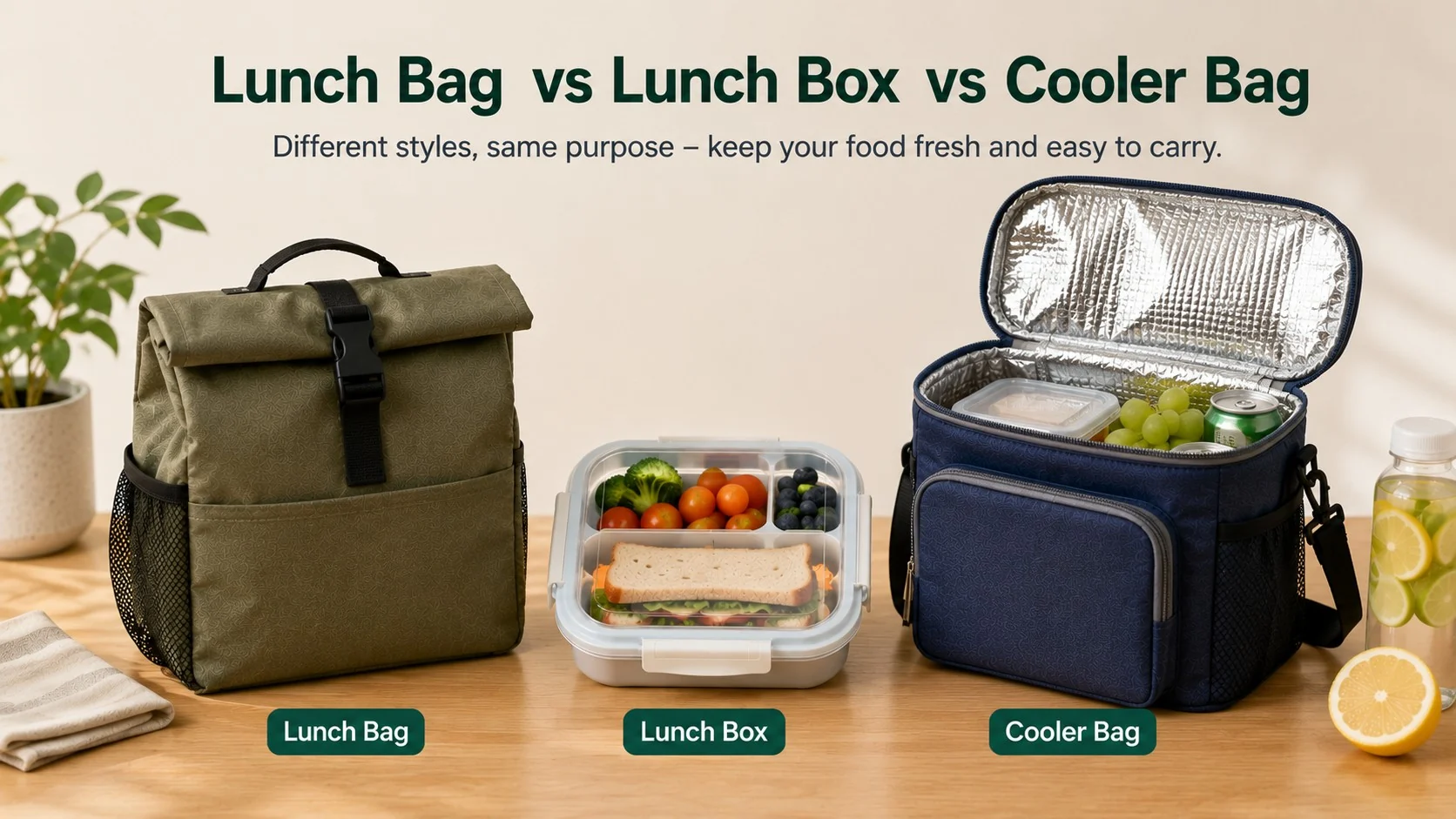
A lunch bag, lunch box, and cooler bag are all designed to carry food and drinks, but they are not exactly the same. The main differences are their construction, insulation, capacity, and intended use.
A lunch bag is usually soft-sided and lightweight, making it convenient for carrying everyday meals.
A lunch box is generally rigid and provides a more structured container for food.
A cooler bag usually places greater emphasis on insulation and may offer more space for food and beverages.
However, the terms can overlap. For example, an insulated lunch bag can also function as a small cooler bag, while a lunch bag can be designed to carry a separate lunch box or food container.
| Feature |
Lunch Bag |
Lunch Box |
Cooler Bag |
| Construction |
Usually soft-sided |
Usually rigid |
Usually soft-sided |
| Flexibility |
High |
Low |
High |
| Insulation |
Optional or moderate |
Optional |
Usually emphasized |
| Capacity |
Small to medium |
Small to medium |
Small to large |
| Portability |
Lightweight and easy to carry |
Easy to carry |
Depends on size |
| Common Uses |
School, office, daily meals |
School, office, meal prep |
Picnic, travel, outdoor activities |
| Customization |
Highly customizable |
Depends on material |
Highly customizable |
What Are the Different Types of Lunch Bags?
There are many types of lunch bags available today. The best design depends on the target customer, application, price point, and branding requirements.
1. Insulated Lunch Bags
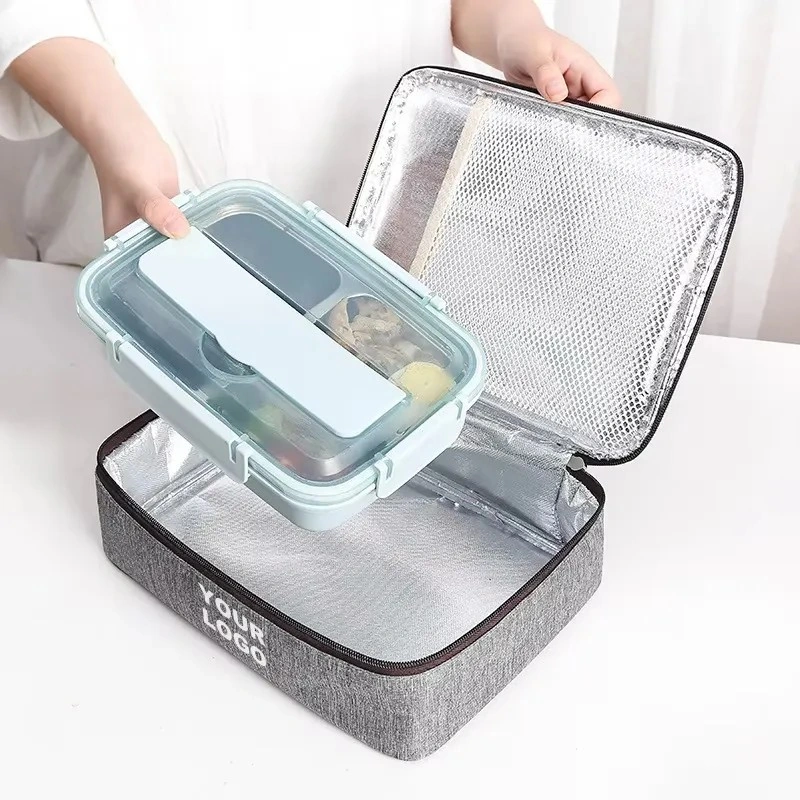
Insulated lunch bags are designed with an insulating layer between the exterior fabric and the interior lining.
Common insulation constructions may include foam, EPE, PE foam, aluminum foil, or other thermal materials.
They are commonly used for:
- Office lunches
- School meals
- Travel
- Food delivery
- Outdoor activities
Insulated lunch bags are also one of the most common options for custom promotional products.
2. Lunch Tote Bags
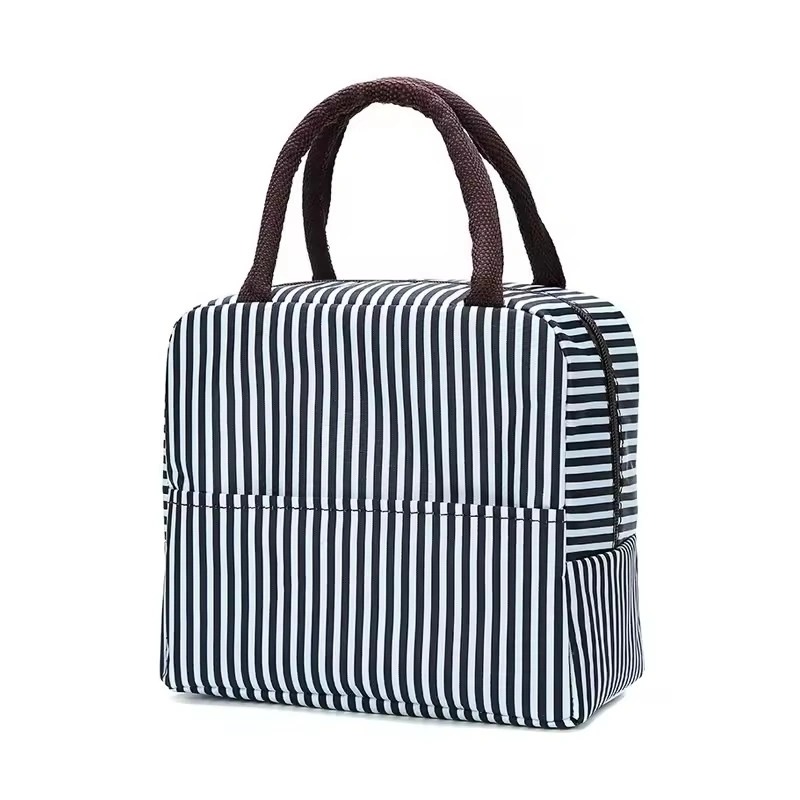
Lunch tote bags use a tote-style construction with handles and an open or closed top.
They are particularly suitable for brands that want a more lifestyle-oriented appearance.
A lunch tote can be designed using:
- Cotton
- Canvas
- Polyester
- RPET
- Jute
- Quilted fabric
- Other custom textiles
3. Roll-Top Lunch Bags
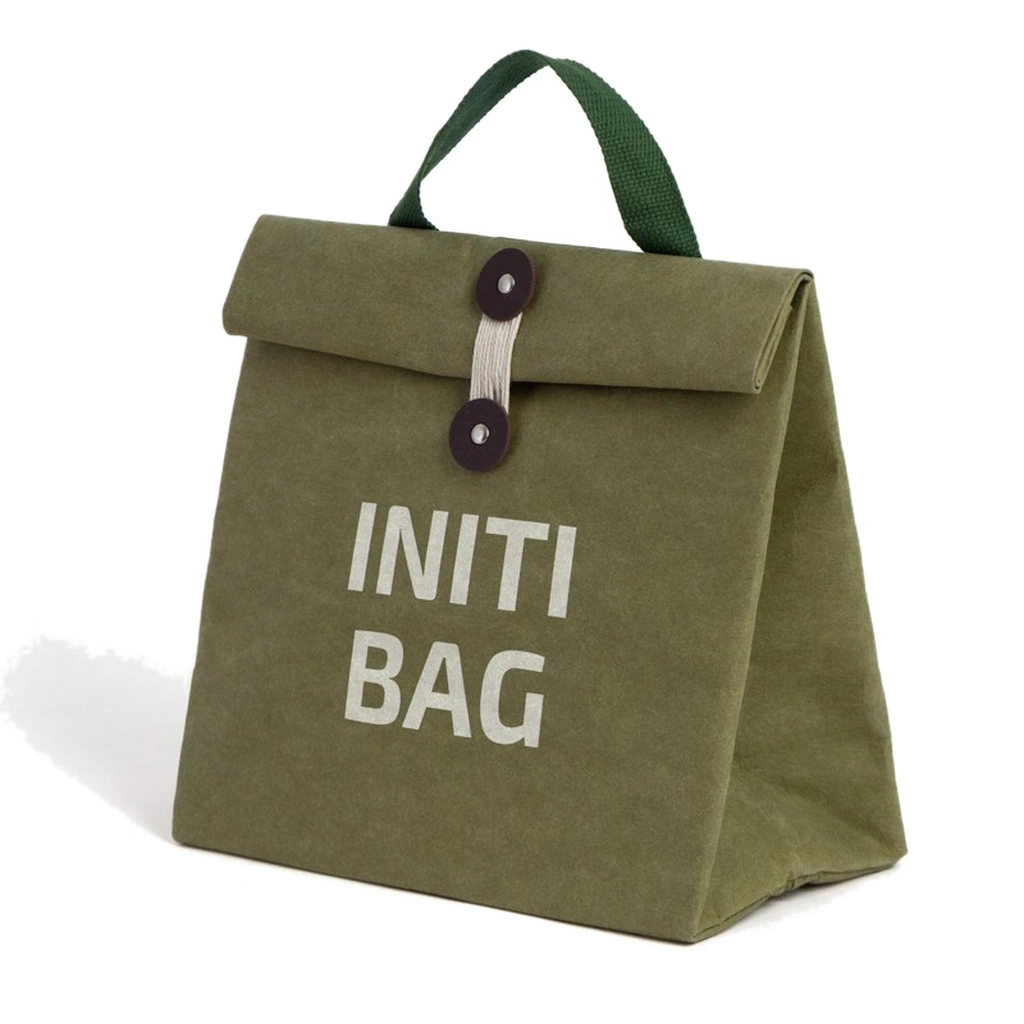
Roll-top lunch bags use a flexible opening that rolls down and closes with a buckle, hook-and-loop closure, or other fastening system.
This design can create a distinctive appearance while allowing some flexibility in capacity.
Roll-top construction can be especially useful for brands looking for a modern outdoor or lifestyle product.
4. Box-Shaped Lunch Bags
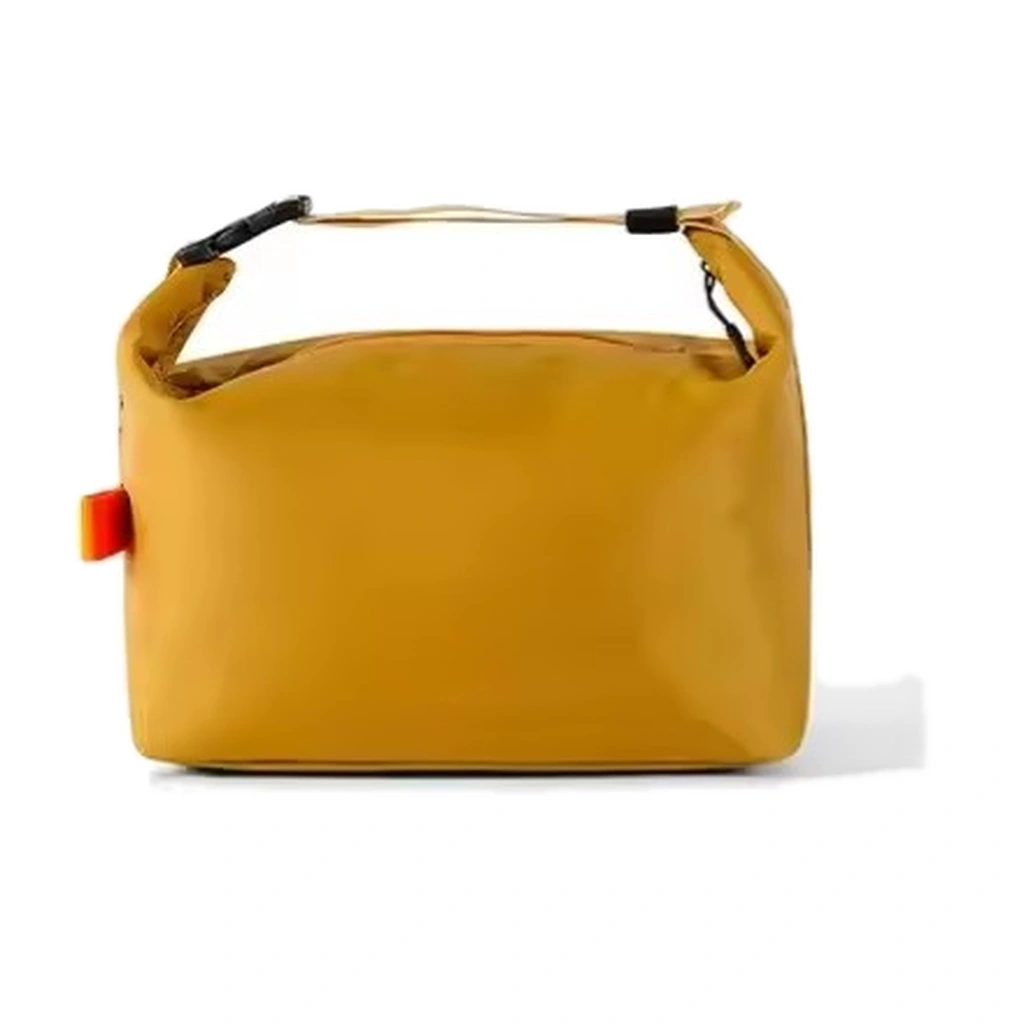
Box-shaped lunch bags use a more structured rectangular construction.
They are commonly designed to hold:
- Lunch containers
- Bottles
- Snacks
- Fruit
- Small food boxes
The structured shape can also make it easier to organize the interior.
6.Lunch Bag Backpacks
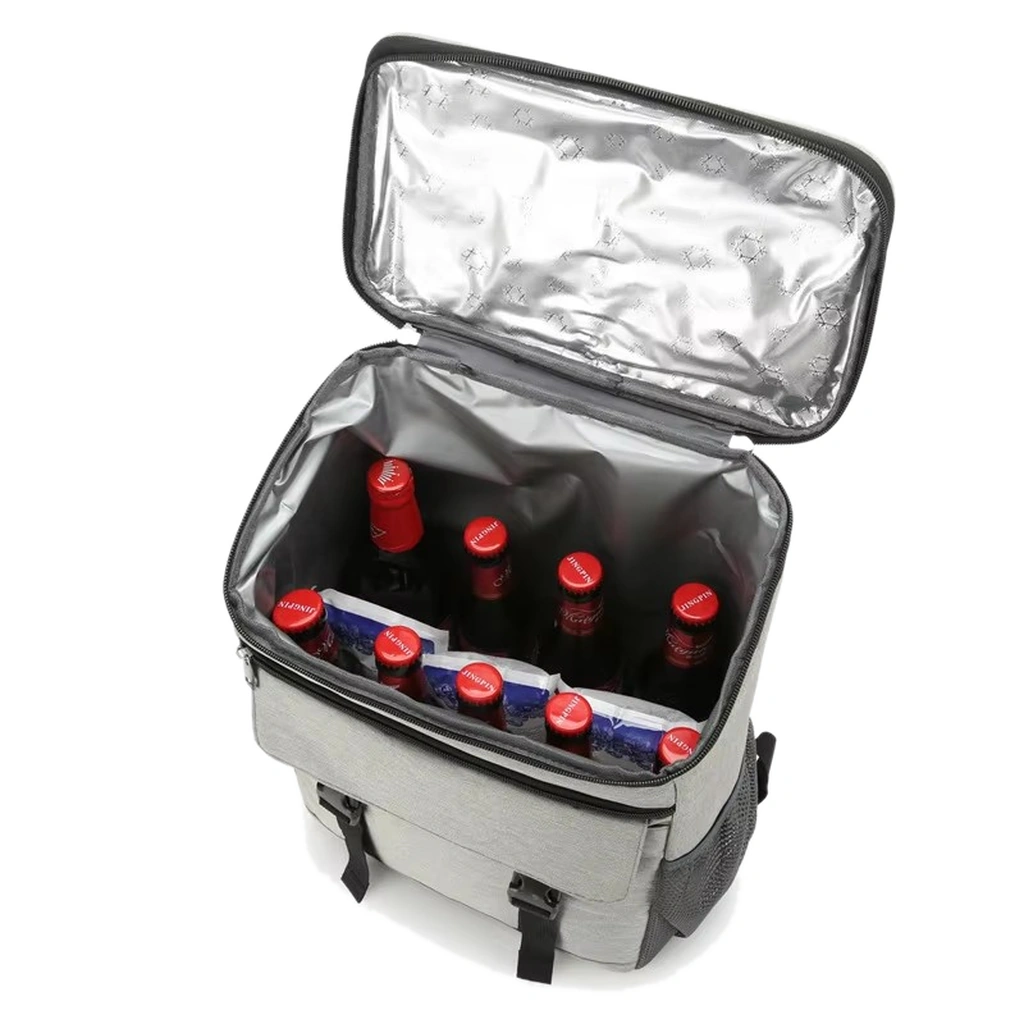
Lunch bag backpacks combine the functionality of a lunch bag with backpack-style carrying.
They can be useful when users need to carry lunch together with other personal items while keeping their hands free.
What Materials Are Lunch Bags Made From?
Lunch bags are made from a variety of materials, and the right choice depends on the bag's durability, appearance, flexibility, insulation requirements, target price, and intended use.
Most lunch bags are not made from a single material. An insulated lunch bag typically combines an outer material, insulation layer, and inner lining to create the required balance of protection, temperature control, and usability.
For custom lunch bags, understanding each material is important because the outer fabric affects the product's appearance and durability, while the insulation and lining determine much of its functional performance.
What Are the Most Common Materials Used for Lunch Bags?
Fabric Materials
1. Polyester
Polyester is one of the most widely used materials for lunch bags because it offers a good balance of durability, versatility, appearance, and cost.
Different fabric weights can be selected depending on the product's positioning. Lightweight polyester works well for promotional lunch bags and everyday products, while heavier fabrics can provide a more structured feel and better resistance to frequent use.
Polyester lunch bags are commonly used for:
- Insulated lunch bags
- Promotional products
- School lunch bags
- Office lunch bags
- Cooler bags
- Retail products
Polyester also provides a practical surface for custom branding, making it a popular choice for businesses ordering lunch bags with printed logos or graphics.
2. Nylon
Nylon is another common choice for lunch bags, particularly when a lightweight, smooth, and flexible construction is required.
Compared with some heavier fabrics, nylon can provide a softer and lighter feel while offering good resistance to abrasion. It is often used for compact lunch carriers, travel-oriented designs, and products where portability is a priority.
Nylon can also be combined with insulation and a thermal lining to create lightweight insulated lunch bags.
3. Oxford Fabric
Oxford fabric is a durable woven material commonly used for lunch bags that require a stronger outer shell and a more structured appearance.
It is typically made from polyester or nylon yarns and features a basket-weave construction. This structure gives Oxford fabric good resistance to abrasion and everyday wear while maintaining a relatively lightweight feel.
Oxford fabric lunch bags are commonly used for:
- Insulated lunch bags
- School lunch bags
- Office lunch bags
- Cooler bags
- Travel lunch bags
- Promotional and retail products
Different fabric weights, such as 210D, 300D, 420D, or 600D Oxford fabric, can be selected according to the required durability, structure, and target price. Lighter Oxford fabric is suitable for compact and lightweight lunch bags, while heavier versions can provide a more robust feel for frequent use.
Oxford fabric also offers a smooth and consistent surface for branding. It can be customized with screen printing, heat transfer printing, woven labels, patches, and other logo applications.
4. Canvas and Cotton
Canvas and cotton are popular choices for brands looking for a more natural textile appearance and softer hand feel.
Canvas is generally more structured and durable, while cotton can provide a softer and more casual appearance. Both materials work well for lifestyle-oriented lunch bags, reusable collections, and promotional merchandise.
They are also suitable for branding techniques such as:
- Screen printing
- Heat transfer printing
- Embroidery
- Woven labels
- Patches
Canvas and cotton lunch bags are particularly suitable when the visual identity of the material is an important part of the product design.
5. Neoprene
Neoprene is a soft and flexible material that is often used for lunch bags and food carriers with a modern, lightweight appearance.
Its flexible structure can provide a degree of cushioning around food containers and bottles, while its soft surface gives the product a distinctive hand feel.
Neoprene is commonly considered for:
- Compact lunch bags
- Food carriers
- Bottle and food sleeves
- Lifestyle products
- Fashion-oriented lunch bags
For brands targeting younger consumers or lifestyle markets, neoprene can provide a different look and feel from traditional woven-fabric lunch bags.
6. RPET
RPET, or recycled polyethylene terephthalate, is a popular material option for brands looking to incorporate recycled content into reusable lunch bags.
RPET fabric can offer performance characteristics similar to conventional polyester while providing a material story that may be more suitable for brands with recycled-material requirements.
It is commonly considered for:
- Eco-conscious promotional products
- Reusable lunch bags
- Retail collections
- Corporate merchandise
- Sustainable product programs
When using recycled materials, buyers should confirm the actual material composition and any required certification with the manufacturer before making specific sustainability claims.
7. Jute
Jute is a natural plant-based fiber with a distinctive woven texture and natural appearance.
Jute lunch bags and cooler bags are often chosen when a brand wants to emphasize a natural, rustic, or eco-conscious visual style.
Jute can work particularly well for:
- Grocery brands
- Natural food brands
- Promotional products
- Picnic products
- Lifestyle collections
For example, a structured jute cooler bag can combine the natural appearance of jute with an insulated interior, creating a product that looks different from conventional polyester cooler bags.
8. Kraft Paper and Paper-Look Materials
Kraft paper and paper-look materials provide a distinctive alternative to conventional textile lunch bags.
They are often selected for their natural, minimalist, and paper-inspired appearance, particularly by food brands, cafés, retailers, and businesses looking for a different packaging or promotional style.
For insulated applications, a kraft paper-style exterior can be combined with an insulation layer and reflective thermal lining.
This type of construction can be suitable for:
- Food brands
- Cafés
- Supermarkets
- Retail food packaging
- Promotional programs
- Private-label collections
When specifying kraft paper materials, buyers should confirm whether the product uses washable kraft paper, paper-composite material, or another paper-look fabric, as material composition can vary between products.
Insulation Materials
The outer material is only one part of an insulated lunch bag. The interior construction is equally important.The insulation layer helps slow down heat transfer between the inside of the bag and the surrounding environment.The thickness and construction of the insulation can be adjusted according to the intended product design and performance requirements.
Common insulation materials include:
- EPE foam: EPE (expanded polyethylene) foam is widely used in lunch bags because it is lightweight, flexible, and provides good thermal insulation. It can be used in both compact lunch bags and larger cooler bags, making it a practical option for everyday products and high-volume custom orders.
- PE foam: PE (polyethylene) foam provides lightweight insulation while also adding cushioning to the bag. Its flexible structure makes it suitable for soft-sided lunch bags that need to protect food containers and maintain a lightweight, easy-to-carry design.
- Aluminum foil lining: Aluminum foil is commonly used as a reflective inner lining in insulated lunch bags. It helps reflect radiant heat and can work together with the insulation layer to improve thermal performance. Its smooth surface is also practical for food-related products because it is relatively easy to wipe clean.
- Multi-layer insulation systems: Many insulated lunch bags use a combination of materials rather than relying on a single insulation layer. A typical construction may combine an outer fabric, foam insulation, and a reflective or moisture-resistant inner lining. This multi-layer structure can provide a balance of insulation, durability, flexibility, and appearance, making it suitable for customized retail, promotional, and commercial lunch bags.
What Should Consider When Ordering Custom Lunch Bags?
If you are purchasing lunch bags for a business, brand, retailer, or promotional campaign, there are several specifications to confirm before production.
1. Size and Capacity
Start with the products that the bag needs to carry.
For example:
- Lunch box
- Bento container
- Water bottle
- Snacks
- Fruit
- Cutlery
The internal dimensions should be based on the actual contents rather than choosing a standard size.
2. Material
Choose the exterior material according to the desired appearance, durability, budget, and sustainability requirements.
3. Insulation
If thermal performance is important, specify the insulation construction and lining requirements.
4. Closure
Common closure options include:
- Zipper
- Hook and loop
- Buckle
- Drawstring
- Roll-top
- Magnetic closure
5. Handles and Straps
The carrying method should match the intended use.
Options may include:
- Short handles
- Webbing handles
- Shoulder straps
- Adjustable straps
6. Logo and Branding
Custom lunch bags can be branded using different decoration methods depending on the material.
Possible options include:
- Screen printing
- Heat transfer
- Embroidery
- Woven labels
- Rubber labels
- Patches
- Custom woven branding
7. Packaging
Packaging should be considered early in the product-development process.
Options may include:
- Individual polybags
- Paper packaging
- Custom boxes
- Printed inserts
- Retail-ready packaging
- Bulk packaging
How Do Businesses Use Custom Lunch Bags?
Custom lunch bags are useful far beyond school lunches.
Promotional Products
Companies can use branded lunch bags as promotional merchandise, employee gifts, event giveaways, or campaign products.
Retail Products
Retailers can develop lunch bags as part of their own product range and customize the design around their target customers.
Corporate Gifts
A reusable lunch bag can be combined with bottles, food containers, or other lifestyle products as part of a corporate gift set.
Food and Beverage Businesses
Food brands, meal-preparation companies, restaurants, and catering businesses can use customized insulated bags for packaging and brand promotion.
Supermarkets and Grocery Brands
Reusable insulated bags can be developed as shopping or food-carrying products for grocery customers.
Outdoor and Lifestyle Brands
Cooler and lunch bags can also be developed for camping, travel, picnics, and outdoor activities.
How to Choose a Custom Lunch Bag Manufacturer
Choosing the right supplier is about more than finding the lowest unit price.Before placing a bulk order, consider the manufacturer's ability to support the complete product-development process.
- Material Options:Can the supplier provide different materials such as polyester, canvas, RPET, cotton, jute, or kraft paper?
- Custom Design:Can they modify the size, shape, construction, insulation, handles, lining, and closure?
- Branding:Can they provide the printing or labeling method required by your brand?
- Sampling:Can you review a sample before mass production?
- Quality Control:Does the supplier have a clear process for checking materials, dimensions, stitching, printing, and finished products?
- Production Capacity:Can the manufacturer handle your required order quantity and production schedule?
- Packaging:Can the supplier provide customized packaging suitable for retail or distribution?
A manufacturer that can handle these steps under one process can make custom product development more efficient.
INITI specializes in custom bags, packaging, and promotional products for businesses and wholesale buyers. With OEM and ODM capabilities, we can develop lunch bags based on your requirements, from material and structure selection to logo application, packaging, and bulk production.
FAQ
What is another name for a lunch bag?
Common names include lunch tote, lunch carrier, lunch pouch, insulated lunch bag, bento bag, and cooler bag. The exact term usually depends on the bag's design and intended use.
What is the difference between a lunch bag and a lunch tote?
A lunch tote usually refers to a lunch bag with a tote-style construction and handles. The terms can overlap, and many products can accurately be described using both names.
Is a lunch bag the same as a cooler bag?
Not always. Lunch bags are generally designed for carrying individual meals, while cooler bags often have larger capacities and stronger emphasis on insulation. However, many insulated lunch bags can also function as small cooler bags.
What material is best for lunch bags?
The best material depends on the application. Polyester can be suitable for promotional and functional products, canvas and cotton for lifestyle products, jute for natural-looking products, RPET for recycled-material applications, and kraft paper-style materials for distinctive sustainable-looking designs.
Are insulated lunch bags better than regular lunch bags?
If temperature control is important, an insulated lunch bag is generally more suitable than a non-insulated bag. The appropriate insulation construction depends on the intended use.
Can I customize a lunch bag with my logo?
Yes. Depending on the material, customization can include screen printing, heat transfer, embroidery, woven labels, patches, and other branding methods.
Can lunch bags be made in custom sizes?
Yes. Custom dimensions can be developed according to the food containers, bottles, products, or other items that the bag needs to carry.
Can I order custom lunch bags for my brand?
Yes. Businesses can develop custom lunch bags based on their desired material, size, construction, insulation, branding, and packaging requirements.
Conclusion
So, what is a lunch bag called?
The most common terms include lunch bag, lunch tote, lunch carrier, lunch pouch, insulated lunch bag, bento bag, and cooler bag. While these names can overlap, the most important differences are usually related to construction, capacity, materials, insulation, and intended use.
For everyday consumers, choosing between these styles often comes down to size, portability, insulation, and appearance.
For businesses, retailers, promotional companies, and brands, the decision goes further. The right lunch bag should match the target application, price point, brand identity, material requirements, and packaging strategy.
If you are developing a custom lunch bag, start by defining the product's size, material, insulation, branding, and intended use. A clear specification makes it easier to develop samples and move efficiently toward bulk production.
Related Products


 Hot News