Jute is one of those materials that people often recognize before they know its name. The coarse, golden-brown fabric used in coffee sacks, rustic home décor, woven packaging, and natural-looking bags is frequently made from jute. Its distinctive texture gives products an earthy appearance, while its plant-based origin makes it an important material in discussions about renewable resources and sustainable textiles.
But what exactly is jute? Is it the same as burlap? Why does it feel rougher than cotton, and what makes it suitable for certain products but less practical for others?
Understanding jute requires looking beyond its natural appearance. Its fiber structure, growing conditions, processing methods, yarn characteristics, and fabric construction all influence how it performs in a finished product. These factors also explain why two fabrics that both look like jute can differ considerably in softness, strength, appearance, and environmental impact.
This guide explores jute from the material itself: where it comes from, how its fibers are processed, what properties define it, which forms of jute fabric are commonly available, and how its advantages and limitations affect different applications. Whether you are researching natural textiles, developing a product, or comparing plant-based materials, understanding these fundamentals will help you make more informed decisions.
What Is Jute?
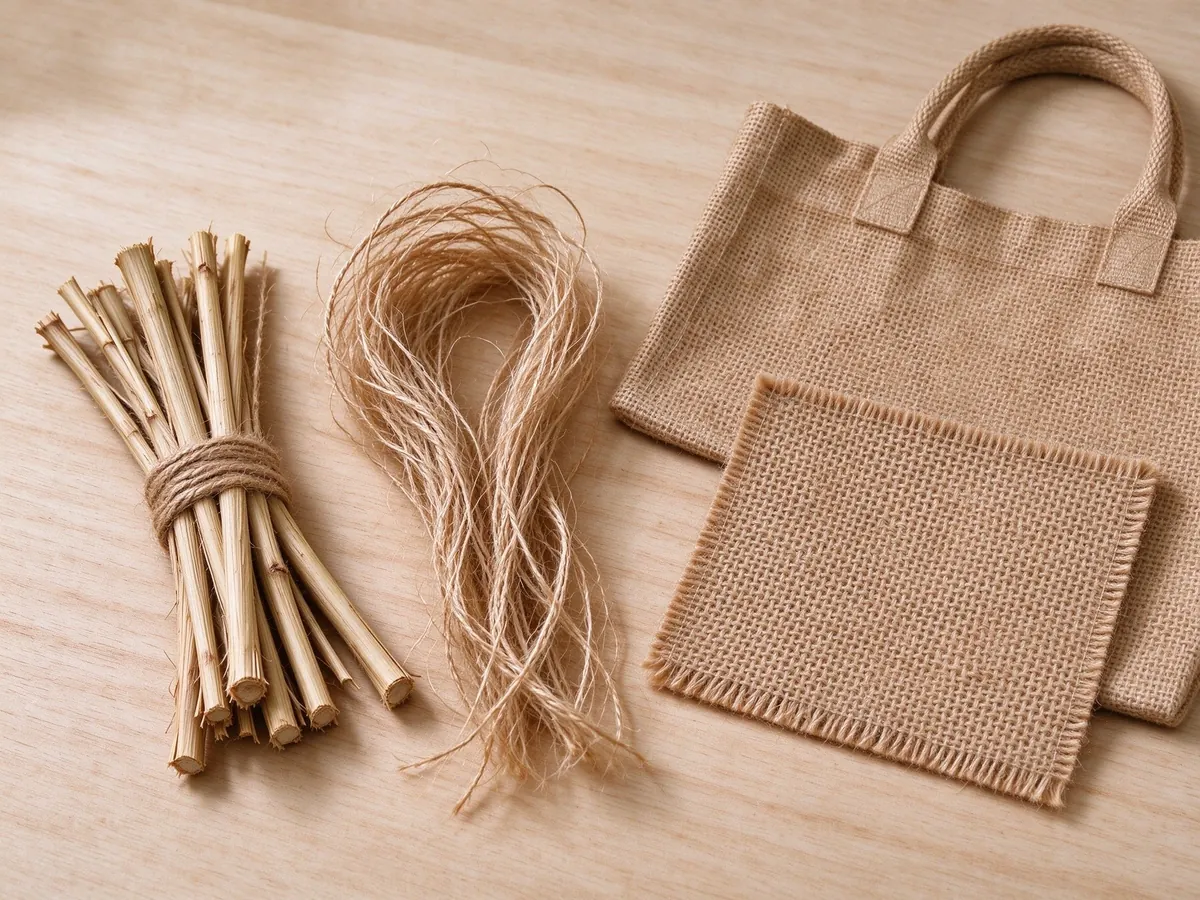
Jute is a natural plant fiber obtained primarily from the stems of plants belonging to the genus Corchorus. The two main cultivated species used for commercial jute production are Corchorus capsularis, commonly known as white jute, and Corchorus olitorius, commonly known as tossa jute.
Unlike cotton, whose useful fibers grow around the seeds, jute fibers are extracted from the plant's stem. They belong to a group of natural fibers called bast fibers, which develop in the tissues beneath the outer bark of certain plants.
Other familiar bast fibers include flax, used to produce linen, and hemp, which is used in textiles, rope, and industrial materials. Although these fibers share a plant-stem origin, their physical characteristics are not identical. Jute generally produces coarser, less elastic yarns than linen, making it particularly suitable for practical textiles where texture, breathability, and economical fiber production matter more than a soft, flowing finish.
Jute is widely cultivated in warm, humid regions, especially Bangladesh and India. Its long, slender stalks can produce substantial quantities of usable fiber within a relatively short growing season. Once extracted and processed, the fibers can be spun into yarn and woven or otherwise converted into a variety of textile products.
The natural color of jute usually ranges from pale cream and golden yellow to tan and brown. Its surface may have a subtle sheen, but the finished fabric often appears matte and textured because of its coarse yarns and open weave.
Jute is also known as the golden fiber, a name associated with its characteristic color and its economic importance in traditional fiber-producing regions.
What Is Jute Made Of?
Jute fiber is composed mainly of cellulose, hemicellulose, and lignin, together with smaller quantities of other natural constituents.
Each component contributes to the behavior of the fiber.
- Cellulose is the principal structural component of many plant fibers. It contributes to tensile strength and helps the fiber maintain its structure.
- Hemicellulose is another plant cell-wall component that influences moisture interaction and the overall structure of the fiber.
- Lignin is a complex natural polymer that helps strengthen plant tissues. Its presence contributes to jute's comparatively stiff and coarse character.
- Pectins, waxes, and other minor constituents occur in varying amounts and can influence fiber separation, surface properties, and processing requirements.
The proportions of these components vary according to the plant variety, growing conditions, maturity, and processing method.
This composition helps explain why jute behaves differently from cotton. Cotton fibers are naturally suited to producing relatively soft, flexible yarns, whereas jute's structure and lignin content generally favor thicker yarns with a firmer hand feel.
It is important to distinguish the raw fiber from the finished fabric. Chemical composition provides a useful starting point, but the final texture and performance also depend on how the fiber is graded, spun, woven, dyed, and finished.
Is Jute a Natural or Synthetic Material?
Jute is a natural, plant-derived fiber. It is not manufactured from petroleum-based polymers in the way conventional polyester or polypropylene fibers are.
However, a finished product described as a jute product does not necessarily consist entirely of jute.
For example, a jute fabric may be laminated with a polymer film, combined with a cotton lining, supported by a synthetic backing, or fitted with polyester handles. These additional components can change its appearance, strength, moisture resistance, and end-of-life options.
For material identification, it is therefore useful to distinguish three things:
Raw jute fiber: the natural fiber extracted from the plant.
Jute fabric: a textile produced from jute yarn, sometimes blended with other fibers.
A jute-based product: a finished item that may contain jute alongside linings, coatings, adhesives, trims, or other materials.
This distinction becomes especially important when evaluating biodegradability, recyclability, and the environmental characteristics of a finished product.
Where Does Jute Come From?
Jute grows best in warm, humid environments with sufficient rainfall and suitable soil conditions. Commercial production is concentrated in South Asia, particularly the Ganges Delta region, which spans parts of Bangladesh and eastern India.
These regions provide a combination of seasonal rainfall, fertile alluvial soils, and established agricultural knowledge that supports large-scale jute cultivation.
The jute plant is generally grown as an annual crop. Depending on the variety and local conditions, it can reach several meters in height during a growing period of roughly four to six months.
Its rapid growth is one reason jute is considered a renewable fiber resource. Rather than depending on fossil feedstocks, production begins with a crop that can be replanted and harvested over successive growing seasons.
The Two Main Jute Species
Although several related plants can produce fibers used in similar applications, two species account for most conventional commercial jute.
White jute (Corchorus capsularis)
White jute has a long history of cultivation and is associated with pale-colored fibers. Its properties vary with variety and growing conditions, but it is generally distinguished from tossa jute by its botanical origin and traditional fiber characteristics.
Tossa jute (Corchorus olitorius)
Tossa jute is widely cultivated for commercial fiber production. It often produces long, relatively strong fibers with a golden to brown appearance. The exact quality of the harvested fiber depends on plant maturity, field conditions, retting, and subsequent handling.
The names white jute and tossa jute refer to plant types, not simply to the color of the finished fabric. Processing and finishing can change the appearance of both.
Why Is Jute Concentrated in South Asia?
Jute is closely associated with the natural conditions of the region in which it is traditionally grown.
Warm temperatures and seasonal rainfall support rapid plant development, while suitable soils help produce long stems from which fibers can be extracted. The established network of farmers, fiber processors, spinning facilities, and textile manufacturers also makes the region a major center for jute production.
The industry has developed around more than the crop itself. Harvesting knowledge, retting practices, fiber grading, transport infrastructure, and textile processing all contribute to the availability of commercial jute.
For international buyers, this regional concentration can be relevant when researching raw-material origin, supplier capabilities, seasonal supply conditions, and traceability.
However, the country where a finished jute product is manufactured is not necessarily the country where its raw fiber was grown. Material origin and product manufacturing location are separate details and should be verified independently when they matter to a purchasing decision.
How Is Jute Fiber Made?
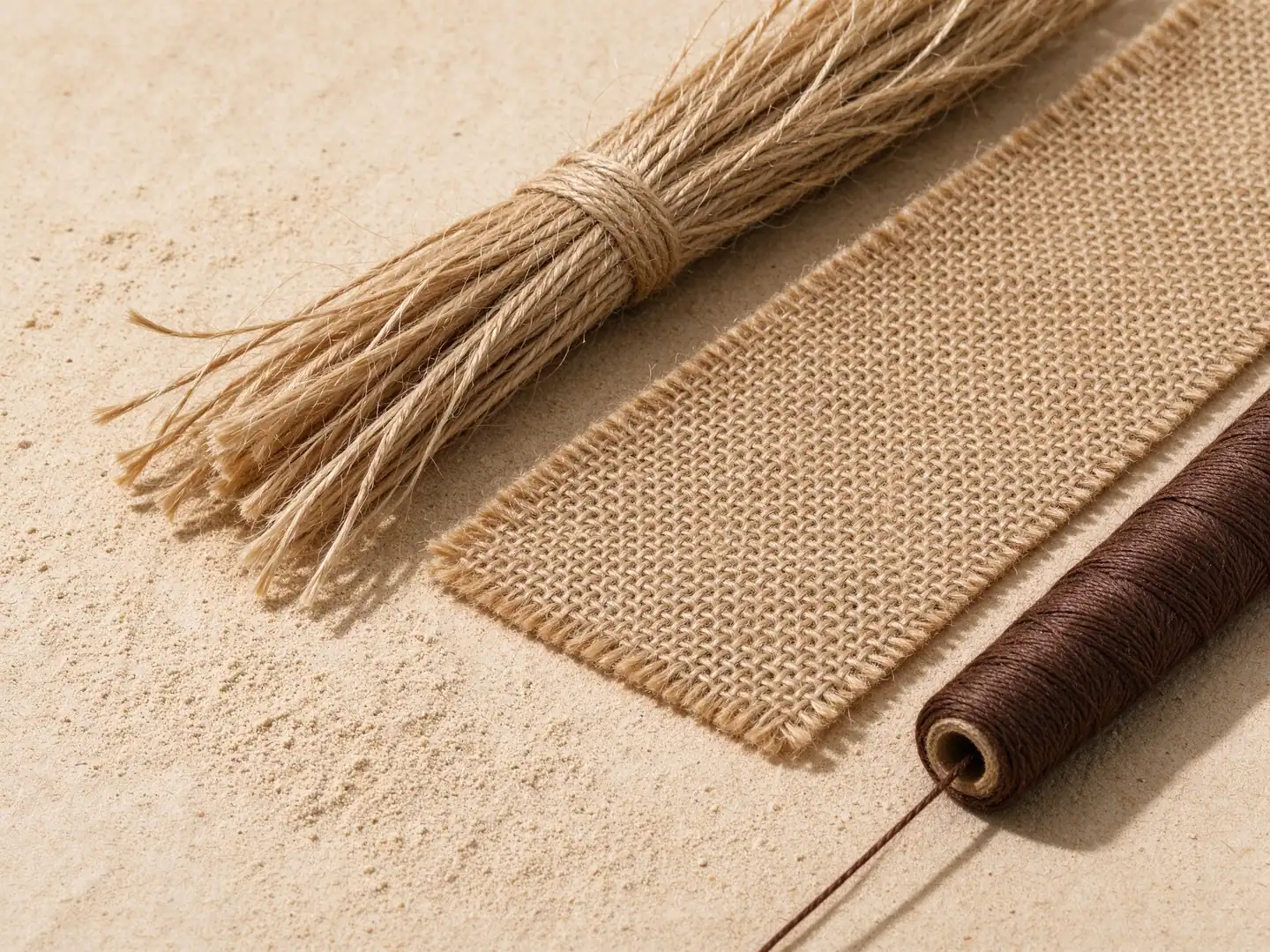
Jute fabric does not begin as a ready-to-use textile. The plant must pass through several agricultural and processing stages before its fibers can be converted into yarn.
The quality of the final material is influenced by decisions made throughout this process. Fiber maturity, retting conditions, drying, grading, spinning, and fabric construction can all affect the texture, consistency, and strength of the finished textile.
Step 1: Cultivating the Jute Plant
Farmers sow jute seeds in suitable soil, usually during a season when moisture and temperature conditions support germination and growth.
The plants develop tall, relatively straight stems. For fiber production, the aim is to cultivate plants that produce a useful quantity of long, consistent fiber while maintaining appropriate agricultural yields.
Growing conditions matter. Soil fertility, rainfall, temperature, crop density, pests, and harvest timing can influence the quality and quantity of the resulting fiber.
Although jute is often described as a low-input crop, this should not be interpreted to mean that every jute crop requires no irrigation, fertilizer, or pest management. Agricultural requirements vary with local conditions and farming practices.
Step 2: Harvesting the Stems
Jute is generally harvested when the plants have reached an appropriate stage of maturity for fiber production.
Harvesting too early may reduce fiber yield, while excessive maturity can affect fiber fineness and processing characteristics. The appropriate timing depends on the variety and the intended use of the fiber.
After harvesting, the stems are prepared for the next stage. Leaves and unwanted plant material may be removed, and the stems are handled in a way that facilitates fiber extraction.
Step 3: Retting
Retting is one of the most important stages in traditional jute processing.
The useful fibers are held within plant tissues alongside non-fibrous material. Retting helps break down the substances that bind these tissues together, allowing the fibers to be separated from the stem.
In conventional water retting, harvested stems are submerged in water for a period that varies with temperature, water conditions, plant maturity, and local methods.
Microorganisms help break down pectic substances and other components that hold the fibers together. Once retting has progressed sufficiently, the fibers can be separated more easily.
Retting quality matters because the process influences both fiber cleanliness and physical properties.
- Insufficient retting can leave fibers difficult to separate and may result in rougher, less consistent material.
- Excessive retting can damage fibers and reduce their quality.
- Poorly managed water retting can create environmental problems when organic matter and wastewater are discharged without appropriate controls.
Alternative retting methods and improved water management can help address some of these issues, although their suitability depends on local infrastructure, cost, and production requirements.
Step 4: Stripping and Fiber Extraction
Once retting is complete, the fibers are separated from the woody core and surrounding plant material.
This stage may involve manual stripping or mechanical assistance, depending on the production system.
The extracted fibers are typically obtained in long bundles rather than as isolated, perfectly uniform strands. These bundles are then handled and prepared for further processing.
The remaining woody stalk material may have additional uses, depending on local practices and the availability of suitable processing facilities.
Step 5: Washing and Drying
Extracted fibers are washed when necessary to remove remaining plant residues and other impurities.
They are then dried, often using sunlight in traditional production systems. Drying conditions can affect the cleanliness, color, moisture content, and storage stability of the raw fiber.
Poorly dried material can be more vulnerable to storage problems, including mold growth under unsuitable conditions. Excessive or uneven exposure can also affect appearance and consistency.
For manufacturers, stable raw-material moisture and appropriate storage practices are important because fibers may undergo further processing and transport before they reach a textile mill.
Step 6: Grading and Preparation
After drying, the fibers are sorted or graded according to characteristics such as length, strength, fineness, color, cleanliness, and uniformity.
Grading helps processors select appropriate material for different applications.
Longer, cleaner, more uniform fibers may be suitable for higher-quality yarns, while shorter fibers and processing remnants can be directed toward other uses where their characteristics are acceptable.
Grading is not merely an appearance-related step. Differences in raw-fiber quality can influence yarn formation, fabric consistency, and the amount of processing required.
Step 7: Spinning the Fibers into Yarn
The prepared fibers are processed into yarn.
Depending on the required yarn characteristics and manufacturing system, preparation may include sorting, blending, softening, drawing, and other operations that help organize the fibers before spinning.
Jute yarn is generally thicker and less flexible than yarn made from fine cotton. Its coarseness makes it suitable for many utilitarian textiles, but it also limits its suitability for products that require a very smooth surface or a soft drape.
Yarn thickness, twist, fiber quality, and spinning method all influence the final fabric.
Step 8: Weaving and Finishing
Jute yarn can be woven into fabrics with different densities and surface characteristics.
A relatively open weave creates a breathable textile with a visible grid structure. A tighter weave can produce a more compact surface, depending on yarn thickness and construction.
After weaving, the fabric may be cleaned, dyed, printed, softened, coated, laminated, or otherwise finished according to its intended use.
Not every jute textile receives the same treatments. A simple agricultural fabric may be left close to its natural state, while a decorative textile may undergo more extensive finishing.
The important point is that jute's final performance is the result of both the raw fiber and the manufacturing process. Knowing that a product contains jute does not, by itself, tell you how strong, soft, colorfast, or moisture-resistant it will be.
What Are the Main Properties of Jute?
Jute has a distinctive combination of strength, texture, breathability, moisture absorption, and limited elasticity. These properties make it valuable for many practical textiles, but they also create limitations in applications requiring flexibility, smoothness, or prolonged exposure to moisture.
The following table summarizes its most relevant characteristics.
| Property |
Typical behavior |
What it means in practice |
| Appearance |
Natural golden, tan, brown, or pale shades |
Creates an earthy, textured look |
| Texture |
Coarse to moderately coarse |
Better suited to rustic or structured surfaces than soft-touch products |
| Tensile strength |
Useful strength, varying by grade and construction |
Can support many packaging and textile applications |
| Elasticity |
Relatively low |
Does not stretch and recover like many elastic synthetic materials |
| Breathability |
Generally good, especially in open weaves |
Allows air to move through the fabric |
| Moisture absorption |
Absorbs moisture |
Can swell, become damp, or develop odor or mold under poor storage conditions |
| Abrasion behavior |
Depends on fiber, yarn, and weave |
Suitable for many practical uses, but not immune to surface wear |
| Sunlight resistance |
Prolonged exposure may cause fading or degradation |
Not ideal for untreated products expected to remain outdoors indefinitely |
| Biodegradability |
Raw jute fiber can biodegrade under suitable conditions |
End-of-life performance depends on coatings, blends, and disposal conditions |
| Drape |
Generally limited compared with soft apparel fabrics |
Better suited to structured or textured products |
These are general tendencies, not guaranteed specifications. A tightly woven jute textile can behave differently from a loose burlap fabric, and a coated product may have different moisture and surface characteristics from untreated jute.
What Are the Different Types of Jute Fabric?
The term jute fabric describes a family of textiles rather than one standardized material.
Different varieties of jute fiber, yarn specifications, weave patterns, and finishing methods can create noticeably different fabrics. Some are coarse and loosely woven, while others are more compact, refined, or designed for decorative applications.
Understanding these distinctions helps explain why the word jute alone is not enough to describe the performance of a finished textile.
Hessian or Burlap
Hessian and burlap are common names for coarse woven fabrics traditionally made from jute.
The terms are often used interchangeably, although regional naming conventions can differ. The fabric is typically recognizable by its visible weave, natural color, and relatively rough texture.
Hessian or burlap is widely used for sacks, agricultural materials, craft projects, rustic decorations, and certain packaging applications.
Its open structure can allow air to circulate, while its natural appearance makes it suitable for products intended to communicate a simple, unprocessed aesthetic.
However, the fabric is not necessarily identical across suppliers. Yarn thickness, weave density, finishing, and raw-fiber quality can vary.
Burlap is also not exclusively made from jute. Similar coarse fabrics can be produced from other fibers, so the name alone does not always establish the exact fiber composition.
Fine or Tightly Woven Jute Fabric
Some jute textiles use finer yarns or tighter constructions than conventional coarse burlap.
A more compact weave can create a more uniform surface, improve dimensional stability, and reduce the size of the openings between yarns. These features may be useful for decorative textiles and certain consumer products.
However, a tighter weave does not automatically make a fabric waterproof, softer, or more durable in every respect. The outcome depends on the fiber grade, yarn characteristics, and finishing.
For product development, it is useful to assess the actual textile sample rather than selecting a material solely by its trade name.
Colored, Dyed, and Printed Jute
Natural jute is often associated with golden-brown shades, but the fiber can be dyed and the fabric can be printed.
Coloring allows jute textiles to be adapted to different product styles, interior design schemes, and branding requirements.
The final appearance depends on the original fiber color, dyeing method, preparation, and finishing. Because untreated jute is naturally colored and textured, the results may differ from printing on a smooth white synthetic fabric.
The visible weave can also influence how graphics appear. Fine details, very small lettering, and intricate images may be less clear on a coarse surface than on a smooth textile.
Colorfastness is another important consideration. A dyed textile should be evaluated for color transfer, washing or cleaning requirements, and exposure to light according to its intended use.
Laminated or Coated Jute
Jute can be combined with a surface coating or laminated backing to modify its behavior.
For example, a polymer layer may help limit moisture penetration or provide a more stable surface for a particular application. A laminated textile may also feel firmer than untreated fabric.
These modifications change the characteristics of the material and may affect its environmental profile.
A coated jute textile should not automatically be described as fully biodegradable or easily recyclable. The natural fiber and the added coating may require different disposal or processing routes.
When the product is intended to be marketed as a natural or environmentally preferable material, the complete composition should be considered.
Blended Jute Fabrics
Jute can be blended or combined with other fibers to balance its natural texture with different performance requirements.
For example, a blend may be developed to change the softness, flexibility, appearance, or manufacturing behavior of the textile. Jute may also be used as one component in a product whose other materials provide a lining, structural support, or protective surface.
The result depends on the proportion of each material and how the fibers are processed.
A jute blend should not be assumed to have the same properties as pure jute. Its moisture absorption, biodegradability, texture, and end-of-life options may differ from those of an untreated jute textile.
What Is Jute Fabric Used For?
Jute's combination of natural texture, useful strength, breathability, and relatively economical production makes it suitable for a broad range of applications.
Its traditional uses remain important, but the material also appears in home furnishings, decorative products, plant protection, and selected fashion or accessory applications.
Agricultural Sacks and Packaging
Coarse jute fabric has long been made into sacks to store and transport agricultural products. Its woven structure balances strength and air permeability. The fabric shall protect goods from handling damage, contamination and moisture.
Ropes, Twine, and Cordage
Jute fibers can be spun into twine and rope for agricultural, household and light industrial use. However, it is not suitable for long-term damp environments, heavy loads or safety-critical scenarios. Material selection shall be determined by load capacity, working environment and expected service life.
Rugs, Carpets, and Floor Coverings
Jute is widely used in rugs and floor coverings because its natural color and texture work well in interiors that favor organic materials.
It can be used as a visible woven surface, as part of a blended textile, or in the backing of certain floor coverings.
Its relatively firm character can contribute to a substantial appearance, while its neutral tones can complement wood, cotton, linen, and other natural-looking materials.
Home Décor and Furnishings
Jute textiles and cords are used in decorative products such as placemats, table runners, baskets, lampshades, curtains, and furniture accents.
In these applications, appearance can be as important as mechanical performance. The coarse weave, irregular natural color, and visible fiber structure give jute a distinctive aesthetic that differs from smooth synthetic fabrics.
Jute can also be combined with softer materials to create contrast between a textured exterior and a more comfortable or refined interior.
Its suitability depends on the expected level of contact, cleaning requirements, light exposure, and moisture conditions.
Fashion and Accessories
Jute is less common in conventional apparel than cotton, linen, or polyester because of its relatively rough texture and limited drape.
However, it can be incorporated into selected fashion products, accessories, footwear components, decorative trims, and structured textile designs.
Jute has a distinctive place in the bag industry because it combines a recognizable natural texture with practical strength and a relatively firm structure. Unlike smooth cotton or synthetic fabrics, jute has a coarse, woven appearance that can become an important part of a bag's overall design.
Its use in bags is not limited to one particular style. Depending on the fabric construction, jute can be used for shopping bags, tote bags, gift bags, promotional bags, and selected packaging applications. However, its suitability varies according to the intended use, required durability, and expected exposure to moisture.
- Shopping Bags and Tote Bags
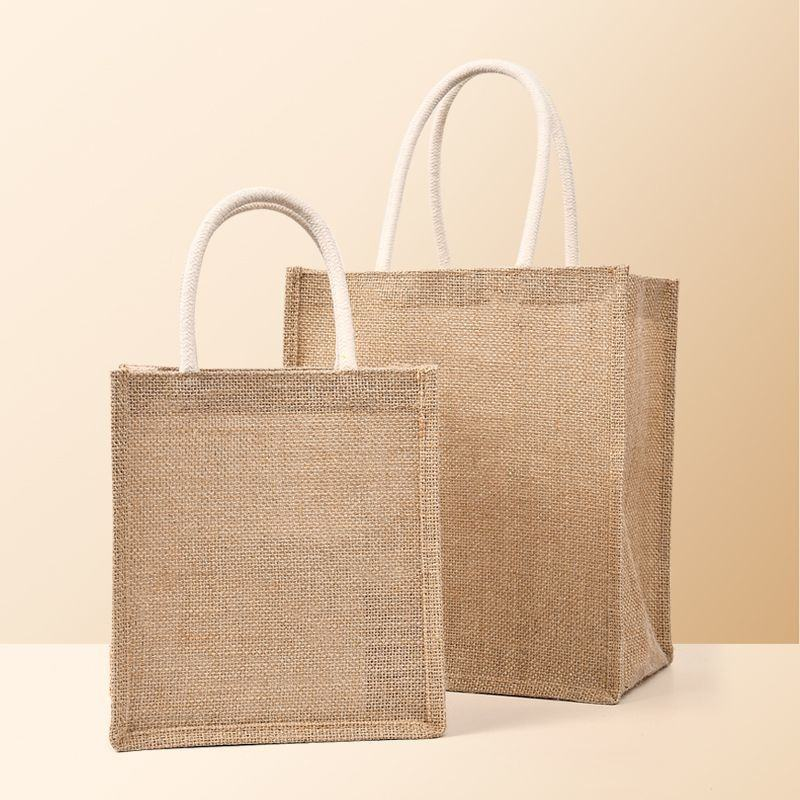
Shopping bags and tote bags are among the most recognizable applications of jute fabric. Its natural golden-brown color and visible weave give these bags a rustic appearance that works well for grocery shopping, retail packaging, farmers' markets, and everyday carrying.
Jute's relatively firm structure can help a bag maintain its shape, especially when the fabric is sufficiently dense or combined with a suitable lining. However, the actual carrying capacity depends on the complete construction, including the fabric weight, handle attachment, seams, and reinforcement.
For bags intended to carry heavier items, the strength of the handles and stress points should be evaluated alongside the body fabric. A coarse or heavy-looking jute material does not automatically guarantee a high load capacity.
- Promotional and Retail Bags
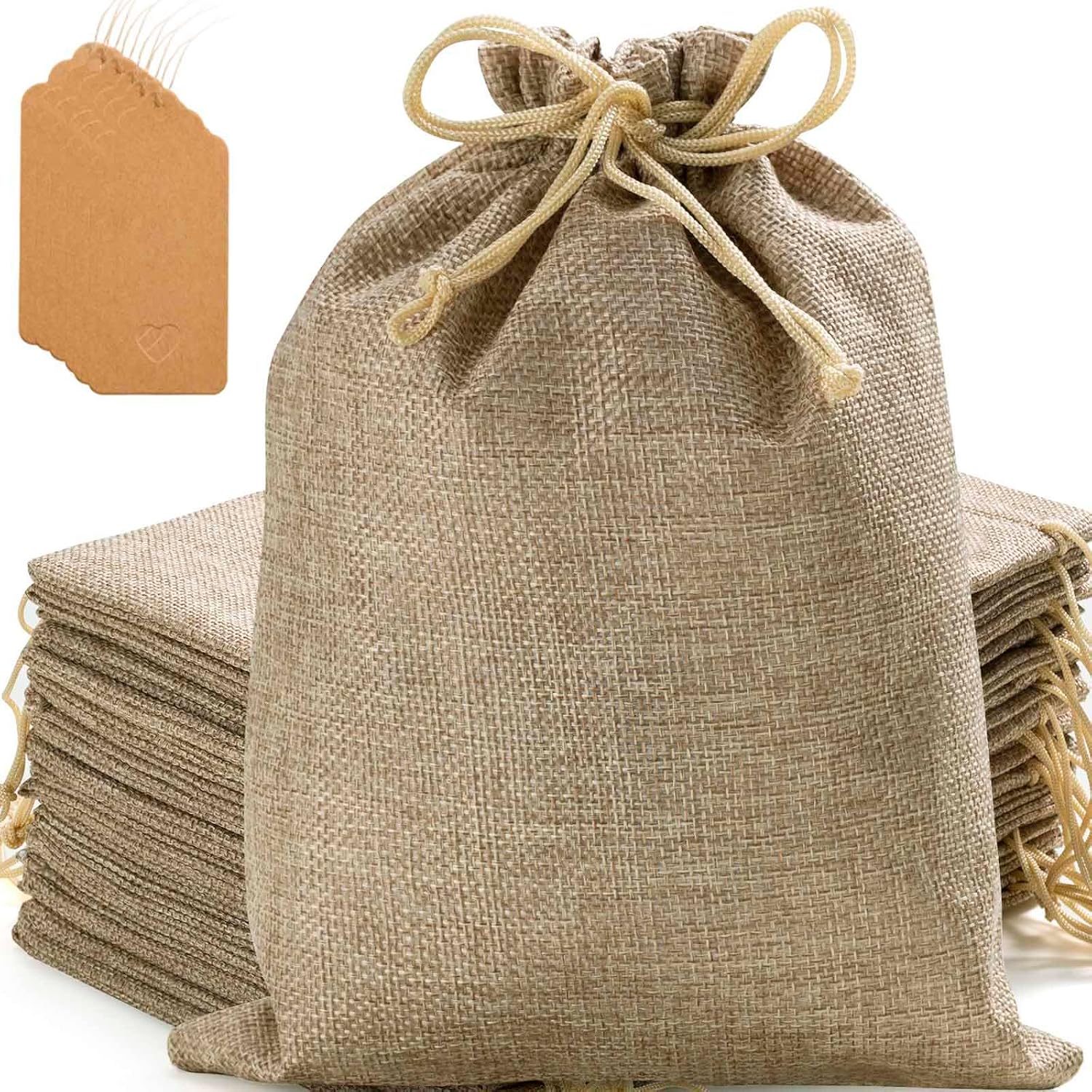
Jute is also used in promotional bags and retail packaging where the material's appearance helps communicate a natural or understated brand identity.
Compared with smooth fabrics, jute offers a more visibly textured surface. This can be attractive for brands that want their packaging to feel substantial and distinctive rather than glossy or highly synthetic.
Printing and decoration are possible, but the weave affects the final result. Simple logos and bold graphics may work well, while very fine details can be more difficult to reproduce clearly on a coarse surface. The printing method, fabric color, and weave density should therefore be considered together during product development.
- Gift Bags and Specialty Packaging

Jute can be used in gift bags and specialty packaging for products such as home accessories, selected food gifts, craft items, and seasonal merchandise.
In these applications, the material often serves both a practical and a visual purpose. Its textured surface creates a natural presentation, while its woven construction provides a fabric-based alternative to some paper or plastic packaging formats.
The choice of construction depends on the product being packaged. A simple jute bag may be sufficient for dry, lightweight items, whereas products that require additional protection may need a lining, insert, closure, or moisture-resistant inner layer. These additions can change the overall material composition and should be considered when evaluating recyclability or biodegradability.
- Jute Blends and Combined-Material Bags
Not every bag described as a jute bag is made entirely from jute. Some designs combine jute with cotton, canvas, or synthetic materials to adjust the texture, flexibility, appearance, or functional performance.
For example, a product may use jute as the main visible fabric while incorporating a different material for the handles, lining, base, or closure. Such combinations can help address specific design requirements, but the properties of the finished bag will depend on the materials and construction used.
This distinction is particularly important when evaluating moisture resistance, cleaning requirements, durability, and environmental claims. A bag made primarily from jute but finished with a synthetic laminate will not necessarily have the same end-of-life characteristics as an untreated jute textile.
What Should Be Considered When Using Jute for Bags?
Although jute is suitable for many bag applications, several material characteristics need to be considered:
- Moisture sensitivity: Untreated jute absorbs moisture and is not naturally waterproof. Prolonged damp conditions can affect its appearance and service life.
- Surface texture: Its coarse weave creates a distinctive natural look but may not suit products requiring a smooth or soft-touch finish.
- Edge finishing: Depending on the weave, cut edges may fray and require appropriate construction or finishing.
- Printing requirements: The visible texture can affect fine graphics, small text, and color consistency.
- Structural performance: Fabric weight, weave density, handles, seams, and reinforcement all influence the finished bag's strength.
- Material composition: Linings, coatings, and blended fibers can change the product's flexibility, moisture resistance, and environmental characteristics.
Is Jute an Environmentally Friendly Material?
Jute is often considered an environmentally preferable fiber because it comes from a renewable plant source and can biodegrade under suitable conditions.
However, a responsible assessment requires looking at the material's entire life cycle rather than relying on the word natural.
Cultivation, retting, fiber processing, dyeing, transportation, product durability, reuse, and disposal all influence the environmental impact of a finished jute product.
Renewable Agricultural Origin
Jute is grown as a crop and can be replanted over successive growing seasons.
Its relatively short growth cycle allows new fiber to be produced without relying on the extraction of fossil feedstocks as the primary raw material.
Agricultural Inputs and Land Management
Jute is frequently described as requiring relatively modest agricultural inputs compared with some other commercial fiber crops.
In suitable growing regions, rainfall can supply much of the water required for crop development. Actual water and chemical requirements nevertheless vary according to climate, soil, farm management, and crop conditions.
It is therefore more accurate to say that jute can be produced with comparatively modest inputs in suitable environments than to claim that every jute crop requires no irrigation, fertilizer, or pesticides.
Carbon Absorption and Greenhouse Gas Emissions
Like other growing plants, jute absorbs carbon dioxide during photosynthesis.
This biological process is part of the carbon cycle, but it should not be confused with a complete calculation of a product's carbon footprint.
A life-cycle assessment must also consider emissions associated with cultivation, processing, energy use, transportation, finishing, product use, and disposal.
For this reason, a general statement that jute plants absorb carbon dioxide is not sufficient to establish that every jute product has a lower total carbon footprint than every alternative.
Reliable comparisons require a defined product, an appropriate functional unit, and comparable assessment boundaries.
Biodegradability
Untreated jute fiber can biodegrade under suitable environmental conditions.
Microorganisms can break down its natural components, allowing the material to return to the environment over time. This can be an advantage in applications where a natural fiber is appropriate and the product does not need to remain intact indefinitely.
Water Use and Wastewater
Jute's agricultural water requirements may be relatively modest in regions with suitable rainfall, but water is also involved in some processing methods.
Traditional water retting uses water to help separate fibers from plant tissues. If wastewater containing organic matter is released without appropriate management, it can affect local water quality.
Dyeing, washing, and other finishing processes can create additional water and chemical-management requirements.
The environmental profile of jute therefore depends not only on how the plant is grown but also on how the fiber and finished fabric are processed.
Durability and Reuse
A material's environmental value is partly related to how long a product remains useful.
If a jute product is used repeatedly for its intended purpose, it may help reduce the need for replacement products. But the benefit depends on actual use, service life, and the material it replaces.
A product that wears out quickly or is rarely reused may deliver less benefit than expected, even if its primary fiber is renewable.
For products expected to experience frequent handling, moisture exposure, or demanding loads, construction quality and suitability can therefore be as important as raw-material selection.
Is Jute Always More Sustainable Than Synthetic Materials?
Not necessarily.
Jute has clear advantages in terms of renewable plant origin and the biodegradability of untreated fibers. Synthetic materials may offer other advantages, including moisture resistance, dimensional stability, specific strength characteristics, and resistance to certain environmental conditions.
A synthetic product that performs reliably for a long service life may have a different environmental profile from a natural-fiber product that needs frequent replacement. Likewise, a jute product with extensive plastic lamination may have different disposal implications from a simple untreated textile.
A meaningful comparison should consider:
- The amount and origin of raw material used.
- Agricultural inputs and processing requirements.
- Energy and water consumption.
- Product durability and expected service life.
- The number of times the product is actually reused.
- Whether the material can be repaired, recycled, composted, or otherwise appropriately managed at the end of its life.
The most responsible conclusion is that jute can be a useful lower-impact material in suitable applications, but its environmental advantages depend on the complete product system.
What Are the Advantages and Limitations of Jute?
Jute is useful because its natural characteristics align well with certain applications. The same characteristics can become disadvantages when a product requires softness, moisture protection, or a highly controlled surface finish.
Understanding both sides provides a more realistic basis for evaluating the material.
Key Advantages
1. Renewable plant-based origin
Jute is a fast-growing annual fiber crop that can be cultivated and harvested season after season without depleting finite fossil resources. It needs relatively low pesticide and fertilizer inputs compared with many cash crops. As a carbon-positive plant, jute absorbs large amounts of CO₂ during growth, making it an eco-friendly substitute for fossil-based synthetic textiles and plastics.
2. Distinctive natural appearance
It features inherent golden-brown hues and clearly exposed fiber grains, delivering a unique organic, rustic tactile texture. This natural aesthetic cannot be easily replicated by man-made fabrics. It is highly sought-after for packaging, tote bags, home decor and interior goods where brands want to highlight earthy, handcrafted and eco-conscious visual identity.
3. Useful textile strength
Jute fiber boasts good tensile strength and dimensional stability. After spinning and weaving, jute fabric maintains reliable load-bearing performance. It can withstand moderate pulling stress, ideal for manufacturing sacks, rugs, ropes, tote bags and various reusable consumer goods. Proper fabric density and reinforcement can further upgrade its mechanical performance.
4. Breathability in suitable constructions
Open-weave jute structures permit free air circulation through the fabric. This air permeability prevents heat and moisture buildup inside packages. It is especially valuable for agricultural sacks storing grains, nuts and dried produce, reducing spoilage risks caused by trapped humidity.
5. Potential biodegradability
Raw, untreated jute fibers can decompose naturally in soil or compost environments within a reasonable period. It will not leave persistent microplastic residues. This trait is a major selling point for brands aiming to reduce plastic waste and develop disposable or single-use packaging with low environmental impact.
Note: biodegradability will be weakened if blended with synthetic fibers or coated with plastic film.
6. Versatility
Jute offers great processing flexibility. It can be woven into different fabric weights and weave styles, blended with cotton, canvas or recycled fibers to adjust handfeel and performance. It supports dyeing, screen printing and heat transfer printing, and can be integrated into diversified product structures ranging from woven bags, home decorations to woven backings for carpets.
Key Limitations
1. Coarse texture
Jute is generally rougher than cotton and many other textile fibers. This can limit its suitability for products that require a smooth or soft surface.
2. Moisture sensitivity
Jute absorbs moisture and is not naturally waterproof. Damp conditions can affect its feel, appearance, storage stability, and service life.
3. Limited elasticity
Its relatively low elasticity makes jute less suitable for products that need substantial stretch and recovery.
4. Potential fiber shedding and fraying
Depending on the yarn and weave, jute fabrics may release loose fibers or fray at unfinished edges.
5. Variable appearance and quality
Natural color, fiber length, cleanliness, and texture can vary. Some variation is inherent in natural materials, but excessive inconsistency may be unsuitable for applications requiring a highly uniform finish.
6. Limitations under prolonged outdoor exposure
Sunlight, moisture, and other environmental conditions can degrade untreated jute over time. The material should not be assumed to provide long-term outdoor performance without appropriate construction and testing.
7. Finishing can change its environmental profile
Coatings, laminations, dyes, and blended materials may improve certain properties but can also complicate recycling, biodegradation, or disposal.
These limitations do not make jute an inferior material. They simply mean that it performs best when the product's requirements align with its natural characteristics.
How Does Jute Compare With Other Natural Fibers?
Jute is often discussed alongside cotton, linen, and hemp because all four are plant-derived fibers. However, they differ in their botanical origins, texture, processing characteristics, and common applications.
The most useful comparison is not which fiber is universally better, but which material is appropriate for a particular purpose.
| Material |
Fiber source |
Typical texture |
Common characteristics |
Typical applications |
| Jute |
Stem of the jute plant |
Coarse and textured |
Low stretch, natural appearance, moisture absorption |
Sacks, rugs, ropes, decorative textiles |
| Cotton |
Fibers surrounding cotton seeds |
Soft to moderately firm |
Comfortable, absorbent, versatile |
Apparel, towels, bags, household textiles |
| Linen |
Stem of the flax plant |
Crisp to soft, depending on processing |
Breathable, relatively strong, characteristic natural texture |
Apparel, table linens, home textiles |
| Hemp |
Stem of the hemp plant |
Varies from coarse to refined |
Useful strength, relatively low stretch, adaptable to blends |
Textiles, ropes, canvas-like fabrics, accessories |
| Sisal |
Leaves of the agave plant |
Stiff and coarse |
Firm structure and abrasion-oriented applications |
Rope, mats, cordage, selected floor coverings |
How Should Jute Fabric Be Evaluated for Product Development?
For businesses developing products with jute, the raw-material description is only the first step. The textile must also meet the practical requirements of the finished item.
Fiber and Yarn Consistency
Natural fibers can vary in color, length, fineness, and cleanliness.
Some variation is normal, but the acceptable range depends on the intended application. A rustic decorative product may benefit from visible natural variation, while a product line requiring a consistent appearance may need tighter material selection.
Yarn thickness and twist also influence how the fabric looks and behaves. Thick yarns can create a pronounced texture, while finer yarns may produce a more compact surface.
Weave Density and Fabric Weight
Fabric weight is one useful specification, but it should not be treated as a complete measure of quality.
Two jute fabrics with similar weight can differ in yarn thickness, weave density, surface appearance, and mechanical performance.
A heavier fabric is not necessarily stronger in every direction, and a tighter weave does not automatically guarantee superior durability.
For meaningful comparison, fabric weight should be considered alongside weave construction, yarn characteristics, and relevant performance requirements.
Edge Stability and Fraying
Jute fabric can fray when cut, particularly when the weave is open or the edges are not properly finished.
This characteristic matters when the textile is used in products with exposed edges, seams, folds, or frequently handled openings.
The appropriate construction may include suitable seam allowances, edge finishing, binding, or other methods intended to prevent excessive unraveling.
The best approach depends on the weave and the stresses the finished product will experience.
Surface Quality and Printing
The natural texture of jute influences how graphics and colors appear.
An open weave may interrupt fine details, while natural fiber color can affect the appearance of printed shades. The surface may also absorb finishing materials differently from a smooth synthetic textile.
Artwork and printing methods should therefore be assessed on the intended jute fabric rather than on a different material used as a visual reference.
For consistent results, the sample should be reviewed under realistic lighting and from the viewing distance expected in the finished application.
Moisture and Storage Conditions
Because jute absorbs moisture, raw fiber, fabric, and finished products should be stored in appropriate conditions.
Excessive humidity and poor ventilation can contribute to mold, odor, or deterioration. Moisture can also affect the consistency of the textile during processing.
Where a finished product may encounter water or damp environments, the material construction and any protective treatment should be assessed for the intended level of exposure.
A coating may improve certain forms of moisture resistance, but its performance should be verified rather than assumed.
Testing the Finished Material
The relevant tests depend on the product and the conditions in which it will be used.
Potential evaluation areas include:
- Tensile strength or tear resistance where mechanical loading matters.
- Abrasion resistance where repeated rubbing is expected.
- Colorfastness where dyed material may transfer color or experience light exposure.
- Dimensional stability where changes in size or shape would affect the product.
- Moisture behavior where the material may become damp.
- Seam or attachment performance where the fabric is incorporated into a finished construction.
Not every product needs every test. The purpose is to identify the risks that matter to the specific application and evaluate them with suitable methods.
How Should Jute Be Stored and Maintained?
Jute's natural fiber structure means that storage and maintenance should take account of moisture, ventilation, sunlight, and surface wear.
The exact care instructions depend on the fabric construction and any coatings, dyes, or additional materials.
Keep Jute Dry
Jute can absorb moisture from the air and from direct contact with water.
For storage, it is generally advisable to keep untreated jute in a clean, dry, well-ventilated environment. Products should not be left in damp packaging or against surfaces where moisture can accumulate.
If a jute textile becomes wet, it should be allowed to dry thoroughly under suitable conditions before being stored.
Avoid Prolonged Damp Storage
Persistent moisture can encourage mildew and affect the appearance and smell of jute products.
This is particularly relevant for products stored in closed containers, humid warehouses, or poorly ventilated spaces.
Appropriate packaging and storage conditions can help reduce these risks, although they cannot compensate for a product that is inherently unsuitable for prolonged wet exposure.
Limit Unnecessary Sunlight Exposure
Long periods of direct sunlight may fade natural or dyed jute and can gradually weaken exposed fibers.
For decorative items and products used near windows or outdoors, placement and exposure should be considered when selecting the material.
The level of protection depends on the fabric and any finishing treatments.
Use Appropriate Cleaning Methods
Jute should not automatically be treated like a washable cotton textile.
Excessive water, aggressive detergents, or unsuitable cleaning methods may affect its shape, texture, color, or structural integrity. Some products may be surface-cleaned, while others may have specific manufacturer instructions because of their coatings, linings, or construction.
The safest method is to follow the care guidance provided for the actual finished product.
Inspect for Wear
Repeated friction, folding, and handling can cause surface fiber loss, fraying, or damage to particular areas.
Where the product is intended for repeated use, periodic inspection can help identify problems before they become more serious.
Storage conditions, handling practices, and the suitability of the material for its intended purpose all influence service life.
FAQ
What is jute made from?
Jute is made from the fibers extracted from the stems of plants in the genus Corchorus. The two main commercial species are white jute (Corchorus capsularis) and tossa jute (Corchorus olitorius).
Is jute a natural fiber?
Yes. Jute is a plant-based natural fiber. However, finished jute products may contain additional materials such as synthetic coatings, linings, adhesives, or blended fibers.
Is jute the same as burlap?
Not exactly. Jute is a fiber, while burlap is a type of coarse woven fabric traditionally made from jute. Similar burlap-style fabrics can also be produced from other fibers, so the exact composition depends on the product.
Why is jute called the golden fiber?
Jute is commonly called the golden fiber because of its characteristic golden-brown color and its historical economic importance as a commercial plant fiber.
Is jute waterproof?
No. Untreated jute is not naturally waterproof. It absorbs moisture, and prolonged damp conditions may affect its appearance and service life. Coatings or laminations can improve certain forms of water resistance, depending on the construction.
Is jute biodegradable?
Untreated jute fiber can biodegrade under suitable environmental conditions. However, coatings, synthetic blends, linings, and other components can change the end-of-life behavior of a finished product.
Is jute stronger than cotton?
There is no single answer for every product. Fiber strength, yarn construction, fabric density, and finishing all affect performance. Jute is commonly used in coarse packaging and industrial textiles, while cotton can be processed into a wider range of soft and flexible fabrics. Finished materials should be compared using specifications relevant to their intended use.
Can jute fabric be dyed or printed?
Yes. Jute fabric can be dyed or printed, but results depend on its natural color, weave, surface texture, preparation, and finishing. The coarse surface may make fine details more difficult to reproduce than on smoother textiles.
Why does jute fabric feel rough?
Jute's fiber composition, relatively high lignin content, and typical yarn construction contribute to its firm, coarse feel. The level of roughness varies according to fiber grade, spinning, weave density, and finishing.
Is jute suitable for outdoor use?
Jute can be used in selected outdoor applications, particularly where a biodegradable textile is intended for temporary use. However, untreated jute can be affected by prolonged moisture and sunlight exposure. Its suitability depends on the required service life, local conditions, and any protective treatments.
What is the difference between jute fiber and jute fabric?
Jute fiber is the raw plant-derived material extracted from the stem. Jute fabric is produced by processing the fibers into yarn and then weaving or otherwise forming the yarn into a textile. The finished fabric's characteristics depend on both the fiber and the manufacturing process.
Conclusion
Jute is much more than a coarse, golden-brown fabric. It is a versatile plant fiber whose structure, processing requirements, and natural characteristics explain its long-standing role in packaging, agriculture, home furnishings, and notably bag production.
Its renewable origin, distinctive texture, useful strength, and potential biodegradability make it a compelling choice for tote bags, shopping carriers, promotional bags and gift packaging. At the same time, its moisture sensitivity, limited elasticity, and relatively coarse handfeel mean it is not suitable for every bag design or end-use scenario.
The key is to look beyond the material’s name and understand how the fiber has been processed and constructed. When a bag’s intended application matches its natural properties, jute delivers a practical and visually unique textile solution for reusable branded packaging.
For designers and buyers sourcing natural fiber bags, the best starting point is not simply to judge whether jute is good or bad. Instead, it is to understand its composition, real-world performance during daily use, and where its strengths create the greatest value for bag projects.
Related Products
Related Article



 Hot News