When sourcing custom bags, packaging products, or promotional items, buyers often focus on the design first — logo placement, colors, size, and shape.
However, the fabric choice is one of the most important decisions that determines the final product’s durability, appearance, cost, and overall user experience.
Among the many fabric options available, woven and non-woven fabrics are two commonly used materials in the bag industry.
At first glance, they may look similar. Both can be lightweight, customizable, and suitable for reusable bags. However, their internal structures are completely different, which leads to differences in strength, texture, production methods, printing performance, and ideal applications.
For businesses ordering custom bags in bulk, understanding the difference between woven vs. non-woven fabric helps avoid choosing a material that does not match the product purpose.
A promotional giveaway bag for a trade show, a retail shopping bag used every week, and a heavy-duty packaging bag all require different fabric performance.
This guide explains the key differences between woven and non-woven fabric and helps buyers select the right option for their custom bag projects.
What Is Woven Fabric?
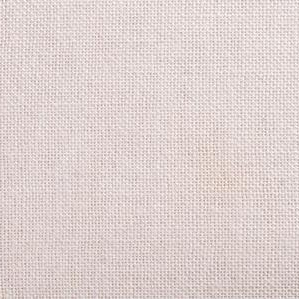
Woven fabric is a textile material created by interlacing two sets of yarns or threads together.
The vertical threads are called warp yarns, while the horizontal threads are called weft yarns.
During production, these yarns cross over and under each other at a specific angle, usually 90 degrees, creating a stable fabric structure.
This traditional weaving method has been used for thousands of years and remains one of the most common textile manufacturing processes today.
Common woven fabrics include:
- Cotton canvas
- Polyester fabric
- Denim
- Oxford fabric
- Nylon fabric
- Woven polypropylene (PP woven)
The weaving structure gives the material a clear fiber direction, making woven fabrics strong, stable, and suitable for products that require long-term use.
How Is Woven Fabric Made?
The production process of woven fabric generally includes several steps:
1. Fiber Preparation
Raw materials such as cotton, polyester, nylon, or polypropylene are processed into yarns or tapes.
The quality of the yarn directly affects the final fabric’s strength and appearance.
2. Warping
Warp yarns are arranged parallel to each other and prepared for weaving.
This creates the foundation of the fabric structure.
3. Weaving
The loom interlaces warp and weft yarns together to form the fabric.
Different weaving methods create different textures and performance characteristics.
Common weave structures include:
Plain Weave
The simplest weaving structure.
Warp and weft yarns cross alternately, creating a balanced and durable fabric.
Common applications:
- Canvas tote bags
- Packaging bags
- Everyday textile products
Twill Weave
The yarns create a diagonal pattern on the surface.
This structure provides better flexibility and abrasion resistance.
Common applications:
- Denim
- Workwear
- Premium bags
Satin Weave
The surface is smoother because fewer yarn intersections appear on the outside.
It is often used for products requiring a softer and more luxurious appearance.
What Is Non-Woven Fabric?
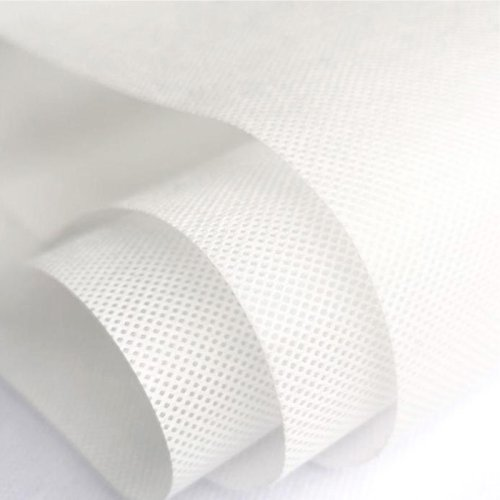
Unlike woven fabric, non-woven fabric is not produced by weaving yarns together.
Instead, it is made by bonding fibers together through mechanical, chemical, or thermal processes.
The fibers are arranged into a web-like structure and then bonded to create a fabric sheet.
The name “non-woven” simply means the material is created without traditional weaving or knitting.
Common non-woven materials include:
- Polypropylene (PP)
- Polyester (PET)
- Recycled PET (RPET)
- PLA (biodegradable alternatives)
Among them, polypropylene spunbond non-woven fabric is one of the most widely used materials for promotional bags, shopping bags, and packaging products.
How Is Non-Woven Fabric Made?
The manufacturing process of non-woven fabric is different from traditional textiles.
Instead of producing yarn first, manufacturers directly process fibers into fabric.
A typical spunbond non-woven process includes:
1. Fiber Formation
Raw materials such as polypropylene pellets are melted and extruded into continuous filaments.
2. Fiber Web Formation
The fibers are laid randomly onto a moving surface to create a web structure.
3. Fiber Bonding
Heat, pressure, or chemical methods are used to bond the fibers together.
The result is a sheet-like fabric with a soft and flexible structure.
Because the process removes the yarn-spinning and weaving stages, non-woven fabric can usually be produced faster and at a lower cost compared with traditional woven textiles.
Woven vs. Non-Woven Fabric: The Basic Difference
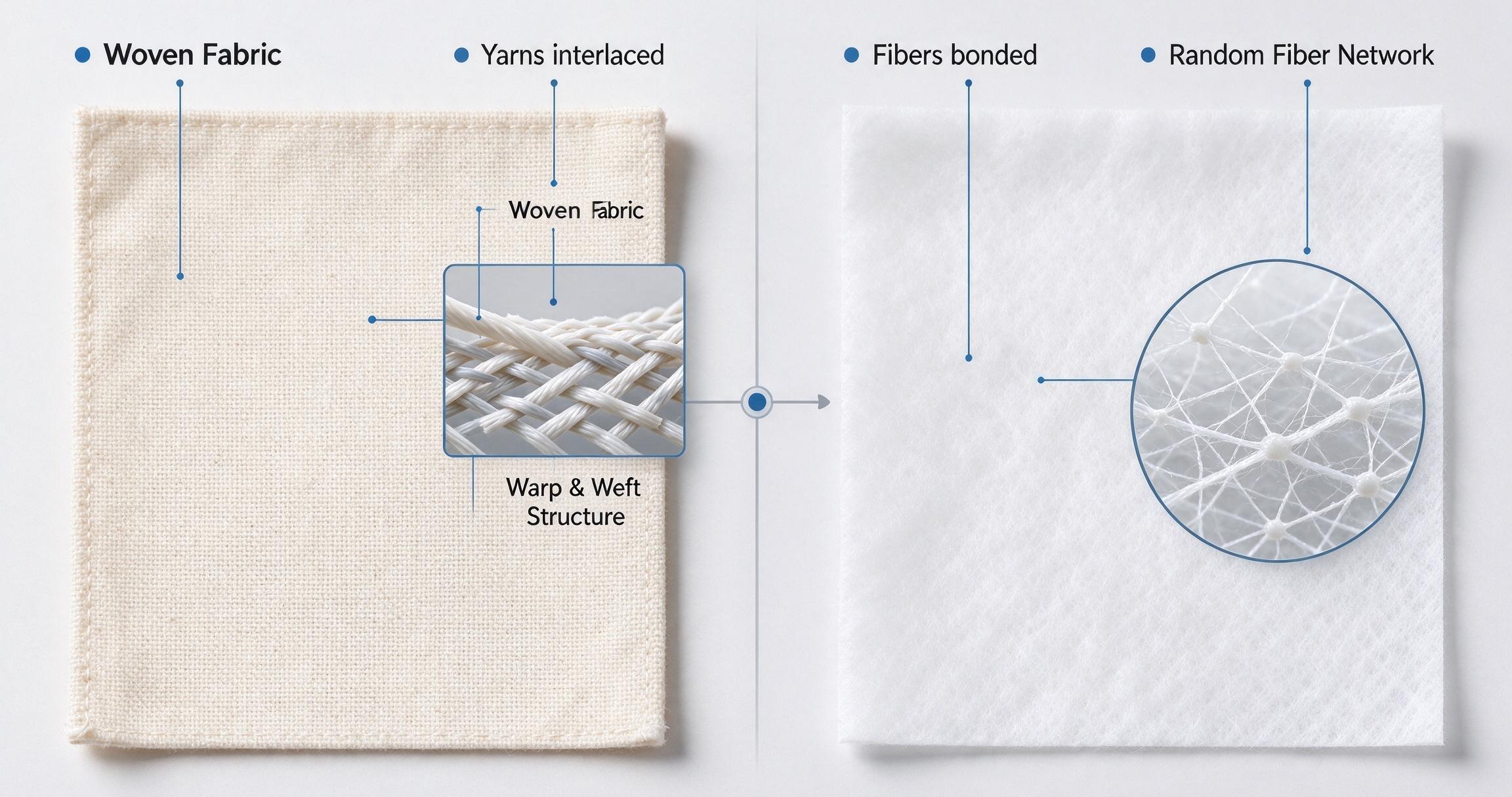
The biggest difference between woven and non-woven fabric comes from their structure.
| Feature |
Woven Fabric |
Non-Woven Fabric |
| Manufacturing method |
Yarns are woven together |
Fibers are bonded together |
| Fiber arrangement |
Organized warp and weft structure |
Random fiber network |
| Surface appearance |
Textile-like texture |
Smooth or felt-like texture |
| Structure |
More stable and firm |
Softer and more flexible |
| Production process |
More traditional textile process |
Faster manufacturing process |
| Common materials |
Cotton, polyester, canvas, PP woven |
PP, PET, RPET, PLA |
| Typical applications |
Durable bags, clothing, textiles |
Promotional bags, packaging, disposable products |
In simple terms:
Woven fabric = threads are built together.
Non-woven fabric = fibers are bonded together.
This structural difference affects almost every aspect of the final product.
For bag buyers, choosing between woven and non-woven fabric is not simply a material decision.
It directly affects:
- How much weight the bag can carry
- How long the bag can be reused
- How the bag feels in customers’ hands
- How the logo appears after printing
- Production cost and MOQ
- Whether the product matches the brand positioning
For example:
A luxury retail brand may prefer a structured woven canvas tote because customers associate the heavier texture with premium quality.
A company ordering thousands of promotional bags for an event may choose non-woven fabric because it provides better cost control and easy customization.
Neither material is universally better.
The correct choice depends on the intended use.
Woven vs. Non-Woven Fabric: Which One Is Stronger?
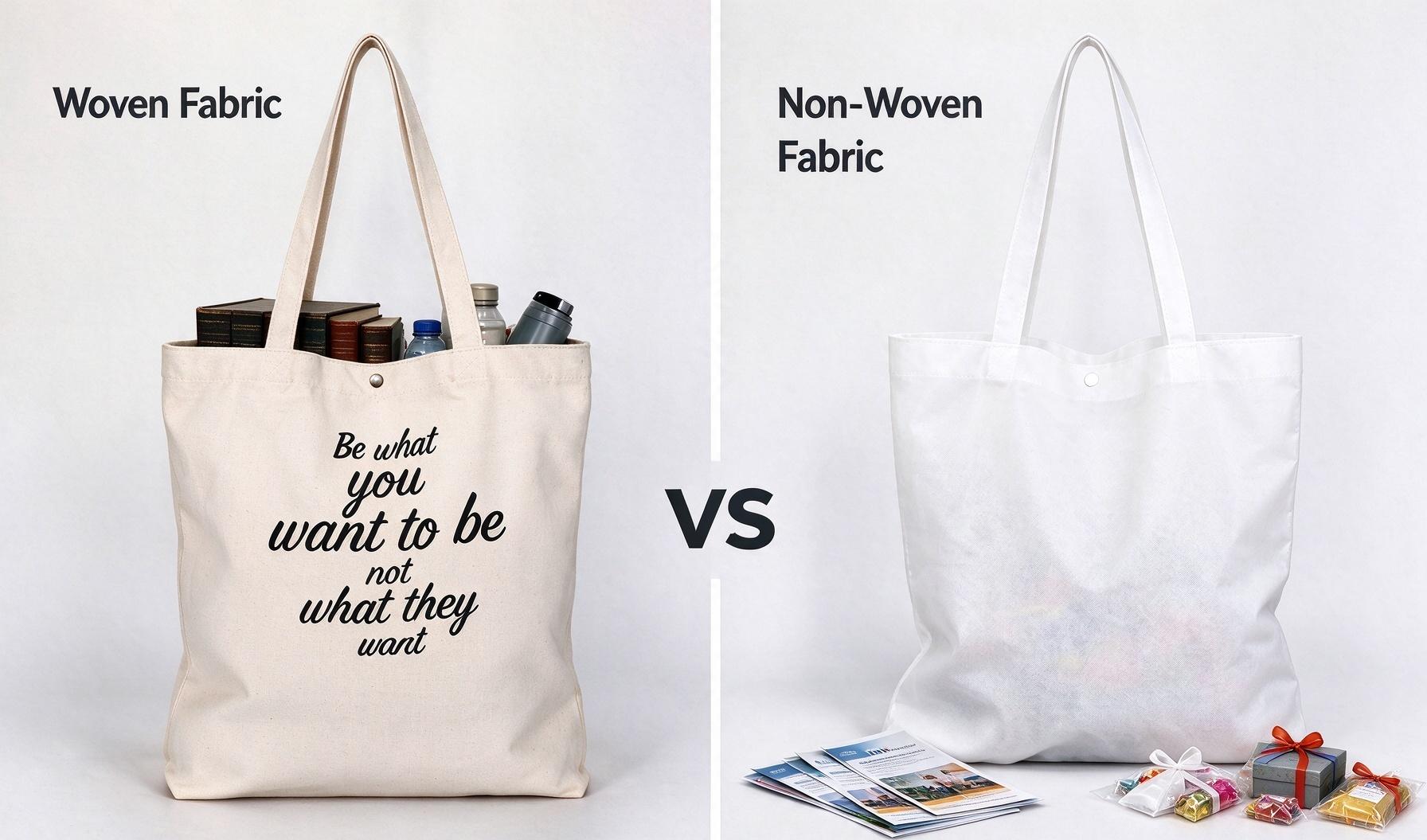
One of the most common questions from buyers is:
“Is woven fabric stronger than non-woven fabric?”
The simple answer is usually yes, but the real answer depends on the fabric specification, thickness, construction, and intended application.
Strength is not determined by the fabric name alone.
For example:
- A lightweight woven fabric may not outperform a heavy non-woven fabric in every situation.
- A high GSM non-woven bag can be surprisingly durable for promotional and retail applications.
- A well-designed woven bag with reinforced handles can carry significantly heavier loads.
The key difference is how each structure handles stress.
Woven fabric has an organized yarn structure. The interlocking warp and weft yarns create a stable framework that distributes pulling force across the fabric.
This makes woven materials suitable for:
- Heavy shopping bags
- Long-term reusable totes
- Industrial packaging
- Products requiring repeated carrying
Non-woven fabric relies on bonded fibers instead of interwoven yarns.
The fiber network provides good flexibility and lightweight performance, but repeated heavy stress may eventually affect the bonding points.
This is why non-woven fabric is commonly selected for:
- Promotional bags
- Trade show giveaways
- Retail packaging
- Lightweight reusable bags
For buyers, the better question is not:
“Which fabric is stronger?”
Instead ask:
“How much strength does my application actually require?”
The Role of GSM: Why Fabric Weight Matters
When comparing woven and non-woven fabrics, buyers often see a specification called GSM.
GSM means:
Grams per Square Meter
It indicates the weight of the fabric.
Generally:
- Higher GSM = thicker and heavier fabric
- Lower GSM = lighter and more economical fabric
However, GSM should not be used as the only measurement when comparing woven and non-woven materials.
A 100 GSM woven fabric and a 100 GSM non-woven fabric do not necessarily perform the same way.
Their structures are different.
A woven fabric uses connected yarns that provide directional strength.
A non-woven fabric uses bonded fibers, where strength depends on fiber density and bonding quality.
Lower GSM Non-Woven Fabric
Common uses:
- Promotional giveaway bags
- Event bags
- Lightweight shopping bags
Advantages:
- Lower cost
- Lightweight
- Easy transportation
- Suitable for large quantities
Medium GSM Non-Woven Fabric
Common uses:
- Retail shopping bags
- Corporate gift bags
- Reusable packaging
Advantages:
- Better structure
- Improved durability
- More premium hand feel
Higher GSM Non-Woven Fabric
Common uses:
- More durable reusable bags
- Premium promotional products
Advantages:
- Stronger body structure
- Better load capacity
For woven fabrics, thickness, yarn density, and weave construction often influence performance more than GSM alone.
Texture and Appearance: How Do They Feel Different?
For many brands, the appearance of the bag is just as important as performance.
Fabric texture affects how customers perceive product quality.
Woven Fabric Appearance
Woven fabric usually has a more traditional textile appearance.
Depending on the material, it can look:
- Natural
- Premium
- Structured
- Durable
- Fashion-oriented
For example:
Canvas woven fabric has a strong textile feeling that is often associated with quality and long-term use.
Cotton woven fabric gives a softer and more natural appearance.
Oxford woven fabric provides a structured and technical look.
This makes woven fabrics popular for:
- Lifestyle brands
- Retail stores
- Premium promotional gifts
- Fashion packaging
Non-Woven Fabric Appearance
Non-woven fabric has a smoother and more uniform surface.
It usually feels:
- Lightweight
- Soft
- Flexible
- Simple and practical
Because the surface is relatively even, it is widely used for products where branding and cost efficiency are important.
Typical applications include:
- Exhibition bags
- Conference bags
- Promotional tote bags
- Shopping bags
For large campaigns where thousands of bags are distributed, non-woven fabric provides an effective balance between appearance and budget.
Printing and Customization: Which Fabric Is Better for Branding?
For promotional and retail buyers, printing performance is often a key consideration.
A bag is not only a functional product.
It is also a moving advertising space.
Both woven and non-woven fabrics can be customized, but their surfaces behave differently.
Printing on Woven Fabric
Woven fabric has a structured surface.
The final printing result depends on:
- Fabric type
- Weave density
- Surface treatment
- Printing method
Common printing methods include:
- Screen printing
- Heat transfer printing
- Embroidery
- Digital printing
Advantages:
- Premium appearance
- Suitable for long-term branding
- Works well with natural textile styles
For example, a canvas tote with a simple logo can create a strong premium impression without complicated decoration.
Printing on Non-Woven Fabric
Non-woven fabric generally has a smoother surface.
Advantages:
- Good color visibility
- Suitable for large logo printing
- Cost-effective for bulk customization
Common printing methods include:
- Screen printing
- Flexographic printing
- Heat transfer printing
For event bags and promotional campaigns, non-woven fabric is often chosen because manufacturers can produce large quantities with consistent branding results.
Water Resistance: Are Woven or Non-Woven Fabrics Waterproof?
Another common misunderstanding is that fabric type automatically determines water resistance.
Neither woven nor non-woven fabric is naturally waterproof.
Their water resistance depends on:
- Material composition
- Surface treatment
- Coating
- Lamination
For example:
Woven Fabric
Some synthetic woven fabrics, such as polyester or polypropylene woven materials, naturally resist moisture better than some natural fibers.
Additional treatments can improve performance:
- PU coating
- PVC coating
- Lamination
Non-Woven Fabric
PP non-woven fabric has some natural moisture resistance because polypropylene absorbs very little water.
However, it is not completely waterproof.
For stronger protection, manufacturers may add:
- BOPP lamination
- Film coating
- Water-resistant finishing
For buyers selecting bags for outdoor events, grocery use, or product packaging, it is important to discuss the actual environment rather than simply asking whether the fabric is waterproof.
Cost Comparison: Woven vs. Non-Woven Fabric
Cost is one of the biggest reasons businesses choose one fabric over another.
However, the lowest unit price is not always the most economical option.
The correct choice depends on:
- Quantity
- Expected lifespan
- Brand positioning
- Product usage
Why Non-Woven Fabric Is More Cost-Effective
Non-woven fabric generally has lower production costs because:
- The manufacturing process is faster
- Fiber bonding eliminates traditional weaving steps
- Large-scale production is efficient
This makes it ideal for:
- Large promotional campaigns
- Trade shows
- Corporate giveaways
- Retail packaging
When a company needs 10,000 or 50,000 bags, non-woven fabric can significantly reduce the total project cost.
Why Woven Fabric Costs More
Woven fabrics usually involve:
- More complex textile production
- More material preparation
- Longer manufacturing processes
The higher cost reflects:
- Better structure
- Higher durability
- Premium appearance
For brands that want customers to keep and reuse the bag for a long time, the additional investment can create more long-term brand exposure.
Environmental Considerations: Is Woven or Non-Woven Fabric More Sustainable?
Sustainability is becoming increasingly important for brands and procurement teams.
However, choosing the more sustainable fabric is not simply about woven versus non-woven.
Several factors should be considered:
- Material source
- Production process
- Product lifespan
- Recyclability
- Actual reuse frequency
Woven Fabric Sustainability
The biggest advantage of woven fabric is durability.
A stronger bag that is used repeatedly may reduce the need for replacement products.
Examples:
- Canvas tote bags
- Cotton bags
- Reusable woven shopping bags
These products are often designed for long-term use.
Non-Woven Fabric Sustainability
Non-woven fabric can also support sustainable packaging solutions.
Advantages include:
- Lightweight transportation
- Efficient production
- Recyclable material options such as PP and RPET
For short-term promotional campaigns, non-woven bags can reduce dependence on disposable plastic bags.
However, buyers should consider whether the bag’s expected lifespan matches the intended environmental goal.
A reusable bag only creates environmental value when customers actually reuse it.
There is no universal answer to whether woven or non-woven fabric is better.
The right choice depends on:
- Product purpose
- Expected lifespan
- Target customer
- Budget requirements
- Brand positioning
- Quantity ordered
For bag buyers, the decision becomes much easier when looking at real application scenarios.
1. For Promotional Bags: Is Non-Woven Fabric a Better Choice?
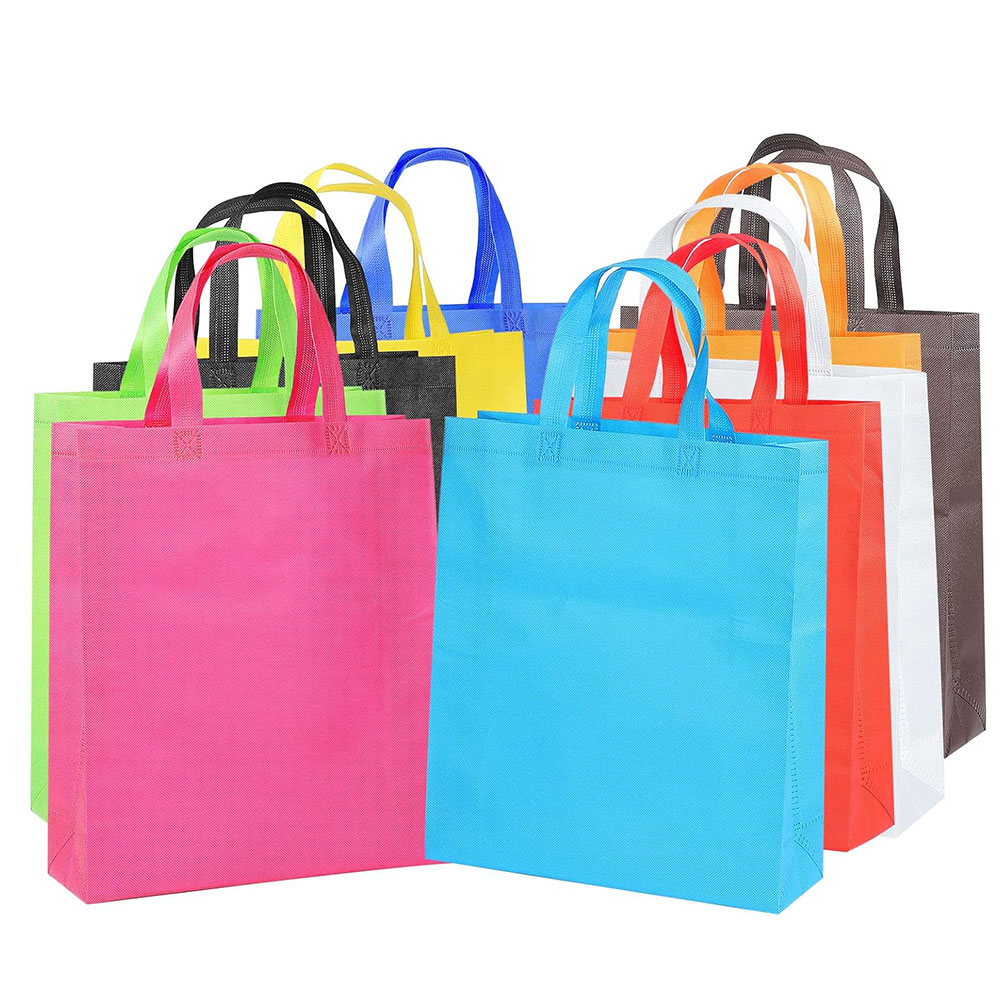
For promotional campaigns, events, exhibitions, and corporate giveaways, non-woven fabric is often the preferred option.
The reason is simple:
Promotional bags usually need to achieve three goals:
- Keep the cost under control
- Allow clear brand printing
- Support large-volume production
Non-woven fabric performs well in these areas.
Advantages include:
Cost Efficiency
For campaigns involving thousands of bags, material cost is an important factor.
Non-woven fabric can provide a practical solution without significantly increasing the project budget.
Typical applications:
- Trade show bags
- Conference tote bags
- School event bags
- Marketing giveaway bags
Lightweight for Transportation
Large promotional orders often involve international shipping.
Because non-woven fabric is lightweight, it helps reduce:
- Shipping volume
- Storage requirements
- Transportation costs
This is especially useful for companies distributing bags at large-scale events.
Easy Branding
Non-woven bags provide a relatively smooth printing surface.
They are commonly customized with:
- Company logos
- Event names
- Campaign graphics
- Brand messages
For short-term marketing campaigns, non-woven fabric provides a good balance between appearance and cost.
2. For Retail Shopping Bags: Woven or Non-Woven?
Retail shopping bags require a different consideration.
A retailer needs to think about:
- Customer experience
- Reuse frequency
- Brand perception
If the goal is simply replacing disposable plastic bags at a low cost, non-woven fabric can be suitable.
However, if the bag itself is part of the brand experience, woven fabric often provides stronger value.
Non-Woven Retail Bags
Suitable for:
- Supermarket promotions
- Seasonal shopping campaigns
- Large-volume retail distribution
Benefits:
- Affordable
- Lightweight
- Easy to customize
- Suitable for bulk orders
Woven Retail Bags
Suitable for:
- Boutique stores
- Lifestyle brands
- Premium retailers
Benefits:
- Better hand feel
- More structured appearance
- Higher perceived value
- Longer product lifespan
A well-made woven tote bag can become a reusable product customers continue using long after the original purchase.
For brands that want continuous exposure, durability can become part of the marketing strategy.
3. For Custom Tote Bags: Which Fabric Works Better?

Custom tote bags are one of the most common applications where buyers compare woven and non-woven materials.
The answer depends on the positioning of the tote bag.
Everyday Promotional Tote Bags
Recommended:
Non-woven fabric
Why:
- Lower production cost
- Suitable for large quantities
- Simple logo printing
- Lightweight
Common buyers:
- Corporations
- Universities
- Events organizers
- Advertising companies
Premium Reusable Tote Bags
Recommended:
Woven fabric
Examples:
- Canvas
- Cotton
- Polyester woven materials
Why:
- Stronger structure
- Better durability
- More premium appearance
- Better customer perception
Common buyers:
- Fashion brands
- Retail stores
- Gift companies
- Lifestyle companies
4. For Packaging Bags: Which Material Should Buyers Select?
Packaging applications require a balance between appearance, protection, and cost.
For example:
A company selling luxury products may need packaging that communicates quality.
A company distributing promotional products may prioritize affordability.
Non-Woven Packaging Bags
Common applications:
- Gift packaging
- Product wrapping bags
- Promotional packaging
Advantages:
- Economical
- Lightweight
- Easy to customize
- Suitable for large production runs
Woven Packaging Bags
Common applications:
- Premium product packaging
- Reusable packaging solutions
- Brand merchandise bags
Advantages:
- Stronger structure
- Higher perceived value
- Better long-term usability
How Should Buyers Evaluate Fabric Before Ordering?
Many sourcing problems happen because buyers only compare price.
A better approach is evaluating the complete product requirement.
Before choosing woven or non-woven fabric, consider the following factors:
1. Intended Usage
Ask:
- Is the bag used once or repeatedly?
- Will customers carry heavy items?
- Is the bag part of the product experience?
Examples:
A conference giveaway bag does not require the same durability as a retail shopping tote.
2. Expected Lifespan
A useful question:
How long should this bag realistically last?
Short-term use:
→ Non-woven fabric may be sufficient.
Long-term reuse:
→ Woven fabric is usually a better choice.
3. Brand Positioning
Material affects how customers perceive a product.
A lightweight non-woven bag communicates:
- Practicality
- Affordability
- Convenience
A structured woven bag communicates:
- Quality
- Durability
- Premium positioning
4. Order Quantity
Large-volume orders often benefit from non-woven materials.
Smaller premium projects may justify woven fabrics because the focus is more on quality than minimum cost.
Common Mistakes Buyers Make When Choosing Fabric
Mistake 1: Choosing Based Only on Price
The cheapest material may not always create the lowest total cost.
If a bag fails quickly, it can affect:
- Customer satisfaction
- Brand reputation
- Replacement costs
Mistake 2: Ignoring Fabric Thickness
Simply saying “non-woven bag” is not enough.
Buyers should confirm:
- GSM
- Material composition
- Lamination requirements
- Handle construction
Different specifications can create very different results.
Mistake 3: Treating All Woven Fabrics as the Same
Woven fabrics vary significantly.
For example:
Canvas and polyester woven fabric have different:
- Texture
- Strength
- Appearance
- Cost
The final product depends on selecting the right woven material.
Mistake 4: Not Considering the Complete Bag Construction
Fabric is important, but it is only one part of the final product.
A durable bag also depends on:
- Stitching quality
- Handle reinforcement
- Seam construction
- Printing method
- Accessories
A high-quality fabric cannot compensate for poor manufacturing.
FAQ
Is woven fabric better than non-woven fabric?
Neither fabric is universally better.Woven fabric is generally stronger, more durable, and better suited for long-term reusable products.Non-woven fabric is lightweight, affordable, and suitable for large-volume promotional and packaging applications.The best choice depends on the product purpose.
Is non-woven fabric waterproof?
Non-woven fabric is usually water-resistant rather than completely waterproof.Polypropylene non-woven fabric absorbs very little moisture, but water can still pass through depending on the structure.Additional coatings or laminations can improve water resistance.
Which fabric is cheaper, woven or non-woven?
Non-woven fabric is generally more cost-effective because its production process is faster and requires fewer manufacturing steps.Woven fabric usually costs more because of the additional textile production processes.
Can woven and non-woven fabrics both be customized?
Yes.Both materials can be customized with:Logo printing、Color selection、Size customization、Handle options、Additional features
The suitable customization method depends on the fabric structure.
Which fabric is more environmentally friendly?
A durable woven bag used many times may reduce replacement needs, while recyclable non-woven materials can also provide sustainable packaging solutions.
The most sustainable option is usually the one that matches the intended use and is actually reused.
Conclusion
Woven and non-woven fabrics serve different purposes.
Woven fabric is built from interlaced yarns, creating a strong and structured material suitable for durable, reusable products.Non-woven fabric is made by bonding fibers together, providing a lightweight and economical solution for promotional bags, packaging, and high-volume applications.
For buyers, the best choice depends on understanding the relationship between material structure and product requirements.
If you need a cost-effective solution for large promotional orders, non-woven fabric may be the right option.
If you want a durable reusable bag that strengthens brand value over time, woven fabric may provide better long-term performance.
A successful custom bag project starts with selecting the right material for the right purpose.At INITI, we work with buyers to evaluate fabric options based on the actual application rather than simply recommending the most expensive material.
Related Products



 Hot News