Choosing the best material for reusable bags is not as simple as picking cotton because it is natural or choosing recycled polyester because it contains recycled plastic. The right material depends on how the bag will be used, how frequently it will be reused, what it needs to carry, how it will be branded, and how much buyers are willing to invest in each unit.
For a supermarket, a reusable shopping bag must withstand repeated loading and unloading. For a fashion retailer, the bag may need a refined appearance and a smooth surface for branding. A promotional merchandise company may prioritize affordable bulk production, while a private-label brand may look for a combination of durability, distinctive design, and documented environmental attributes.
These different requirements explain why no single material is the best choice for every reusable bag.
Cotton, canvas, jute, polypropylene, polyester, recycled PET, and laminated fabrics all offer different combinations of strength, appearance, cost, maintenance, and environmental considerations. Understanding these differences helps buyers select a bag that customers will actually use rather than one that looks attractive but quickly becomes inconvenient or damaged.
This guide compares the most common reusable bag materials, explains their practical advantages and limitations, and provides a purchasing framework for businesses developing custom reusable bags for retail, grocery shopping, promotional campaigns, and private-label collections.
What Makes a Material Suitable for Reusable Bags?
Before comparing individual materials, it is important to define what makes a reusable bag successful.
A bag is not genuinely practical simply because its fabric is thick or its raw material is marketed as environmentally friendly. Its performance depends on the relationship between the material, the bag's construction, its intended application, and the way customers use it.
1. Durability Across Repeated Use
A reusable bag needs to withstand more than one shopping trip. Repeated loading, friction against other objects, folding, cleaning, and pulling on the handles gradually place stress on the material and seams.
However, durability is not determined by fabric weight alone. A tightly woven lightweight fabric may perform well in a compact shopping bag, while a heavy fabric with weak stitching may fail at the handles.
Buyers should evaluate:
- Resistance to tearing and abrasion during normal use.
- The ability to maintain shape when carrying the intended load.
- Seam strength and handle attachment.
- Resistance to stretching, fraying, or surface damage.
- Performance after repeated folding and cleaning.
The relevant question is not simply whether a material is strong, but whether it remains functional under the conditions the finished bag will encounter.
2. Weight, Portability, and Storage
Reusable bags are more likely to become part of a customer's routine when they are convenient to carry.
A compact polyester or nylon bag may fit into a handbag, backpack, or car storage compartment. A cotton tote offers a familiar fabric feel, while a heavyweight canvas bag provides a more substantial structure but occupies more space.
The right balance depends on the application.
For example, customers buying groceries on foot may appreciate a bag that folds into a small package. A retailer selling premium home goods may prefer a structured bag that maintains its shape and presents products neatly.
Portability also affects how many bags customers can conveniently keep available. A material that is technically durable but too bulky for the intended use may reduce the likelihood of repeated use.
3. Resistance to Water, Dirt, and Stains
Reusable bags encounter different environments depending on their purpose.
A grocery bag may come into contact with condensation, damp produce, or minor spills. A retail shopping bag may remain relatively clean but need to maintain an attractive appearance. A promotional bag used outdoors may encounter rain, dust, or accidental contact with wet surfaces.
Natural fibers generally absorb moisture more readily than many synthetic fabrics. Polyester and polypropylene tend to offer better moisture resistance, although their actual performance depends on fabric construction and any additional coating.
It is also important to distinguish between water-resistant fabric and a waterproof finished bag. Seams, zippers, stitching holes, and uncoated sections may allow water to enter even when the main fabric repels it.
Buyers should therefore specify the required level of protection rather than relying on the material name alone.
4. Branding and Visual Presentation
For businesses, a reusable bag is often both a carrying product and a branding tool.
The material influences how a logo appears, how accurately colors reproduce, and whether the finished product communicates the intended brand position.
Cotton and canvas provide a familiar textile appearance and can work well with screen printing, embroidery, and other suitable decoration methods. Polyester supports a variety of printing approaches, including sublimation on compatible fabrics. Polypropylene can be decorated using methods appropriate to its surface, while laminated materials can provide a smooth area for detailed graphics.
A material that works well for a simple one-color logo may not be the best choice for a design containing fine lines, gradients, or full-color imagery.
Before production, buyers should evaluate the actual combination of fabric, ink, printing process, artwork, and expected use.
5. Environmental Performance Over the Bag's Lifetime
Environmental performance is more complicated than deciding whether a material is natural, recycled, or synthetic.
The production of fibers, fabric processing, dyeing, transportation, cleaning, product lifespan, and end-of-life disposal can all influence a bag's overall impact.
A cotton bag uses a renewable plant-based fiber, but cotton cultivation and processing require resources. A recycled polyester bag can make use of recovered plastic, but it remains a synthetic textile. A polypropylene bag may be lightweight and economical, yet its environmental value depends partly on how long it is used and whether suitable recovery options exist.
The number of times a bag is reused also matters. A reusable bag that is purchased but rarely used may not deliver the expected environmental benefit.
For buyers, the more useful questions are:
- How long is the bag expected to remain functional?
- Will customers use it regularly?
- Can it be cleaned and maintained appropriately?
- Does the material contain verified recycled or certified content?
- What disposal or recycling options are realistically available?
Environmental claims should reflect documented material properties and actual product characteristics, not assumptions based on appearance.
Comparing the Main Materials for Reusable Bags
Different materials serve different markets. The following comparison provides an initial screening tool before buyers evaluate specific fabric grades and bag constructions.
| Material |
Main advantages |
Main limitations |
Suitable applications |
| Cotton |
Soft, familiar, printable, made from natural fibers |
Absorbs moisture, may shrink, requires careful environmental assessment |
Everyday shopping, retail, promotions |
| Cotton canvas |
Structured appearance, substantial feel, suitable for repeated use |
Heavier and bulkier than lightweight alternatives |
Premium retail, branded shopping bags |
| Jute |
Distinctive natural texture, rustic appearance, renewable plant fiber |
Coarse surface, limited fine-detail printing, moisture sensitivity |
Grocery, gift packaging, natural-style retail |
| Non-woven polypropylene |
Lightweight, economical, suitable for large promotional orders |
Less textile-like appearance, construction-dependent lifespan |
Events, retail promotions, shopping bags |
| Woven polypropylene |
Practical, relatively strong, suitable for repeated utility use |
More utilitarian appearance, limited fine-detail decoration on some constructions |
Grocery, wholesale retail |
| Polyester |
Lightweight, versatile, quick-drying, easy to fold |
Synthetic origin, may retain odors or show wear depending on construction |
Foldable shopping bags, daily carry |
| Recycled PET (rPET) |
Uses recycled PET feedstock, versatile, available in different constructions |
Recycled content must be verified; not automatically recyclable everywhere |
Brand merchandise, retail, promotional bags |
| Nylon |
Lightweight, flexible, good tear resistance in suitable constructions |
Synthetic origin, potentially higher material cost |
Compact reusable bags, travel, outdoor use |
| Hemp |
Plant-based fiber, distinctive texture, potential durability |
Availability, price, and fabric consistency can vary |
Premium natural-fiber collections |
| Laminated fabrics |
Easier surface cleaning, more structure, can support vivid graphics |
Coating complicates material recovery and can crack or peel |
Grocery, retail, promotional bags requiring wipe-clean surfaces |
These are general material characteristics, not guarantees of finished-bag performance. Fabric grade, construction, seams, handles, coatings, and quality control can change the result significantly.
1. Cotton: A Versatile Choice for Everyday Reusable Bags
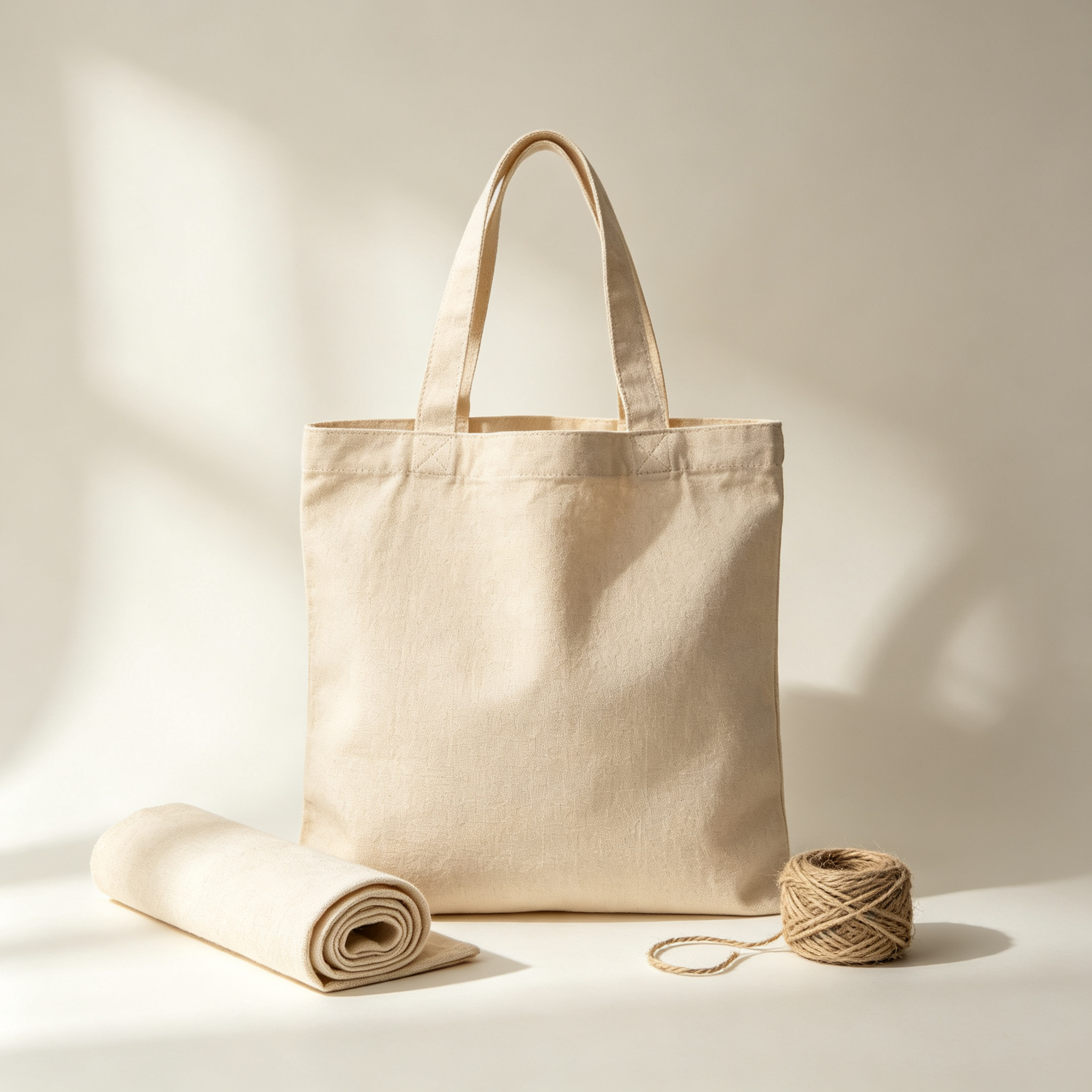
Cotton is widely used in reusable bags because it offers a familiar textile feel, a natural appearance, and broad customization possibilities.
It works particularly well for brands that want a bag to look like an everyday accessory rather than disposable packaging. Cotton can be produced in different fabric weights and finishes, allowing buyers to develop lightweight giveaways as well as more substantial retail bags.
What Cotton Does Well
Cotton fabric is generally comfortable to handle and can be suitable for repeated everyday use when the fabric and construction match the application.
Its relatively familiar surface makes it appropriate for many branding styles. Simple logos, text, and graphic designs can be applied using compatible printing processes. Cotton can also be sewn into different bag shapes, including flat shopping bags, drawstring bags, pouches, and gift bags.
Another advantage is its versatility in presentation. A lightweight cotton bag can suit a casual promotional campaign, while a better-finished cotton bag can support a more considered retail presentation.
Cotton is also available in conventional, organic, and recycled forms. These options should not be treated as interchangeable, because they involve different sourcing and documentation requirements.
What Buyers Should Consider
Cotton absorbs moisture and can become heavier when wet. Some cotton fabrics may shrink, wrinkle, or change appearance after washing, especially if the fabric has not been pre-treated or the finished bag is not cared for appropriately.
Lightweight cotton is also not automatically suitable for heavy shopping loads. A bag intended for repeated use needs appropriate fabric specifications, seam construction, and handle reinforcement.
For custom orders, buyers should confirm:
- The exact fabric type and weight.
- Whether the fabric is pre-shrunk or requires special care.
- The intended printing method and artwork limitations.
- The expected load and frequency of use.
- Whether recycled or organic content requires supporting documentation.
Best Applications
Cotton is a practical choice for reusable bags used in retail promotions, lifestyle merchandise, bookstores, conferences, and everyday shopping.
It is particularly useful when the brand wants a recognizable fabric appearance, a comfortable feel, and flexibility in product design.
However, conventional cotton should not automatically be described as the most sustainable option. Its environmental performance depends on how the fiber is produced, how the finished bag is used, and how long it remains in service.
2. Cotton Canvas: For a More Substantial, Structured Bag
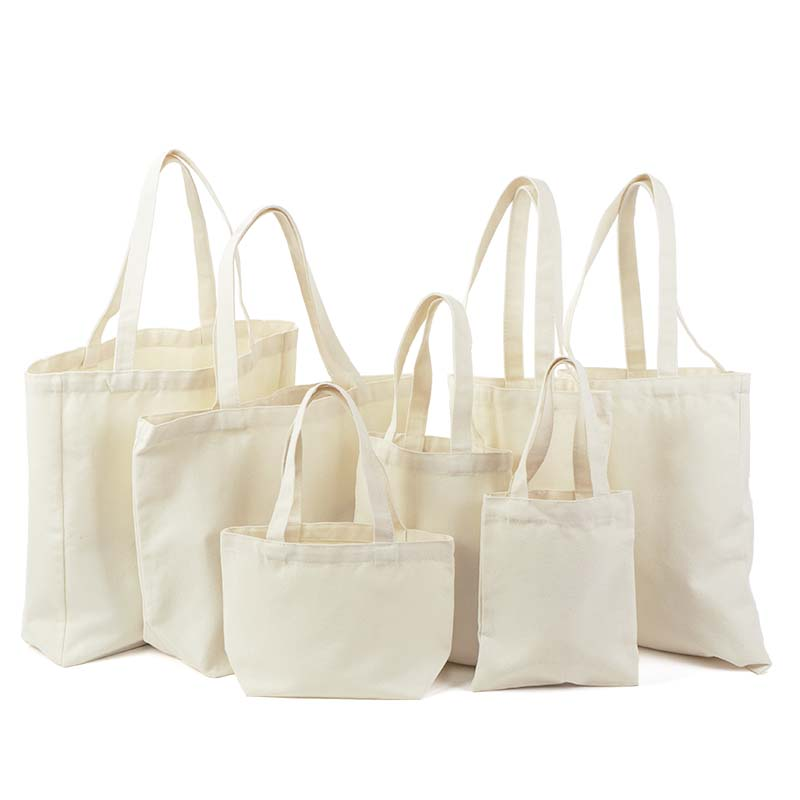
Cotton canvas is a woven cotton fabric commonly selected when a reusable bag needs more body and a stronger visual presence.
Compared with lightweight cotton, canvas generally offers a firmer hand and a more substantial appearance. It can help a bag retain its shape when carrying books, merchandise, or other everyday items.
Why Buyers Choose Canvas
Canvas is well suited to brands that expect their bags to remain in circulation for an extended period.
Its textile appearance works with casual, minimalist, and premium-inspired designs. Depending on the fabric and construction, canvas can support screen printing, embroidery, and other decoration techniques.
For retailers, canvas can make a reusable shopping bag feel like a product customers may continue using after the original purchase. For promotional merchandise buyers, it can provide a more substantial alternative to lightweight giveaway bags.
Limitations to Consider
Canvas is not always the most practical option.
Heavier canvas usually takes up more storage space and may cost more to manufacture and ship than lightweight alternatives. Cotton fibers can absorb moisture, and washing may affect the dimensions or appearance of an inadequately prepared fabric.
A thicker fabric also does not guarantee that the finished bag will carry a particular load. Handle attachment, stitching, bag dimensions, and the distribution of weight remain important.
Canvas should therefore be selected for the role it needs to perform, not simply because a heavier fabric appears more durable.
Best Applications
Canvas is particularly appropriate for branded retail merchandise, bookstores, gift shops, corporate merchandise, and reusable shopping bags positioned as long-term accessories.
3. Jute: A Distinctive Natural-Fiber Option
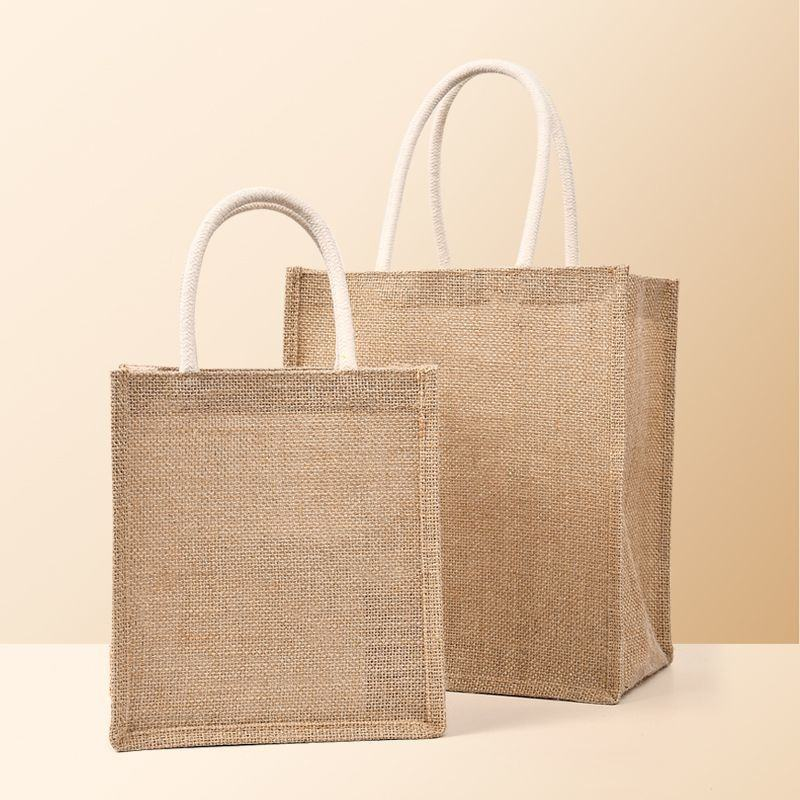
Jute is a plant-based fiber known for its coarse texture and recognizable natural appearance.
Unlike smooth cotton or synthetic fabrics, jute creates a visibly textured surface. This appearance can become part of a product's identity, especially for grocery retailers, food brands, gift packaging companies, and businesses developing rustic or natural-style merchandise.
Advantages of Jute
Jute bags can provide a distinctive look without relying on elaborate printing or decorative details.
The material is associated with traditional shopping bags and gift packaging, and its texture can help a product stand out in a retail setting.
Jute is also a renewable plant fiber. However, renewable origin alone does not establish the environmental impact of a finished bag; processing, coatings, construction, product lifespan, and disposal still matter.
Practical Limitations
Jute is generally coarser than cotton and may not be comfortable for every handle design or application. Its surface can also limit the reproduction of very fine printed details.
Moisture is another consideration. Untreated jute may absorb water, and prolonged damp storage can contribute to deterioration or unpleasant odors.
Some bags combine jute with other materials, use laminated surfaces, or add cotton handles. These design choices can improve usability, but they also change the product's material composition and end-of-life options.
Best Applications
Jute is suitable for grocery shopping, food-related gift sets, farm shops, specialty retailers, and packaging where a natural texture is part of the desired presentation.
It is less appropriate when buyers require a very smooth printing surface, frequent machine washing, or a compact bag that folds into a small pocket.
4. Non-Woven Polypropylene: A Cost-Conscious Promotional Option
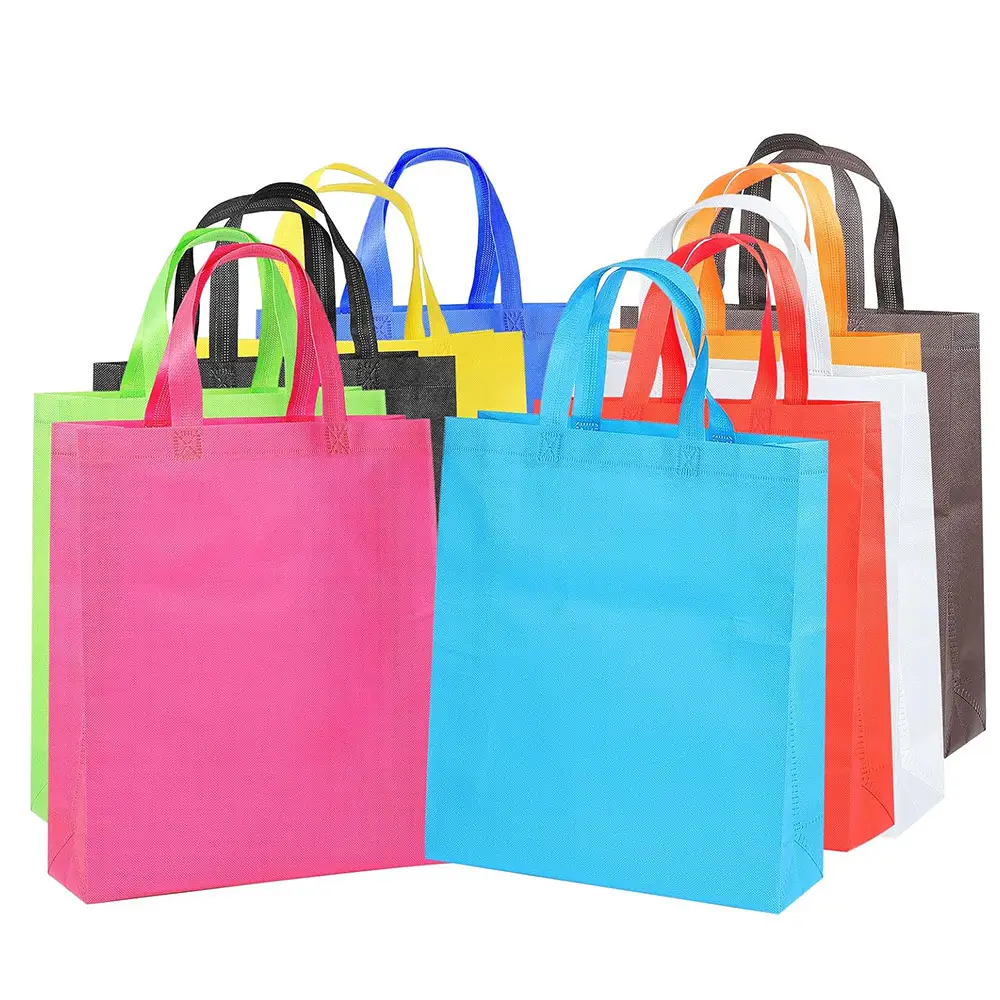
Non-woven polypropylene, commonly called non-woven PP, is made from polypropylene fibers bonded into a sheet-like fabric rather than formed through conventional weaving.
It is widely used in shopping bags and promotional merchandise because it can be economical to manufacture in volume.
Why It Works for Large Orders
Non-woven PP is lightweight and can be manufactured in different colors, shapes, and fabric weights.
For businesses distributing large numbers of bags at conferences, trade shows, retail promotions, or community events, its relatively low unit cost can make it a practical choice.
The material can also be combined with suitable printing or lamination processes to create branded products.
What Buyers Need to Check
Not all non-woven PP bags have the same expected lifespan.
A lightweight bag designed for occasional use should not be compared directly with a more substantial bag intended for repeated grocery shopping. Material weight, fiber bonding, stitching, handle construction, and any coating all influence performance.
Cleaning also requires consideration. Depending on the fabric and finish, wiping or gentle spot cleaning may be more appropriate than machine washing.
Non-woven PP is a plastic-based material. Although polypropylene can be recyclable in appropriate systems, a finished bag's actual recyclability depends on local collection infrastructure, product construction, and any added materials.
Best Applications
Non-woven PP is particularly suitable for high-volume promotional bags, retail giveaways, pharmacy bags, event merchandise, and budget-conscious shopping bags.
It is worth considering when quantity and unit price are central purchasing factors, provided the expected use matches the product's construction.
5. Woven Polypropylene: For Practical, Repeated Utility Use
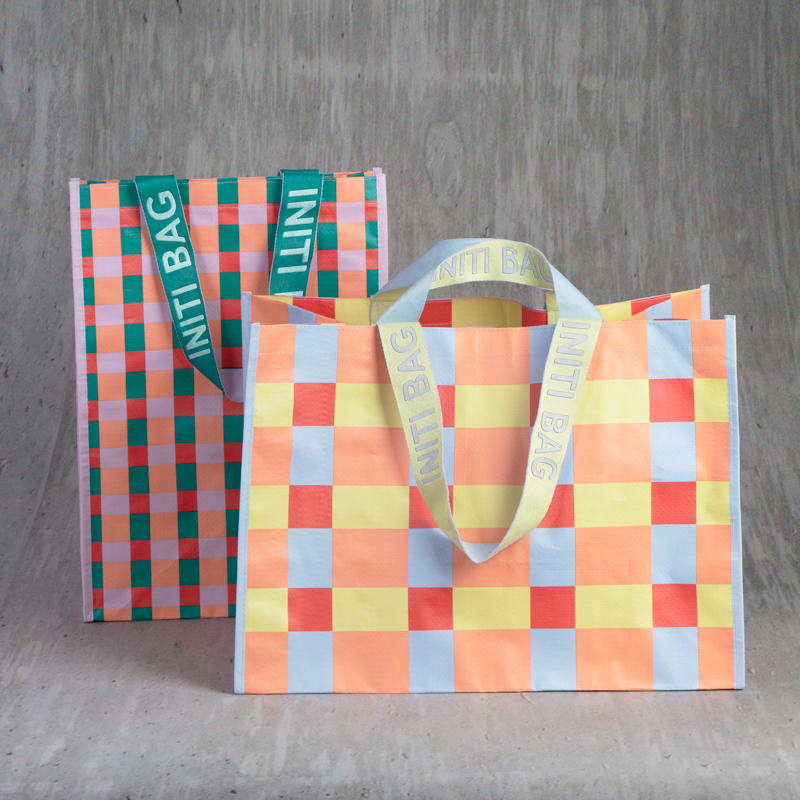
Woven polypropylene bags are constructed from polypropylene tapes or fibers woven together to create a fabric structure.
This construction differs from non-woven PP and can provide a practical combination of strength, surface coverage, and resistance to everyday handling.
Key Benefits
Woven PP is often used when a bag needs to handle frequent loading and unloading.
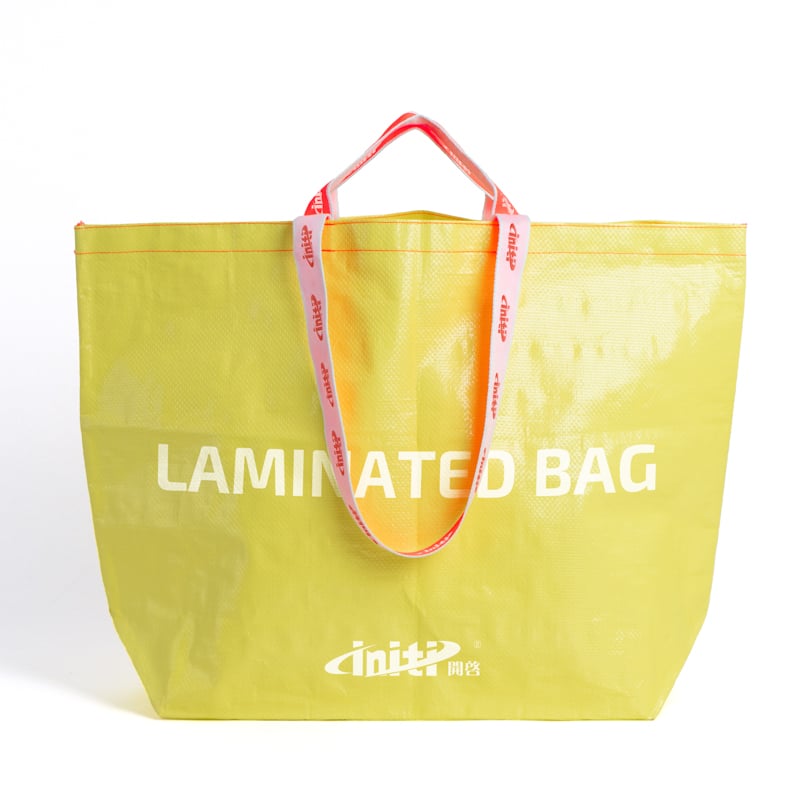
Depending on the construction, it can be suitable for carrying groceries, household supplies, and other goods. The fabric may also be laminated to provide a smoother surface and improve resistance to surface moisture.
Its practical appearance is often acceptable for utility-oriented shopping applications where function matters more than a soft, premium textile feel.
Limitations
Woven PP is not automatically waterproof or indestructible. Water can enter through seams or openings, and the finished bag may fail if handles or attachment points are poorly designed.
Lamination can make cleaning easier, but it adds another layer that may complicate recycling. Printing quality also depends on the surface finish and the selected decoration method.
Buyers should assess the complete bag rather than evaluating the woven material in isolation.
Best Applications
Woven PP is a strong candidate for grocery retail, wholesale shopping, utility bags, and applications requiring practical performance at scale.
For businesses that need a soft, foldable, lifestyle-oriented bag, polyester or cotton may provide a better fit.
6. Polyester: Lightweight and Adaptable for Everyday Carry
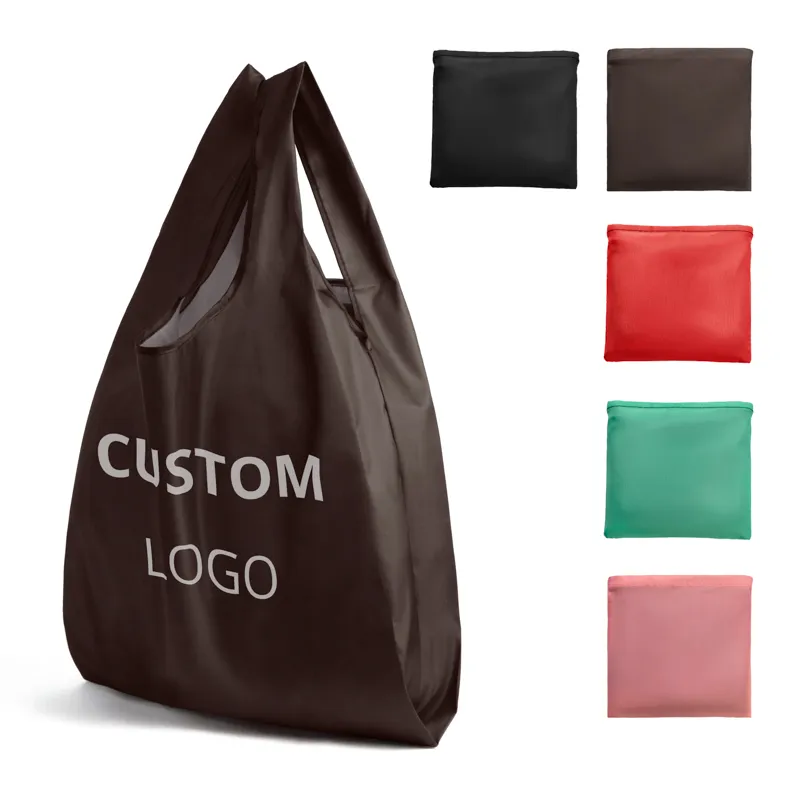
Polyester is a synthetic fiber used in a wide range of reusable bags, from foldable shopping bags to retail merchandise.
Its appeal comes from its versatility. It can be manufactured in lightweight fabrics, dyed in many colors, and designed for bags that need to fold compactly or dry relatively quickly.
Advantages of Polyester
Polyester generally absorbs less moisture than cotton and is often easier to maintain in applications where quick drying is useful.
Lightweight polyester bags can be folded into small pouches or compact shapes, making them convenient to keep in a handbag, backpack, car, or desk drawer.
The material is also available in different fabric constructions, finishes, and thicknesses. This allows buyers to choose between simple utility bags and products with a more polished appearance.
Limitations
Polyester remains a synthetic material, usually derived from petrochemical feedstocks unless recycled inputs are used.
Its environmental characteristics depend on the fiber source, production process, product lifespan, and end-of-life options. Polyester should not be marketed as sustainable merely because it lasts a long time or is lightweight.
The surface can also show abrasion, snagging, or printing wear depending on fabric quality and use. Not every polyester fabric supports every printing method.
Best Applications
Polyester is particularly suitable for foldable shopping bags, travel-oriented reusable bags, event merchandise, and lightweight everyday carry products.
For businesses that want a bag customers can easily keep available for unexpected purchases, portability can be a major advantage.
7. Recycled PET (rPET): A Recycled-Fiber Option for Branded Bags
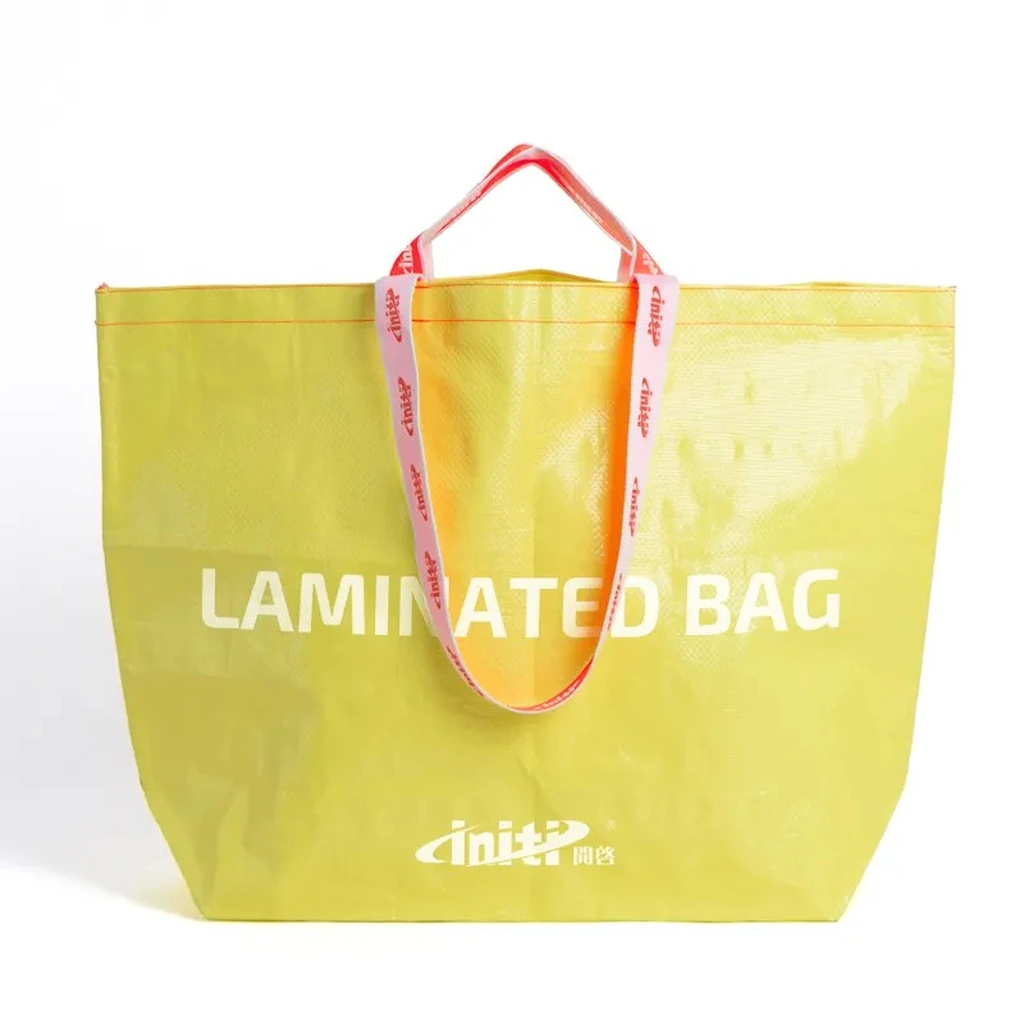
Recycled PET, often abbreviated as rPET, is made from recycled polyethylene terephthalate. PET is used in many beverage bottles and other packaging applications, and recovered PET can be processed into new fiber.
For brands that want to incorporate recycled feedstock into merchandise, rPET provides an option worth evaluating.
Why Brands Consider rPET
Recycled PET can be used in different textile constructions, including fabrics for shopping bags, promotional bags, and lightweight accessories.
Depending on the fabric, it can offer many of the practical characteristics associated with polyester, such as relatively low moisture absorption and adaptability to different designs.
The material can also support a more specific sourcing story when the recycled content is verified and the claim is accurately communicated.
Best Applications
rPET is worth considering for retail merchandise, corporate gifts, promotional campaigns, and private-label collections where documented recycled content is part of the product specification.
It is most useful when the recycled-content claim has a clear role in the product's positioning and can be supported with evidence.
8. Nylon: For Compact, Flexible Reusable Bags
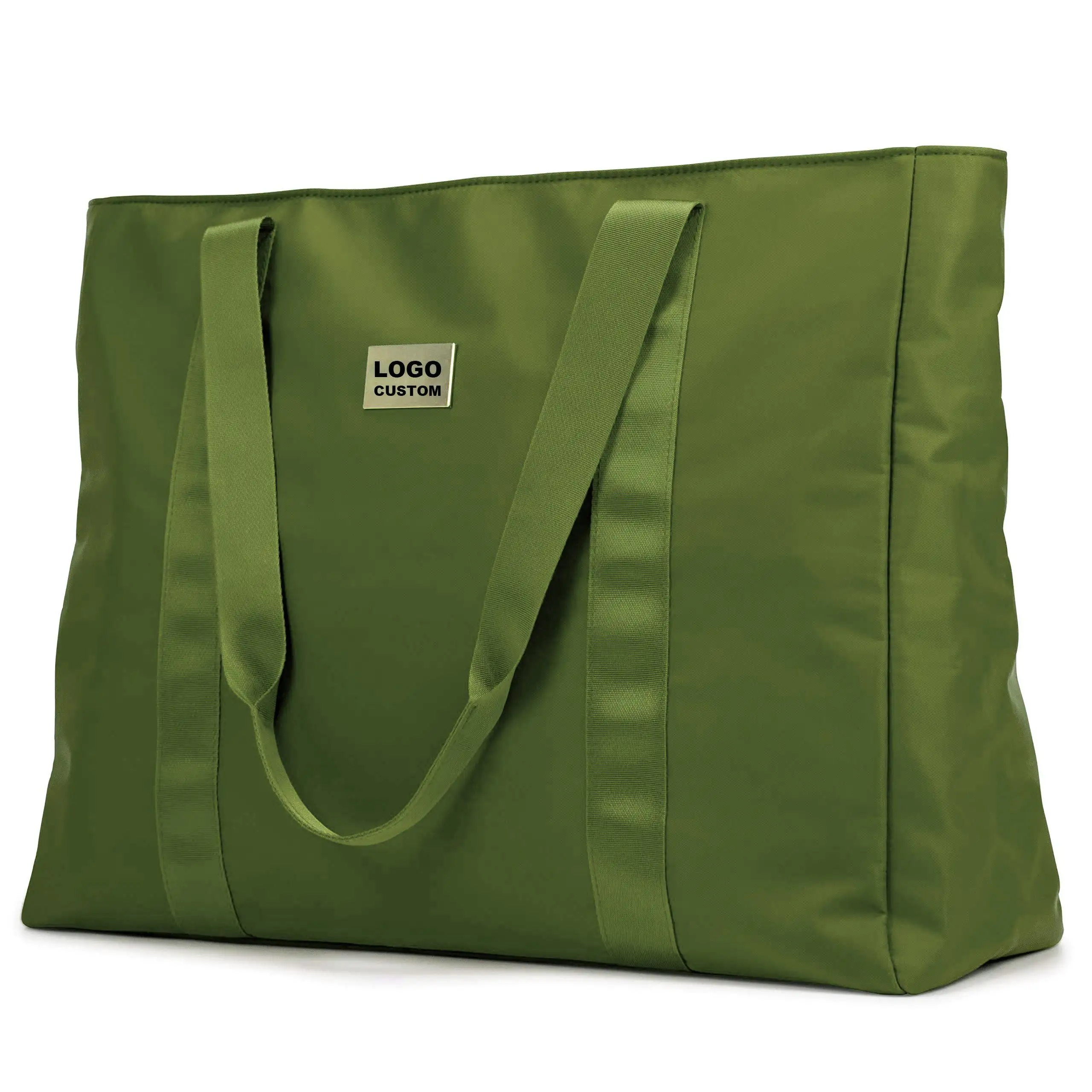
Nylon is another synthetic material used in reusable bags, especially products designed to be lightweight, flexible, and resistant to tearing.
It is often selected for applications where portability matters as much as carrying capacity.
Advantages
Nylon fabrics can be thin and flexible while offering good tear resistance when properly constructed.
This makes nylon useful for compact bags that fold into small pouches or are carried during travel and outdoor activities.
Depending on the fabric structure and finish, nylon bags may also offer useful resistance to everyday moisture.
Limitations
Nylon is generally more expensive than some basic promotional bag materials, although actual costs vary by specification and order quantity.
It is a synthetic polymer, and its production and disposal have environmental considerations. Buyers should also evaluate surface appearance, print compatibility, and the bag's intended exposure to abrasion or sunlight.
As with polyester, lightweight construction should not be mistaken for unlimited load capacity.
Best Applications
Nylon is a good candidate for compact shopping bags, travel merchandise, outdoor-oriented products, and reusable bags intended to remain in a small pouch until needed.
It may be unnecessary for simple retail packaging when the product does not require its particular combination of flexibility and tear resistance.
9. Hemp: A Natural-Fiber Alternative for Selected Collections
Hemp is a plant-based fiber used in textiles and other products. In reusable bags, it can provide a distinctive natural texture and an alternative to conventional cotton.
Some buyers consider hemp when developing products with a natural-material identity or a more distinctive fabric story.
Advantages
Hemp fabrics can be durable, and the fiber's texture may suit brands looking for a less conventional appearance.
Hemp cultivation can have different agricultural requirements from cotton, but its environmental advantages depend on local growing conditions, farming practices, processing, transport, and the specific product being compared.
Hemp can also be blended with other fibers to change the fabric's hand feel, appearance, and performance.
Limitations
Some hemp fabrics have a coarse feel, while others are blended or processed to create a smoother surface. Buyers should not assume that all hemp bags have the same texture or strength.
The material may also require additional sampling to establish whether the selected printing method and artwork produce the intended result.
Best Applications
Hemp may suit premium natural-fiber collections, lifestyle retail, specialty merchandise, and brands that want to explore alternatives to conventional cotton.
For a large promotional order with a strict budget, more widely available materials may be easier to source consistently.
10. Laminated Fabrics: When Surface Protection and Easy Cleaning Matter
Lamination is not a single fiber type. It is a finishing approach in which a base fabric receives an additional layer or coating.
The base may be polypropylene, recycled PET fabric, or another suitable material. The finish can change the bag's appearance, stiffness, moisture resistance, and cleaning requirements.
Benefits
A laminated surface can often be wiped clean more easily than an uncoated textile.
It can also help a bag maintain its shape and provide a smooth area for graphics. Gloss and matte finishes create different visual effects, allowing buyers to adapt the product to a brand's preferred presentation.
For grocery and retail bags that encounter frequent surface contact, these properties may be useful.
Trade-Offs
The additional layer changes the material composition of the finished product.
A laminated bag may be more difficult to recycle than a bag made from a single material, depending on the base fabric, coating, and available recycling infrastructure.
Repeated folding can also cause some coatings to crease, crack, or peel. These risks depend on the materials and manufacturing quality, so buyers should assess samples under realistic use conditions.
Best Applications
Laminated fabrics can work well for grocery bags, retail shopping bags, and promotional products that need a smooth printed surface or easier surface cleaning.
They are less appropriate when easy recycling of a single-material product is a primary requirement and the coating prevents suitable recovery.
Which Reusable Bag Material Is Best for Different Applications?
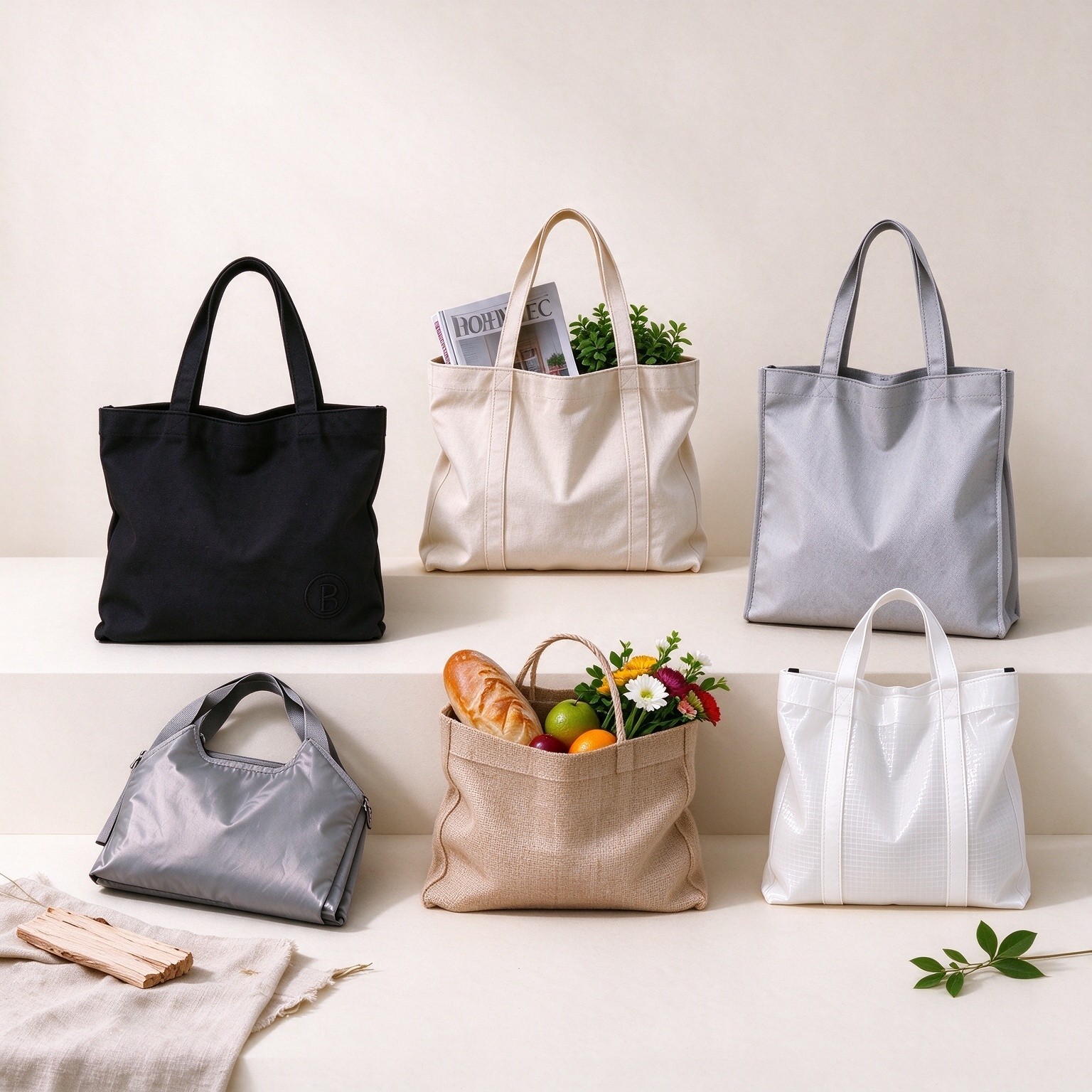
Material selection becomes easier when the intended application is defined before comparing fabrics.
A material that works well for a premium retail bag may be unnecessarily expensive for a one-day event. Conversely, a low-cost promotional bag may not deliver the desired customer experience when used as a long-term retail product.
The following recommendations provide a practical starting point.
Grocery Shopping Bags
For grocery shopping, buyers should prioritize reliable construction, convenient handling, and manageable cleaning requirements.
Woven polypropylene can be appropriate for utility-focused shopping bags. Cotton canvas may suit retailers looking for a more textile-oriented product, while polyester or rPET can work for foldable bags that customers keep available for shopping trips.
The right choice depends on the expected load, the frequency of use, the type of goods carried, and the desired retail position.
If the bag will carry damp produce or chilled products, buyers should also consider whether a wipe-clean surface or separate washable lining is needed.
Retail Shopping Bags
Retail shopping bags need to support both the practical task of carrying purchases and the brand's visual identity.
Cotton canvas is suitable for brands seeking a substantial textile appearance. Lightweight cotton may work for casual merchandise, while polyester and rPET can support certain lightweight or foldable designs.
Jute may suit natural-style retail packaging, particularly when its texture complements the products being sold.
For retail use, buyers should consider whether the bag is intended to be disposable-style packaging, a reusable accessory sold with a product, or a branded item expected to remain in circulation for months or years. That distinction changes how much investment in material and construction makes sense.
Promotional and Event Bags
Promotional bags are often ordered in large quantities, making unit cost and production consistency important.
Non-woven PP is a common choice when the budget is tight and the bag is intended for event distribution. Lightweight cotton may suit brands that want a softer textile appearance, while polyester can be useful when compact storage is important.
For higher-value campaigns, canvas or a well-specified rPET fabric may better match the brand's positioning.
The decision should account for what recipients are likely to do with the bag after the event. A design that is easy to fold, comfortable to carry, and suitable for everyday use has a better chance of remaining useful.
Private-Label and Premium Merchandise
Private-label brands generally have more reasons to consider the complete product experience.
The fabric should match the intended retail price, logo application, product dimensions, handle design, and expected lifespan.
Canvas may support a substantial, familiar textile appearance. Polyester can provide flexibility in weight and color. Hemp or selected cotton fabrics may help establish a distinctive material identity, while rPET can be considered when recycled content is part of the product specification.
The best option is the material that meets the product brief consistently, not necessarily the one with the highest raw-material cost.
Outdoor and Travel Use
Outdoor and travel applications often benefit from low weight, compact storage, and resistance to everyday moisture.
Polyester and nylon are useful candidates for these requirements. Some laminated fabrics may also be suitable when surface cleaning is important.
Food-Related and Produce Bags
Reusable bags used for produce or other food-related purposes need to be evaluated according to their actual contact conditions.
Cotton and mesh fabrics may be appropriate for selected produce applications, while wipe-clean synthetic materials may be more practical for carrying items that can leave moisture or residue on the bag.
For products intended to contact food directly, buyers should verify applicable material and product requirements for the destination market. A material being commonly used in bags does not automatically establish that every finished product is suitable for direct food contact.
Does a More Eco-Friendly Material Always Make a Better Reusable Bag?
Environmental positioning is one of the main reasons businesses choose reusable bags. However, the material label alone does not determine whether a bag is a responsible choice.
A bag made from natural fibers may have advantages at the end of its life, while a synthetic bag may offer benefits in weight, moisture resistance, or long-term use. Recycled materials can reduce demand for virgin feedstock, but they still require processing and do not eliminate the need to consider product lifespan.
For buyers, it is more useful to evaluate the entire product system than to rank materials using a single environmental characteristic.
Natural Fibers Versus Synthetic Materials
Natural fibers such as cotton, jute, and hemp originate from plants. Their renewable origin can be an advantage, but agricultural inputs, land use, water requirements, processing, dyeing, and transportation all affect their environmental profile.
Synthetic materials such as polypropylene, polyester, and nylon offer different functional properties. They may be lightweight, quick-drying, or resistant to certain types of wear. Their environmental considerations include feedstock sourcing, manufacturing energy, potential fiber shedding, and end-of-life management.
Neither category is automatically superior in every situation.
For example, a natural-fiber bag used only a few times may not deliver the intended environmental benefit. A synthetic bag used consistently over an extended period may provide a different result, although its eventual disposal still matters.
The comparison must consider both the material's production impact and the way the finished bag is used.
Conventional Cotton Versus Organic Cotton
Organic cotton is grown according to defined organic agricultural standards, but the term does not mean that the finished bag has no environmental impact.
Organic and conventional cotton can differ in farming practices and input requirements. Their overall environmental performance also depends on yield, processing, fabric construction, transportation, and how the final product is used.
Buyers considering organic cotton should verify the relevant certification and its scope if they intend to make an organic claim. They should also check whether the certification applies to the fiber, fabric, or finished product.
A conventional cotton bag should not be described as organic simply because it has a natural color or an unbleached appearance.
Recycled Content: What Should Be Verified?
Recycled-content claims need to be specific enough for buyers and end customers to understand them.
For rPET bags, useful questions include:
- What percentage of the material comes from recycled PET?
- Is the recycled feedstock post-consumer, post-industrial, or a mixture?
- Which components of the finished bag contain recycled material?
- Can the supplier provide supporting documentation?
- Is third-party certification required for the target market or customer?
A product made with recycled fabric may still contain virgin polyester thread, conventional labels, synthetic coatings, or other components. Whether this matters depends on the buyer's specification and the environmental claim being made.
The goal is not to reject products with mixed materials. It is to make sure the claim accurately describes the product.
Reusability Is More Than a Material Property
A reusable bag needs to be used repeatedly to deliver its intended function.
Customers are more likely to keep using a bag when it is comfortable, attractive, easy to store, and appropriate for everyday tasks. A bulky bag that is difficult to carry may be used less frequently, even if the material itself is durable.
This creates an important connection between product design and environmental performance.
A well-designed reusable bag should match its intended use, be convenient to maintain, and have a realistic expected service life. Buyers should avoid overengineering a bag for an application that does not need it, but they should also avoid choosing a material so light or fragile that the product becomes unusable too quickly.
What About Recycling at the End of the Bag's Life?
The ability to recycle a material in principle does not mean every finished bag can be recycled in practice.
A bag may combine several materials, including a main fabric, lining, coating, handles, labels, zippers, and metal accessories. These components can make separation difficult or prevent acceptance by a local recycling program.
Natural fibers also require realistic disposal expectations. Although some untreated natural fibers can biodegrade under suitable conditions, dyes, coatings, blended fibers, and other components may change how a finished bag breaks down.
Buyers should therefore evaluate end-of-life options based on the actual product and the infrastructure available in the target market.
How Material Choice Affects Printing, Branding, and Customization
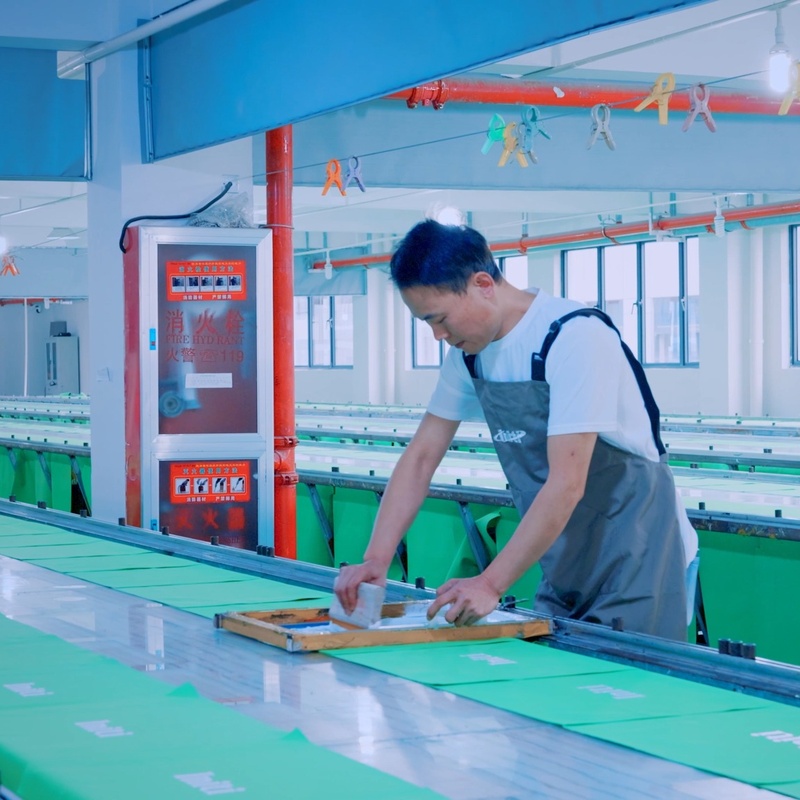
For promotional and private-label bags, material selection is closely connected to branding.
Two bags with the same dimensions and logo can produce very different results if their surfaces, textures, and decoration methods differ.
Cotton and Canvas Printing
Cotton and canvas offer textile surfaces that can work well with screen printing and other suitable decoration processes.
They are useful for logos, simple illustrations, and designs that benefit from a natural fabric appearance. Embroidery may also be suitable for selected products, depending on fabric weight and construction.
However, the surface texture can influence fine details, and fabric movement or shrinkage may affect the final appearance. Buyers should review a production-representative sample rather than relying exclusively on a digital mock-up.
Polyester and rPET Printing
Polyester and some rPET fabrics support several branding techniques, but the appropriate method depends on the specific fabric construction.
Sublimation can be effective on compatible polyester-based materials, particularly when detailed, full-color designs are required. Other printing methods may be more suitable for different surfaces or artwork.
Not all recycled polyester fabrics are equally suitable for sublimation. Buyers should confirm the fabric composition, color, surface finish, and decoration process with the manufacturer.
Polypropylene and Laminated Surfaces
PP bags can support several printing methods, including processes designed for coated or laminated surfaces.
Lamination may provide a smooth area for graphics, but it can change the bag's flexibility and material recovery options. Printing suitability also depends on the ink system, surface treatment, and manufacturing process.
For buyers who require detailed artwork, the best approach is to request a sample using the intended base fabric and decoration method.
How to Prevent Branding Problems
Before approving bulk production, buyers should establish:
- The exact artwork, including dimensions and placement.
- The material color and whether the logo requires a contrasting background.
- The intended printing or decoration method.
- The acceptable color variation between the approved sample and production.
- The expected resistance to rubbing, handling, and cleaning.
- Whether the decoration needs to withstand repeated washing.
These details help prevent a common sourcing problem: selecting a material that performs well physically but does not reproduce the brand's visual identity as expected.
How Much Does Reusable Bag Material Affect Cost?
Material is an important cost factor, but it is not the only one. The finished price depends on the complete product specification and the production process.
| Cost factor |
How it affects the quotation |
| Material type |
Different fibers, fabric constructions, and finishes have different sourcing and processing costs. |
| Fabric weight |
Heavier or more substantial fabric can increase material consumption and shipping weight. |
| Bag dimensions |
Larger panels and gussets generally require more fabric. |
| Construction |
Reinforced seams, structured bases, linings, and additional pockets add labor and materials. |
| Printing |
Artwork complexity, print size, number of colors, and decoration method affect cost. |
| Accessories |
Zippers, buttons, labels, additional handles, and other components increase material and assembly requirements. |
| Order quantity |
Larger quantities may reduce unit costs when production setup and purchasing costs are spread across more units. |
| Packaging |
Individual packaging and special presentation requirements may add cost. |
| Quality requirements |
Additional sampling, testing, inspection, and documentation may increase the total project cost. |
Buyers should compare total project cost and expected product performance rather than choosing solely on the lowest quoted unit price.
For a large promotional campaign, economical non-woven PP may be sufficient. For a private-label retail product, a higher initial cost may be justified if the bag delivers the intended appearance, performance, and customer experience.
Common Mistakes When Choosing Reusable Bag Materials
Several purchasing mistakes can be avoided by defining requirements before selecting the fabric.
Choosing a Material Only Because It Is Marketed as Eco-Friendly
Terms such as natural, organic, recycled, and recyclable refer to different material attributes. They do not automatically establish the finished bag's total environmental performance.
Buyers should identify the specific claim they want to make and obtain the documentation needed to support it.
Assuming a Heavier Bag Is Always Better
A heavyweight fabric can provide structure and substance, but it may also make the bag more expensive and less convenient to carry.
The right specification should reflect the expected load and frequency of use. A lightweight foldable bag and a structured retail bag have different performance requirements.
Ignoring Cleaning Requirements
A bag intended for grocery shopping or frequent everyday use may encounter dirt, moisture, and spills.
If cleaning is difficult or the material deteriorates quickly under normal care, customers may stop using the bag. Buyers should select a material and finish compatible with realistic maintenance requirements.
Focusing on the Fabric but Ignoring the Handles
Handles and their attachment points experience repeated stress during use.
Even a well-selected fabric cannot compensate for poorly constructed seams or unsuitable handle reinforcement. Buyers should inspect these areas carefully during sample approval.
Ordering in Bulk Without Testing the Intended Use
A bag can look excellent in a product photograph but perform poorly when filled, folded, or cleaned.
Testing a sample under representative conditions helps identify problems before they affect an entire order.
FAQ
1. What is the best material for reusable bags?
There is no universal winner. Cotton canvas is a strong candidate for substantial retail bags, non-woven PP for cost-conscious promotional bags, woven PP for practical shopping applications, and polyester or nylon for lightweight, compact designs. The best material depends on the bag's intended use, expected lifespan, and budget.
2. Is cotton or polyester better for reusable bags?
Cotton offers a familiar textile feel and a natural-fiber appearance, while polyester is often lighter, dries relatively quickly, and works well for foldable designs. Cotton may be preferable for certain retail and promotional products, whereas polyester can suit applications where compact storage is important.
3. Are reusable bags made from polypropylene durable?
They can be, but durability depends on whether the bag is made from woven or non-woven PP, the material specification, the construction, and the intended load. Buyers should evaluate the complete product rather than relying on the polypropylene label alone.
4. Is rPET a good material for reusable bags?
rPET can be a useful option for promotional and retail bags when buyers want to incorporate recycled PET into the product. The recycled-content percentage, supporting documentation, fabric construction, and end-of-life options should all be considered.
5. Which reusable bag material is easiest to clean?
Laminated fabrics and certain synthetic materials are often easier to wipe clean than untreated natural textiles. However, cleaning performance depends on the surface finish and the complete bag construction.
6. Which material is best for promotional giveaway bags?
Non-woven PP is often considered for large promotional orders because it can offer a low unit cost. Lightweight cotton and polyester are alternatives when the desired appearance, portability, or expected reuse justifies a different specification.
7. Are natural-fiber reusable bags always more sustainable?
No. Natural-fiber origin is only one factor in environmental performance. Farming, processing, product lifespan, cleaning, transportation, and disposal also matter. Buyers should avoid assuming that one material is automatically better across every environmental measure.
8. What should buyers check before ordering custom reusable bags?
Confirm the material composition, fabric weight, dimensions, handle construction, printing method, expected load, cleaning requirements, and order quantity. Request a representative sample and establish clear quality standards before approving mass production.
9. Does recycled material automatically mean a bag is recyclable?
No. Recycled content describes the material's origin, while recyclability concerns whether the product can be recovered through an appropriate process. Coatings, mixed materials, accessories, and local recycling infrastructure can all affect the finished bag's end-of-life options.
10. Can reusable bags be customized with a company logo?
Yes. Many reusable bag materials can support logo printing or other decoration methods. The most suitable technique depends on the fabric, artwork, required color accuracy, expected use, and budget. A sample is the best way to confirm the final appearance before bulk production.
Conclusion
The best material for reusable bags is the one that meets the product's functional, visual, environmental, and commercial requirements without unnecessary compromises.
Cotton and canvas suit many everyday and retail applications. Jute offers a distinctive natural texture. Non-woven and woven polypropylene provide practical options for different shopping and promotional needs. Polyester and nylon are useful when portability matters, while rPET offers a way to incorporate recycled PET into branded products. Hemp and laminated fabrics can also serve specific market requirements.
For businesses purchasing reusable bags in bulk, the decision should begin with the intended application and continue through material verification, sample evaluation, construction review, and production quality control.
Related Article



 Hot News