What Is RPET Material and Why Is It Popular?
RPET has become one of the most widely discussed recycled materials in reusable bags, apparel, packaging, travel products, and promotional merchandise.
Retailers, supermarkets, corporate buyers, sports brands, promotional companies, and private label sellers increasingly use RPET products to communicate recycled-material sourcing and reduce dependence on virgin polyester.
However, many buyers still have practical questions:
- What does RPET actually mean?
- Is every bag made from recycled plastic bottles an RPET bag?
- How is RPET fabric produced?
- Is RPET the same as recycled polyester?
- Is RPET waterproof?
- Does RPET automatically mean environmentally friendly?
- What certification documents should buyers request?
- Which types of bags are suitable for RPET material?
This guide explains RPET from a B2B purchasing perspective and provides practical recommendations for selecting custom RPET bags.
What Does RPET Mean?
RPET stands for recycled polyethylene terephthalate.
PET is a type of polyester commonly used in:
- Beverage bottles
- Food packaging
- Polyester fibers
- Textile fabrics
- Packaging films
- Other molded plastic products
When recovered PET is collected, processed, and converted into usable recycled material, it is referred to as RPET or recycled PET.
In textile applications, RPET is commonly converted into recycled polyester fibers and yarns that can be woven or knitted into fabric.
These fabrics can then be used to manufacture:
RPET is therefore not one single fabric specification. It is a recycled raw-material category that can be developed into many different textiles, weights, coatings, and product structures.
Is RPET the Same as Recycled Polyester?
In most textile and bag applications, RPET and recycled polyester refer to closely related materials.
RPET describes recycled PET as a raw material. Recycled polyester usually describes the fiber or textile produced from recycled PET feedstock.
For example:
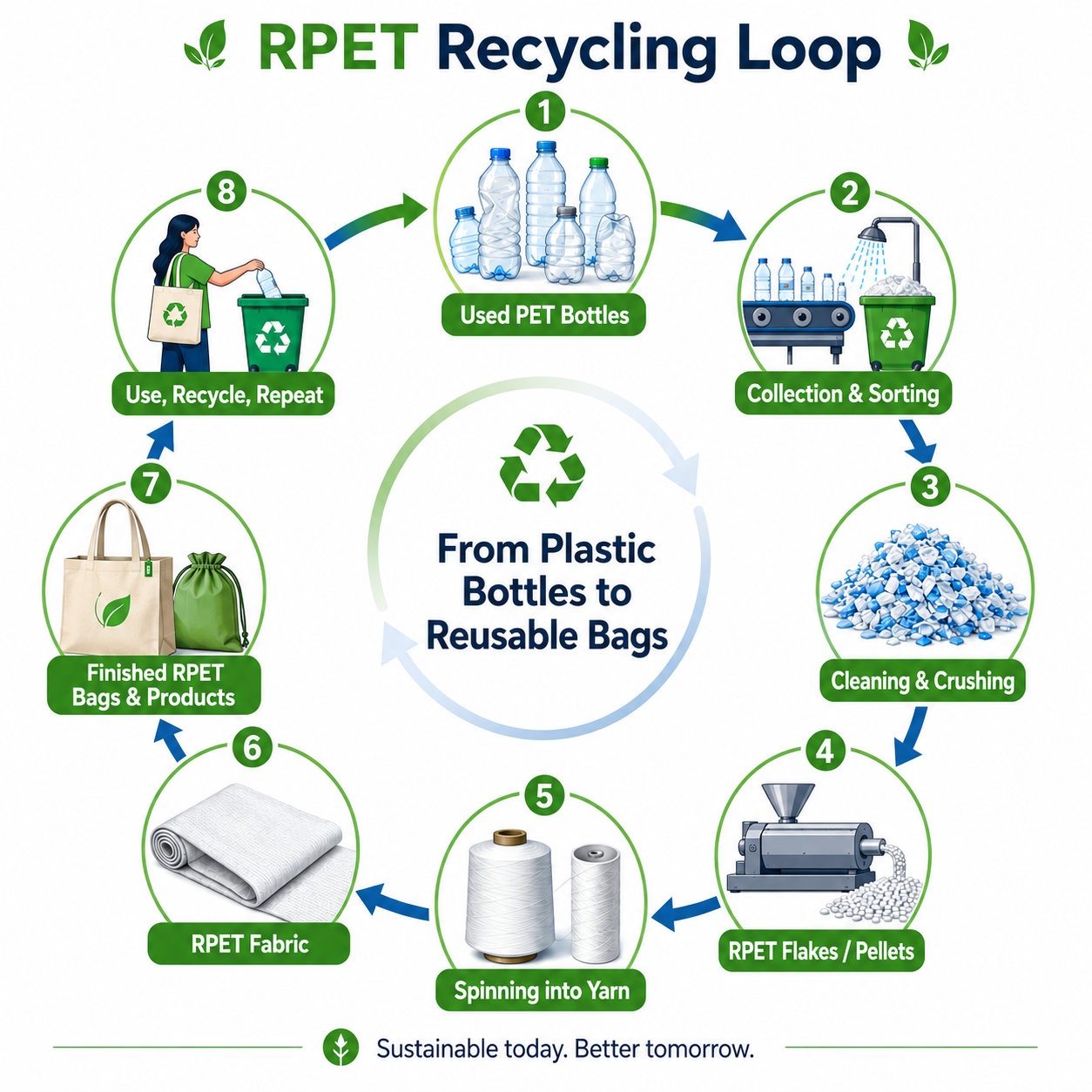
- Used PET bottles are collected.
- The bottles are sorted and cleaned.
- The PET is converted into flakes or pellets.
- The recycled material is processed into polyester fiber.
- The fiber is spun into yarn.
- The yarn is woven or knitted into RPET fabric.
- The fabric is used to manufacture bags or other textile products.
However, recycled polyester does not always come only from plastic bottles. Recycled feedstock may also come from:
- Industrial polyester waste
- Production scraps
- Textile waste
- Used polyester garments
- Other PET products
Buyers should therefore avoid assuming that every RPET product is made exclusively from post-consumer beverage bottles.
How Is RPET Fabric Made?
The exact process depends on the recycling technology and source material, but RPET textile production generally follows several stages.
1. Collection
Post-consumer or post-industrial PET material is collected from recycling systems, factories, or approved supply chains.
Common sources include:
- Used beverage bottles
- Packaging waste
- Polyester production waste
- Textile cutting waste
- End-of-life polyester products
2. Sorting
The collected material is sorted according to:
- Plastic type
- Color
- Contamination level
- Material quality
- Intended recycled application
Incorrect materials, labels, caps, metals, and contaminants must be removed.
3. Cleaning
The selected PET is washed to remove:
- Dirt
- Adhesives
- Labels
- Residue
- Oils
- Other contaminants
Cleaning quality affects the appearance, consistency, odor, and performance of the recycled material.
4. Flake or Pellet Production
The cleaned PET is usually shredded into flakes. It may then be melted, filtered, and converted into recycled pellets.
5. Fiber and Yarn Production
The recycled PET is melted and extruded into fibers. These fibers are stretched, processed, and spun into recycled polyester yarn.
6. Fabric Manufacturing
The yarn can be made into different fabrics, including:
- Plain woven polyester
- Oxford fabric
- Ripstop fabric
- Mesh
- Felt
- Non-woven material
- Lining
- Webbing
- Knitted fabric
7. Finishing
Depending on the product, the fabric may receive:
- Dyeing
- Printing
- Lamination
- Water-resistant coating
- PU coating
- PVC coating
- Anti-static treatment
- Flame-retardant treatment
- Additional backing
This means two products described as RPET may have very different weight, feel, durability, appearance, and environmental profile.
Mechanical Recycling vs Chemical Recycling
RPET can be produced through different recycling methods.
Mechanical Recycling
Mechanical recycling commonly involves:
- Sorting
- Washing
- Shredding
- Melting
- Filtering
- Re-extruding the PET
This is currently a widely used method for recycled polyester production.
Advantages
- Established production process
- Suitable for many textile applications
- Commonly available for bags and promotional products
- Can use post-consumer bottle feedstock
Limitations
Repeated heat processing may affect polymer quality. Contamination and color variation can also influence the final yarn.
Chemical Recycling
Chemical recycling breaks polyester down into smaller chemical components before rebuilding the material.
Potential Advantages
- May process some materials that are difficult to recycle mechanically
- Can potentially produce material closer to virgin-quality polyester
- May support future textile-to-textile recycling systems
Limitations
- More complex processing
- Limited availability in some markets
- Higher project cost may apply
- Certification and traceability still need verification
For most conventional custom bag projects, mechanically recycled polyester is currently the more common option.
Why Is RPET Popular?
1. It Reduces Demand for Virgin Polyester Feedstock
Virgin polyester is generally produced from fossil-based raw materials. Using recycled PET creates demand for recovered polyester feedstock instead of relying entirely on newly produced polymer.
This is one of the main reasons brands include RPET in responsible-material sourcing programs.
2. It Gives Existing PET Material Another Use
Recovered PET can be converted into textile fibers and used in products such as bags, clothing, carpets, and accessories.
This helps keep some recovered material in productive use rather than treating it immediately as waste.
3. It Works with Many Bag Structures
RPET polyester can be developed into lightweight, medium-weight, or more structured materials.
It can be used for:
This versatility makes it easier for brands to apply recycled-material sourcing across several product categories.
4. It Supports Multiple Printing Methods
Depending on the fabric construction and coating, RPET bags can support:
- Screen printing
- Heat transfer
- Sublimation
- Digital printing
- Embroidery
- Woven labels
- Rubber patches
- Full-surface printing
This gives buyers flexibility when adapting the product to brand colors, promotional artwork, and retail collections.
5. It Is Lightweight and Practical
Like conventional polyester, RPET can provide useful performance characteristics such as:
- Low product weight
- Good flexibility
- Quick drying
- Crease resistance
- Color versatility
- Easy folding
- Compatibility with coatings and laminations
These characteristics are particularly useful for shopping bags, sports products, travel bags, and promotional merchandise.
6. It Provides a Clear Recycled-Material Story
RPET is relatively easy for buyers and consumers to understand when the claim is supported properly.
A brand can communicate:
- Recycled polyester content
- Post-consumer recycled feedstock
- Recycled bottle sourcing
- Traceable material certification
- Reduced use of virgin polyester
However, marketing claims must accurately match the final product composition and certification documents.
Is Every Bag Made from Recycled Bottles an RPET Bag?
A bag may be described as RPET when its polyester fabric is produced from recycled PET feedstock.
However, buyers should check more than the product name.
Important questions include:
- What percentage of the fabric is recycled polyester?
- Is the recycled content post-consumer or post-industrial?
- Does the percentage refer to the fabric or the complete product?
- Are the lining, webbing, zipper, thread, and labels also recycled?
- Is certification available?
- Can the supplier provide transaction documents?
- Is the claim traceable through the supply chain?
For example, a bag may use an RPET outer fabric but still contain:
- Virgin polyester lining
- Standard nylon zipper
- Virgin PP webbing
- Foam padding
- Plastic hardware
- Metal accessories
- Conventional sewing thread
The product may still contain recycled material, but it should not automatically be described as 100% recycled unless the complete composition supports that claim.
RPET Fabric Types Used for Bags
RPET Oxford Fabric
RPET Oxford fabric is commonly used for:
- Backpacks
- Travel bags
- Cooler bags
- Laptop bags
- Sports bags
- Storage products
It can be produced in different densities and may include PU or other coatings.
RPET Non-Woven Fabric
RPET non-woven material can be used for:
- Promotional shopping bags
- Event bags
- Gift packaging
- Lightweight retail totes
Buyers should distinguish RPET non-woven polyester from conventional PP non-woven fabric because they use different base polymers.
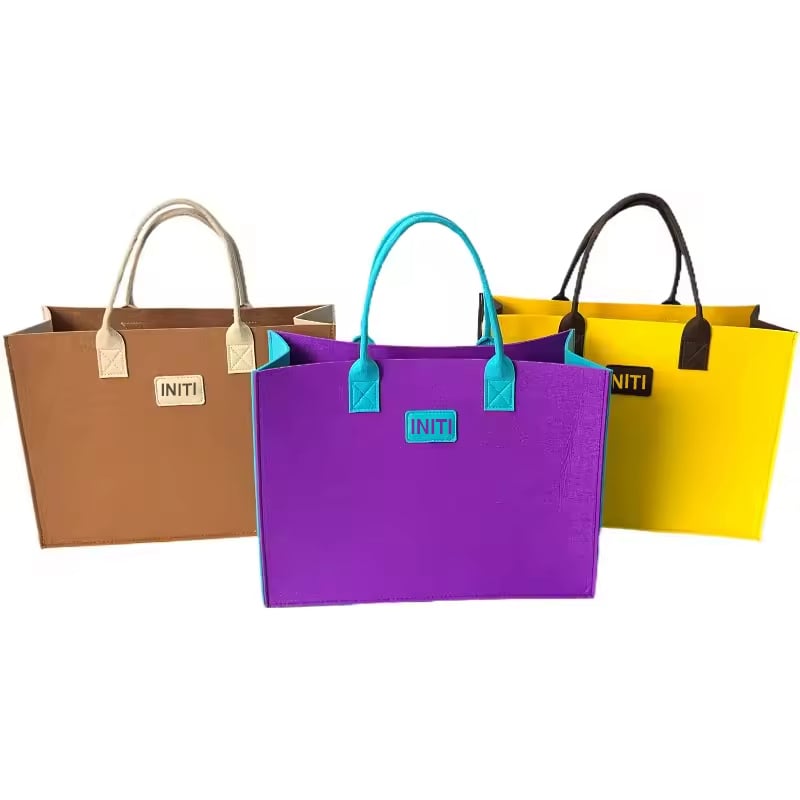
RPET Felt
RPET felt is suitable for:
- Storage baskets
- Laptop sleeves
- Organizers
- Gift packaging
- Interior dividers
Its thickness, density, stiffness, and surface quality can be customized.
RPET Mesh
RPET mesh can be used for:
- Beach bags
- Laundry bags
- Sports bags
- Pet products
- Equipment storage
Mesh density should be selected according to the size of the intended contents.
RPET Ripstop Fabric
Ripstop constructions may be used for:
- Foldable shopping bags
- Outdoor bags
- Lightweight backpacks
- Sports accessories
- Travel organizers
The reinforced grid construction can help limit the spread of small tears, although final durability still depends on the fabric specification and sewing quality.
Recommended RPET Products
RPET shopping bags are suitable for:
- Retail stores
- Supermarkets
- Membership programs
- Corporate promotions
- Trade shows
- Brand campaigns
Recommended features include:
- Reinforced handles
- Bottom gusset
- Large logo area
- Internal pocket
- Foldable construction
- Custom Pantone colors
Recommended Product:
Custom RPET Shopping Tote Bag
Foldable RPET bags are suitable for campaigns where compact storage and distribution efficiency are important.
They work well for:
- Supermarket giveaways
- Travel accessories
- Loyalty programs
- Promotional events
- E-commerce retail
Recommended features include:
- Integrated storage pouch
- Lightweight ripstop fabric
- Reinforced seams
- Snap or elastic folding system
- Full-color printing
Recommended Product:
RPET Foldable Shopping Bag
RPET drawstring bags offer a cost-controlled solution for:
- Sports events
- Schools
- Charity campaigns
- Fitness clubs
- Conferences
- Promotional packs
Recommended features include:
- Front zipper pocket
- Reinforced lower corners
- Thicker cords
- Reflective logo
- Multiple campaign colors
Recommended Product:
Custom RPET Drawstring Backpack
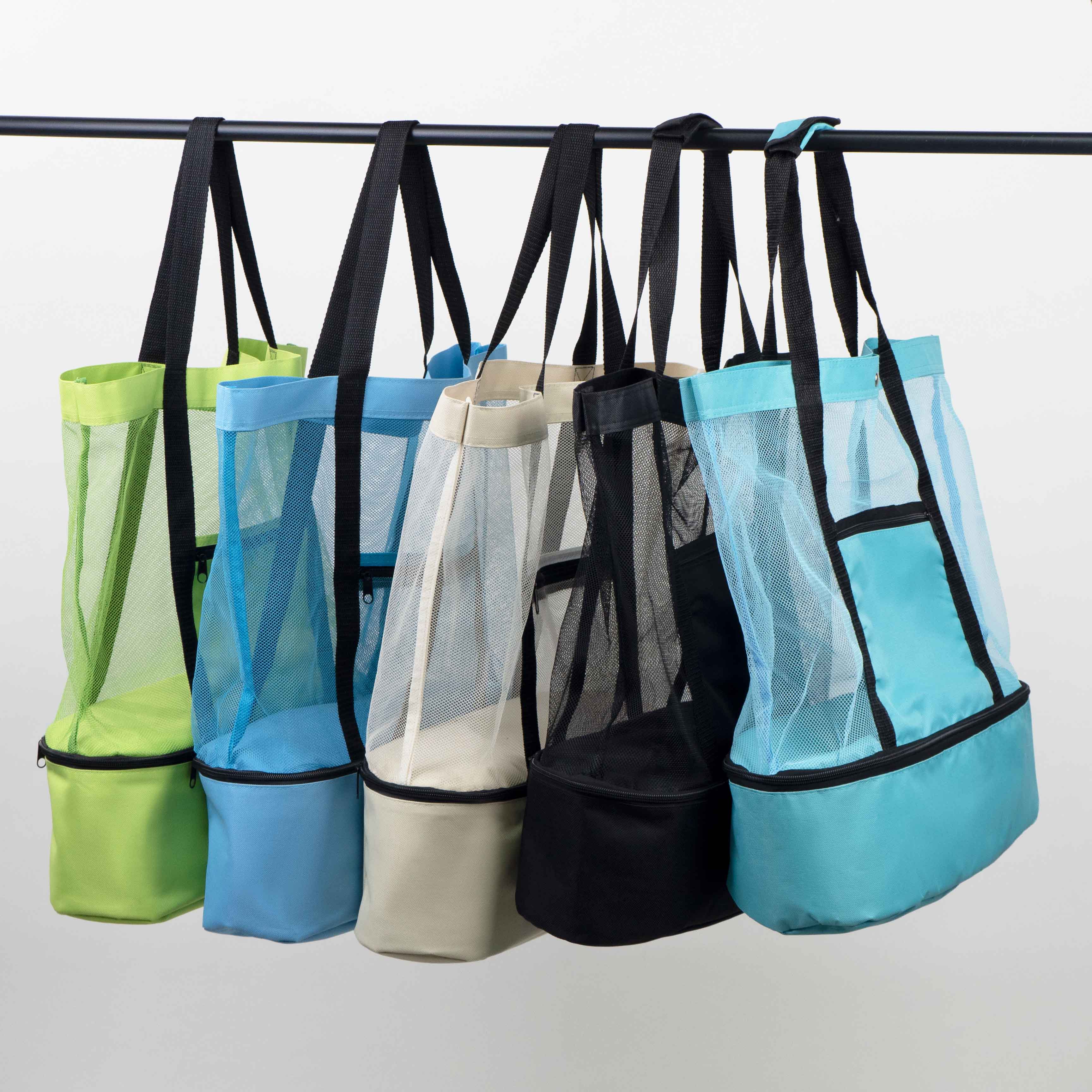
RPET exterior fabric can be combined with insulation and suitable lining materials to produce:
- Lunch bags
- Picnic bags
- Grocery coolers
- Promotional food bags
- Corporate wellness gifts
Buyers should note that an RPET exterior does not mean the complete cooler bag is made entirely from recycled material.
Recommended Product:
RPET Insulated Cooler Bag
RPET backpacks are suitable for:
- Schools
- Corporate gifts
- Travel brands
- Sports programs
- Retail collections
- Employee welcome kits
Recommended features include:
- Padded shoulder straps
- Laptop compartment
- Side bottle pockets
- Reinforced base
- Recycled lining and webbing options
Recommended Product:
Custom RPET Backpack
RPET fabric can be used for lightweight and structured personal-care bags.
Suitable applications include:
- Beauty gift sets
- Travel collections
- Hotel amenities
- Promotional kits
- Subscription boxes
- Private label beauty products
Recommended Product:
RPET Cosmetic Bag with Custom Logo
RPET garment bags can be developed for:
- Fashion brands
- Suit retailers
- Wedding garments
- Uniform suppliers
- Hotels
- Dry-cleaning services
Recommended features include:
- Full zipper closure
- Reinforced hanger opening
- Clear identification pocket
- Carry handles
- Foldable suit-bag structure
Recommended Product:
Custom RPET Garment Bag
RPET vs Virgin Polyester
| Factor |
RPET |
Virgin Polyester |
| Feedstock |
Recycled PET sources |
Newly produced fossil-based polymer |
| Appearance |
Can closely resemble conventional polyester |
Consistent and widely available |
| Performance |
Depends on yarn, fabric, coating, and construction |
Depends on the same factors |
| Color Options |
Broad, but feedstock may affect certain specifications |
Very broad |
| Certification |
Recycled-content verification may be requested |
Recycled certification not applicable |
| Price |
May be higher depending on certification and supply |
Often cost-efficient |
| Main Positioning |
Recycled-material sourcing |
Conventional performance and cost |
RPET is not automatically stronger or weaker than virgin polyester. Performance depends on:
- Yarn quality
- Fabric density
- Weave
- Coating
- Lamination
- Sewing
- Reinforcement
- Accessories
- Product design
Buyers should compare complete product specifications rather than material names alone.
RPET vs Cotton
| Factor |
RPET |
Cotton |
| Source |
Recycled polyester feedstock |
Plant-based natural fiber |
| Weight |
Often lightweight |
Varies from light cotton to heavy canvas |
| Drying |
Generally quicker |
Usually slower |
| Water Resistance |
Can accept coatings |
Untreated cotton absorbs moisture |
| Printing |
Suitable for several methods |
Strong screen-printing surface |
| Appearance |
Technical and modern |
Natural and textile-oriented |
| Applications |
Sports, travel, shopping, outdoor |
Retail, gifts, lifestyle, promotions |
Neither material is best for every project. The choice should depend on the intended use, branding, budget, expected lifespan, and material claim.
RPET vs PP Non-Woven Material
RPET and PP non-woven are frequently confused, but they are different materials.
RPET
- Based on recycled polyethylene terephthalate
- Commonly processed into recycled polyester
- Can be woven, knitted, felted, or non-woven
- Suitable for a wide range of fabric structures
- Based on polypropylene
- Commonly used in low-cost shopping and promotional bags
- Usually made through spunbond non-woven production
- Can use virgin or recycled PP depending on specification
A standard PP non-woven bag should not be described as RPET merely because it is reusable.
Is RPET Waterproof?
RPET itself does not automatically mean waterproof.
The water performance of an RPET bag depends on:
- Fabric construction
- Weaving density
- Coating
- Lamination
- Seam structure
- Zipper type
- Opening design
- Waterproof tape
- Overall product testing
Possible descriptions include:
- Water-repellent
- Water-resistant
- Moisture-resistant
- Coated fabric
- Waterproof construction
These terms should not be used interchangeably.
A coated RPET fabric may resist light rain, but water can still enter through seams or zippers. A product should only be described as waterproof when the complete construction and test results support that claim.
Is RPET Biodegradable?
RPET is recycled polyester, and polyester is a synthetic plastic-based material. It should not be described as biodegradable unless a specific material technology and appropriate evidence support the claim.
Recycled content and biodegradability are different concepts:
- Recycled content describes where the material came from.
- Biodegradability describes how a material breaks down under specific environmental conditions.
Using recycled material does not automatically make a product biodegradable.
Can RPET Be Recycled Again?
In principle, polyester may be recycled again, but practical recyclability depends on the complete product.
A bag becomes more difficult to recycle when it combines:
- Multiple fabric types
- PVC or PU coatings
- Foam
- Metal hardware
- Mixed plastic buckles
- Adhesives
- Printed films
- Non-removable linings
- Complex trims
For better end-of-life design, buyers can consider:
- Mono-material construction
- Fewer mixed-material accessories
- Removable hardware
- Detachable inserts
- Limited coatings
- Clear material labels
- Durable and repairable structures
A durable product that remains in use longer may also provide more practical value than a poorly made product with a recycled-content claim.
What Is GRS Certification?
GRS stands for Global Recycled Standard.
It is used to verify recycled content and establish requirements related to chain of custody and additional processing criteria.
For B2B bag buyers, GRS may be relevant when:
- The customer requests certified recycled content
- The product will carry a GRS-related claim
- The buyer requires supply-chain traceability
- The order is for a large retailer or brand
- Transaction documentation is required
However, buyers should understand that a factory certificate alone may not prove that every product or shipment is certified.
Important documents may include:
- Scope Certificate
- Transaction Certificate
- Material certificates
- Supplier invoices
- Production records
- Product composition
- Approved claim wording
The required documentation should be confirmed before quoting, sampling, and production.
What Is RCS Certification?
RCS stands for Recycled Claim Standard.
RCS focuses on verifying recycled material and chain of custody. It can be relevant for products where buyers need independent recycled-content verification.
The choice between GRS and RCS depends on:
- Buyer requirements
- Product composition
- Supply chain
- Certification availability
- Intended marketing claim
- Destination market
Suppliers should not promise certification until the material source, factory scope, processing units, and transaction-document requirements have been confirmed.
Questions Buyers Should Ask Before Ordering RPET Bags
Material Questions
- What is the exact recycled polyester percentage?
- Is the feedstock post-consumer or post-industrial?
- Is the recycled content calculated for the fabric or the complete bag?
- Are the lining, handles, zippers, and thread also recycled?
- What is the fabric weight or denier?
- Does the fabric include a coating or lamination?
Certification Questions
Is GRS or RCS certification available?
Is the factory included within the certification scope?
Can a Transaction Certificate be issued?
What claim wording can be used?
Are certification costs included in the quotation?
Performance Questions
What weight is the bag designed to carry?
How are the handles reinforced?
Is the fabric water-resistant?
What printing method is recommended?
Can colorfastness and seam testing be arranged?
Can a pre-production sample be approved?
Production Questions
What is the MOQ per color and design?
What is the sample lead time?
What is the bulk production time?
How will the bags be folded and packed?
What is the carton quantity and shipping volume?
Common RPET Purchasing Mistakes
Assuming RPET Means 100% Recycled
A product may contain only a percentage of recycled material or may combine recycled fabric with conventional accessories.
Using Unsupported Bottle Claims
Do not state that a bag is made from a specific number of bottles unless the calculation method and bottle assumptions are documented.
Ignoring Certification Requirements Until Production
If a Transaction Certificate is needed, it should be discussed before material purchasing and production begin.
Selecting Fabric Only by Appearance
Buyers should also check:
- Weight
- Strength
- Coating
- Colorfastness
- Abrasion resistance
- Print adhesion
- Intended load
Describing Water-Resistant Fabric as Waterproof
The full bag construction must be considered, including seams, zippers, and openings.
Focusing Only on Recycled Content
A weak bag that fails quickly may not meet the practical goals of a reusable product. Construction quality and product lifespan still matter.
Quality Control for RPET Bags
Recommended inspection points include:
- Material composition
- Fabric weight
- Recycled-content documentation
- Color consistency
- Surface defects
- Coating adhesion
- Printing clarity
- Handle attachment
- Stitch density
- Zipper performance
- Finished dimensions
- Load performance
- Packaging accuracy
- Label and claim wording
Possible testing includes:
- Handle pull testing
- Seam-strength testing
- Repeated load testing
- Abrasion testing
- Colorfastness testing
- Print adhesion testing
- Water-resistance testing
- Zipper-cycle testing
- Restricted-substance testing
- Finished-dimension inspection
Testing requirements should be selected according to product type, destination market, buyer standard, and intended use.
How to Choose the Right RPET Bag
Choose the product according to the purchasing scenario.
For Supermarkets
Recommended products:
- RPET grocery tote
- Foldable shopping bag
- Reinforced reusable bag
- Insulated grocery cooler
Focus on:
- Capacity
- Handle strength
- Bottom reinforcement
- Folding efficiency
- Logo visibility
For Promotional Campaigns
Recommended products:
- RPET drawstring bag
- Lightweight tote
- Foldable bag
- Event backpack
Focus on:
- Unit cost
- Printing
- Distribution efficiency
- Multiple colors
- Packaging volume
For Corporate Gifts
Recommended products:
- RPET backpack
- Cooler lunch bag
- Travel organizer
- Laptop bag
- Fitness gift set
Focus on:
- Retail presentation
- Logo quality
- Gift packaging
- Functional details
- Material documentation
For Fashion and Lifestyle Retail
Recommended products:
- RPET tote bag
- Quilted RPET bag
- Crossbody bag
- Cosmetic pouch
- Travel bag
Focus on:
- Fabric hand feel
- Color matching
- Hardware
- Lining
- Private label details
INITI provides OEM and ODM development for custom RPET bags used in retail, supermarket, promotional, travel, sports, beauty, and corporate gift projects.
Our custom services include:
- RPET fabric selection
- Recycled-content sourcing
- GRS-related project support
- Custom size and structure development
- Logo printing
- Embroidery
- Private label service
- Sample development
- Quality inspection
- Custom retail packaging
- Wholesale bulk production
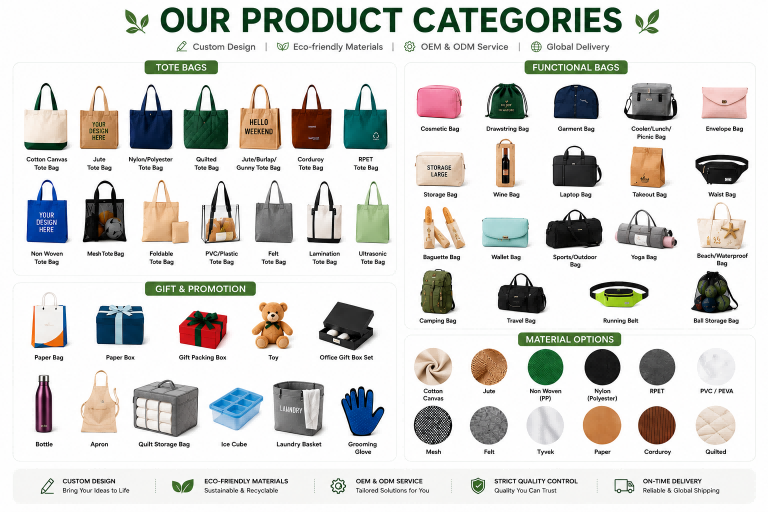
Available RPET product categories include:
- RPET tote bags
- RPET shopping bags
- RPET foldable bags
- RPET drawstring bags
- RPET backpacks
- RPET cooler bags
- RPET cosmetic bags
- RPET garment bags
- RPET travel bags
- RPET storage products
Before production, we can help buyers compare material weight, fabric structure, logo method, certification requirements, load performance, packaging, and target budget.
FAQ
1. What does RPET stand for?
RPET stands for recycled polyethylene terephthalate.
2. Is RPET the same as recycled polyester?
In textile applications, RPET is commonly processed into recycled polyester fiber and fabric.
3. Is RPET always made from plastic bottles?
No. RPET may come from bottles, industrial PET waste, textile waste, or other recycled polyester sources.
4. Is RPET waterproof?
Not automatically. Water performance depends on coating, lamination, seams, zippers, and the complete product structure.
5. Is RPET biodegradable?
Standard RPET is recycled polyester and should not be described as biodegradable.
6. Can RPET bags be customized?
Yes. Size, fabric weight, color, coating, printing, handles, pockets, lining, and packaging can all be customized.
7. Can RPET fabric be printed?
Yes. Screen printing, heat transfer, sublimation, digital printing, embroidery, and labels may be used depending on the fabric.
8. What is GRS certification?
GRS is a third-party standard used to verify recycled content and chain-of-custody requirements, together with additional processing criteria.
9. Does a GRS-certified factory mean every product is certified?
No. The product, material, processing units, and transaction documentation must meet the relevant requirements.
10. Can the whole bag be made from recycled materials?
Many components can use recycled options, but the complete composition must be confirmed component by component.
11. Is RPET stronger than normal polyester?
Not necessarily. Strength depends on yarn, fabric density, coating, sewing, reinforcement, and product design.
12. Do you provide RPET samples?
Yes. Samples can be developed to confirm material, color, structure, printing, performance, certification requirements, and packaging.
Bottom Internal Links
Related Products:
RPET Bags | Tote Bags | Custom Bags | Drawstring Bags | Sports Outdoor Bag | Cooler Bags | Cosmetic Bags | Garment Bags
Applications:
Supermarket Programs | Retail Promotions | Corporate Gifts | Sports Events | Travel Brands | Beauty Promotions | E-commerce Sellers | Importers & Distributors
Custom Services:
OEM/ODM Manufacturing | RPET Material Selection | GRS Project Support | Custom Logo Printing | Sample Development | Private Label Service | Quality Inspection | Bulk Order Support



 Hot News