A shoe bag is one of those products that people often overlook — until they actually need one.
Think about packing a suitcase for a business trip or vacation. Clothes are neatly folded, accessories are organized, but then there is one problem: where should the shoes go?
Putting shoes directly into luggage may seem convenient, but the soles that touch the ground are now sharing space with clean clothes and personal items. A simple fabric shoe bag solves this problem by creating a separate space for footwear.
But the purpose of a shoe bag goes beyond keeping shoes away from clothes.
For travelers, it makes packing cleaner and more organized.
For footwear brands, it can become part of the product experience.
For retailers and promotional companies, it can turn ordinary packaging into something customers continue using.
A well-designed shoe bag may look like a small detail, but small details often influence how people experience a product.
What Is the Point of a Shoe Bag?
1. Keeping Shoes Separate From Clothes and Other Belongings
The most important purpose of a shoe bag is separation.
Shoes are different from most items people carry because they are constantly exposed to outdoor environments. The soles of shoes may collect:
- dirt
- dust
- sand
- small stones
- moisture
- stains from different surfaces
When shoes are placed directly inside luggage, these contaminants can transfer to clothing, towels, or personal accessories.
A shoe bag creates a physical barrier between footwear and other belongings.
A shoe bag does not necessarily make shoes cleaner by itself. Instead, it prevents existing dirt from spreading to other areas.
This is why many people consider a shoe bag less as a storage container and more as a protection barrier.
2. Protecting Shoes From Dust and Surface Damage
Another important purpose of a shoe bag is protecting footwear when it is not being used.
Shoes can lose their appearance over time because of:
- dust accumulation
- friction with other items
- sunlight exposure
- improper storage
This is especially noticeable with premium footwear.
For example:
Leather Shoes
Leather footwear can develop surface marks when stored together with other shoes or hard objects.
A soft fabric shoe bag helps reduce:
- scratches
- surface friction
- dust buildup
Suede Shoes
Suede is sensitive to dust and dirt because of its textured surface.
A breathable shoe bag helps protect suede shoes during storage while allowing airflow.
Sneakers
Sneakers, especially collectible or limited-edition styles, are often stored carefully because their appearance is part of their value.
A shoe bag provides:
- individual storage
- protection from rubbing
- cleaner long-term storage
However, it is important to understand that most fabric shoe bags are designed mainly for dust protection and organization.
A standard shoe bag is usually not a replacement for waterproof storage or professional shoe preservation systems.
The material and construction determine how much protection a shoe bag can provide.
3. Improving Travel Organization
Travel is one of the most common reasons people use shoe bags.
When packing a suitcase, shoes often create organization challenges because they are:
- heavier than clothing
- irregularly shaped
- potentially dirty
- difficult to stack
A shoe bag helps solve these problems by creating a separate packing unit.
Instead of placing shoes randomly inside luggage, travelers can:
- pack each pair separately
- identify shoes quickly
- keep the suitcase cleaner
- move shoes easily between bags
For frequent travelers, shoe bags are often used together with:
- packing cubes
- toiletry bags
- travel organizers
Each item has a different purpose.
Packing cubes organize clean clothing.
Toiletry bags organize personal care products.
Shoe bags isolate footwear.
Together, they create a more efficient travel system.
4. Helping Maintain Shoe Shape and Condition
Some shoes require more attention than others.
A shoe bag cannot completely prevent deformation, but the right design can help reduce unnecessary pressure and friction.
For example:
- dress shoes may need a soft interior
- boots need enough height to avoid folding
- sneakers need enough space around the toe area
A common mistake when choosing shoe bags is focusing only on external size.
A bag that technically fits the shoes may still damage them if:
- the opening is too narrow
- the height is insufficient
- the fabric is too rough
- the shoes are compressed during transportation
For premium footwear, buyers should consider:
- bag dimensions
- fabric softness
- closure design
- internal structure
A well-designed shoe bag should protect shoes while allowing comfortable placement.
5. Enhance Product Presentation and Brand Experience
For footwear brands and retailers, a shoe bag serves a purpose beyond protection.
Packaging is often the first physical interaction customers have with a product. A well-designed shoe bag can improve the overall unboxing experience and make the product feel more complete.
For example, a pair of premium shoes presented with a customized fabric shoe bag can create a stronger impression than footwear placed only inside standard packaging.
Brands may use shoe bags to:
- reinforce premium positioning
- provide reusable packaging
- increase customer satisfaction
- create additional brand exposure
Customization options such as:
- logo printing
- custom colors
- branded labels
- unique fabric choices
allow companies to turn a simple shoe bag into an extension of their brand identity.
For retailers, promotional companies, and footwear manufacturers, this makes shoe bags more than an accessory — they become a valuable packaging solution.
6. Provide a Flexible and Reusable Storage Solution
Another important benefit of shoe bags is their flexibility.
Unlike rigid storage boxes, fabric shoe bags are lightweight and easy to store when not in use.
They can be used for:
- seasonal footwear storage
- travel organization
- gym equipment storage
- keeping different shoe collections separated
Their reusable nature also makes them a practical alternative to disposable packaging.
For businesses focusing on sustainability and customer experience, reusable shoe bags can add extra value after the original purchase.
A customer may continue using the shoe bag for months or even years, extending the connection between the product and the brand.
Why Use a Shoe Bag When Traveling?
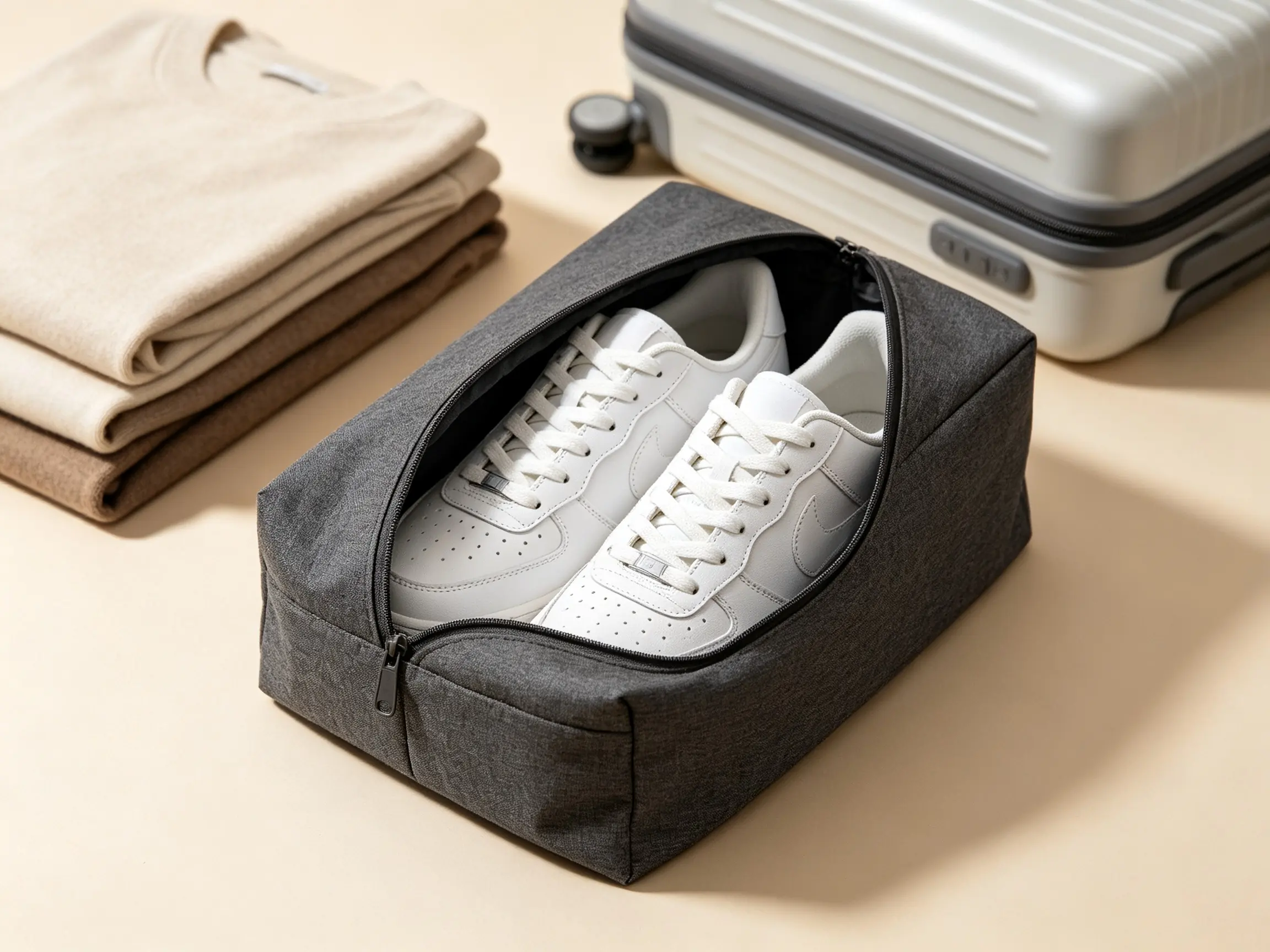
Travel is one of the strongest search intentions behind shoe bags.
Many travelers ask:
“Do I really need a shoe bag?”
The answer depends on how often shoes are transported and what type of footwear is involved.
For occasional travelers bringing casual shoes, a basic shoe bag may already provide enough protection.
For frequent travelers, business users, athletes, and outdoor enthusiasts, a dedicated shoe bag provides several advantages.
1. Preventing Dirty Soles From Touching Clothes
This is the biggest travel benefit.
A suitcase usually contains items that people want to keep clean:
- shirts
- jackets
- underwear
- towels
- accessories
Shoes are usually the least clean item inside the luggage.
A shoe bag keeps the dirty parts of footwear contained.
This is particularly useful after:
- walking outdoors
- visiting beaches
- hiking
- exercising
- rainy weather
2. Making Packing More Organized
A shoe bag gives every pair of shoes its own location.
Instead of searching through luggage, users can quickly find:
- running shoes
- sandals
- formal shoes
- casual sneakers
For families or group travelers, separate shoe bags can also help organize different people's belongings.
3. Supporting Multiple Shoe Carrying
Many travelers carry more than one pair of shoes.
For example:
Business travelers may bring:
- formal shoes
- casual shoes
Vacation travelers may pack:
- sneakers
- sandals
- beach footwear
Sports travelers may need:
- training shoes
- competition shoes
A shoe bag allows each pair to be stored separately without mixing different footwear types.
What Types of Shoes Need a Shoe Bag?
Not all footwear has the same storage and protection requirements. The ideal shoe bag design depends on the type of shoes being stored, how they are used, and the level of protection required.
For buyers sourcing custom shoe bags, understanding the target footwear category is important because different shoes require different materials, sizes, and structures.
Shoe Bags for Sneakers
Sneakers are one of the most common footwear types used with shoe bags.
From everyday casual sneakers to limited-edition collectible shoes, users often want to maintain a clean appearance while protecting their footwear during travel and storage.
Sneakers usually require shoe bags that provide:
- enough space for different shoe shapes
- lightweight construction
- easy opening and closing
- breathable materials
Shoe Bags for Formal Shoes
Formal shoes such as dress shoes, business shoes, and leather footwear often require more careful protection.
Unlike casual sneakers, formal shoes may have:
- smooth leather surfaces
- polished finishes
- structured shapes
A suitable shoe bag should help prevent:
- surface scratches
- dust accumulation
- contact with other items
Shoe Bags for Sports Shoes
Sports shoes have different requirements because they are often used in environments where dirt, sweat, and moisture are common.
Examples include:
- running shoes
- gym shoes
- football shoes
- training shoes
For these applications, ventilation becomes an important consideration.
Mesh shoe bags are often preferred because they allow:
- better airflow
- easier visibility
- faster drying after use
However, mesh alone may not provide enough protection against dust compared with closed fabric bags.
Many practical designs combine:
- polyester body
- mesh panels
- zipper or drawstring closure
This creates a balance between protection and ventilation.
Shoe Bags for Boots and Larger Footwear
Boots require special attention because of their larger size and taller structure.
A common problem with regular shoe bags is insufficient height.
When selecting boot shoe bags, buyers should consider:
- increased length
- wider opening
- stronger seams
- durable fabric
Examples include:
- hiking boots
- work boots
- winter boots
- riding boots
For these products, a larger shoe bag can prevent unnecessary folding or compression during storage.
Common Types of Shoe Bags
Shoe bags come in different structures depending on their purpose, price level, and user experience requirements.
For brands and businesses, the closure type and construction style can significantly influence product positioning.
1. Drawstring Shoe Bags
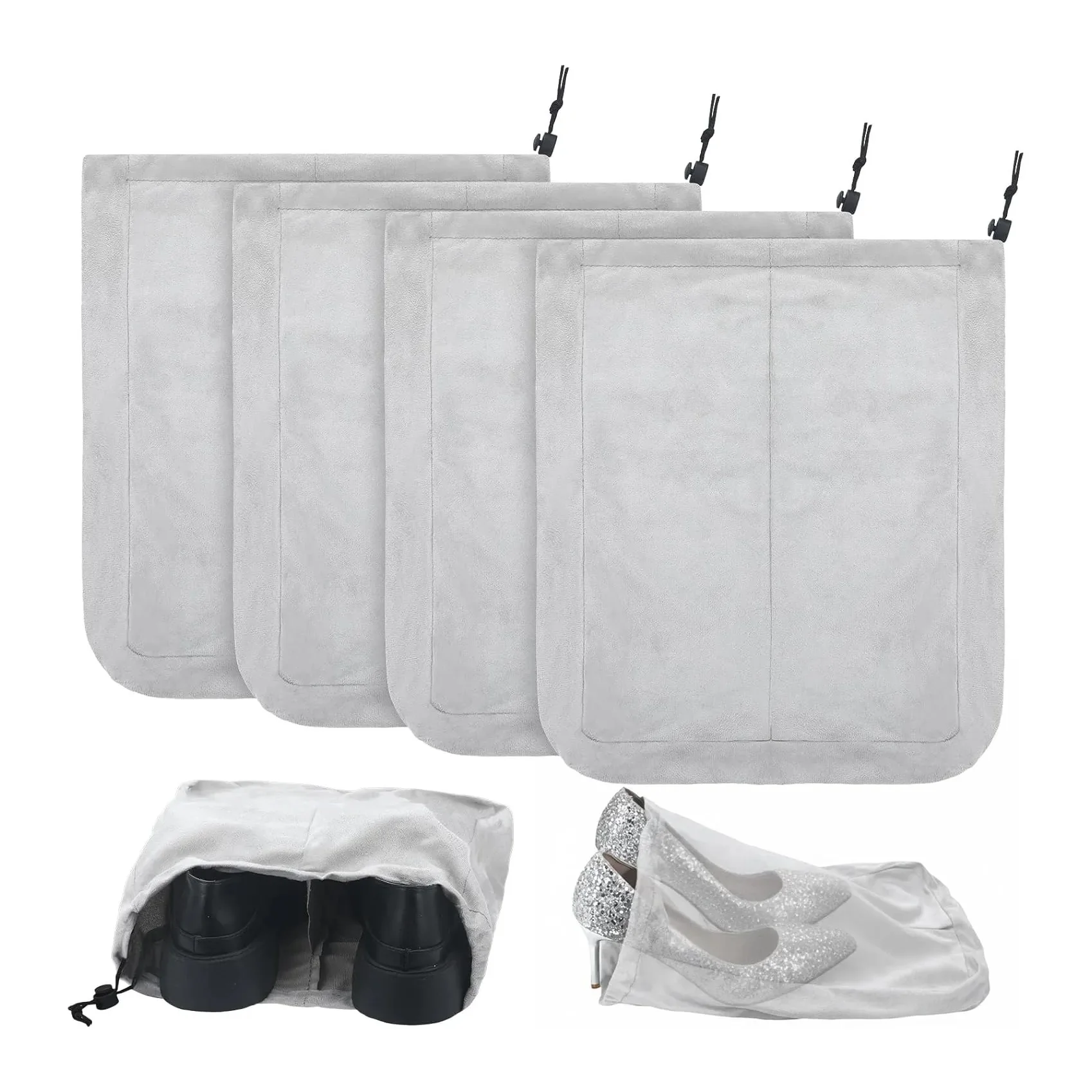
Drawstring shoe bags are one of the most common designs.
They are popular because they offer:
- simple construction
- easy operation
- lightweight performance
- affordable production costs
The opening can be quickly closed by pulling the cord, making them convenient for travel and everyday storage.
Drawstring shoe bags are widely used for:
- promotional giveaways
- footwear packaging
- travel accessories
- sports products
From a customization perspective, they also provide a large printable surface.
Brands can add:
- logo printing
- brand colors
- custom labels
- unique patterns
For companies ordering large quantities, drawstring shoe bags are often a practical option because they balance functionality and cost.
2. Zipper Shoe Bags
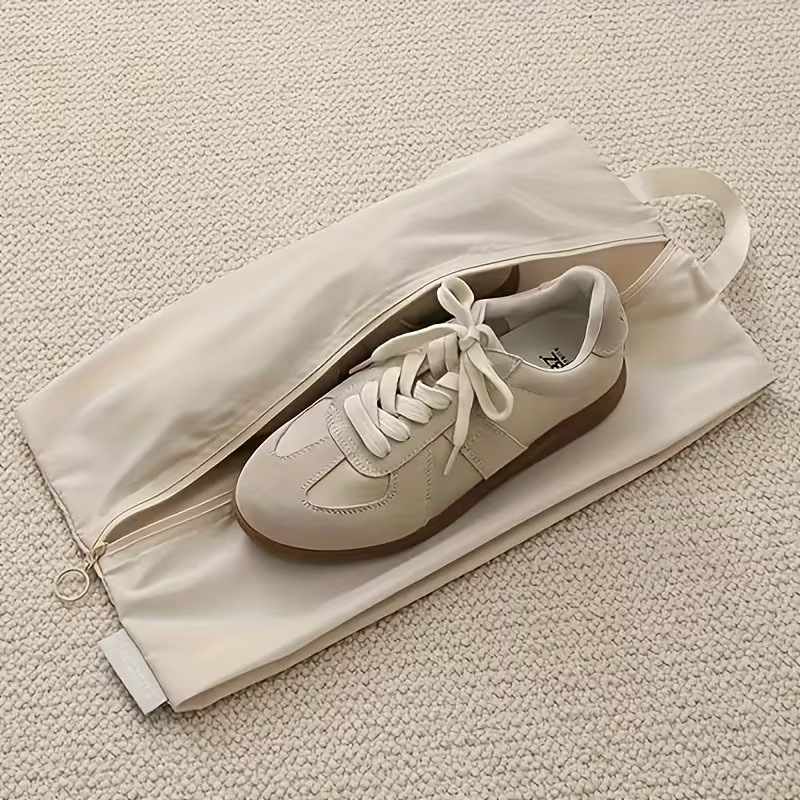
Zipper shoe bags provide a more secure closure compared with drawstring styles.
Advantages include:
- better sealing
- easier access
- more premium appearance
They are often selected for:
- business travel products
- premium footwear packaging
- retail accessories
The zipper opening also provides a wider access area, which can make placing larger shoes easier.
However, zipper designs usually involve:
- higher production costs
- more components
- additional manufacturing steps
Therefore, buyers need to consider whether the added functionality matches the product positioning.
3. Shoe Bags With Handles
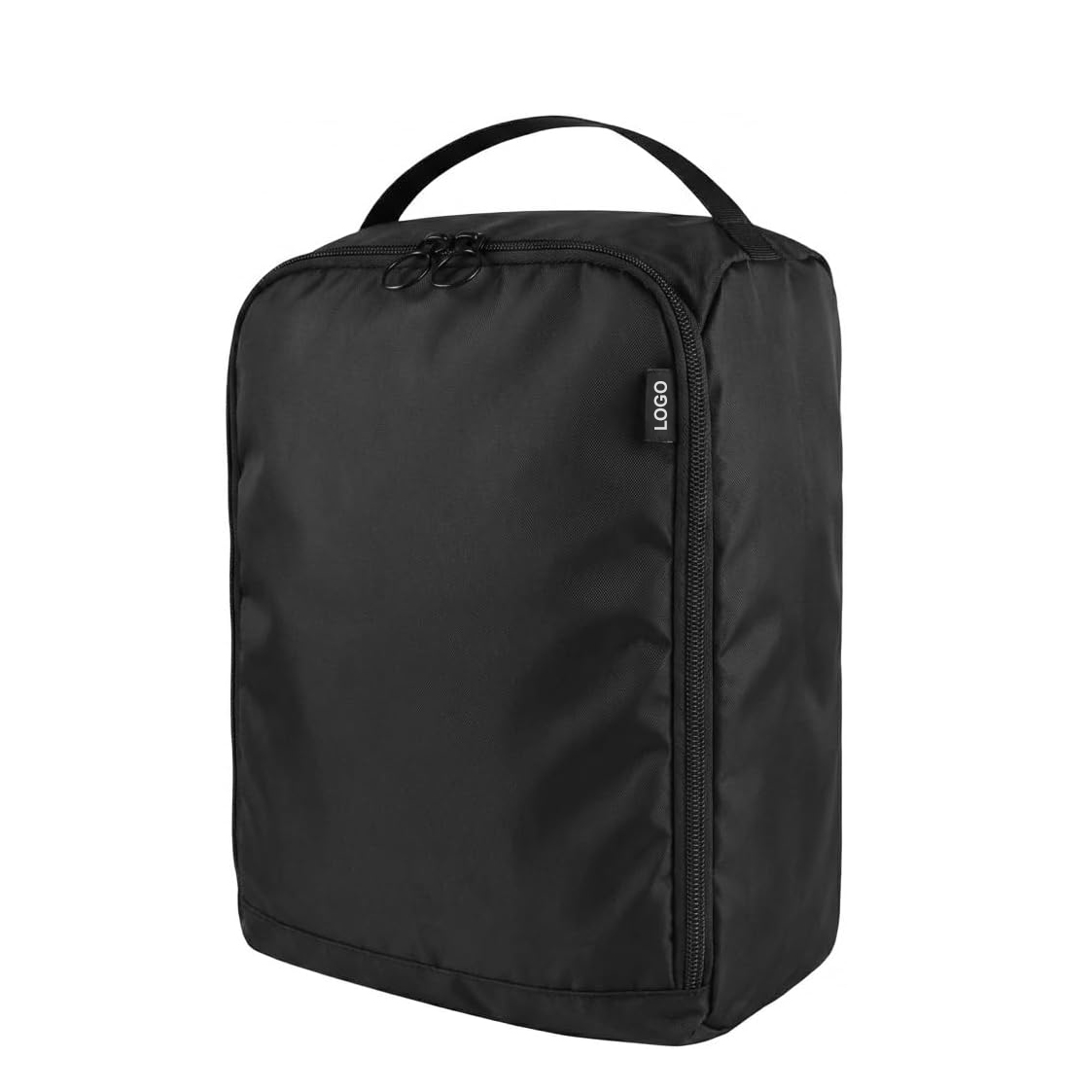
Some shoe bags include handles for easier carrying.
This design is useful when users need to transport shoes separately, such as:
- golf shoes
- gym shoes
- business footwear
- travel shoes
A handle changes the shoe bag from a simple storage pouch into a more portable accessory.
For brands, this can increase perceived value because the product feels more complete and practical.
Shoe Bag Materials: Which Material Is Best?
Choosing the right material is one of the most important decisions when developing custom shoe bags.
There is no single “best” material because different applications require different characteristics.
The right choice depends on:
- target market
- footwear type
- price range
- brand positioning
- required durability
Cotton Shoe Bags
Cotton is one of the most popular materials for premium shoe packaging.
Advantages:
- soft hand feel
- natural appearance
- reusable
- environmentally friendly image
Cotton shoe bags are often associated with:
- premium brands
- handmade products
- luxury packaging
They work especially well when the packaging itself is part of the customer experience.
For example, a high-end footwear brand may use a cotton shoe bag because it creates a more refined unboxing experience.
However, cotton may require more care compared with synthetic materials because it can absorb moisture more easily.
Canvas Shoe Bags
Canvas is a heavier and stronger cotton-based fabric.
Compared with regular cotton, canvas provides:
- better structure
- stronger durability
- thicker texture
It is suitable for brands looking for a balance between:
- premium appearance
- long-term usability
- natural material appeal
Canvas shoe bags are commonly used for:
- sneakers
- lifestyle footwear
- reusable packaging
Because canvas has a stable surface, it also works well with printing and branding.
Polyester Shoe Bags
Polyester is one of the most widely used materials for shoe bags.
Its popularity comes from several practical advantages:
- lightweight
- durable
- quick-drying
- color flexible
- affordable
Polyester shoe bags are suitable for:
- large-volume orders
- promotional campaigns
- sports products
- travel accessories
For businesses that need customized shoe bags at competitive pricing, polyester is often one of the most practical choices.
It supports many customization methods, including:
- screen printing
- heat transfer printing
- embroidery
- woven labels
Non-Woven Shoe Bags
Non-woven fabric is commonly used for economical packaging solutions.
Advantages:
- low cost
- lightweight
- easy production
- suitable for bulk orders
It is often selected for:
- promotional shoe packaging
- event giveaways
- short-term campaigns
Compared with cotton or canvas, non-woven fabric usually provides a more basic appearance.
However, when the main goal is affordable protection and branding, it can be an effective solution.
Mesh Shoe Bags
Mesh shoe bags focus on ventilation and visibility.
Their main advantages are:
- breathable structure
- lightweight design
- easy identification of contents
They are commonly used for:
- gym shoes
- sports footwear
- outdoor activities
A fully mesh construction provides maximum airflow, but many brands prefer hybrid designs combining mesh with fabric.
For example:
- mesh front panel
- polyester back panel
- zipper closure
This design improves ventilation while maintaining durability.
How Should Brands Choose the Right Shoe Bag?
For businesses, selecting a shoe bag is not only about choosing a container for footwear.
A shoe bag can influence:
- customer experience
- product presentation
- packaging costs
- brand perception
Therefore, buyers should evaluate several factors.
1. Consider Product Positioning
The shoe bag should match the footwear category.
For example:
Premium footwear brands
May prefer:
- cotton
- canvas
- soft-touch materials
because the packaging should reflect product quality.
Sports footwear brands
May prefer:
- polyester
- mesh combinations
because lightweight and ventilation are more important.
Promotional campaigns
May prefer:
because cost efficiency and branding space are key factors.
2. Consider User Experience
A shoe bag should not only protect shoes but also be convenient to use.
Important design details include:
Opening Size
A narrow opening can make it difficult to insert larger shoes.
Closure Method
Different users may prefer:
- drawstring simplicity
- zipper security
Fabric Feel
A rough fabric may reduce the premium experience.
Reusability
Reusable shoe bags can create additional value after purchase.
3. Consider Branding Opportunities
A customized shoe bag provides an additional touchpoint between brands and customers.
Possible customization options include:
- logo printing
- custom colors
- woven labels
- embroidery
- packaging sets
For footwear companies, the shoe bag can become part of the product identity rather than simply an accessory.
Shoe Bag vs Shoe Box: Which One Is Better?
When people think about shoe storage, shoe bags and shoe boxes are often compared because both are designed to protect footwear.
However, they solve different problems.
A shoe box focuses on rigid protection and long-term storage, while a shoe bag focuses on flexibility, portability, and separation.
The right choice depends on how the shoes are being used.
| Feature |
Shoe Bag |
Shoe Box |
| Portability |
Excellent |
Limited |
| Travel use |
Very suitable |
Not practical |
| Storage flexibility |
High |
Low |
| Space efficiency |
Takes little space when empty |
Requires fixed space |
| Protection from dust |
Good |
Excellent |
| Custom branding |
Easy |
More limited |
| Reusability |
High |
Medium |
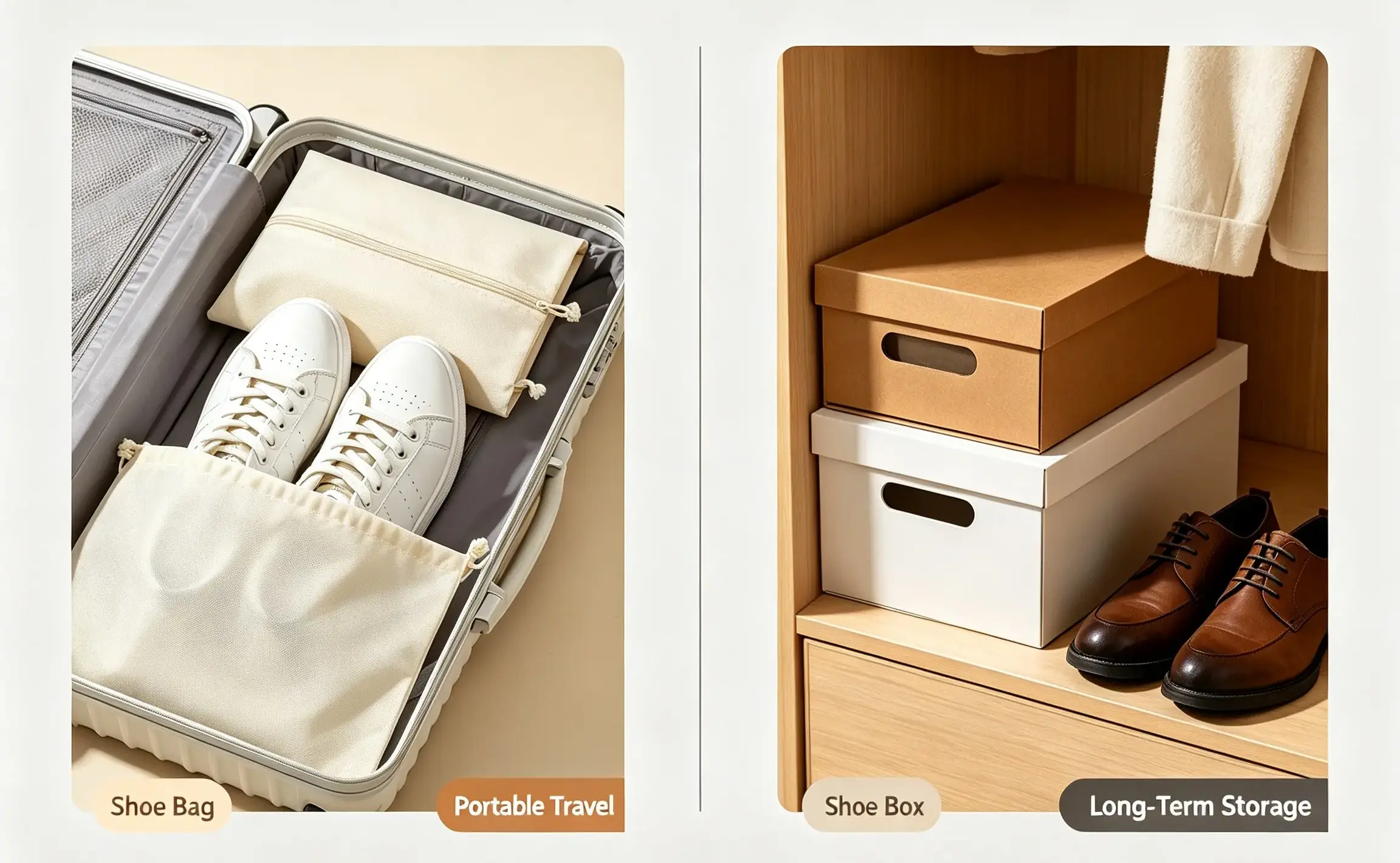
When Should You Choose a Shoe Bag?
A shoe bag is usually the better option when users need:
- travel convenience
- lightweight packaging
- flexible storage
- easy transportation
For example, travelers can place several shoe bags inside luggage without adding much weight or taking up unnecessary space.
For footwear brands, shoe bags can also replace traditional disposable packaging and create additional customer value.
When Is a Shoe Box More Suitable?
Shoe boxes are better for:
- retail shelf presentation
- long-term collection storage
- stacking multiple products
- protecting structured footwear
For example, collectors storing limited-edition sneakers may prefer shoe boxes because they provide stronger physical protection.
However, shoe boxes are bulky and less convenient for transportation.
How to Choose the Right Shoe Bag Size?
One common mistake when purchasing shoe bags is choosing based only on appearance.
A shoe bag should have enough space for the actual footwear type.
A bag that is too small can create several problems:
- difficult insertion
- unnecessary pressure on shoes
- damaged zipper or seams
- uncomfortable user experience
When selecting shoe bag sizes, buyers should consider:
- shoe length
- shoe height
- shoe width
- sole thickness
- intended footwear category
Small Shoe Bags
Suitable for:
- slippers
- sandals
- lightweight footwear
- children's shoes
These bags are usually compact and easy to carry.
Medium Shoe Bags
Suitable for:
- sneakers
- casual shoes
- running shoes
- everyday footwear
This is the most common size category because it fits many standard shoe styles.
Large Shoe Bags
Suitable for:
- boots
- hiking shoes
- larger sneakers
- bulky footwear
Large shoe bags often require:
- wider openings
- stronger fabrics
- reinforced stitching
For brands selling different footwear categories, offering multiple sizes can improve customer satisfaction.
Custom Shoe Bags for Brands and Businesses
For companies, a shoe bag is not only a functional product.
It can also become a branding tool.
Many businesses use custom shoe bags for:
- footwear packaging
- retail accessories
- promotional gifts
- travel sets
- sports programs
A customized shoe bag can extend brand exposure because customers often reuse practical packaging.
1. Shoe Bags as Footwear Packaging
Footwear brands increasingly look beyond traditional packaging.
A shoe bag can provide:
- product protection
- premium unboxing experience
- reusable packaging value
Instead of customers throwing away packaging after purchase, a reusable shoe bag can continue serving a purpose.
This creates additional brand contact after the purchase.
2. Shoe Bags for Promotional Campaigns
Custom shoe bags are also suitable for promotional programs.
Examples include:
- sports events
- corporate gifts
- travel campaigns
- wellness programs
Their advantages include:
- practical daily use
- affordable customization
- large logo area
- lightweight shipping
Compared with many promotional products that are rarely used, shoe bags provide functional value.
3. Shoe Bags for Travel Product Collections
Some brands create travel accessory collections that include:
- packing cubes
- toiletry bags
- laundry bags
- shoe bags
In these sets, the shoe bag plays an important role by separating footwear from other travel items.
A coordinated design system can improve overall product presentation.
What Customization Options Are Available for Shoe Bags?
Depending on the product positioning, businesses can customize:
Material
Options include:
- cotton
- canvas
- polyester
- non-woven
- mesh
Closure Style
Common choices:
- drawstring closure
- zipper closure
The choice depends on:
- target price
- user preference
- protection requirements
Printing and Branding
Common customization methods include:
- screen printing
- heat transfer printing
- embroidery
- woven labels
The printable area of a shoe bag provides a valuable space for brand communication.
Color and Design
Brands can customize:
- fabric colors
- logo colors
- matching packaging sets
- seasonal designs
This helps the shoe bag become part of the overall brand identity.
Are Shoe Bags Only Used for Shoes?
Although shoe protection is the primary purpose, shoe bags can have additional uses.
Many users reuse them for:
- travel accessories
- gym items
- laundry organization
- cables and small products
- personal belongings
This versatility increases the practical value of the product.
However, the original purpose remains footwear protection and organization.
A good shoe bag should first perform its main function effectively before adding extra features.
FAQ
What is the main purpose of a shoe bag?
The main purpose of a shoe bag is to protect shoes and keep them separated from other belongings. It helps prevent dirt, dust, and surface friction from affecting clothes or other items while improving organization during travel and storage.
Are shoe bags necessary for travel?
Shoe bags are especially useful for travelers because they keep shoe soles away from clean clothing and make luggage easier to organize. They are commonly used for sneakers, hiking shoes, sandals, and formal footwear.
Can a shoe bag protect shoes from water?
Most fabric shoe bags are designed for dust protection and organization rather than complete waterproof protection.
If moisture resistance is required, buyers should consider specialized coated materials or water-resistant fabrics.
What material is best for a shoe bag?
The best material depends on the application.
- Cotton: premium and soft
- Canvas: durable and structured
- Polyester: lightweight and cost-effective
- Mesh: breathable
- Non-woven: economical for bulk orders
There is no single best material for every purpose.
Are shoe bags reusable?
Yes. Many shoe bags are designed for repeated use.
Reusable shoe bags can provide long-term value because they continue protecting shoes after the original purchase.
Can shoe bags be customized with logos?
Yes. Custom shoe bags can include logos, colors, labels, and other branding elements.
They are commonly used by footwear brands, retailers, and promotional companies.
What size shoe bag should I choose?
The correct size depends on the footwear type.
Standard sneakers usually fit medium sizes, while boots and oversized shoes require larger designs.
Businesses should consider their target footwear category before selecting dimensions.
Conclusion
A shoe bag may be a small accessory, but its purpose is surprisingly important.
For everyday users, it keeps shoes organized, protects belongings, and makes travel easier.
For brands and businesses, it offers additional opportunities beyond basic protection. A customized shoe bag can improve product presentation, support reusable packaging goals, and create another way for customers to interact with a brand.
The right shoe bag depends on several factors, including:
- footwear type
- material selection
- closure design
- size requirements
- brand positioning
At INITI, we help businesses create customized fabric bags for different applications, including shoe bags, travel accessories, promotional products, and retail packaging solutions. With flexible material choices, custom designs, and production experience, we work with brands to develop practical and market-ready bag solutions.
A well-designed shoe bag protects more than footwear — it protects the overall product experience.
Related Products



 Hot News