A makeup bag is used to store products that come into direct contact with the skin, including foundation, concealer, lipstick, mascara, makeup brushes, and beauty sponges. Over time, traces of these products can accumulate inside the bag. Powder settles into corners, foundation leaves oily marks on the lining, and small cosmetic residues collect around zippers and seams.
Even when the outside of a makeup bag looks clean, its interior may contain a mixture of makeup residue, dust, skin oils, and product spills. If the bag is not cleaned regularly, these residues can become harder to remove and may contribute to unpleasant odors.
However, cleaning a makeup bag is not as simple as putting it into a washing machine. Different bags are manufactured from different materials, and their linings, coatings, padding, printed surfaces, and hardware may respond differently to water, detergents, and cleaning products.
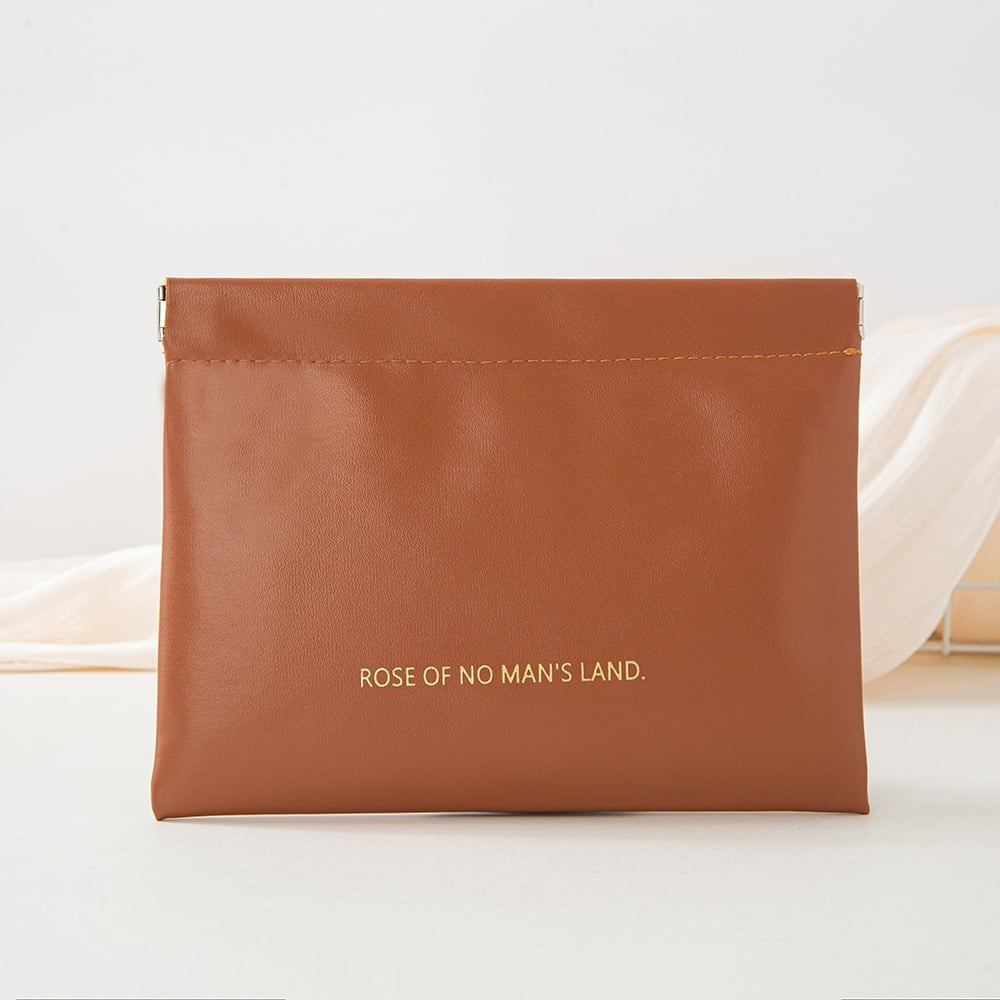
For example, a cotton makeup pouch may tolerate gentle hand washing, while a PU leather cosmetic bag is better cleaned with a damp cloth. A clear PVC makeup bag can usually be wiped clean relatively easily, but excessive heat may deform the material.
Knowing how to clean a makeup bag correctly helps maintain its appearance, extend its useful life, and keep its storage space in better condition.
This guide explains how to clean makeup bags step by step, how to remove common cosmetic stains, which cleaning methods work for different materials, and how to prevent dirt and residue from building up again. It also covers practical design considerations that make cosmetic bags easier to maintain.
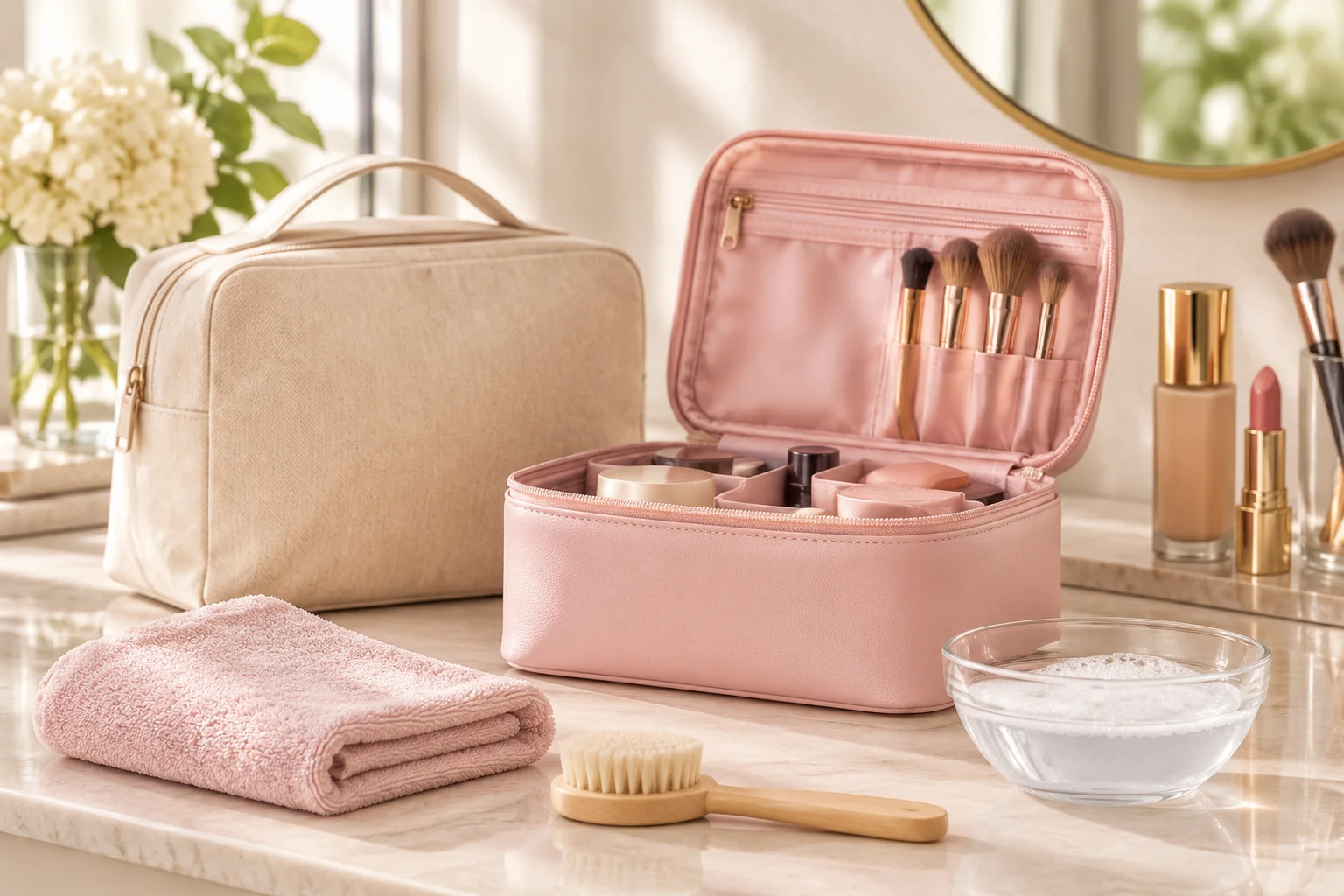
The Anatomy of Cosmetic Spills: Stain Chemistry & Residue Matrix
Effective stain removal and material maintenance begin with understanding what cosmetic residues are made of. Beauty products are not uniform substances; they are engineered chemical formulations comprising pigments, binders, volatile solvents, heavy waxes, plant oils, silicones, and synthetic film-formers. Each component interacts differently with textile fibers, synthetic films, and porous coatings.
Cosmetic Residue Matrix
| Cosmetic Category |
Primary Chemical Constituents |
Common Residue Characteristics |
High-Risk Accumulation Zones |
| Loose & Setting Powders |
Talc, mica, silica, zinc stearate, mineral iron oxides |
Dry, fine, airborne particulates; hydrophobic; turns into dense paste if wetted prematurely |
Bottom corners, seam allowances, zipper tape, fabric weave crevices |
| Pressed Powders & Shadows |
Micronized pigments, mineral fillers, binding oils, dimethicone |
Fractured cake debris, pigmented smears, light lipid adhesion |
Main floor panel, interior pockets, divider corners |
| Liquid & Cream Foundations |
Water-in-silicone or water-in-oil emulsions, titanium dioxide, iron oxides, dimethicone, cyclopentasiloxane |
Thick, oily, highly pigmented liquid films; readily penetrates porous woven fibers |
Lower bottom panel, side walls, lining seams |
| High-Coverage Concealers |
High pigment concentration, synthetic waxes, microcrystalline wax, mineral oils |
Dense, highly adherent, sticky waxy patches |
Pocket pleats, corners, seam junctions |
| Lipsticks & Lip Glosses |
Carnauba wax, beeswax, ozokerite, synthetic oils, castor oil, lake dyes |
Hydrophobic, melting wax films, intense lipid-based staining with oil-soluble dyes |
Interior pockets, base corners, direct fabric contact zones |
| Mascara (Standard & Waterproof) |
Iron oxide black, isoparaffin, beeswax, carnauba wax, synthetic film-forming polymers (PVP/polyurethane) |
Hard, waxy, insoluble dark flakes or stubborn, sticky dark streaks |
Narrow corners, brush slot interiors, zipper fabric |
| Liquid & Gel Eyeliners |
Carbon black, acrylic/acrylate polymers, volatile silicones, fast-evaporating solvents |
Ultra-concentrated pigment lines; water-resistant once cured |
Interior lining, piping edges, thread seams |
| Skincare Serums & Oils |
Squalane, botanical lipids, vitamin E, triglycerides, essential oils |
Clear or translucent greasy rings; oxidizes over time into rancid, yellowish residues |
Bag floor, lower structural corners |
| Physical/Chemical Sunscreens |
Zinc oxide, titanium dioxide, avobenzone, octocrylene, butyloctyl salicylate |
Chalky white marks or yellowish greasy deposits; can chemically react with washing surfactants |
Interior walls, bottom lining, exterior handles |
| Nail Polishes & Top Coats |
Nitrocellulose, ethyl acetate, butyl acetate, plasticizers, resins |
Hard, impermeable, insoluble plasticized enamel coating |
Direct drop zones, interior pockets |
The Critical Rule of Dry vs. Wet Residue
The single most common mistake in makeup bag cleaning is immediately applying a wet sponge or wet wipe to an interior coated in loose setting powder or crushed eyeshadow.
Mineral powders (talc, mica, silica) are engineered to repel light moisture and absorb skin oils. When wetted prematurely inside a bag, dry powder particles instantly turn into a dense, viscous pigment paste. This slurry is forced deep into the microscopic interlacing of woven fabric threads, seams, and lining pores, transforming a simple dry dusting task into an aggressive, deep-set pigment stain. Therefore, dry mechanical extraction must always precede any liquid intervention.
How Often Should You Clean Your Makeup Bag?
There is no universal cleaning schedule for every makeup bag. The appropriate frequency depends on how often the bag is used, what products it contains, whether it is carried during travel, and how easily its interior becomes dirty.
A makeup bag used every day to carry liquid foundation, concealer, and brushes will generally require more frequent attention than a small pouch used occasionally for a few lipstick products.
It is useful to distinguish between three types of cleaning:
- Daily or occasional maintenance: Removing loose powder, checking for leaks, and wiping obvious marks.
- Regular cleaning: Cleaning the interior and exterior to prevent cosmetic residue from accumulating.
- Deep cleaning: Cleaning the lining, seams, corners, pockets, and other areas where dirt may have collected.
Recommended Makeup Bag Cleaning Schedule
The following table provides practical starting points rather than strict hygiene rules.
Usage Situation |
Recommended Cleaning Frequency |
Main Cleaning Tasks |
Daily makeup bag |
Quick inspection several times a week; wipe weekly |
Remove powder, clean small spills, wipe the lining |
Occasionally used makeup bag |
Every 4–8 weeks, depending on use |
Remove dust, check products, clean visible stains |
Travel makeup bag |
After each trip |
Remove spills, wipe the interior, clean the exterior |
Makeup artist's professional bag |
After each working session or client, as appropriate |
Clean contact surfaces, separate used tools, remove cosmetic residue |
Makeup bag containing liquid products |
Inspect frequently; spot clean immediately after leaks |
Remove foundation, concealer, skincare, and oil stains |
Makeup bag used for brushes and sponges |
Weekly inspection, with cleaning whenever tools are used |
Remove loose powder and prevent damp tools from being stored inside |
These intervals should be adjusted according to actual conditions. A bag that contains a leaking foundation bottle should be cleaned immediately rather than waiting for its scheduled cleaning day.
For a makeup bag used every day, a quick weekly wipe-down and a more thorough cleaning every month can be a reasonable routine. However, a bag that remains relatively clean may not need a full wash every month.
Essential Cleaning Supplies, Tools & Solution Chemistry
Achieving pristine cleaning results without degrading fabric coatings, weakening stitching, or tarnishing metallic hardware requires assembling the correct toolkit and choosing mild, pH-balanced cleaning agents.
| Tool / Supply |
Primary Function |
Technical Specification / Recommendation |
Inappropriate Substitutes (To Avoid) |
| Microfiber Cleaning Cloths |
Surface wiping, surfactant application, moisture extraction |
High-density 300–400 GSM, split-microfiber (80% polyester, 20% polyamide), lint-free |
Terry cloth towels (sheds lint), paper towels (leaves cellulose pulp in seams) |
| Ultra-Soft Detailing Brush |
Dislodging dry powders, cleaning delicate seams and logo embroidery |
Synthetic nylon or horsehair bristles; feather-soft tip density |
Stiff wire brushes, coarse bristle scrubbing brushes (frays thread) |
| Precision Cotton Swabs |
Cleaning narrow zipper teeth, piping crevices, pocket corners |
Tightly spun cotton tips, wooden or stiff paper stems |
Toothpicks (punctures lining), standard loose cotton balls (leaves fibers) |
| Mild Liquid Dish Soap |
Emulsifying greasy foundation, lipstick waxes, and cosmetic oils |
pH-neutral (pH 6.5–7.5), dye-free, fragrance-free concentrated surfactant |
Industrial degreasers, harsh hand soaps containing moisturizers/lotions |
| Gentle Liquid Laundry Detergent |
Cleaning washable cotton, canvas, and polyester textiles |
Enzyme-containing, color-safe, phosphate-free liquid formulation |
Powder detergents (leave undissolved granular streaks), bleach-based soaps |
| Micellar Water (Oil-Free) |
Pre-treating stubborn cosmetic pigments, mascaras, and liquid liners |
Biphasic or pure micellar water; oil-free formula |
Acetone, chemical paint thinners, pure mineral spirits |
| Isopropyl Alcohol (70% Max, Diluted) |
Targeted sanitization of non-porous synthetic vinyl/TPU |
70% v/v pharmaceutical grade; diluted 1:1 with distilled water |
Denatured alcohol, industrial solvent alcohol, 99% pure alcohol (cracks PVC/PU) |
| Absorbent Microfiber Drying Towel |
Rapid mechanical water extraction without wringing |
500+ GSM plush microfiber towel |
Heated tumble dryer, direct radiant heater, radiator contact |
| Mesh Laundry Washing Bag |
Protecting machine-washable cotton/polyester pouches |
Fine honeycomb mesh with zipper lock cover |
Coarse open-net bags, washing unprotected with heavy garments |
Chemical Hazards & Inappropriate Cleaning Agents
Many household cleaning products that work wonders on ceramic tile, kitchen counters, or denim jeans are destructive when applied to cosmetic bags. Using the wrong solvent can permanently strip waterproof polyurethane backings, cloud transparent PVC windows, melt synthetic leather topcoats, dissolve seam bonding adhesives, and corrode metallic zippers.
Chemical Incompatibility and Material Damage Matrix
| Inappropriate Cleaning Agent |
Target Materials Affected |
Primary Chemical Failure Mode |
Severity & Permanent Outcome |
| Chlorine Bleach (Sodium Hypochlorite) |
Cotton, canvas, polyester, nylon, metal zippers |
Breaks peptide bonds in natural fibers; oxidizes dyes; degrades nylon polymer chains |
Severe: Irreversible yellowing, structural fiber rotting, rusted metal zippers |
| Acetone & Nail Polish Removers |
PU leather, PVC, TPU, polyester linings, printed logos |
Aggressive polar solvent dissolves synthetic topcoats, melts vinyl, liquefies ink |
Catastrophic: Immediate melting, sticky gummy surface, permanent opaque scarring |
| Undiluted Isopropyl Alcohol (75%) |
Clear PVC, PU faux leather, coated linings |
Leaches plasticizers from flexible vinyl; dissolves polyurethane binder resins |
Severe: Vinyl embrittlement, yellowing, surface cracking, peeling faux leather |
| Abrasive Scouring Powders & Pads |
Clear PVC, TPU, metallic hardware, smooth PU |
Mechanical gouging via mineral abrasive grains (calcium carbonate, silica) |
Moderate-Severe: Permanent micro-scratching, loss of optical clarity, dull hardware |
| Strong Alkaline Cleaners (pH 9.5) |
Natural wool/silk blends, anodized aluminum, coatings |
Saponification of protective finishes; weakens synthetic thread tensile strength |
Moderate: Color bleeding, loss of water repellency, seam failure under tension |
| High-Temperature Water (50°C) |
Cotton canvas, bonded foams, thermo-taped seams |
Causes severe cellulosic fiber shrinkage; softens hot-melt bonding glues |
Severe: Bag warping, delaminated foam layers, bubbling exterior shell |
Detailed Failure Mechanisms of Harmful Chemicals
- Chlorine Bleach: Chlorine bleach attacks both organic and synthetic polymers. On natural cotton, it hydrolyzes cellulose molecules, leading to thread snapping at seam lines. On synthetic polyester and nylon, chlorine causes permanent chemical yellowing that cannot be reversed. Furthermore, chlorine vapor accelerates the galvanic corrosion of zinc-alloy zipper sliders and brass rivets.
- Acetone & Ethyl Acetate: These organic solvents have solubility parameters that closely match those of polyurethane (PU), polyvinyl chloride (PVC), and thermoplastic polyurethane (TPU). When acetone touches a PU vanity case, it instantaneously dissolves the polymer chains of the surface skin, creating a permanent sticky mess that ruins the bag.
- High-Proof Alcohol Formulations: Pure rubbing alcohol acts as a powerful dehydrating agent and plasticizer extractor. When applied to clear PVC travel organizers, it extracts the phthalate or non-phthalate plasticizers that keep the vinyl flexible. Within days, the clear plastic becomes stiff, cloudy, and prone to shattering along fold lines.
- Abrasive Scouring Compounds: Scouring powders contain hard mineral particles that act like sandpaper on soft synthetic polymers. Using a scouring pad on a transparent makeup bag destroys its optical clarity, leaving a hazy, abraded finish that permanently traps cosmetic grime.
The Master 10-Step Universal Cleaning Protocol
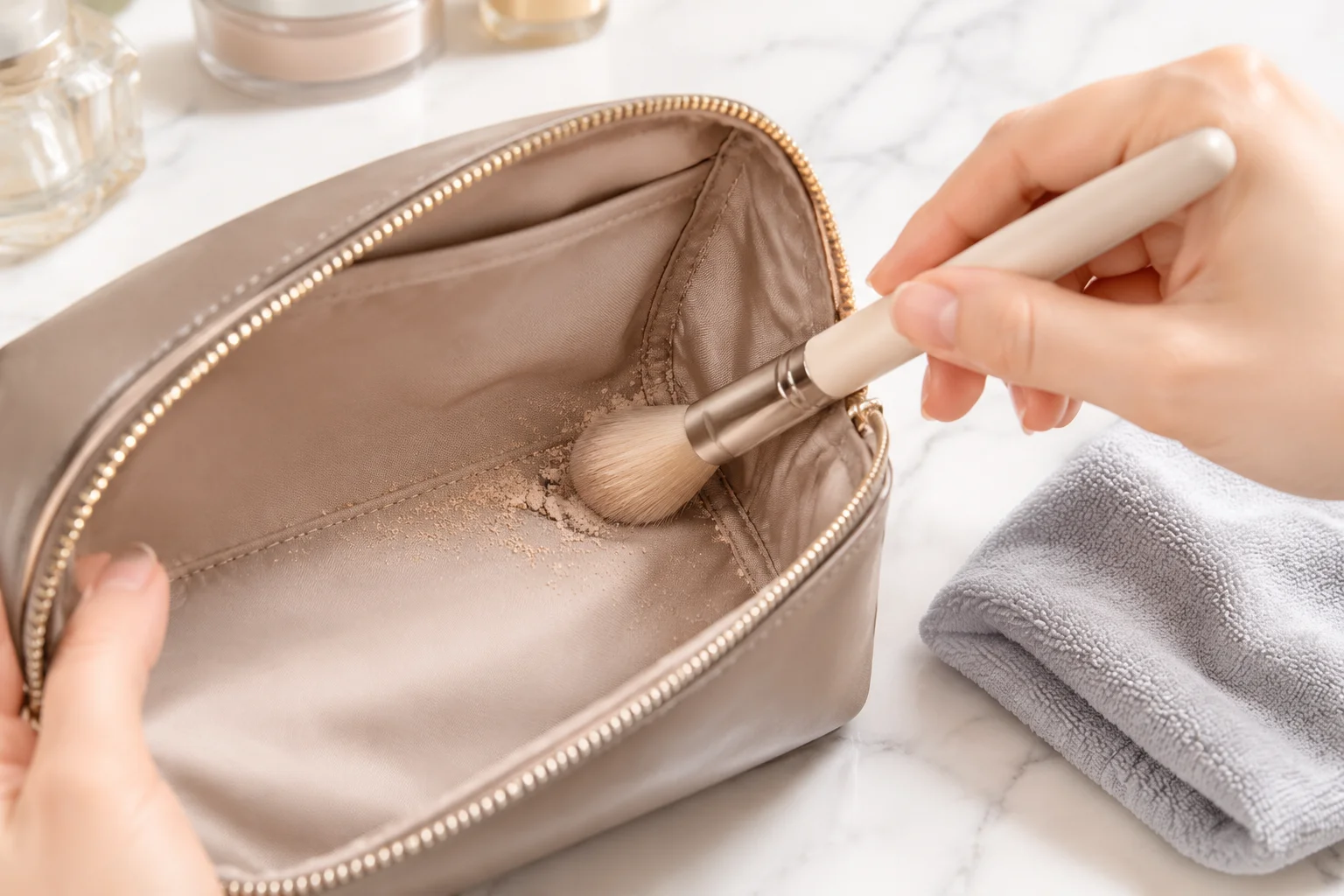
Regardless of whether you are cleaning a soft cotton pouch, a multi-tier professional travel case, or a sleek faux-leather vanity kit, following a methodical, standardized cleaning procedure prevents damage, optimizes stain removal, and guarantees structural preservation.
Step 1: Complete Depletion & Deconstruction
Remove every single cosmetic container, tool, brush, hair clip, and accessory from the bag. Open all secondary compartments, pull-out brush flaps, detachable hook-and-loop dividers, and zippered mesh pockets. Never leave small items inside under the assumption they are clean. Even a single cap from an eyeliner pencil can harbor concentrated pigments that will dissolve and bleed across wet fabric during cleaning.
Step 2: Cosmetic Tool & Container Sanitization
Wipe down the exterior of all cosmetic bottles, compact cases, lipstick tubes, and foundation pumps with an alcohol wipe or damp microfiber cloth before they are eventually repacked. Storing dirty cosmetic bottles back into a freshly cleaned bag instantly re-contaminates the lining. Separate makeup brushes and sponges for independent deep cleaning and drying.
Step 3: Mechanical Inverted Dry Dusting
Take the completely emptied bag, open all zippers to their maximum width, and invert the bag over a waste receptacle. Gently tap the base to dislodge loose powder grains. Using an ultra-soft detailing brush, sweep all internal seams, structural corner folds, pleated divider bases, and zipper fabric tapes. Use a dry microfiber cloth to pick up fine dust from flat surfaces. Do not introduce any water or liquid until all loose particulate matter is 100% removed.
Step 4: Architectural & Material Identification
Inspect the product care label (if present) and analyze the bag's construction. Determine whether the exterior is woven cotton, technical nylon, PU leather, or clear PVC; identify if the lining is a loose-floating synthetic, a laminated TPU membrane, or a heat-sealed vinyl; and check for structural stiffeners (EVA foam, cardboard core, or polyethylene plates). If the bag incorporates internal cardboard stiffener plates, it must never be submerged in water.
Step 5: Formulate Mild Surfactant Solution
For washable fabric surfaces, prepare a small amount of mild liquid detergent in cool or lukewarm water.The solution should be diluted rather than concentrated.There is no single detergent-to-water ratio suitable for every fabric, because detergent formulations and material finishes vary.For small stains, a few drops of mild detergent in a bowl of water are generally sufficient as a starting point.For PU leather and PVC, a damp cloth with a small amount of mild soap may be enough.Avoid adding bleach, strong solvents, or several cleaning products together.
Step 6: Interior Lining Precision Remediation
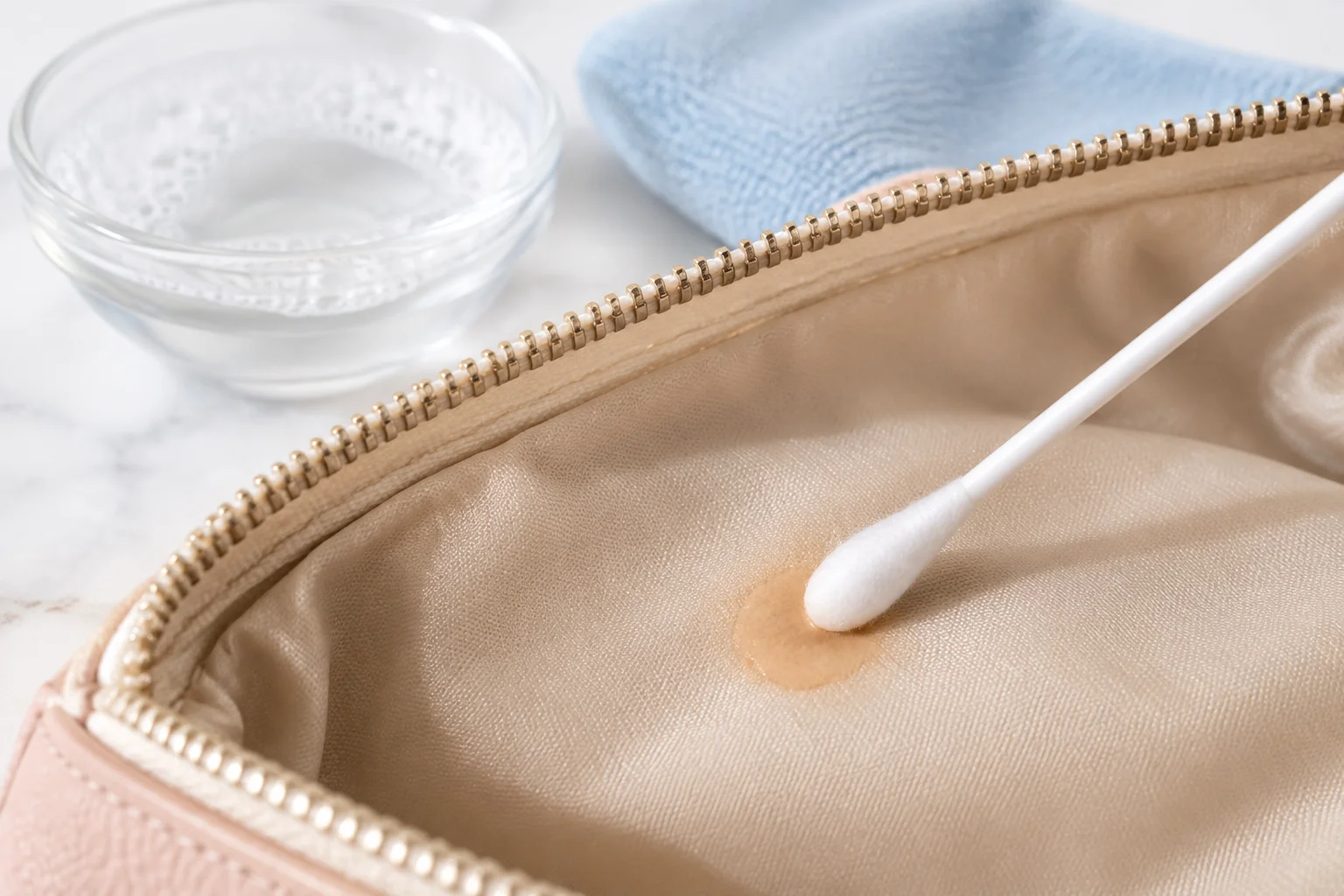
Dip a clean microfiber cloth into the surfactant solution and wring it out thoroughly until it is merely damp, not dripping. If the bag has a floating lining, pull the lining outward away from the shell. Wipe the interior surface systematically from top to bottom. For stubborn foundation or lipstick marks, apply a drop of diluted surfactant directly onto a cotton swab and massage the stain in tight circular motions from outer perimeter to center.
Step 7: Exterior Shell Targeted Cleansing
Clean the exterior fabric or synthetic shell according to its specific material requirements. Use a fresh section of the damp microfiber cloth. Avoid applying excessive moisture over brand logos, gold/silver foil stamping, intricate embroidery, or heat-sealed decorative badges.
Step 8: Hardware, Zipper & Crevice Detailing
Using a slightly damp cotton swab or an ultra-soft toothbrush, gently brush along both sides of the zipper track to clear cosmetic residue and dust trapped between the teeth. Clean around metallic zipper pullers, D-rings, magnetic snap buttons, and handle rivets. Immediately dry all metal hardware using a clean, dry cloth to prevent water spotting and long-term oxidation.
Step 9: Surfactant Extraction & Neutral Clean Rinse
Detergent residue left inside fabric fibers acts as a chemical magnet for dust and cosmetic powder once dried. Submerge a fresh microfiber cloth in pure, clean, lukewarm water (without detergent) and wring it out completely. Thoroughly wipe down all interior and exterior surfaces previously treated with soap. Repeat this wiping process 2–3 times until zero soap slickness remains.
Step 10: Structured Moisture Wicking & Ambient Air Drying
Lay the bag flat on a clean, dry, highly absorbent microfiber towel. Gently press another dry towel against both the interior and exterior to wick away free moisture. Never twist or wring the bag. Open all zippers and prop the bag open in a well-ventilated, shaded indoor room. If the bag is soft and collapsible, lightly stuff the interior with clean white towels or acid-free tissue paper to support its natural structural shape while air-drying for 24 to 48 hours.
Material-Specific Cleaning & Maintenance Masterclass
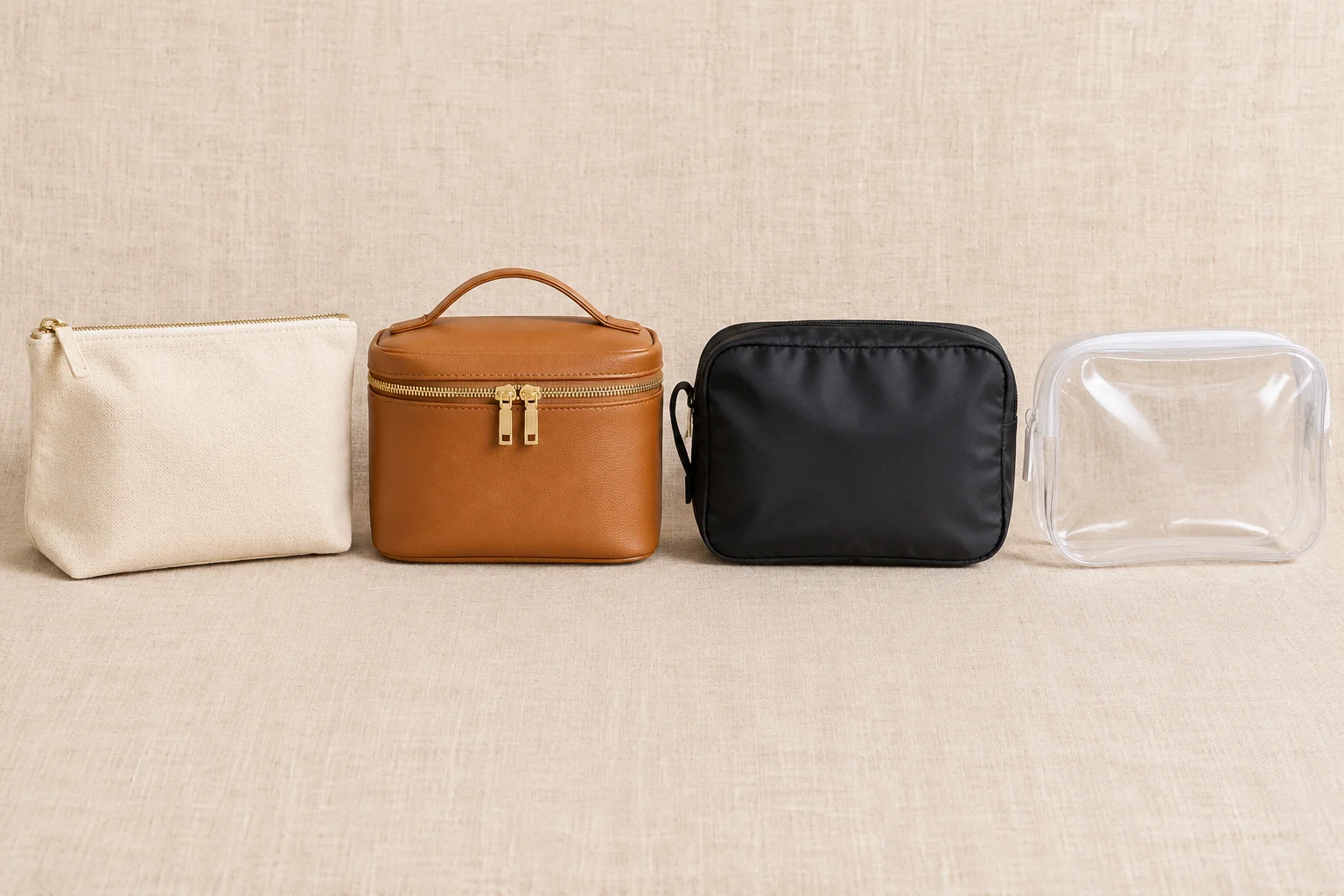
The cleaning method should be determined primarily by the material and construction rather than by the bag's appearance.
Two makeup bags may look almost identical but require different care because one uses untreated cotton while the other uses coated synthetic fabric.
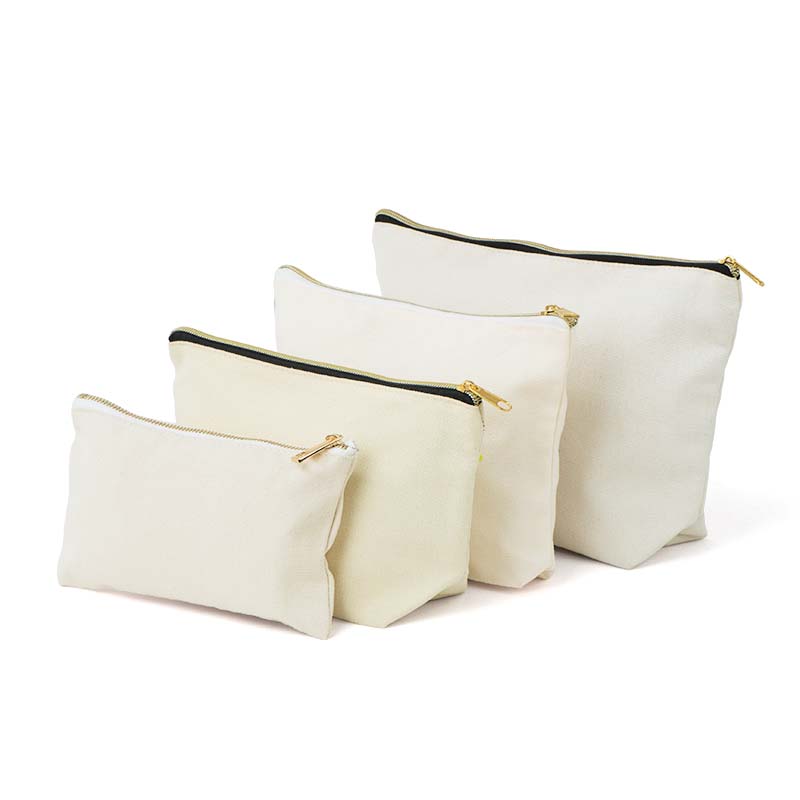
Natural Cotton & Heavy Cotton Canvas
Cotton is a natural cellulosic fiber prized for its soft hand-feel, biodegradability, and excellent printability. However, cotton is inherently hydrophilic—it rapidly absorbs water, oils, and liquid pigments, drawing them deep into its fiber lumen.
Structural Vulnerabilities: Unwashed raw cotton canvas can suffer 5%–10% dimensional shrinkage if exposed to hot water or heated dryers. Bright or dark direct dyes are prone to color bleeding.
Cleaning Protocol:
- Always pre-treat dry powders mechanically before introducing liquids.
- Treat localized foundation or oil spots with a diluted dish soap solution using a soft-bristled brush.
- If the care label permits full washing, submerge in cold water (<30°C) with mild liquid detergent. Agitate gently by hand for 2–3 minutes.
- Rinse with cold water until clear. Press flat between two towels to remove water.
- Reshape the bag manually along its seam lines and dry flat in the shade.
B2B Engineering Note: If manufacturing cotton cosmetic bags, specifying a water-resistant interior lining (such as a 210D polyester backing or a light TPU lamination) prevents liquid makeup spills from migrating through to the exterior cotton shell.
Synthetic Polyester & Recycled rPET Textiles
Polyester is the most widely utilized material for commercial makeup bags and interior linings (e.g., 150D, 210D, 300D, 600D Oxford). It is lightweight, dimensionally stable, resistant to biological degradation, and has low natural moisture absorption.
Structural Vulnerabilities: Many polyester fabrics feature a clear Polyurethane (PU) or Polyvinyl Chloride (PVC) backing coat on the reverse side to provide water resistance and structural body. Aggressive machine agitation or harsh detergents can cause this internal coating to crack, flake, or peel away.
Cleaning Protocol:
- Use a damp microfiber cloth infused with diluted mild detergent.
- Wipe the fabric in the direction of the weave.
- For stubborn stains, use an enzyme-based fabric cleaner pre-tested on an interior seam.
- Wipe clean with a fresh damp cloth. Never wring or twist.
- Air dry away from direct heaters.
Technical Nylon (Ripstop, Ballistic & Crinkle Nylon)
Nylon (Polyamide) offers superior tensile strength, exceptional abrasion resistance, and a silky, flexible drape. High-grade nylon cosmetic bags often feature Durable Water Repellent (DWR) surface finishes.
Structural Vulnerabilities: Nylon is susceptible to thermal degradation and UV-induced oxidation. Hot water and high-heat drying weaken nylon fibers and cause puckered, wavy seams.
Cleaning Protocol:
- Surface-clean using cool water and mild pH-neutral soap.
- Avoid vigorous scrubbing, which can abrade the DWR finish or create fuzzy surface pilling.
- Remove soap residue thoroughly with clean cold water.
- Hang dry in a well-ventilated, shaded environment.
Polyurethane (PU) & Vegan Leather
PU synthetic leather provides a luxurious, leather-like aesthetic with a smooth, non-porous surface. It consists of a woven or non-woven fabric base coated with a layer of polyurethane resin that is embossed with grain textures.
Structural Vulnerabilities: PU leather is strictly non-washable. It cannot be submerged in water. Immersion causes water to penetrate the backing substrate, leading to hydrolysis—a chemical degradation that results in bubbling, cracking, and peeling of the topcoat. PU is also extremely sensitive to organic solvents (acetone, pure alcohol, toluene).
Cleaning Protocol:
- Wipe the exterior with a soft microfiber cloth lightly moistened with clean water and a trace amount of mild foam soap.
- For ink or pigment marks, use a specialized synthetic leather cleaner; never rub with rubbing alcohol or nail polish remover.
- Immediately buff the surface completely dry with a dry microfiber cloth.
- Condition every 6 months with a water-based synthetic leather protector to preserve flexibility and prevent surface micro-cracking.
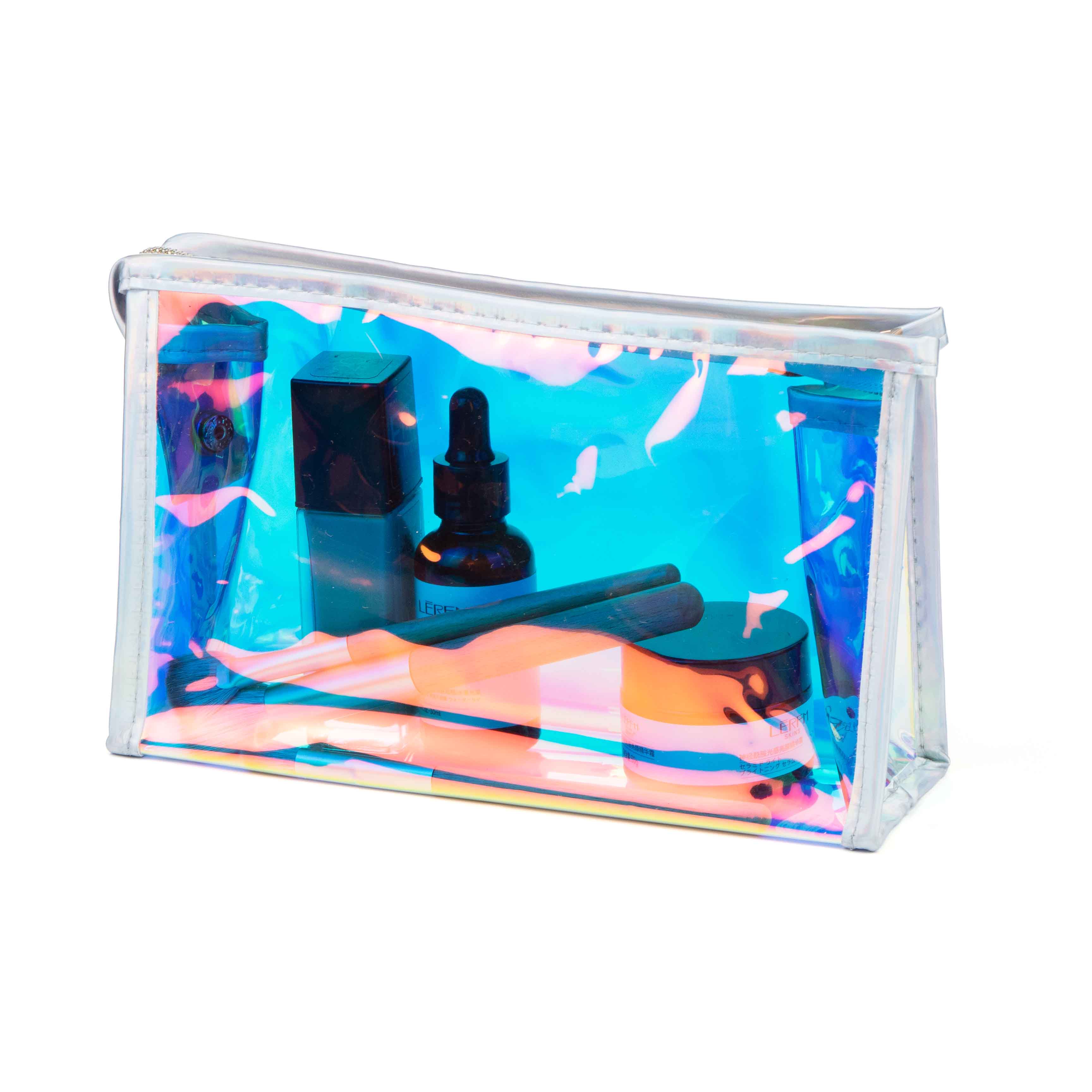
Transparent Polymers: Clear PVC, TPU & EVA
Clear cosmetic bags are essential for airport security travel compliance (TSA 3-1-1 rules) and provide immediate visual inventory of products.
Material Differences:
- PVC (Polyvinyl Chloride): Economical, rigid, high clarity; contains plasticizers that can migrate or stiffen in cold temperatures.
- TPU (Thermoplastic Polyurethane): Premium, highly flexible, eco-friendly, superior abrasion resistance, plasticizer-free, excellent low-temperature flexibility, highly resistant to yellowing.
- EVA (Ethylene Vinyl Acetate): Semi-translucent, rubbery matte touch, chlorine-free, lightweight.
Structural Vulnerabilities: Transparent polymers scratch easily under abrasive friction. Solvents (acetone) will instantly dissolve the surface, leaving permanent milky, opaque scars. Prolonged heat causes optical distortion and yellowing.
Cleaning Protocol:
- Blow or brush away loose abrasive dust particles before touching the surface.
- Clean using a soft microfiber cloth with lukewarm water and a drop of mild liquid dish soap.
- Wipe gently in straight lines; avoid aggressive circular scouring.
- To remove fingerprints and restore optical clarity, use a diluted 1:1 mixture of distilled water and white vinegar or a specialized plastic/acrylic cleaner.
- Dry thoroughly with a plush, scratch-free microfiber cloth to eliminate water spotting.
Food-Grade & High-Flexibility Silicone
Monolithic molded silicone makeup pouches and brush holders have surged in popularity due to their modern minimalist look and seamless, water-impermeable design.
Structural Vulnerabilities: Silicone attracts electrostatic dust and lint. While the silicone body itself is nearly indestructible under hot water, any integrated metal zippers, fabric zip tapes, or magnetic clasps can corrode or fail if soaked.
Cleaning Protocol:
- If the pouch is 100% silicone (with no fabric or paper components), wash under warm running water with antibacterial dish soap.
- If it contains a fabric zipper tape, wipe the silicone shell with a soapy cloth and avoid submerging the zipper tape.
- Rinse thoroughly under running water.
- Wipe dry with a lint-free cloth or allow to air dry. A tiny pinch of cornstarch dusted on the exterior can eliminate post-wash surface stickiness if desired.
Luxury Textiles: Velvet, Silk, Satin, Neoprene & Tyvek
- Velvet & Chenille: Never apply heavy water or scrub, as moisture permanently crushes the raised textile pile. Use dry brushing with a soft velvet brush. Spot-clean stubborn oil stains using dry foam shampoo, dabbing gently with a microfiber sponge.
- Silk & Satin: Highly prone to permanent water-spotting rings. Dry clean only, or spot-treat using a professional silk-safe formulation.
- Neoprene: Hand wash in cold water with gentle detergent; never machine dry, as heat degrades the internal chloroprene rubber foam core.
- Tyvek® & Washable Kraft Paper: Unique high-density polyethylene/cellulose nonwovens that resemble crinkled paper but are tear-resistant and water-resistant. Hand wash gently in cool water with mild soap; air dry flat. Never iron or expose to high heat.
Advanced Stain Removal Playbook: Formulations & Procedures
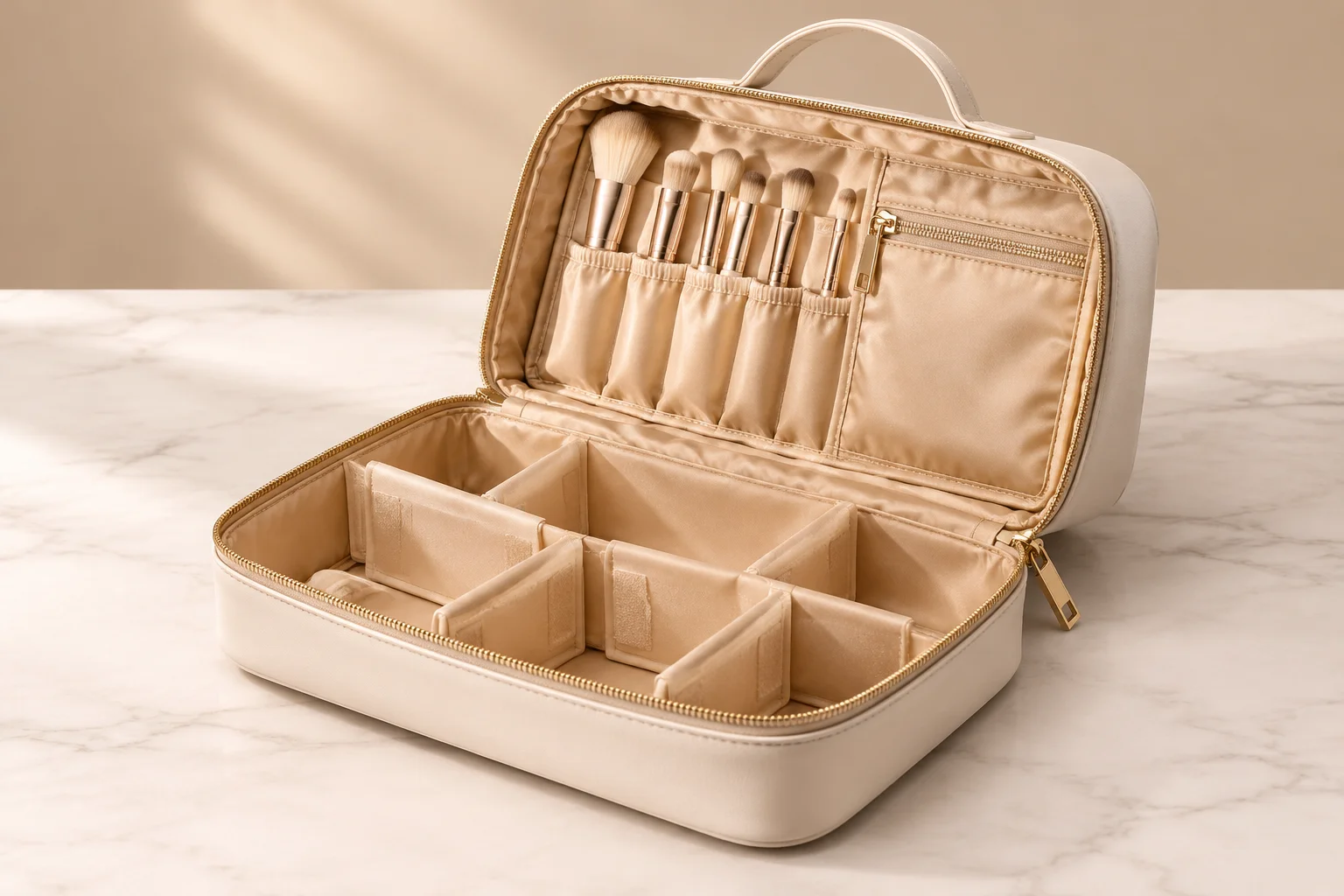
Cosmetic stains are notoriously resilient because they are engineered to resist sweat, water, and facial oils. Removing them requires targeted chemical counter-measures tailored to the stain's specific binding chemistry.
Step-by-Step Remediation Protocols
1. Liquid Foundation & Heavy Concealer Stains
Chemistry: Emulsions of silicone polymers (dimethicone), volatile carriers, binding oils, and high-density titanium dioxide/iron oxide pigments.
- Use the edge of an old credit card or a blunt spoon to lift away any thick, wet excess foundation. Never wipe with a dry cloth, which pushes pigments deeper into the weave.
- Apply one drop of concentrated, clear, grease-cutting liquid dish soap directly to the stain.
- Using a soft-bristled detailing brush or cotton swab moistened with lukewarm water, gently work the soap into the stain using tight circular motions. The surfactants will break down the lipid/silicone envelope holding the pigment.
- Allow the surfactant to dwell on the fabric for 5 to 10 minutes.
- Blot the area repeatedly with a damp microfiber cloth, rinsing the cloth frequently, until the pigment and soap are completely extracted.
2. Long-Wear, Matte & Transfer-Proof Lipstick
Chemistry: Heavy microcrystalline waxes, synthetic beeswaxes, volatile isoparaffins, and concentrated organic lake dyes engineered for extreme surface adhesion.
- If the lipstick is soft or warm, place an ice cube inside a plastic zip bag and hold it against the lipstick mark for 2 minutes to harden the waxes. Carefully scrape away the brittle wax using a blunt edge.
- Saturate a cotton pad with oil-free micellar water or a gentle liquid makeup remover.
- Press the saturated pad firmly against the stain for 30 seconds to dissolve the synthetic film-formers, then lift straight up (do not smear).
- Apply a drop of mild liquid dish soap to emulsify remaining dye lipids.
- Rinse-wipe with a clean damp cloth until the fabric returns to its original color.
3. Waterproof Mascara & Liquid Polymer Eyeliners
Chemistry: Acrylate copolymer film-formers, isoparaffins, and intense carbon black or iron oxide pigments that cure into water-insoluble rubbery films.
- Moisten a precision cotton swab with a biphasic, ophthalmologist-tested waterproof eye makeup remover.
- Carefully roll the cotton swab across the mascara line. Avoid scrubbing outward across surrounding clean fabric.
- Once the polymer film softens and transfers onto the swab, use a fresh swab to lift the residue away.
- Extract residual solvent and pigment using a microfiber cloth dampened with mild soapy water, followed by a pure water rinse wipe.
4. Mineral Sunscreens & Chemical UV Filters
Chemistry: Micro-fine physical zinc oxide/titanium dioxide particles suspended in hydrophobic carriers, or chemical filters like avobenzone that can form yellowish complexes with minerals in tap water.
- Mix a 1:1 solution of white distilled vinegar (5% acidity) and warm water. The mild acetic acid helps dissolve mineral salt deposits and break down sunscreen carrier lipids.
- Dab the solution onto the sunscreen mark using a microfiber cloth.
- Let it sit for 5 minutes, then gently massage with a drop of liquid dish soap.
- Rinse thoroughly with clean water and dry immediately.
5. Dried Facial Oils, Vitamin E & Skincare Serums
Chemistry: Oxidized triglycerides, fatty acids, and botanical lipids that leave translucent, yellowing, sticky spots.
- Dust a small amount of cornstarch, talc, or baking soda over the greasy area and press it down gently. Leave it for 30–60 minutes to draw out free surface lipids.
- Brush away the saturated powder completely using a dry brush.
- Treat remaining oily marks with warm water and a drop of liquid dish soap, then wipe clean with a damp towel.
6. Emergency Nail Polish Spills
Chemistry: Fast-curing nitrocellulose lacquer dissolved in volatile solvents.
- Caution: Never use acetone on PU leather, PVC, TPU, polyester linings, or printed fabrics.
- If the spill is still wet: Instantly drop a mound of dry baking soda or table salt directly onto the wet pool. The dry powder will absorb the liquid polish before it cures. Once absorbed into a clump, lift the clump away.
- If the polish has dried on untreated 100% natural cotton canvas: Dip a micro-applicator swab in non-acetone polish remover, gently dab only the affected thread fibers with surgical precision, and immediately blot with clean paper towels. Stop immediately if the base fabric dye begins to transfer.
Cleaning Specialized Architecture, Linings & Hardware
Modern cosmetic bags incorporate sophisticated structural elements designed to organize beauty tools. Each of these components requires specific care protocols.
Architectural Care Guidelines
Top Lid Clear Compartments: Clean clear PVC or TPU window flaps using a damp microfiber cloth with mild soapy water. Immediately dry to prevent mineral spotting.
Elastic Brush Slots: Dip a cotton swab in diluted detergent and clean inside each individual loop to remove foundation and powder transferred from brush handles. Never pull, stretch, or soak elastic loops in hot water (40°C), which causes rapid relaxation and permanent loss of elasticity.
Floating / Hanging Linings: Gently pull the independent lining inside-out, separating it from the outer shell. Clean and wash the lining under a gentle stream of lukewarm water without wetting the outer leather shell or internal padding.
Heat-Laminated Coated Linings: Linings coated with PU or TPU film should be wiped down flat. Never fold or crease a coated lining sharply while wet, as this can cause micro-fissures in the waterproof membrane.
Fine Mesh Pockets: Fine polyester mesh traps loose powder inside its open honeycomb weave. Use a dry soft brush to tap particles loose from behind the mesh. Follow with a lightly damp microfiber wipe. Never use stiff wire brushes or sharp tools that can snag and tear the mesh.
Zippers, Pullers & Metallic Hardware:
- Use a dry, soft-bristled toothbrush to brush along the open zipper teeth in the direction of the tape to clear loose powders.
- Wipe the zipper teeth and fabric tape with a cotton swab lightly dampened with water.
- Dry the metal components thoroughly.
- If the slider feels stiff or catches, apply a tiny amount of specialized zipper lubricant, beeswax, or paraffin wax along the teeth, then cycle the zipper back and forth 3–5 times. Never use household cooking oils or WD-40, which attract dust and permanently stain adjacent fabrics.
Padded EVA & Foam Compartments: Closed-cell EVA foam resists water absorption, but open-cell PU foam absorbs water like a sponge. If an open-cell padded bag is soaked, moisture remains trapped between the lining and shell for days, causing hidden mold growth. Clean padded bags by surface wiping only.
Machine Washing vs. Hand Washing vs. Surface Wiping
The decision to machine wash, hand wash, or surface clean must be dictated by the bag’s underlying construction rather than its outer visual appearance.
Comprehensive Construction Decision Matrix
| Makeup Bag Classification |
Machine Washable? |
Hand Washable (Submersion)? |
Surface Cleaning (Damp Wipe)? |
Primary Structural Risk of Machine Agitation |
| Plain Unlined Cotton Pouch |
Yes (Cold / Gentle) |
Yes (Recommended) |
Yes |
Dimensional shrinkage, severe fabric creasing |
| Heavy Uncoated Canvas Bag |
Conditional |
Yes (Recommended) |
Yes |
Color fading, loss of crisp fabric hand/stiffness |
| Coated Oxford Polyester Pouch |
No |
Yes (Cold water) |
Yes (Recommended) |
Peeling/cracking of internal waterproof PU backing |
| Technical Nylon Travel Bag |
No |
Yes (Brief rinse) |
Yes (Recommended) |
Abrasion of DWR coating; puckered seam lines |
| PU / Faux Leather Vanity Case |
STRICTLY NO |
STRICTLY NO |
Yes (Exclusively) |
Total topcoat hydrolysis, delamination, peeling |
| Clear PVC / TPU Travel Case |
STRICTLY NO |
No |
Yes (Exclusively) |
Scratching, optical distortion, clouding, seam tears |
| Monolithic Molded Silicone Pouch |
No (Unnecessary) |
Yes (If no fabric zip) |
Yes (Recommended) |
Zipper tape failure under high-spin extraction |
| Structured Train Case (Rigid Board) |
STRICTLY NO |
STRICTLY NO |
Yes (Exclusively) |
Complete destruction of internal cardboard/MDF frame |
| Padded Foam Vanity Organizer |
STRICTLY NO |
No |
Yes (Recommended) |
Internal foam water retention; mold/mildew incubation |
| LED Mirror / Heated Cosmetic Box |
STRICTLY NO |
STRICTLY NO |
Yes (Exclusively) |
Catastrophic electrical short-circuit; corrosion |
Step-by-Step Machine Washing Protocol (For Approved Bags Only)
Empty Completely: Check every hidden pocket.
Zip Fully: Close all zippers to prevent the open metal/nylon teeth from snagging and abrading the fabric during rotation.
Encapsulate in Mesh Bag: Place the cosmetic bag inside a zippered, fine-honeycomb mesh laundry bag.
Machine Settings:
- Program: Delicate / Hand Wash / Silk Cycle
- Agitation: Low spin speed (400–600 RPM maximum).
- Temperature: Cold Water (<30°C / 85°F).
- Detergent: Mild, color-safe liquid detergent (approx. 15 ml).
- Additives: Zero fabric softeners (softeners coat synthetic fibers with waxy films that ruin water-repellent finishes) and zero bleach.
Immediate Extraction: Remove the bag immediately once the cycle ends.
Reshape & Dry: Manually stretch seams back into alignment, reshape the body, and air dry in a well-ventilated area for 24+ hours.
Sanitization Protocols, Odor Elimination & Mold Remediation
Cleaning (the mechanical and chemical removal of visible dirt and cosmetic residue) is not the same as sanitization or disinfection (the reduction and destruction of microorganisms). A cosmetic bag may look spotlessly clean while still harboring millions of Colony Forming Units (CFUs) of bacteria (Staphylococcus epidermidis, Staphylococcus aureus, Pseudomonas aeruginosa) and fungal spores introduced by unwashed fingers, damp makeup sponges, and contaminated applicators.
Hierarchy of Microbial Reduction
- Cleaning: Removes visible dirt, oils, and cosmetic pigments via mechanical action and surfactants.
- Sanitization: Reduces bacterial populations by 99.9% to safe public hygiene levels.
- Disinfection: Destroys pathogenic microorganisms, viruses, and fungi on non-living surfaces.
Safe Cosmetic Bag Sanitization Guidelines
-
Non-Porous Synthetic Surfaces (PVC, TPU, Silicone, Coated Linings):
- Wipe with a soft cloth moistened with a diluted 60%–70% Isopropyl Alcohol solution or fabric-safe quaternary ammonium sanitizing wipes.
- Ensure the surface remains visibly moist for the manufacturer-specified contact time (typically 30 to 60 seconds).
- Immediately wipe dry with a clean microfiber cloth. Never allow alcohol to pool on transparent PVC or PU leather.
-
Porous Textiles (Cotton, Polyester, Nylon):
- Standard liquid disinfectants can cause severe discoloration. The safest, most effective sanitizing method is Gentle Steam Cleansing (holding a garment steamer 15–20 cm away from the fabric for 5–10 seconds) or exposing the completely dry bag to a UV-C Sanitizing Chamber for 3–5 minutes.
- Alternatively, use a specialized textile antibacterial spray containing active silver ions or biodegradable, fabric-safe botanical antimicrobials (such as thymol formulations).
4-Phase Odor Eradication Protocol
- Phase 1: Source Elimination: Clean every trace of dried cosmetic residue using mild dish soap. Scented sprays will only temporarily mask odors without resolving the underlying decomposition.
- Phase 2: Acetic Acid Neutralization: Dampen a microfiber cloth in a 1:3 solution of white distilled vinegar and water. Wipe the interior lining thoroughly. Acetic acid neutralizes alkaline odor molecules and kills surface mold spores. The vinegar scent evaporates completely as it dries.
- Phase 3: Activated Bamboo Charcoal Adsorption: Place two high-grade activated bamboo charcoal sachets inside the bag, close the zipper, and leave it sealed for 48 hours. Activated charcoal possesses millions of microscopic pores that trap and neutralize volatile organic compounds (VOCs) and moisture without leaving chemical residues. (Avoid loose baking soda, which leaves powdery white residues inside fabric seams and zipper teeth).
- Phase 4: Complete Aeration: Open all compartments and place the bag in a dry room with an oscillating fan or active dehumidifier for 24 hours.
Mold & Mildew Remediation Protocol
If a damp cosmetic sponge was stored inside a closed cosmetic bag for weeks, black mold spots (Aspergillus or Cladosporium) may develop.
- Non-Porous Surfaces (PVC, Silicone, TPU): Wipe down with a 70% alcohol solution or mild tea tree oil dilution (1 tsp tea tree oil in 1 cup water). Scrub gently, wipe dry, and expose to natural indirect sunlight for 1 hour.
- Porous Fabrics & Foam Linings: Mold hyphae penetrate deep into open-cell foam padding and woven yarn fibers. If black mold spots have visibly colonized deep foam padding or laminated linings and cannot be eradicated with vinegar and hand washing, the cosmetic bag must be discarded and replaced to prevent facial skin infections and ocular contamination.
Preserving Structural Integrity & Hardware Aesthetics
Improper cleaning and rough handling during maintenance can compromise the structural silhouette and aesthetic hardware of high-end cosmetic bags. Follow these professional preservation rules:
Preventing Creasing & Delamination on PU Leather:
- Never fold, crush, or place heavy objects on top of synthetic leather vanity cases while they are damp.
- When storing, stuff the interior with acid-free tissue paper to maintain the sidewall curvature and prevent collapsed corners.
Preventing Hardware Oxidation & Pitting:
- Cosmetic bag zippers, snap buttons, logo plates, and strap buckles are typically made of electroplated zinc alloy, brass, or aluminum.
- Contact with acidic solutions, vinegar, or salty cleaning agents can degrade the transparent electrophoretic lacquer coating, leading to metal oxidation, tarnishing, and green verdigris formation.
- Always wipe hardware dry immediately after cleaning and buff with a dry microfiber polishing cloth.
Maintaining Zipper Alignment:
When closing a structured bag, align the two sides of the zipper track before pulling the slider. Never force a zipper slider around sharp corners when the bag is overfilled or distorted during washing.
How to Keep a Makeup Bag Clean for Longer
Cleaning is only one part of makeup bag maintenance.
The way the bag is used and organized has a significant influence on how quickly it becomes dirty again.
A few simple habits can reduce the amount of cleaning required.
1. Keep Cosmetic Containers Clean
Foundation bottles, lipstick tubes, and skincare containers can transfer residue onto the lining.
Before returning products to the bag, wipe away any visible residue around their openings and caps.
Make sure lids are properly closed.
This is particularly important for liquid cosmetics.
2. Separate Brushes From Other Cosmetics
Makeup brushes collect pigment and product residue.
When stored loosely with other cosmetics, they can transfer that residue to the interior.
A separate brush compartment or brush sleeve can reduce direct contact.
Brushes should also be cleaned separately and allowed to dry before storage.
3. Do Not Store Wet Sponges Inside a Closed Bag
Beauty sponges can retain considerable moisture.
Placing a damp sponge inside a closed cosmetic bag creates an unfavorable storage environment.
Allow sponges to dry completely in an appropriate ventilated area before storing them.
If the sponge must be carried while damp, use a suitably ventilated container rather than a sealed fabric compartment.
4. Use Small Inner Pouches
Small pouches can help separate different categories of products.
For example:
- Liquid foundation and concealer
- Lipsticks and lip glosses
- Makeup brushes
- Small skincare containers
- Beauty accessories
If one product leaks, the residue may remain inside the smaller pouch instead of spreading across the entire cosmetic bag.
This is particularly useful for larger travel makeup organizers.
5. Clean Spills Immediately
Do not wait until the next scheduled cleaning session.
Fresh spills are generally easier to manage than dried cosmetic residue.
Remove excess product and use a material-compatible cleaning method as soon as possible.
6. Avoid Overfilling the Bag
Overfilling creates unnecessary pressure on the zipper, seams, and lining.
It can also make the contents harder to remove and clean.
A bag that is packed too tightly may develop product marks from friction between cosmetic containers and the interior.
Choose a size that accommodates the actual contents without excessive compression.
7. Store the Bag in a Dry Place
Avoid leaving a makeup bag in a damp bathroom or inside a closed suitcase for extended periods.
A cool, dry, well-ventilated storage location is generally preferable.
Also avoid leaving cosmetic products in a hot vehicle, as elevated temperatures may affect the products themselves.
8. Check the Bag Regularly
A quick inspection can prevent small problems from becoming larger ones.
Check:
- The bottom lining
- Internal pockets
- Zipper edges
- Brush compartments
- Product caps
- The exterior surface
This takes much less time than removing an old, deeply embedded stain.
B2B Sourcing & Manufacturing: Designing Easy-Clean Cosmetic Bags
For beauty brands, cosmetic manufacturers, private-label retailers, and promotional product buyers, cleanability is a primary driver of consumer satisfaction and product longevity. Sourcing a cosmetic bag that is inherently easy to clean requires thoughtful material selection, ergonomic construction, and rigorous quality assurance testing during OEM/ODM development.
Technical Interior Lining Selection Matrix
| Lining Material Spec |
Cleaning Performance |
Impermeability Rating |
Hand Feel & Aesthetics |
Ideal B2B Product Tier |
| Standard 190T/210D Polyester |
Moderate (Requires spot wash) |
Low (Water-permeable) |
Crisp, lightweight, economical |
Promotional gift bags, mass retail giveaways |
| 210D Polyester + TPU Film Lamination |
Excellent (Wipe-Clean) |
100% Liquid-Proof |
Soft, smooth, luxurious, flexible |
Premium retail cosmetics, prestige beauty brands |
| Food-Grade PEVA Film Lining |
Superior (Instant Wipe-Clean) |
100% Liquid-Proof |
Matte, rubbery, clean, eco-safe |
Travel toiletry organizers, skincare bags |
| Clear/Tinted 0.3mm–0.5mm TPU |
Superior (Instant Wipe-Clean) |
100% Liquid-Proof |
Glass-clear, ultra-durable, premium |
High-end transparent vanity cases, TSA compliant |
| Untreated 100% Cotton Canvas |
Poor (Absorbs oils/pigments) |
0% (Highly absorbent) |
Natural, eco-friendly, organic |
Eco-conscious brands (Best with drop-in liner) |
Structural & Ergonomic Features That Simplify Maintenance
- 180° Lay-Flat & Wide-Mouth Doctor-Bag Openings: Bags engineered with sprung steel wire frame openings (doctor-bag style) or full perimeter clamshell zippers lay 100% flat on vanity tables. This eliminates dark, inaccessible bottom corners and allows users to wipe the entire interior in seconds.
- Detachable Drop-Bottom & Floating Linings: Designing the interior lining with bottom release velcro or specifying a floating lining attached only at the top collar allows end users to pull the lining out and hand-wash it under a tap without wetting the outer leather shell.
- Removable Modular Dividers: Internal divider walls should be attached via high-cycle hook-and-loop fasteners or snap fasteners, allowing users to remove them for independent cleaning.
Interior Color Psychology & Soil-Concealment Engineering
Choosing the wrong interior lining color leads to poor user experiences:
- Pure White / Off-White Linings: High internal visibility for finding small items, but reveals every speck of foundation and eyeshadow immediately.
- Pitch Black Linings: Conceals dark mascara and eyeliner smudges, but creates an internal "black hole" effect where users cannot see their products, while showing white powder residue vividly.
- The Optimal Industry Solution: Mid-Tone Neutral Hues (Champagne Gold, Warm Taupe, Heather Grey, Soft Peach, Pale Slate). These mid-tone shades provide excellent contrast for locating cosmetics while effectively masking minor powder dusting and neutral foundation marks between cleanings.
FAQ
How often should I wash my makeup bag?
For a makeup bag used every day, a quick weekly wipe-down and a more thorough cleaning approximately once a month can be a practical routine.However, the frequency depends on the products stored inside and the condition of the bag.Travel makeup bags should be inspected and cleaned after each trip. Any foundation, skincare, or liquid cosmetic spill should be treated immediately.
How do I get rid of glitter that is stuck to the interior lining?
Never use a wet cloth on dry glitter, which spreads micro-plastics everywhere. Use a high-tack lint roller, a loop of painter's masking tape wrapped around your fingers, or the narrow crevice tool of a household vacuum cleaner with a micro-filter attachment.
Can I use a hair dryer to speed up the drying process?
Only on the Cool / Cold Air setting. High-temperature heat from a hair dryer will shrink cotton fabrics, warp structured PVC/TPU panels, melt internal seam-sealing adhesives, and cause polyurethane coatings to blister and crack.
Is it safe to put a makeup bag in the freezer to kill bacteria or freeze lipstick?
Freezing is effective for hardening soft lipstick spills to facilitate mechanical scraping. However, placing an entire PVC or faux leather makeup bag in a freezer can cause the plasticizers in the synthetic materials to become temporarily brittle, leading to severe cracking if bent or folded while frozen.
What is the best way to clean white cotton canvas makeup bags with embroidered logos?
Spot-clean the canvas with lukewarm water and mild detergent using a cotton swab. Avoid scrubbing directly across the embroidered threads, as vigorous friction can pull, snag, or fray the delicate rayon/polyester embroidery stitches.
Conclusion
Maintaining a clean, hygienic cosmetic bag is an indispensable part of modern personal beauty care. By understanding the chemical nature of cosmetic residues, matching cleaning protocols strictly to material vulnerabilities, and adopting smart daily preventive habits, users can preserve the structural elegance and hygiene of their favorite vanity cases for years.
Key Maintenance Principles Summary
- Mechanical Extraction Precedes Liquid Remediation: Always vacuum, brush, and shake out dry powders before introducing water or cleaning solutions.
- Respect Material Constraints: Never submerge structured cases, PU leather, or padded foam bags; reserve washing machines exclusively for verified, plain fabric pouches inside protective mesh bags.
- Avoid Harsh Solvents: Strictly avoid chlorine bleach, 100% acetone, and abrasive scourers on synthetic polymers and coatings.
- Air-Dry with Shape Support: Never use tumble dryers or direct high heat; allow bags to air-dry completely in well-ventilated shade with interior shape support.
- Sanitize Responsibly: Use diluted 70% alcohol or fabric-safe quaternary wipes on non-porous surfaces, and gentle steam or UV-C for delicate porous textiles.
At INITI, we understand that a cosmetic bag needs to combine practical storage with suitable materials and functional construction. Our custom cosmetic bag solutions cover different styles, including fabric makeup pouches, clear PVC cosmetic bags, PU leather designs, and multi-compartment organizers.
Whether you are developing a retail collection, a private-label beauty accessory, or a promotional makeup bag, selecting the right material and interior construction can help create a product that is practical to use and easier to maintain.
Related Products
Related Blog & Application Articles


 Hot News