Key Functional Advantages of the Cosmetic Bag
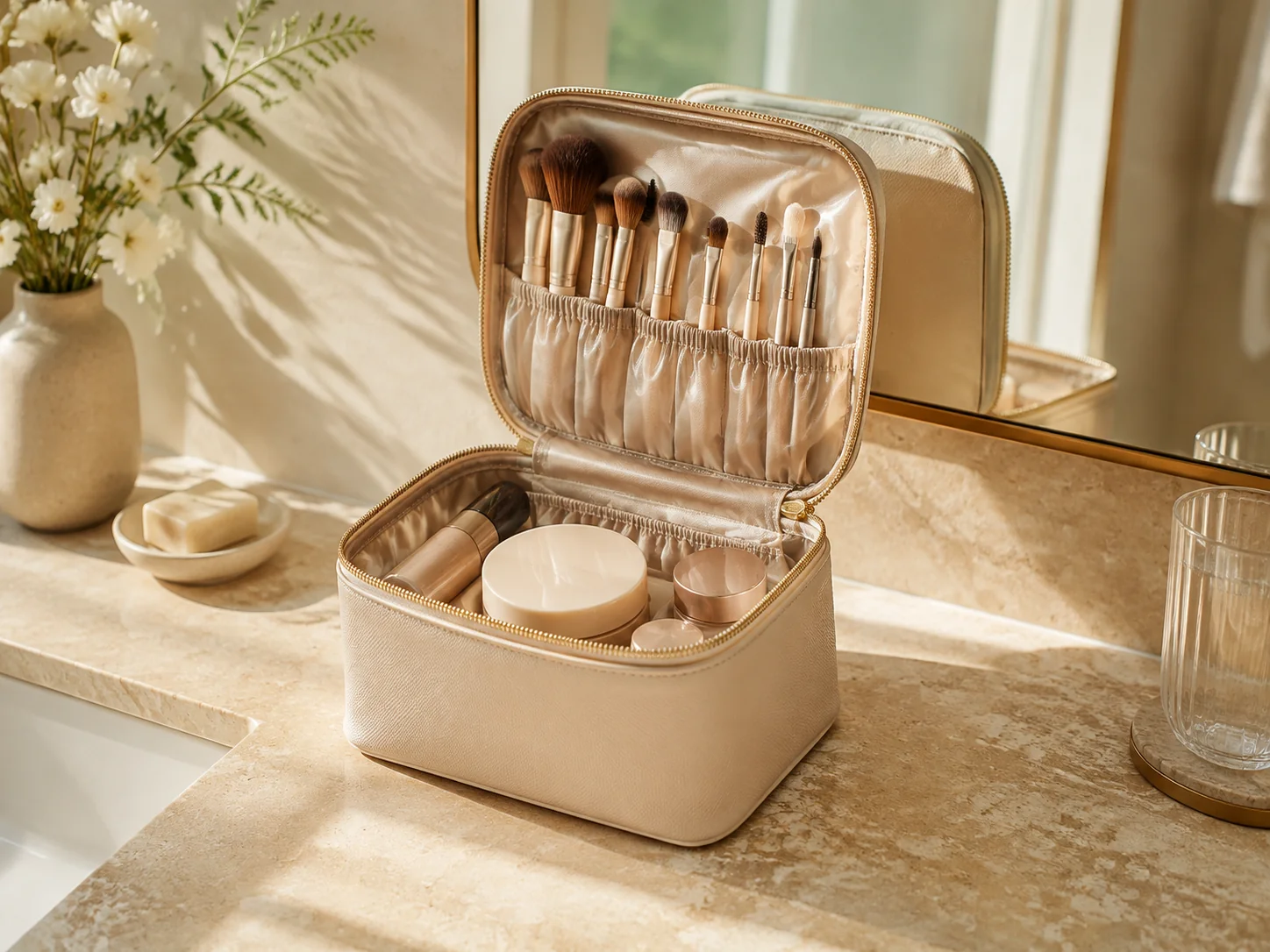
- True Countertop Stability: A reinforced, flat base ensures the bag remains firmly upright on damp marble or laminate vanities, preventing open liquid foundation bottles from tipping over.
-
Internal Spill Isolation: High-grade cosmetic bags feature heat-sealed or taped-seam waterproof linings (TPU/PEVA). If a toner cap loosens at 35,000 feet due to cabin depressurization, the resulting liquid spill is contained within the lining chamber rather than soaking your luggage or luxury handbag.
- Tool Preservation & Hygiene Segregation: Dedicated brush sleeves with wipe-clean PVC/TPU protective flaps keep makeup bristles straight, clean, and isolated from powder residues, preventing cross-contamination.
Zipper Pouch vs Cosmetic Bag: What Are the Main Differences?
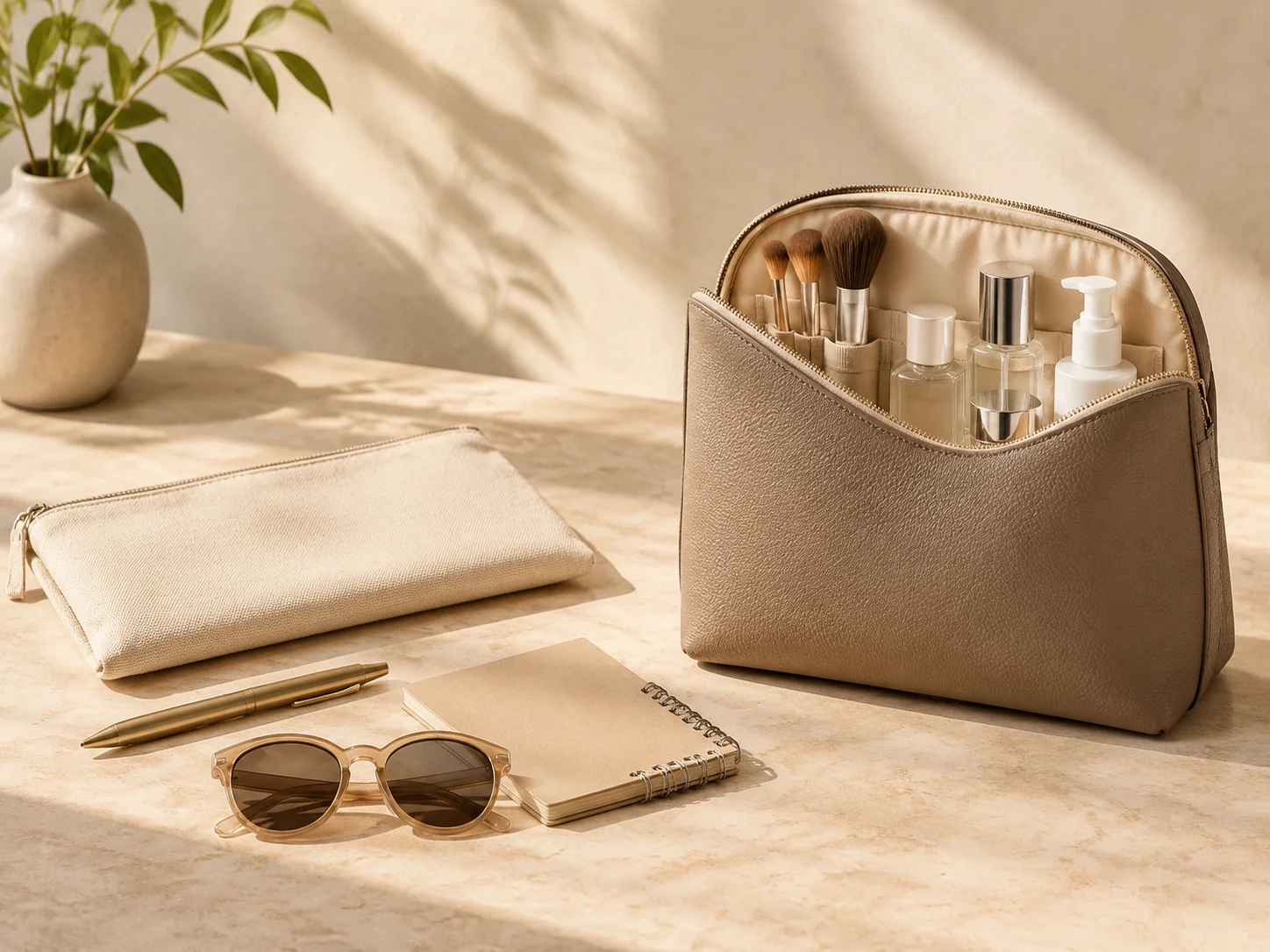
Volumetric Capacity & Spatial Geometry
-
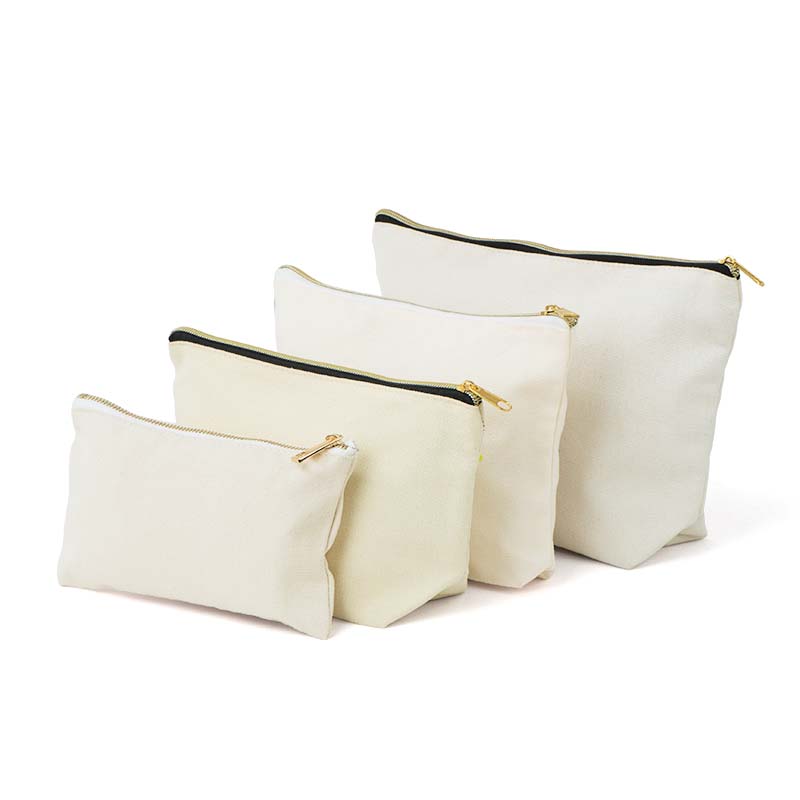
Zipper Pouch Capacity Mechanics: A 20 cm×15 cm flat pouch has a theoretical empty thickness of 2 mm. When an object with a 40 mm diameter (such as a round powder jar) is inserted, the pouch draws surface area from its width and height to accommodate the volume, shrinking its usable exterior dimensions by up to 25%.
-
Cosmetic Bag Capacity Mechanics: A 20 cm×12 cm×8 cm box cosmetic case delivers a fixed 1.92 Liters of structural volume. Inserting a 40 mm jar consumes only a fraction of the pre-allocated cubic space without distorting the outer profile or pulling against the zipper teeth.
Weight, Portability
- A set of three flat zipper pouches weighs less than 120 grams combined and occupies virtually zero volume until filled. They can be slipped into exterior briefcase sleeves, seatback pockets, or tote dividers.
-
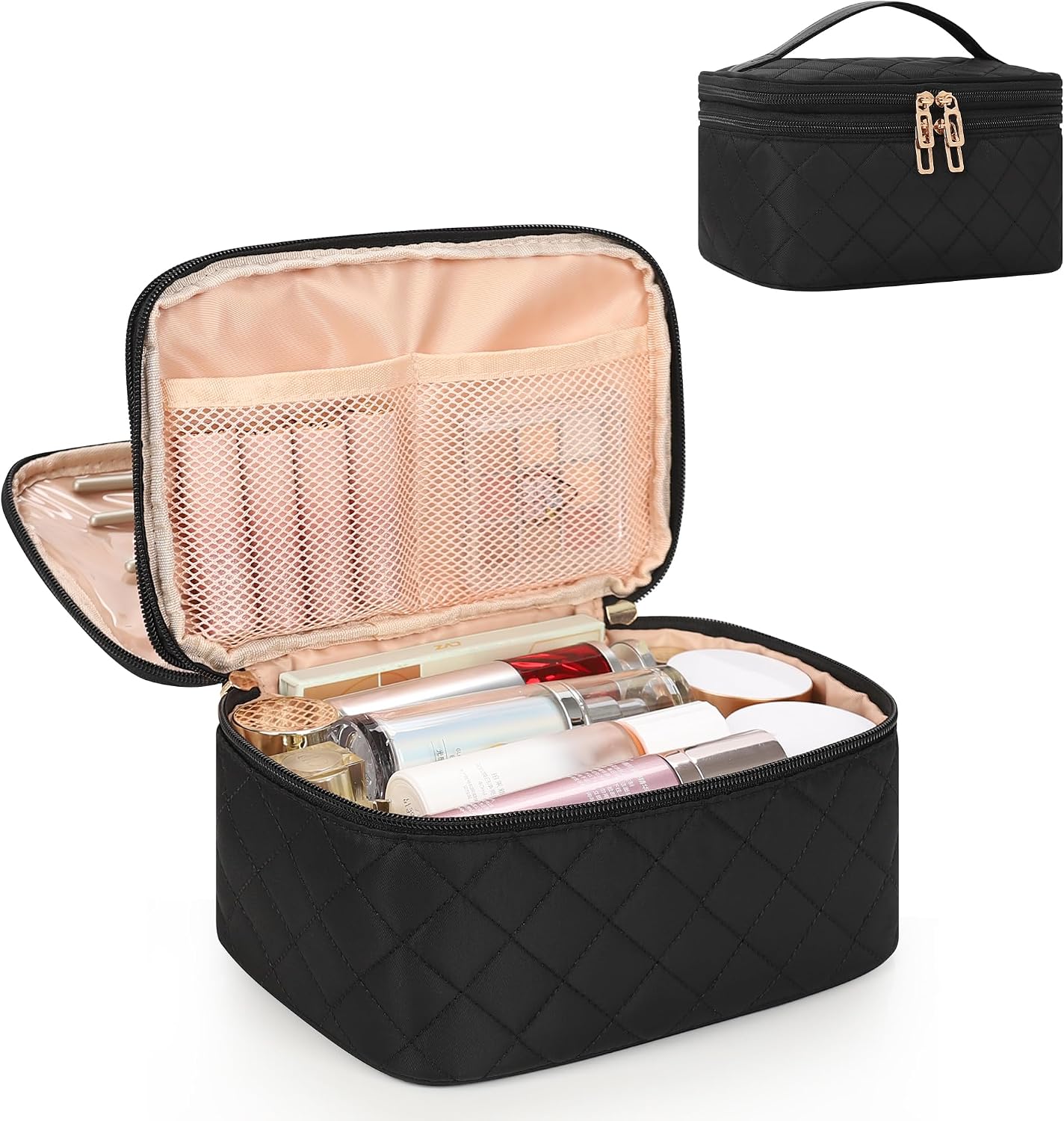
A structured cosmetic case has a fixed minimum volume of 2.0 Liters to 4.0 Liters and weighs 250g to 450g empty. It requires dedicated packing space in the main luggage compartment.
Interior Compartmentalization
- Zipper Pouch: Placing a makeup brush, an eyeliner pencil, an iPhone charging block, and a set of metal house keys in an undivided pouch creates continuous mechanical friction. Key edges can scratch compact cases, pencil caps can pop off and mark fabric walls, and loose powder dust coats charging cables.
- Cosmetic Bag:
| Interior Feature |
Main Benefit |
Potential Drawback |
Best Application |
| Zipper pocket |
Keeps small items separate |
Uses interior space |
Medium cosmetic bags |
| Mesh pocket |
Easy visibility |
May not protect delicate items |
Travel organizers |
| Elastic loops |
Holds brushes and tools |
Requires accurate sizing |
Makeup organizers |
| Fixed dividers |
Separates different product types |
Reduces flexible capacity |
Premium cosmetic bags |
| Removable dividers |
Flexible storage arrangement |
Higher construction complexity |
Professional organizers |
Material Selection
Both product categories can use similar materials.
Cotton, canvas, polyester, nylon, PU, and PVC are common options for zipper pouches and cosmetic bags.
The selection process, however, may differ.
For a stationery pouch, buyers may prioritize printing quality, abrasion resistance, and lightweight construction.
For a cosmetic bag, the ability to handle makeup residue, skincare products, and occasional spills may become more important.
Product Purpose: General Organization vs Beauty Storage
A zipper pouch is designed to organize items that might otherwise be scattered inside a larger bag.
Its function is relatively broad.
For example, a consumer may use the same zipper pouch for charging cables during the week, stationery at work, and travel accessories during a holiday.
A cosmetic bag has a more clearly defined storage purpose.
Its dimensions and internal layout are usually selected with makeup and beauty products in mind.
This affects practical details such as:
- Whether the opening is wide enough for larger cosmetic products
- Whether the base provides sufficient depth
- Whether the lining can be wiped clean
- Whether makeup brushes need separate storage
- Whether the structure can accommodate bottles and jars
- Whether additional padding is useful
The more specialized the contents, the more important it becomes to develop the product around their actual dimensions.
Market Positioning
Another important difference concerns the target market.
Zipper pouches can be positioned across many retail categories.
Cosmetic bags are more directly associated with beauty, skincare, travel, and personal-care products.
This affects product presentation, color selection, packaging, and branding.
For example, a promotional company developing an event giveaway may choose a simple polyester zipper pouch with a printed logo.
A skincare brand developing a gift-with-purchase product may prefer a coordinated cosmetic pouch with a matching zipper, branded lining, and a more refined exterior.
The construction may be similar, but the commercial positioning is different.
Can a Zipper Pouch Be Used as a Cosmetic Bag?
Yes. In fact, many cosmetic bags are essentially zipper pouches designed and marketed for beauty-related applications.
There is no universal construction rule that separates every zipper pouch from every cosmetic bag.
A simple rectangular pouch made from polyester or cotton can serve both purposes.
The main consideration is whether its dimensions, materials, and construction are suitable for the intended contents.
When a Zipper Pouch Works Well as a Cosmetic Bag
A general-purpose zipper pouch can be an effective cosmetic bag when the contents are relatively small and uncomplicated.
Suitable examples include:
- Lipstick and lip balm
- Mascara and eyeliner
- Compact powder
- Small makeup brushes
- Travel-size beauty samples
- Facial wipes and small accessories
For these applications, one main compartment may provide enough organization.
The pouch should have a sufficiently wide opening and a zipper that operates smoothly.
If the contents include creams or liquids, buyers should also consider the interior lining and whether the finished bag is easy to clean.
When a Dedicated Cosmetic Bag Is a Better Choice
A more specialized cosmetic bag becomes useful when the product needs to accommodate larger or more varied beauty items.
Consider the following situations:
- Multiple product sizes:A collection containing foundation bottles, jars, palettes, and small accessories may require more depth and a wider opening than a basic flat pouch.
- Beauty tools that need separation:Makeup brushes and applicators can become mixed with other products. Dedicated pockets or elastic holders can make storage more practical.
- Frequent travel:A travel cosmetic bag may need a stable base, stronger construction, and a lining suitable for repeated use.
- Premium retail positioning:A beauty brand may require more refined materials, coordinated colors, decorative details, and branded interior finishing.
In these cases, the product should be developed specifically for the intended beauty collection rather than using a standard pouch without considering its limitations.
The Difference Is Often More About Product Development Than Product Naming
For B2B buyers, the distinction between these two terms should not become a limitation.
A manufacturer can develop a zipper pouch and then adapt it into a cosmetic bag by changing its size, lining, internal layout, material, and branding.
This creates opportunities to develop multiple product variations from a similar basic construction.
For example, a brand could use:
- A small flat pouch for lip products
- A medium gusseted pouch for everyday cosmetics
- A larger structured cosmetic bag for travel
- A matching general-purpose pouch for accessories
All four products may share similar materials and design details while serving different market needs.
Material Comparison: Which Materials Work for Each Product?
Zipper pouches and cosmetic bags can use many of the same materials. The correct choice depends on product function, visual positioning, durability expectations, cleaning requirements, and target price.
Below are several commonly used materials and their potential applications.
Cotton and Canvas
Cotton and canvas are popular choices for brands looking for a natural textile appearance.
They are particularly suitable for lifestyle collections, promotional gifts, wellness products, and reusable accessories.
Advantages:
- Natural textile appearance
- Comfortable hand feel
- Suitable for screen printing and embroidery
- Available in different fabric weights
- Can support simple or more substantial constructions
Limitations:
- Untreated fabric can absorb moisture
- Makeup stains may be difficult to remove
- Lightweight cotton may lack sufficient structure
- Additional lining may be necessary for certain applications
For a general-purpose zipper pouch, cotton is suitable for stationery, small accessories, and everyday organization.
For a cosmetic bag, canvas can work well when the brand wants a natural appearance. However, a suitable inner lining should be considered if the bag will hold creams, foundation, or other products that may leave residue.
Polyester
Polyester is one of the most versatile materials for both product categories.
It is available in different weights, textures, and finishes, making it suitable for flat pouches, gusseted bags, padded organizers, and more structured cosmetic products.
Advantages:
- Lightweight
- Available in many colors
- Suitable for different printing methods
- Good design flexibility
- Can be combined with coatings or laminations
- Available in woven and other textile constructions
Limitations:
- Performance varies by fabric specification
- Uncoated polyester is not automatically waterproof
- Thin fabrics may require additional reinforcement
- Appearance and hand feel can differ significantly between grades
Polyester is a practical choice for promotional zipper pouches because it supports broad color and logo customization.
For cosmetic bags, it can be combined with an easy-clean lining or used in padded and quilted constructions.
Buyers should specify fabric weight, surface finish, backing, and lining rather than referring to polyester as if it were one uniform material.
Nylon
Nylon is another suitable option when lightweight construction and abrasion resistance are important.
It is commonly considered for travel accessories, everyday organizers, and functional pouches.
Advantages:
- Lightweight
- Good abrasion resistance in suitable constructions
- Flexible
- Available in different denier specifications
- Suitable for compact travel accessories
Limitations:
- Performance depends on fabric construction and coating
- Some finishes may change the surface appearance
- Water resistance should not be assumed without specification
- Very lightweight fabrics may need reinforcement
For zipper pouches, nylon can be suitable for electronic accessories, travel items, and everyday organizers.
For cosmetic bags, it can provide a practical lightweight exterior, particularly when combined with an appropriate lining.
PU Leather
PU leather is often selected for products that require a smoother and more refined appearance.
It can help position a simple pouch as a more premium accessory.
Advantages:
- Smooth surface
- Available in different textures and colors
- Suitable for embossing and debossing
- Can create a structured appearance
- Easy to coordinate with metal hardware
Limitations:
- Performance varies by PU formulation and backing
- Surface cracking and peeling should be evaluated
- Flexibility and abrasion resistance need checking
- Higher-quality options may increase material costs
PU is particularly suitable for cosmetic bags, beauty gift sets, and premium retail accessories.
It can also be used for general-purpose zipper pouches, although buyers should ensure the appearance matches the intended product category.
PVC and TPU
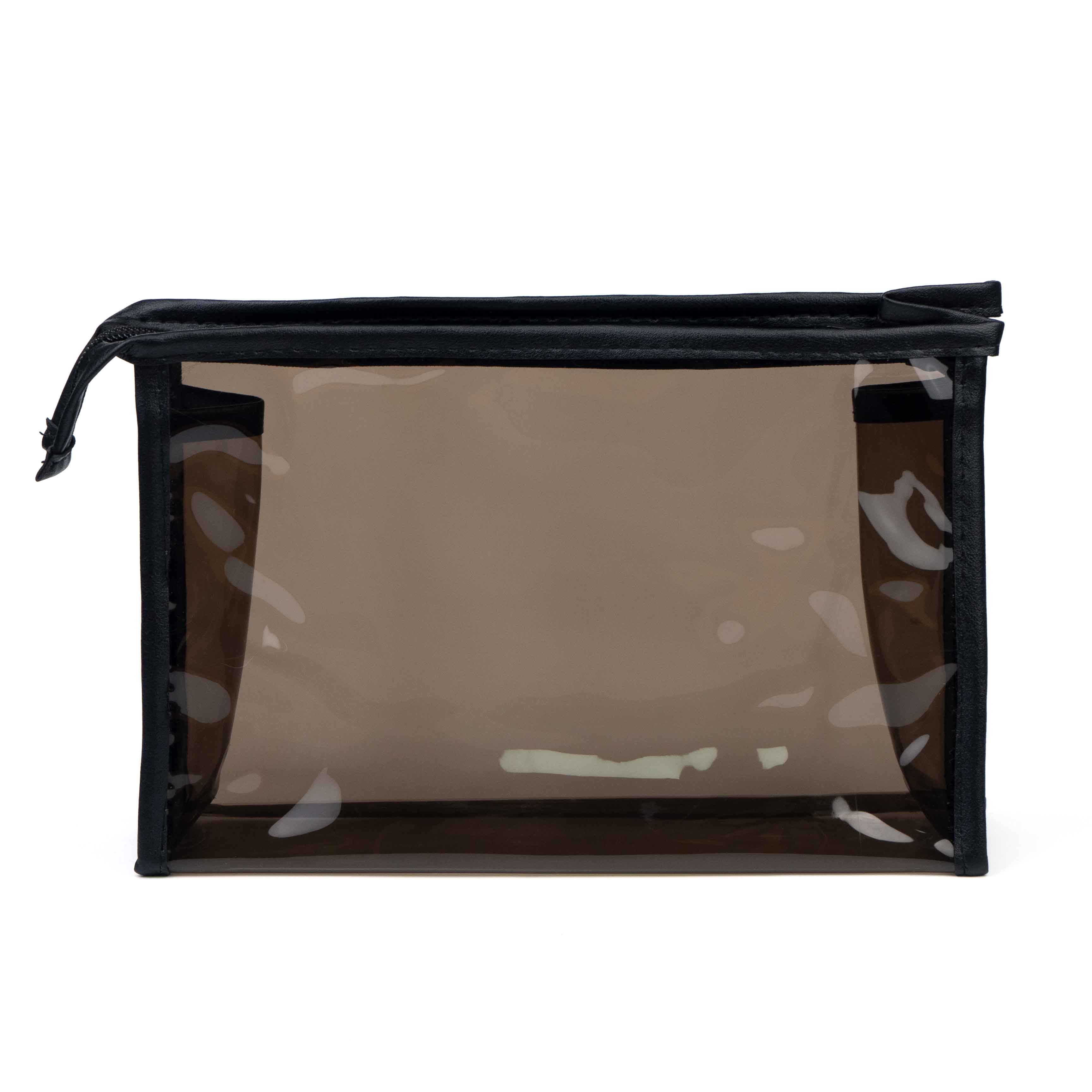
PVC and TPU are common options for transparent or semi-transparent pouches.
Their visibility makes them useful when users need to identify contents without opening the bag.
Advantages:
- Transparent or translucent appearance
- Easy surface cleaning
- Suitable for visible product presentation
- Available in different colors and finishes
- Useful for travel and beauty gift sets
Limitations:
- Thickness affects flexibility and appearance
- Material clarity may vary
- Seams and zipper areas require attention
- PVC and TPU have different cost and performance characteristics
Transparent pouches are frequently used for cosmetic kits because they allow beauty products to remain visible.
They can also be used as general-purpose organizers for travel accessories and small personal items.
RPET Fabric
RPET fabric is produced using recycled PET material.
It may be considered by brands that want to incorporate recycled-content materials into promotional accessories or retail collections.
Advantages:
- Can support recycled-material product positioning
- Available in different textile constructions
- Suitable for printed and branded products
- Can be used for both simple pouches and more structured bags
Limitations:
- Recycled-content claims need appropriate documentation
- Fabric performance depends on the actual specification
- Not every RPET fabric has the same appearance or hand feel
- Recycled content alone does not guarantee overall product sustainability
RPET can be used for general-purpose zipper pouches as well as cosmetic bags.
For B2B buyers, the important step is to confirm the recycled content, material specification, documentation, and labeling requirements before production.
Size and Capacity: How Should Buyers Choose?
Size is one of the most important purchasing considerations because it directly affects product usability, material consumption, production cost, and shipping efficiency.
A pouch that is too small may be difficult to use, while an oversized bag may increase costs without providing meaningful additional value.
The key is to define the intended contents before confirming the external dimensions.
Common Size References for Zipper Pouches
The following dimensions are practical starting points for product development.
| Size Category |
Approximate Dimensions (W × H) |
Potential Applications |
| Small |
10–15 × 8–12 cm |
Cards, lip products, small accessories |
| Medium |
18–22 × 12–16 cm |
Stationery, everyday essentials, small cosmetics |
| Large |
23–28 × 16–20 cm |
Travel accessories, makeup collections |
| Extra Large |
28–35 × 20–25 cm |
Larger organizers and multi-item storage |
These dimensions are reference ranges, not fixed industry standards.
A flat pouch and a gusseted pouch with identical width and height will not provide the same usable capacity.
Common Size References for Cosmetic Bags
Cosmetic bags generally need to accommodate a wider range of product shapes.
The following examples can help buyers establish an initial design direction.
| Cosmetic Bag Type |
Approximate Dimensions (W × H × D) |
Intended Contents |
| Mini cosmetic pouch |
12 × 9 × 3 cm |
Lipstick, mascara, small makeup |
| Compact cosmetic bag |
18 × 12 × 6 cm |
Daily makeup essentials |
| Medium cosmetic bag |
22 × 15 × 8 cm |
Makeup and small skincare products |
| Large cosmetic bag |
26 × 18 × 10 cm |
Multiple beauty products and accessories |
| Travel cosmetic bag |
28 × 20 × 12 cm |
Travel-size bottles, skincare, and makeup |
These are development references only. The most suitable dimensions depend on the size and quantity of the actual products.
Zipper and Closure Design: What Should Buyers Consider?
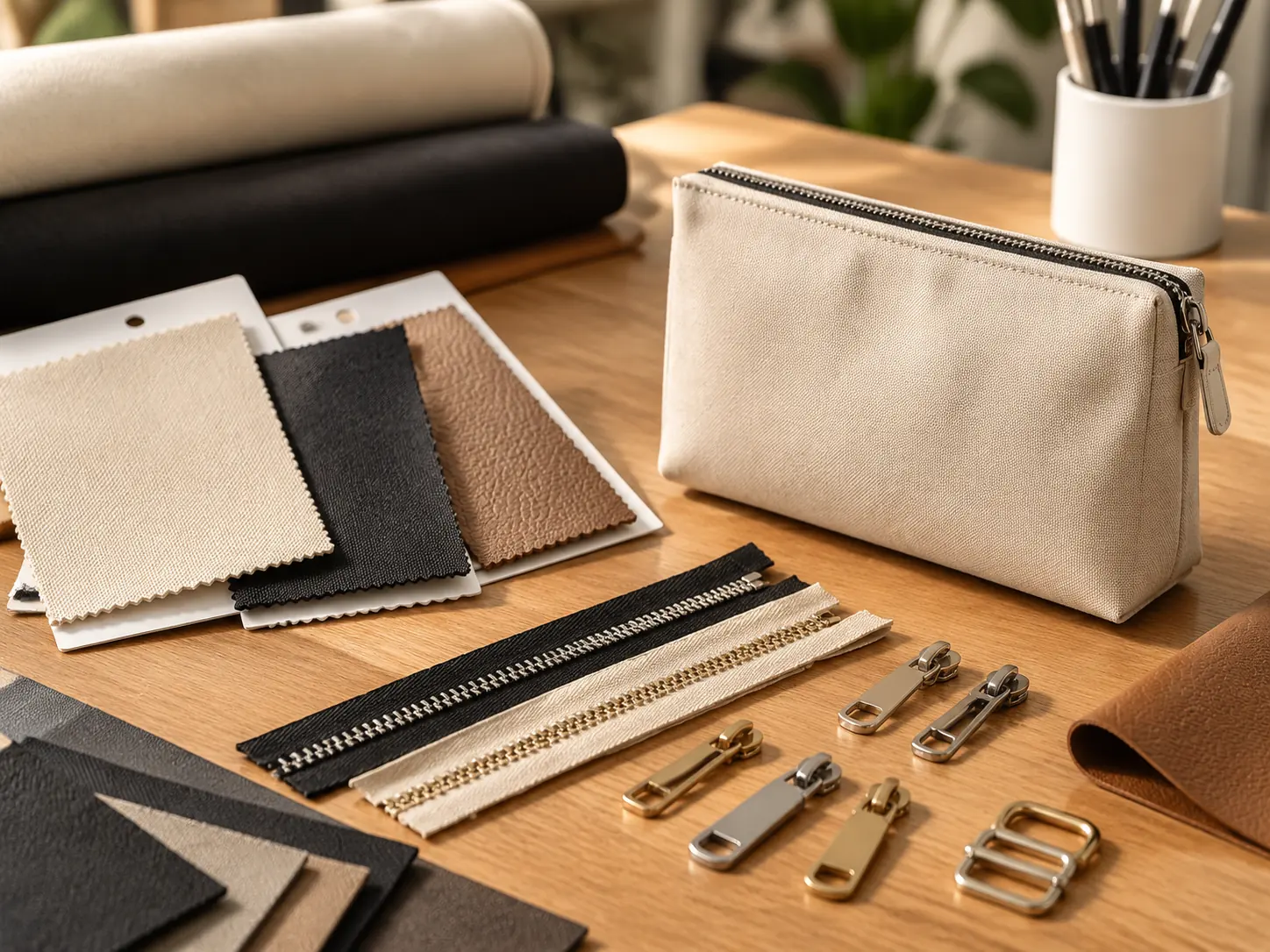
Although both product categories commonly use zipper closures, not all zippers and opening designs provide the same user experience.
The zipper should be selected according to the bag size, expected usage, material thickness, appearance, and target price.
Common Zipper Types
- Nylon Coil Zipper:Nylon coil zippers are flexible and commonly used for fabric pouches.They are suitable for lightweight and medium-weight constructions and can follow curved zipper paths more easily than some other zipper types.
- Resin Zipper:Resin zippers have molded plastic teeth and can provide a more visible decorative effect.They are available in different colors and can be suitable for lifestyle pouches and cosmetic bags.
- Metal Zipper:Metal zippers can create a more substantial and decorative appearance.They are often considered for premium accessories and products that use PU or heavier fabrics.However, the weight, flexibility, and overall appearance should match the bag construction.
Zipper Opening Design
The zipper position affects how easily users can access the contents.
| Opening Design |
Main Characteristics |
Suitable Applications |
| Straight top zipper |
Simple and familiar |
Basic zipper pouches and small cosmetic bags |
| Wide top opening |
Allows easier access |
Cosmetic bags and travel organizers |
| U-shaped zipper |
Opens across multiple sides |
Larger cosmetic organizers |
| Perimeter zipper |
Allows the bag to open more widely |
Structured cosmetic cases |
| Double zipper |
Provides access from two directions |
Larger organizers and travel products |
A simple top zipper is sufficient for many small pouches.
A wider opening becomes more useful when the bag contains larger items or several products that need to be accessed frequently.
Zipper Quality and Practical Testing
Buyers should evaluate more than the visual appearance of the zipper.
Important inspection points include:
- Smooth opening and closing
- Consistent zipper alignment
- Secure zipper tape attachment
- Proper stitching around the zipper
- No fabric caught in the teeth
- Suitable zipper length
- Appropriate zipper pull size
- Consistent operation across production samples
For larger cosmetic bags, the zipper may experience more stress because the contents push outward against the opening.
The zipper and surrounding fabric should therefore be tested under realistic loading conditions.
Which Product Is Better for Different Business Applications?
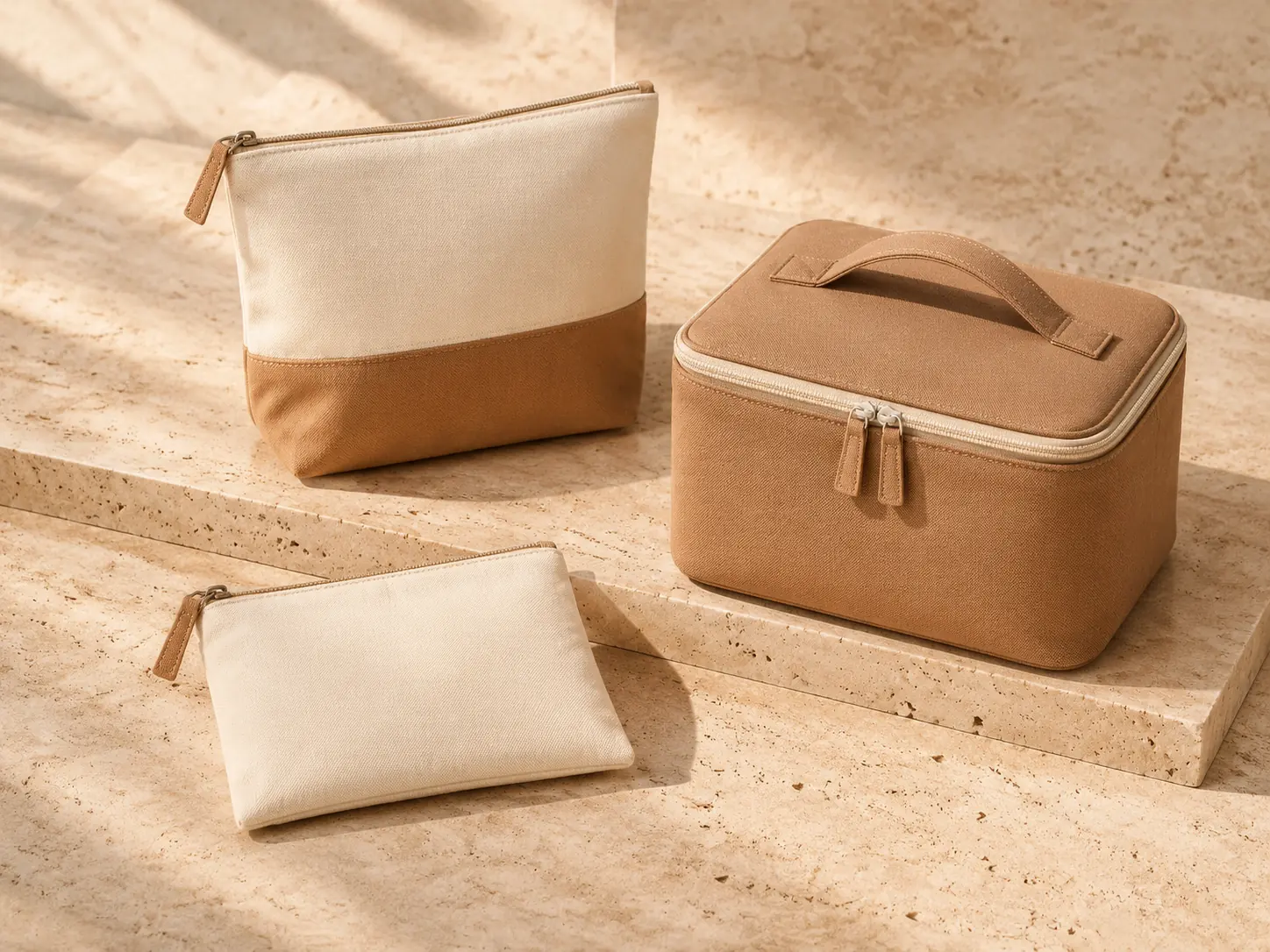
The choice between a zipper pouch and a cosmetic bag becomes clearer when the intended sales channel and business application are considered.
Different industries may have different priorities regarding appearance, functionality, quantity, and price.
Scenario selection reference
| Business Application |
Recommended Product |
Why |
| Stationery retail |
Zipper pouch |
Simple storage for small office items |
| Electronics accessories |
Zipper pouch |
Flexible organization for cables and devices |
| Beauty retail |
Cosmetic bag |
Clear connection to beauty products |
| Skincare gift sets |
Cosmetic bag |
Suitable for coordinated product collections |
| Promotional giveaways |
Either |
Depends on the campaign theme |
| Travel accessories |
Either |
Depends on whether the contents are general items or personal-care products |
| Hotel amenity kits |
Either |
Based on contents and presentation requirements |
| Lifestyle retail |
Zipper pouch |
Broader everyday applications |
| Professional makeup collections |
Specialized cosmetic organizer |
Requires more structured interior organization |
What Affects the Cost of a Zipper Pouch or Cosmetic Bag?
For B2B buyers, product cost is influenced by much more than the external dimensions.
Two bags that look almost identical may have different prices because of their materials, internal construction, hardware, printing, and production requirements.
Understanding these cost factors helps buyers control the budget without compromising essential product functions.
Material Consumption
Material is one of the main cost components.
Larger dimensions generally require more fabric or sheet material.
However, material consumption is also affected by:
- Fabric width
- Cutting layout
- Gusset construction
- Padding
- Lining
- Reinforcement
- Pattern efficiency
A flat zipper pouch may use less material than a deep, structured cosmetic bag of similar width and height.
A gusseted design also requires additional panels or fabric allowance.
Construction Complexity
A simple pouch generally requires fewer production steps than a multi-compartment organizer.
Additional construction details may include:
- Multiple lining panels
- Internal pockets
- Reinforced bases
- Padding
- Quilting
- Binding
- Elastic holders
- Removable dividers
Each additional component may increase labor time and assembly complexity.
For buyers developing products for high-volume promotional programs, a simpler structure may be more appropriate if it meets the intended function.
Zipper and Hardware Selection
Standard zippers are generally easier to source and incorporate into production.
Customized zipper pullers, decorative metal components, and special hardware may increase costs, particularly when custom molds or additional development are required.
The cost impact depends on the selected hardware, order quantity, and production arrangements.
Printing and Decoration
Branding costs depend on:
- Printing method
- Number of colors
- Artwork complexity
- Print size
- Decoration position
- Material compatibility
For example, a one-color screen-printed logo on a cotton pouch has different production requirements from a full-color printed design on compatible polyester fabric.
Buyers should finalize the artwork before sampling to reduce unnecessary revisions.
Order Quantity and Packaging
Order quantity can influence material purchasing, production efficiency, and setup costs.
Custom colors, special fabrics, and unique hardware may also have minimum purchasing requirements.
Packaging affects the total project cost as well.
Individual packaging, custom boxes, printed inserts, and special retail presentation all need to be included when calculating the project budget.
Cost Factor Comparison
| Cost Factor |
Basic Zipper Pouch |
Customized Cosmetic Bag |
| Main material |
Usually simple fabric construction |
Depends on material and finish |
| Lining |
Optional or basic |
Often specified according to contents |
| Structure |
Often simple |
May require gussets or reinforcement |
| Interior compartments |
Usually limited |
May include pockets or dividers |
| Zipper |
Standard zipper often sufficient |
May require wider or more specialized opening |
| Padding |
Usually optional |
May be required for selected applications |
| Branding |
Often straightforward |
May involve more decorative details |
| Packaging |
Basic bulk or individual packing |
May require retail or gift packaging |
The actual quotation should be based on the complete specification.
Quality Control: What Should Buyers Check Before Bulk Production?
Product quality should be evaluated according to the actual function of the bag.
A zipper pouch intended for stationery does not require exactly the same inspection criteria as a cosmetic bag designed to carry liquid skincare products.
However, several quality-control points apply to both categories.
Material Quality
Check whether the approved material matches the production batch.
Important points include:
- Material thickness or weight
- Color consistency
- Surface defects
- Fabric texture
- Coating or lamination condition
- Odor
- Print quality
- Lining appearance
For PU and coated materials, buyers should also examine the surface for scratches, peeling, or visible defects.
Dimensions and Shape
Finished dimensions should be checked against the approved specification.
Pay attention to:
- Width and height
- Bottom depth
- Side gusset
- Opening length
- Symmetry
- Shape consistency
- Seam position
For gusseted cosmetic bags, the base should be checked to ensure that it provides the expected storage depth.
Stitching and Seam Construction
Stitching quality affects both appearance and product durability.
Inspect:
- Stitch consistency
- Seam alignment
- Loose threads
- Skipped stitches
- Reinforcement at stress points
- Zipper attachment
- Corner finishing
- Lining attachment
For bags with handles or wrist straps, the attachment points should receive additional attention.
Zipper Function
The zipper should operate smoothly throughout its full length.
Check for:
- Jamming
- Misalignment
- Uneven zipper tape
- Loose zipper teeth
- Weak attachment
- Fabric caught in the zipper
- Puller defects
The zipper should also be tested when the bag contains the intended products.
A zipper that works well on an empty bag may become difficult to close when the bag is filled to capacity.
Interior Construction
For cosmetic bags, inspect the lining and internal compartments carefully.
Check whether:
- The lining is securely attached.
- Internal pockets are correctly positioned.
- Elastic holders have suitable tension.
- Dividers do not interfere with the main compartment.
- Interior seams are clean.
- The usable space matches the approved sample.
If the bag is designed for liquids or creams, buyers should also evaluate the lining and finished construction under the expected conditions.
Functional Testing
A practical functional test should use the intended contents.
For zipper pouches, this may involve inserting and removing the relevant stationery, cables, or personal accessories.
For cosmetic bags, use representative makeup and skincare products.
Check:
- Ease of inserting and removing products.
- Whether the bag can close properly.
- Whether the contents move excessively.
- Whether the bag maintains its intended shape.
- Whether the internal layout remains practical when fully loaded.
Any performance requirements that are important to the buyer should be defined and agreed upon before mass production.
How to Choose the Right Product for Your Business
After comparing the two categories, the next step is to translate the product requirements into a practical purchasing decision.
Instead of selecting a product based only on its name or appearance, buyers should evaluate its intended use, contents, market positioning, and production specifications.
Step 1: Define the Main Application
Start by identifying what the bag will be used for.
If the main purpose is to organize different everyday accessories, a zipper pouch is usually a logical starting point.
If the primary purpose is storing makeup, skincare, or beauty tools, a cosmetic bag may be more appropriate.
However, if the product needs to serve multiple purposes, a versatile zipper pouch with a suitable size and lining may be sufficient.
Step 2: Identify the Contents
Make a list of the products that need to fit inside.
Include:
- Product dimensions
- Quantity
- Shape
- Total weight
- Whether any items are fragile
- Whether products may leak or leave stains
This information helps determine the required width, height, depth, and internal layout.
Step 3: Select the Appropriate Structure
Choose a flat pouch for compact and relatively thin items.
Choose a gusseted pouch when additional depth is required.
Consider a box-shaped or structured cosmetic bag when the products need more defined storage space.
Add internal pockets or dividers only when they solve a genuine organization problem.
Step 4: Confirm the Material
Consider the expected usage conditions and target price.
For example:
- Cotton or canvas for natural lifestyle positioning
- Polyester for flexible promotional and retail applications
- Nylon for lightweight functional organizers
- PU for a more refined appearance
- PVC or TPU for transparent storage
- RPET for products requiring recycled-material positioning
The selected material should be evaluated together with the lining and overall construction.
Step 5: Establish the Target Price
Before adding decorative details, determine the expected selling price or promotional budget.
This helps decide whether additional features are commercially justified.
For a simple giveaway, a basic zipper pouch may provide sufficient value.
For a premium beauty collection, better materials, additional compartments, and coordinated branding may justify a higher development cost.
Step 6: Develop and Approve a Sample
A sample should confirm more than the general appearance.
Buyers should evaluate:
- Actual dimensions
- Material hand feel
- Zipper operation
- Interior capacity
- Stitching quality
- Branding placement
- Overall functionality
If the bag is intended for a specific product set, test it with those actual products before approving the sample.
Step 7: Confirm the Production Specification
Once the sample is approved, the complete specification should be documented.
It should include:
- Finished dimensions
- Material composition and specification
- Fabric color
- Lining material
- Zipper type and color
- Internal construction
- Branding method
- Logo position
- Packaging requirements
- Applicable quality standards
A detailed specification reduces misunderstandings between the buyer and manufacturer and helps maintain consistency during bulk production.
FAQ
Can a flat zipper pouch work as a daily makeup bag?
Yes, for minimal, dry touch-up items. A zipper pouch works well if you only carry 3–5 compact items such as lipstick, powder compact, eye pencil, and travel perfume. However, if your kit includes liquid foundation, makeup brushes, or bottles that must stay upright, a structured cosmetic bag is much safer to prevent leaks and damage.
Are cosmetic bags allowed in airplane carry-on luggage?
Yes, but liquids must comply with the TSA 3-1-1 liquids rule. Liquids, gels, and aerosols must be in containers of 3.4 ounces (100ml) or less and fit into a single clear, quart-sized bag. Many travelers use a clear optical TPU cosmetic bag for airport security checkpoints, then keep their dry cosmetics in a structured travel case in their carry-on.
Should a Cosmetic Bag Have a Waterproof or Easy-Clean Lining?
Not every cosmetic bag needs a fully waterproof lining, but an easy-to-clean interior is often useful. Makeup residue, skincare products, and accidental spills can stain the inside of a bag. Polyester lining with a suitable coating, PEVA, or other wipe-clean materials may be considered depending on the product requirements.
Which Is Better for Promotional Gifts: Zipper Pouches or Cosmetic Bags?
Both can work well for promotional projects. Zipper pouches offer broader applications because they can organize stationery, travel accessories, small electronics, and personal items. Cosmetic bags are more suitable for beauty-related promotions, skincare campaigns, cosmetics brands, and gift sets. The better choice depends on the campaign audience, intended use, and brand positioning.
How Can Buyers Reduce the Cost of Custom Cosmetic Bags?
Buyers can manage costs by simplifying the construction, selecting materials that match the actual performance requirements, standardizing dimensions, and avoiding unnecessary accessories or compartments. Using existing zipper colors and commonly available materials may also help reduce customization complexity. However, reducing material quality or compromising stitching and zipper performance can create greater problems after delivery.
Conclusion
Zipper pouches and cosmetic bags share many construction features, but they serve different product-positioning purposes.
A zipper pouch is generally the more versatile option for organizing stationery, electronics accessories, travel essentials, and other small everyday items. Its simple construction makes it suitable for a wide range of retail, promotional, and lifestyle applications.
A cosmetic bag is more specifically designed around makeup, skincare, beauty tools, and personal-care products. It may require additional depth, a suitable lining, wider access, or internal compartments depending on the intended contents.
However, these categories are not mutually exclusive. A zipper pouch can work perfectly well as a cosmetic bag when its dimensions, materials, and construction meet the requirements of beauty storage.
For B2B buyers, the best approach is to start with the intended application rather than the product name. Consider what needs to be stored, how the bag will be used, which materials are suitable, and what level of customization is justified by the target market.
At INITI, we help buyers develop custom zipper pouches and cosmetic bags with different materials, structures, sizes, and branding options. By matching product design with practical requirements and commercial objectives, businesses can create accessories that are not only visually appealing but also suitable for real-world use and long-term product collections.
Related Products
Related Blog & Application Articles


 Hot News