Mesh Tote Bag vs Solid Fabric Tote Bag: Which Is Better?
A mesh tote bag and a solid fabric tote bag may have similar dimensions and handles, but they do not provide the same carrying experience.
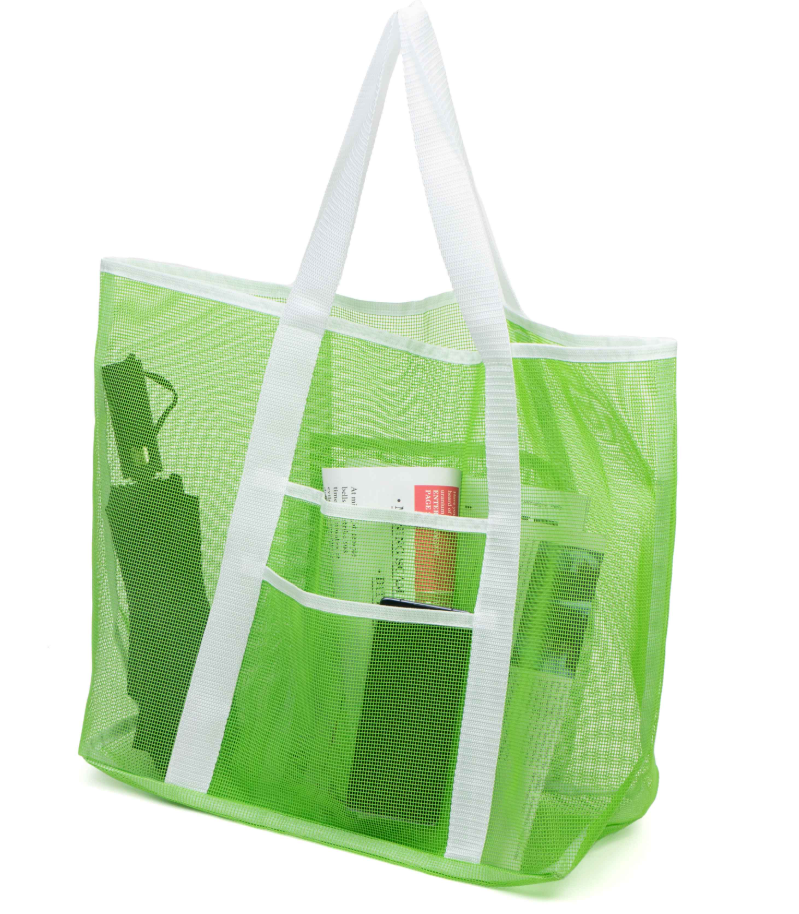
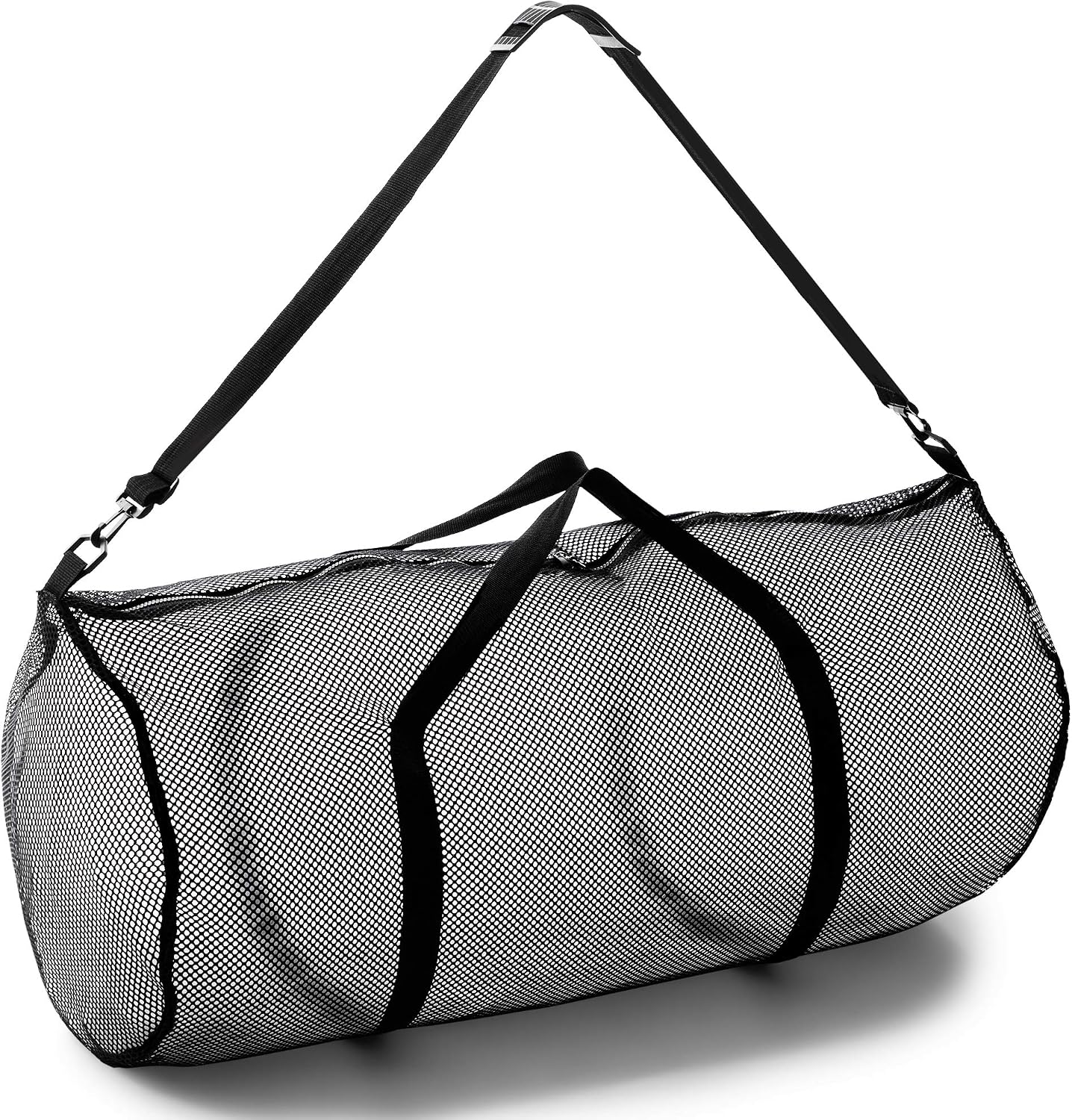
A mesh tote allows air and water to pass through its open structure. It can be useful for beach equipment, swimming accessories, sports gear and shopping programs where visibility or ventilation matters.
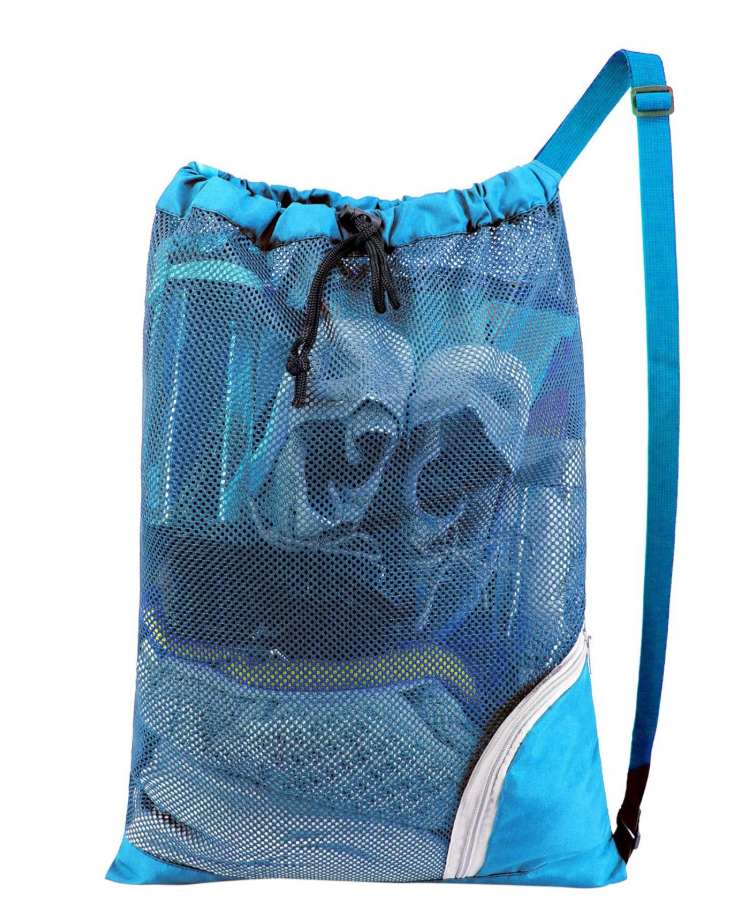
A solid fabric tote uses a more continuous surface, such as cotton canvas, woven polyester or nylon. It generally offers better coverage, more uninterrupted printing space and greater flexibility for internal pockets and retail presentation.
Neither construction is automatically stronger, lighter, cheaper or more environmentally friendly.
For buyers developing custom tote bags, the better choice depends on the contents, expected carrying load, exposure to moisture, branding requirements and production specification.
This comparison explains when to choose mesh, when to choose solid fabric and when a combination of both is more practical.
1. Mesh Tote Bag vs Solid Fabric Tote Bag: Quick Comparison
Both constructions can be customized for retail, promotional and wholesale programs, but their strengths differ.
| Feature |
Mesh Tote Bag |
Solid Fabric Tote Bag |
| Airflow |
Generally high through open mesh |
Lower; varies by fabric and construction |
| Water and sand drainage |
Usually easier through suitable openings |
Generally limited unless drainage is designed in |
| Visibility of contents |
High to partial, depending on mesh density |
Usually low or opaque |
| Privacy |
Limited |
Generally better |
| Protection from dust and sand |
Limited because particles can enter |
Usually better with a suitable closure |
| Containment of small items |
Depends heavily on opening size |
Generally better |
| Loaded shape |
Can stretch or sag depending on mesh structure |
Depends on fabric weight and reinforcement |
| Carrying strength |
Depends on mesh, seams, handles and reinforcement |
Depends on fabric, seams, handles and reinforcement |
| Logo printing |
Often needs a solid patch, panel or label |
Usually offers larger continuous print areas |
| Cleaning |
Open structure may release loose sand and water |
Depends on the fabric and finish |
| Foldability |
Often good with flexible mesh |
Also good with lightweight woven fabric |
| Retail presentation |
Sporty, casual or functional appearance |
Broader range of smooth, textured and structured finishes |
| Manufacturing cost |
Depends on mesh, binding, reinforcement and labor |
Depends on fabric, weight, printing and construction |
| Common applications |
Beach, pool, wet equipment, sports, visibility-focused promotions |
Fashion retail, gifts, books, general shopping and private-label merchandise |
A lightweight nylon tote may weigh less than a heavily reinforced mesh beach bag. Likewise, a properly engineered mesh tote may carry more reliably than a poorly sewn canvas bag.
Material category alone cannot determine the result.
2. When Is a Mesh Tote Bag the Better Choice?
Mesh is most useful when the open structure serves a specific function.
Beach, Pool and Wet Equipment
Mesh tote bags can allow water and loose sand to escape through the openings.
For swimwear, towels, sandals and pool accessories, this can make the bag more practical than a tightly woven fabric tote that retains loose water or sand inside.
However, mesh does not keep its contents dry. It also allows external splashes, rain and sand to enter.
For beach and resort programs, buyers should assess the mesh opening size, bottom structure and whether a separate pocket is needed for small valuables.
Sports Gear and Outdoor Activities
Mesh bags offer ventilation and visibility when carrying equipment that may be damp after use.
Examples include swimming accessories, sports clothing, training equipment and certain recreational products.
Ventilation may help moisture escape, but it does not guarantee that damp items will dry completely or prevent odors.
Contents should still be dried appropriately, rather than stored wet for extended periods.
Shopping Programs That Benefit From Visibility
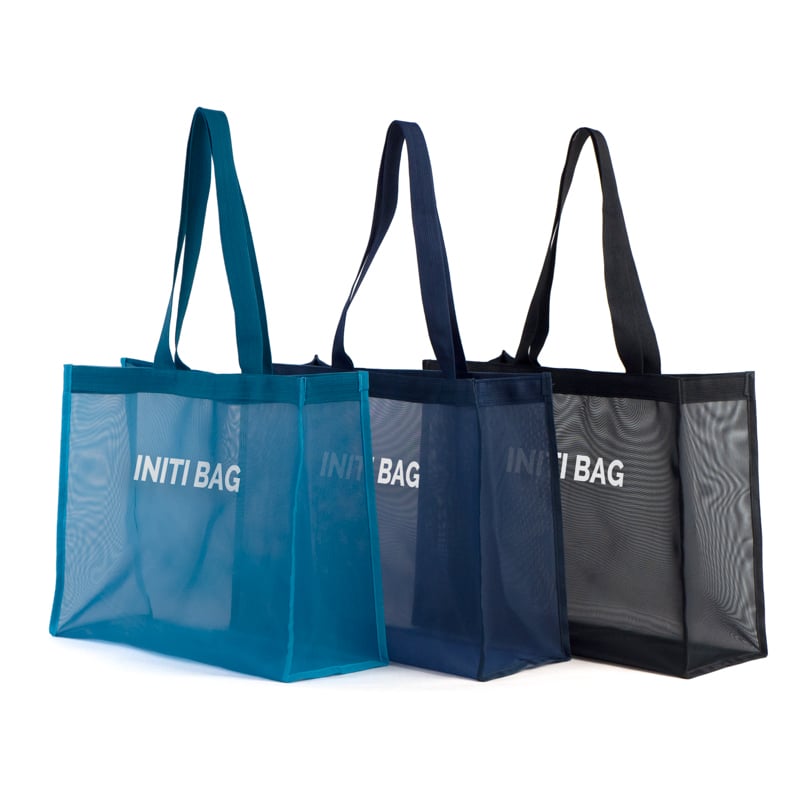
A transparent or semi-transparent mesh shopping tote allows users to identify contents without opening the bag.
This may suit selected supermarket promotions, beach retail programs and casual lifestyle collections.
For such projects, the buyer should still verify that small products cannot slip through the openings and that the handles support the expected load.
Lightweight, Flexible Carrying
Some polyester and nylon mesh constructions are lightweight and flexible, making them suitable for foldable or compact tote designs.
However, it is incorrect to assume that every mesh tote is lighter than every solid fabric bag.
A large mesh tote with heavy webbing, reinforced panels and binding can weigh more than a simple lightweight woven nylon tote.
Choose mesh when ventilation, drainage or visibility has a clear practical benefit—not simply because the product is marketed as lightweight.
3. When Is a Solid Fabric Tote Bag Better?
Solid fabric is often more suitable when the buyer prioritizes coverage, branding, merchandise presentation or containment.
Fashion Retail and Gift Packaging
Cotton canvas, woven polyester and nylon tote bags provide relatively continuous surfaces for logos and artwork.
They can also provide more visual coverage for clothing, gift boxes and retail merchandise.
For fashion brands and boutiques, this is useful when the tote is part of the brand's packaging presentation.
A solid fabric body does not automatically protect delicate clothing from every risk. Dark fabric colorfastness, seam construction and surface cleanliness must still be considered.
Carrying Books, Boxes and Small Products
A well-designed solid fabric tote can provide a more continuous bag body and base for packaged merchandise, books or mixed small items.
This is useful where loose objects could catch on or pass through open mesh.
However, solid fabric does not automatically mean higher carrying capacity. A thin woven tote with weak handle attachment can fail under load.
Buyers should specify the intended contents and confirm the finished bag's performance.
Privacy and Protection From External Contact
Solid fabric usually provides better coverage than open mesh.
This can matter for personal belongings, clothing, gifts and merchandise that should not be readily visible.
A suitable closure and internal pocket can improve containment.
Neither an ordinary canvas tote nor an unsealed nylon tote should automatically be described as waterproof. Water protection depends on the fabric finish, seams, opening and closure.
Larger or More Detailed Logos
A solid canvas or nylon panel provides a continuous area for screen printing, heat transfer, embroidery or other appropriate branding.
For detailed illustrations, multi-color artwork and large brand graphics, solid fabric often simplifies logo placement.
Mesh bags can still be branded effectively, but may need an added fabric panel, label or printed webbing.
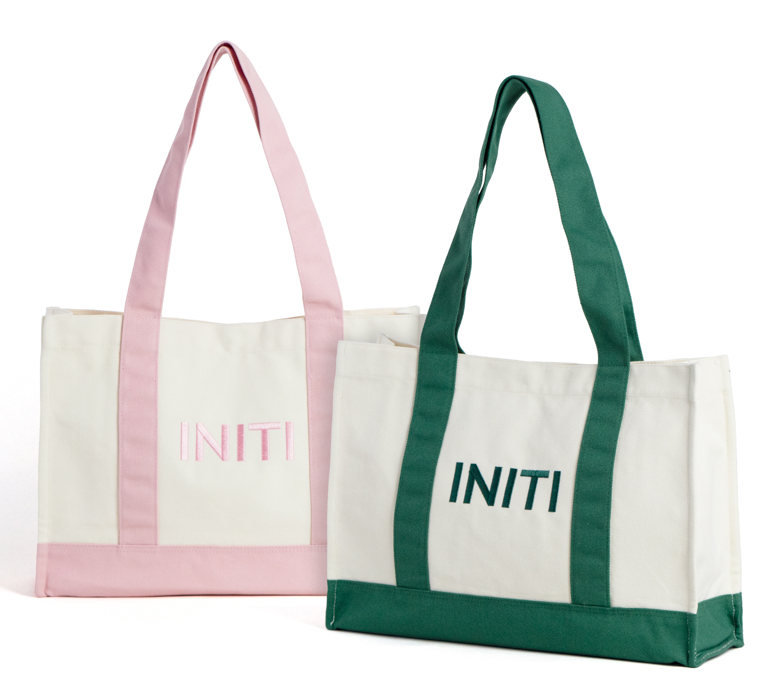
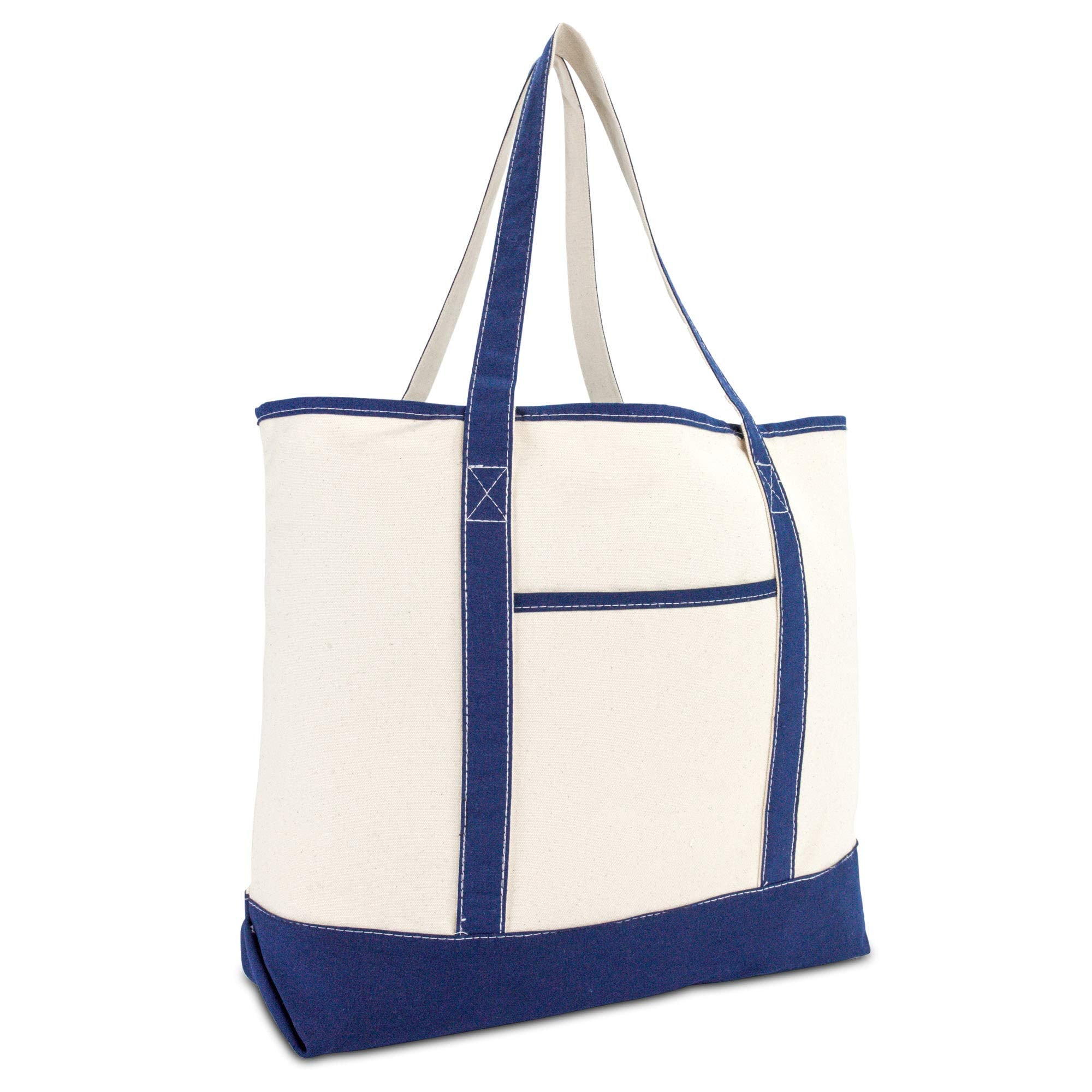
For an existing solid-fabric reference, INITI's Contrast Canvas Tote Bag offers a structured canvas body, reinforced lower panels and a large branding area.
4. Mesh vs Canvas, Polyester and Nylon: Material Differences
Comparing mesh with canvas alone does not cover every tote bag option.
Mesh describes an open fabric structure. Canvas, nylon and polyester describe different material or fabric categories.
For example, a polyester mesh tote and a woven polyester tote may use the same fiber family while behaving differently because of their fabric construction.
| Tote Construction |
Main Advantage |
Main Limitation |
Suitable Direction |
| Polyester mesh |
Ventilation, visibility and drainage |
Openings can snag or allow small items through |
Beach, pool, sports, casual shopping |
| Cotton mesh |
Soft, flexible appearance with an open structure |
Stretch, shrinkage and moisture behavior require attention |
Produce and selected lifestyle totes |
| Cotton canvas |
Continuous branding surface and familiar retail appearance |
Heavier constructions can be bulky; absorbs moisture if untreated |
Boutiques, gifts, books, merchandise |
| Woven polyester |
Available in lightweight or more structured constructions |
Actual water resistance depends on fabric and finish |
Promotional, shopping and travel totes |
| Woven nylon |
Lightweight options, flexibility and smooth appearance |
Strength and durability depend on actual specification |
Travel, lifestyle and foldable totes |
| RPET woven fabric |
Can support verified recycled-content sourcing programs |
Recycled content does not establish overall environmental superiority |
Retail, promotional and branded programs |
The correct specification should include fabric construction and weight, not just the fiber name.
For guidance on canvas sizing and fabric weights, see How to Choose Tote Bag Size and Fabric Weight.
5. What About Strength, Durability and Load Capacity?
This is one of the most important issues for wholesale tote bag buyers.
A bag can look strong when empty but become distorted or damaged after repeated carrying.
Common Risks With Mesh Totes
Open-mesh constructions may experience:
- Excessive stretching under load
- Enlarged or distorted openings
- Snagging against rough objects
- Stress concentrated around handle attachments
- Damage along bound edges
- Sagging when carrying heavy or unevenly distributed products
These risks depend on the particular mesh and bag construction, not simply the presence of openings.
For larger mesh shopping bags, possible reinforcement options include solid bottom panels, webbing handles, bound seams and appropriate backing at attachment points.
Selected heavy-duty designs may use bottom-wrapping webbing to distribute the load through the strap structure.
Common Risks With Solid Fabric Totes
Solid fabric bags can also fail due to:
- Weak handle stitching
- Insufficient seam allowance
- Fabric tearing at stress points
- Poorly supported gussets
- Excessive needle perforations
- Dye transfer or fabric distortion
- Inadequate reinforcement for heavier merchandise
Increasing canvas GSM alone does not guarantee that the finished bag can carry a particular weight.
How Buyers Should Compare Strength
Request samples with similar dimensions and intended carrying capacity.
Then evaluate:
- The bag filled with the actual merchandise
- The agreed carrying load
- Handle attachment and seam condition
- Repeated lifting or handling under defined conditions
- Permanent deformation after unloading
- Bottom stability and opening clearance
Buyers should define the loading method, test duration or cycles and pass/fail requirements.
Do not accept unverified claims such as “heavy-duty mesh carries more than canvas” or “12 oz canvas guarantees a specific load.”
Carrying performance belongs to the complete construction, not the fiber name alone.
6. Logo Printing and Branding: Which Tote Is Easier to Customize?
The available branding surface is a major difference between mesh and solid fabric totes.
A solid panel can usually accommodate larger artwork.
By contrast, direct printing over large mesh openings may create interrupted graphics or uneven ink coverage.
For custom mesh tote bags, buyers can consider:
- Sewn-on canvas or polyester logo patches
- Woven labels
- Solid fabric branding panels
- Printed webbing handles
- Heat transfer onto compatible solid fabric components
The selected method should be tested against the actual material and expected handling.
For custom canvas tote bags, printing, embroidery and other decorative methods may provide more flexibility, although the final process must still suit the fabric and artwork.
Practical recommendation: If the campaign requires a large, detailed logo, choose a solid fabric tote or a mesh design with a dedicated solid branding panel.
If the brand only requires a small, clear identifier, a label or patch may be sufficient.
7. Can a Hybrid Mesh and Solid Fabric Tote Be Better?
In many applications, yes.
A hybrid tote combines open mesh areas with solid fabric components to balance airflow, support, containment and branding.
For example, a beach or travel tote may include:
- Mesh side panels for ventilation
- A solid reinforced bottom
- Webbing shoulder handles
- A solid front panel for logo printing
- A small secured pocket for accessories
This arrangement can offer advantages over a fully open mesh body without giving up the main benefits of mesh.
However, hybrid construction is not automatically stronger. Its performance depends on how the different materials and seams are connected.
Extra panels, binding and sewing also affect production cost.
Example: Large Mesh Tote With Reinforced Panels
INITI's Large Mesh Tote Bag with Reinforced Panels is an example of a mixed-material design.
The existing reference measures approximately 43 × 40 × 24 cm, combining mesh sections with solid panels, a wide gusset and long webbing handles.
The reinforced areas provide a more defined structure and usable branding surfaces, while the mesh sections preserve airflow and partial visibility.
This is a useful reference for resorts, outdoor retailers, sports brands and promotional buyers developing larger-capacity totes.
8. Which Tote Bag Should Buyers Choose for Different Uses?
The most useful comparison is based on the actual contents and intended retail program.
| Application |
Recommended Direction |
Reason |
| Beach and pool merchandise |
Mesh or hybrid tote |
Drainage and ventilation are useful |
| Wet swimwear and sports accessories |
Mesh tote |
Open structure can release moisture |
| Fashion boutique checkout packaging |
Solid canvas or woven fabric |
Better coverage and branding presentation |
| Corporate gifts and promotional sets |
Solid fabric or hybrid |
Depends on artwork, contents and price position |
| Books and boxed retail merchandise |
Appropriately reinforced solid fabric |
Continuous body and base help contain products |
| Summer resort merchandise |
Mesh or hybrid |
Suitable for beach-oriented use and visual styling |
| Produce shopping |
Purpose-designed mesh or other suitable bag |
Opening size, handling and food-contact requirements matter |
| Travel and foldable shopping |
Lightweight woven fabric or flexible mesh |
Compare actual packed size and carrying needs |
| Retail programs with large artwork |
Solid fabric or mesh with a solid panel |
Easier to present detailed logos |
| Multi-purpose everyday tote |
Solid fabric or hybrid |
Broad range of containment and design options |
There is no universal winner.
A retailer developing a summer poolside collection may choose mesh because the bag's openness is useful.
The same retailer may choose canvas for gift packaging, where privacy, logo clarity and consistent presentation matter more.
9. Cost Comparison: Is Mesh Cheaper Than Solid Fabric?
Neither material category is always cheaper.
The cost of a custom tote depends on both fabric consumption and construction.
| Cost Driver |
Mesh Tote |
Solid Fabric Tote |
| Main material |
Mesh fiber, structure, width and weight |
Fabric composition, weave, weight and finish |
| Cutting |
Mesh stability and pattern requirements |
Fabric pattern and cutting efficiency |
| Sewing |
Binding and reinforcement may add labor |
Seams and structural details may add labor |
| Branding |
Added patch or panel may be required |
Printing often uses the main body |
| Accessories |
Webbing, pockets, zippers, reinforced bottom |
Handles, linings, closures and pockets |
| Packing and freight |
Depends on finished weight and folded volume |
Depends on finished weight and folded volume |
| Testing and inspection |
Loaded deformation, seams and intended use |
Handles, seams, colorfastness and intended use |
For example, an inexpensive open-mesh tote may require additional binding, a logo patch and reinforced handles.
A basic solid polyester tote might need fewer components and simpler printing.
Alternatively, a heavy canvas tote with lining, embroidery and a zipper may cost more than a simple mesh shopping bag.
The correct comparison is between two bags designed to meet the same functional requirements, not between material names alone.
Buyers should compare:
- Ex-factory unit price
- Actual finished specifications
- Sample and testing requirements
- Packing method and carton quantity
- Expected shipping volume and weight
- Intended use and potential quality risks
For repeat-use programs, expected service life may also be relevant, but it must be supported by the actual design and performance evidence rather than assumed from the fabric type.
10. What Should a Good Manufacturer Control?
Whether the project uses mesh or solid fabric, a reliable tote bag manufacturer should be able to develop and reproduce an approved specification.
Key checks include:
| Production Stage |
Mesh Tote Focus |
Solid Fabric Tote Focus |
| Material approval |
Mesh openings, stretch, shade and edge behavior |
Fabric weight, shade, finish and dimensional stability |
| Pattern development |
Loaded shape, gusset and reinforcement position |
Dimensions, gusset and panel alignment |
| Printing and branding |
Patch, label or solid-panel attachment |
Logo placement, color and print durability |
| Sewing |
Binding, mesh-to-webbing connections and stress points |
Handle attachments, seams and bottom support |
| Sample testing |
Load deformation, snagging and containment |
Load performance, seams and relevant colorfastness |
| Final inspection |
Mesh defects, handle stability and packing |
Appearance, seams, dimensions and packing |
The supplier should also know when a textile test is unsuitable for the product.
For example, ASTM D3939/D3939M-26 excludes open constructions such as nets from its mace-method snagging test. It should not be specified automatically for an open-mesh tote.
Where an attribute-based lot sampling plan is required, the buyer and manufacturer may agree on a method such as ISO 2859-1:2026, with defined defect categories and acceptance criteria.
Neither a sampling inspection nor an impressive-looking sample guarantees that every finished bag will perform identically.
11. INITI Tote Bag Options for Different Projects
INITI's existing tote range provides references for open-mesh, hybrid and solid-fabric constructions.
| Product |
Construction |
Suitable Project Direction |
| Transparent Mesh Shopping Tote Bag |
Fine-mesh body, large gusset, webbing handles |
Shopping, casual retail and visibility-focused promotions |
| Large Mesh Tote Bag with Reinforced Panels |
Mesh and solid reinforced panels |
Beach, sports, resorts and high-capacity retail |
| Large Mesh Beach Shopping Bag |
Mesh structure with reinforced bottom options |
Beach and pool programs |
| Contrast Canvas Tote Bag |
Cotton canvas, contrast reinforced bottom, magnetic snap |
Boutique retail, gifting and lifestyle merchandise |
| Artwork Printed Canvas Tote Bag |
Canvas body with large-format artwork |
Retail collections and branded merchandise |
| Custom Logo Nylon Shoulder Tote Bag |
Woven nylon body with bottom gusset |
Travel, lifestyle, shopping and promotions |
The most suitable starting design depends on the end product and buyer specifications. Each can be further developed for appropriate dimensions, branding, structure and packaging.
12. RFQ Checklist: Mesh vs Solid Fabric Tote Bags
For an accurate comparison, send the manufacturer the same requirements for both options.
| RFQ Item |
What to Specify |
| Application |
Retail, beach, sports, gift, shopping or travel |
| Contents |
Actual product size, shape and expected weight |
| Tote size |
Width, height, gusset and handle drop |
| Material options |
Mesh type or solid fabric type, construction and weight |
| Performance |
Ventilation, drainage, coverage, load or foldability |
| Reinforcement |
Handles, base panels, binding and seams |
| Branding |
Logo size, artwork, placement and method |
| Accessories |
Pockets, lining, closure and other components |
| Quality control |
Samples, testing conditions and agreed acceptance criteria |
| Order details |
Quantity, colors, SKUs, packaging and delivery |
INITI's general custom tote bag MOQ starts from 500 pieces. Specific mesh, canvas, nylon, colors or special constructions may require higher quantities.
Why Choose INITI for Custom Tote Bags?
Hangzhou INITI Imp&Exp Co., Ltd. has over 16 years of experience in custom bags and packaging, supported by two production facilities and OEM/ODM capabilities.
Our tote bag range includes mesh shopping bags, hybrid mesh designs, cotton canvas bags, nylon and polyester totes, and other reusable shopping bag constructions.
For custom projects, INITI supports fabric selection, bag dimensions, handle reinforcement, solid and mesh panel combinations, logo applications, sample development, production inspection and export packing.
We provide fast quotations and free design support for retailers, brands, importers, distributors and promotional buyers.
The aim is to develop a tote around its actual contents, brand presentation and expected use, rather than choosing mesh or solid fabric based on appearance alone.
FAQ
1. Is a mesh tote bag better than a canvas tote bag?
Mesh is generally more suitable when ventilation, drainage or visibility is important. Canvas is often preferable for continuous branding areas, merchandise coverage and structured retail presentation. The better choice depends on the application.
2. Are mesh tote bags strong enough for groceries?
They can be, provided the mesh, seams, handles and reinforcement are designed for the intended load. Buyers should confirm the carrying requirements through finished-bag sample testing.
3. Are mesh tote bags waterproof?
No. The open structure allows water to pass through. Mesh may be useful for drainage, but it does not protect contents from rain or splashes.
4. Which type of tote is better for custom logo printing?
Solid fabric generally provides a larger continuous printing surface. Mesh totes may use a sewn-on patch, solid branding panel, woven label or printed webbing to improve logo clarity.
5. Can INITI manufacture both mesh and solid fabric tote bags?
Yes. INITI supports OEM/ODM development for mesh, canvas, nylon and other tote constructions. General custom orders start from 500 pieces, with final requirements confirmed by project.
Conclusion
A mesh tote bag is not inherently better or worse than a solid fabric tote bag.
Mesh is useful when airflow, water drainage and visibility support the intended use. Solid fabric is often better when the buyer needs coverage, detailed branding and more conventional retail presentation.
For projects that require both ventilation and structure, a hybrid tote may provide a more appropriate balance.
The final decision should be based on the contents, expected carrying load, sample performance, branding requirements and production cost.
Inquiry Support
Choosing between mesh tote bags and solid fabric totes for a wholesale project?
Send us your intended use, target dimensions, product contents, carrying requirements, logo artwork, estimated order quantity and delivery destination.
Email us at [email protected] for a fast quotation, free design support and OEM/ODM tote bag development.
Related Products
Transparent Mesh Shopping Tote Bag
Large Mesh Tote Bag with Reinforced Panels
Large Mesh Beach Shopping Bag
Contrast Canvas Tote Bag
Artwork Printed Canvas Tote Bag
Custom Logo Nylon Shoulder Tote Bag
Related Blog & Application Articles
Mesh Fabric for Custom Bags: Material, Hole Size, Reinforcement and Airflow
How to Choose Tote Bag Size and Fabric Weight
What Is the Best Material for Beach Bags?
Mesh Tote Bags for Beach & Travel Brands
Canvas Tote Bags for Promotional Campaigns & Bulk Orders


 Hot News