Mesh Fabric for Custom Bags: Material, Hole Size, Reinforcement and Airflow
Mesh fabric is used in custom bags when buyers need ventilation, visibility, drainage or reduced product weight.
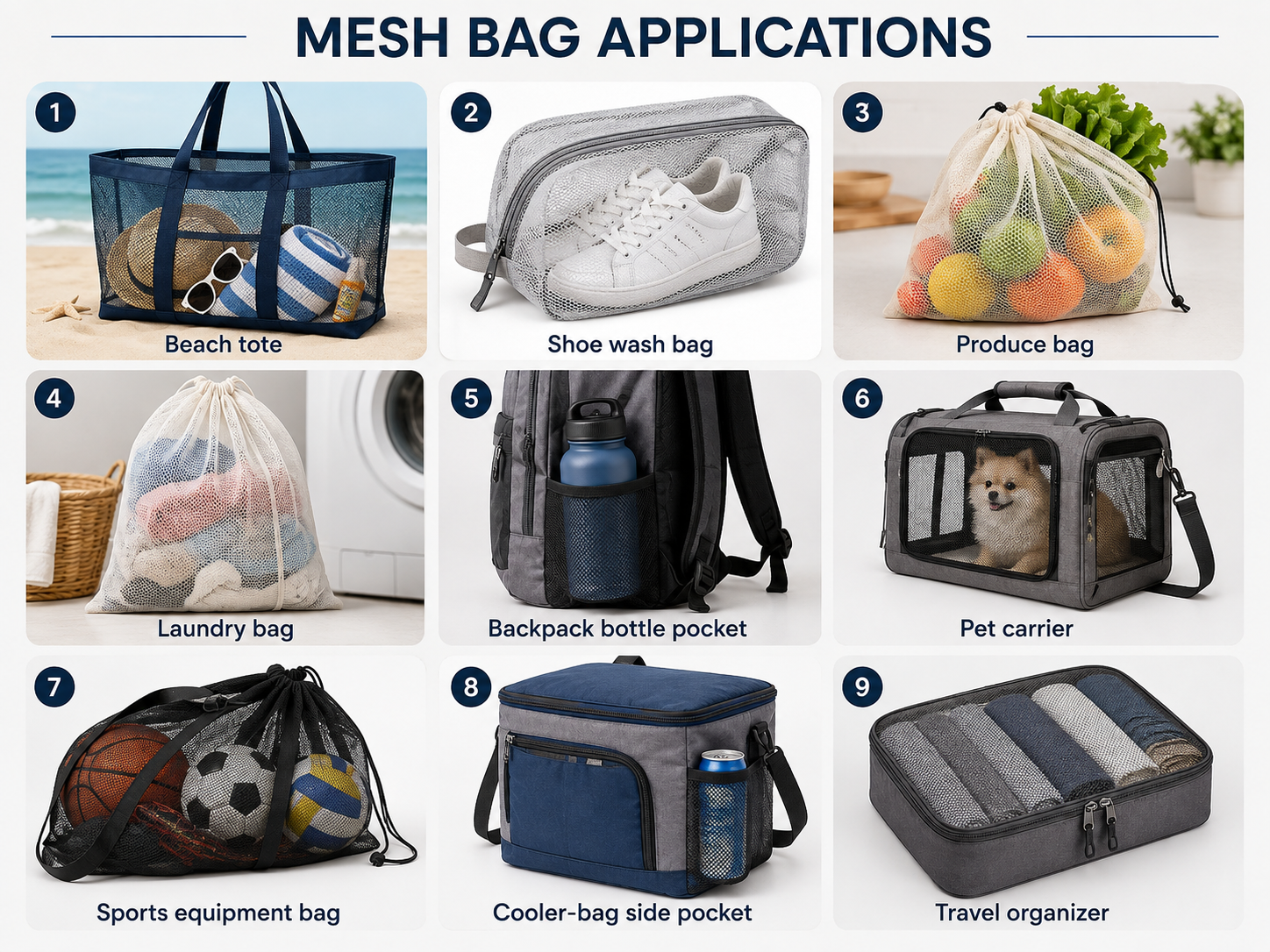
Common applications include:
However, “mesh fabric” is not a complete material specification.
Two mesh materials can look similar but perform differently because of their:
- Fiber composition
- Yarn thickness
- Hole size
- Knitted or woven construction
- Stretch
- Abrasion resistance
- Edge stability
- Reinforcement
For B2B buyers, four areas require particular attention:
- Mesh material
- Hole size and openness
- Reinforcement and seam construction
- Airflow and drainage
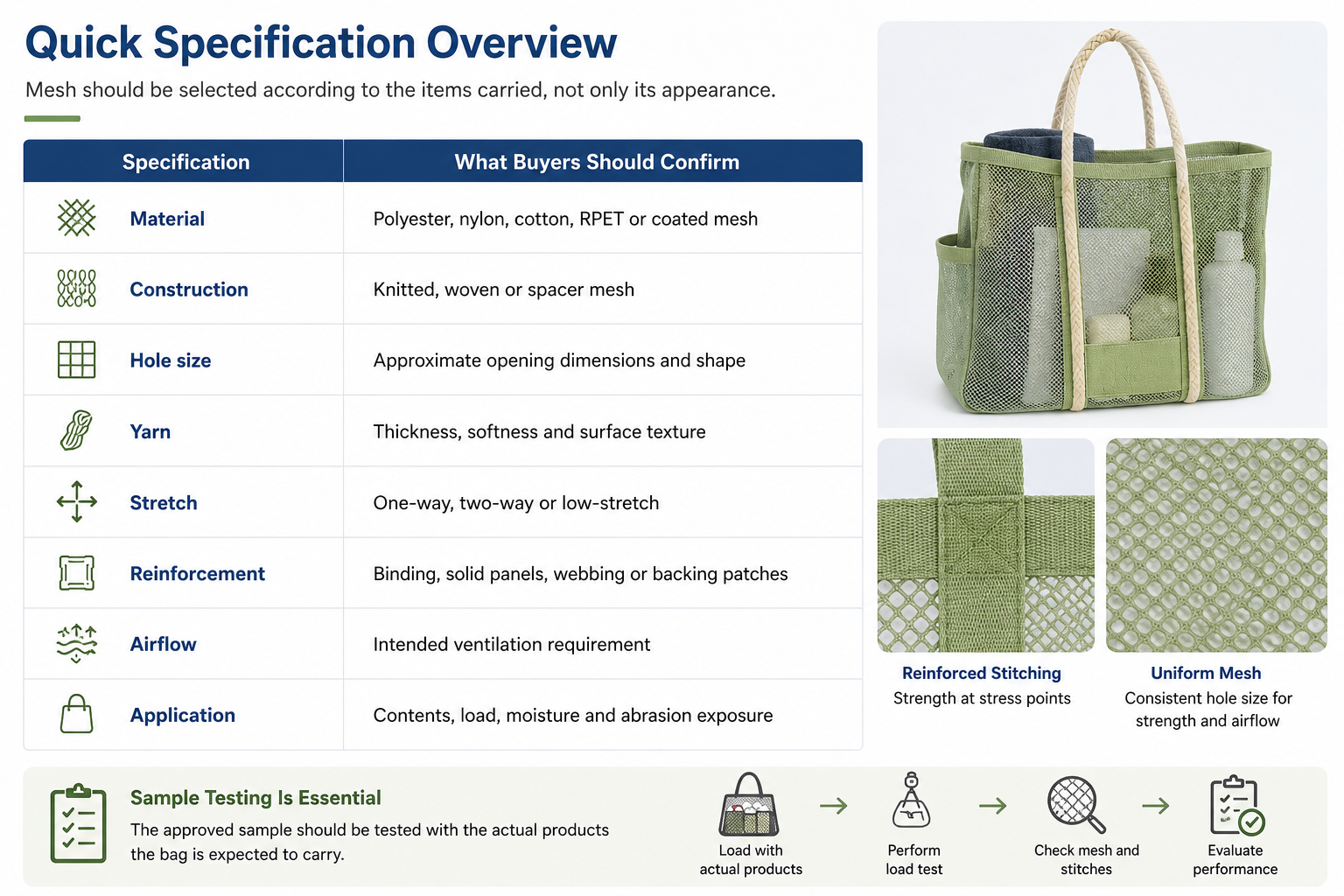
Quick Specification Overview
| Specification |
What Buyers Should Confirm |
| Material |
Polyester, nylon, cotton, RPET or coated mesh |
| Construction |
Knitted, woven or spacer mesh |
| Hole size |
Approximate opening dimensions and shape |
| Yarn |
Thickness, softness and surface texture |
| Stretch |
One-way, two-way or low-stretch |
| Reinforcement |
Binding, solid panels, webbing or backing patches |
| Airflow |
Intended ventilation requirement |
| Application |
Contents, load, moisture and abrasion exposure |
Mesh should be selected according to the items carried, not only its appearance.
1. Common Mesh Materials for Bags
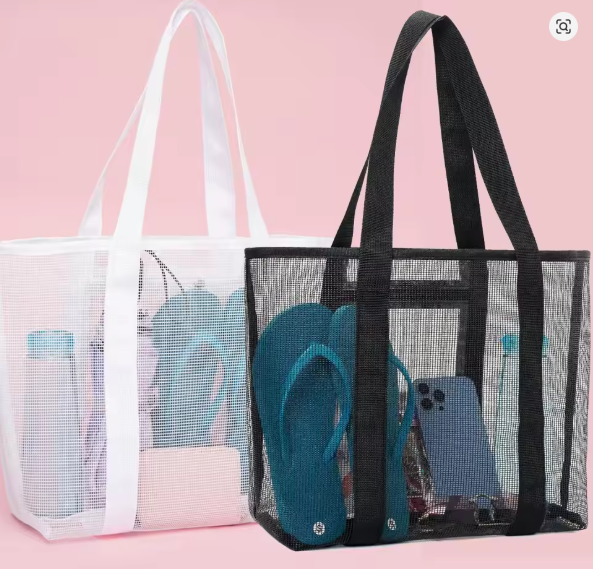
Polyester Mesh
Polyester is commonly used for custom mesh bags because it offers a practical balance of:
- Strength
- Color availability
- Dimensional stability
- Quick drying
- Competitive cost
- Compatibility with sewing and binding
It is suitable for:
- Beach totes
- Laundry bags
- Shoe wash bags
- Sports organizers
- Bottle pockets
- Travel bags
Polyester mesh can be produced in lightweight open structures or thicker, more rigid constructions.
Its performance still depends on yarn thickness, knitting density and finishing.
Nylon Mesh
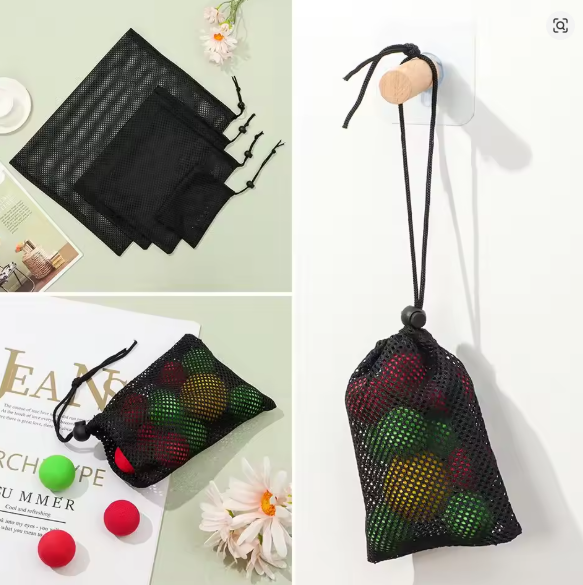
Nylon mesh can provide good flexibility and abrasion resistance.
It may be selected for:
- Sports bags
- Equipment storage
- Backpacks
- Pet carriers
- High-use travel accessories
Compared with some polyester mesh, nylon may feel softer or more flexible. It may also absorb more moisture and can behave differently under heat or long-term sunlight exposure.
Buyers should compare actual samples rather than selecting only by the fiber name.
RPET Mesh
RPET mesh is generally made from recycled polyester fiber.
It can be used for buyers requiring:
- Recycled-material product ranges
- Coordination with RPET bag bodies
- Retail sustainability programs
- Private-label recycled collections
The specification should confirm:
- Recycled content percentage
- Certification requirements
- Mesh construction
- Color availability
- Strength
- Whether the binding, thread and handles are also recycled
The presence of RPET mesh in one panel does not mean the complete bag is made entirely from recycled material.
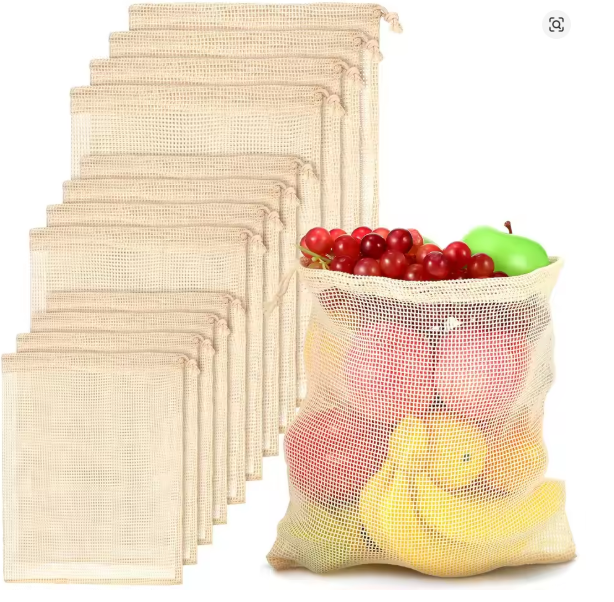
Cotton Mesh
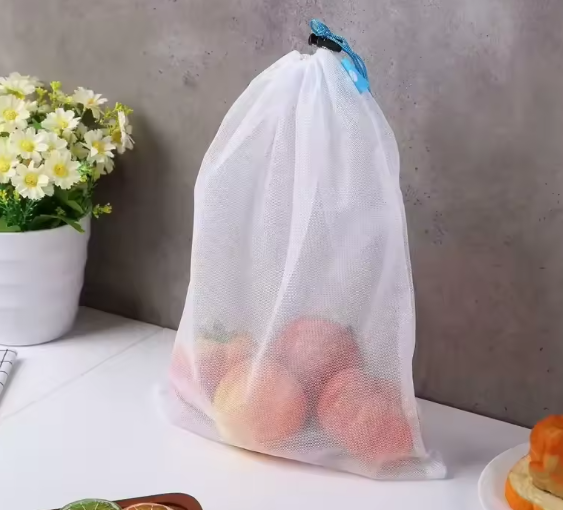
Cotton mesh provides a softer and more natural appearance.
It is often used for:
- Produce bags
- Grocery bags
- Lifestyle shopping bags
- Household storage
- Natural-material product collections
Its limitations may include:
- Moisture absorption
- Slower drying
- Shrinkage
- Lower shape stability
- Greater weight than lightweight synthetic mesh
Wash testing is important when finished dimensions and opening size must remain consistent.
Spacer or Sandwich Mesh
Spacer mesh uses multiple layers to create a thicker, cushioned structure.
It can provide:
- Padding
- Shape retention
- Air channels
- Surface protection
- A more substantial appearance
It is commonly used for:
- Backpack panels
- Shoulder straps
- Shoe wash bags
- Sports equipment bags
- Pet carriers
Spacer mesh increases thickness and packing volume. It should not be selected when the buyer only requires basic ventilation.
2. Mesh Hole Size
Mesh hole size affects:
- Airflow
- Visibility
- Drainage
- Item containment
- Sand release
- Surface strength
- Printing options
The specification should state the approximate opening dimensions rather than using only terms such as:
- Fine mesh
- Medium mesh
- Large mesh
- Breathable mesh
These descriptions can be interpreted differently by different suppliers.
Fine Mesh
Fine mesh has small openings and provides better containment of small items.
Suitable applications include:
- Laundry bags
- Shoe wash bags
- Travel organizers
- Small accessory storage
- Selected produce bags
Advantages:
- Prevents small items from escaping
- Provides more surface support
- Reduces snagging risk
- Offers greater visual coverage
Limitations:
- Lower airflow than a more open structure
- Slower drainage
- May retain sand or debris
- Less transparent
Medium Mesh
Medium mesh provides a balance between ventilation, visibility and strength.
It is suitable for:
- Beach bags
- Sports totes
- Bottle pockets
- Shopping bags
- General storage
This is often the most flexible direction for multi-purpose custom bags.
Large-Opening Mesh
Large mesh openings provide:
- High visibility
- Strong ventilation
- Fast water drainage
- Easy sand release
- Low material weight
It may be suitable for:
- Beach products
- Sports equipment
- Large produce
- Outdoor storage
- Pool accessories
Possible limitations include:
- Small items falling through
- Greater snagging risk
- Lower logo-printing area
- More stress around individual yarns
- Reduced privacy
Hole Shape and Mesh Construction
Mesh openings may be:
- Square
- Diamond-shaped
- Hexagonal
- Circular
- Irregular
- Elongated
The visible hole shape does not independently determine performance.
Buyers should also evaluate:
- Yarn thickness
- Connection points
- Stretch direction
- Recovery after stretching
- Edge stability
- Resistance to snagging
A mesh with larger openings and thick yarns may be stronger than a fine mesh made from weak, thin yarns.
3. Airflow and Ventilation
Airflow through mesh depends on more than hole size.
Important factors include:
- Percentage of open area
- Yarn thickness
- Fabric thickness
- Number of layers
- Surface coating
- Lining
- Contents placed inside the bag
- Pressure difference across the material
ISO 9237 describes a method for measuring air passing through a defined fabric area under specified pressure conditions and applies to many permeable textile fabrics and made-up textile articles.
For most retail bag projects, laboratory airflow testing is not always required. However, it may be useful when ventilation is a core performance requirement.
Airflow Is Not the Same as Quick Drying
A highly open mesh allows air and water to pass through, but the finished bag’s drying performance also depends on:
- Binding material
- Reinforcement panels
- Lining
- Zippers
- Foam
- Webbing
- Folded seams
A beach bag with an open mesh body may still retain moisture in a padded handle or reinforced bottom.
Airflow Is Not Odor Control
Ventilation can help moisture escape, but it does not prevent odor by itself.
Odor may remain when:
- Wet contents stay inside too long
- Solid panels restrict drying
- The material absorbs moisture
- Dirt accumulates in seams
- The bag cannot be cleaned easily
Claims such as “odor-free” should not be based only on the use of mesh.
4. Drainage and Sand Release
Mesh bags are commonly used for beaches, swimming pools and wet equipment because water can pass through the open structure.
Large holes generally release water and sand more easily, but they may also allow small items to fall out.
Buyers should consider the actual contents:
| Contents |
Suitable Mesh Direction |
| Towels and swimwear |
Medium or large openings |
| Beach toys |
Large openings |
| Phones and keys |
Separate solid zipper pocket |
| Shoes |
Fine-to-medium mesh |
| Small laundry items |
Fine mesh |
| Fruit and vegetables |
Opening size matched to product |
| Bottles |
Medium mesh with elastic or solid upper edge |
A combination structure is often more practical than making the entire bag from one mesh.
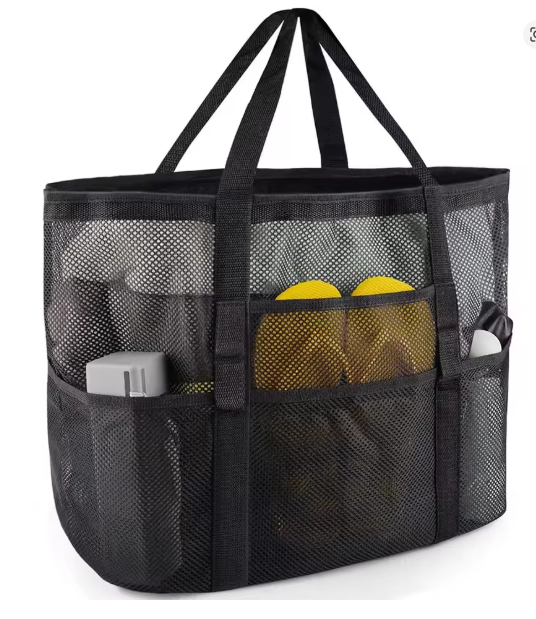
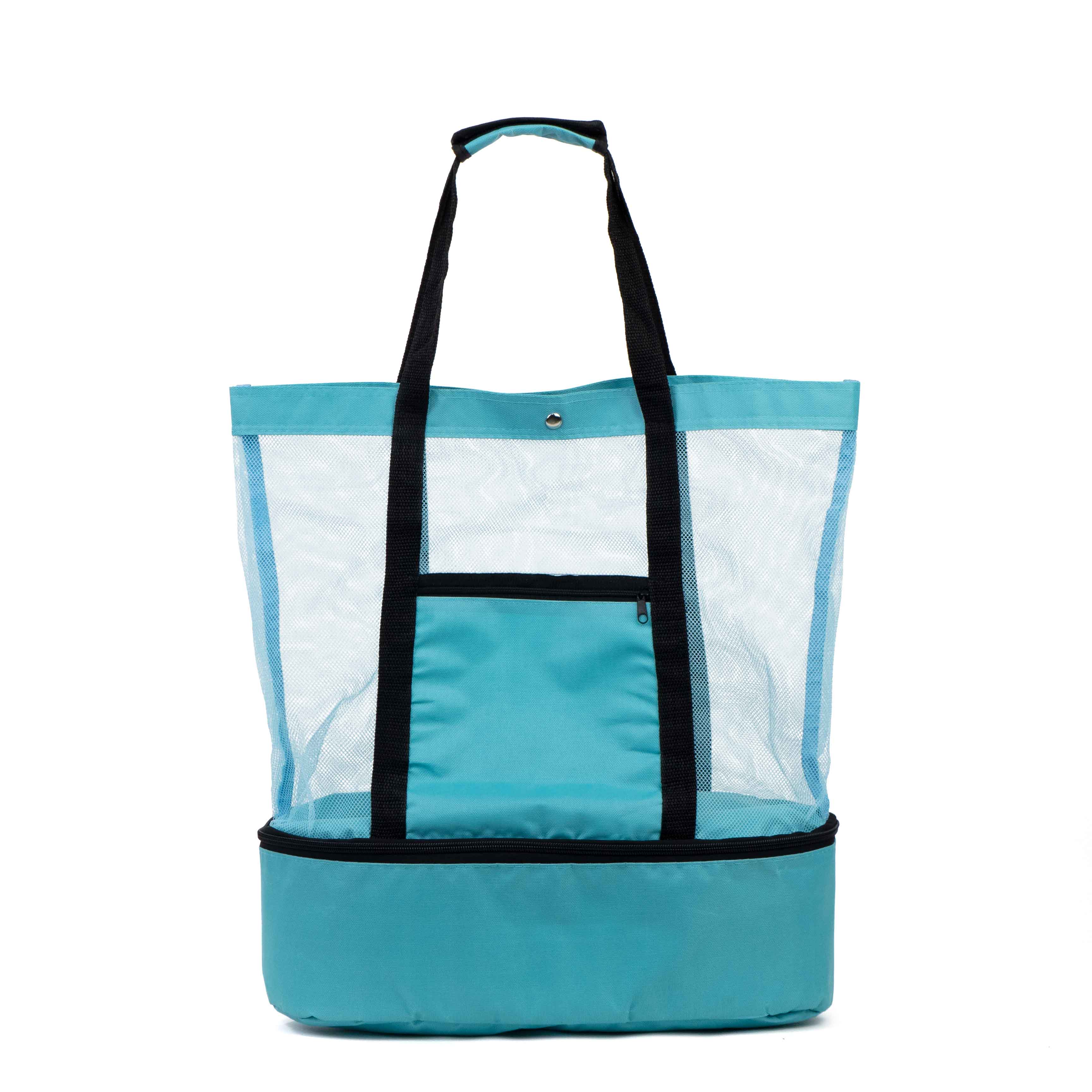
For example, a beach tote can use:
- Open mesh main body
- Solid bottom
- Zipper pocket for small items
- Reinforced fabric handles
5. Mesh Reinforcement
Open mesh provides less continuous material around seams and attachment points than a solid woven panel.
The most common risk areas are:
- Handles
- Zippers
- Bag openings
- Bottom corners
- Side seams
- Shoulder-strap attachments
- Pocket openings
Edge Binding
Binding covers cut mesh edges and helps stabilize the seam.
Common binding materials include:
- Polyester fabric
- Nylon fabric
- PP tape
- Polyester webbing
- Cotton tape
Binding width should be sufficient to contain the mesh securely.
If the seam allowance is too narrow, the mesh may pull out under load.
Solid Fabric Panels
Solid panels may be added at:
- The bag bottom
- Handle attachment areas
- Zipper openings
- Front pockets
- Side corners
These panels distribute force over a larger area and create better surfaces for printing.
Webbing Reinforcement
Webbing can be used for:
- Handles
- Shoulder straps
- Opening reinforcement
- Full-length body support
For higher-load bags, webbing may extend down the bag panels or around the bottom.
The webbing should connect to a reinforced area rather than only to unsupported mesh.
Backing Patches
Internal backing patches can support:
- Handle stitching
- D-rings
- Hooks
- Buckles
- Shoulder straps
The patch should be large enough to distribute force beyond the immediate stitch line.
Sewing Mesh Fabric
Mesh may stretch or distort during sewing.
Important production controls include:
- Appropriate needle size
- Controlled thread tension
- Sufficient seam allowance
- Correct stitch density
- Stable binding
- Avoiding excessive stretching during sewing
- Reinforcement at load points
Very dense stitching can damage thin mesh by creating multiple needle holes in a small area.
Loose stitching may allow the mesh to move or pull out of the seam.
The correct construction should be confirmed on a finished sample.
Zippers and Closures
Installing a zipper directly onto flexible mesh can create distortion.
A stable zipper structure often requires:
- Solid zipper tape
- Binding
- Fabric facing
- Reinforcement strips
- Controlled seam allowance
Common closure options include:
- Zipper
- Drawstring
- Snap button
- Hook-and-loop closure
- Open top
- Elastic edge
A drawstring is suitable for produce and laundry bags.
A zipper provides better containment for shoe wash bags and travel organizers.
An open top is practical for beach and shopping totes but requires separate storage for small valuables.
Logo Options for Mesh Bags
Direct printing on open mesh is limited because there is insufficient continuous surface area.
Common branding methods include:
- Woven label
- Printed fabric panel
- Rubber patch
- PVC patch
- Embroidered patch
- Handle printing
- Hangtag
- Solid front pocket
A tightly constructed mesh may support selected screen or heat-transfer printing, but the result should be tested.
For clear logo presentation, adding a solid fabric panel is usually more reliable than printing directly across large mesh openings.
Recommended Mesh Direction by Application
| Application |
Recommended Direction |
| Beach tote |
Medium or large polyester mesh with solid bottom |
| Shoe wash bag |
Fine or spacer mesh with reinforced zipper |
| Produce bag |
Cotton or polyester mesh matched to product size |
| Laundry bag |
Fine-to-medium polyester mesh |
| Backpack bottle pocket |
Stretch mesh with elastic upper edge |
| Pet carrier |
Strong mesh with reinforced perimeter and abrasion testing |
| Sports equipment bag |
Medium or large mesh with webbing reinforcement |
| Cooler-bag side pocket |
Stretch mesh with solid lower attachment |
| Travel organizer |
Fine mesh with zipper and binding |
INITIGIFT’s mesh category currently covers cotton and polyester mesh totes, beach bags, produce bags, drawstring bags and travel-storage products.
Quality Checks for Mesh Bags
Buyers should inspect:
Material
- Fiber composition
- Hole size
- Yarn thickness
- Stretch
- Color
- Surface consistency
- Snags
- Broken yarns
Construction
- Binding width
- Seam allowance
- Handle reinforcement
- Zipper stability
- Bottom structure
- Pocket attachment
- Loose threads
Performance
- Airflow
- Drainage
- Loaded shape
- Handle strength
- Seam strength
- Stretch recovery
- Abrasion
- Snag resistance
- Dimensions
- Compartment capacity
- Logo position
- Closure function
- Packing deformation
- Interior cleanliness
A mesh shoe wash bag, beach tote and pet carrier should not use the same testing requirements because their loads and risks are different.
Buyer Specification Checklist
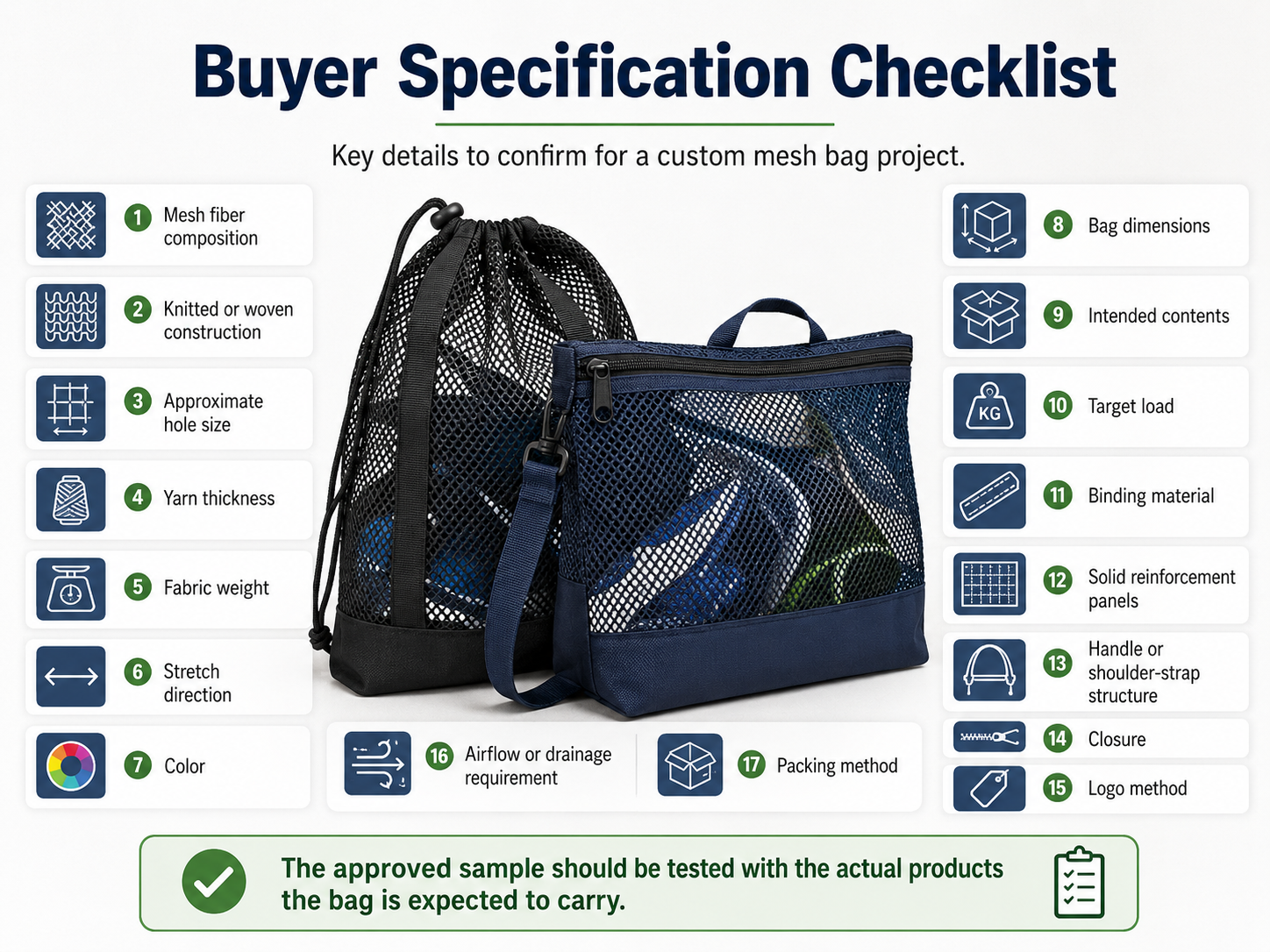
A practical custom mesh bag specification should include:
- Mesh fiber composition
- Knitted or woven construction
- Approximate hole size
- Yarn thickness
- Fabric weight
- Stretch direction
- Color
- Bag dimensions
- Intended contents
- Target load
- Binding material
- Solid reinforcement panels
- Handle or shoulder-strap structure
- Closure
- Logo method
- Airflow or drainage requirement
- Packing method
The approved sample should be tested with the actual products the bag is expected to carry.
Common Buyer Mistakes
Selecting Mesh Only by Appearance
Similar-looking mesh can differ in stretch, yarn strength and abrasion resistance.
Assuming Larger Holes Always Provide Better Performance
Larger openings improve ventilation but may reduce containment and increase snagging.
Attaching Handles Directly to Unsupported Mesh
Handles should connect to binding, webbing or reinforced solid panels.
Printing Detailed Logos Directly on Open Mesh
A solid pocket, label or patch usually gives a clearer result.
Describing Mesh as Quick-Drying Without Testing the Complete Bag
Binding, padding and reinforcement may retain moisture.
Ignoring Stretch
A flexible mesh bag may become longer or wider when loaded, changing its capacity and appearance.

How INITI Supports Custom Mesh Bag Development
INITI develops custom mesh totes, beach bags, shoe wash bags, sports bags, produce bags and mesh storage products for global B2B buyers.
Customization can include:
- Polyester, nylon, cotton and RPET mesh
- Hole size and mesh density
- Custom dimensions
- Solid bottom panels
- Edge binding
- Webbing handles
- Zipper or drawstring closures
- Inner pockets
- Logo labels and patches
- Retail packaging
- Sample development
- Handle and seam testing
Existing mesh-related structures include beach totes, shoe wash bags and mesh side pockets used on functional cooler bags.
FAQ
Which mesh material is best for custom bags?
Polyester is suitable for many general bag applications. Nylon may provide greater flexibility, cotton offers a natural appearance, and RPET mesh supports recycled-material product programs.
Does larger mesh provide more airflow?
Generally, a greater open area allows more air to pass through, but yarn thickness, fabric layers, coatings and the bag’s contents also affect airflow.
How should mesh handles be reinforced?
Handles should normally connect to webbing, binding, solid fabric panels or internal reinforcement rather than unsupported mesh alone.
Can logos be printed directly on mesh?
Some tight mesh structures can be printed, but labels, patches or solid fabric panels usually provide clearer and more consistent branding.
How should mesh strength be tested?
Test the finished bag with the intended load. Inspect the mesh, seams, binding, handles, zippers and reinforcement after static and repeated use.
Conclusion
Mesh performance depends on more than whether the fabric looks open or breathable.
Buyers should evaluate:
- Fiber composition
- Hole size
- Yarn and construction
- Stretch
- Reinforcement
- Seam stability
- Airflow
- Drainage
- Intended contents
Fine mesh provides better containment, while larger openings improve visibility, drainage and ventilation.
The correct result usually comes from combining mesh with solid panels, binding and reinforced handles rather than making every part of the bag from open mesh.
Inquiry Support
For a custom mesh bag recommendation, provide:
- Intended bag type
- Estimated quantity
- Preferred dimensions or reference sample
- Items to be carried
- Required colors
- Preferred hole size
- Target load
- Handle and closure requirements
- Logo artwork
- Packaging requirements
If you have not finalized all details, you can first send your intended use and target quantity, and we can recommend a suitable specification.
Related Products
Related Blog Articles


 Hot News