What Is a Duffel Bag: Types, Sizes and Common Uses
A duffel bag is a soft-sided bag with a spacious main compartment, usually carried by hand or over the shoulder. Its elongated body and wide opening make it useful for packing clothes, shoes, sports equipment and travel essentials.
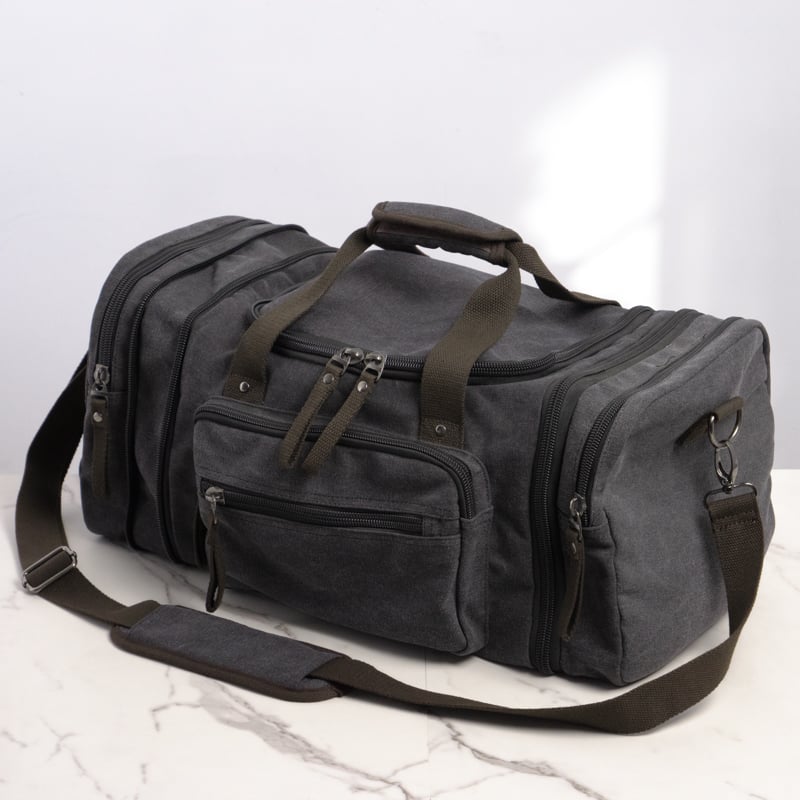
Traditional duffel bags were often cylindrical, but modern designs also include rectangular gym bags, structured weekenders, expandable travel bags and convertible styles with backpack straps.
The terms duffel bag and duffle bag refer to the same type of bag. Both spellings are accepted, although "duffel" is commonly used in product descriptions.
Not every duffel serves the same purpose, however. A lightweight gym duffel may be sufficient for a towel and change of clothes, while a travel bag may need more organization, stronger handles and space for several days of packing.
This guide covers the main duffel bag types, typical sizes, materials and common uses, along with the features worth checking before choosing or sourcing one.
1. What Makes a Bag a Duffel Bag?
Duffel bags are generally identified by their elongated shape, flexible body and large main storage area.
Most modern designs have several recognizable features:
- Spacious main compartment: Provides room for clothing, shoes and other bulky items.
- Wide opening: Usually a top zipper, although traditional and specialized designs may use different closures.
- Carry handles: Allow the bag to be lifted and carried over short distances.
- Shoulder strap: Common on travel and sports models, often adjustable or detachable.
- Soft-sided construction: Makes the bag easier to pack around irregularly shaped belongings.
Unlike a suitcase, a typical duffel has no rigid shell or wheeled frame. Its body is usually made from fabric, although structured and wheeled versions also exist.
The defining characteristics are its overall construction and flexible packing space, not a particular fabric, size or number of compartments.
2. Common Types of Duffel Bags
Duffel bags can be grouped by shape, carrying system or intended use. These categories overlap: a rectangular duffel, for example, can also be designed for gym use or weekend travel.
The traditional barrel duffel has a cylindrical or rounded body, usually with a lengthwise zipper and two handles.
Its relatively simple construction provides one large storage space without many internal dividers.
Common uses: Sports equipment, casual travel, uniforms and general storage.
Main consideration: Rounded sides can make packing and organizing flat items less efficient than in a rectangular bag.
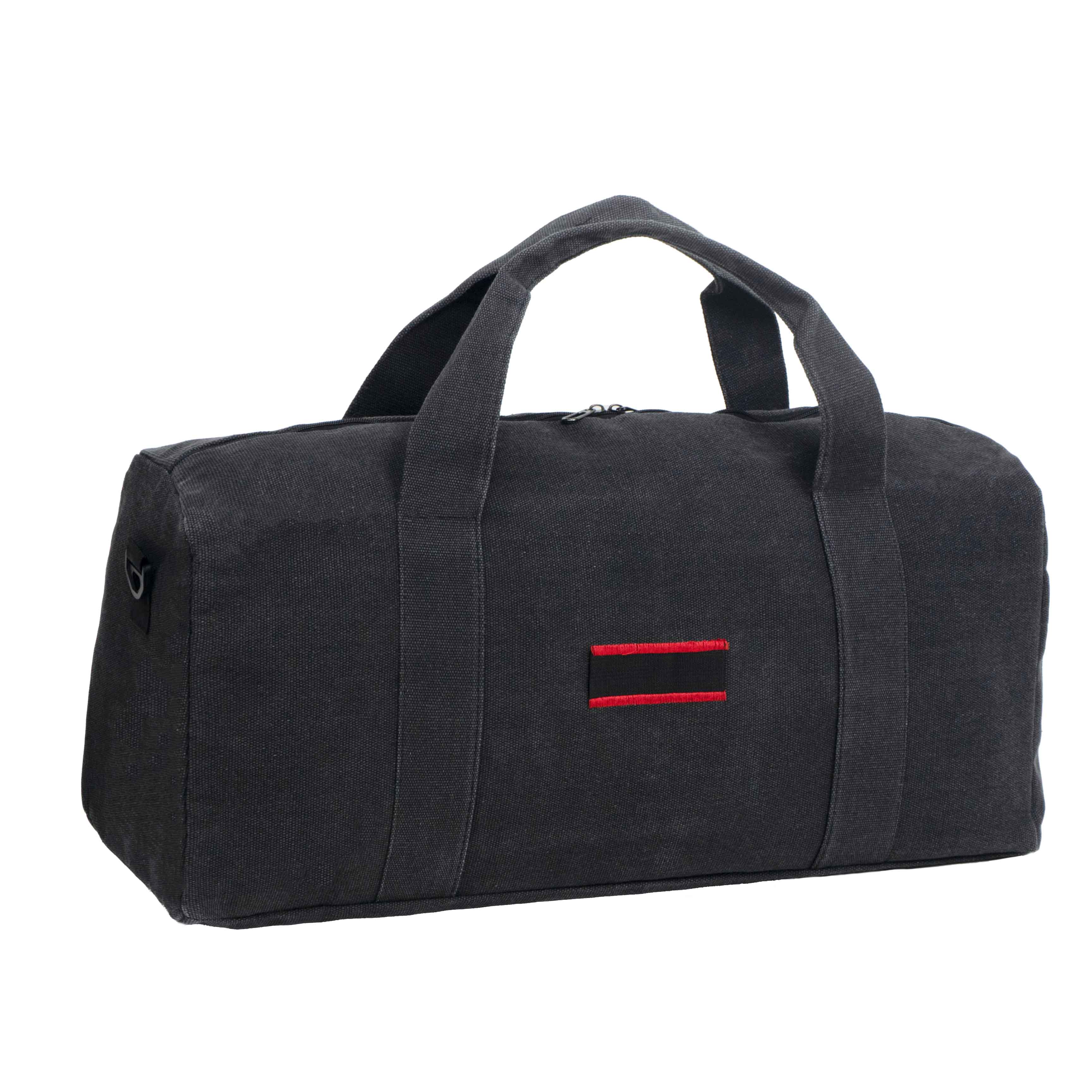
A rectangular duffel has flatter panels and a more defined base. It may have a soft body or additional reinforcement to help retain its shape.
The flatter construction can make it easier to stack clothing, organize accessories and position the bag on a luggage rack.
Common uses: Fitness, overnight travel, school sports and retail travel collections.
Main consideration: Additional structure may increase the bag's empty weight and reduce its ability to fold flat.
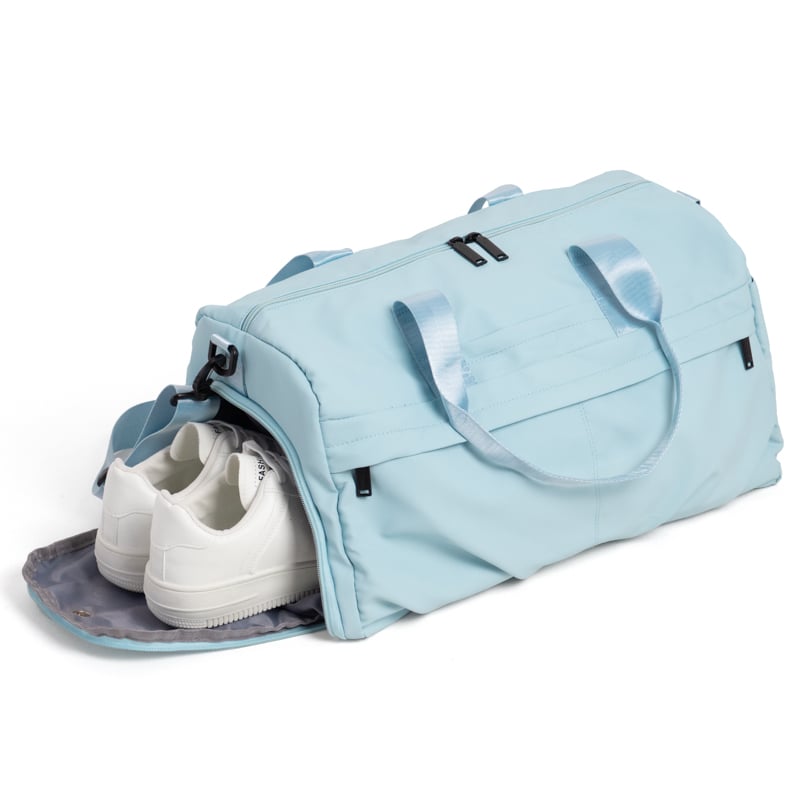
Gym duffels are developed around workout clothing, footwear, towels and sports accessories.
Depending on the intended user, they may include a separate shoe compartment, a ventilated section, an exterior bottle pocket or a lining that is easier to wipe clean.
Not every gym duffel needs these features. A simple one-compartment bag can be sufficient for light fitness use.
Common uses: Fitness centers, swimming, training, school teams and sports clubs.
Main consideration: Compartments improve organization but occupy space within the bag's overall dimensions.
Travel duffels generally provide space for clothing, toiletries and personal items needed during short trips.
Some have internal organizer pockets, a luggage sleeve that slides over a suitcase handle, or a more structured shape for convenient packing.
A weekender is defined by its intended use rather than a unique construction. Many duffel bags can serve as weekenders.
Common uses: Overnight stays, weekend trips, road travel and short business trips.
Main consideration: The bag should be comfortable to carry when fully packed, not only when empty.
Convertible and Expandable Duffel Bag
Convertible duffels offer more than one carrying configuration, such as handles, a shoulder strap and backpack-style straps.
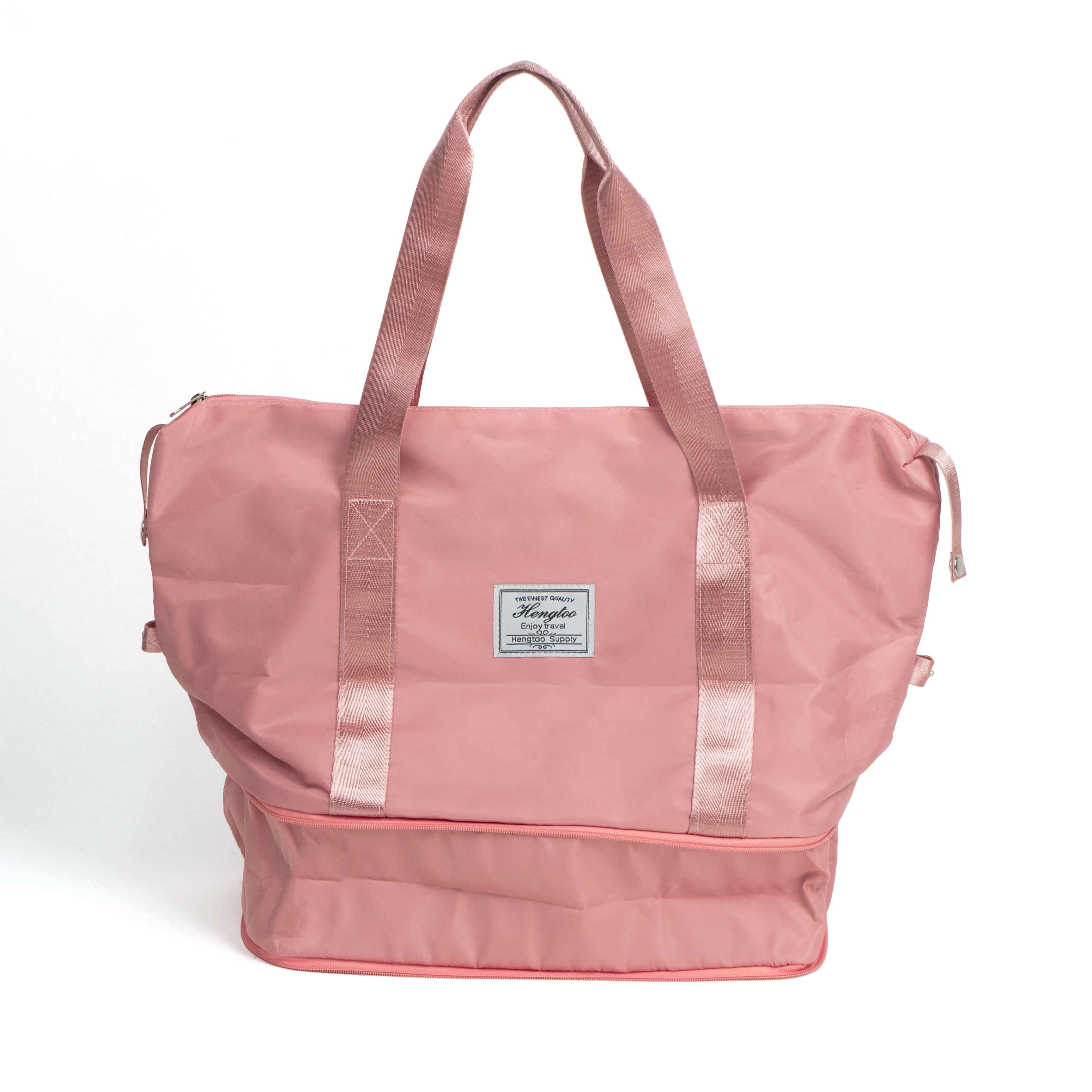
Expandable designs use additional zippered sections or panels to increase capacity when required. Some larger duffels also incorporate wheels and a telescopic handle.
Common uses: Mixed travel, additional luggage, equipment transport and situations where packing requirements change.
Main consideration: Extra straps, expansion panels and hardware add weight and potential wear points. Their value depends on how frequently those features are used.
3. Duffel Bag Sizes: How Many Liters Do You Need?
Duffel bag sizes are commonly described in liters (L), while manufacturing specifications typically use dimensions in centimeters or inches.
There is no universal capacity standard defining a small, medium or large duffel. The following ranges are practical shopping and product-development references.
| Capacity |
General Size |
Common Uses |
| 20–30 L |
Small |
Light gym sessions, swimming, yoga, minimal overnight packing |
| 30–45 L |
Medium |
Regular gym use, sports training, overnight trips |
| 45–60 L |
Large |
Weekend travel, larger sports kits, extra clothing and footwear |
| 60–90 L |
Extra large |
Team equipment, bulky clothing, extended trips and gear storage |
| Over 90 L |
Oversized |
Specialized equipment and high-volume gear transport |
These ranges are approximate and should not be treated as standardized product categories.
Dimensions and Capacity Are Not the Same
Two duffel bags advertised as 40 liters may have noticeably different shapes.
One may be long and narrow, making it suitable for equipment. Another may be shorter and deeper, providing a more practical layout for folded clothes.
For a simple rectangular box, volume can be estimated as:
Length × Width × Height (cm) ÷ 1,000 = Volume (L)
For example, a rectangular space measuring 50 × 30 × 30 cm has a geometric volume of 45 liters.
However, applying this formula to a duffel's external dimensions does not establish its actual usable capacity. Curved panels, fabric thickness, lining, padding and internal compartments can all reduce the available space.
For product selection, it is useful to compare:
- External dimensions
- Usable main-compartment dimensions
- Opening width
- Compartment layout
- Intended packed weight
A sample filled with the intended contents often gives a more reliable answer than the advertised capacity alone.
For bulk orders, packing density also affects shipping costs. Soft, unstructured duffels can often be folded or packed flat to reduce carton volume (CBM), while rigid baseboards, padded shoe compartments and structured panels generally require more packing space. Actual freight savings depend on carton dimensions, shipment volume and the shipping method. LCL sea freight is commonly charged by weight or measurement, while FCL freight is generally priced per container. Reduced carton volume may therefore lower LCL charges or allow more units to fit into a container, rather than automatically reducing the freight rate.
Can a Duffel Bag Be Used as Carry-On Luggage?
Yes, some duffel bags qualify as cabin baggage, but there is no universal carry-on duffel size.
The International Air Transport Association (IATA) notes that cabin baggage allowances vary by airline, cabin class and aircraft type.
Many airlines use dimensions around 56 × 45 × 25 cm as a reference, but this is not a guaranteed allowance for every flight. Some carriers impose smaller limits or separate rules for personal items.
For air travel, check the airline's current requirements and measure the bag in its packed condition, including handles and any external attachments where required.
A bag labeled "carry-on duffel" is not automatically accepted on every airline.
4. What Are Duffel Bags Commonly Used For?
The same general bag style can serve different users, but the appropriate size and internal layout will vary.
| Application |
What Users Usually Carry |
Useful Design Features |
| Gym and fitness |
Clothes, shoes, towel, bottle |
Wide opening, washable lining, optional shoe section |
| Weekend travel |
Clothing, toiletries, personal accessories |
Medium capacity, comfortable handles, interior pockets |
| Team sports |
Uniforms, footwear, training accessories |
Large compartment, reinforced handles, identification area |
| Outdoor activities |
Extra clothing, footwear, general gear |
Abrasion-resistant base, suitable weather protection |
| Promotional programs |
Clothing, daily items, event merchandise |
Simple construction, practical capacity, printable panels |
| Travel retail |
Clothing and organized travel essentials |
Luggage sleeve, internal pockets, secure main closure |
Gym and Everyday Fitness
A compact or medium duffel is useful when someone needs more space than a small tote but does not require a large suitcase-style bag.
A separate shoe compartment is helpful for users who regularly carry footwear, but it is not essential for everyone.
Short Trips and Weekend Travel
Duffels provide flexible storage for clothes and travel accessories.
A rectangular model may be easier to organize, while a soft barrel duffel can accommodate irregularly shaped items.
For travelers who walk long distances, a shoulder strap alone may be less comfortable than a properly designed backpack carrying system.
Sports Teams and Group Programs
Larger duffels are commonly used for uniforms, training equipment and shared gear.
For team orders, practical details may include player-name panels, consistent bag dimensions and sufficiently strong carrying attachments.
Retail and Promotional Merchandise
Duffel bags are also used for sports merchandise, corporate wellness programs, travel promotions and private-label collections.
A simple polyester duffel may suit a cost-sensitive campaign. A structured design with upgraded hardware and organized storage may be more appropriate for a retail product line.
The intended use should determine the specification, rather than adding features solely to make the bag appear more expensive.
5. What Materials Are Duffel Bags Made From?
The material influences the bag's weight, appearance, maintenance requirements and expected durability.
| Material |
Common Characteristics |
Typical Applications |
| Polyester / Oxford fabric |
Versatile, available in different constructions and finishes |
Sports bags, promotional duffels, everyday travel |
| Nylon |
Lightweight options with good strength and abrasion performance in suitable constructions |
Travel and frequently used gym bags |
| Cotton canvas |
Textile appearance, relatively substantial hand feel, variable weight |
Casual weekenders and lifestyle collections |
| RPET polyester |
Recycled polyester options, with characteristics depending on fabric construction |
Retail and travel collections specifying recycled content |
| Neoprene |
Soft, flexible, cushioned feel |
Structured casual travel and fashion-oriented duffels |
| Coated synthetic fabrics |
Can provide increased water resistance depending on coating and construction |
Outdoor and equipment-oriented duffels |
Material names alone do not establish performance.
For example, 600D polyester and 600D nylon are not directly equivalent specifications. Fabric construction, coating, yarn properties and finishing affect the result.
Fabric coatings also affect flexibility, weight and water resistance. PU (polyurethane) and PVC (polyvinyl chloride) backings can provide different performance characteristics depending on their formulations and coating thickness. For EU and US markets, buyers should verify applicable chemical restrictions, including relevant REACH requirements for certain phthalates and PFAS restrictions that may apply to textile bags, coated fabrics and water-repellent finishes. Material declarations and appropriate test reports should support any compliance or PFAS-free claims, with requirements checked against the specific product and destination market.
Likewise, a bag made from water-resistant fabric is not necessarily waterproof. Water may still enter through zipper openings, stitching or unsealed seams.
Products intended for sustained rain exposure or wet environments require appropriate finished-bag construction and testing.
6. How Is a Duffel Different From a Gym Bag or Weekender Bag?
These names describe overlapping categories rather than three entirely separate products.
| Term |
What It Mainly Describes |
| Duffel bag |
General bag shape and construction |
| Gym bag |
Intended use for exercise and fitness |
| Weekender bag |
Intended use for short or weekend trips |
A duffel can be a gym bag, a weekender, or both.
However, a gym bag can also be a backpack or tote, and a weekender can take the form of a structured tote or another travel bag style.
For buyers, the product name is less important than whether the design matches the contents and carrying conditions.
For a more focused comparison, see Gym Bag vs Duffel Bag: What's the Difference?.
7. How to Choose the Right Duffel Bag
A useful starting point is to list what the bag must hold and how it will be carried.
Check the usable space. Confirm that the largest expected item fits through the opening and into the main compartment. A separate shoe section may reduce the space available for clothes.
Consider the carrying distance. Short-distance use may require only handles. Frequent walking may justify a padded shoulder strap or convertible backpack-style carrying system.
Match the fabric to the environment. Everyday indoor use, frequent travel and outdoor exposure place different demands on material durability and moisture resistance.
Evaluate the loaded bag. Check the handle attachments, shoulder strap, zipper operation and base construction with realistic contents and agreed loading conditions.
For wholesale and custom orders, confirm the full specification. A useful product brief includes dimensions, materials, compartment layout, carrying requirements, logo method, packaging and target price range.
For larger orders, carton dimensions and units per carton should also be confirmed before shipment planning. They affect total shipment volume and may influence freight cost per bag.
These details help ensure that the selected design works in everyday use rather than simply looking suitable in product photographs.
8. Frequently Asked Questions
Q1. Are duffel and duffle bags the same?
Yes. "Duffel bag" and "duffle bag" are alternative spellings for the same general type of bag. Both appear in retail and product sourcing terminology.
Q2. What is the most common duffel bag size?
There is no single standard size. Medium designs around 30–45 liters are a practical reference for general gym and short-trip use, but suitable capacity depends on the items being carried.
Q3. Can a duffel bag replace a suitcase?
For short trips and flexible packing, it often can. For heavier loads, extended travel or situations where rolling luggage is more convenient, a suitcase may be easier to manage.
Q4. Are all duffel bags waterproof?
No. Many are made with water-resistant fabrics, but waterproof performance depends on the entire construction, including the closure and seams. A waterproof claim should be supported by appropriate testing.
Q5. Can duffel bags be customized for retail or wholesale orders?
Yes. Common customization options include fabric, dimensions, color, compartments, handles, shoulder straps, logo application and packaging. The chosen specifications should be based on the target market and intended use.
Conclusion
A duffel bag is a versatile soft-sided bag used for sports, travel, clothing and equipment storage. Its main advantage is accessible packing space, although the practical result depends on the bag's shape, size and construction.
Compact duffels suit lighter daily use. Medium models cover many gym and overnight needs. Larger designs provide room for weekend luggage or equipment but become less convenient to carry when heavily packed.
The most suitable duffel is not necessarily the largest or the one with the most compartments. It is the one whose capacity, carrying system and materials match the intended contents and routine.
For bulk buyers, packing efficiency, material compliance and consistent production quality are also important considerations.
Recommended Products: Custom Duffel Bags for Sports and Travel
The following INITI designs illustrate three different approaches to duffel bag construction.
1. Multi-Color Fitness Duffel Bag
A customizable sports duffel available in polyester, Oxford or nylon fabric options, with a large main compartment, front zipper pocket, reinforced carrying handles and a detachable adjustable shoulder strap.
Suitable for: Gym merchandise, school sports, fitness brands and casual travel collections.
Customization focus: Dimensions, fabric, strap construction, logo application and optional compartment features.
View Multi-Color Fitness Duffel Bag
2. Neoprene Duffel Bag with Trolley Sleeve
A soft structured rectangular travel duffel with a wide zippered opening, organized interior, padded handles and rear luggage sleeve. A detachable shoulder strap can be added according to the project requirements.
Suitable for: Weekend travel, business travel accessories and private-label lifestyle collections.
Customization focus: Neoprene specification, material finish, lining, internal organization, handle details and luggage-sleeve dimensions.
View Neoprene Duffel Bag with Trolley Sleeve
3. Custom Expandable Travel Duffel Bag with Bottom Compartment
A foldable travel duffel with a main zipper compartment, front pocket, inner zip pocket and expandable bottom section for additional storage.
Suitable for: Lightweight travel, backup luggage, retail travel accessories and promotional programs.
Customization focus: Expanded and unexpanded dimensions, bottom-section construction, handle reinforcement and packing format.
View Custom Expandable Travel Duffel Bag
Inquiry Support
For custom duffel bag projects, INITI provides material selection, product development, sampling, free design support and bulk production services.
Email [email protected] with your intended application, preferred size, material, estimated quantity, logo requirements and destination market for a fast quotation.
Related Articles
References


 Hot News