Gym Bag vs Duffel Bag: What's the Difference?
A gym bag and a duffel bag often look similar. Both can have a long zippered body, two handles and an adjustable shoulder strap. Some products are even marketed under both names.
The difference becomes clearer when you consider what each term describes.
A gym bag is defined mainly by its intended use. A duffel bag is defined mainly by its general shape and construction.
A gym bag is designed or selected for carrying workout clothing, shoes, towels and other fitness essentials. It may be a duffel, backpack, tote or convertible design.
A duffel bag usually has an elongated, soft-sided body with one large main compartment. It may be used for fitness, team sports, short trips or general equipment storage.
That means a duffel can also be a gym bag. The categories overlap rather than compete.
For buyers choosing custom gym bags or wholesale duffel bags, the important differences are capacity, organization, carrying comfort, material selection and the way the product will be used.
1. Gym Bag vs Duffel Bag: Quick Comparison
| Feature |
Gym Bag |
Duffel Bag |
| Main definition |
A bag used for fitness and training |
A general bag style or construction |
| Typical shape |
Duffel, backpack, tote or convertible |
Usually elongated, rounded or rectangular |
| Main application |
Daily gym, swimming, fitness classes and training |
Gym, sports, travel, overnight trips and equipment |
| Main compartment |
Varies by bag type |
Often one spacious central compartment |
| Shoe compartment |
Useful on many gym-focused designs |
Optional; also available on gym duffels |
| Wet/dry separation |
Useful for selected fitness activities |
Optional, depending on intended use |
| Carrying options |
Handles, shoulder strap or backpack straps |
Usually handles and shoulder strap; some are convertible |
| Size |
Compact to large |
Compact to very large |
| Main purchasing priority |
Fitness routine and organization |
Shape, packing access and versatility |
| Customization |
Pockets, shoe storage, straps and branding |
Dimensions, compartments, fabric, straps and branding |
There is no universal size limit separating the two categories.
A compact duffel may be smaller than a gym backpack, while a larger gym duffel may also function as a weekend travel bag.
The name on the product listing matters less than its actual dimensions and features.
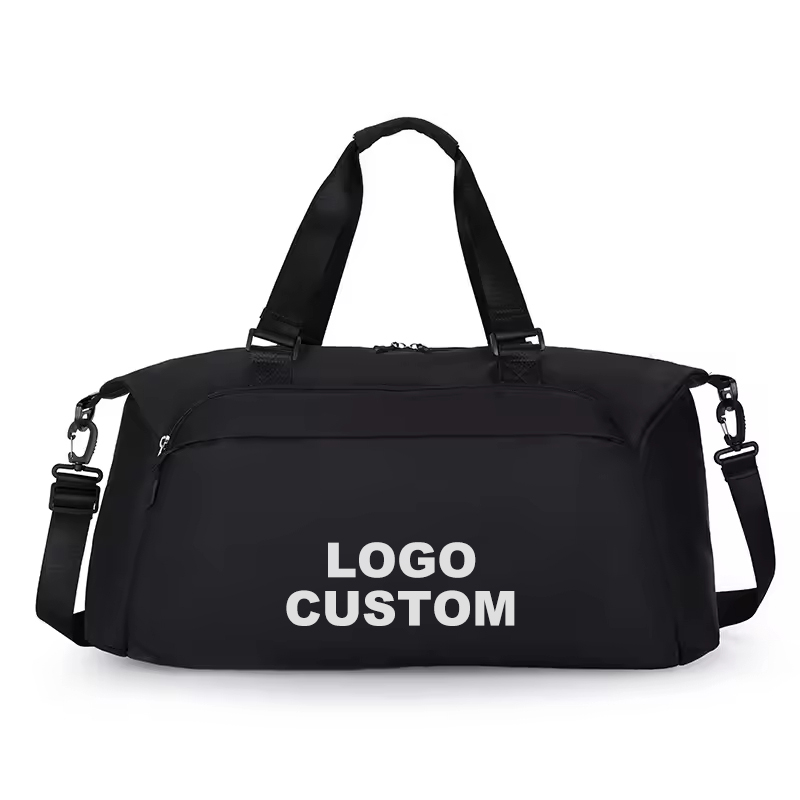
A gym bag is a bag used to transport the items needed for training, exercise or related activities.
Typical contents include:
- Workout clothing and a change of clothes
- Training shoes
- A towel
- Water bottle
- Toiletries
- Keys, phone and small personal items
- Sports accessories
The right design depends on the user's routine.
Someone who walks to a fitness studio carrying only a towel and clothing may prefer a compact backpack or tote.
Someone who drives to the gym with shoes, shower products and a complete change of clothes may prefer a medium-sized gym duffel.
Common Gym Bag Features
Fitness-focused designs may include:
Separate shoe compartment: Helps keep footwear apart from clean clothing and personal belongings.
Wet-item pocket: Provides a designated area for damp clothing or towels, with its actual moisture-containment performance depending on the construction.
Quick-access pocket: Holds a phone, membership card, keys or earphones.
Bottle pocket: Keeps a bottle accessible and may help organize the main compartment.
Reinforced handles or shoulder strap: Supports repeated carrying.
Easy-clean lining: Makes routine cleaning more practical when suitable materials are selected.
Not every gym bag requires all these features.
For a low-cost membership giveaway, a simple one-compartment sports bag may be sufficient. For a premium fitness retail collection, separate storage and improved carrying comfort may justify a more complex design.
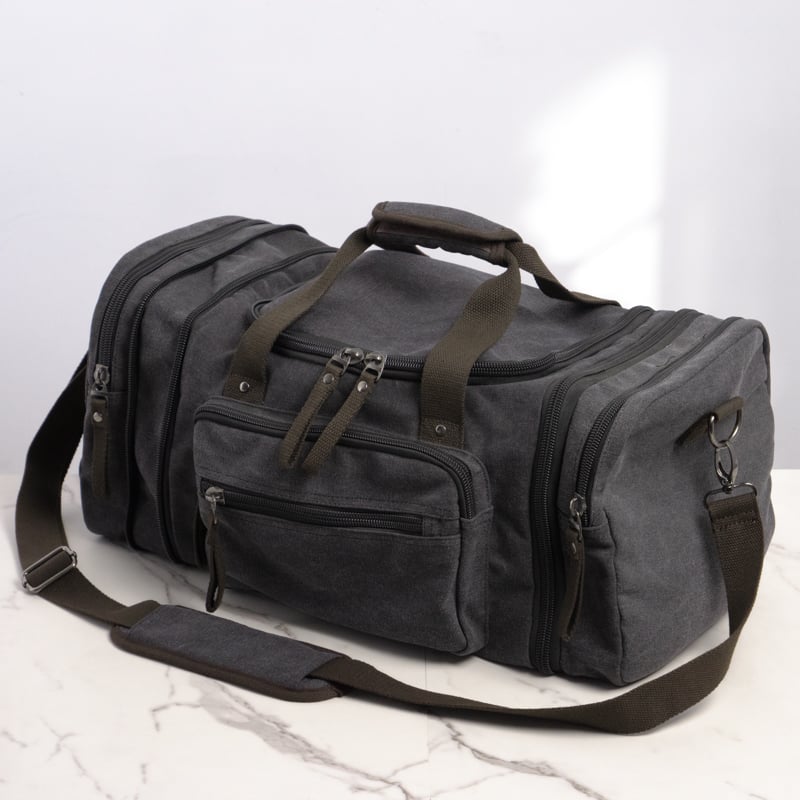
A duffel bag, also spelled duffle bag, is generally a soft-sided bag with an elongated body and a relatively large storage compartment.
Traditional duffels were often cylindrical, while modern designs may use rounded rectangular shapes, flat bottoms and structured panels.
Common features include:
- A long main compartment
- A top zipper or wide access opening
- Two carry handles
- An adjustable shoulder strap
- Flexible fabric construction
- Optional side and internal pockets
Duffel bags are used for fitness, overnight travel, team sports, camping, travel accessories and promotional merchandise.
Their main advantage is flexible packing space.
For bulky sportswear, towels, shoes or training equipment, a wide opening and a relatively unobstructed main compartment can make packing easier.
However, a travel duffel does not automatically have specialized gym features. Some designs prioritize a large main compartment rather than separate shoe or wet-item storage.
Likewise, a duffel is not automatically suitable as an airline carry-on. Actual packed dimensions must be checked against the applicable airline requirements.
4. How Much Capacity Do You Need?
Capacity is important, but buying by liters alone can lead to disappointment.
The same nominal volume may feel different depending on the shape of the bag, opening size and compartment layout.
The following ranges are illustrative planning references, not standardized definitions.
| Approximate Capacity |
Possible Application |
Items to Check |
| 15–25 L |
Light gym sessions and compact daily fitness bags |
Clothing, small towel, bottle and essentials |
| 25–40 L |
Regular gym use, fitness classes and gym-to-work routines |
Shoes, clothing, towel and toiletries |
| 40–60 L |
Larger gym duffels and short travel |
Additional clothing, larger footwear and equipment |
| 60 L+ |
Team sports, bulky equipment and larger travel loads |
Equipment dimensions, carrying weight and bag structure |
A compact gym bag with excellent organization may be more useful than a much larger bag with no practical separation.
The Shoe Compartment Can Reduce Main Storage Space
One of the most common mistakes in gym bag selection is treating the shoe compartment as additional capacity without checking its construction.
A side shoe compartment may extend inside the main body.
When it is empty, the main compartment can appear spacious. Once shoes are inserted, the shoe section may occupy a substantial portion of that space.
For product development, buyers should test:
- The maximum intended shoe size
- The actual shoe-compartment opening
- The shape of the footwear when inserted
- Remaining main-compartment space
- Whether clothing and towels still fit
- Whether the compartment closes without excessive strain
A gym bag should be tested with the shoes inside, not with an empty shoe compartment.
For more detailed OEM specifications, see Custom Sports Duffel Bag Specification Guide: Capacity, Compartments, Straps & Load Testing.
5. Shoe Storage, Wet/Dry Separation and Ventilation
These features often distinguish a fitness-focused gym duffel from a simple general-purpose duffel.
Shoe Compartments
A separate shoe compartment helps organize the bag and limit direct contact between used shoes and clean clothing.
But its performance depends on the design.
The compartment should have sufficient usable length, width and opening clearance. The separating panel should remain stable when shoes are packed.
Ventilation panels or eyelets may improve airflow, but they do not guarantee that wet shoes will dry completely or that odors will be prevented.
Used footwear and damp contents should be removed and dried appropriately after use.
Wet and Dry Compartments
A designated wet-item pocket can be useful for swimming, fitness, yoga and post-workout clothing.
However, a moisture-resistant lining is not the same as a waterproof compartment.
Water can still pass through:
- Unsealed stitching
- Zipper openings
- Unprotected seams
- Gaps between compartments
If a brand intends to claim that a wet pocket will prevent leakage into the main compartment, the complete pocket construction should be tested.
For ordinary gym use, a wipe-clean or moisture-resistant section may be sufficient without claiming complete water containment.
Separate Storage Should Not Become Unnecessary Complexity
Every additional pocket or compartment adds fabric, sewing, zippers or other components.
It may also create new failure points and reduce useful capacity.
A good gym bag does not need the highest possible number of pockets. It needs the compartments its actual users will use.
6. Gym Bag vs Duffel Bag: Materials and Durability
Both gym and duffel bags can use polyester, nylon, canvas, RPET and other fabrics.
The intended use and construction matter more than the product label.
| Material |
Common Benefits |
Main Considerations |
| Polyester Oxford fabric |
Available in different weights, textures and finishes; common for sports and promotional bags |
Abrasion, coating, colorfastness and actual construction |
| Nylon fabric |
Can provide lightweight, flexible and durable designs |
Fabric specification, coating and wear requirements |
| Cotton canvas |
Distinctive texture and a broad branding surface |
Weight, moisture absorption, colorfastness and cleaning |
| RPET polyester |
Supports verified recycled-content specifications |
Recycled-content documentation and finished-bag performance |
| Mesh panels |
Allow ventilation and visibility in suitable areas |
Snagging, edge stability and abrasion |
| Coated fabrics and linings |
May improve resistance to moisture or ease of cleaning |
Coating durability, seam construction and chemical requirements |
Terms such as 600D polyester describe yarn-related specifications, not the finished fabric's GSM or the bag's carrying capacity.
Similarly, a water-resistant outer fabric does not automatically make the complete gym bag waterproof.
For a fitness product intended for frequent use, the buyer should consider:
- Surface abrasion from floors and benches
- Repeated zipper operation
- Handle and shoulder-strap loading
- Moisture exposure
- Cleaning requirements
- Color transfer onto light-colored clothing
- Lining and pocket durability
The material should be selected according to these real conditions.
7. What Makes a Good Gym or Duffel Bag?
Regardless of the name, a well-designed sports bag should satisfy several practical quality requirements.
Strong Handle and Shoulder-Strap Attachments
Handles, webbing, strap anchors and hardware form a load-bearing system.
Possible reinforcement options include Box-X stitching, bar-tacks, backing patches and extended webbing, depending on the construction.
No single stitching pattern guarantees a specific carrying capacity.
The complete bag should be evaluated under the intended load using agreed test conditions.
A Zipper That Works When the Bag Is Full
A zipper may operate smoothly when the sample is empty but become difficult to close when the bag is loaded.
Buyers should evaluate:
- Opening width
- Zipper path and curvature
- Slider operation
- Reinforcement at zipper ends
- Fabric tension when packed
- Access to the main compartment
Wide openings can be useful for bulky sports gear, while a more controlled opening may suit compact daily gym bags.
Comfortable Carrying Options
Short handles may be convenient for moving a bag between a car and a gym locker.
An adjustable, padded shoulder strap may improve comfort over longer distances.
A backpack-style carrying system may be more appropriate for users who walk, cycle or commute for extended periods.
The correct solution depends on bag weight, journey and frequency of use.
Practical Bottom Construction
Gym and travel bags are frequently placed on floors, benches and other surfaces.
The bottom should be developed with attention to abrasion, seam position, material choice and stability under load.
A reinforced base may be useful for some larger designs, but it should not add unnecessary weight to a lightweight promotional bag.
Easy Maintenance
Sports bags are frequently used around sweaty clothing, footwear and damp towels.
Buyers should evaluate whether the lining can be cleaned and whether the bag can be opened sufficiently for drying.
Do not claim that a bag is machine washable, antibacterial or odor-proof without evidence supporting the specific construction and claim.
8. Which Bag Should You Choose for Different Uses?
For most consumers, the choice should start with the routine rather than the name.
For brands, the use case also defines the correct product specification.
| Intended Use |
Recommended Direction |
Main Purchasing Priority |
| Basic daily workout |
Compact gym bag or small duffel |
Lightweight construction and essential storage |
| Gym before or after work |
Organized gym duffel or gym backpack |
Shoe separation, access and carrying comfort |
| Yoga and Pilates |
Gym bag with appropriate mat holder |
Mat fit, clothing storage and balanced carrying |
| Swimming and pool activities |
Gym bag with suitable wet-item section |
Moisture management and easy cleaning |
| Weekend travel |
Medium or larger travel duffel |
Packing space, secure closure and carrying options |
| Team sports |
Larger sports duffel |
Equipment fit, reinforcement and identification |
| Gym membership promotion |
Simple branded sports bag |
Useful design, budget and logo visibility |
| Private-label fitness retail |
Purpose-designed gym duffel |
Materials, compartments, appearance and durability |
| Multi-purpose fitness and travel |
Hybrid gym/travel duffel |
Balance between organization and main capacity |
Choose a gym-focused design when daily workout organization matters most. Choose a general duffel when flexible storage and wider use are the priorities.
If both functions matter, develop a gym duffel with carefully selected compartments rather than assuming it needs every available feature.
9. Is a Gym Bag Cheaper Than a Duffel Bag?
There is no universal pricing difference.
A basic gym bag may be inexpensive because it has a simple construction. A premium gym duffel with a separate shoe section, lined wet pocket and padded shoulder strap may cost more than a basic travel duffel.
Likewise, a large travel duffel with heavy fabric, reinforced bottom and custom hardware may cost more than a compact fitness bag.
For OEM and wholesale orders, compare the actual specifications.
| Cost Factor |
Impact on Production |
| Bag size |
Fabric consumption and packing volume |
| Fabric construction |
Material cost, cutting and sewing requirements |
| Shoe compartment |
Additional pattern pieces, divider, zipper and labor |
| Wet-item pocket |
Extra lining, construction and possible testing |
| Handles and straps |
Webbing, padding, reinforcement and hardware |
| Logo |
Printing, embroidery, patches or labels |
| Zippers and accessories |
Component specification and assembly |
| Packaging |
Individual retail packing, carton quantities and freight volume |
For a fitness brand creating several products, using compatible fabrics, webbing, zippers and branding methods can simplify procurement.
However, different bag styles still require their own patterns and approved samples. MOQ and component availability should be confirmed for each project.
10. What Should a Reliable Gym Bag Manufacturer Be Able to Do?
For bulk purchasing, factory capability matters more than the terms gym bag and duffel bag.
A reliable OEM sports bag manufacturer should be able to translate the intended use into a clear product specification.
Product and Pattern Development
The manufacturer should understand the relationship between external dimensions, usable capacity and compartment layout.
For example, adding a larger shoe section may require increasing the body size or reducing the available clothing area.
A manufacturer should explain these trade-offs before the buyer approves the sample.
Material and Component Control
The factory should be able to identify and verify the specified:
- Main fabric and lining
- Webbing and shoulder straps
- Zippers and sliders
- Hooks, buckles and adjusters
- Reinforcement materials
- Logo and label components
Substitutions should be approved rather than introduced without notice during production.
Sample Testing Based on Actual Use
Useful sample checks include:
- Packing the intended shoes, clothing, towel and accessories.
- Verifying the usable main-compartment capacity.
- Checking access to pockets and closures.
- Lifting and carrying the bag under an agreed load.
- Examining handles, strap anchors and zipper ends.
- Testing wet-item separation where that function is specified.
- Reviewing the bag after unloading for deformation or damage.
The test load, duration, number of repetitions and acceptance criteria should be agreed for the specific product.
Bulk Production Quality Control
| Stage |
Main Control Points |
| Incoming materials |
Fabric, lining, webbing, zipper and hardware specifications |
| Cutting |
Dimensions and component identification |
| Sewing |
Seams, shoe-compartment dividers and reinforcement |
| Assembly |
Zippers, straps, hooks and pockets |
| Branding |
Logo placement, color and durability |
| Final inspection |
Dimensions, function, workmanship, SKU and packing accuracy |
For large retail or team orders, buyers may also require a documented inspection plan and carton identification by color, design or destination.
A capable factory should control the complete order, not merely produce one attractive sample.
11. INITI Gym Bag and Duffel Bag Options
INITI's current sports and travel bag range includes both general-purpose duffels and fitness-focused designs.
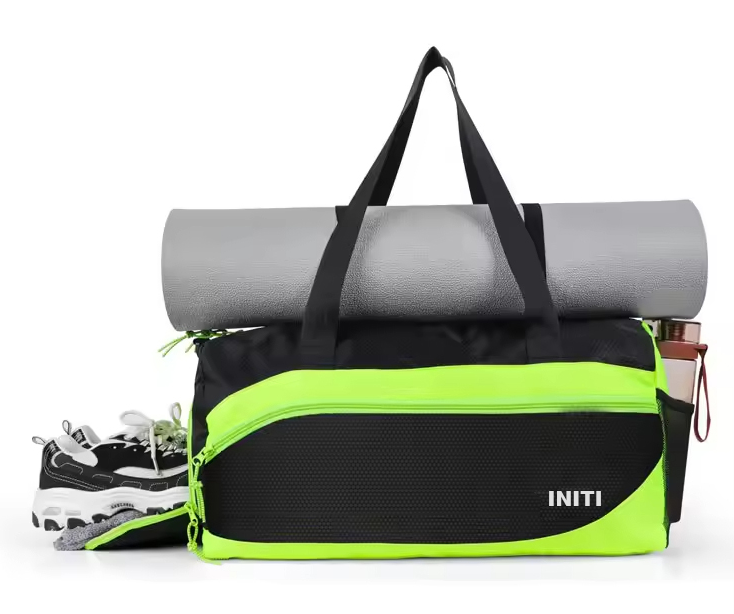
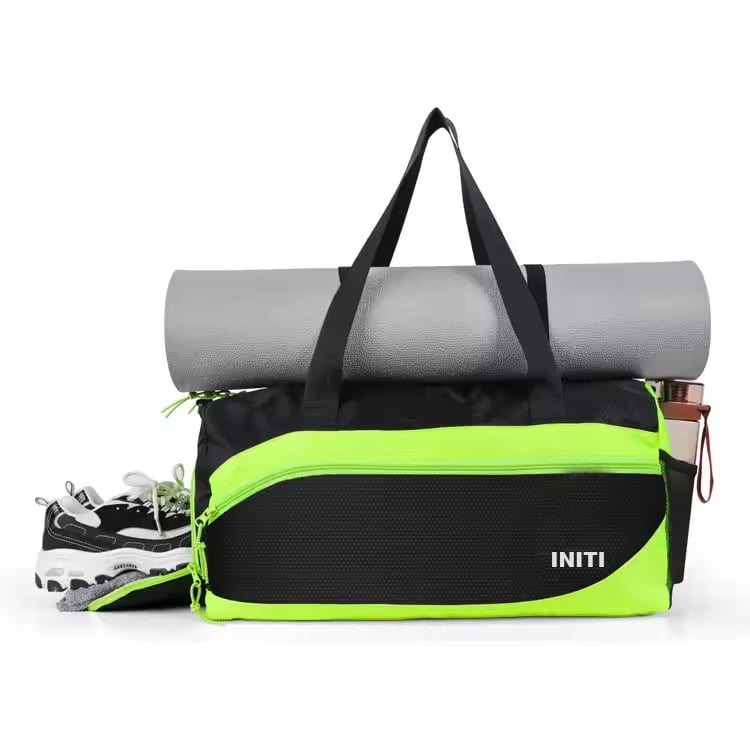
Waterproof Yoga Gym Duffle Bag with Shoe Compartment
View Product
A gym-focused duffel with a separate ventilated shoe compartment, bottle pocket, front zippered pocket, internal wet/dry section and external yoga-mat securing straps.
It is a useful development reference for fitness studios, yoga brands and sports retail programs requiring more organized storage.
The water protection of the finished bag and wet compartment should be assessed against the actual project requirements.
Custom Sports Duffel Bag with Logo
View Product
A general-purpose sports duffel with a spacious main compartment, front zippered pocket, reinforced webbing handles and adjustable shoulder strap.
This is a reference for team sports, gym membership programs, promotional gifts and mixed sports/travel use.
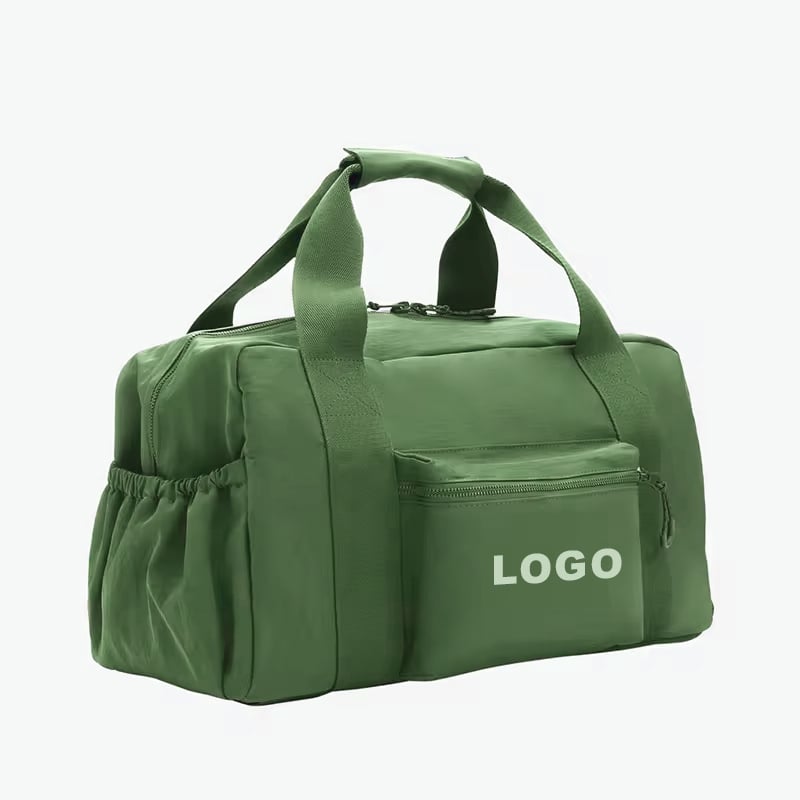
Custom Travel Duffel Bag
View Product
A soft travel duffel with top handles, shoulder strap, main zipper compartment and side pocket.
It demonstrates how a general duffel can serve gym, overnight and travel applications without needing a complex fitness-specific compartment system.
Custom Pink Sports Duffel Bag with Side Compartment and Detachable Shoulder Strap
View Product
A soft rectangular sports duffel with additional zip storage, a detachable shoulder strap and a distinctive front-panel design.
This offers a development direction for activewear brands and lifestyle retailers seeking a more differentiated private-label product.
Nylon Mesh Sports Duffel Bag
View Product
An elongated mesh duffel developed for bulky swimming and sports accessories, with a double-pull zipper, webbing handles and detachable padded shoulder strap.
It is a reference for equipment that benefits from ventilation and drainage, rather than a conventional bag designed to keep contents dry.
For more options, browse INITI's Sports Bag Collection.
12. Custom Gym Bag and Duffel Bag RFQ Checklist
Before requesting a quotation, provide:
| RFQ Item |
Buyer Information |
| Intended use |
Daily gym, yoga, sports, travel or promotion |
| Target customer |
Fitness members, athletes, teams, travelers or retail buyers |
| Size and capacity |
Dimensions, target liters and required contents |
| Shoe storage |
Required or not; intended footwear size |
| Wet/dry separation |
Required performance and pocket construction |
| Material |
Polyester, nylon, canvas, RPET or other specified fabric |
| Carrying method |
Hand, shoulder, crossbody or backpack |
| Construction |
Main opening, bottom, reinforcement and compartments |
| Branding |
Logo size, artwork, location and method |
| Quality requirements |
Load tests, zipper operation, dimensions and inspection |
| Order details |
Quantity, colors, SKUs and destination |
| Packing |
Retail packaging, labels, carton quantities and delivery |
INITI's general MOQ for custom gym bags and duffel bags starts from 500 pieces. Specific colors, materials, custom hardware or complex compartment designs may require higher quantities.
Why Choose INITI for Custom Gym Bags and Duffel Bags?
Hangzhou INITI Imp&Exp Co., Ltd. has over 16 years of experience in custom bags and packaging, supported by two production facilities and OEM/ODM development capabilities.
Our sports and travel range includes compact fitness bags, gym duffels, yoga bags with shoe storage, general-purpose sports duffels and large mesh equipment carriers.
Depending on the project, INITI supports material selection, pattern development, custom compartments, strap and handle construction, logo applications, sample development, quality inspection and export packing.
For brand collections and wholesale programs, we can help buyers compare product specifications and develop designs around target customers, intended carrying loads, retail presentation and budget.
We provide fast quotations and free design support. Materials, performance requirements and inspection criteria are confirmed for each project.
FAQ
1. Is a gym bag the same as a duffel bag?
Not exactly. Gym bag describes an intended use, while duffel bag describes a general bag style. Many gym bags are duffels, but gym bags can also be backpacks or totes.
2. Can a duffel bag be used as a gym bag?
Yes. A duffel with suitable capacity, comfortable handles and practical compartments can work well for gym use. Separate shoe storage is useful but not essential for every user.
3. What size gym bag is best?
It depends on the contents. Compact designs may suit light workouts, while larger gym duffels are useful when carrying shoes, a full change of clothes, towels and toiletries. Check usable dimensions rather than relying on liters alone.
4. Does a gym bag need a separate shoe compartment?
No. It is useful for users who regularly carry footwear, but it takes space and adds construction cost. Test the compartment with actual shoes before selecting it.
5. Can INITI manufacture custom gym and duffel bags?
Yes. INITI supports OEM/ODM development of gym bags, sports duffels and travel duffels, including custom fabrics, sizes, compartments, straps, logos and packaging. The general starting MOQ is 500 pieces.
Conclusion
The difference between a gym bag and a duffel bag is primarily one of purpose and design terminology.
Gym bags are selected around workout routines. Duffel bags offer a general storage shape that can serve gym use, sports and travel.
For buyers, the most important factors are usable capacity, compartments, carrying comfort, materials and manufacturing quality.
A simple duffel may be sufficient for someone who only needs flexible packing space. A more specialized gym duffel may be better for users who regularly carry footwear, damp clothing and multiple accessories.
The best choice is the bag designed for the actual contents and routine—not the product name.
Inquiry Support
Developing custom gym bags or duffel bags for a brand, gym chain, sports team or promotional program?
Send us your intended use, desired dimensions, shoe or wet-pocket requirements, fabric preference, logo artwork, estimated quantity and packing requirements.
Email us at [email protected] for a fast quotation, free design support and OEM/ODM bag development.
Related Products
Waterproof Yoga Gym Duffle Bag with Shoe Compartment
Custom Sports Duffel Bag with Logo
Custom Travel Duffel Bag
Custom Pink Sports Duffel Bag with Side Compartment and Detachable Shoulder Strap
Nylon Mesh Sports Duffel Bag
Sports Bag Collection
Related Blog & Application Articles
Custom Sports Duffel Bag Specification Guide: Capacity, Compartments, Straps & Load Testing
Custom Fitness Bag Collection for Yoga Studios
Best Yoga Bags: Types, Materials & How to Choose
Weekender Bags: Types, Materials, Features & How to Choose the Right One


 Hot News