What Are Gunny Bags?
Gunny bags are coarse, breathable sacks traditionally made from natural plant fibers, especially jute. They are widely used for packing, storing, and transporting agricultural products such as grains, potatoes, coffee beans, cocoa, onions, nuts, and other dry goods.
Depending on the region, the terms gunny bag, gunny sack, jute sack, and burlap bag may be used in slightly different ways.
For B2B buyers, the important point is this:
A gunny bag is generally a strong, loosely woven natural-fiber sack designed for bulk packing, agricultural storage, transport, or rustic packaging applications.
Modern gunny bags can also be developed for:
- Retail packaging
- Coffee and tea branding
- Corporate gifting
- Wine packaging
- Promotional bags
- Decorative storage
- Agricultural products
- Industrial packaging
The correct material, weave density, weight, coating, liner, and sewing structure depend on the final product being packed.
1. What Material Are Gunny Bags Made From?
Traditional gunny bags are most commonly associated with jute fiber.
Jute is a natural bast fiber that can be spun into yarn and woven into coarse fabric. The material is commonly used for:
- Sacks
- Shopping bags
- Wine bags
- Agricultural packaging
- Floor coverings
- Decorative products
- Promotional products
Gunny cloth is usually coarser and more open in structure than refined fashion-grade jute fabric.
However, buyers should not assume that every rustic-looking sack has exactly the same material composition.
Some products may use:
- Natural jute
- Jute blends
- Hemp blends
- Cotton-jute blends
- Synthetic reinforcement
- Laminated jute
- Jute with PE or food-contact liners
For commercial purchasing, the material composition should be confirmed in the specification rather than judged only by appearance.
2. Why Are They Called Gunny Bags?
The word gunny has long been associated with coarse woven fabric used for sacks and wrapping.
In practical trade use, “gunny bag” usually refers to a rough natural-fiber sack used for agricultural or bulk goods.
Today, regional terminology varies.
For example, buyers may search for:
- Gunny bag
- Gunny sack
- Jute sack
- Burlap sack
- Hessian bag
- Jute packaging bag
These terms often overlap, but they are not always used identically in every market.
For international sourcing, it is better to define the actual product specification:
- Fiber composition
- Fabric weight
- Weave density
- Bag dimensions
- Capacity
- Seam construction
- Printing method
- Inner liner requirement
This is more reliable than depending only on the product name.
3. Gunny Bag vs Jute Bag: What Is the Difference?
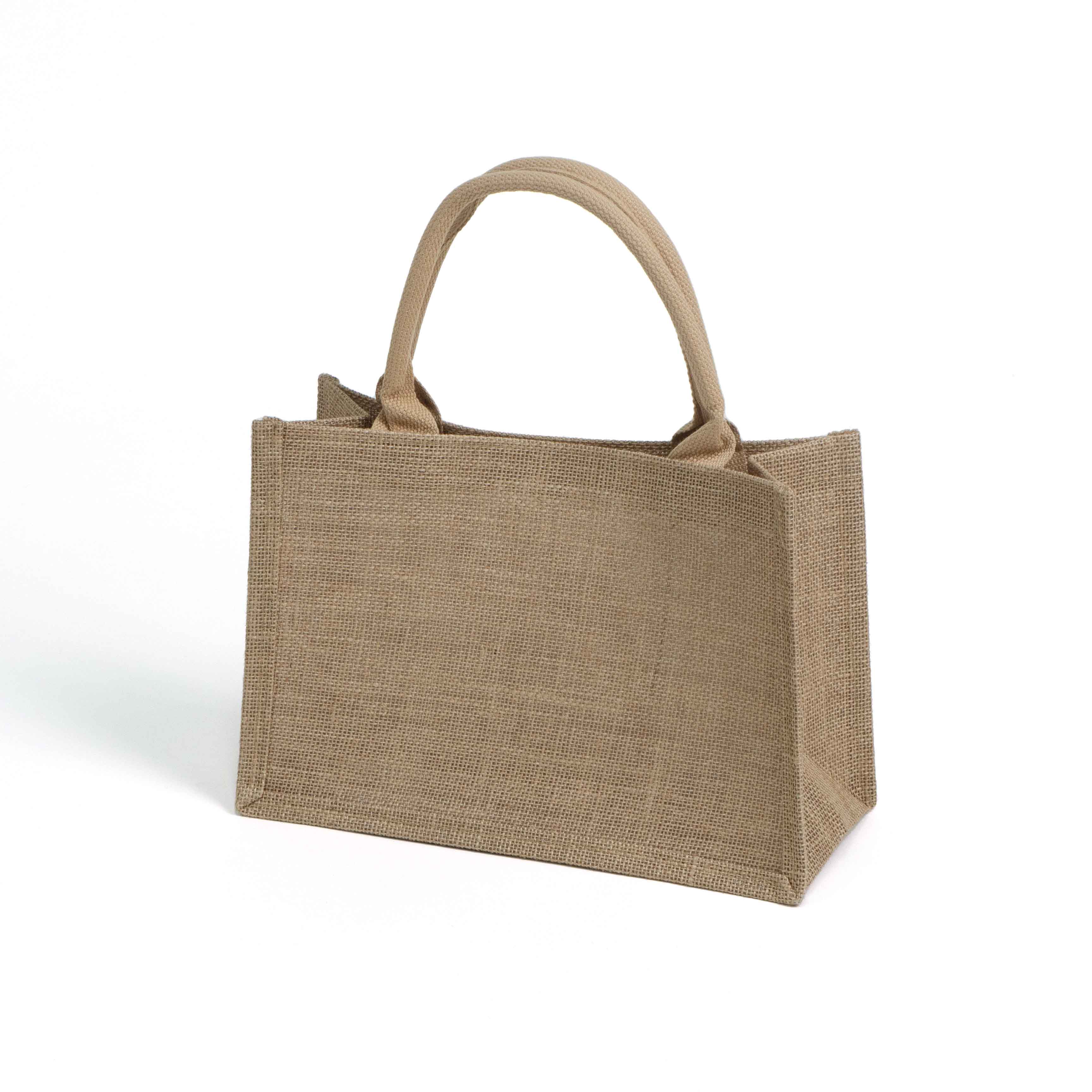
A gunny bag is usually a type of jute bag, but not every jute bag is a gunny bag.
Gunny Bag
Usually refers to:
- Coarse fabric
- Sack-style construction
- Agricultural or bulk packaging
- Rustic appearance
- Functional transport use
Jute Bag
A broader category that can include:
- Shopping totes
- Gift bags
- Wine bags
- Promotional bags
- Fashion accessories
- Packaging sacks
- Laminated shopping bags
So:
Gunny bags are generally a functional sack-style category within the wider jute bag family.
4. Gunny Bag vs Burlap Bag
The terms are often used interchangeably, especially in retail and e-commerce.
However, in practice:
Gunny Bag
More commonly associated with:
- Agricultural products
- Grains
- Potatoes
- Coffee beans
- Heavy-duty sacks
- Bulk transport
Burlap Bag
More commonly associated with:
- Rustic gift packaging
- Decorative bags
- Wedding favors
- Retail display
- Craft use
- Promotional packaging
The difference is often more about market positioning and product finish than an absolute material difference.
A coarse jute sack may be marketed as a gunny bag for agriculture and as a burlap sack for rustic decorative use.
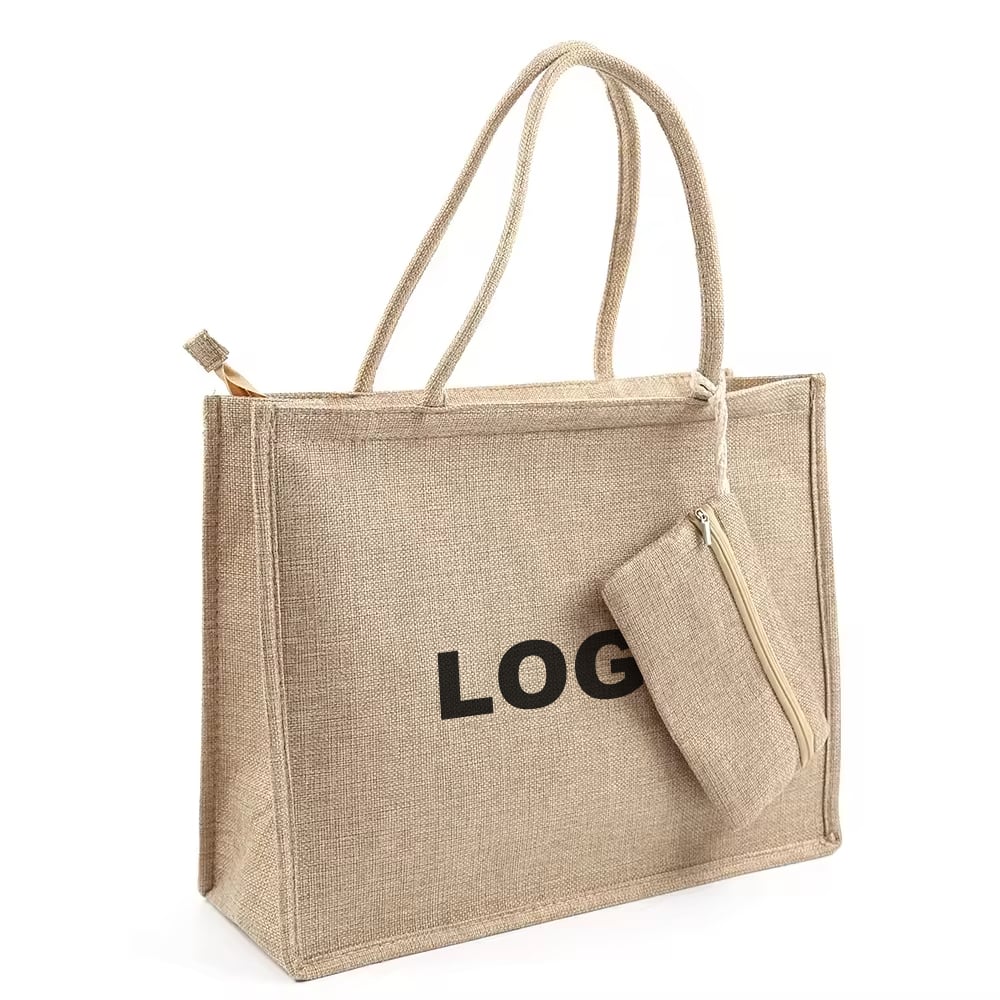
Gunny Bag vs Burlap Bag vs Jute Tote Bag
| Feature |
Gunny Bag |
Burlap Bag |
Jute Tote Bag |
| Main Positioning |
Bulk packaging |
Rustic packaging |
Retail and promotional use |
| Fabric Appearance |
Coarse |
Coarse to medium |
More refined |
| Structure |
Sack |
Pouch or sack |
Tote bag |
| Handle |
Often none |
Optional |
Usually included |
| Printing |
Basic |
Basic to decorative |
Wide branding options |
| Main Use |
Agriculture, storage |
Gifts, décor, packaging |
Shopping, retail, promotion |
| Surface Finish |
Functional |
Rustic |
Cleaner and more commercial |
5. What Are Gunny Bags Used For?
Gunny bags are used in many industries because the fabric is breathable, relatively strong, and suitable for dry bulk products.
Common applications include:
Grain Packaging
Used for products such as:
- Rice
- Wheat
- Maize
- Barley
- Pulses
The breathable structure can help reduce trapped moisture compared with fully sealed plastic packaging.
Coffee Bean Sacks
Jute sacks are widely associated with coffee bean transport and storage.
For coffee projects, buyers may require:
- Specific bag dimensions
- Printed origin marks
- Export symbols
- Brand information
- Inner liners
- Food-contact compliance requirements
Cocoa and Nut Packaging
Gunny sacks may also be used for:
- Cocoa beans
- Peanuts
- Cashews
- Other dry agricultural products
The correct liner and fabric specification depend on product and export requirements.
Potato and Onion Sacks
Breathability is important for many agricultural products that should not be stored in sealed, moisture-trapping packaging.
Gunny-style sacks may be used where ventilation is a priority.
Industrial and Warehouse Storage
Gunny bags can be used for:
- Hardware
- Dry materials
- Recycling
- Temporary storage
- Warehouse organization
Industrial applications may require stronger yarn, denser weaving, or reinforced seams.
Promotional and Decorative Packaging
Smaller gunny-style bags are also used for:
- Wine gifts
- Corporate gift sets
- Holiday packaging
- Coffee packaging
- Natural product branding
- Rustic retail presentations
6. Why Do Buyers Choose Gunny Bags?
Gunny bags remain relevant because they offer a distinct combination of material and functional characteristics.
Breathable Structure
The woven construction allows air circulation, which can be useful for certain dry agricultural products.
Natural Appearance
Jute gives the product a recognizable natural and rustic look.
This is useful for:
- Organic brands
- Coffee companies
- Agricultural products
- Handmade goods
- Sustainable packaging concepts
Strong Sack Construction
When correctly specified, gunny bags can handle significant product weight.
Actual strength depends on:
- Yarn quality
- Weave density
- Fabric weight
- Seam construction
- Bag size
Large Printable Area
The sack surface can support:
- Brand names
- Product origin
- Batch information
- Export markings
- Logos
- Handling instructions
Reusability
Depending on condition and application, gunny sacks may be reused for:
- Storage
- Agricultural handling
- Garden use
- Decorative purposes
- Secondary transport
7. What Are the Limitations of Gunny Bags?
Gunny bags are not suitable for every application.
Limited Moisture Protection
Standard jute fabric is breathable and does not provide complete waterproof protection.
For products that require stronger moisture barriers, buyers may need:
- PE liners
- Laminated structures
- Inner coated layers
- Alternative materials
Fiber Shedding
Coarse natural jute may release loose fibers.
This can matter for:
- Clean retail products
- Precision equipment
- Sensitive food applications
- Premium consumer packaging
Surface Roughness
Gunny cloth is coarse.
That makes it suitable for agricultural and rustic packaging, but less suitable where a soft, refined surface is required.
Dimensional Variation
Natural fibers can show more variation than highly standardized synthetic fabrics.
Buyers should define acceptable tolerance for:
- Size
- Color
- Fabric weight
- Weave appearance
Odor and Moisture Control
Natural-fiber packaging should be properly stored and protected from excess humidity.
For export projects, warehouse control and packing conditions are important.
8. How Are Gunny Bags Constructed?
A standard sack may appear simple, but construction details strongly affect performance.
Common elements include:
- Tubular or cut-panel construction
- Side seams
- Bottom seam
- Hemmed opening
- Drawstring closure
- Tie closure
- Open top
- Inner liner
- Reinforced stitching
For heavy agricultural goods, buyers should pay particular attention to:
- Bottom seam strength
- Side seam strength
- Stitch density
- Thread specification
- Fabric weight
- Carrying capacity
9. Common Gunny Bag Styles
Open-Top Sack
Suitable for:
- Grain
- Beans
- Agricultural filling lines
The opening may later be stitched or tied.
Drawstring Gunny Bag
Suitable for:
- Gifts
- Coffee packaging
- Small agricultural products
- Promotional kits
Lined Jute Sack
Used where additional inner protection is needed.
Possible liner options include:
- PE
- PP
- Food-contact liner
- Custom internal bag
Printed Gunny Bag
Suitable for:
- Export packaging
- Coffee branding
- Product identification
- Agricultural cooperatives
Handle Gunny Bag
A more consumer-oriented structure used for:
- Shopping
- Retail
- Gifts
- Promotional products
10. Printing Options for Gunny Bags
Because gunny fabric has a coarse surface, printing method selection is important.
Screen Printing
Suitable for:
- Simple logos
- Bold text
- Limited-color graphics
- Large-volume projects
Stencil Printing
Often used for:
- Numbers
- Product codes
- Origin marks
- Warehouse identification
Transfer Printing
Possible for selected fabric constructions and surface treatments, but testing is required.
Woven Labels or Patches
Useful when a more refined branding appearance is needed.
For rough gunny cloth, highly detailed graphics may not reproduce as clearly as they would on smooth polyester or cotton fabric.
11. How to Choose the Right Gunny Bag Size
Buyers should define the bag according to the product being packed.
Important factors include:
- Product density
- Weight per bag
- Filling method
- Storage method
- Pallet size
- Transport route
- Manual handling
- Machine filling compatibility
A sack for coffee beans may require a different proportion from a sack used for potatoes.
The best practice is to test samples with the actual product.
12. Fabric Weight and Weave Density
Two gunny bags can look similar but perform very differently.
Buyers should evaluate:
Fabric Weight
Heavier fabric generally provides:
- More structure
- Better durability
- Higher material cost
Weave Density
Denser weave can reduce openings in the fabric and improve containment.
Looser weave may improve breathability but can be unsuitable for smaller products.
Yarn Strength
The yarn specification affects:
- Tear resistance
- Seam strength
- General durability
For bulk orders, buyers should define material specifications rather than order based only on bag dimensions.
13. Gunny Bags for Food and Agricultural Products
Food and agricultural projects require more careful planning than general decorative packaging.
Buyers should consider:
- Product contact requirements
- Hygiene requirements
- Moisture protection
- Odor
- Liner material
- Storage conditions
- Export requirements
- Local regulations
For coffee, cocoa, grains, and food ingredients, buyers may need additional liners or documentation depending on destination market and intended contact conditions.
The natural jute sack should not automatically be assumed to satisfy every food-contact requirement.
14. Gunny Bags for Coffee Brands
Coffee is one of the most commercially recognizable applications for jute sacks.
For coffee-related buyers, common customization includes:
- Origin country text
- Farm or cooperative name
- Harvest year
- Lot number
- Bean type
- Export information
- Custom logo
In addition to bulk green-coffee sacks, smaller jute bags can also be developed for:
- Coffee gift sets
- Roasted coffee packaging
- Retail displays
- Subscription boxes
- Promotional merchandise
This allows one natural material style to support both supply-chain packaging and consumer-facing brand presentation.
15. Are Gunny Bags Eco-Friendly?
Gunny bags are commonly associated with natural-material and reusable packaging concepts.
However, buyers should evaluate more than one simple environmental claim.
Important factors include:
- Fiber source
- Product durability
- Reuse rate
- Manufacturing process
- Transportation
- Dyeing
- Lamination
- Liner material
- End-of-life options
An untreated jute sack and a heavily laminated multi-material jute bag may have very different recycling and disposal characteristics.
For sustainability-focused projects, buyers should ask:
- What is the exact fiber composition?
- Is a synthetic liner included?
- Is the bag intended for reuse?
- Are any coatings used?
- What certification or documentation is required?
Environmental claims should match the actual product structure.
16. Gunny Bags vs Plastic Sacks
| Factor |
Gunny Bag |
Plastic Sack |
| Breathability |
High |
Low |
| Moisture Barrier |
Low |
High |
| Natural Appearance |
Excellent |
Low |
| Fiber Shedding |
Possible |
No |
| Printing Detail |
Moderate |
High |
| Agricultural Use |
Strong |
Strong depending on product |
| Reusability |
Possible |
Possible |
| Best For |
Breathable dry goods |
Moisture-sensitive or sealed goods |
The correct choice depends on the packed product.
For some buyers, a combined solution may be more suitable, such as:
Jute outer sack + protective inner liner
This preserves the natural external appearance while adding moisture or contamination protection.
17. Gunny Bags vs PP Woven Bags
PP woven sacks are widely used in agriculture and industry.
Gunny Bags
Better for:
- Natural appearance
- Breathability
- Coffee branding
- Rustic presentation
PP Woven Bags
Better for:
- Water resistance
- High-volume standardized packaging
- Full-surface laminated printing
- Lower fiber shedding
The choice should depend on the actual supply-chain requirements rather than appearance alone.
18. What Should B2B Buyers Check Before Ordering?
A professional buyer should evaluate:
Material
Confirm:
- Jute percentage
- Blend composition
- Fabric weight
- Weave density
Size
Confirm:
- Width
- Height
- Gusset
- Finished capacity
Seam Construction
Check:
- Bottom seam
- Side seam
- Thread
- Reinforcement
Closure
Choose:
- Open top
- Drawstring
- Tie
- Stitch closure
Printing
Confirm:
- Artwork complexity
- Number of colors
- Print area
- Surface compatibility
Liner
Determine whether the product needs:
- No liner
- PE liner
- PP liner
- Food-contact inner packaging
- Custom moisture barrier
Key Quality Control Points
For bulk gunny bag production, buyers should pay attention to:
Fabric Consistency
Check:
- Weight
- Weave density
- Color
- Fiber quality
Bag Dimensions
Check:
- Finished width
- Height
- Gusset
- Tolerance
Seam Strength
Check:
- Bottom seam
- Side seam
- Thread breakage
- Stitch density
Printing
Check:
- Position
- Ink coverage
- Readability
- Color consistency
Moisture Condition
Natural-fiber products should be properly stored and packed to reduce moisture-related problems during transport.
Recommended Applications by Buyer Type
| Buyer Type |
Recommended Gunny Bag Use |
| Coffee Importer |
Large printed coffee sacks |
| Agricultural Buyer |
Grain, potato, onion, nut sacks |
| Retail Brand |
Small drawstring jute bags |
| Gift Supplier |
Wine, food and promotional gift bags |
| Corporate Buyer |
Branded natural-fiber gift packaging |
| Home & Garden Brand |
Storage and decorative sack products |
Recommended Products
Suitable for retailers, supermarkets, brands, and promotional programs requiring a natural material appearance.
Suitable for wineries, gift suppliers, holiday campaigns, and corporate gifting.
Suitable for coffee, tea, gifts, jewelry, small promotional products, and rustic packaging.
Suitable for buyers who need a smoother natural-fabric appearance and broader printing options.
Why Work With Us
Gunny and jute bag projects require the correct balance of material, weave density, size, seam strength, printing compatibility, and final packaging.
With 16+ years of manufacturing experience, two factory buildings, and project experience with global brands and Fortune 500 companies, we support custom jute, burlap, cotton, canvas, RPET, nylon, polyester, and functional bag development.
Our quality and compliance systems include SEDEX, DISNEY, GRS, HIGG, and ISO9001, supporting retailers, importers, distributors, promotional companies, gift suppliers, and brand owners.
For jute and gunny bag projects, we focus on:
- Material consistency
- Correct bag dimensions
- Seam strength
- Print clarity
- Handle reinforcement
- Liner compatibility
- Bulk quality control
- Export packing

FAQ
1. What is a gunny bag?
A gunny bag is a coarse woven sack generally made from jute or similar natural fibers and commonly used for agricultural goods, storage, transport, and rustic packaging.
2. Are gunny bags and jute bags the same?
Gunny bags are usually made from jute, but jute bags include a much broader range of products such as shopping totes, wine bags, gift bags, and promotional bags.
3. Are gunny bags waterproof?
Standard gunny bags are not waterproof. They are breathable. Liners or laminated structures can be added when additional moisture protection is required.
4. Can gunny bags be custom printed?
Yes. Screen printing, stencil printing, labels, and patches are common options depending on the fabric surface and design.
5. Are gunny bags suitable for food products?
They can be used for agricultural and food supply-chain applications, but the complete product specification, liner, hygiene requirements, and destination-market rules should be confirmed for the specific project.
6. Can gunny bags be made in custom sizes?
Yes. Dimensions, capacity, fabric weight, weave density, closure, printing, and liner can be customized according to the packed product.
7. What is the difference between burlap and gunny?
The terms often overlap. “Gunny” is more commonly associated with coarse functional sacks, while “burlap” is often used for rustic retail, decorative, and gift packaging.
Conclusion
Gunny bags are strong, breathable, coarse natural-fiber sacks most commonly associated with jute.
They remain widely used because they combine:
- Breathability
- Functional strength
- Natural appearance
- Printability
- Reuse potential
For B2B buyers, the correct gunny bag should be selected based on:
- Product type
- Weight
- Required breathability
- Moisture protection
- Fabric weight
- Weave density
- Seam strength
- Printing
- Liner requirements
The most important lesson is that “gunny bag” is a general product term, not a complete technical specification.
A coffee sack, grain bag, potato sack, gift pouch, and retail jute bag may all use similar natural fibers but require very different materials and construction.
For professional sourcing, buyers should define the actual application first and then select the appropriate jute fabric, structure, closure, liner, and printing method.
Related Topics


 Hot News