Nylon is widely used in bags, backpacks, sportswear, travel accessories, and reusable shopping products because it is lightweight, durable, and resistant to everyday wear. However, like other frequently used fabrics, nylon can gradually lose its original appearance. White nylon may turn yellow or gray, colored nylon may develop stubborn stains, and frequently handled bags can accumulate dirt around handles, seams, and corners.
When ordinary washing does not restore the fabric, bleaching may seem like the next solution. But can you bleach nylon without damaging it?
The answer depends on the type of nylon, the bleach being used, the original color, and the fabric's construction. Some nylon fabrics can tolerate carefully controlled bleaching under specific product instructions, while others may experience permanent discoloration, loss of strength, or damage to their surface finishes.
It is also important to distinguish between household laundry bleaching and industrial textile bleaching. A bleaching chemical used under controlled factory conditions does not automatically become suitable for cleaning a finished nylon bag at home.
This guide explains how different bleaching agents interact with nylon, how to approach white and colored nylon, what to do when a nylon product becomes yellow, and which cleaning methods are more appropriate for nylon bags. It also examines the material and construction considerations that retailers, procurement teams, and private-label brands should understand when selecting nylon products.
What Is Nylon Fabric?
Nylon is a synthetic polyamide fiber developed for applications requiring strength, flexibility, and resistance to abrasion. Unlike cotton, which comes from natural cellulose fibers, nylon is produced through chemical polymerization.
Its molecular structure contains repeating amide groups, which contribute to its mechanical properties and influence how it responds to certain chemicals, moisture, heat, and cleaning treatments.
Nylon is available in different forms, including Nylon 6 and Nylon 6,6. Although both belong to the polyamide family, their production characteristics and performance can vary.
-
Nylon 6 (Polycaprolactam): Formed from ring-opening polymerization of caprolactam. It contains 6 carbon atoms in each repeating unit. It has a slightly lower melting point (220°C / 428°F), higher dye uptake, and slightly greater chemical reactivity.
-
Nylon 6,6 (Polyhexamethylene Adipamide): Synthesized from hexamethylenediamine and adipic acid. It features a more symmetrical crystalline matrix, a higher melting point (265°C /509°F), superior abrasion resistance, and slightly higher chemical resistance.
Common Characteristics of Nylon
Before discussing bleaching, it helps to understand the characteristics that make nylon different from other bag materials.
Property |
Description |
Relevance to Cleaning |
High tensile strength |
Resists pulling forces and everyday mechanical stress |
Aggressive chemical exposure may compromise long-term strength |
Abrasion resistance |
Handles repeated rubbing and friction |
Surface dirt can often be removed through gentle cleaning |
Lightweight construction |
Provides strength without adding excessive weight |
Suitable for bags that need to remain portable |
Low moisture absorption |
Absorbs less moisture than many natural fibers |
Does not mean stains or residues cannot remain on the surface |
Chemical sensitivity |
Responds differently to oxidizing and reducing agents |
Bleach selection must consider the exact nylon formulation |
Thermoplastic behavior |
Can soften or deform under excessive heat |
Hot-water treatments and high-temperature drying should be avoided |
Good dyeability |
Can be colored using suitable dye systems |
Bleaching may affect the dye as well as the fiber |
One important distinction is that nylon's durability does not mean it is resistant to every chemical.
A nylon tote bag may withstand repeated carrying, folding, and friction while still being vulnerable to an unsuitable bleaching solution. Chemical resistance and mechanical durability are two different performance characteristics.
Common Nylon Products That May Require Cleaning
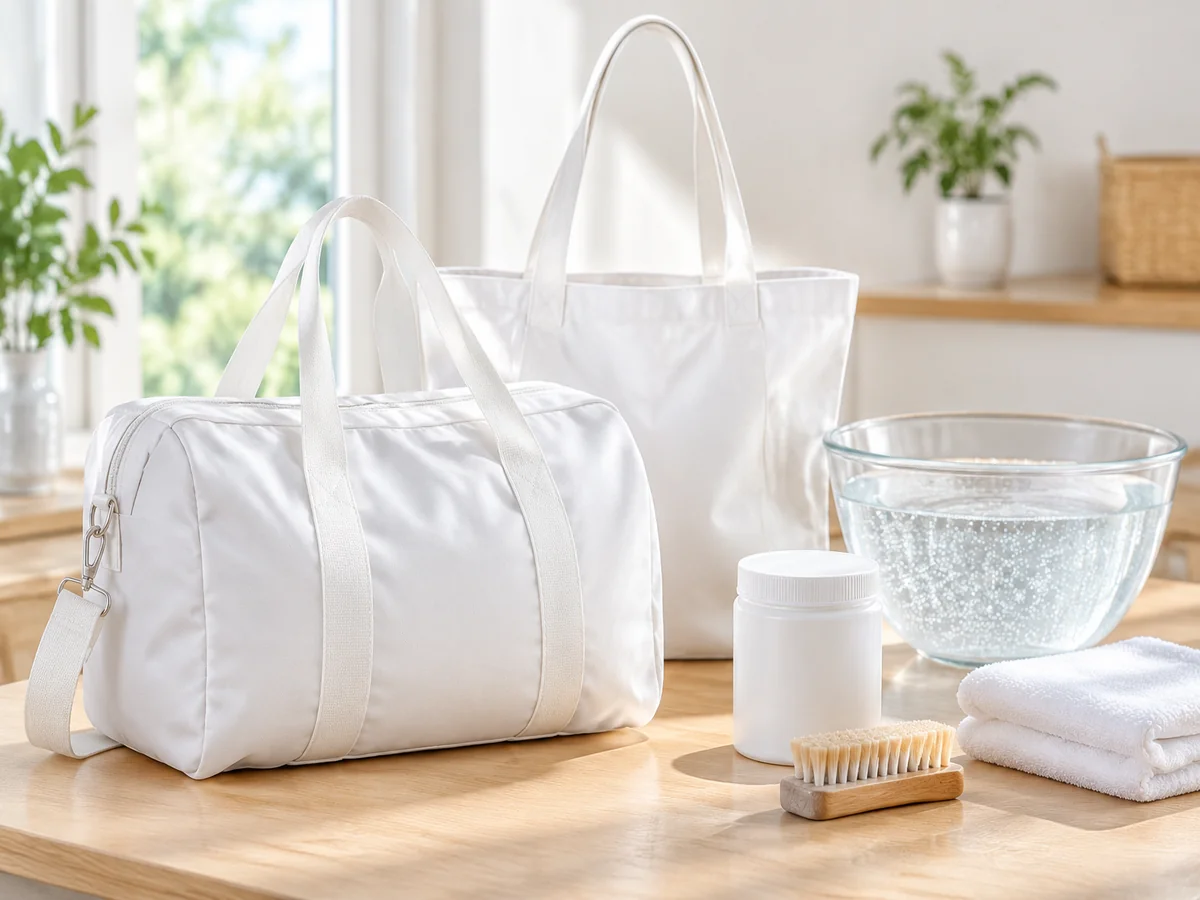
Nylon is used in many products, and each application has different cleaning considerations.
Product Type |
Common Nylon Construction |
Typical Cleaning Concern |
Nylon tote bags |
Lightweight woven nylon |
Surface dirt, food stains, and color fading |
Nylon backpacks |
Woven nylon, sometimes coated |
Dirt around straps, bottom panels, and seams |
Cosmetic bags |
Nylon fabric with lining and zippers |
Makeup, foundation, oil, and liquid stains |
Drawstring bags |
Lightweight nylon fabric |
Dust, sweat, and uneven discoloration |
Travel bags |
Heavy-duty nylon, sometimes laminated |
Oil marks, abrasion, and dirt accumulation |
Sports bags |
Nylon or nylon blends |
Sweat, odors, and repeated washing |
Nylon shopping bags |
Lightweight or ripstop nylon |
General handling marks and stains |
For a simple, uncoated nylon fabric, cleaning may be relatively straightforward. However, a finished bag can contain several additional materials, including polyester lining, metal hardware, plastic buckles, printed graphics, foam padding, and waterproof coatings.
Can You Bleach Nylon?
The short, definitive answer depends entirely on the type of bleaching agent you intend to apply:
Chlorine Bleach (Sodium Hypochlorite / Household Bleach): NO.
Under no circumstances should chlorine bleach be applied to nylon fabric, bags, outerwear, or industrial textiles. It chemically attacks the amide groups in polyamide polymer chains, stripping away mechanical strength, causing micro-pitting, dissolving fine fibers, and triggering an irreversible reaction that turns white nylon into an unsightly yellow or brown hue.
Oxygen-Based Bleach (Sodium Percarbonate / Hydrogen Peroxide): YES.
Oxygen bleach is completely safe and highly recommended for both white and colorfast nylon products. It releases active oxygen bubbles that break down organic stains, grease, mildew, and grime through mild oxidation without cleaving the underlying synthetic polymer structure.
Reductive Color Removers (Sodium Hydrosulfite): YES (Controlled).
When professional dyers, garment renovators, or textile mills need to strip color from nylon or reverse mild oxidation, reductive bleaches work safely without hydrolyzing the nylon matrix.
Natural Organic Acid Brighteners (Vinegar, Lemon Juice, Baking Soda): YES.
Safe for light maintenance, localized stain lifting, and hard-water mineral neutralization, provided acidity levels are kept moderate.
The Chemistry of Nylon vs. Bleaching Agents
Why Chlorine Bleach Attacks and Yellows Nylon
When household chlorine bleach—consisting of sodium hypochlorite dissolved in an alkaline aqueous solution—contacts nylon, a destructive two-step chemical attack takes place:
- N-Chlorination of Amide Bonds: The hypochlorite ion and hypochlorous acid react directly with the secondary amine groups along the nylon backbone. The hydrogen atom bound to nitrogen is displaced by a chlorine atom, converting stable amide groups into unstable.
- Chain Cleavage (Scission) & Chromophore Generation: The chlorinated polymer backbone is chemically destabilized. Under the influence of light, ambient moisture, or residual heat, the N-chloro compounds undergo homolytic cleavage and rearrangement. This cleaves the long macromolecular chains into shorter oligomers, catastrophically reducing tensile strength and elongation. Simultaneously, conjugated double-bond structures are generated. These chromophoric degradation products absorb blue light, reflecting a permanent, dull brownish-yellow color across the fabric.
Crucial Insight: The yellow color produced by chlorine bleach is not a surface deposit that can be washed away. It is the color of the decomposed nylon polymer itself.
How Oxygen Bleach Cleans Without Degrading Polyamide
In contrast, oxygen bleaches operate through a benign, selective oxidative pathway:
- Sodium Percarbonate: When dissolved in water, solid sodium percarbonate dissociates into sodium carbonate (washing soda) and hydrogen peroxide.
- Perhydroxyl Ion Generation: At a mildly alkaline pH (approx. 9.0 to 10.5), hydrogen peroxide ionizes into water and the active bleaching species, the perhydroxyl anion.
- Targeted Stain Oxidation: The perhydroxyl anion possesses sufficient oxidation potential to break conjugated double bonds in organic chromophores (such as coffee tannins, vegetable dyes, proteins, sebum, and mold spores), turning colored stain molecules into smaller, colorless, water-soluble fragments.
- Polymer Preservation: The energy of the perhydroxyl reaction is insufficient to break the strong carbon-carbon and carbon-nitrogen covalent bonds of the polyamide backbone at moderate temperatures (<50°C). The fiber structure, tensile elasticity, and base white tone remain intact.
Nylon Fabric Classifications & Product Applications
In commercial manufacturing, outdoor gear, promotional packaging, and apparel, nylon is woven into diverse structures and deniers. Understanding your fabric's exact construction dictates how it reacts to cleaning agents and mechanical agitation.
Nylon Fabric Weave & Specification Matrix
| Fabric Variety |
Typical Denier / Yarn Count |
Common Commercial Products |
Cleaning & Bleaching Behavior |
| Ripstop Nylon |
40D, 70D, 210D |
Kites, backpacks, hammocks, outdoor windbreakers, tents |
High tear resistance; sensitive to high-heat soaking and coating delamination |
| Ballistic / Cordura® |
500D, 1000D, 1680D |
Heavy-duty luggage, tactical packs, tool bags, duffels |
Dense weave traps detergents; requires thorough multi-stage cold rinsing |
| Nylon Taffeta |
50D, 70D, 190T |
Drawstring bags, dust bags, garment lining, cosmetic pouches |
Lightweight and smooth; dries fast; releases surface dirt easily in mild soak |
| Nylon Oxford |
210D, 420D, 840D |
Shopping totes, cooler bags, school backpacks, organizers |
Structured weave; often has thick internal PU/PVC coating needing gentle care |
Nylon-Spandex Blend
(Elastane / Lycra®)
|
20D to 70D Nylon
+ 15–25% Spandex
|
Swimwear, leggings, cycling apparel, compression wear |
Highly vulnerable to chlorine (both fibers degrade); requires cold oxygen wash |
Recycled PA (GRS)
(Econyl / rNylon)
|
70D, 210D, 600D |
Eco-friendly corporate gifts, sustainable consumer totes |
Chemically equivalent to virgin PA; maintain wash water below 40°C |
Impact on Backings, Membrane Laminations, and DWR Coatings
Nylon bags, backpacks, rainwear, and outdoor gear are rarely made of bare woven fabric. They almost always feature internal barrier coatings and external chemical finishes. The interaction between bleaching agents and these surface treatments is critical.
Coating & Membrane Interaction Overview
| Surface Treatment |
Chemical Function |
Bleach Sensitivity & Risk Profile |
PU Backing
(Polyurethane Coating)
|
Internal waterproofing & structural stiffness |
Degraded by alkaline hydrolysis & hot water; flakes, bubbles, and peels if soaked45 min |
PVC Lamination
(Polyvinyl Chloride Film)
|
Heavy-duty moisture barrier in cooler & tactical bags |
Plasticizers leach out under harsh solvents; turns brittle and cracks over time |
TPU Film Membrane
(Thermoplastic PU)
|
Breathable, flexible waterproof barrier |
Good resistance to mild oxygen bleach; destroyed by chlorine bleach |
DWR Finish
(C6 or C0 PFC-Free)
|
External water beading (Lotus leaf effect) |
Stripped by detergent surfactants and alkaline bleach; needs heat re-curing to restore |
Seam-Sealing Tape
(Hot-Melt TPU Tape)
|
Heat-welded waterproof seam tape over needle holes |
Hot water softens adhesive; tape lifts and peels at temperatures 45°C |
Polyurethane (PU) and PVC Waterproof Backings
Most commercial nylon totes, cosmetic bags, and backpacks have an internal PU coating.
- The Hydrolysis Hazard: Polyurethane bonds are vulnerable to alkaline hydrolysis when exposed to prolonged soaking in high-pH solutions combined with elevated water temperatures. If a PU-coated bag is soaked in hot water with excessive detergent or bleach for hours, the PU layer will turn cloudy, sticky, and eventually flake off as white dandruff-like powder, permanently destroying the bag's water resistance.
- Best Practice: Keep soaking water lukewarm (30°C max) and limit dwell time to 45 minutes for coated items.
Durable Water Repellent (DWR) Fluorocarbon and C0 Finishes
The exterior of premium nylon fabrics is treated with a DWR finish that lowers the surface energy, causing water droplets to bead up and roll off.
- Bleach Impact: Bleaching agents and detergent surfactants leave microscopic hydrophilic residues on the fabric surface that mask the DWR fluoropolymer or silicone chains, causing the fabric to wet out ("sponge effect").
- Restoration: After oxygen bleaching and thorough rinsing, dry the item, then tumble dry on low heat for 20 minutes (or lightly iron through a clean pressing towel on low synthetic setting) to reactivate the fluoropolymer alignment.
Seam-Sealing Tapes and Heat-Welded Bonding
Technical outdoor nylon products feature heat-activated thermoplastic polyurethane (TPU) tape applied over stitched seams.
- Risk Factor: Hot water (45°C /113°F) softens the hot-melt adhesive, causing seam tapes to curl, peel, and delaminate. Always use cool-to-lukewarm water when laundering seam-sealed nylon gear.
Dyes, Prints, and Colorfastness on Nylon
Because polyamides contain basic amino groups, they have a natural chemical affinity for acid dyes, making nylon capable of achieving extraordinarily rich, saturated colors. However, this dye mechanism requires specific laundering precautions.
Dye & Print Bleach Resistance Matrix
| Coloring Method |
Oxygen Bleach Resistance |
Practical Laundering Advice |
Acid Dyeing
(Piece / Yarn Dyed)
|
Moderate to High |
Safe up to pH 10.0; avoid hot water to prevent dye migration |
Solution Dyeing
(Dope-Dyed Yarn)
|
EXCEPTIONAL |
Impervious to color loss, fading, or chemical bleaching |
Screen Print
(Plastisol / Water-Based)
|
High |
Safe in oxygen soak; avoid stiff-bristle brushing over print edges |
Silicone Heat Transfer
(3D Silicone Logos)
|
EXCELLENT |
Highly durable; withstands repetitive oxygen bleaching cycles |
| Metallic Foil Stamping |
POOR |
Oxidized and dulled by bleaches; spot-clean fabric around foil |
Acid Dyes vs. Disperse Dyes vs. Solution-Dyed (Dope-Dyed) Yarn
- Acid-Dyed Nylon: Common in apparel and vibrant bags. The dye-fiber bond is ionic. In strongly alkaline wash environments, hydroxide ions compete with dye molecules for cationic sites on the nylon fiber, which can cause color bleeding or dulling. Keep the pH balanced.
- Disperse-Dyed Nylon: Applied via thermal migration into the amorphous regions of the fiber. Good washfastness, but prolonged exposure to oxidizers at high temperatures can cause shade shifts.
- Solution-Dyed (Dope-Dyed) Nylon: In this process, inorganic color pigments are compounded directly into the molten polyamide polymer chips prior to extrusion through spinnerets into filament yarns. Because the color is locked evenly throughout the entire fiber cross-section rather than sitting on the surface, solution-dyed nylon features unbeatable colorfastness against light, washing, and oxygen bleaches.
Screen Printing, Heat Transfer, and Embroidery Vulnerability
- Plastisol & Water-Based Screen Prints: Generally withstand oxygen bleach soaks well. Avoid using stiff bristle brushes directly over the ink film, as this can cause micro-fissuring and flaking.
- Heat Transfer PU/Vinyl Decals: Safe in cold-to-warm oxygen bleach baths, but hot water can soften the adhesive backing, resulting in edge lifting.
- Embroidery: Most commercial embroidery on nylon bags utilizes polyester or trilobal polyester threads, which are highly colorfast and impervious to oxygen bleach. If rayon embroidery thread was used (common in vintage items), it can weaken and bleed when wet.
- Metallic Foil Prints: Highly vulnerable. Oxygen bleach can oxidize micro-aluminum particles in metallic inks, turning brilliant gold or silver prints into cloudy grey. Spot-clean around metallic prints instead of full submersion.
Comprehensive Bleaching Agent Comparison Matrix
The table below provides a detailed technical comparison of every major bleaching, brightening, and stain-removal agent applied to nylon textiles.
| Bleaching Agent |
Operating pH |
Optimal Water Temperature |
Safety on Nylon |
Primary Action & Application |
| Household Chlorine Bleach |
Highly Alkaline (pH 11.0–13.0) |
Any temperature |
STRICTLY FORBIDDEN (Severe Damage) |
Cleaves polyamide amide bonds; causes irreversible yellowing and fiber brittleness |
Oxygen Bleach Powder
(e.g., OxiClean, Vanish)
|
Mildly Alkaline (pH 9.0–10.5) |
35°C–45°C (95°F–113°F) |
EXCELLENT (White & Colored) |
Generates perhydroxyl ions; oxidizes stains without fiber degradation |
Liquid Oxygen Bleach
(3% Solution)
|
Slightly Acidic to Neutral |
20°C–40°C (68°F–104°F) |
EXCELLENT (Gentle Action) |
Spot cleaning, delicate soaking, and antimicrobial sanitization |
Reductive Color Remover
(Rit Color Remover, Dylon)
|
Mildly Acidic to Neutral (pH 6.5–7.5) |
40°C–50°C (104°F–122°F) |
GOOD (For Re-dye Prep) |
Strips fugitive dye runs and mineral oxidation via chemical reduction |
Liquid Laundry Bluing
(Mrs. Stewart's)
|
Neutral (pH 7.0) |
Cold Water (15°C–25°C) |
EXCELLENT (Visual Correction) |
Deposits micro-blue pigment to absorb yellow light; creates bright white perception |
| White Distilled Vinegar |
Mildly Acidic (pH 2.5–3.0) |
Cold to Lukewarm (20°C–35°C) |
VERY GOOD (Mild Chelation) |
Dissolves hard water mineral salts, soap scum, and neutralizes alkaline residues |
| Baking Soda |
Mildly Alkaline (pH 8.2–8.4) |
Lukewarm (25°C–40°C) |
VERY GOOD (Gentle Scour) |
Deodorizes, lifts grease, and acts as a safe, mild alkaline cleaning buffer |
Why Does Nylon Turn Yellow or Gray?
Before deciding to bleach nylon, it is worth identifying why the fabric has changed color.
Yellowing and graying do not always indicate that the original material needs bleaching. In many cases, the problem comes from accumulated dirt, detergent residue, dye transfer, heat exposure, or changes in the fabric's finishing system.
Understanding the cause can help prevent unnecessary chemical treatment.
Accumulated Dirt and Body Oils
Frequently handled nylon products can gradually develop a dull appearance.
For example, the handles of a nylon tote bag may become darker than the main body because they are repeatedly exposed to hands, sweat, skin oils, and environmental dirt.
Backpacks may develop similar marks around shoulder straps and contact areas.
These deposits can make white or light-colored nylon appear gray or yellow.
In this situation, the first step should be ordinary cleaning rather than bleaching.
A mild detergent and a soft cloth may remove much of the accumulated dirt without exposing the fabric to unnecessary chemical stress.
Detergent Residue
Detergent residue can remain in the fabric when the product is not rinsed thoroughly.
This is more likely when:
- Too much detergent is used.
- The washing water is hard.
- The product has several layers or compartments.
- The fabric is washed in an overloaded machine.
- The rinse cycle is insufficient.
Residue can attract additional dirt and leave the surface looking dull.
For nylon bags with thick seams, padded sections, or multiple layers, thorough rinsing is particularly important.
Dye Transfer
Nylon can pick up color from other materials during contact or washing.
For example, a white nylon bag stored against dark clothing or washed together with a garment that releases dye may develop gray, blue, or pink discoloration.
Dye transfer is different from ordinary surface dirt.
A detergent may remove some loose contamination, but it may not completely reverse dye that has become fixed to the nylon.
Attempting to remove it with strong bleach may create additional discoloration rather than restore the original color.
Heat Exposure
Excessive heat can contribute to changes in nylon's appearance and physical properties.
Possible sources include:
- Hot-water washing.
- High-temperature tumble drying.
- Direct contact with a hot iron.
- Exposure to high-temperature industrial processing.
- Prolonged storage in hot environments.
Nylon is a thermoplastic material, so heat can influence its shape and surface characteristics.
If yellowing occurs after heat exposure, ordinary stain removal may not restore the original appearance.
Aging and Light Exposure
Long-term exposure to sunlight and artificial ultraviolet radiation can affect certain nylon materials and their finishing systems.
Depending on the polymer grade, dye, stabilizers, and surface treatments, the fabric may gradually lose its original appearance.
White nylon can become yellowish, while dyed nylon may experience fading.
This type of color change is particularly difficult to reverse because the problem may not be limited to surface contamination.
Changes in Optical Brighteners
Some white textiles use optical brightening agents to create a brighter visual appearance.
These compounds absorb ultraviolet light and emit blue light, making the fabric appear whiter.
If an optical brightener is removed or its performance changes over time, the fabric may appear less bright or slightly yellow, even when there is no significant increase in dirt.
This is one reason why repeated bleaching does not necessarily restore old white nylon to its original factory appearance.
Identifying the Cause Before Treatment
Appearance |
Possible Cause |
Recommended First Step |
Gray handles |
Body oils and accumulated dirt |
Spot-clean with mild detergent |
Yellow overall appearance |
Aging, heat, chemical exposure, or finish changes |
Check care instructions and clean gently |
Blue or pink patches |
Dye transfer |
Isolate the affected area and identify the transferred dye |
Dull surface |
Detergent residue or accumulated dirt |
Rinse and clean with mild detergent |
Uneven faded areas |
Light exposure or chemical damage |
Evaluate the original dye and surface condition |
Yellow marks near seams |
Accumulated contamination or adhesive/lining interaction |
Inspect the construction before cleaning |
Sticky or peeling surface |
Coating deterioration |
Avoid bleach and aggressive cleaning |
Correctly identifying the problem is often more useful than immediately choosing a stronger cleaning product.
How to Clean Nylon Before Considering Bleach
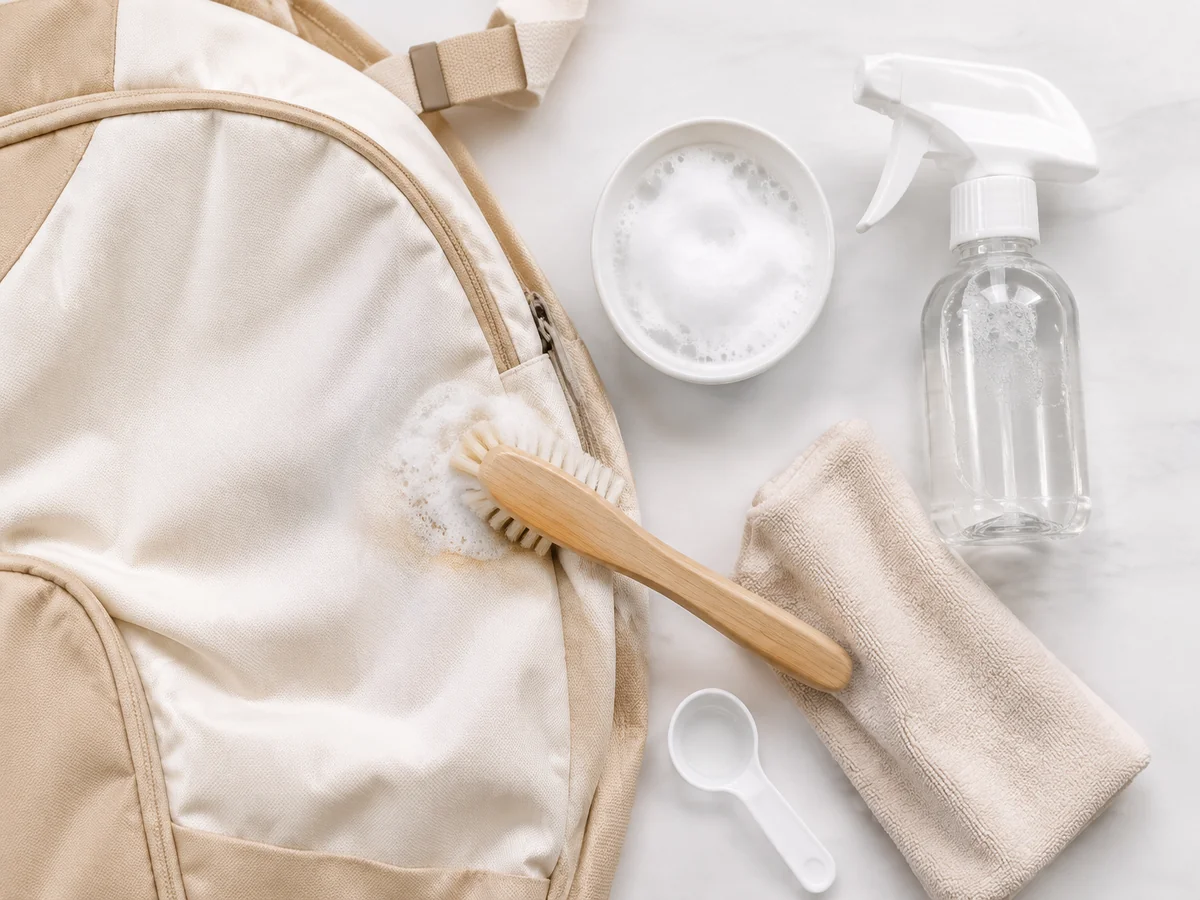
For most finished nylon products, ordinary cleaning should be the first approach.
This is especially true for reusable bags, backpacks, cosmetic bags, and promotional products that contain several different materials.
Materials and Tools Needed
Prepare the following items:
- Mild liquid laundry detergent.
- Clean, cool or lukewarm water.
- A soft microfiber cloth.
- A soft-bristled brush.
- A clean basin or sink.
- A dry towel.
- A well-ventilated drying area.
Avoid preparing a mixture of several cleaning chemicals.
Using more products does not necessarily improve the result and may introduce additional compatibility problems.
Step 1: Check the Care Label
Before cleaning, check the manufacturer's instructions.
Look for information about:
- Permitted washing temperature.
- Hand washing or machine washing.
- Approved detergents.
- Bleach restrictions.
- Tumble-drying restrictions.
- Ironing and heat limitations.
If the product has no care label, start with the least aggressive cleaning method.
For a bag with a waterproof coating, printed logo, or laminated structure, the material manufacturer's guidance is particularly important.
Step 2: Empty and Inspect the Product
Remove all contents from the bag.
For a nylon backpack or cosmetic bag, check:
- Inner compartments.
- Zipper tracks.
- Bottom corners.
- Pockets.
- Seams.
- Areas around handles and straps.
Shake out loose dust and debris.
If the bag contains removable accessories, detachable straps, or removable inserts, separate them when the construction allows.
This prevents dirt from spreading during cleaning.
Step 3: Prepare a Mild Detergent Solution
Mix a small amount of mild liquid detergent with cool or lukewarm water.
There is no universal detergent-to-water ratio for all nylon products because detergent concentration varies between brands.
Follow the detergent manufacturer's instructions and avoid using excessive amounts.
The objective is to remove surface contamination without leaving detergent residue.
Step 4: Clean the Surface Gently
Dip a microfiber cloth into the cleaning solution and gently wipe the nylon surface.
For localized dirt, use a soft-bristled brush with light pressure.
Pay particular attention to:
- Bag handles.
- Bottom panels.
- Corners.
- Areas around zippers.
- Seams and stitching.
- Frequently touched sections.
Avoid vigorous scrubbing.
Excessive friction can change the surface appearance, particularly on lightweight nylon or fabrics with protective coatings.
Step 5: Remove Detergent Residue
Use a clean cloth dampened with fresh water to remove detergent from the surface.
For washable products that can safely be immersed, rinse them according to the care instructions.
Pay attention to areas where detergent may collect, including folded seams, pockets, and padded sections.
Insufficient rinsing can leave a visible film after drying.
Step 6: Dry the Nylon Properly
Remove excess water by gently pressing the product between clean towels.
Do not twist or wring the fabric.
Allow the product to air-dry in a well-ventilated, shaded area.
For bags, open all compartments and allow internal sections to dry completely.
Avoid placing the product directly on a heater or using high-temperature drying equipment.
A bag may appear dry on the outside while moisture remains inside its lining or padded sections.
When Should You Stop Cleaning?
If ordinary cleaning does not remove the discoloration, do not automatically increase the detergent concentration or switch to a stronger chemical.
Stop and assess whether the discoloration is caused by:
- Permanent dye transfer.
- Heat damage.
- Chemical yellowing.
- UV-related fading.
- Deterioration of a coating or adhesive.
Some forms of discoloration cannot be reversed through household cleaning.
Continuing to apply stronger chemicals may make the original problem worse.
Stain-Specific Removal Matrix for Nylon Bags & Apparel
Different stain molecules bond to nylon through different mechanisms. Use the targeted matrix below for optimal removal efficiency:
| Stain Category |
Specific Stains |
Primary Chemistry Treatment |
Step-by-Step Procedure |
| Tannin & Plant Pigments |
Coffee, tea, red wine, fruit juice, soy sauce, grass stains |
Oxygen Bleach Soak + Citric Acid Flush |
Blot fresh spill; soak in oxygen bleach at 40°C for 1 hr; flush with diluted white vinegar |
| Lipid & Hydrocarbon Oils |
Motor oil, cosmetic foundation, body sebum, butter, salad dressing |
Solvent Degreaser / Surfactant Paste (Dish soap + Baking soda) |
Apply isopropyl alcohol or dish soap directly; let sit 15 min; scrub with warm water |
| Protein Stains |
Blood, perspiration, dairy, egg, biological fluids |
Enzymatic Detergent + Cold Water (Protease enzyme bath) |
NEVER use hot water (sets protein); soak in cold enzyme wash 30 min; rinse clean |
| Inorganic & Chemical Residues |
Ballpoint ink, permanent marker, dye transfer from raw denim |
Isopropyl Alcohol (91%) / Ethyl Alcohol dab + Oxygen soak |
Place absorbent pad under stain; dab solvent with cotton ball; wash clean |
| Fungal / Microbial Growth |
Surface mildew, black mold spots, damp storage mustiness |
Hydrogen Peroxide (3%) + Baking Soda paste pre-treat |
Brush off dry mold outdoors; saturate with 3% H2O2; soak in warm oxygen bath
|
| Mineral & Metallic Deposits |
Rust (iron oxide), hard water lime scale, salt crusts |
Oxalic Acid / White Vinegar / Lemon Juice + Salt Paste |
Apply lemon juice + salt paste or commercial rust remover; rinse thoroughly in 15 min |
Common Mistakes to Avoid When Bleaching Nylon
Never Mix Bleach with Other Household Chemicals
This deserves special attention.
Chlorine bleach should never be mixed with:
- Vinegar.
- Toilet cleaners.
- Acidic stain removers.
- Ammonia.
- Other household cleaning products unless the manufacturer explicitly confirms compatibility.
Such combinations can release toxic gases or produce dangerous chemical reactions.
If a treatment requires rinsing between products, follow the exact instructions and use clean water.
Do not attempt to neutralize a bleaching solution by experimenting with another household chemical.
Do Not Use a Stronger Solution Just Because the First Attempt Failed
If a cleaning product does not remove a stain, increasing its concentration is not necessarily the answer.
The stain may be caused by permanent dye transfer, heat damage, or a change in the fiber itself.
In these situations, stronger chemicals may damage the nylon without improving the appearance.
The correct approach is to identify the cause of discoloration before selecting another treatment.
Do Not Judge the Result While the Fabric Is Wet
Wet nylon may look darker or more uneven than dry nylon.
Water temporarily changes the appearance of the fabric surface and can make differences in color less obvious.
Always allow the product to dry completely before evaluating the final result.
This is particularly important when comparing treated and untreated areas.
How to Maintain Nylon Bags and Prevent Future Discoloration
Preventive care is generally more effective than repeatedly attempting to restore a discolored product.
Clean Small Stains Early
Do not allow stains to accumulate for long periods.
When a nylon bag becomes dirty:
- Remove loose dirt.
- Blot excess liquid with a clean cloth.
- Identify the stain type.
- Use a compatible mild cleaner.
- Remove cleaning residue.
- Allow the product to dry completely.
Avoid rubbing a fresh stain aggressively, as this may spread it across a larger area.
Avoid Washing Nylon with Dark or Color-Bleeding Items
Color transfer can be difficult to reverse.
Separate white and light-colored nylon products from dark textiles, especially when the other items have not been washed before.
This is particularly important for white reusable shopping bags and light-colored cosmetic pouches.
Store Nylon Products in a Clean, Dry Environment
Before storing a nylon bag, make sure it is completely dry.
For bags with several compartments, leave zippers open during drying to allow air circulation.
Avoid storing nylon products:
- In damp cabinets.
- In sealed containers while wet.
- Against dark materials that may transfer color.
- In areas exposed to prolonged direct sunlight.
- Near chemicals or cleaning products that may leak.
Avoid Excessive Heat
Follow the manufacturer's temperature recommendations.
Avoid using a high-temperature dryer or placing nylon bags directly on heaters.
Heat can affect not only the nylon itself but also the adhesives, coatings, linings, and plastic components used in the product.
Protect the Original Finish
If a nylon bag has a water-resistant finish, use cleaning products specifically approved for that finish.
Aggressive detergents, solvents, and unsuitable chemical treatments may reduce the performance of the surface treatment.
For technical bags, the fabric manufacturer's care instructions should take priority over general household laundry advice.
FAQ
Does Bleach Turn Nylon Yellow?
Yes, certain bleaching treatments can cause nylon to become yellow instead of white.The result depends on the chemical formulation, concentration, treatment conditions, dye system, and finishing agents.Chlorine exposure is a particular concern for nylon because it can contribute to yellowing and fiber degradation.If yellowing appears after treatment, stop bleaching and rinse according to the product instructions.
Can You Bleach Colored Nylon?
Bleaching colored nylon is generally not recommended.Bleaching chemicals may affect the original dye and create fading, patchy areas, or permanent color changes.For colored nylon bags, use a mild detergent and spot-clean only where necessary.
Can You Use Baking Soda to Whiten Nylon?
Baking soda may help with certain surface residues and cleaning applications, but it is not a reliable bleaching agent for nylon.It should not be expected to reverse permanent yellowing, dye transfer, or chemical discoloration.If you use a baking-soda-based cleaner, confirm its compatibility with the fabric and rinse away all residue.
Can You Use Vinegar to Remove Yellow Stains from Nylon?
Vinegar may help remove certain mineral or detergent residues, but it does not reliably reverse yellowing caused by fiber aging, heat, or chemical damage.It is also not suitable for every coating, dye, or finished bag.Do not mix vinegar with chlorine bleach under any circumstances.
Is It Better to Replace a Yellowed Nylon Bag Than Bleach It?
That depends on the cause and severity of the discoloration.If the problem is ordinary surface dirt, cleaning may restore an acceptable appearance.However, if the fabric has extensive chemical damage, permanent fading, coating deterioration, or weakened fibers, bleaching is unlikely to provide a satisfactory solution.
Conclusion
Nylon can be cleaned and, in certain controlled situations, bleached. However, bleaching is not a universal solution for yellowing, stubborn stains, or faded nylon products.
The most important step is identifying the actual cause of discoloration before choosing a cleaning method. Surface dirt, detergent residue, dye transfer, aging, heat exposure, and chemical deterioration require different approaches.
For everyday nylon bags, mild detergent, gentle spot cleaning, thorough rinsing, and proper air-drying should generally come before bleaching. Chlorine bleach, oxygen-based products, and hydrogen peroxide all have limitations, and none should be assumed suitable for every nylon construction.
For businesses sourcing nylon bags, the same considerations apply at the product development stage. Fabric composition, dyeing, coatings, printing, stitching, and cleaning requirements should be evaluated together rather than treated as separate details.
At INITI, material selection and finished-bag construction are important considerations when developing custom bags for retailers, promotional gift companies, and private-label brands. Whether a project involves nylon tote bags, cosmetic bags, drawstring bags, or other functional products, understanding the intended use and maintenance requirements helps buyers make more informed sourcing decisions.
Ultimately, good nylon care is not about using the strongest bleach. It is about choosing a cleaning method that preserves the fabric's original appearance, functional performance, and service life.
Related Products

 Hot News