Why Is Nylon Not Naturally Waterproof?
To understand why untreated nylon cannot provide complete waterproof protection, it helps to look at its fiber structure and fabric construction.
Nylon is a polyamide. Its molecular chains contain repeating amide groups, which can interact with water molecules. This gives nylon some moisture absorption capability.
At the same time, nylon's synthetic polymer structure and the way its fibers are processed allow it to resist moisture better than many conventional absorbent natural fabrics.
However, there are two separate issues to consider: water absorption by the fiber and water penetration through the fabric.
Nylon Can Absorb Moisture
Nylon is often described as hydrophobic in general material discussions, but this description needs some qualification.
Unlike materials that absorb large amounts of water, nylon has relatively low moisture absorption. However, its polyamide structure contains polar groups that can interact with water.
This means nylon can absorb moisture from the surrounding environment, including water vapor and liquid water.
Moisture absorption can influence:
- Fabric weight.
- Dimensional stability.
- Flexibility.
- Drying behavior.
- Mechanical properties under certain conditions.
The actual effect depends on the nylon grade, yarn, fabric structure, humidity, and exposure time.
For bag applications, this does not mean nylon becomes unusable when wet. It simply means that nylon should not be treated as a material that is completely unaffected by water.
Water Can Pass Through the Gaps Between Yarns
A woven nylon fabric is made by interlacing yarns in two directions: warp and weft.
Even when the individual fibers have relatively low moisture absorption, small spaces may remain between the yarns.
Water can enter these spaces under certain conditions.
The size and distribution of these gaps depend on:
- Yarn thickness.
- Weave structure.
- Fabric density.
- Finishing processes.
- Mechanical deformation.
A tightly woven fabric generally provides better resistance to water penetration than a loosely woven fabric made from otherwise comparable yarns.
However, weave density alone cannot guarantee waterproof performance.
A tightly woven untreated fabric may resist light moisture, but water can still pass through it under sufficient pressure.
Surface Wetting and Water Penetration Are Different
Another important distinction is between water sitting on the surface and water passing through the fabric.
A fabric may cause water droplets to bead up on its surface because of a water-repellent finish.
This does not necessarily mean the fabric can withstand sustained water pressure.
For example, a nylon fabric with DWR treatment may look highly water-repellent during a simple splash test. However, when water is applied continuously or pressure increases, the fabric may still allow water to penetrate.
What Factors Affect Nylon's Water Resistance?
The waterproof performance of nylon fabric is influenced by several factors. Two fabrics with the same fiber composition can behave very differently when exposed to water.
For bag buyers, understanding these factors helps avoid selecting materials based only on their names or advertised specifications.
Denier and Yarn Thickness
Denier (D) measures the linear density of a yarn. One denier represents a mass of one gram per 9,000 meters of yarn.
In bag manufacturing, common nylon specifications include 20D, 40D, 70D, 210D, 420D, and 600D.
Higher-denier yarns are generally thicker and heavier than lower-denier yarns.
However, higher denier does not automatically mean better waterproof performance.
For example:
- 210D nylon can be suitable for lightweight bags and packable products.
- 420D nylon can provide a balance between weight and durability.
- 600D nylon can be considered for products requiring a more substantial fabric construction.
These are general application tendencies, not fixed waterproof grades.
A 210D nylon fabric with an effective waterproof coating may outperform an untreated 600D nylon fabric in water penetration testing.
Similarly, two 420D nylon fabrics may have different water resistance because of differences in weave density, coating thickness, and finishing quality.
Buyers should therefore treat denier as one part of the fabric specification rather than a direct measurement of waterproofness.
Weave Density and Fabric Construction
Fabric construction determines how yarns are arranged and how much space remains between them.
A tighter weave can reduce the size of openings through which water may pass.
Common nylon fabric constructions include:
Plain Weave
Plain weave uses a simple over-and-under yarn arrangement. It is widely used because of its balanced structure and versatility.
It can be produced in different densities, weights, and finishes.
Twill Weave
Twill fabrics have a diagonal surface pattern. Depending on yarn and construction, they can provide a flexible hand feel and good durability.
Ripstop Weave
Ripstop nylon incorporates stronger reinforcement yarns at regular intervals to help prevent small tears from spreading.
It is commonly used in lightweight outdoor equipment, packable bags, and travel products.
However, ripstop construction primarily addresses tear resistance, not waterproofing.
A ripstop fabric still requires appropriate coating or lamination when higher water protection is needed.
Fabric Thickness and Weight
Thickness and fabric weight can influence the way nylon performs during use.
Heavier fabrics may have a denser construction or thicker yarns, but fabric weight alone does not determine how much water pressure a material can withstand.
A lightweight coated nylon may offer better water penetration resistance than a heavier untreated material.
For procurement purposes, it is useful to separate three specifications:
- Denier: The linear density of the yarn.
- GSM: The weight of the finished fabric per square meter.
- Water resistance: The measured performance under a specified test method.
These measurements describe different characteristics and should not be used interchangeably.
What Are the Different Ways to Make Nylon Waterproof?
Nylon can be engineered to provide different levels of water protection through surface treatments and coating technologies.
The correct method depends on the product's intended use, flexibility requirements, target price, appearance, and expected exposure to water.
Four commonly discussed technologies are DWR, PU coating, silicone coating, and waterproof lamination.
DWR (Durable Water Repellent) Treatment
DWR is a surface treatment designed to reduce the tendency of water to spread across or wet the fabric.
When water comes into contact with DWR-treated nylon, droplets tend to form beads and roll off the surface.
This treatment is commonly used in outdoor clothing, backpacks, tents, and other products where surface water repellency is useful.
How DWR Works
DWR changes the surface characteristics of the textile, reducing its tendency to be wetted by water.
It does not necessarily create a continuous waterproof barrier between the outside and inside of the fabric.
As a result, DWR-treated nylon may perform well during light rain and splashes but may not withstand prolonged water exposure.
Advantages of DWR
- Maintains a relatively lightweight fabric structure.
- Usually has little effect on the original fabric thickness.
- Helps water droplets roll off the surface.
- Can be combined with other waterproofing technologies.
- Suitable for products where flexibility and appearance matter.
Limitations of DWR
- Does not automatically make the fabric waterproof.
- Performance may decrease with abrasion and repeated washing.
- Does not seal stitching holes.
- Cannot independently guarantee protection against strong water pressure.
DWR is most appropriate when the main requirement is surface water repellency rather than complete protection against water penetration.
PU (Polyurethane) Coating
Polyurethane coating is one of the most common methods of improving the water resistance of nylon fabrics.
A PU layer is applied to the fabric surface or reverse side, creating a barrier that helps prevent liquid water from passing through.
PU-coated nylon is widely used in backpacks, travel bags, outdoor equipment, and protective covers.
How PU Coating Works
The polyurethane layer covers the fabric structure and reduces the pathways through which water can penetrate.
Depending on the formulation, coating thickness, and production process, PU-treated nylon can achieve different levels of water resistance.
Some PU coatings are designed to provide basic moisture protection, while others are developed for more demanding waterproof applications.
1-Pass PU (): A very thin resin spread that stabilizes the woven threads so they don't fray during laser or die cutting. Provides minimal splash resistance.
2-Pass PU (): The industry standard for lifestyle totes, cosmetic bags, and everyday carry. Keeps interior contents dry during normal daily rainfall.
3-Pass / Polycarbonate PU (): A dense, reinforced coating. For high-end brands, we utilize Polycarbonate-modified PU, which eliminates the risk of hydrolytic breakdown (the sticky coating and sour odor that can affect low-grade PU bags after years in humid storage).
Advantages of PU-Coated Nylon
- Provides better water penetration resistance than untreated nylon.
- Can be produced in different coating weights.
- Maintains relatively good flexibility.
- Suitable for a wide range of bag applications.
- Can be applied to different nylon fabric constructions.
Limitations of PU-Coated Nylon
- Additional coating increases material cost.
- Some coatings may become less flexible at low temperatures.
- Poor coating quality can lead to peeling or cracking.
- Certain formulations may have limited resistance to prolonged UV exposure.
- Breathability may decrease depending on the coating structure.
For custom bag projects, buyers should confirm whether the PU coating is applied to the inside or outside of the fabric, what performance is expected, and whether the coating affects printing or sewing.
Silicone-Coated Nylon
Silicone coating is another method used to improve the water resistance of nylon.
It is particularly common in lightweight outdoor equipment, such as tents, tarps, and technical camping products.
Silicone-treated nylon can offer a combination of low weight, flexibility, and strong water repellency.
How Silicone Coating Works
A silicone-based coating is applied to the nylon fabric to create a water-resistant barrier.
Some fabrics are coated on one side, while others receive silicone treatment on both sides.
The exact construction affects the fabric's handling, surface friction, and compatibility with other manufacturing processes.
Advantages of Silicone-Coated Nylon
- Good water resistance when properly engineered.
- Suitable for lightweight products.
- Flexible construction.
- Can offer good resistance to environmental exposure.
- Useful for certain outdoor applications.
Limitations of Silicone-Coated Nylon
- Some versions can be more difficult to print or bond.
- The surface may be slippery, affecting sewing and handling.
- Specialized manufacturing processes may be required.
- Cost can be higher depending on the specification.
Silicone-coated nylon is worth considering for lightweight outdoor products where weight and water protection are important.
However, it may not be the most practical option for every promotional or everyday bag project.
Waterproof Membrane Lamination
Lamination involves bonding a functional film or membrane to a textile material.
In nylon fabric, the membrane acts as a barrier against liquid water while some specialized constructions allow water vapor to pass through.
This technology is widely used in technical outdoor clothing and high-performance equipment.
How Lamination Works
A membrane is bonded to nylon using an appropriate lamination process.
Depending on the construction, the material may have two or three layers:
- Two-layer construction: Nylon fabric bonded to a membrane or functional layer, sometimes with a separate lining in the finished product.
- Three-layer construction: An outer fabric, functional membrane, and inner protective layer are bonded together.
The membrane provides the primary water barrier, while the outer nylon fabric helps protect the structure from abrasion and external damage.
Advantages of Laminated Nylon
- Can provide high water penetration resistance.
- Some systems offer a combination of waterproofness and breathability.
- Suitable for technical outdoor applications.
- Provides a more integrated functional structure.
Limitations of Laminated Nylon
- Generally more expensive than basic untreated fabric.
- Requires compatible lamination and finishing processes.
- Can be more difficult to repair if the membrane is damaged.
- May require additional seam-sealing processes.
- Performance depends on membrane quality and bonding durability.
For a standard promotional tote or everyday shopping bag, this level of material engineering may be unnecessary.
It is more appropriate when the product has clearly defined performance requirements, such as outdoor equipment protection or technical travel applications.
Comparison of Common Nylon Waterproofing Methods
| Treatment |
Main Function |
Water Protection |
Flexibility |
Typical Applications |
| DWR |
Repels water droplets on the surface |
Low to moderate; not a waterproof barrier |
Generally maintains original feel |
Everyday bags, light outdoor use |
| PU Coating |
Creates a water-resistant or waterproof barrier |
Moderate to high, depending on specification |
Usually good |
Backpacks, travel bags, outdoor bags |
| Silicone Coating |
Adds a flexible water-resistant barrier |
High when properly constructed |
Generally flexible |
Tents, lightweight outdoor equipment |
| Membrane Lamination |
Creates a functional barrier layer |
High, depending on membrane and construction |
Depends on the laminate |
Technical outdoor products |
These descriptions are general rather than guaranteed performance grades.
A coating name alone cannot establish a fabric's waterproof rating. Buyers should request the actual test results for the selected material.
How Waterproof Is Nylon in Different Conditions?
The term waterproof can mean different things in different product categories.
A fabric that performs well during a short rain shower may not be suitable for a backpack exposed to hours of heavy rain.
Similarly, a bag that protects its contents from accidental splashes may not be designed to withstand immersion in water.
Understanding the intended exposure is essential when selecting nylon.
| Exposure Condition |
Untreated Nylon |
DWR-Treated Nylon |
Properly Coated or Laminated Nylon |
| Occasional splashes |
Limited |
Good surface repellency |
Generally suitable |
| Light rain |
Limited to moderate |
Often suitable for short exposure |
Suitable |
| Heavy rain |
Not recommended without testing |
Limited |
Better suited, subject to construction |
| Prolonged rain |
Not reliable |
Not sufficient by itself |
Depends on coating and seams |
| Continuous water pressure |
Not suitable |
Not suitable by itself |
Requires verified specifications |
| Full immersion |
Not suitable |
Not suitable |
Requires specialized waterproof construction |
This comparison is intended as a material-selection guide. Actual performance must be confirmed through testing rather than inferred from the treatment name.
How Is Nylon Waterproofness Tested?
One of the most important steps in evaluating waterproof nylon is understanding how its performance is measured.
A supplier may describe a fabric as water-repellent, water-resistant, or waterproof, but these terms are not meaningful without knowing the testing method and results.
For commercial bag projects, two important areas should be evaluated separately:
- Resistance to surface wetting.
- Resistance to water penetration.
These are related but different performance characteristics.
Spray Test: AATCC TM22
AATCC TM22 is a commonly used method for evaluating the water repellency of textile fabrics.
During the test, water is sprayed onto a fabric specimen mounted at a specified angle.
Hydrostatic Pressure Test: ISO 811
ISO 811:2018 is an international standard for determining the resistance of textile fabrics to water penetration using a hydrostatic pressure test.
During the test, water pressure is applied to one side of a fabric specimen.
The pressure is gradually increased until water penetrates through the material at the specified observation point.
The result is generally expressed in millimeters of water column (mm H₂O).
A higher hydrostatic head value indicates that the fabric can withstand greater water pressure before penetration occurs.
For example, if one fabric reaches a hydrostatic head value of 3,000 mm and another reaches 8,000 mm under the same test conditions, the second fabric demonstrates greater resistance to water penetration in that test.
However, the result applies to the tested fabric specimen. It does not automatically represent the performance of the completed bag.
Hydrostatic Head Ratings: How Should Buyers Interpret Them?
Buyers may encounter different water column ratings when comparing coated nylon fabrics.
The following table provides illustrative purchasing reference points rather than universal industry classifications.
| Hydrostatic Head |
General Interpretation |
Potential Application |
| Below 1,000 mm |
Limited resistance to water penetration |
Basic moisture protection, depending on construction |
| 1,000–3,000 mm |
Moderate water penetration resistance |
General outdoor accessories |
| 3,000–5,000 mm |
Higher resistance to water penetration |
Outdoor bags and rain-exposed products |
| 5,000–10,000 mm |
Stronger water penetration resistance |
More demanding outdoor applications |
| Above 10,000 mm |
High water penetration resistance |
Technical outdoor applications requiring higher protection |
These ranges should not be treated as a guarantee that a finished bag will remain dry under specific weather conditions.
There is no single hydrostatic head value that is appropriate for every bag.
The required rating depends on the intended use, exposure duration, closure design, seams, and other product characteristics.
Buyers should also confirm whether the supplier's reported value comes from ISO 811 or another test method. Results obtained under different conditions may not be directly comparable.
Water Resistance Test: AATCC TM35
AATCC TM35 is a rain test method used to evaluate the resistance of textile materials to water penetration under specified rain conditions.
Unlike a simple spray test, it is designed to assess how a fabric responds to simulated rainfall.
This can be useful when evaluating materials intended for products exposed to rain.
However, fabric-level testing still does not replace testing the completed bag.
Is Waterproof Nylon Suitable for Different Types of Bags?
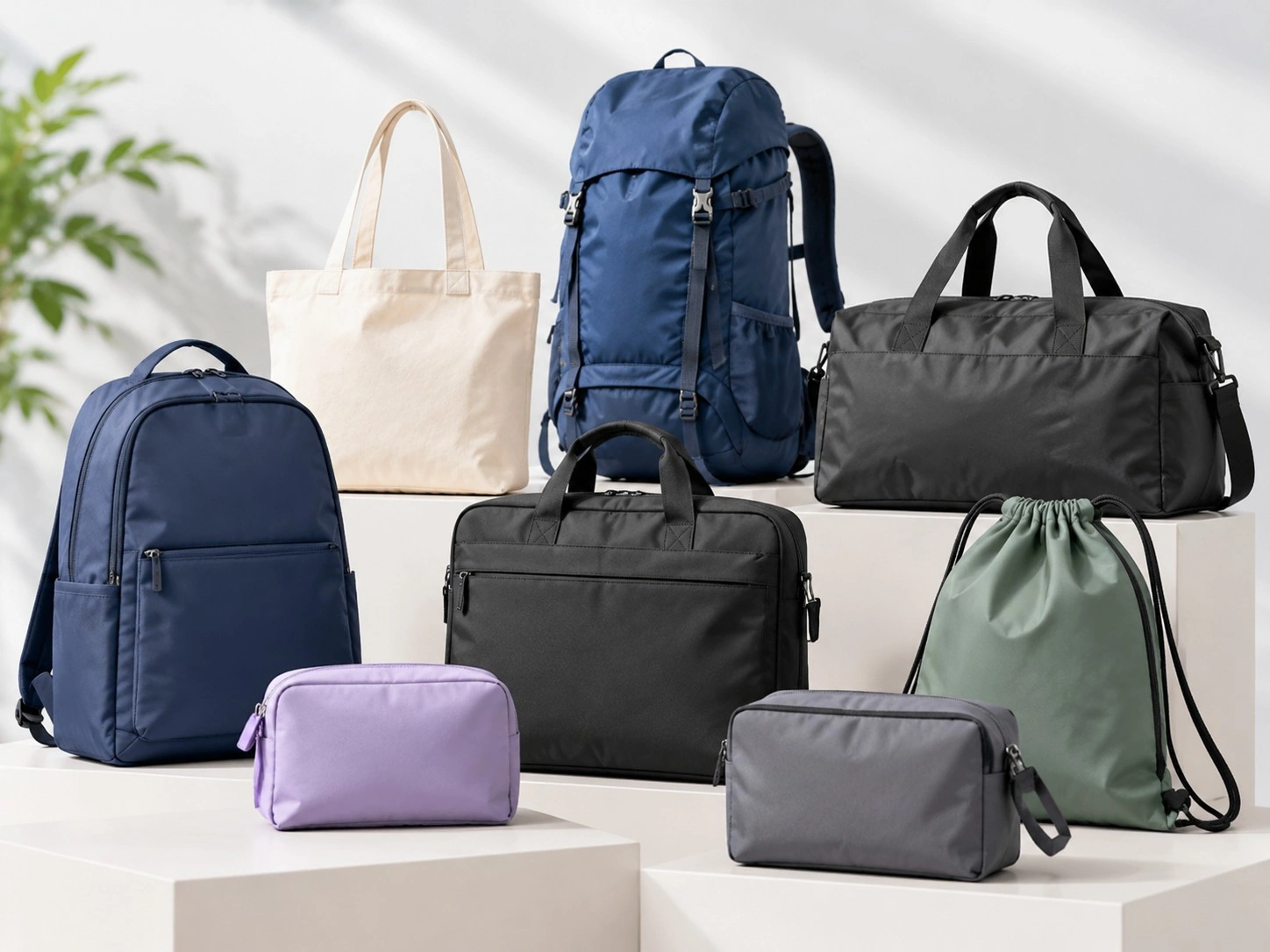
Nylon's combination of strength, flexibility, and relatively low weight makes it suitable for a wide range of bag products.
However, the required water protection differs significantly between product categories.
A lightweight nylon tote does not need the same construction as a technical outdoor backpack.
The following applications illustrate how buyers can match nylon specifications to different product requirements.
| Bag Type |
Suggested Nylon Construction |
Main Considerations |
| Everyday Tote |
Standard or DWR-treated nylon |
Weight, appearance, cost |
| Commuter Backpack |
DWR-treated or PU-coated nylon |
Rain exposure, zippers, seams |
| Travel Duffel |
Medium-weight nylon with suitable coating |
Abrasion, base protection, flexibility |
| Sports Bag |
Nylon with appropriate water-resistant finishing |
Cleaning, ventilation, wet/dry separation |
| Hiking Backpack |
PU-coated or laminated nylon |
Rain protection, tear resistance, seam design |
| Cosmetic Bag |
Nylon with suitable lining or coating |
Splash resistance, internal liquid protection |
| Laptop Bag |
Coated nylon with padded construction |
Zipper protection, padding, internal compartments |
| Technical Outdoor Bag |
Specification-based coated or laminated nylon |
Hydrostatic head, seam sealing, closure design |
The material should be selected according to the actual product function rather than applying the highest waterproof specification to every design.
How to Maintain Waterproof Nylon Bags
Proper care can help preserve the appearance and functional performance of nylon bags.
The exact cleaning method depends on the fabric, coating, lining, and manufacturer's instructions.
However, several general practices can help reduce unnecessary damage.
Clean the Surface Regularly
Dust, dirt, and oils can accumulate on nylon surfaces.
For routine cleaning:
- Remove loose dirt using a soft cloth or brush.
- Prepare lukewarm water with a small amount of mild detergent.
- Gently wipe the affected area.
- Remove detergent residue with a clean damp cloth.
- Allow the bag to air-dry.
Avoid aggressive scrubbing, particularly on fabrics with DWR finishes or delicate surface coatings.
Avoid Harsh Cleaning Products
Strong solvents, bleach, and unsuitable cleaning chemicals may damage nylon fibers, coatings, printed logos, or laminated layers.
Always check the care instructions before using a cleaning product.
For a custom bag collection, it is also useful to establish consistent care instructions that can be provided to retailers or end users.
Dry the Bag Completely Before Storage
Even waterproof-coated nylon can retain moisture in seams, pockets, and internal compartments.
After exposure to rain or cleaning, empty the bag and allow it to dry completely in a well-ventilated area.
Avoid storing a damp bag in a sealed container for extended periods.
This helps reduce the risk of unpleasant odors and moisture-related deterioration.
Avoid Excessive Heat
Direct exposure to high temperatures can affect coatings, adhesives, and laminated layers.
Avoid using high-temperature dryers or placing coated nylon bags directly against strong heat sources unless the manufacturer specifically permits it.
Air drying is generally a safer approach.
Store the Bag Properly
When the bag is not in use:
- Make sure it is completely dry.
- Remove unnecessary contents.
- Avoid placing heavy objects on delicate coated fabrics.
- Store it away from prolonged direct sunlight.
- Avoid excessive folding that may damage certain laminated constructions.
Can Waterproof Nylon Be Re-Waterproofed?
The answer depends on the original treatment.
A worn DWR finish may sometimes be restored using a compatible water-repellent treatment.
However, this does not necessarily restore a damaged PU coating or delaminated membrane.
If the coating has peeled, cracked, or separated from the fabric, applying a general water-repellent spray will not repair the underlying damage.
Is Nylon Better Than Polyester for Water Resistance?
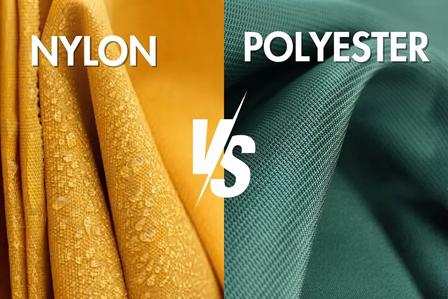
Nylon and polyester are two of the most common synthetic fabrics used in bag manufacturing.
Both offer useful characteristics, but neither should automatically be considered waterproof.
The main difference is that nylon is often selected for its strength, flexibility, and abrasion resistance, while polyester is commonly chosen for its dimensional stability, color retention, and resistance to UV exposure.
Their water performance depends on the actual fabric construction and finishing process.
Water Absorption
Nylon generally absorbs more moisture than polyester under comparable conditions.
Polyester has lower moisture regain, which can help it retain its weight and dimensions more consistently in humid environments.
However, this does not mean polyester fabric is automatically waterproof.
Water can still pass through an untreated polyester weave.
Durability and Abrasion Resistance
Nylon is often preferred when abrasion resistance and a strong strength-to-weight ratio are priorities.
It can be particularly useful for backpacks, luggage, and outdoor products that experience repeated friction.
Polyester also provides good durability, although performance varies depending on yarn quality, weave, and finishing.
UV Resistance
Polyester generally performs better than standard nylon when exposed to prolonged sunlight.
This can be an important consideration for outdoor promotional products, beach bags, and equipment that remains outside for extended periods.
Special treatments can improve the UV performance of nylon, but buyers should confirm the required level through testing if long-term outdoor exposure is expected.
Weight and Flexibility
Nylon is often chosen for lightweight and flexible products.
It can create soft, packable bag designs without adding unnecessary material weight.
Polyester is also available in lightweight constructions, but the hand feel and flexibility depend on the fabric specification.
| Feature |
Nylon |
Polyester |
| Moisture absorption |
Generally higher |
Generally lower |
| Natural waterproofness |
Not waterproof |
Not waterproof |
| Abrasion resistance |
Often excellent |
Good to very good |
| Tear resistance |
Often very good |
Good to very good |
| UV resistance |
Generally lower without treatment |
Generally better |
| Flexibility |
Often flexible |
Depends on construction |
| Weight |
Available in lightweight options |
Available in lightweight options |
| Drying behavior |
Can retain more moisture |
Usually dries relatively quickly |
| Coating compatibility |
PU, silicone, and other finishes |
PU, PVC, TPU, and other finishes |
| Common bag uses |
Backpacks, travel bags, outdoor accessories |
Tote bags, promotional bags, travel bags, cooler bags |
There is no universal winner.
A tightly woven, PU-coated polyester fabric may provide better water protection than untreated nylon. Likewise, properly coated nylon may outperform untreated polyester.
Which Material Should Buyers Choose?
Choose nylon when the project prioritizes:
- Lightweight construction.
- Flexibility and foldability.
- Abrasion resistance.
- A technical or outdoor appearance.
- A good strength-to-weight balance.
Choose polyester when the project prioritizes:
- Color stability.
- Better general UV performance.
- A broad range of fabric finishes.
- Cost-controlled promotional production.
- Consistent material availability.
If water protection is the primary requirement, compare the actual coated fabric samples and test results instead of making the decision based on fiber composition alone.
How to Choose the Right Waterproof Nylon for a Custom Bag Project
For brands, retailers, promotional merchandise companies, and procurement teams, choosing nylon is not simply a matter of selecting a fabric with a high denier value or a waterproof label.
The material must meet the product's functional requirements while remaining suitable for the target market, production process, and budget.
A practical approach is to work backward from the intended use of the finished bag.
1.Define the Required Level of Water Protection
Before discussing fabric specifications, identify what the bag actually needs to withstand.
Consider the following questions:
- Will the bag be used indoors or outdoors?
- Will it encounter occasional splashes or regular rainfall?
- Does it need to protect valuable contents from moisture?
- Will it be exposed to continuous rain?
- Is the bag expected to contain liquids?
- Does it need to withstand immersion?
These questions help determine whether standard nylon, DWR-treated nylon, coated nylon, or a laminated construction is appropriate.
2.Choose the Right Denier and Fabric Weight
Once the protection requirement is clear, buyers can select an appropriate fabric construction.
Denier and GSM should be considered together, but they describe different characteristics.
Denier measures yarn linear density, while GSM measures the weight of the finished fabric per square meter.
When comparing samples, buyers should evaluate:
- Fabric thickness.
- Fabric weight.
- Surface texture.
- Flexibility.
- Tear resistance.
- Abrasion resistance.
- Overall bag weight.
A lightweight bag that needs to fold into a small pouch may benefit from a thinner nylon construction. A larger travel bag may require heavier fabric and additional reinforcement.
3.Select the Appropriate Coating
The coating should match the intended application.
For basic surface repellency, DWR may be sufficient.
For more substantial protection against water penetration, PU-coated nylon is a common option.
For lightweight outdoor products, silicone-coated nylon or a specialized laminate may be worth evaluating.
Buyers should ask suppliers to clarify:
- The coating or finishing type.
- Whether the coating is applied to the face or reverse side.
- Whether the fabric is coated on one side or both sides.
- The applicable hydrostatic pressure test result.
- The coating's flexibility and adhesion.
- Its compatibility with printing and sewing.
The exact coating specification should be confirmed through a physical sample rather than relying solely on a product description.
4.Consider the Bag's Construction
The same fabric can produce different water protection results when used in different bag designs.
For example, a simple tote with an open top will naturally have less protection against rain entering the bag than a backpack with a covered zipper and a more enclosed structure.
Important construction details include:
- Seam construction
- Zipper design
- Top closure
- Bottom construction
- Pocket design
5.Evaluate Printing and Branding Compatibility
Custom branding is an important consideration for B2B bag projects.
Not every nylon finish is equally suitable for every logo application.
Depending on the fabric surface and coating, possible branding methods include:
- Screen printing.
- Heat transfer printing.
- Embroidery.
- Woven labels.
- Rubber or silicone patches.
A coated surface may affect ink adhesion or heat-transfer performance. Silicone-treated fabrics can also require specialized printing processes.
For this reason, logo testing should be carried out on the actual selected fabric rather than on an untreated nylon sample.
Buyers should also check:
- Color consistency.
- Print adhesion.
- Resistance to rubbing.
- Logo durability after cleaning.
- Whether printing affects the coating.
This is especially important for retail products and branded promotional bags, where appearance and repeatability are essential.
6.Balance Material Performance Against Cost
Waterproofing treatments add material and manufacturing costs.
The cost difference depends on several factors:
- Nylon type.
- Fabric weight.
- Coating formulation.
- Coating thickness.
- Lamination process.
- Required performance rating.
- Order quantity.
- Additional construction processes.
For example, a basic DWR-treated fabric may be more economical than a fully laminated construction.
The goal should be to select the lowest-cost specification that consistently meets the agreed performance criteria.
7.Approve the Actual Fabric and Finished Sample
A fabric swatch is useful for checking color, texture, thickness, and initial hand feel.
However, it cannot fully demonstrate how the finished bag will perform.Before mass production, buyers should review a sample.
FAQ
Is 100% nylon waterproof?
No. A fabric labeled 100% nylon is not automatically waterproof.The percentage identifies the fiber composition, not the water protection level.Untreated nylon can resist some moisture but may allow water to pass through under prolonged exposure or pressure. Coatings and laminations can improve its performance.
Is nylon more waterproof than polyester?
Not necessarily.Nylon and polyester are both synthetic materials that can provide some resistance to moisture, but neither is inherently waterproof.Nylon is often selected for its strength and abrasion resistance, while polyester generally has lower moisture absorption and better UV resistance.The waterproof performance of both materials depends heavily on their weave, coating, and finished construction.
Is PU-coated nylon waterproof?
PU-coated nylon can achieve good water resistance and, depending on the coating and test results, may meet specific waterproof requirements.However, the performance varies according to coating quality, thickness, and manufacturing process.The finished bag may also require additional seam and closure protection.
Can nylon bags be used in heavy rain?
Some coated or laminated nylon bags can be used in heavy rain, provided that their fabric and construction meet the required protection level.Untreated nylon bags should not be assumed to provide reliable protection during prolonged rainfall.Zippers, seams, and openings must also be considered.
Does waterproof nylon lose its waterproofness over time?
It can.Repeated abrasion, cleaning, UV exposure, and general wear may reduce the effectiveness of water-repellent finishes or damage coatings.The extent depends on material quality and how the bag is used and maintained.
Conclusion
Nylon is a versatile synthetic material valued for its lightweight construction, strength, flexibility, and abrasion resistance. These properties make it suitable for a wide range of bags, including backpacks, travel bags, sports bags, cosmetic bags, and outdoor accessories.
However, standard nylon is not inherently waterproof. Its ability to resist water depends on the fabric construction, surface treatment, coating, and finished bag design.
DWR treatments help water droplets roll off the surface, while PU coatings, silicone treatments, and waterproof membranes can provide stronger protection against water penetration. The actual performance should be confirmed through appropriate testing rather than inferred from the material name or denier value.
At INITI, we help you strike this balance. High-quality custom bags require coordinated alignment of fabric, construction, functionality and branding processes. Share your project requirements with us, and our team will support you to evaluate specifications, approve fabric swatches and finished samples, and finalize performance criteria before mass production.



 Hot News