When sourcing or purchasing insulated cooler bags for retail, outdoor activities, corporate gifting, or daily food and beverage transport, one central question always emerges: Cooler tote vs. cooler backpack—which design is better?
Neither format is universally superior. Instead, they represent two distinct design philosophies engineered around different carrying ergonomics, thermal insulation architectures, internal storage layouts, loading capacities, and manufacturing cost profiles.
A cooler tote prioritizes broad, horizontal accessibility, rapid top-down loading, lightweight foldability, and wide flat branding panels, making it the premier choice for company picnics, grocery shopping, tailgate gatherings, and short-distance transit. In contrast, a cooler backpack is built for dynamic mobility and active ergonomics, utilizing dual padded shoulder straps, vertical center-of-gravity alignment, multi-compartment dry/wet isolation, and waterproof technical builds to keep hands free during hiking, paddleboarding, beach trekking, and extended outdoor excursions.
This comprehensive guide delivers a deep-dive engineering, functional, and B2B sourcing comparison between cooler totes and cooler backpacks. Whether you are an outdoor lifestyle brand expanding your catalog, a corporate procurement manager planning high-impact promotional giveaways, or an e-commerce buyer optimizing product specifications, this guide breaks down thermal mechanics, ergonomic load physics, material durability, cost drivers, and manufacturing considerations to help you select or customize the perfect bag design.
To understand the core functional trade-offs at a glance, here is how both cooler bag architectures stack up across key performance metrics:
| Key Evaluation Dimension |
Cooler Tote Bag |
Cooler Backpack |
| Primary Carrying System |
Dual hand webbing handles / Single long shoulder strap |
Dual padded ergonomic shoulder straps (± chest & waist sternum support) |
| Ergonomic Load Distribution |
Asymmetrical (concentrated on one shoulder or one hand) |
Symmetrical (distributed across shoulders, spine, and upper torso) |
| Mobility & Hands-Free Status |
Occupies one hand or restricts arm movement |
100% Hands-free mobility; ideal for walking, hiking, paddling |
| Opening & Interior Accessibility |
Wide horizontal zip/flip lid; instant top-down visibility |
Vertical roll-top or front U-zip; deep bottom requires stacking |
| Thermal Insulation Architecture |
Standard 5mm–10mm EPE foam + foil/PEVA lining (4–12 hours cold) |
Heavy-duty 10mm–25mm NBR/closed-cell foam + TPU/leakproof heat welds (12–48 hours) |
| Internal Organization |
Single large thermal compartment (occasional front slip pocket) |
Multi-tier layout (insulated cooler base + upper dry gear section + tech pockets) |
| Storage & Packing Flexibility |
Collapsible, easily flattened for pantry or car trunk storage |
More structured, bulkier; requires dedicated storage volume |
| Branding & Print Real Estate |
Massive, continuous flat front and back panels (high visual impact) |
Segmented panels, outer gear loops, Molle webbing, compact logo zones |
| Production Complexity & Cost |
Low to moderate manufacturing complexity; budget-friendly unit price |
High complexity (multiple panels, padding, technical zippers); premium unit cost |
| Optimal Use Cases |
Picnics, beach days by car, office lunch programs, grocery retail, mass events |
Day hiking, kayaking/SUP, tailgating on foot, festivals, premium corporate gifts |
What Is a Cooler Tote?
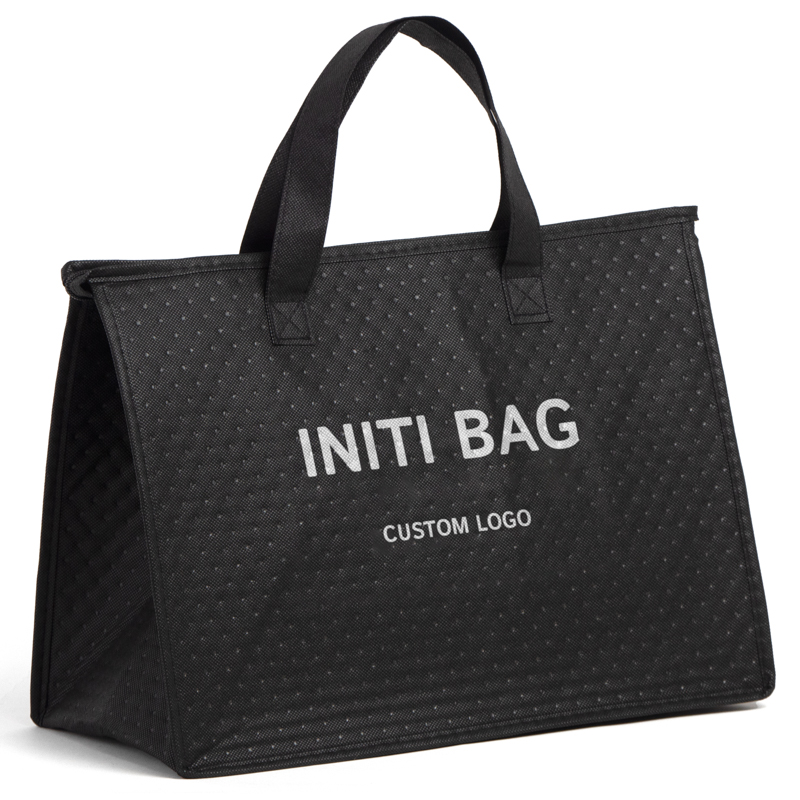
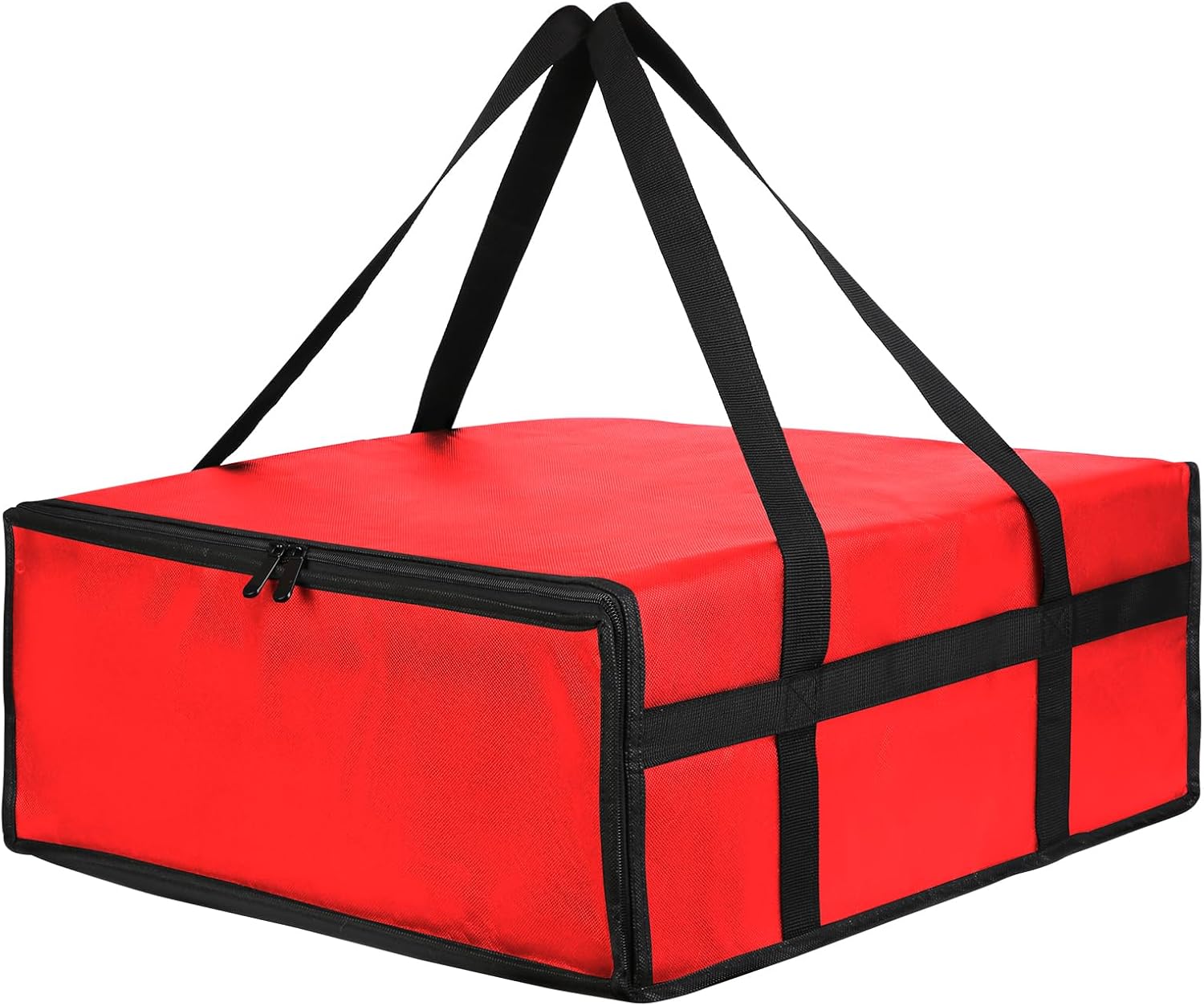
A cooler tote is an insulated bag with a tote-style silhouette, usually featuring an open main compartment, two handles, and a top closure such as a zipper, hook-and-loop fastening, or flap. Its flexible structure allows users to pack food, beverages, reusable ice packs, and other items for short trips or everyday activities.
Unlike a standard shopping tote, a cooler tote incorporates an insulating structure between its outer fabric and interior lining. Depending on the design, the bag may also have a reinforced base, exterior pockets, adjustable shoulder straps, or collapsible side panels.
The defining characteristic is its carrying format. Users can lift it by the handles, place it over one shoulder when the handle length permits, or set it down and access its contents without removing a backpack from their body.
Common Types of Cooler Totes
Cooler totes are available in several formats, each serving a different purpose.
Classic insulated tote: This design resembles a conventional shopping bag but includes insulation and a wipe-clean interior. It works well for groceries, lunches, picnics, and promotional merchandise.
Structured cooler tote: Reinforced panels or a more stable base help the bag maintain its shape. This format is useful when the contents include several beverage containers or when the bag needs to look more substantial on retail shelves.
Collapsible cooler tote: Flexible panels allow the bag to fold down when empty. It is suitable for reusable shopping programs, compact storage, and distribution through retail or promotional channels.
Large-capacity picnic tote: A wider body and generous opening accommodate food containers, drinks, and picnic accessories. The design is particularly convenient when several people share the contents.
Premium insulated tote: Upgraded exterior fabrics, refined trims, reinforced handles, and carefully designed pockets can create a more elevated appearance for lifestyle brands, corporate gifts, and retail collections.
The best version depends on how customers will use the bag. A compact lunch tote does not need the same structure as a large grocery cooler, and a premium retail tote may prioritize appearance and finishing more heavily than a high-volume event giveaway.
What Is a Cooler Backpack?
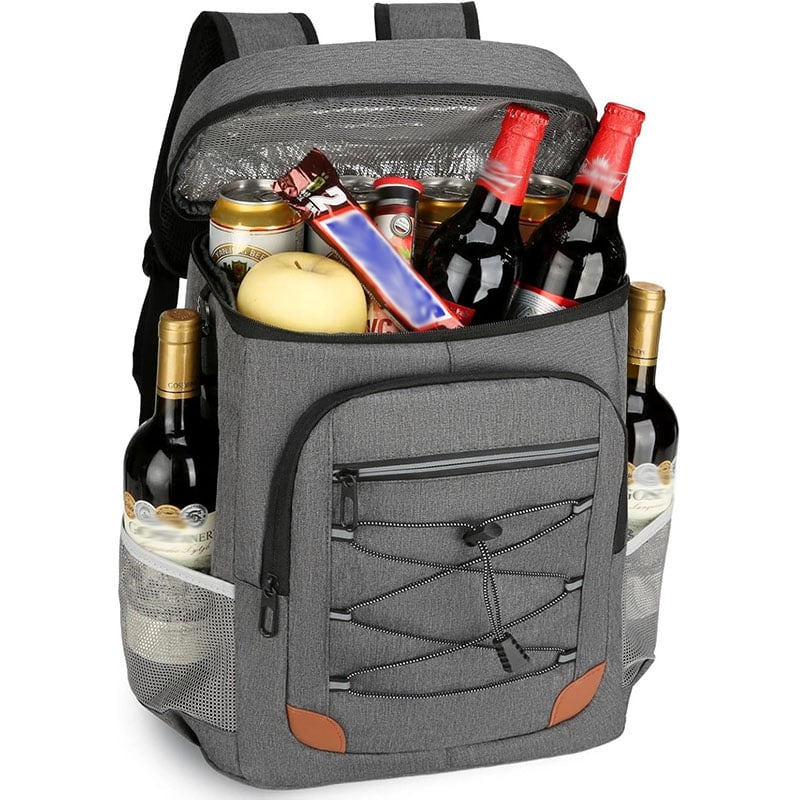
A cooler backpack is an insulated bag designed to be carried on the user's back through two shoulder straps. Like other soft coolers, it uses an insulated compartment to slow heat transfer and help maintain the temperature of its contents when used with appropriate cooling packs or ice.
Its most important design feature is the carrying system. Instead of supporting the entire load with one hand or one shoulder, a backpack can distribute weight across both shoulders and, when fitted, a chest strap or waist belt.
Cooler backpacks are commonly used for hiking, beach trips, camping, outdoor festivals, fishing, and travel. They can also serve as promotional products for outdoor brands, sporting events, tourism programs, and companies whose customers value active lifestyles.
Common Types of Cooler Backpacks
Classic zippered cooler backpack: A conventional backpack silhouette with an insulated main compartment and a top zipper. It is familiar to consumers and relatively straightforward to pack.
Roll-top cooler backpack: The top opening rolls down and secures with buckles or another fastening system. This format can reduce the exposed opening area when closed properly and offers a distinctive outdoor appearance.
Compact day-trip cooler backpack: A smaller design for individual lunches, snacks, and a limited number of beverages. It prioritizes light weight and ease of movement over maximum capacity.
Large-capacity cooler backpack: A larger body accommodates more food and drinks. Depending on the intended load, it may require broader straps, improved reinforcement, and a more substantial back panel.
Hybrid cooler backpack: This design combines an insulated main compartment with additional pockets for personal belongings, utensils, or small accessories. Some versions separate dry storage from the insulated section.
A cooler backpack should not be evaluated by its appearance alone. The shoulder straps, attachment points, opening design, body depth, and loaded weight all affect whether the product remains comfortable and functional during use.
Cooler Tote vs. Cooler Backpack: Key Differences
1. Ergonomics and Carrying Dynamics
The most immediate physical differentiator between a cooler tote and a cooler backpack is how kinetic load is transferred to the human body. Because liquids (water, beverages, canned drinks) and ice packs create high-density cargo—1 liter of water weighs exactly 1 kg (2.2 lbs)—carrying comfort dictates how far and how comfortably a user can travel.
Cooler Totes: Point-Load Asymmetry
A cooler tote typically relies on two top webbing handles or a single long shoulder strap.
- Weight Distribution: When loaded with 12 to 24 beverage cans and ice, a tote concentrates 10 to 20 pounds of downward gravitational pull onto a single shoulder or hand.
- Biomechanical Impact: This asymmetrical load pulls the neck and trapezius muscles downward on one side, forcing the spine into a lateral curve to maintain balance. Over distances exceeding 200–300 meters, this causes shoulder fatigue, hand numbness from webbing compression, and awkward gait mechanics.
- Mobility Limitation: One hand or one side of the upper body is continuously occupied, making it cumbersome to carry beach chairs, hold children's hands, ride a bicycle, or hold paddleboard oars.
- Ideal Transit Range: Short-distance transit (car trunk to picnic bench, office parking lot to desk, supermarket checkout to vehicle).
Cooler Backpacks: Symmetrical Center-of-Gravity Alignment
A cooler backpack adopts the structural framework of technical outdoor daypacks, featuring two wide, contoured shoulder straps, a padded back panel, and optional sternum or hip straps.
- Weight Distribution: The payload is centered directly over the wearer’s spine and core. Wide straps (typically 65mm–80mm in width) embedded with 8mm–12mm high-density EVA foam disperse gravitational force evenly across both shoulders and the upper thoracic back.
- Biomechanical Impact: The bag holds the center of gravity close to the body, eliminating torso twisting and lateral spinal fatigue. Breathable air-mesh back channels allow convective airflow, preventing sweaty heat accumulation during warm outdoor hikes.
- Hands-Free Freedom: By securing the weight firmly to the back, the wearer maintains complete bilateral arm freedom. Users can carry trekking poles, kayak paddles, beach umbrellas, or fishing rods without adjusting their grip on the cooler.
- Ideal Transit Range: Medium to long-distance walking, multi-mile coastal treks, outdoor festivals, trail hiking, and water sports transport.
2. Thermal Mechanics and Insulation Architecture
Insulation performance is governed by three heat transfer mechanisms: conduction, convection, and radiation. How a cooler bag manages these thermodynamic forces determines whether ice remains solid for 4 hours or 24+ hours.
Thermal Layers and Material Science
Both formats utilize a multi-layer composite build, but their engineering thicknesses and sealing methods differ:
Outer Shell (Abrasion & Environmental Shield):
- Cooler Totes: Commonly constructed from 300D–600D polyester, woven recycled PET (RPET), or laminated non-woven fabrics for lightweight flexibility.
- Cooler Backpacks: Built from rugged 600D–1200D Oxford polyester with PU coating, heavy-duty 500D PVC Tarpaulin, or 840D double-sided TPU for extreme tear, puncture, and UV resistance.
Core Insulating Foam (Conductive Resistance):
- Cooler Totes: Standard models feature 4mm to 8mm of Expanded Polyethylene (EPE) pearl cotton foam. High-end retail totes use up to 10mm EPE or Polyurethane (PU) foam.
-
Cooler Backpacks: Technical outdoor models utilize 10mm to 25mm of dense closed-cell NBR (Nitrile Butadiene Rubber) foam or high-density EVA. Closed-cell structures contain millions of sealed micro-air pockets that drastically lower thermal conductivity (k-value ≈0.032 W/m⋅K).
Radiant Barrier:
- High-performance models incorporate a vaporized aluminum foil or metallized Mylar film between the outer shell and foam core to reflect infrared thermal radiation away from the cold chamber.
Internal Lining & Waterproof Sealing (Convective and Leakproof Control):
- Cooler Totes: Linings are typically food-grade PEVA or aluminum foil. In entry-to-mid tier totes, seams are sewn with binding tape, which can allow melted ice water to seep through needle puncture holes over time unless high-frequency heat welding is specified.
- Cooler Backpacks: Quality backpack coolers employ seamless high-frequency (HF) voltage heat-welded PEVA or molded food-grade TPU liners. Because backpack coolers sit upright against the wearer's back, leakproof integrity is mandatory to prevent ice melt from soaking clothing. Premium models also feature airtight, waterproof, leakproof TIZIP or airtight nylon teeth zippers that block convective air exchange entirely.
Ice Retention Profiles
-
Cooler Totes: Designed for single-day casual scenarios. When packed with frozen gel packs or cubed ice at a recommended 2:1 ice-to-contents ratio, standard totes maintain cold internal temperatures (≤40∘F/4.4∘C) for 4 to 12 hours.
- Cooler Backpacks: Engineered for active outdoor day trips and full-day expeditions. With thicker closed-cell NBR insulation and airtight zipper seals, technical backpack coolers maintain ice and cold storage for 12 to 36 hours (and up to 48 hours in specialized roll-top TPU configurations).
3. Structural Usability, Loading, and Interior Accessibility
The interior geometry and opening mechanism determine how easy it is to pack, unpack, and share items from the cooler during an event.
Cooler Totes: Horizontal Geometry and Instant Visibility
- Wide Top-Down Aperture: Cooler totes feature a wide rectangular or oval top opening secured by a long zipper, Velcro flap, or magnetic closure. When unzipped, the entire interior perimeter is visible at a glance.
- Flat Base Stabilization: The wide gusseted base allows the bag to sit firmly on picnic tables, car trunks, grass, or sand without tipping over.
- Zero-Rummage Accessibility: Food containers, wide bento boxes, large salad bowls, and wine bottles can be placed flat next to each other. Users can grab a specific drink or snack instantly without lifting out other items.
- Casual Sharing: Ideal for group social settings where multiple people reach in for beverages while the bag rests open on a table or blanket.
Cooler Backpacks: Vertical Stacking and Tiered Organization
- Vertical Cylindrical Profile: To maintain ergonomic stability along the spine, backpack coolers are built tall and narrow.
- Stacking Dynamics: Cold cargo must be stacked in vertical layers (drinks and heavy ice at the bottom, delicate sandwiches and fruits in the mid-tier). Reaching an item placed at the base requires removing upper layers or utilizing side-access utility zippers.
-
Multi-Compartment Segmentation: Backpack coolers excel at separating mixed gear types:
- Lower Insulated Chilled Chamber: Dedicated food, drink, and ice zone.
- Upper Dry Storage Vault: Non-insulated top compartment for dry snacks, napkins, sunglasses, cutlery, and light apparel.
- Exterior Tech & Utility Pockets: Splash-proof front zippered pockets for cellphones, keys, wallets, and battery banks; dual elastic side mesh pockets for 32oz water bottles or thermal tumblers.
4. Packing Volume, Storage Footprint, and Logistics Efficiency
For commercial distributors, retail brands, and corporate purchasers, a product’s flat-packed carton density directly dictates international freight costs, warehousing storage fees, and end-user storage convenience.
Collapsibility and Off-Season Storage
- Cooler Totes: Because totes use flexible 5mm–8mm EPE foam without rigid backboards or curved internal stays, they fold completely flat. Users can slide an empty tote under a car seat, store it in a kitchen drawer, or pack it inside a travel suitcase for vacation use.
- Cooler Backpacks: Backpack coolers feature contoured shoulder harnesses, thick dense foam panels, molded EVA bottom bases, and padded lumbar cushions. While semi-compressible, they retain substantial volume and cannot be folded completely flat without creasing the insulation or damaging the back panel structure.
B2B Supply Chain & Shipping Economics
- Freight Density: A standard 40HQ export shipping container holds approximately 18,000 to 28,000 flat-folded cooler totes (depending on size and GSM). The same container holds only 4,500 to 7,500 structured cooler backpacks.
- Logistics Cost Impact: The landed shipping cost per unit for a cooler backpack is approximately 2.5x to 4x higher than a flat-pack cooler tote. For high-volume promotional gift programs operating on strict budget caps, this volume differential makes cooler totes a more cost-effective choice.
5. Durability, Stress Engineering, and Water Resistance
A cooler bag must withstand abrasion, heavy liquid weight, puncture from ice edges, and moisture exposure. Understanding where these bags experience mechanical stress is essential for evaluating quality and ensuring product longevity.
Key Stress Points on Cooler Totes
- Handle-to-Body Attachment Points: Webbing handles must be reinforced with heavy "X-box" cross-stitching or extend continuously underneath the bottom of the bag as a cradle harness to prevent handle tear-out under heavy can loads.
- Top Zipper Pull Stress: When a tote is packed to full capacity, lateral expansion puts outward tensile force on the top zipper teeth and slider stops.
- Base Corner Abrasion: Frequent setting down on rough concrete, asphalt, and pebble beaches wears out the lower fabric corners unless an abrasion-resistant 600D PU or PVC tarpaulin patch is added.
Key Stress Points on Cooler Backpacks
- Upper Shoulder Harness Yoke: The junction where the shoulder straps anchor to the top-back panel absorbs up to 90% of dynamic shock loads when the user walks or runs. High-quality builds require reinforced webbing inserts and bar-tack sewing across the yoke.
- Lower Strap Anchor Triangles: The triangular webbing anchors at the bottom corners must feature heavy polyester webbing stitched deep into the side structural seams.
- Waterproof Zipper Tracks: Airtight zippers require higher pull force than standard nylon coil zippers. The end-stops and slider tracks must be reinforced to prevent seam delamination.
- Bottom Abrasion Pan: Heavy-duty outdoor backpack coolers often incorporate a seamless, molded waterproof EVA or high-density PVC base to block groundwater and sand infiltration while allowing the bag to stand upright on wet boat decks or muddy trails.
6. Branding Real Estate and Decorative Methods
For promotional marketing agencies, corporate merchandise directors, and private-label lifestyle brands, the exterior surface serves as a primary mobile billboard.
Cooler Totes: High-Impact Visual Canvas
-
Uninterrupted Surface Area: The expansive flat front and rear fabric panels provide large, unobstructed decoration areas (up to 30 cm×25 cm).
-
Decoration Versatility:
- Screen Printing: Cost-effective for bold 1- to 3-color corporate logos.
- Heat Transfer / Direct-to-Film (DTF): Excellent for full-color gradients, brand mascots, and high-definition photographic artwork.
- Sublimation Printing: Applicable on full-bleed polyester panels before bag sewing, allowing complete edge-to-edge custom pattern coverage.
- Embroidered / Woven Patches: Adds a textured, premium aesthetic to canvas and heavy Oxford tote bags.
Cooler Backpacks: Premium Technical Detailing
-
Segmented Imprint Zones: Because the front face is broken up by horizontal zipper tracks, dry-pocket flaps, bungee cord lattices, and Molle webbing, logo placement is more concentrated (typically 12 cm×8 cm or 18 cm×12 cm).
-
Technical Decoration Methods:
- Molded 3D PVC / Silicone Rubber Badges: Highly durable, waterproof, and gives an authentic outdoor-gear appearance.
- High-Frequency Welded TPU Badges: Seamlessly integrated with waterproof fabric shells.
- Reflective Screen Printing: Enhances nighttime outdoor safety and adds a modern technical aesthetic.
- Laser-Engraved Metal Plates: Ideal for executive corporate gifts and luxury private-label brands.
Which Design Is Better for Different Activities?
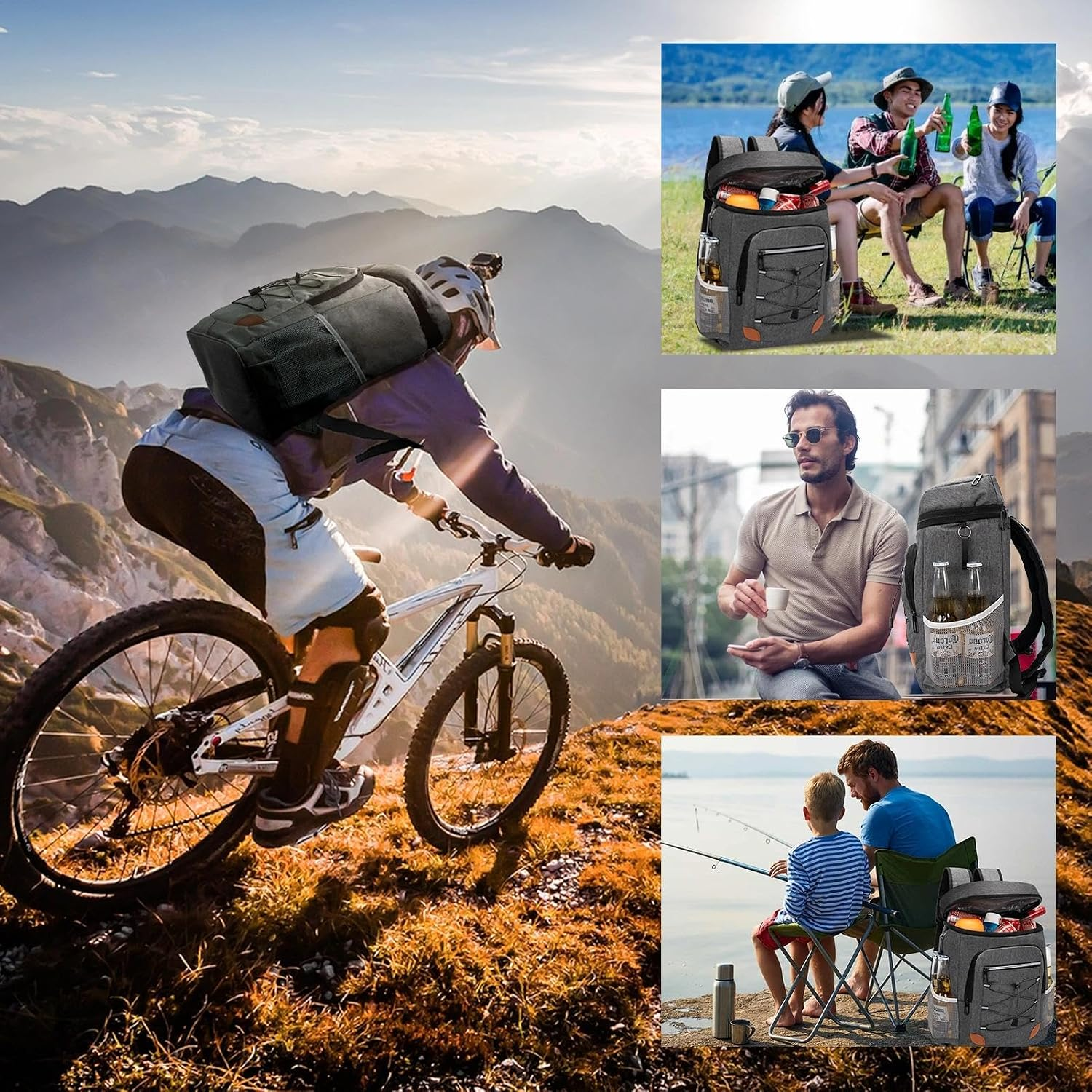
The intended use should guide the decision before buyers begin comparing colors, fabrics, or decorative details.
A product that performs well for grocery shopping may be inconvenient for hiking. Likewise, a backpack designed for mobile outdoor activities may not offer the easiest access for a family picnic.
1. Grocery Shopping and Reusable Retail Bags
Cooler totes are generally a natural fit for grocery shopping because users can place items inside quickly and carry the bag over short distances.
Their wide openings make them practical for chilled groceries, packaged foods, beverages, and reusable shopping programs. A reinforced base can also help support the weight of the contents.
A cooler backpack may be less convenient when shoppers need to load several large packages or repeatedly access individual items. It can still be useful for people who walk or cycle to stores, particularly when hands-free transport matters.
For retailers developing reusable insulated shopping bags, the tote is often the more straightforward starting point.
Buyers should consider handle length, loaded weight, foldability, interior cleaning, and the types of products customers are expected to carry. If the bag will be used for heavier grocery loads, handle reinforcement and base construction deserve particular attention.
2. Picnics and Family Outings
Cooler totes are well suited to picnics because their openings allow users to access food and drinks while the bag sits beside a picnic blanket or outdoor table.
A wider body can accommodate multiple food containers, fruit, and other shared items. Users can remove what they need without taking the entire bag off their back.
Cooler backpacks work better when the picnic site requires a longer walk or when users must carry other equipment at the same time. They can be particularly useful for smaller groups or individuals who bring only a limited quantity of food and beverages.
For a family picnic, a large tote may be more convenient at the destination. For a picnic reached after a long walk, a backpack may be easier to transport.
The distinction is between access at the destination and comfort on the way there.
3. Hiking and Nature Walks
Cooler backpacks are generally the more practical choice for walking-oriented activities.
A hands-free carrying system allows users to maintain a natural walking posture and keep their hands available for trekking poles, water bottles, or other equipment. A compact shape may also be easier to manage on a trail than a wide bag swinging from one hand.
For promotional products aimed at hiking enthusiasts, consider a modest capacity, durable exterior fabric, comfortable adjustable straps, and a closure that remains secure during movement.
Do not oversize the product merely to increase the advertised capacity. An unnecessarily large cooler backpack can become heavy and cumbersome when filled.
4. Beach Trips and Poolside Use
Both designs can work well at the beach, but they serve different carrying needs.
A cooler tote is convenient when users arrive by car, carry food from the parking area, and spend most of the day in one location. Its wide opening makes it easy to reach for drinks and snacks.
A cooler backpack is more useful when users walk a longer distance to the beach or need to carry towels, personal items, and other equipment in addition to chilled food.
Sand, moisture, and repeated handling also influence product design. Buyers should assess whether the exterior fabric is easy to wipe clean, whether the base is practical for setting the bag on the ground, and whether the closure can be operated without difficulty.
Water resistance should be specified carefully. A water-resistant exterior, a leak-resistant insulated liner, and a fully waterproof construction are not equivalent features.
If the intended product will be exposed to splashes or wet surfaces, define the required level of protection and test the completed construction accordingly.
5. Camping and Outdoor Gatherings
The choice depends on whether the cooler is intended for personal transport or stationary storage.
A cooler backpack can carry food and beverages from a vehicle to a campsite or picnic area. It is also useful when users need to move around during an outdoor gathering.
A tote may be more convenient for serving food once the group is settled. Its broad opening and accessible main compartment can make shared snacks and beverages easier to retrieve.
For longer camping trips or large groups, neither a conventional tote nor a compact cooler backpack should automatically replace a larger cooler. If substantial capacity or extended cold retention is required, buyers may need to evaluate a larger soft cooler, a hard-sided cooler, or a dedicated food-storage solution.
The relevant question is not simply which bag holds more. It is whether the product's capacity, construction, and carrying system match the intended trip.
6. Road Trips and Travel
Cooler totes can be convenient for road trips because they are easy to place on a vehicle seat, on the floor, or in a suitable luggage area. A wide opening is useful when passengers want to retrieve snacks and drinks during stops.
A cooler backpack is more convenient when the same bag must be carried between the vehicle, accommodation, picnic area, and other destinations.
For travel-oriented designs, buyers should assess external dimensions, closure security, access while the bag is stationary, and whether the filled product can be moved comfortably.
If the bag is intended for use inside a vehicle, do not assume that a backpack's shape will fit every seating or storage arrangement. The dimensions of the finished sample should be checked against the expected storage space.
7. Sports Events, Festivals, and Outdoor Promotions
Both formats can work for promotional campaigns, but the audience and event format should determine the selection.
A cooler tote may suit hospitality programs, community events, family-oriented promotions, and retail campaigns. Its broad front or side panels can provide useful space for logos and event graphics.
A cooler backpack may be a better match for outdoor festivals, sports-related brands, travel programs, and campaigns aimed at active consumers. The hands-free carrying format can make the product more practical when recipients move between event areas.
Buyers should also consider event rules. Some venues restrict bag sizes, shapes, or types, so a product intended for stadiums or festivals should be checked against the relevant venue requirements rather than advertised as universally event-compliant.
8. Employee Gifts and Corporate Merchandise
The best format depends on how recipients are expected to use the gift.
A cooler tote can be an approachable option for employees who may use it for lunches, shopping, weekend outings, or family activities. A more structured design with refined finishing can also work for a corporate gift set.
A cooler backpack may suit companies with outdoor-oriented teams, wellness initiatives, travel programs, or employee activities that involve walking and recreation.
For corporate buyers, the product should feel relevant rather than simply carrying a large logo. Consider whether the recipient is likely to reuse the bag, whether the design fits the brand's identity, and whether the expected retail or perceived value justifies the selected materials and construction.
Cooler Tote vs. Cooler Backpack for B2B Buyers
For businesses purchasing cooler bags in bulk, the comparison extends beyond individual convenience. The selected format influences product positioning, production requirements, customization, packaging, and how easily the product fits into a larger merchandise program.
The same insulated function can support very different commercial objectives.
Retailers: Match the Format to the Customer's Shopping Habits
Retailers should consider the environment in which customers will discover, purchase, and use the product.
A cooler tote can fit naturally into a reusable shopping or picnic-bag collection. Its familiar shape may make the intended use immediately clear, while a structured silhouette and coordinated colors can help it fit the visual style of a retail range.
A cooler backpack may appeal to customers shopping for outdoor equipment, travel accessories, or active lifestyle products. Its specialized carrying structure can also distinguish it from ordinary insulated totes.
Before selecting a format, assess:
- The target retail price and expected product positioning.
- The typical contents and load.
- Whether the product needs to fold for storage.
- The amount of shelf or display space available.
- Whether the design should coordinate with an existing product range.
- How the product will be packaged and transported.
Promotional Product Companies: Prioritize Practicality and Branding
Promotional product distributors need to balance logo visibility, recipient relevance, unit cost, and campaign requirements.
A cooler tote offers broad, relatively unobstructed panels that can work well for printed logos and larger graphics. It is also familiar to a wide audience, which can make it suitable for grocery promotions, summer campaigns, hospitality programs, and community events.
A cooler backpack can provide stronger relevance for outdoor, travel, sports, and adventure-themed campaigns. Its carrying system may increase its perceived usefulness for recipients who regularly move between locations.
For either format, the logo area should be planned around the actual construction. Seams, pockets, straps, zippers, and insulation thickness can limit where artwork can be placed or which decoration methods are practical.
A useful promotional product is not defined by how large its logo can be. It is defined by whether the recipient has a reason to keep using it.
Private-Label Brands: Build a Clear Product Identity
For private-label brands, the choice between a tote and a backpack can shape the identity of an entire product line.
A tote can communicate everyday convenience, versatility, and straightforward access. A backpack can communicate mobility, organization, and outdoor use.
These associations are not absolute, but they help buyers create a coherent collection.
For example, a brand selling reusable shopping products may begin with a collapsible cooler tote and later introduce a larger structured version. An outdoor-oriented brand may develop a compact cooler backpack before introducing a larger model with additional pockets.
A clear product architecture helps customers understand the differences between models without requiring every product to have a completely different appearance.
Instead of changing only the color, consider whether each version offers a meaningful improvement in capacity, access, carrying comfort, or intended use.
Procurement Teams: Compare the Total Specification, Not Just the Unit Price
The cheapest quotation may not represent the lowest overall purchasing cost.
A tote and a backpack can use similar outer fabrics and insulation while requiring different amounts of material, different components, and different sewing operations.
A backpack may require shoulder straps, padding, adjustment hardware, and reinforced attachment points. A tote may use fewer components but require longer handles, a wider body, or a reinforced base.
The actual cost difference depends on the specification and production process.
When comparing quotations, confirm that suppliers are pricing equivalent requirements, including:
- Finished dimensions and tolerances.
- Insulation material and thickness.
- Outer fabric and interior lining.
- Handle or shoulder-strap construction.
- Zippers, buckles, and other hardware.
- Pocket quantity and placement.
- Logo method, artwork size, and number of print colors.
- Packaging and carton requirements.
- Sample approval and quality-control expectations.
If one supplier quotes a simple tote and another quotes a reinforced tote with a different lining and upgraded zipper, the prices are not directly comparable.
The same applies to backpacks. Strap padding, hardware, and reinforcement should be specified rather than assumed to be included.
Manufacturing and Cost Comparison
A cooler tote is often less complex than a backpack with multiple straps, pockets, and adjustment hardware. However, the final price depends on the actual specification, not simply the product category.
A basic tote with a simple closure and limited decoration may be economical to produce. A large, structured tote with reinforced handles, multiple panels, upgraded insulation, and premium finishing can require more material and labor.
Similarly, a simple backpack may be relatively straightforward, while a model with padded straps, multiple compartments, specialized closures, and additional reinforcement may require more components and assembly operations.
Main Factors That Affect Unit Cost
| Cost Factor |
Cooler Tote |
Cooler Backpack |
| Main body |
Depends on size, shape, and fabric |
Depends on size, shape, and fabric |
| Carrying system |
Handles; sometimes a shoulder strap |
Shoulder straps and potentially additional support |
| Reinforcement |
Often concentrated at handles, seams, and base |
Often needed at straps, seams, and load-bearing areas |
| Pockets |
Optional |
Common in more feature-rich designs |
| Closure |
Zipper, flap, or another suitable closure |
Zipper or roll-top; additional hardware may be needed |
| Customization |
Often straightforward on broad panels |
Depends on panel access and component placement |
| Packaging |
Influenced by size and foldability |
Influenced by shape, padding, and components |
The table describes common design considerations, not a guaranteed price ranking.
Comprehensive Technical Specification Comparison
| Engineering Component |
Promotional Cooler Tote |
Heavy-Duty Cooler Tote |
Functional Backpack Cooler |
Premium Technical Backpack Cooler |
| Outer Fabric |
80–120 GSM Non-Woven or 210D Poly |
600D Polyester / Heavy Canvas / RPET |
600D–900D Oxford with PU coating |
840D Nylon / Double-Coated 500D TPU |
| Insulation Core |
3mm–4mm EPE Pearl Foam |
6mm–10mm High-Density EPE Foam |
8mm–12mm EPE + EVA Foam |
15mm–25mm Closed-Cell NBR Foam |
| Liner Material |
Aluminum Foil or 0.12mm PEVA |
0.15mm–0.25mm Food-Grade PEVA |
0.25mm–0.35mm Seamless Welded PEVA |
Food-Grade Thick Polyether TPU |
| Seam Construction |
Traditional Stitched Binding Tape |
High-Frequency Welded Liner |
High-Frequency Welded Liner |
100% Radio-Frequency Seamless Welding |
| Closure System |
#3 or #5 Nylon Coil Zipper |
#5 or #8 Reinforced Metal/Nylon Zip |
#8 Water-Resistant Reverse PU Zip |
Airtight, Waterproof TIZIP / Gas-tight Zip |
| Carrying System |
Basic PP Webbing Handles |
Padded Handles + Detachable Strap |
Ergonomic Air-Mesh Padded Straps |
Ergonomic EVA Harness + Sternum/Hip Belts |
| Ice Retention |
2 to 4 Hours |
6 to 12 Hours |
12 to 24 Hours |
24 to 48+ Hours |
| Estimated Factory FOB Cost (MOQ 1000) |
$1.20 – $3.80 |
$4.20 – $8.50 |
$8.50 – $16.50 |
$18.00 – $35.00+ |
Note:The above prices are for reference only, and actual prices need to be calculated based on specific needs
Quality Control: What Should Buyers Test Before Bulk Production?
A sample approval process should verify that the selected design works as intended, rather than merely confirming that the bag looks correct.
The tests should reflect the intended application, the agreed specification, and the risks associated with the product.
Load and Carrying Tests
For a cooler tote, fill the bag with the representative intended load and check the handles, attachment points, seams, and base. Observe whether the bag tilts excessively, deforms, or becomes difficult to carry.
For a cooler backpack, test the shoulder straps, adjustment hardware, attachment points, and loaded stability. Have representative users wear the sample and check whether the straps remain secure and the contents sit comfortably.
Testing should use a defined load and procedure. Informal handling can identify obvious problems, but it does not replace a documented test when the product requires a specific load-bearing standard.
Closure and Access Tests
Open and close the bag repeatedly to check whether the zipper or other closure operates smoothly.
Check for snagging, misalignment, difficulty closing the bag when full, or interference from nearby pockets and seams.
For a roll-top backpack, confirm that the opening can be rolled and secured consistently. For a tote, check whether the closure remains accessible when the bag is packed.
Interior Cleaning and Leakage Tests
If the bag is intended to hold ice or items that may release moisture, define whether the product must be leak-resistant, easy to wipe clean, or capable of containing liquid under specified conditions.
These are different requirements and should not be treated as interchangeable.
A bag with a wipe-clean lining may be suitable for ordinary food containers but unsuitable for loose ice if the seams are not designed to contain meltwater.
Insulation Performance Tests
Cold-retention performance depends on more than the bag's shape. Buyers should define the test conditions, including the contents, cooling packs, ambient temperature, closure use, and the temperature range that matters for the intended application.
Compare tote and backpack samples under the same conditions if thermal performance is part of the selection criteria.
Sourcing Checklist: What Buyers Need Specify Before Requesting Quotes
To ensure fast, accurate supplier quotes, clarify these key product specifications before requesting a factory quotation:
- Core Dimensions & Can Capacity (e.g., 12-can, 24-can, 30-can, 42-can / L x W x H in cm)
- Outer Fabric Type & GSM/Denier (e.g., 600D RPET Polyester, 840D TPU, Heavy Cotton Canvas, 500D PVC Tarpaulin)
- Insulation Material & Thickness (e.g., 5mm EPE, 10mm EPE, 20mm Closed-cell NBR foam)
- Liner Specification & Sealing Type (e.g., Stitched Aluminum Foil vs. Seamless HF Welded 0.25mm PEVA/TPU)
- Zipper Grade & Waterproof Requirements (e.g., Standard #5 Nylon Coil vs. #8 PU Coated Water-Resistant vs. Airtight Submersible)
- Carrying Harness Configuration (e.g., Webbing length, EVA padding thickness, sternum strap, air-mesh back panel)
- Pocket Layout & Hardware (e.g., Upper dry zone, side elastic mesh pockets, bottle opener accessories, MOLLE loops)
- Logo Artwork & Decoration Method (e.g., 2-color Screen Print, DTF, Molded Rubber Patch, Metal Badge)
- Packaging & Carton Packing Method (e.g., Individual polybag, hangtag, master carton dimension limits, flat packing)
If you have not finalized all details, you can first send your intended use and target quantity, and we can recommend a suitable specification.
FAQ
Is a cooler tote better than a cooler backpack?
A cooler tote is often better for grocery shopping, picnics, and situations where users need quick access to food and drinks. A cooler backpack is generally better for longer walks and activities where hands-free carrying matters. The best choice depends on the intended load, distance, and use case.
Which design is better for a beach trip?
Both can work well. A tote is convenient when users carry food from a car to a nearby beach spot and want easy access to the contents. A backpack is more practical when the walk is longer or users need their hands free to carry other equipment.
Can we design a hybrid cooler bag that combines both styles?
Yes. Hybrid cooler bags feature stowable backpack shoulder straps that zip away into a back panel, paired with top tote handles and a detachable crossbody strap. Keep in mind that adding stowaway pockets, extra zippers, and dual webbing harnesses increases construction complexity and unit cost compared to a dedicated tote or backpack design.
Is a cooler backpack more expensive to manufacture?
It can be, particularly when the design includes padded straps, adjustment hardware, multiple pockets, and reinforced attachment points. However, the actual cost depends on the complete specification. A large or highly structured tote can also require substantial materials and labor.
What should buyers check before ordering custom cooler bags?
Buyers should confirm dimensions, usable capacity, outer fabric, insulation, lining, closure, carrying structure, logo placement, packaging, and quality-control requirements. Samples should be evaluated under representative loading and usage conditions before bulk production.
Conclusion
Cooler totes and cooler backpacks solve the same basic problem in different ways. A tote prioritizes convenient access, straightforward packing, and flexible everyday use. A backpack prioritizes hands-free carrying and mobility, particularly when users need to walk longer distances or carry other equipment.
For retailers, promotional product companies, and private-label brands, the right design is the one that matches the product's intended market and actual use conditions.
A grocery-oriented cooler may benefit more from a wide opening and reinforced handles than from a complex strap system. An outdoor cooler backpack may justify additional investment in shoulder straps, adjustment hardware, and carrying stability. A corporate gift may need a balance of practical function, brand presentation, and budget.
Before finalizing a design, define the intended contents, carrying conditions, functional requirements, and customization priorities. Compare samples using realistic loads, and verify any insulation or leakage claims through appropriate testing.
At INITI, custom cooler bag projects can be developed around different product applications, including insulated totes and other cooler bag formats. By aligning the bag structure, materials, dimensions, and branding requirements with the intended use, buyers can create a product that is practical for recipients and appropriate for their business objectives.
Related Products
Related Blog Articles


 Hot News