Garment Bag Structure Explained: Window, Zipper, and Hanger Design
A garment bag can fail at its smallest structural details: a transparent window may distort or stick under unsuitable storage conditions, a zipper can catch delicate clothing, or an oversized hanger opening may expose garments to unnecessary dust.
For apparel brands and garment-cover buyers, window material, zipper construction and hanger access should be developed as one coordinated design. Each component affects garment protection, ease of use and manufacturing quality.
This guide explains practical design options, common failure risks and the specifications buyers should verify before approving custom garment bags for OEM production.
1. How Window, Zipper and Hanger Design Work Together
A garment cover should be developed around the garment, hanger and intended use—not simply assembled from three standard accessories.
| Component |
Main Function |
Common Risk |
Key Specification |
| Clear Window |
Identify garments without opening the cover |
Creasing, weak attachment, film contact issues |
Material, size, position and joining method |
| Zipper |
Provide access and closure |
Snagging, misalignment, damaged ends |
Gauge, length, opening direction and guard |
| Hanger Opening |
Allow hanging and support practical handling |
Excessive gaps, tearing, poor hook fit |
Opening dimensions, reinforcement and dust protection |
The components also influence one another. A center zipper may divide a transparent front panel into separate sections, while the hanger position determines how clothing hangs behind the window. For multi-garment covers, the gusset and expected load must also be considered.
2. Clear Window Design: Visibility, Durability and Material Compatibility
Transparent garment-cover windows are useful for retail inventory, uniform storage, wardrobes and garment identification. However, the largest possible window is not always the most practical option.
Small ID Pocket vs. Full Clear Panel
| Window Type |
Suitable Application |
Main Consideration |
| Clear ID Pocket |
Size labels, names and garment references |
Card size, accessibility and placement |
| Partial Viewing Window |
Identifying garment color or style |
Usable viewing area and stitching |
| Full Clear Front |
Multi-garment storage and wardrobe organization |
Film flexibility, attachment and contact with clothing |
A small identification pocket may be sufficient for uniform distribution or retail stock management. A full transparent front is more useful when the garment itself needs to remain visible.
Larger windows require careful panel construction, particularly when transparent film is joined to fabric or non-woven material.
Choosing PVC or PEVA Window Materials
PVC and PEVA are possible materials for transparent garment-cover panels. The correct selection depends on the required clarity, flexibility, surface characteristics, product positioning and destination-market requirements.
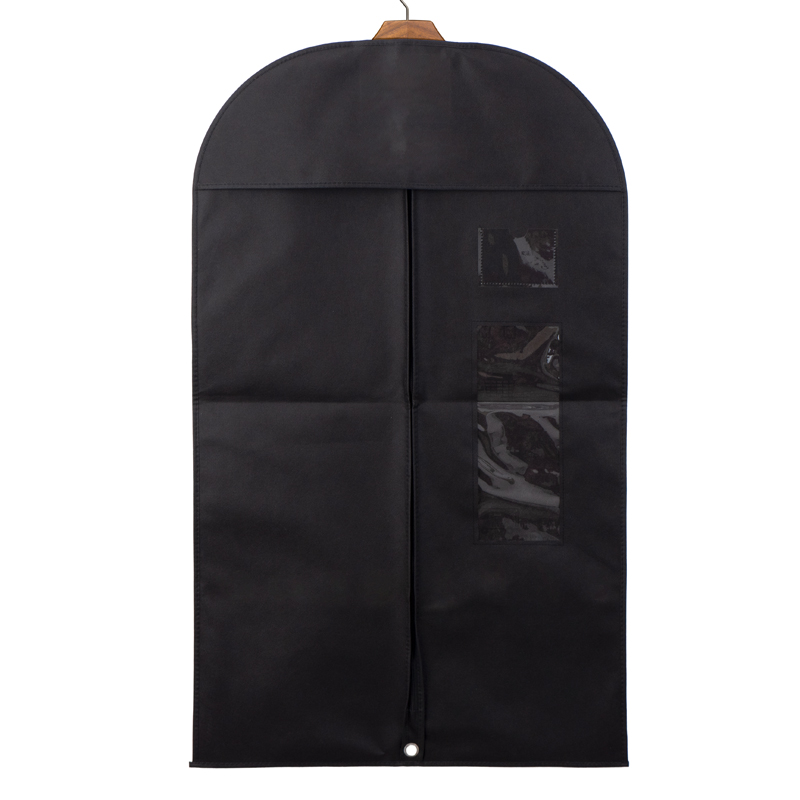
Before sampling, buyers should specify:
- Film material and thickness
- Required transparency or frosted finish
- Window dimensions and position
- Folding requirements
- Surface appearance and acceptable defects
- Contact with garments or internal packaging
- Relevant material and chemical requirements
A thicker film is not automatically more durable or more suitable for garment contact. The finished construction should be assessed for flexibility, surface behavior and attachment strength.
Film Blocking and Material Migration
Transparent films may experience unwanted adhesion between film surfaces, particularly under certain combinations of temperature, pressure and storage time. This phenomenon is commonly called blocking.
The ASTM D3354-21 standard describes a method for measuring blocking load between layers of plastic film. However, it is a film-to-film test and does not establish whether a garment-cover window will stick to wool, silk or another clothing material.
For garment bags where a transparent panel may remain in direct contact with coated, printed or delicate fabrics, buyers should evaluate film-to-garment compatibility under representative storage and transport conditions.
For certain plasticized PVC formulations, plasticizer migration may also be relevant. ISO 177:2016 describes a method for assessing the tendency of plasticizers to migrate from plastics into other materials in close contact.
Potential concerns to evaluate include:
- Unwanted adhesion to garment surfaces
- Surface residue or material transfer
- Changes in transparency or surface appearance
- Compatibility with coated or printed garments
- Performance after agreed temperature and contact-time conditioning
Anti-blocking formulations, suitable surface finishes or protective separation may help address specific risks. Their effectiveness should be verified using representative film and garment materials rather than assumed from a supplier's material description.
Blocking, plasticizer migration, yellowing and fogging are not interchangeable phenomena. They should be investigated separately when relevant to the selected material.
Window Stitching and Edge Protection
Window attachment is another potential weak point, especially when flexible film is sewn into a non-woven or woven panel.
During sampling, buyers should inspect stitching, binding, corners and the area around the zipper for distortion, uneven tension or signs of tearing.
A suitable fabric binding or reinforcement can help protect the window edge, but its effectiveness depends on the complete construction.
For foldable garment bags, the window should also be examined after the loaded cover has been folded and reopened. Positioning a transparent panel directly on a major fold line may increase the likelihood of unwanted creasing.
Product Reference: Clear-Front Multi-Garment Cover
INITI's Breathable Clear-Front Multi-Garment Cover combines:
- Transparent PEVA or PVC front panel
- Non-woven back panel
- Approximately 4-inch side gusset
- Full-length center zipper
- Small reinforced top hanger opening
- Bound edge construction
This provides an existing reference for garment-cover buyers who require both visibility and additional storage depth. The 4-inch gusset belongs to this specific design and is not a universal specification.
3. Zipper Design: Gauge, Access and Garment Protection
A zipper affects more than the opening and closing function. Its size, layout and installation influence loading, folding, garment contact and long-term usability.
Center, Side and Partial Zipper Layouts
| Zipper Layout |
Main Advantage |
Design Consideration |
| Center-Front Full-Length |
Direct access while hanging |
Accurate alignment and garment clearance |
| Side Zipper |
Keeps the front panel available for windows or branding |
Accessibility for bulky garments |
| Partial-Length Zipper |
Shorter opening for selected constructions |
Restricted access for longer or thicker clothing |
For clear-front garment covers, the transparent panel and zipper should be designed together. A center zipper may require two separate transparent sections or a suitable reinforced connection.
Choosing the Zipper Gauge: #3 vs. #5 Coil
For OEM specifications, zipper gauge should be identified rather than described only as a “nylon zipper.”
Two useful starting options are:
| Zipper Reference |
Potential Application |
What Buyers Should Check |
| #3 Coil |
Lightweight non-woven suit covers and flexible garment covers |
Weight, flexibility, opening length and operating performance |
| #5 Coil |
More substantial garment covers and selected travel designs |
Zipper profile, construction, operating requirements and loaded performance |
The official YKK Standard Coil Zipper range includes #3 and #5 sizes. YKK describes coil zippers as suitable for applications ranging from apparel to luggage.
These sizes provide practical reference points, not mandatory garment-bag standards. A larger gauge does not by itself prove that the finished bag will perform better.
Final selection should consider the zipper supplier, chain construction, tape, slider, intended frequency of use and attachment quality.
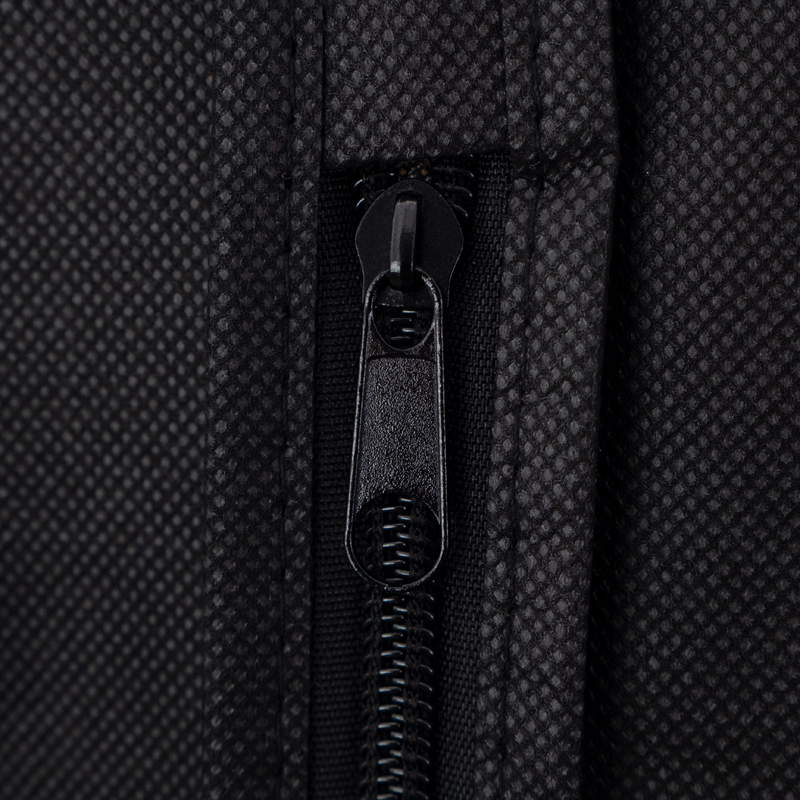
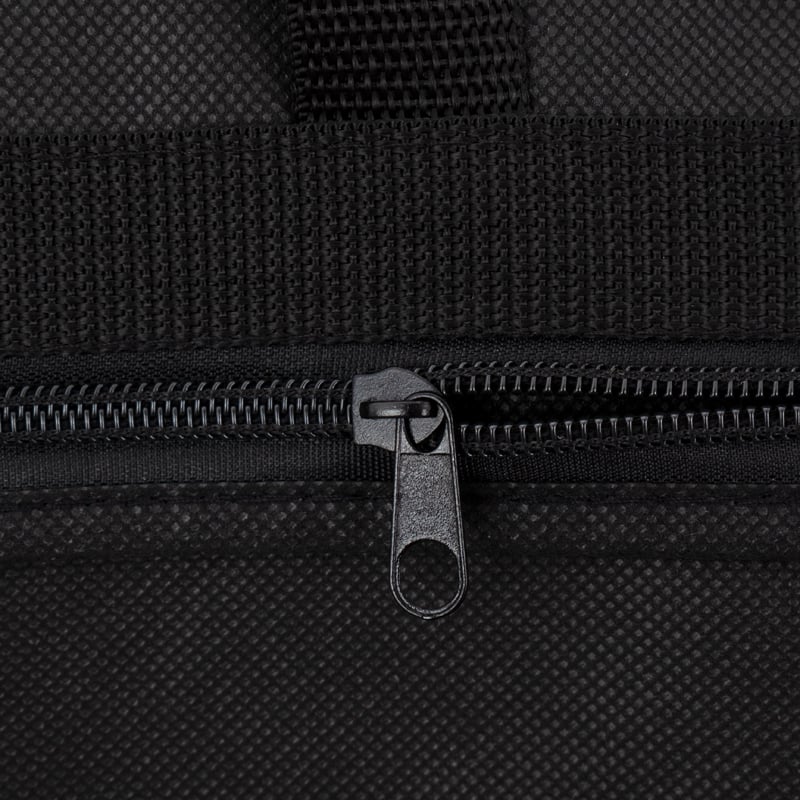
Zipper Components to Specify
The product specification should identify:
- Zipper gauge and construction
- Zipper length and position
- Tape material and color
- Slider and puller
- Top and bottom stops
- Stitching and seam allowance
- Optional inner protective flap
Preventing Fabric Snagging
For tailored suits, silk garments and fine knitwear, the inside of the zipper opening deserves particular attention.
An inner fabric zipper guard or protective flap can help reduce contact between the zipper and delicate clothing. The flap should be evaluated for adequate width, softness and position.
It should not be considered effective merely because it has been added to the design.
During sample approval, buyers should insert the actual garment, operate the zipper and check whether sleeves, hems, linings or other fabric can become caught near the slider or zipper elements.
Common Zipper Defects
Inspect finished samples for:
- Wavy or uneven zipper installation
- Excessive slider resistance
- Poorly secured zipper ends
- Exposed rough edges
- Snagging when loaded
- Distortion after folding
INITI's Custom Non-Woven Garment Bag, with its approximately 60 × 140 cm body and full-length zipper, provides a reference for a relatively simple hanging-cover construction.
4. Hanger Opening Design: Fit, Reinforcement and Dust Protection
The top hanger opening is small, but its dimensions and construction influence both garment access and dust protection.
An opening that is too large may allow unnecessary dust entry. One that is too tight can make hanger insertion difficult or place excessive stress on the surrounding material.
Common Hanger Opening Designs
Small Reinforced Top Opening
A compact opening allows the hanger hook to pass through the top of the cover. Its dimensions should be developed around the intended hanger and appropriate reinforcement.
Reinforced Eyelet or Grommet
A metal or reinforced eyelet can be used for specific hanging or fastening arrangements.
Buyers should confirm whether it is intended to receive a hanger hook, act as an external hanging point or serve another function. The fitting should not be assumed to carry the full garment load unless the construction is designed and tested accordingly.
Overlapping Dust Flap
An overlapping fabric flap can cover part of the hanger opening while still allowing the hook to pass through.
This option may be useful for garment covers intended for extended wardrobe storage where reducing dust entry is important.
The flap should be sufficiently flexible for hanger insertion, remain in the intended position during use and avoid unnecessary contact with delicate fabrics.
Reinforced Slit Opening
A narrow slit with suitable binding or localized reinforcement is another possible approach.
Depending on the material and stress concentration, stitching or bar-tack reinforcement may be considered near the slit ends.
Overlapping flaps and narrow slits are established design concepts rather than universal requirements. For example, an earlier US garment dust-cover patent illustrates a narrow hanger opening and a foldable flap intended to reduce dust entry.
Neither design should be represented as completely dustproof.
Wrap-Around Rail Opening
For selected wardrobe-cover constructions, a fabric sleeve or hook-and-loop closure can wrap around a hanging rail. This differs from a conventional garment cover designed for individual hanger hooks.
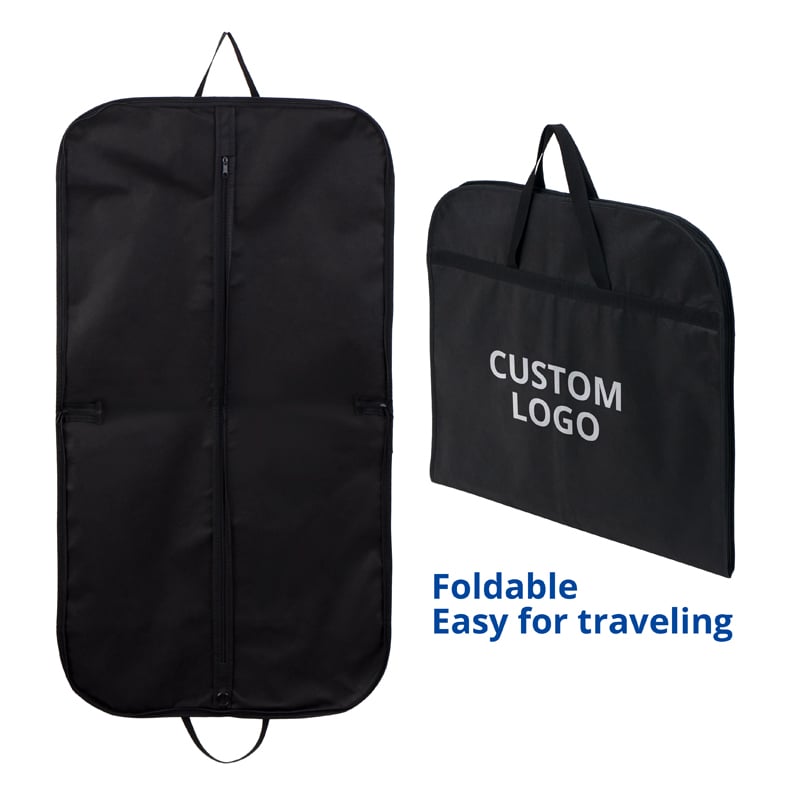
Measuring the Actual Hanger
Before approving the opening, confirm:
- Hook shape and maximum width
- Type and number of hangers
- Hook clearance
- Opening position
- Material and reinforcement
- Expected loaded weight
Different plastic, metal and specialty hanger designs may require different openings.
There is no single hanger-hole dimension that should be applied to every garment bag without verification.
Preventing Top-Opening Damage
Inspect the opening after inserting and removing the hanger and after hanging the loaded cover.
Check for stretched material, pulled stitches, rough hardware edges and tearing. For foldable travel designs, an internal hanger retainer may also help keep the hanger in position when the bag is carried.
The internal retainer and external top opening serve different functions and should be specified separately.
INITI's Polyester Gusseted Garment Bag offers a reference structure with a full-length zipper, clear window, ID holder, reinforced handles and metal grommet. Its existing lengths include approximately 43, 54 and 60 inches.
5. Choosing the Right Combination
The best garment bag design is the one that meets the intended use without unnecessary components.
| Buyer Application |
Window |
Zipper |
Hanger Opening |
| Retail Suit Cover |
Optional ID pocket |
Full-length access |
Compact reinforced opening |
| Uniform Storage |
ID pocket or viewing panel |
Designed for frequent access |
Consistent hanger compatibility |
| Multi-Garment Wardrobe Cover |
Large clear front |
Full-length zipper |
Opening appropriate for the hanger arrangement |
| Foldable Travel Garment Bag |
Optional window away from fold lines |
Convenient access and optional inner guard |
Secure hook fit and optional internal retainer |
| Premium Delicate Garments |
Window only where needed |
Protective flap where garment contact is possible |
Smooth edges and reduced hardware contact |
| Long-Term Closet Storage |
Identification window if needed |
Convenient full or partial access |
Narrow opening or overlapping dust flap where suitable |
A clear window, protective zipper flap and reinforced hanger opening can be combined, but their positions must be coordinated. Additional features may change cutting, sewing, material use and cost.
6. Sample Approval and Quality Inspection
The final construction should be evaluated using the actual garment and hanger, not only an empty sample.
| Inspection Point |
Recommended Check |
| Window Visibility |
Confirm garments or labels can be identified |
| Window Attachment |
Check stitching, binding, corners and panel tension |
| Film Contact |
Assess sticking, surface changes or transfer where relevant |
| Folded Window |
Fold and reopen the loaded cover to inspect creasing |
| Zipper Gauge |
Confirm specified size and component compatibility |
| Zipper Operation |
Open and close the entire zipper travel |
| Garment Snagging |
Check zipper clearance with actual clothing |
| Protective Flap |
Confirm coverage and position during opening and closing |
| Hanger Fit |
Insert and remove the designated hook |
| Dust Flap or Slit |
Check usability, coverage and reinforcement |
| Top Opening Strength |
Inspect the opening while the cover is loaded |
| Finished Dimensions |
Measure against the approved specification |
For transparent films that may contact garments during prolonged storage or warm transportation, buyers should agree on appropriate contact-conditioning checks, including the representative materials, temperature, duration and contact pressure where relevant.
These are project-specific compatibility checks. A film-to-film blocking result alone does not prove compatibility with clothing.
For broader sourcing considerations—such as colorfastness, garment sizing, folding, packing and bulk production—see Custom Garment Bags for Clothing Brands: OEM Guide.
7. OEM Specification and Cost Considerations
Buyers requesting quotations should provide a complete but practical construction brief.
| Specification |
Information to Provide |
| Garment Type |
Suit, dress, coat, uniform or mixed garments |
| Bag Size |
Width × length × gusset |
| Body Material |
Non-woven, polyester, canvas or other material |
| Window |
Material, thickness, dimensions, position and contact requirements |
| Zipper |
Gauge, construction, length, position and optional guard |
| Hanger Opening |
Hook dimensions, opening type and reinforcement |
| Dust Protection |
Optional overlapping flap or reinforced slit |
| Carrying Format |
Hanging-only or foldable |
| Branding |
Logo artwork, size, position and method |
| Order Quantity |
Total pieces and breakdown by variation |
| Packaging |
Individual packing, folded dimensions and carton requirements |
The main cost differences arise from material selection, transparent-panel size, edge binding, zipper specification, reinforcement, assembly complexity and packing.
A more complicated construction should be selected only when its features provide a clear functional benefit.
INITI custom garment bag orders start from 500 pieces. Special films, zipper components, reinforcements or multiple variations may require higher minimum quantities. Exact requirements should be confirmed before sampling and quotation.
Hangzhou INITI Imp&Exp Co., Ltd. has over 16 years of experience in custom bags and packaging, supported by two production facilities and OEM/ODM development capabilities.
Our garment bag range includes non-woven hanging covers, clear-front multi-garment organizers, gusseted polyester covers and foldable canvas garment bags. These existing constructions provide practical references for developing different window layouts, zipper systems, hanger openings, edge finishes and carrying arrangements.
INITI supports specification review, material selection, sample development, manufacturing coordination, quality inspection and export packing. Buyers can evaluate garment fit, transparent-panel attachment, zipper operation and hanger compatibility before approving bulk production.
Our supplier audit, material certification and quality management experience includes SEDEX, Disney-related requirements, GRS, Higg assessments and ISO 9001. Applicable documentation and testing are reviewed according to the specific product, material and destination market.
FAQ
What is the best transparent window material for garment bags?
PVC and PEVA are possible options, but neither is universally best. Buyers should evaluate clarity, flexibility, contact compatibility, folding behavior and applicable market requirements before selecting the film.
Should a garment bag use a #3 or #5 zipper?
A #3 coil zipper can be considered for lightweight garment covers, while #5 may be evaluated for more substantial designs. Final selection depends on the actual construction, zipper supplier and functional requirements.
Can an overlapping flap make the hanger opening dustproof?
An overlapping flap can help reduce dust entering around the hanger hook, but it does not create a completely dustproof seal. The opening must still provide suitable hook clearance and remain durable during use.
Do transparent garment windows require anti-blocking treatment?
Not always. The need depends on the film formulation, intended contact materials and storage conditions. Anti-blocking properties or protective separation may be considered where testing indicates a relevant risk.
Can INITI customize all three structural details at a 500-piece MOQ?
INITI custom garment bag orders start from 500 pieces. The exact MOQ for a specific window, zipper and hanger construction depends on material sourcing, components and manufacturing requirements.
Conclusion
Window, zipper and hanger design should be treated as an integrated garment-cover structure.
A clear window must provide visibility without introducing avoidable material-contact problems. A zipper must offer practical access while protecting the garment from snagging. A hanger opening must fit the intended hook and balance usability, reinforcement and dust protection.
For OEM buyers, the most reliable approach is to confirm material suitability and structural performance on representative finished samples before bulk production.
Inquiry Support
For a custom garment bag project, please provide:
- Intended garment type and dimensions
- Preferred cover size and gusset
- Transparent window material and layout
- Zipper gauge, position and guard requirements
- Hanger specifications and top-opening design
- Any dust-flap or reinforcement requirements
- Logo artwork
- Estimated quantity and variations
- Packaging and destination-market requirements
If you already have a reference sample or technical drawing, include photographs of the window attachment, zipper and hanger opening for review.
Email [email protected] to discuss custom garment bag construction, sample development or a bulk quotation.
Related Products
Breathable Clear-Front Multi-Garment Cover
Polyester Gusseted Garment Bag
Custom Non-Woven Garment Bag
Custom Foldable Canvas Garment Bag
Garment Bag — Product Category
Related Blog Articles
Custom Garment Bags for Clothing Brands: OEM Guide
What Is a Garment Bag Used For?
What's the Difference Between PEVA and Cotton Garment Bags?



 Hot News