Retail Packaging for Apparel: Garment Bag vs Box vs Dust Cover
A tailored suit handed to a customer in a simple dust cover may be sufficiently protected for short-term handling, but the same cover may be unsuitable for repeated travel. A rigid gift box can create a strong presentation for folded knitwear, yet may introduce unwanted creases if used for a garment that should remain hanging.
For apparel brands, the packaging decision affects more than appearance. It influences garment condition at handover, customer convenience, storage space, packing labor and the cost of distributing each order.
The right format depends on three questions: Should the garment remain hanging? How will it reach the customer? What should the packaging do after delivery?
This guide compares garment bags, retail boxes and basic dust covers from a clothing brand's purchasing perspective, including when combining formats is more practical than choosing only one.
1. Garment Bag vs Box vs Dust Cover: What's the Difference?
These three terms describe packaging with different primary purposes, although there is some overlap.
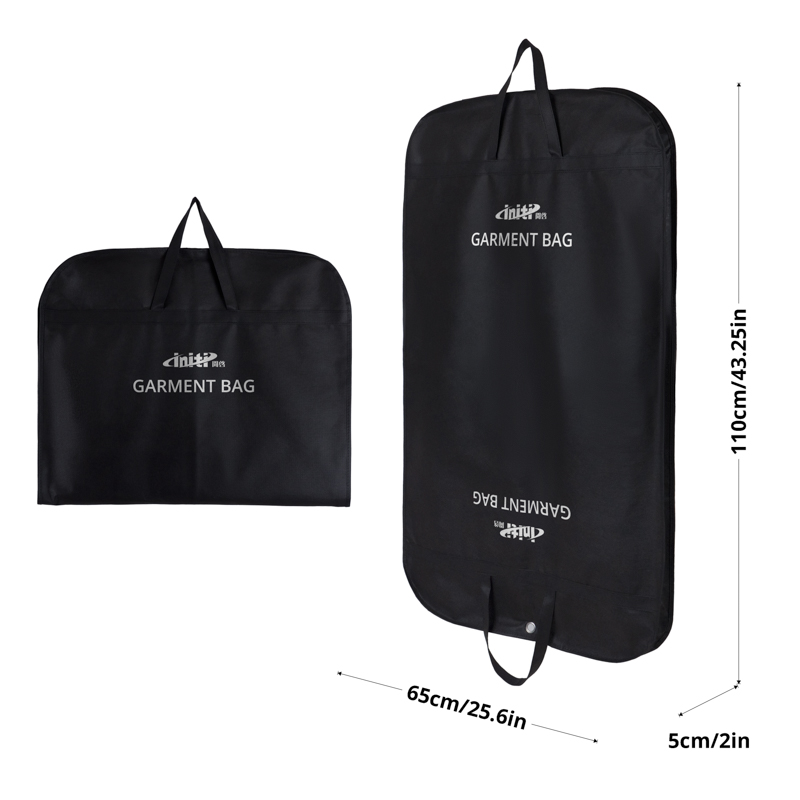
In apparel sourcing, a dust cover is often a basic type of garment cover. It may be a lightweight non-woven or plastic cover designed mainly for hanging storage and dust protection. A more substantial garment bag may add reinforced handles, folding fasteners, a stronger zipper or other carrying features.
The terminology is not universal. For example, Redmark's garment-cover guide uses garment bag and garment cover as overlapping terms. Buyers should therefore compare actual specifications rather than assume that different product names always indicate different constructions.
A retail box is a separate format: it encloses folded garments within a paperboard or corrugated structure rather than allowing them to remain hanging.
| Comparison |
Structured Garment Bag |
Retail / Gift Box |
Basic Dust Cover |
| Primary purpose |
Protect and carry garments |
Present and contain folded apparel |
Cover garments during hanging storage |
| Typical garments |
Suits, dresses, coats, formalwear |
Shirts, sweaters, scarves, folded gift sets |
Suits, uniforms, coats, seasonal garments |
| Garment position |
Hanging or carefully folded |
Usually folded |
Hanging |
| Common construction |
Fabric body, zipper, handles, optional gusset |
Folding carton or rigid lid-and-base box |
Lightweight non-woven or film cover |
| Main advantage |
Carrying convenience and potential repeated use |
Structured brand presentation |
Simple construction and low material use |
| Main limitation |
Bulkier than a simple cover |
Requires suitable folding; occupies box volume |
Limited carrying and transport capability |
| Purchasing priority |
Durability and fit |
Presentation and packing efficiency |
Cost, size and basic protection |
A lightweight garment bag can also function as a dust cover, while a premium garment cover may be designed for both storage and retail delivery.
2. When Should Apparel Brands Choose a Garment Bag?
A purpose-built garment bag is most useful when customers need to carry or store clothing in a hanging or carefully folded configuration.
Suits, Tailored Jackets and Formalwear
For tailored garments, avoiding unnecessary folding is often more valuable than creating an elaborate unboxing experience.
A branded garment bag can provide:
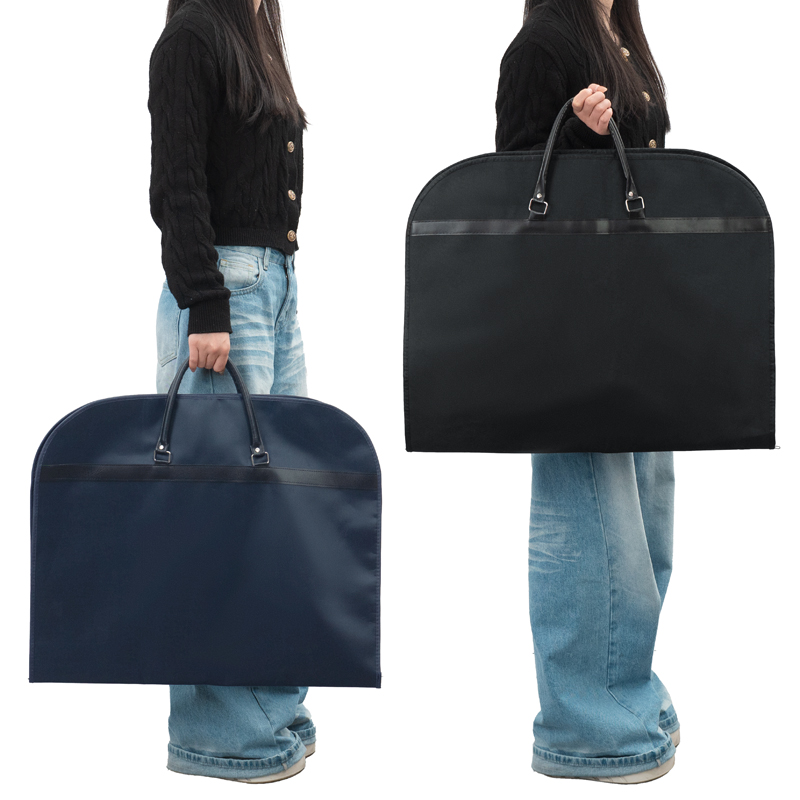
- A full-length protective cover
- A zipper for repeated access
- A suitable hanger opening
- Carry handles or folding hardware
- A large area for logo application
A garment bag does not guarantee wrinkle-free delivery, but a correctly sized design can reduce unnecessary handling and fabric compression.
For example, INITI's Custom Foldable Canvas Garment Bag measures approximately 56 × 180 × 8 cm, combining a full-length zipper, carrying handles and a foldable structure. It is an existing reference for travel-oriented retail projects, not a required size for all garments.
Premium Coats and Special-Occasion Clothing
Coats, long dresses and bulky garments may require additional length or side depth. If the bag is included with a premium clothing purchase, buyers should also consider whether the customer is likely to retain and reuse it.
The value of the packaging should be supported by practical features rather than only thicker fabric or large printed logos.
What to Specify
Before sampling, confirm garment and hanger dimensions, fabric, zipper, handle construction, branding, folding method and finished packed size.
For detailed manufacturing considerations, see Custom Garment Bags for Clothing Brands: OEM Guide.
3. When Is a Retail Box the Better Choice?
Boxes are generally better suited to apparel already intended to be folded or arranged as a gift set. They provide a controlled presentation area for branding, tissue paper, cards and accessories.
Folded Shirts, Knitwear and Gift Collections
Suitable applications include:
- Folded dress shirts
- Sweaters and knitwear
- Scarves and accessories
- Apparel gift sets
- Limited-edition merchandise
- Seasonal retail collections
For some knitwear products, folding instead of prolonged hanging also helps reduce unwanted stretching during storage.
A box should be sized around the folded garment rather than selected solely for its exterior appearance. An overly tight box can compress clothing, while an oversized box may allow movement and require additional protective inserts.
Tissue Paper for Delicate Apparel
For premium retail boxes containing light-colored silk, cashmere or fine wool, buyers should pay attention to the paper that remains in direct contact with the garment.
When extended storage or prolonged contact is expected, consider unbuffered, acid-free tissue paper with a neutral pH rather than unspecified wrapping paper.
The distinction matters because acid-free does not necessarily mean unbuffered. Some acid-free papers contain alkaline buffering agents, which may be unsuitable for sensitive protein-based fibers such as silk and wool.
The Smithsonian Museum Conservation Institute's guidance on textile storage recommends neutral-pH, unbuffered acid-free tissue for general textile preservation. The Canadian Conservation Institute likewise recommends unbuffered acid-free tissue for certain flat-storage applications.
For apparel packaging projects, buyers can use these conservation principles as technical references while evaluating:
- Paper pH and whether buffering agents are present
- Direct contact between tissue, printed paper and garments
- Potential color transfer from paper or printed surfaces
- Storage duration and expected temperature and humidity
- The suitability of box linings, inserts and adhesives
For particularly sensitive clothing, a physical packing trial using the actual garment and selected paper is more informative than relying on an acid-free marketing claim alone.
Suitable tissue can reduce certain material-contact risks, but cannot guarantee that clothing will never yellow or discolor. Museum preservation recommendations are useful references, not mandatory specifications for every short-term retail package.
Folding Carton vs Rigid Gift Box
These structures should not be quoted as if they were equivalent.
| Box Type |
Construction |
Suitable Application |
Main Trade-Off |
| Folding Carton |
Creased paperboard, generally shipped flat |
Standard folded apparel and retail sets |
Requires assembly; limited structural strength |
| Rigid Gift Box |
Wrapped board with a formed shape |
Premium fashion gifts and curated sets |
Higher material use and storage volume |
| Corrugated Box |
Fluted board between liners |
Distribution and e-commerce shipping |
May require additional presentation packaging |
A shallow lid-and-base box can be useful for shirts and accessories.
INITI's Christmas Printed Gift Box with Lid is an existing example, with a reference sample size of approximately 14.95 × 9.50 × 1.94 inches. Its artwork, dimensions and presentation can be developed for other apparel retail programs.
For branded gifting, the Ribbon Gift Packing Box provides another rigid-paperboard reference with customizable ribbons, colors, logos and inserts.
Retail Boxes Are Not Automatically Shipping Cartons
A decorative gift box may provide structure and presentation, but should not automatically be considered sufficient courier packaging.
For direct-to-consumer deliveries, an additional corrugated mailer or shipping carton may be necessary. Box strength, internal fit and outer protection should be specified according to the actual distribution method.
INITI's Kraft Corrugated Paper Box provides a reference for customizable corrugated structures, dimensions, printing and inserts.
4. When Is a Basic Dust Cover Enough?
Not every clothing purchase requires a structured garment bag.
A lightweight dust cover may be sufficient when the primary purpose is to separate a hanging garment from dust and routine handling surfaces.
Typical applications include:
- Retail stockroom storage
- Suit and uniform handover
- Tailoring and alteration services
- Seasonal wardrobe storage
- Garment identification in distribution programs
Common Dust-Cover Materials
Non-woven polypropylene and lightweight film materials are common options. A simple cover may include a hanger opening, zipper or another closure and optional logo printing.
A dust cover can be designed for occasional or repeated use, but suitability depends on the actual material and construction.
For example, INITI's Custom Non-Woven Garment Bag has an approximate 60 × 140 cm body, a full-length zipper and top and bottom handle loops.
Although this product is named a garment bag, its basic non-woven construction demonstrates why garment bag and dust cover often overlap in commercial usage.
Where Dust Covers Have Limits
A lightweight cover may not be suitable for frequent carrying, heavy loads or protecting garments from crushing during transportation.
Breathability should not be confused with guaranteed moisture protection. Garment condition, warehouse humidity and the complete packing system remain important.
For delicate or light-colored clothing, buyers should also evaluate possible abrasion or color transfer from the material in contact with the garment.
5. Which Packaging Works Best for Different Apparel Products?
The right option depends on the garment and how it will be sold or delivered.
| Apparel Product or Program |
Recommended Starting Point |
Main Reason |
| Tailored suit sold in-store |
Branded garment bag |
Supports hanging presentation and carrying |
| Standard suit or uniform collection |
Basic non-woven dust cover |
Practical for storage and handover |
| Premium coat or long formal dress |
Properly sized garment bag with gusset if required |
Reduces unnecessary compression |
| Folded dress shirt |
Shallow folding carton or gift box |
Supports structured presentation |
| Cashmere or fine wool gift |
Suitable folded box with compatible unbuffered tissue where appropriate |
Addresses garment contact and presentation |
| Apparel gift set |
Retail box with suitable internal arrangement |
Organizes multiple components |
| Basic T-shirt shipped online |
Suitable inner protection plus mailer or carton |
Focuses on packing and distribution |
| Occasionwear shipped to customers |
Garment protection plus suitable shipping carton |
Separates clothing protection from transit protection |
For sensitive garments, sample testing remains necessary. A box may also require protective tissue, internal support or another contact-compatible layer.
6. Protection During Retail Handover vs Shipping
An important purchasing distinction is the difference between packaging used for in-store handover and packaging used to ship the same garment.
Retail Handover
The main concerns are appearance, carrying convenience, dust protection, brand visibility and whether the customer will retain the packaging.
Depending on the garment and carrying method, a garment bag or dust cover may be sufficient for some in-store deliveries.
Courier and E-commerce Shipping
Transit presents different risks: compression, shifting, moisture exposure, abrasion and damage to the external package.
A retail gift box is not necessarily transport-rated, and a garment bag alone usually provides limited crush resistance.
FedEx's clothing-shipping guide recommends appropriately sized sturdy corrugated boxes and acid-free tissue or muslin for delicate garments. UPS's clothing-shipping guide also discusses careful folding, protecting delicate details and limiting movement inside the box.
The practical approach is to design the garment-contact layer, retail-presentation layer and shipping-protection layer for their separate functions.
Three Practical Packaging Systems
In-store suit delivery
Suit on hanger → Branded garment bag → Customer handover
Premium folded apparel gift
Folded garment with suitable protective tissue → Retail gift box → Optional carrier bag
E-commerce apparel shipment
Garment with suitable inner protection → Corrugated mailer or shipping carton → Courier delivery
A premium garment bag or retail box can also be included within an e-commerce parcel where the product positioning and customer experience justify it.
7. Which Option Has the Lower Total Packaging Cost?
The cheapest packaging component does not always create the lowest cost per delivered garment.
Buyers should compare the complete packaging system rather than only a supplier's quoted unit price.
| Cost Driver |
Garment Bag |
Retail Box |
Dust Cover |
| Material consumption |
Depends on size and construction |
Depends on board and dimensions |
Usually simpler construction |
| Printing and branding |
Fabric printing, labels or embroidery |
Paper printing and finishing |
Usually simpler printing |
| Packing labor |
Garment insertion and closing |
Folding, tissue and box assembly |
Basic garment covering |
| Empty storage volume |
Depends on folding and hardware |
Rigid boxes occupy more space; cartons can ship flat |
Often compact when flat-packed |
| Shipping volume |
Depends on bag and garment format |
Depends heavily on box structure |
Usually compact before use |
| Reuse potential |
Depends on durability and function |
Depends on box structure and customer use |
Depends on construction |
Compare the Complete Packaging System
A practical quotation comparison should include:
Total Packaging Cost per Delivered Unit = Packaging Components + Setup Cost Allocation + Packing Labor + Storage and Freight Allocation
Reliable damage or replacement costs can be assessed separately where operational data are available.
A rigid gift box may cost more than a simple dust cover, but the two options should not be compared as substitutes unless they satisfy the same packaging requirements.
Similarly, an inexpensive dust cover is not a suitable replacement when the customer needs a durable garment carrier.
Carton CBM and Distribution Efficiency
For bulk packaging orders, buyers should confirm folded or assembled dimensions, pieces per carton, gross weight and carton CBM.
Carton CBM = Length (m) × Width (m) × Height (m)
Rigid gift boxes, folding cartons and fabric garment covers may have significantly different empty packing volumes. Compare their actual shipping configurations before deciding which offers the best overall cost.
8. Materials, Branding and Responsible Packaging Claims
Materials should suit both the garment and the packaging's intended use.
Garment bags and dust covers may use non-woven polypropylene, polyester, cotton canvas or mixed-material constructions. Boxes may use folding paperboard, wrapped rigid board or corrugated board.
Protect the Garment-Contact Surface
For wool, silk, cashmere, light-colored fabrics and printed garments, contact compatibility deserves attention.
Depending on the project, buyers may need to evaluate color transfer, abrasion, loose fibers, moisture behavior and contact with coatings, adhesives, tissue paper or plastic films.
For high-end apparel, the outer appearance of a package does not establish whether its internal materials are safe for prolonged garment contact.
Choose Branding That Fits the Packaging
Garment bags offer broad fabric panels suitable for printing, woven labels or embroidery where compatible.
Retail boxes allow paper printing, foil stamping, embossing and other finishes according to the board structure.
Dust covers may use simpler branding when procurement efficiency is more important than elaborate presentation.
Avoid Unsupported Sustainability Claims
Paper-based packaging is not automatically recyclable in every market, and a fabric cover is not automatically more sustainable merely because it can be reused.
Material composition, coatings, mixed components, local recycling systems and actual reuse should be assessed before making environmental claims.
9. Bulk Ordering and Sample Approval
A useful comparison starts with actual garments and representative finished packaging—not visual mockups alone.
Key Specifications to Confirm
| Area |
Buyer Information Required |
| Apparel |
Garment category, dimensions and folded or hanging format |
| Application |
Retail handover, storage, gifting, e-commerce or distribution |
| Garment Bag |
Length, width, gusset, zipper, hanger opening and handles |
| Dust Cover |
Material, dimensions, closure and expected handling |
| Retail Box |
Internal dimensions, board, structure, lid and inserts |
| Garment Contact |
Tissue specification, lining and compatibility requirements |
| Branding |
Artwork, printing, labels and finishing |
| Quantity |
Total order and quantities by packaging type or SKU |
| Logistics |
Inner packing, carton size and destination |
Sample Checks
A garment bag should be checked with the actual clothing and hanger, including loaded carrying and folding when relevant.
A retail box should be checked with the folded garment inside, confirming that the lid closes without excessive pressure and that the contents remain presentable after handling.
For delicate apparel, inspect tissue paper, printed surfaces, inserts and any materials in direct contact with the garment. Where extended contact is expected, confirm the paper specification and evaluate the actual packing arrangement.
A dust cover should be checked for fit, hanger access, closure operation and garment-contact performance.
For shipped products, the complete packed parcel should be assessed separately against its intended transport conditions.
MOQ and Multi-Format Programs
INITI custom packaging projects start from 500 pieces, with the actual minimum depending on material, dimensions, printing and construction.
If a clothing brand requires garment bags, gift boxes and dust covers within one program, the MOQ for each packaging format and variation should be confirmed separately. The total project quantity does not automatically satisfy every individual production minimum.
Why Choose INITI for Custom Apparel Packaging?
Hangzhou INITI Imp&Exp Co., Ltd. has over 16 years of experience in custom bags and packaging, supported by two production facilities and OEM/ODM development capabilities.
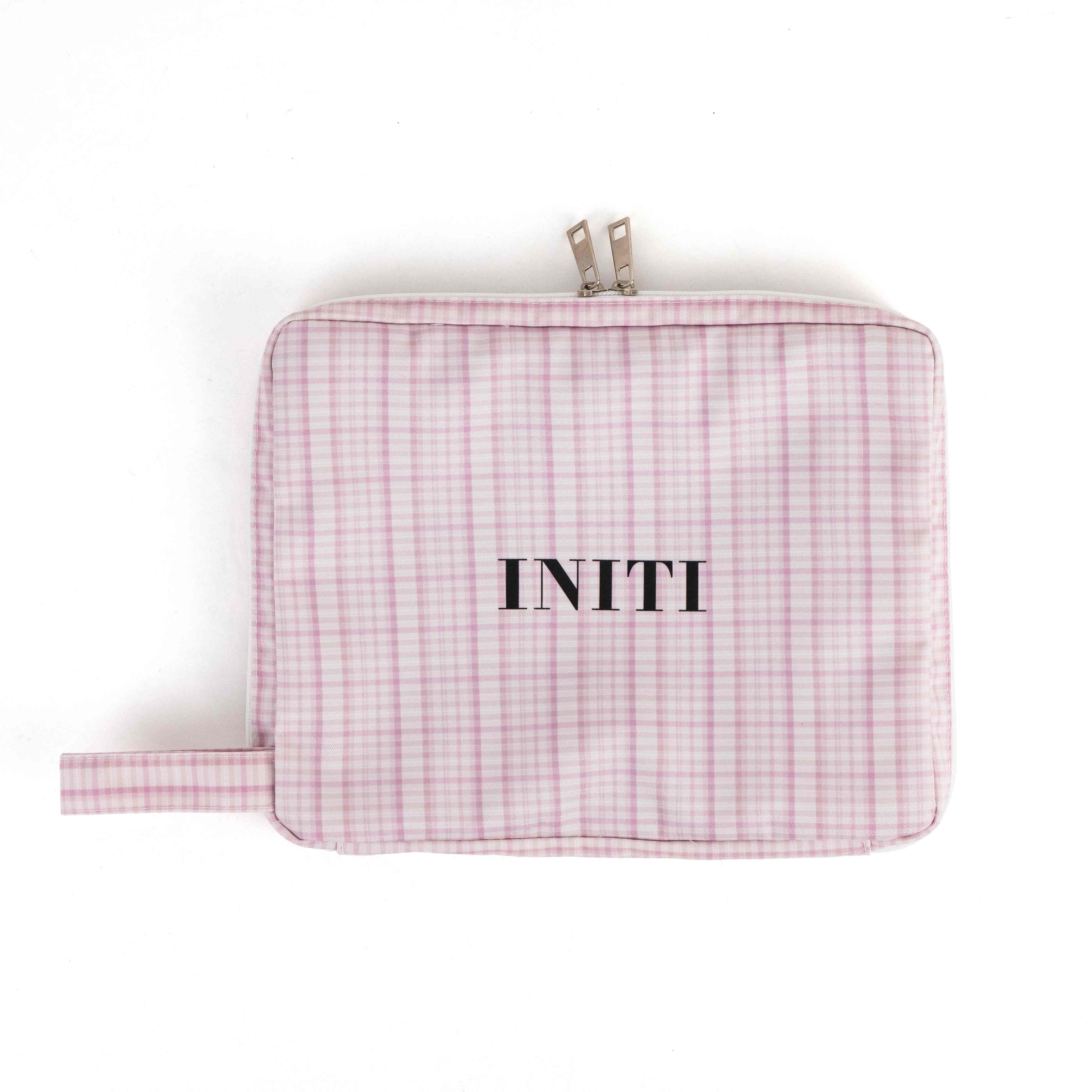
Our existing product range includes non-woven garment covers, foldable canvas garment bags, clear-front garment organizers, rigid gift boxes and corrugated packaging boxes. These structures provide practical development references for clothing brands planning coordinated packaging across multiple collections.
INITI supports material and structural selection, custom sizing, branding, sample development, quality inspection and export packing. For projects involving different packaging formats, buyers can confirm the specifications, garment-contact requirements, artwork and quantities before production.
Our supplier audit, material certification and quality management experience includes SEDEX, Disney-related requirements, GRS, Higg assessments and ISO 9001. Relevant documentation and testing are reviewed according to the specific material, product and destination market.
FAQ
Is a dust cover the same as a garment bag?
The terms overlap. A dust cover generally refers to a simpler protective cover, while a structured garment bag may offer carrying, folding or reinforcement features. Buyers should compare actual specifications rather than rely on the name alone.
Should premium suits be packed in boxes or garment bags?
For suits intended to remain hanging, a suitable garment bag is often more practical. A box may be appropriate for selected folded presentations or shipping arrangements, but garment fit and crease risk should be evaluated.
Do silk and cashmere garments require acid-free tissue paper?
For sensitive garments that will remain in contact with packaging paper during extended storage, unbuffered, neutral-pH acid-free tissue is worth specifying. Not every short-term retail package requires archival-grade materials, and the actual garment and packing system should still be assessed.
Can a retail gift box or dust cover replace shipping packaging?
Not automatically. Gift boxes and dust covers serve different functions from transport packaging. E-commerce orders may need suitable corrugated cartons or mailers and protective inner packing.
Can garment bags and retail boxes be ordered together under a 500-piece MOQ?
INITI custom orders start from 500 pieces, but each packaging format or variation may have its own production minimum. Buyers should provide quantities by design, size and material for confirmation.
Conclusion
There is no universally superior apparel packaging format.
A structured garment bag is useful when clothing needs to remain hanging or be carried repeatedly. A retail box is often better for folded apparel and curated gift presentation. A basic dust cover is appropriate when simple hanging protection is the main requirement.
For delicate silk, cashmere and wool, the suitability of tissue, board liners and other garment-contact materials should also inform packaging selection.
The most effective solution matches garment construction, retail positioning, handling requirements and delivery method without adding unnecessary cost or unsupported protection claims.
Inquiry Support
For a custom apparel packaging project, please provide:
- Garment type and product dimensions
- Whether clothing is delivered hanging or folded
- Intended retail and shipping channels
- Preferred garment bag, box or dust-cover structure
- Material and garment-contact requirements
- Branding artwork
- Estimated quantity by packaging format
- Protective tissue, gift packing or insert requirements
- Destination market and required delivery schedule
If you are comparing multiple packaging formats, reference garments or existing packaging samples will help confirm the most suitable construction.
Email [email protected] to discuss custom garment bags, retail gift boxes, dust covers or coordinated apparel packaging programs.
Related Products
Custom Non-Woven Garment Bag
Custom Foldable Canvas Garment Bag
Breathable Clear-Front Multi-Garment Cover
Christmas Printed Gift Box with Lid
Ribbon Gift Packing Box
Kraft Corrugated Paper Box
Related Blog Articles
Custom Garment Bags for Clothing Brands: OEM Guide
What Is a Garment Bag Used For?
Gift Boxes vs. Gift Bags: Which Should You Choose?
Custom Branded Packaging: The Complete Sourcing Buyer's Guide



 Hot News