Stitch-Bond Fabric for Reusable Shopping Bags: Structure, GSM, Strength and Printing
Stitch-bond fabric is increasingly used for reusable shopping bags, supermarket totes, gift bags and promotional packaging, particularly when buyers want a lightweight material with better dimensional stability than many basic nonwoven fabrics.
RPET stitch-bond versions also allow recycled polyester to be incorporated into reusable bag programs.
However, buyers should not judge this material only by terms such as:
- Stitch bond
- RPET stitchbond
- Recycled polyester nonwoven
- 100 GSM stitch-bond fabric
These descriptions do not fully define the material.
For sourcing purposes, buyers should check:
- How the fabric is constructed
- Whether the substrate and stitching yarn are recycled polyester
- GSM and stitch density
- Finished-bag strength
- Lamination and printing requirements
- Recycled-content documentation
What Is Stitch-Bond Fabric?
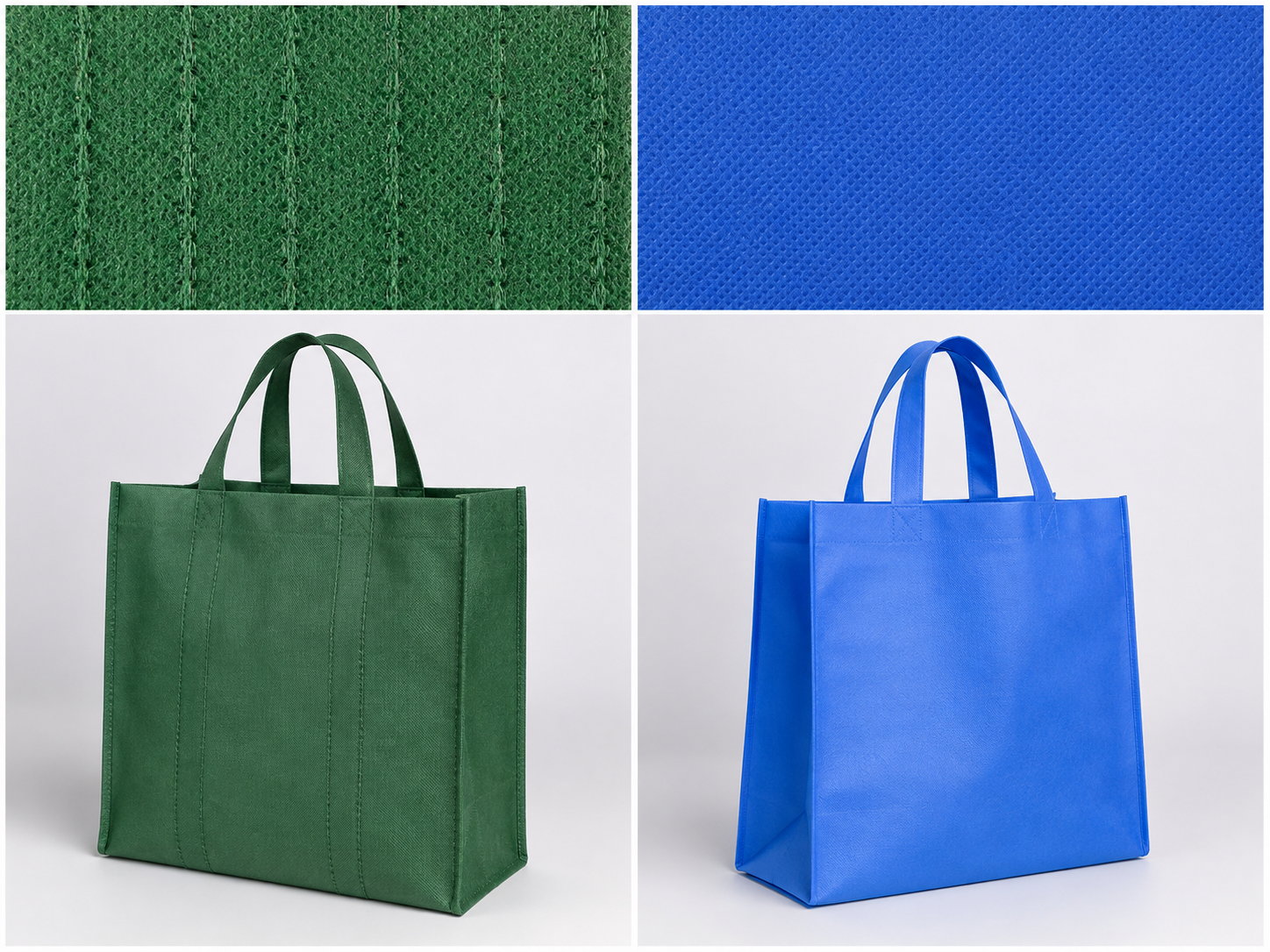
Stitch bonding starts with a fibrous web or another substrate and mechanically reinforces it by passing stitches through the material.
INDA describes stitch bonding as a process in which fibers in a web are bonded by stitches sewn or knitted through the web. Commercial stitch-bond constructions may use a fibrous substrate together with continuous stitching yarns.
A typical polyester stitch-bond material can therefore contain:
- A polyester or RPET fiber web
- Polyester stitching yarn
- Repeated longitudinal stitch lines
- Optional finishing, coating or lamination
The stitching gives the web greater dimensional stability and creates the characteristic visible linear structure.
This is one of the main reasons stitch-bond material can work well for reusable shopping bags: it combines a relatively lightweight fibrous sheet with mechanical reinforcement.
Is Stitch-Bond a Woven Fabric or a Nonwoven?
This question requires some care.
Commercial suppliers frequently describe stitch-bond polyester as stitch-bonded nonwoven fabric, and INDA includes “stitch bond nonwoven” in its terminology.
However, classification is not completely uniform.
EDANA notes that stitch bonding uses needles, with or without threads, to mechanically bond a fiber web. It also states that stitch-bonded structures using threads may be classified differently under certain textile and customs definitions, while threadless stitch-bond structures can fall within its stitch-bonded nonwoven terminology.
For B2B sourcing, the practical approach is therefore:
Do not rely only on “woven” or “nonwoven” in the product name. Define the actual construction.
A clearer material description would be:
RPET fiber web mechanically reinforced with continuous polyester stitch-bond yarn.
This tells the supplier and buyer more than simply writing “recycled nonwoven fabric.”
Stitch-Bond vs Standard Spunbond Nonwoven
Stitch-bond fabric should not automatically be treated as the same material as standard spunbond polypropylene used in economical promotional bags.
| Feature |
Stitch-Bond Polyester |
Spunbond PP Nonwoven |
| Base structure |
Fiber web with mechanical stitching |
Continuous PP filaments thermally bonded |
| Visible surface |
Linear stitch pattern |
Relatively uniform bonded surface |
| Common fiber |
Polyester / RPET |
Polypropylene |
| Dimensional stability |
Supported by stitching |
Depends mainly on web and bonding |
| Typical positioning |
Reusable shopping, packaging and industrial applications |
Promotional and economical shopping bags |
| Printing |
Depends on surface and finishing |
Good for common promotional printing |
| Recycled option |
RPET versions available |
Recycled PP options depend on supply |
| Lamination |
Optional |
Common for full-color retail bags |
Neither structure is automatically stronger.
The finished result depends on material weight, bonding or stitching, handles, seams and bag dimensions.
How GSM Affects Stitch-Bond Fabric
GSM means grams per square meter and describes how much the fabric weighs over one square meter.
A higher GSM generally means more material is present, which can influence:
- Hand feel
- Opacity
- Stiffness
- Shape retention
- Material cost
- Finished-bag weight
But GSM is not a direct strength rating.
Two stitch-bond fabrics with the same GSM may have different performance because of:
- Fiber density
- Fiber quality
- Stitch yarn
- Stitch spacing
- Stitch direction
- Heat setting
- Surface finishing
- Recycled fiber composition
Commercial stitch-bond manufacturers offer wide GSM ranges and adjust stitch construction according to the required end use, which is why GSM should always be evaluated together with the fabric structure.
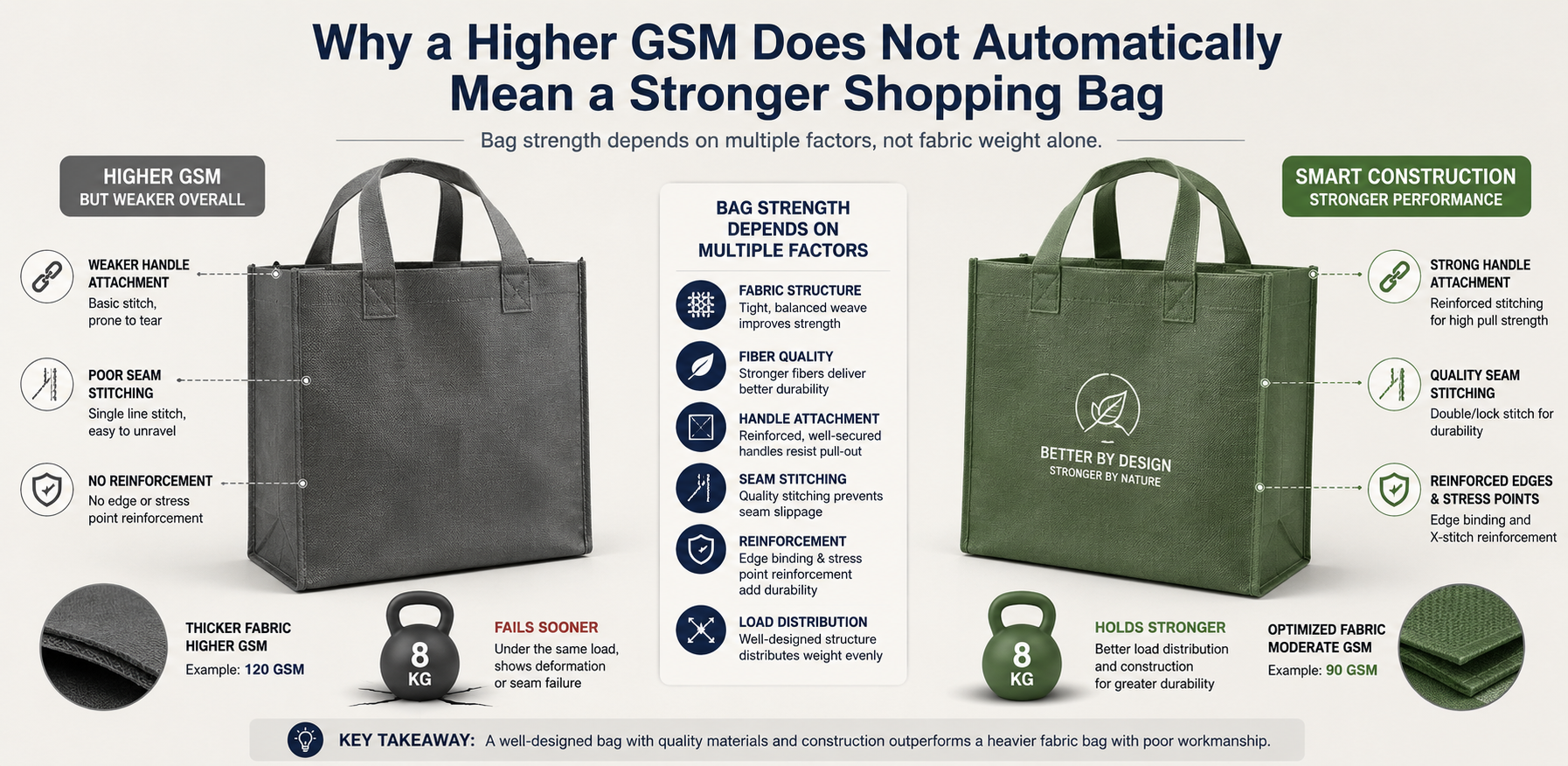
Why a Higher GSM Does Not Automatically Mean a Stronger Shopping Bag
Consider two fabrics with the same nominal weight.
Fabric A
- Higher fiber mass
- Wider stitch spacing
- Softer structure
Fabric B
- Similar GSM
- More stable stitching
- Better dimensional control
Fabric B may perform better in certain directions even though the GSM is similar.
Finished-bag strength also depends on:
- Handle attachment
- Seam allowance
- Binding
- Bottom structure
- Gusset depth
- Bag dimensions
- Intended load
Buyers should therefore avoid specifications such as:
120 GSM RPET stitch-bond bag, heavy duty.
A better specification would define:
Target GSM + material construction + handle structure + finished-bag load test.
Stitch Direction Also Matters
The visible stitch lines give the material more structure in particular directions.
This means strength and elongation may not be identical:
- Along the machine direction
- Across the fabric width
For a reusable shopping bag, this matters when cutting:
- Front and back panels
- Side gussets
- Bottom panels
- Handles made from the same material
The factory should keep panel orientation consistent during cutting.
If fabric direction changes between samples and bulk production, the finished bag may feel or stretch differently.
Handle and Seam Reinforcement
A reusable supermarket bag usually fails at a structural connection before the center of the fabric suddenly breaks.
Important areas include:
- Handle attachment
- Upper hem
- Side seams
- Bottom corners
- Gusset connections
For higher-load applications, possible reinforcement includes:
- PP or polyester webbing handles
- Extended handle attachment
- Box stitching
- Cross stitching
- Bartacks
- Binding tape
- Additional backing layers
Strong RPET stitch-bond material does not eliminate the need for appropriate handle reinforcement.
The finished bag should be tested as a complete product rather than using fabric GSM as a proxy for carrying capacity.
Does Stitch-Bond Fabric Need Lamination?
Not always.
Whether lamination is necessary depends mainly on:
- Required printing
- Desired stiffness
- Moisture resistance
- Retail appearance
- Cleaning requirements
Unlaminated Stitch-Bond
Suitable when buyers want:
- Textile-like surface
- Lightweight construction
- Simple logo printing
- Lower material complexity
- Easier folding
It may work well for:
- Promotional totes
- Simple supermarket bags
- Gift bags
- Corporate reusable bags
Laminated Stitch-Bond
Lamination may improve:
- Surface smoothness
- Full-color graphics
- Stiffness
- Shape retention
- Resistance to light moisture
- Wipe-clean performance
It can be useful for supermarket and retail projects requiring large graphics or a more structured bag.
However, lamination also adds:
- Material
- Cost
- Weight
- Packing thickness
- Another material layer
A laminated RPET stitch-bond bag should not automatically be described as a single-material recycled product if the film and other components are made from different materials.
Does Lamination Make the Bag Waterproof?
No.
Lamination can improve surface moisture resistance, but water may still enter through:
- Bag openings
- Sewn seams
- Needle holes
- Handle attachments
- Unsealed corners
If the project only requires protection from light splashes or wet groceries, water-resistant or moisture-resistant is usually a more appropriate specification.
A waterproof claim should be based on finished-product testing.
Which Printing Methods Work on Stitch-Bond Fabric?
Stitch-bond polyester can support multiple conversion and decoration processes. Commercial stitch-bond manufacturers list printing, embroidery, coating and lamination among available processing methods.
For bags, practical options include:
Screen Printing
Suitable for:
- Simple logos
- One or several solid colors
- Large branding areas
- Promotional projects
The visible stitch texture may affect very fine artwork.
Heat Transfer
Useful for:
- Detailed graphics
- Multi-color logos
- Smaller production programs
Temperature and pressure should be tested on the actual RPET fabric.
Sublimation
Because RPET is recycled polyester, suitable polyester stitch-bond materials may support sublimation-type printing where the material construction and finishing are compatible.
A sample should be checked for:
- Color
- Heat deformation
- Print penetration
- Stitch visibility
Printed Lamination
For large full-color supermarket artwork, a printed film laminated onto the fabric may provide:
- Smoother graphics
- Better photographic detail
- Large print coverage
- More consistent visual presentation
The trade-off is a more complex material structure.
Printing Should Be Tested on the Actual Production Fabric
A digital artwork approval is not enough.
Stitch-bond surfaces have visible fibers and stitch lines that can affect:
- Fine text
- Small logos
- Solid color coverage
- Edge sharpness
- Ink absorption
Before bulk production, approve a physical print sample using the same:
- Fabric GSM
- Color
- Stitch construction
- Surface finish
- Printing method
This is particularly important if the artwork contains small text or detailed brand graphics.
It can be a practical option when the project requires:
- Lightweight reusable construction
- Recycled polyester content
- Large shopping-bag dimensions
- Reinforced handles
- Logo printing
- Cost control at volume
The material can also be developed with:
- Wide side gussets
- Bottom gussets
- Webbing handles
- Edge binding
- Bottom reinforcement
- Lamination
However, suitability should be judged by the finished bag, not simply by the words “RPET stitchbond.”
For grocery use, buyers should test the bag with representative contents such as:
- Bottled products
- Boxed groceries
- Packaged food
- Household products
Handle attachment and bottom deformation are particularly important.

Is It Suitable for Gift Bags and Promotional Projects?
Yes, especially when buyers need something more substantial than basic lightweight nonwoven PP but do not require heavy cotton canvas.
Possible applications include:
- Corporate gifts
- Trade shows
- Brand launches
- Retail promotions
- Membership programs
- Supermarket campaigns
For gift applications, buyers may prioritize:
- Surface appearance
- Printing
- Color
- Handle comfort
For supermarket projects, buyers should prioritize:
- Load
- Gusset structure
- Seam strength
- Handle reinforcement
The same fabric can therefore require different bag constructions.

How to Verify RPET Recycled Content
This is one of the most important points when purchasing RPET stitch-bond material.
Do not verify recycled content only from:
- A recycled symbol
- A supplier statement
- A fabric hangtag
- A general factory certificate
If certified recycled content is required, buyers should check the certification chain.
Textile Exchange’s Global Recycled Standard tracks recycled material through the supply chain. As of July 2026, GRS Version 5.0 is the current published version.
1. Check the Scope Certificate
A valid Scope Certificate confirms that the supplier has been certified to handle listed certified products.
However, Textile Exchange specifically notes that a Scope Certificate alone does not prove that the particular product or shipment you are purchasing is certified.
Check:
- Company name
- Certification body
- Validity period
- Certified product scope
- Material category
2. Request a Transaction Certificate
For a specific certified shipment, the stronger document is the Transaction Certificate (TC).
Textile Exchange states that a buyer should request a TC to verify that a specific shipment is certified. The TC records the seller, buyer, certified products and shipment details.
3. Verify the Certificate
Buyers should verify the certificate with:
- The issuing certification body
- Textile Exchange certification records where applicable
Textile Exchange recommends contacting the issuing certification body when verifying SC or TC validity.
Recycled Fabric Does Not Mean the Entire Bag Is Recycled
A reusable shopping bag may use RPET stitch-bond fabric while containing:
- Virgin polyester stitching thread
- PP webbing
- Plastic bottom board
- Metal snap
- Lamination film
- Printing ink
Therefore, distinguish between:
Made with recycled polyester fabric
and
The entire bag is made from recycled materials
The second statement requires evidence for all relevant components.
For B2B projects, the material composition sheet should separate:
| Component |
Material to Confirm |
| Main fabric |
RPET stitch-bond |
| Stitching yarn |
Polyester / recycled polyester |
| Handles |
PP, polyester or RPET webbing |
| Binding |
Polyester / RPET |
| Lamination |
Film composition |
| Thread |
Polyester / recycled polyester |
| Bottom insert |
Plastic or cardboard |
| Closure |
Plastic or metal |
Buyer Specification Checklist
A practical stitch-bond shopping bag specification should include:
| Specification |
What to Confirm |
| Fiber |
Virgin polyester or RPET |
| Recycled content |
Percentage and certification requirement |
| Construction |
Fiber web + stitch-bond yarn |
| GSM |
Target weight and tolerance |
| Stitch pattern |
Direction, spacing and consistency |
| Bag dimensions |
Width × height × gusset |
| Handles |
Material, width, length and reinforcement |
| Lamination |
None or required film structure |
| Printing |
Screen, transfer, sublimation or laminated print |
| Load requirement |
Static and repeated-use test |
| Documentation |
SC and TC where certified content is required |
Common Buyer Mistakes
Treating Stitch-Bond as Standard Spunbond Nonwoven
The production structures are different and should be specified separately.
Choosing Material Only by GSM
GSM does not define stitch density, directional strength or finished-bag load capacity.
Adding Lamination Automatically
Lamination is useful for certain printing and structural requirements but is unnecessary for every shopping bag.
Assuming RPET Means the Whole Bag Is Recycled
The main fabric and the complete finished product are different claims.
Accepting Only a GRS Scope Certificate
A Scope Certificate confirms supplier certification scope. For a specific certified shipment, request the relevant Transaction Certificate.
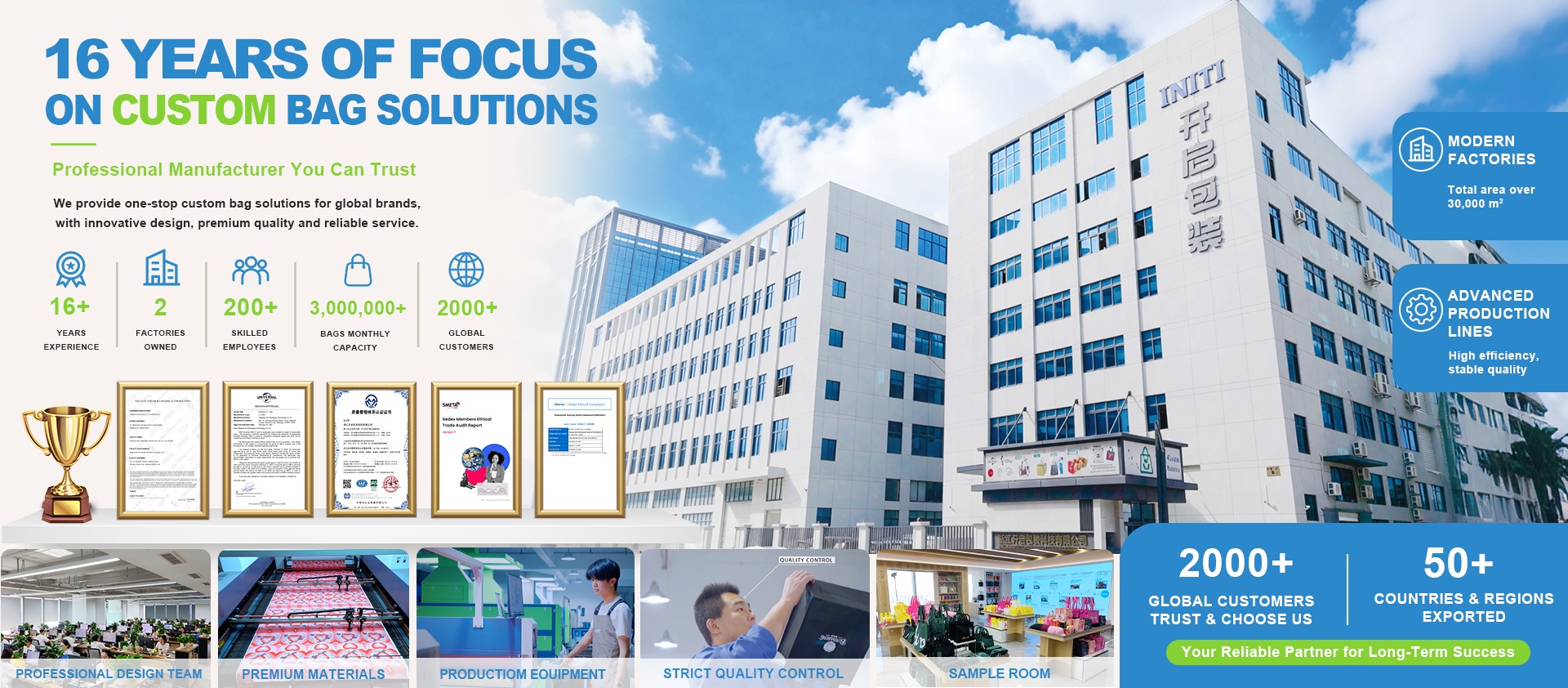
How INITI Supports Stitch-Bond Shopping Bag Development
For reusable shopping-bag projects, the material specification can be developed around:
- RPET stitch-bond fabric
- Required GSM
- Bag dimensions
- Side and bottom gussets
- Webbing handles
- Handle reinforcement
- Laminated or unlaminated construction
- Logo printing
- Finished-bag load testing
- Recycled-content documentation requirements
The final fabric should be approved together with the complete bag structure rather than as an isolated material sample.
FAQ
Is stitch-bond fabric a nonwoven material?
It is commonly marketed as stitch-bonded nonwoven, but formal classification can depend on whether binding yarn is used and which textile or customs definition applies. For purchasing, define the actual fiber-web and stitching construction.
Does higher GSM make an RPET stitch-bond bag stronger?
Not automatically. Strength also depends on fiber density, stitch construction, handle reinforcement, seams and bag dimensions.
Does stitch-bond fabric need lamination?
No. Lamination is mainly useful when buyers need a smoother printing surface, more stiffness or improved moisture resistance.
Which printing method is best?
Simple logos can use screen printing, while heat transfer, compatible polyester printing processes or printed lamination can be considered for more detailed artwork. Always test the production fabric.
How can buyers verify recycled polyester content?
Check the supplier’s valid certification scope and, when certified shipment-level traceability is required, request the relevant Transaction Certificate from the certified supplier.
Conclusion
Stitch-bond RPET can be a practical material for reusable shopping bags, promotional totes and gift bags, but it should not be purchased by GSM alone.
Buyers should define:
- Fiber and recycled content
- Stitch-bond construction
- GSM
- Handle and seam reinforcement
- Lamination
- Printing method
- Finished-bag load performance
- Certification documents
For supermarket projects, structural strength and carrying performance should take priority.
For promotional and gift projects, surface appearance, printing and cost may carry more weight.
The correct specification is the combination that delivers the required bag performance without adding unnecessary material or processing.
Inquiry Support
To develop an RPET stitch-bond shopping bag, provide:
- Intended bag application
- Estimated quantity
- Preferred dimensions
- Target GSM
- Required colors
- Recycled-content requirement
- Lamination requirement
- Logo artwork
- Handle structure
- Target carrying load
- Packaging requirements
If you have not finalized all details, you can first send your intended use and target quantity, and we can recommend a suitable specification.
Related Products
Related Blog Articles



 Hot News