| Characteristic |
Tyvek® |
Washable Kraft Paper |
| Base Material |
100% High-Density Polyethylene (HDPE) |
Natural Virgin Wood Pulp Cellulose |
| Reinforcing Component |
None (Pure continuous polymer web) |
Natural or Synthetic Rubber Latex Matrix |
| Manufacturing Process |
Flash-spinning + Thermal calendering |
Wet-end pulp blending + Latex tanning & rolling |
| Microscopic Structure |
Non-directional synthetic micro-filaments |
Bound organic cellulose fiber network |
Does the Raw Material Determine the Finished Bag Quality?
Not entirely.
A good raw material cannot compensate for weak construction.
For example, a Tyvek bag may use a suitable grade but still fail around the handle attachment if the stitching and reinforcement are inadequate.
Similarly, washable kraft paper may have good material strength but develop premature damage if the bag is designed with sharp corners, excessive tension, or poorly finished seams.
A complete product assessment should therefore include:
- Material composition and thickness.
- Panel construction and cutting quality.
- Stitching density and seam allowance.
- Handle attachment and reinforcement.
- Bottom and side-gusset construction.
- Zipper, snap, and other accessory quality.
- Finished-bag performance under the intended load.
For procurement teams, evaluating the material sheet alone is not enough. The finished bag must be tested as a complete product.
Visual Aesthetics, Texture & Tactile Hand-Feel
The visual and tactile experience of a bag is often the single most important factor in how consumers judge a brand’s quality. While both Tyvek and Washable Kraft Paper share a paper-like personality, their sensory profiles are entirely different.
Sensory & Aesthetic Comparison
| Aesthetic Attribute |
Tyvek® |
Washable Kraft Paper |
| Visual Style |
Modern, futuristic, high-tech, sleek, youthful |
Rustic, organic, artisanal, heritage, eco-luxury |
| Surface Touch |
Silky-smooth, cool, crisp, paper-like |
Warm, textured, fibrous, faux-leather |
| Light Reflection |
Crisp matte white, silky sheen, or metallic |
Natural matte, earthy, soft light absorption |
| Crinkle Pattern |
Fine, geometric, sharp micro-crinkles |
Broad, organic, soft leather-like creases |
| Aging Behavior |
Retains crispness; softens slightly over time |
Develops deep, authentic vintage leather patina |
The Futuristic, High-Tech Crispness of Tyvek
Tyvek presents a distinctly modern, technical visual aesthetic:
- Clean, Architectural Look: In its natural state, Tyvek has a brilliant, pure white color with a subtle, silky surface sheen. Its clean appearance has made it a favorite among tech brands, streetwear labels, modern art museums, and design studios.
- The Signature Crinkle: As a Tyvek bag is used and handled, it develops thousands of intricate, delicate micro-crinkles across its surface. Unlike ordinary paper that looks damaged when creased, Tyvek’s crinkles give it character, turning every bag into a uniquely textured lifestyle accessory.
- Crisp, Energetic Feel: When you touch Tyvek, it feels cool, smooth, and featherlight. It makes a satisfying, crisp rustle when folded or opened that reinforces its identity as a high-performance material.
The Warm, Artisanal Leatherette Charm of Washable Kraft Paper
Washable Kraft Paper speaks an entirely different design language—one rooted in craftsmanship, nature, and vintage luxury:
- The Vegan Leather Aesthetic: Washable kraft paper looks and feels remarkably like genuine vegetable-tanned leather. It has a warm, fibrous surface with a subtle organic grain that feels substantial and grounded in the hands.
- Artisanal Heritage Vibe: In its classic Kraft Tan and Espresso Brown colors, washable kraft paper instantly evokes images of traditional craft bakeries, European coffee houses, organic markets, and bespoke leather workshops.
- Tactile Warmth: Unlike cold plastic or slick nylon, washable kraft paper feels natural and warm to the touch. It has a reassuring weight and density that communicates durability and understated elegance.
How They Crinkle, Crease, and Change Over Time
One of the most fascinating aspects of both materials is how they age with use:
- Tyvek’s Aging Journey: A new Tyvek bag is relatively stiff and smooth. Over months of daily use, the material softens gradually, becoming more flexible like supple cloth while retaining its clean, bright surface. The micro-crinkles multiply, creating a distinctive "pre-washed" or "distressed" aesthetic that remains clean and modern.
- Washable Kraft Paper’s Aging Journey: Washable kraft paper undergoes a dramatic, beautiful transformation over time. As it is crumpled, carried, and washed, the internal cellulose fibers break in like a pair of raw denim jeans or a leather jacket. The surface develops deep, rounded creases, soft corners, and a rich vintage patina. The more your customer uses the bag, the softer, more charming, and more authentic it looks.
Water Resistance: Which Material Handles Moisture Better?
Water resistance is one of the most important differences between Tyvek and washable kraft paper.
Water Resistance of Tyvek Bags
Tyvek has a nonwoven HDPE structure that provides good resistance to liquid water.
It is also breathable because its structure allows water vapor to pass through while resisting liquid penetration.
This combination is useful for products that need a lightweight material with moisture resistance.
However, the material's water resistance does not automatically make the entire bag waterproof.
Water may still enter through:
- Needle holes along stitched seams.
- Open-top constructions.
- Zipper openings.
- Unsealed corners.
- Gaps around accessory attachments.
A bag intended to protect sensitive contents from rain or water exposure may require additional construction measures, such as suitable seam treatments, closures, or an inner waterproof layer.
Buyers should also avoid assuming that all Tyvek grades have identical water-resistance performance.
Water Resistance of Washable Kraft Paper Bags
Washable kraft paper is designed to withstand moisture better than ordinary paper.
Its material formulation helps it maintain structural integrity when exposed to the cleaning conditions specified by the manufacturer.
This makes it suitable for reusable products that may need occasional cleaning.
Nevertheless, washable does not mean waterproof.
A bag may tolerate hand washing but still absorb some moisture or experience changes in texture after prolonged exposure to water.
The surface may also become softer, more wrinkled, or develop a more pronounced vintage appearance after repeated handling.
Whether these changes are considered defects depends on the product design and brand expectations.
For a structured cosmetic pouch or retail tote, the buyer should determine whether the material is expected to maintain a relatively consistent appearance or develop a naturally aged texture.
Water Resistance Comparison
| Practical Requirement |
Tyvek® |
Washable Kraft Paper |
| Light rain exposure |
Generally suitable, subject to construction |
Depends on grade and finish |
| Occasional splashes |
Good material resistance |
Usually tolerates specified moisture exposure |
| Hand cleaning |
Follow grade-specific instructions |
Commonly possible for washable grades |
| Machine washing |
Only when the specific product allows it |
Only when the specific product allows it |
| Long-term water immersion |
Not a default use condition |
Not a default use condition |
| Protecting sensitive contents |
May require additional seam and closure protection |
May require an inner protective layer |
| Maintaining appearance after cleaning |
Depends on grade, ink, and construction |
Depends on formulation, finish, and cleaning method |
Tear Resistance, Strength, and Durability
Both Tyvek and washable kraft paper can be used for reusable bags, but their durability characteristics are different.
Tyvek is known for its strength relative to its weight. Washable kraft paper generally offers a more substantial material feel, although its actual strength depends on thickness, formulation, and construction.
Tear Resistance: Why Tyvek Is Virtually Impossible to Rip
Tyvek’s tear resistance is legendary in the packaging industry:
- The Micro-Filament Lock: Because Tyvek consists of millions of continuous polyethylene fibers randomly laid in all directions, mechanical forces applied to any single point are immediately distributed across the entire surrounding web.
- Hand-Tear Proof: If you take a sheet of Tyvek and try to tear it in half with your hands, you will find it virtually impossible. The material will stretch slightly, but it will not rip. Even if a small cut or nick is made in the edge with scissors, propagating that tear requires immense physical force.
- Field Reliability: For courier mailers, rugged shopping bags, and active travel gear that encounters rough handling, Tyvek provides unmatched peace of mind.
However, the material's performance can change depending on its thickness and formulation.
Thinner versions may be easier to fold and sew but may not provide the same structure as heavier grades.
Repeated folding can also create visible crease lines. In some designs, these creases are part of the intended appearance; in others, they may become an unwanted visual issue.
Tensile Strength: How Washable Kraft Paper Handles Heavy Loads
Washable kraft paper achieves its remarkable toughness through the synergy between natural wood fibers and latex:
- Long-Fiber Cellulose Backbone: The long softwood fibers used in washable paper provide high tensile resistance along the machine direction of the paper roll.
- Latex Shock Absorption: When heavy weight is placed inside the bag, the elastic latex binder stretches slightly, absorbing mechanical shock and preventing the cellulose fibers from snapping under tension.
- Edge Protection: While washable kraft paper is very sturdy, it does not have the endless synthetic filament structure of Tyvek. If an unhemmed raw edge receives a deep notch under extreme tension, it can tear more easily than Tyvek. For this reason, professional bag makers always fold and sew top hems to protect edge integrity.
Weight Capacity Benchmarks in Real-World Bag Use
When properly constructed with reinforced webbing handles and quality thread:
- Standard Tyvek Shopping Tote (38 x 42 cm): Comfortably carries 12 kg to 15 kg (26 to 33 lbs) of groceries, beverage cans, or books without any danger of the bottom dropping out or handles snapping.
- Standard 0.55mm Washable Kraft Paper Tote (38 x 42 cm): Comfortably carries 10 kg to 14 kg (22 to 31 lbs) of daily goods. The stiff paper body holds its shape even under full loads.
Durability Is More Than Tear Resistance
For a finished bag, several types of durability should be evaluated.
| Durability Factor |
What Buyers Should Check |
| Tensile strength |
Whether the material withstands pulling forces |
| Tear resistance |
Whether small cuts or damaged areas spread easily |
| Puncture resistance |
Whether sharp or pointed objects damage the material |
| Abrasion resistance |
Whether repeated rubbing causes surface wear |
| Fold endurance |
Whether repeated folding creates cracks or visible damage |
| Wet strength |
Whether moisture reduces the material's structural integrity |
| Seam strength |
Whether stitched joints withstand repeated loading |
| Handle strength |
Whether handles remain secure during carrying |
| Colorfastness |
Whether color transfers, fades, or changes during use |
| Shape retention |
Whether the finished bag maintains its intended form |
A useful sourcing practice is to request samples made with the same material grade and construction planned for mass production.
A material swatch can help evaluate texture and thickness, but it cannot replace a finished-bag test.
Weight, Compactness & Portability
Weight and portability influence not only customer convenience but also your brand’s international shipping and storage costs.
Weight & Portability Comparison
| Portability Parameter |
Tyvek® |
Washable Kraft Paper |
| Basis Weight (GSM) |
43 g/m² – 105 g/m² (Ultra-lightweight) |
250 g/m² – 520 g/m² (Substantial) |
| Standard Tote Net Weight |
40g – 60g (1.4 – 2.1 oz) |
140g – 180g (4.9 – 6.3 oz) |
| Folded Compressibility |
Folds down to tiny pocket size |
Folds flat, but retains paper thickness |
| Handbag / Pocket Carry |
Effortless (Weighs almost nothing) |
Good (Folds neatly into briefcase or drawer) |
| Shipping Freight Impact |
Massive savings on air/sea freight |
Standard package shipping weight |
Featherlight Tyvek vs. Substantial Washable Kraft Paper
- Tyvek’s Featherlight Feel: Tyvek is one of the lightest durable bag materials in existence. A full-size Tyvek grocery tote weighs a mere 40 to 60 grams—lighter than an egg and less than one-third the weight of a standard cotton canvas tote. When customers carry a Tyvek bag, the only weight they feel is the weight of their belongings.
- Washable Kraft Paper’s Reassuring Density: A comparable washable kraft paper tote weighs around 140 to 180 grams. While still significantly lighter than heavy leather or thick waxed canvas, it has a satisfying heft that conveys substance, quality, and structure.
Foldability, Compressibility, and Pocket Storage
- Tyvek: Tyvek is extremely soft and compressible (especially in Type 14 Soft Structure or pre-crinkled Type 10). It can be tightly rolled, folded, or scrunched down into a tiny pouch no larger than a deck of cards. It is the premier choice for "fold-away" shopping totes that customers keep inside their daily handbags or car glove boxes.
- Washable Kraft Paper: Washable kraft paper folds flat along neat, crisp fold lines like a paper shopping bag. While it cannot be squished into a tiny ball like Tyvek, it folds down completely flat for easy stacking, shelf storage, and packing inside luggage.
Structural Rigidity: Soft Drape vs. Self-Standing 3D Shapes
How a bag holds its shape when placed on a flat surface determines its functionality across different commercial applications.
Structural Form Comparison
| Structural Attribute |
Tyvek® |
Washable Kraft Paper |
| Self-Standing Ability |
Low to Moderate (Requires inner form/contents) |
Outstanding (Stands completely upright empty) |
| Shape Memory |
Soft, slouchy, flexible, drape-like |
Rigid, geometric, holds 90° corners |
| Box Gusset Support |
Slouches softly when empty |
Holds open box shape effortlessly |
| Desktop / Storage Suitability |
Best as soft pouch, drawstring, or zip tote |
Perfect for open bins, planters & organizers |
Why Washable Kraft Paper Stands Up on Its Own
One of the greatest functional advantages of Washable Kraft Paper (especially in 0.55mm and 0.80mm thicknesses) is its inherent stiffness and self-standing capability:
- Open-Top Loading: When you place an empty washable kraft paper grocery bag on a kitchen counter or checkout lane, it stands wide open on its own without collapsing. This makes loading groceries, food containers, or items fast and effortless.
- Home & Office Storage: Washable kraft paper bags can be rolled down at the top cuff to create custom-height desktop storage bins, bread baskets, planter covers, and closet organizers. They hold clean, crisp geometric corners that look architectural on any surface.
Why Tyvek Excels in Slouchy, Packable, and Flexible Styles
In contrast, DuPont™ Tyvek® is celebrated for its fluid, lightweight flexibility:
- Fashion-Forward Slouch: Tyvek totes have a relaxed, casual, streetwear-inspired slouch when carried over the shoulder. They conform naturally to the body rather than holding a stiff box shape.
- Flexible Stuffing: Because Tyvek is soft and pliable, it easily accommodates irregularly shaped items—gym sneakers, jackets, travel pillows, and beach towels—stretching and flexing without cracking.
Printing and Branding: Which Material Offers Better Customization?
Branding is a major reason businesses choose Tyvek and washable kraft paper.
Both materials can support customized logos and graphics, but the available printing and finishing methods are not identical.
The final result depends on the material surface, color, thickness, printing equipment, ink compatibility, and design complexity.
Printing on Tyvek Bags
Tyvek supports several commercial printing processes, including suitable screen printing, flexographic printing, offset printing, and UV inkjet printing.
The most appropriate process depends on the artwork and production quantity.
Screen printing
Screen printing is useful for logos, text, and relatively simple graphics.
It can be a practical choice for promotional bags and retail totes where a clear brand mark is more important than photographic detail.
Buyers should check ink adhesion, color consistency, and resistance to rubbing or folding.
Flexographic printing
Flexographic printing can be considered for production involving repeated graphics and suitable roll-fed material.
It may be more relevant to large-volume programs than to small custom orders.
UV inkjet printing
UV inkjet printing can support detailed graphics and multiple colors.
It is worth considering for designs requiring more complex visual elements, although print quality and flexibility should be tested on the actual Tyvek grade.
Offset printing
Offset printing can also be used with suitable Tyvek products and printing setups.
However, it should not be assumed that every printer can process every grade without adjustments.
Printing on Washable Kraft Paper Bags
Washable kraft paper has a more textured surface, so printing results may differ from those on smooth synthetic materials.
The material's natural appearance is often part of its appeal. As a result, some brands prefer subtle branding methods instead of large, high-contrast graphics.
Common options include:
Screen printing
Screen printing can be used for logos, text, and selected graphic designs.
The ink must be compatible with the material's flexibility and surface treatment. A print that looks good on a flat sample may behave differently after the bag is folded or cleaned.
Debossing
Debossing presses a design into the surface, creating a recessed impression.
It is suitable for brands that want a subtle, tactile logo rather than a highly visible printed graphic.
It can work particularly well with natural-looking and minimalist bag designs.
Embossing
Embossing creates a raised design.
Whether it is suitable depends on the material thickness and its ability to retain the impression without unwanted surface damage.
Foil stamping
Foil stamping can add metallic or decorative details.
However, the texture of washable kraft paper may affect the smoothness and consistency of the foil transfer.
A sample is essential when the design includes fine lines or small lettering.
Printing Comparison
| Printing or Finishing Method |
Tyvek® |
Washable Kraft Paper |
| Screen printing |
Suitable with compatible inks |
Suitable with compatible inks |
| UV inkjet |
Available for suitable grades |
Depends on surface and ink system |
| Flexographic printing |
Available for suitable production setups |
Depends on material and process |
| Offset printing |
Possible with suitable grade and setup |
Not a default choice for finished-bag branding |
| Debossing |
Possible with appropriate processing |
Often suitable for tactile branding |
| Embossing |
Grade-dependent |
Grade- and thickness-dependent |
| Foil stamping |
Possible with suitable finishing |
Possible, but texture may affect coverage |
| Full-color graphics |
Suitable methods available |
More dependent on surface and print compatibility |
| Embroidery |
Generally not the first choice |
Not recommended without careful structural evaluation |
What About Color Matching?
Color consistency is important for private-label brands and promotional programs.
Tyvek's white base can provide a useful starting point for colorful artwork, but the final result still depends on the grade, printing process, ink, and surface.
Washable kraft paper may have a natural brown, grey, or other colored base. This can influence how printed colors appear.
For example, a light-colored logo printed on a darker material may require a different ink strategy from the same logo printed on white material.
Buyers should provide:
- Pantone references where available.
- Vector artwork.
- Logo dimensions.
- Preferred print position.
- Maximum number of print colors.
- Requirements for color consistency across repeat orders.
The supplier should provide a physical sample or approved production proof before mass production.
Branding Should Be Evaluated After Handling
A common mistake is to approve a logo based only on a flat printing sample.
Bags are folded, carried, rubbed against clothing, stored, and sometimes cleaned.
These actions can affect the appearance of printed graphics.
For a reusable bag, buyers should inspect the print after the intended handling or cleaning test.
This is particularly important when using a material with a naturally creased surface, because the artwork may experience repeated bending during normal use.
Environmental Impact: Which Material Is More Sustainable?
Sustainability is an important consideration for retailers, promotional gift companies, and private-label brands.
However, choosing between Tyvek and washable kraft paper based only on whether a material is synthetic or paper-based can lead to misleading conclusions.
A meaningful comparison should consider raw material sourcing, manufacturing, product lifespan, reuse, recycling infrastructure, and the composition of the finished bag.
Is Tyvek Recyclable?
Tyvek is made from HDPE and can be recycled through suitable flexible HDPE recovery systems.
DuPont identifies recyclability as one of the material's characteristics. Recovered Tyvek can be processed into other products, depending on the available recycling system.
However, recyclability does not mean that every local recycling program accepts Tyvek bags.
The finished bag may also contain components that complicate recycling, such as:
- Zippers made from different plastics or metals.
- Fabric linings.
- Mixed-material handles.
- Coatings or laminations.
- Metal buttons and decorative accessories.
For buyers, the important question is whether the finished product can be collected and processed through the recycling systems available in the target market.
A material's theoretical recyclability should not be presented as a guarantee that every customer can recycle the finished bag.
Is Washable Kraft Paper Biodegradable?
Washable kraft paper often contains a substantial cellulose component derived from wood pulp.
Cellulose is a renewable material, but the finished washable paper may also contain binders, coatings, pigments, or other additives.
These components can influence biodegradability, compostability, and recycling compatibility.
Therefore, it is not accurate to assume that every washable kraft paper bag is automatically biodegradable or compostable.
Buyers should request information about:
- The percentage of cellulose.
- The type of binder or reinforcement.
- Any surface coating or lamination.
- Relevant material certifications.
- Industrial or home compostability testing, if claimed.
- Whether the finished bag can enter existing paper recycling streams.
A supplier's general description of the material is not a substitute for product-specific environmental documentation.
Reuse and Product Lifespan Matter
A reusable bag provides environmental value only when it is actually reused.
For example, a lightweight bag that is discarded after one event may not deliver the same practical benefit as a bag designed for repeated use.
Similarly, a material that can theoretically be washed many times is not necessarily more sustainable if the finished bag's handles, zipper, seams, or printing fail early.
Businesses should consider the expected use frequency and the product's realistic lifespan.
A useful procurement question is:
How many times is the bag expected to be reused, and which component is most likely to determine its service life?
This helps shift the discussion from marketing claims toward measurable product performance.
Environmental Comparison
| Sustainability Factor |
Tyvek |
Washable Kraft Paper |
| Primary raw material |
Synthetic HDPE |
Mainly cellulose-based in many versions |
| Renewable raw material |
No, conventional HDPE is fossil-based |
Often wood-pulp based |
| Recyclability |
Possible through suitable HDPE recovery systems |
Depends on binders, coatings, and local paper recycling rules |
| Biodegradability |
Not generally biodegradable |
Depends on the complete formulation |
| Reuse potential |
Good when designed for repeated use |
Good when designed for repeated use |
| Cleaning considerations |
Depends on the grade and construction |
Depends on the material and finished product |
| Environmental documentation |
Material identity and recycling route |
Fiber source, binders, additives, and end-of-life testing |
What Should B2B Buyers Ask Suppliers?
If sustainability is part of the brand's positioning, ask the supplier to provide evidence rather than relying on broad descriptions.
Useful questions include:
- What is the exact composition of the material?
- Is the Tyvek genuine DuPont material or another HDPE nonwoven?
- What percentage of the washable kraft paper is cellulose?
- Are binders, coatings, or laminations included?
- Is there documentation supporting any recycled-content claim?
- Is the finished bag accepted by a relevant recycling or composting system?
- Are the handles, lining, and accessories compatible with the proposed end-of-life route?
Cost Comparison: Which Material Is More Economical?
Cost is often a deciding factor in material selection, particularly for wholesale orders and promotional projects.
However, comparing the two materials using only a quoted price per square meter or per finished bag may not provide an accurate picture.
The total cost depends on more than the raw material.
Material Cost
Tyvek and washable kraft paper have different raw material structures and supply chains.
The actual price depends on:
- Material grade.
- Thickness or basis weight.
- Supplier and material origin.
- Color.
- Surface treatment.
- Order quantity.
- Availability of the requested specification.
Genuine branded Tyvek should also be distinguished from generic HDPE nonwoven materials when comparing quotations.
Two suppliers may offer bags that look similar in photographs but use different materials.
For washable kraft paper, differences in composition and thickness can also create substantial price variations.
Manufacturing Cost
Manufacturing costs depend on the complexity of the bag design.
Factors include:
- Number of panels.
- Cutting and sewing requirements.
- Handle type.
- Reinforcement structure.
- Zippers and hardware.
- Inner lining.
- Printing method.
- Logo size and number of colors.
- Special finishing processes.
A simple flat tote is usually less complicated to manufacture than a multi-compartment cosmetic bag with a zipper, lining, and internal pockets.
Material selection can also influence cutting efficiency, sewing speed, and the type of equipment required.
Therefore, buyers should compare quotations based on the same technical specification.
Customization and Setup Costs
Printing and finishing can introduce additional costs.
For example, screen printing may involve setup charges, while embossing or debossing may require a custom mold or die.
The cost of a multi-color logo may differ from that of a simple one-color design.
Buyers should request a breakdown of:
- Material cost.
- Bag manufacturing cost.
- Printing or finishing cost.
- Accessories.
- Packaging.
- Sampling or mold charges.
- Shipping and other applicable charges.
Compare Total Landed Cost, Not Just Unit Price
For international procurement, the final landed cost is often more useful than the factory quotation alone.
It may include:
| Cost Component |
What to Consider |
| Material |
Grade, thickness, color, and supplier |
| Production |
Cutting, sewing, and assembly |
| Printing |
Artwork complexity and setup |
| Accessories |
Zippers, handles, lining, and hardware |
| Packaging |
Individual packing and export cartons |
| Quality control |
Inspection and testing requirements |
| Transportation |
Carton dimensions, weight, and shipping method |
| Import costs |
Applicable duties, taxes, and customs charges |
A lighter bag may reduce shipment weight, but carton volume can still affect freight costs.
Likewise, a more expensive material may provide a better value if it meets a longer product-life requirement or creates a stronger retail presentation.
How to Compare Supplier Quotations Fairly
When collecting quotations from different manufacturers, use the same product specification.
For example, specify:
- Finished dimensions.
- Material type and exact grade.
- Thickness or basis weight.
- Color.
- Handle dimensions and material.
- Bottom and side-gusset construction.
- Printing method and artwork.
- Lining and accessories.
- Packaging requirements.
- Order quantity.
Without these details, the lowest quotation may simply represent a different product.
For procurement teams, a specification-based comparison is more reliable than choosing the supplier with the lowest initial unit price.
Which Applications Are Better Suited to Tyvek Bags?
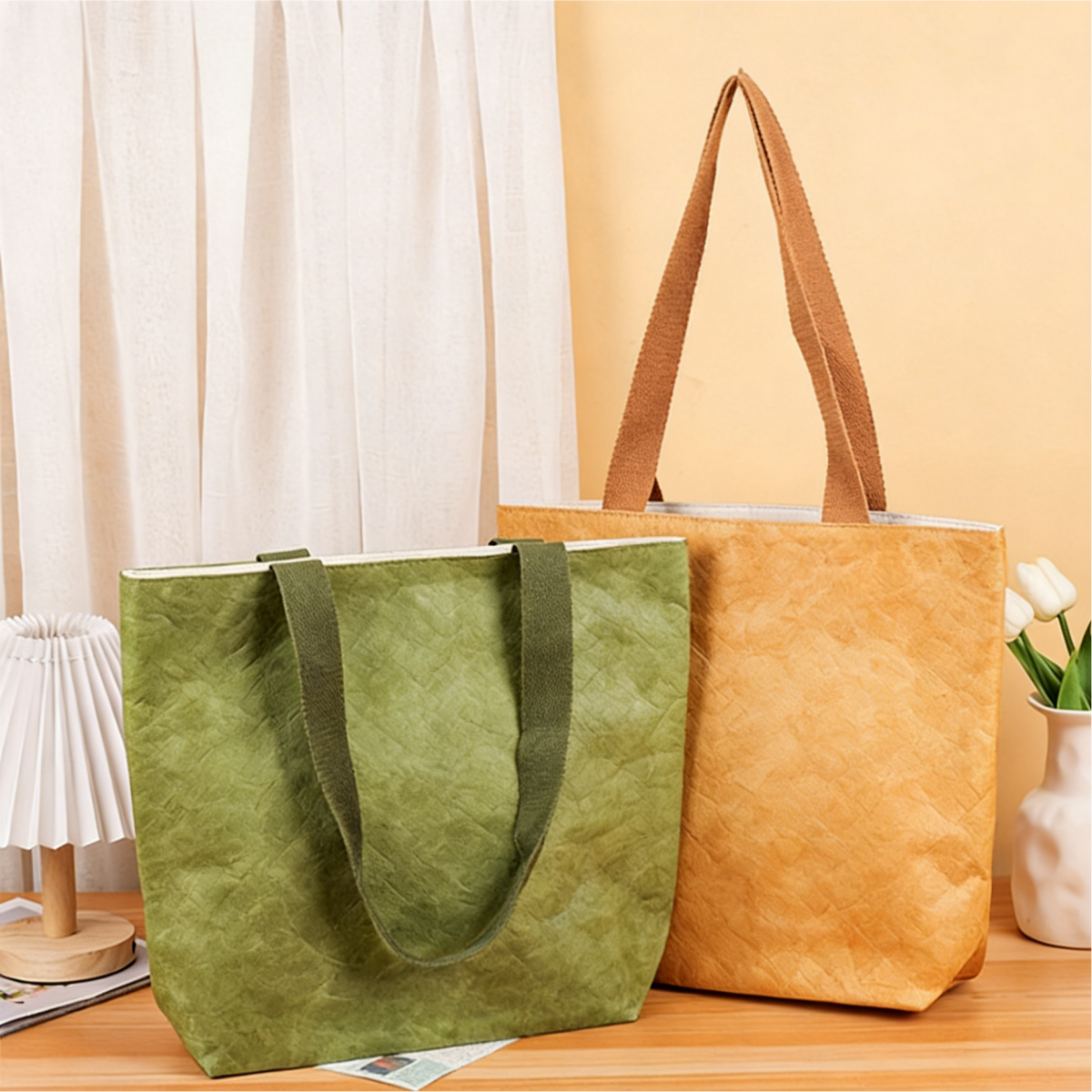
Tyvek is a strong candidate for projects that prioritize low weight, flexibility, moisture resistance, and a distinctive technical appearance.
Promotional Campaigns and Corporate Events
Promotional bags are often distributed in large quantities.
Weight, ease of storage, branding visibility, and practical reuse are important considerations.
Tyvek can be suitable for:
- Trade show giveaways.
- Conference bags.
- Corporate promotional totes.
- Product launch packaging.
- Brand activation campaigns.
Its lightweight structure can be useful when companies need to distribute large numbers of bags without adding substantial weight to event materials.
Retail Shopping Bags
Retailers may choose Tyvek when they want something different from conventional paper or fabric shopping bags.
Its distinctive appearance can help create a modern brand image.
It is particularly relevant for:
- Lifestyle retailers.
- Fashion-related promotions.
- Design-led product collections.
- Reusable shopping bags.
- Limited-edition branded packaging.
Travel and Everyday Pouches
Tyvek's low weight and foldability make it worth considering for travel-related accessories.
Potential products include document pouches, small organizers, and lightweight zippered bags.
For these applications, buyers should pay attention to closure quality, abrasion resistance, and the degree of protection required for the contents.
Brands Seeking a Technical or Minimalist Appearance
Tyvek's paper-like but synthetic appearance can create a distinctive visual identity.
It may suit brands that want a clean, modern, or technical design rather than a conventional natural-paper appearance.
Its printability also allows businesses to develop customized graphics and branding.
Which Applications Are Better Suited to Washable Kraft Paper Bags?
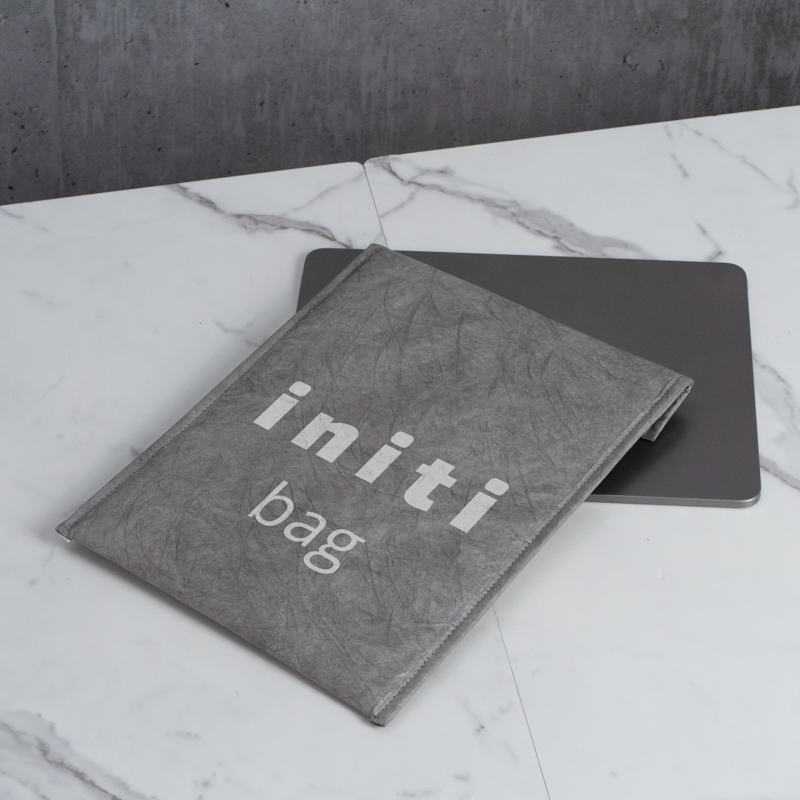
Washable kraft paper is a useful option when natural texture, material body, and a leather-like appearance are important to the product concept.
Retail and Lifestyle Collections
Some retailers want a reusable bag that feels like part of the product collection rather than disposable packaging.
Washable kraft paper can provide a tactile appearance that supports this positioning.
It can be considered for:
- Lifestyle retail bags.
- Boutique shopping totes.
- Fashion accessory packaging.
- Home organization products.
- Branded reusable gift bags.
Cosmetic Bags and Accessory Pouches
The material's texture and relatively firm hand feel can work well for cosmetic bags and small accessories.
It can be used for flat pouches, gusseted makeup bags, and structured organizers.
Buyers should still evaluate the lining and cleaning requirements, especially if the pouch will carry liquid cosmetics or products that may leave stains.
Gift Packaging
Washable kraft paper can be suitable for brands seeking an alternative to conventional paper gift bags.
Its reusable nature and distinctive texture may help improve the perceived value of the packaging.
For corporate gifting and promotional programs, customization options such as debossed logos, printed graphics, and different handle materials can help align the bag with the brand identity.
Storage and Home Organization
Thicker washable kraft paper can be used for storage baskets, organizers, and other products that benefit from a defined structure.
The material's appearance may also fit natural, minimalist, or contemporary home collections.
However, buyers should verify how the material behaves when the product is repeatedly folded, filled, emptied, or cleaned.
Care, Cleaning & Maintenance Guide
Including clear care instructions on an interior woven label or hangtag enhances customer satisfaction and extends the product lifespan.
How to Care for Tyvek Bags
- Daily Cleaning: Wipe clean with a damp cloth and mild liquid soap.
- Deeper Washing: Hand-wash in cold or lukewarm water (max 30°C / 85°F). Hang to dry in a ventilated, shaded area.
How to Care for Washable Kraft Paper Bags
- Daily Cleaning: Wipe down with a damp sponge or rinse quickly under running tap water.
- Washing for a Softer Leather Feel: Hand-wash or machine-wash on a gentle cold cycle with mild detergent. Submerging the bag in water softens the cellulose fibers and accelerates the development of a vintage leather look.
- Drying: Reshape the bag while still damp and let it air-dry flat at room temperature.
- Ironing / Wrinkle Removal: Unlike Tyvek, washable kraft paper can be ironed on low-to-medium heat using a protective cotton pressing cloth between the iron and the bag to smooth out creases.
How to Choose the Right Material for Your Custom Bag Project
The most effective way to choose between Tyvek and washable kraft paper is to begin with the product's commercial purpose.
Rather than selecting a material based only on appearance or marketing claims, buyers should work backward from the requirements of the finished bag.
Define the Main Product Requirement
Start by identifying what matters most.
| Project Priority |
Material Worth Evaluating |
| Very lightweight construction |
Tyvek |
| Paper-like technical appearance |
Tyvek |
| Natural, textured appearance |
Washable kraft paper |
| More substantial hand feel |
Washable kraft paper |
| Foldable promotional tote |
Tyvek |
| Structured lifestyle pouch |
Washable kraft paper |
| Moisture-resistant material |
Tyvek |
| Reusable bag with specified cleaning requirements |
Washable kraft paper or suitable Tyvek grade |
| Tactile, understated logo |
Washable kraft paper |
| Detailed colorful graphics |
Tyvek with a suitable printing process |
These are starting points rather than fixed rules. A well-designed bag may use either material depending on the grade and construction.
Consider the Target Market
The target market can influence material selection because different buyers value different product characteristics.
Retailers
Retail buyers may focus on product appearance, perceived quality, repeat-use potential, and consistency across collections.
Promotional gift companies
Promotional suppliers may prioritize branding, unit cost, order quantity, delivery requirements, and ease of distribution.
Private-label brands
Private-label buyers may place greater emphasis on material differentiation, customized construction, packaging, and consistent production quality.
Corporate procurement teams
Corporate buyers may focus on functional performance, logo presentation, practical use, budget control, and whether the bag aligns with internal sustainability requirements.
The same bag material may perform well in one project but be less suitable for another.
Consider the Expected Product Lifespan
A promotional giveaway and a premium retail accessory do not necessarily need the same durability specifications.
For example, a short-term event bag may prioritize appearance and cost, while a retail tote intended for repeated use may require more demanding seam, handle, and abrasion testing.
Before choosing the material, define:
- Expected usage frequency.
- Typical carrying load.
- Whether the bag will be used indoors or outdoors.
- Expected exposure to water.
- Whether cleaning is required.
- Expected appearance after repeated use.
This helps prevent unnecessary material upgrades while ensuring that the final product meets its actual requirements.
Evaluate the Complete Design
A material may perform well in one construction but poorly in another.
For example, a large tote with long handles places different demands on the material and seams than a small flat pouch.
A cosmetic bag with a zipper and lining requires additional attention to the interaction between the outer material, zipper tape, and sewing process.
Before confirming a material, buyers should consider the entire construction rather than only the main body panel.
What Should Buyers Check Before Placing a Bulk Order?
Material selection is only the first step in sourcing custom bags.
The next challenge is ensuring that the approved sample accurately represents the mass-produced order.
This is particularly important when purchasing Tyvek or washable kraft paper because different grades and surface treatments can produce noticeable variations.
Confirm the Exact Material Specification
Do not rely on general descriptions such as "premium Tyvek" or "high-quality washable paper."
Ask for measurable or verifiable information.
For Tyvek, confirm:
- Whether it is genuine DuPont Tyvek.
- The specific grade or product type.
- Whether it has a hard or soft structure.
- Material weight or thickness where available.
- Surface finish and color.
For washable kraft paper, confirm:
- Main material composition.
- Thickness.
- Basis weight, if available.
- Surface finish.
- Color.
- Recommended cleaning method.
- Any additional coatings or binders.
This information helps prevent material substitutions during production.
Request a Physical Material Sample
Photographs are not enough to evaluate the actual material.
A physical sample allows buyers to check:
- Surface texture.
- Thickness.
- Flexibility.
- Stiffness.
- Folding behavior.
- Color.
- Print compatibility.
- Overall hand feel.
If the project requires a specific material grade, the approved sample should be retained as a reference for future production.
Check the Construction Details
The following areas deserve particular attention:
Handles
Check the handle material, width, length, attachment position, and reinforcement.
Seams
Inspect stitch consistency, seam allowance, loose threads, and stress points.
Bottom construction
Check whether the base is flat, gusseted, reinforced, or supported by an additional panel.
Closures
Inspect zipper quality, pullers, snap buttons, and other hardware.
Lining
Confirm the lining material, attachment method, and compatibility with the outer material.
Printing
Check logo position, color consistency, registration, and resistance to rubbing or folding.
Test the Finished Bag Under Realistic Conditions
A good-looking sample does not necessarily perform well during use.
Testing should reflect the actual application.
For a shopping tote, this may include carrying a defined load and inspecting the handle attachments.
For a cosmetic pouch, it may include repeated opening and closing of the zipper, loading the pouch, and checking the lining.
For a reusable washable paper bag, the test may include the supplier's recommended cleaning method followed by inspection of the material, seams, and printing.
For Tyvek, buyers may evaluate folding, surface abrasion, water exposure, and the performance of stitched areas.
Testing requirements should be agreed upon before production, particularly for large orders or products with specific performance expectations.
Approve a Pre-Production Sample
A pre-production sample should represent the final product as closely as possible.
It should use the approved:
- Material.
- Color.
- Dimensions.
- Construction.
- Handle.
- Accessories.
- Printing.
- Packaging.
If any specification changes after sample approval, the buyer should review whether another sample is necessary.
This step helps reduce disputes and unexpected differences between the approved sample and the delivered order.
FAQ
Are Tyvek bags better than washable kraft paper bags?
Neither material is universally better.Tyvek is worth considering when low weight, flexibility, water resistance, and a technical paper-like appearance are priorities.Washable kraft paper is more suitable when a natural texture, fuller hand feel, and a more structured appearance are important.The right choice depends on the intended application, design, and performance requirements.
Is Tyvek real paper?
No. Tyvek is a synthetic nonwoven material made from high-density polyethylene fibers.Although it can resemble paper, its structure and performance are different from conventional cellulose paper.
Does washable kraft paper crack or tear when folded repeatedly?
No. High-grade washable kraft paper is specifically engineered with high fold endurance. It flexes smoothly along fold lines and crinkles gracefully without cracking or shedding fiber dust.
Which material is more tear-resistant?
Tyvek is generally known for strong tear resistance relative to its weight.Washable kraft paper can also provide good strength, depending on its thickness and formulation.For finished bags, seam and handle performance should be evaluated alongside material tear resistance.
Which material is more affordable?
There is no fixed price ranking that applies to every project.The quotation depends on material grade, bag size, thickness, construction, printing, accessories, order quantity, and packaging.The most reliable comparison is to request quotations based on identical specifications.
Conclusion
Tyvek bags and washable kraft paper bags offer two different approaches to reusable bag design.
Tyvek stands out for its lightweight HDPE nonwoven structure, flexibility, tear resistance, and resistance to liquid water. It is worth considering for foldable shopping totes, promotional bags, travel pouches, and brands seeking a modern, technical appearance.
Washable kraft paper offers a different combination of characteristics. Its cellulose-based composition, natural texture, and relatively substantial hand feel make it suitable for retail bags, cosmetic pouches, gift bags, and structured storage products.
With the right material and construction, both Tyvek and washable kraft paper can become effective options for customized bags and branded packaging. At INITI, we help businesses turn their bag ideas into customized products with suitable materials, designs, and printing options.
Related Products
Related Blog Articles






 Hot News