What Is a Shaker Bottle: Parts, Materials and Mixing Systems
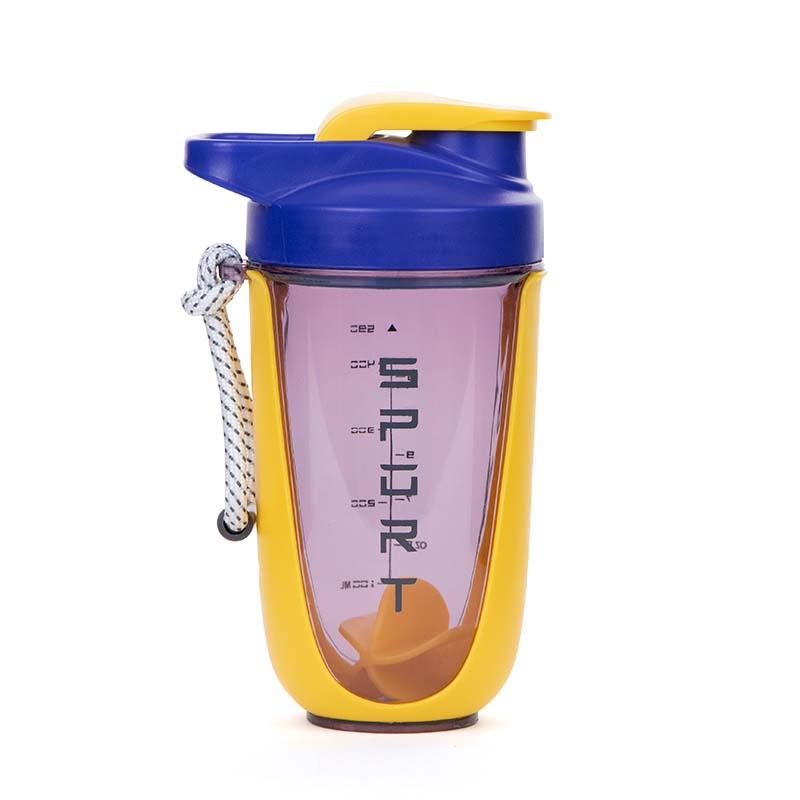
A shaker bottle is a reusable container designed to mix powdered ingredients with liquids by shaking. It is commonly used for protein shakes, meal replacements, electrolyte powders and other powdered drinks.
Unlike an ordinary water bottle, a shaker usually includes a mixing accessory or an internal structure that helps disperse powder. It also needs a lid that stays securely closed while the bottle is shaken.
Some models use a stainless steel wire ball. Others have a removable mixing grid, an integrated mixing structure or a separate compartment for carrying dry powder.
These differences affect mixing performance, cleaning, sealing and manufacturing cost.
For fitness brands, supplement companies and wholesale buyers, understanding how a shaker bottle works is essential when selecting materials, developing a product and checking sample quality.
1. Why Were Shaker Bottles Developed?
Shaker bottles developed to solve a straightforward problem: preparing powdered drinks conveniently without relying on an electric blender.
Protein powder can be stirred into liquid with a spoon, but stirring may leave clumps. A kitchen blender can provide more intensive mixing, but it is less convenient to carry and requires additional equipment and cleaning.
A manual shaker combines mixing, carrying and drinking in one container.
Its main purposes are to:
- Help disperse protein powder and other powdered ingredients.
- Allow users to prepare drinks at gyms, offices and other locations.
- Reduce the need for separate mixing equipment and drinking containers.
- Make portion measurement and transport more convenient.
- Support drink preparation shortly before consumption.
As portable fitness drinkware developed, shaker designs incorporated wire whisk balls, removable mixing grids, measurement markings, flip drinking caps and detachable powder compartments.
These features serve different needs, but the basic purpose remains the same: making powdered drinks easier to prepare away from a kitchen.
Shaker Bottle vs Regular Water Bottle
A conventional water bottle is primarily designed to carry and dispense liquid.
A shaker bottle must also support the mixing process.
| Feature |
Shaker Bottle |
Regular Water Bottle |
| Main purpose |
Mixing powders with liquids |
Carrying and drinking liquids |
| Mixing accessory |
Often included or integrated |
Usually absent |
| Main opening |
Often relatively wide |
Varies by design |
| Lid requirements |
Must remain secure during intended shaking |
Depend on intended carrying and drinking use |
| Cleaning |
Mixing parts and lid details need attention |
Often fewer components |
| Typical use |
Protein, meal replacements and powdered supplements |
Water and ready-to-drink beverages |
Some shaker bottles also function as everyday water bottles, but the additional mixing components are what distinguish the category.
For a separate comparison of sports-bottle designs, read Sports Squeeze Bottle vs Shaker Bottle: Which Product Fits Your Market?.
2. How Does a Shaker Bottle Work?
A manual shaker uses liquid movement to disperse powdered ingredients.
When the user shakes the container, the liquid moves around the bottle and through or around the mixing accessory.
A wire ball, plastic mixing ball or grid can increase agitation and help break apart powder agglomerates.
Mixing performance depends on several factors:
- Powder composition and particle characteristics
- Amount of liquid and powder
- Liquid temperature
- Bottle geometry and free space
- Mixing accessory design
- Shaking duration and intensity
Not every powder is intended to dissolve completely. Some formulations contain ingredients that disperse or remain suspended in liquid.
A shaker can improve mixing without necessarily producing a completely clear or lump-free drink.
How to Use a Manual Shaker Bottle
For a conventional shaker, the usual preparation sequence is:
- Add the amount of liquid recommended by the drink manufacturer.
- Add the powder according to the product instructions.
- Position the mixing ball or grid correctly.
- Secure the main lid and close the drinking spout.
- Shake according to the product instructions, allowing sufficient room for movement.
- Open carefully, consume the drink and clean the bottle afterward.
Users should follow the shaker manufacturer's permitted temperature and ingredient instructions.
Ordinary sealed shaker bottles should not be used to shake warm, hot or carbonated beverages unless the specific product is designed and verified for those conditions.
3. What Are the Main Parts of a Shaker Bottle?
A shaker bottle is a system of fitted components. The design of each part affects everyday use.
| Component |
Function |
What Buyers Should Check |
| Bottle body |
Contains the drink |
Material, capacity, internal shape and durability |
| Wide mouth and neck |
Allows filling and cleaning |
Opening size and thread quality |
| Main screw-on lid |
Connects and closes the bottle |
Thread fit, assembly and sealing |
| Flip cap or drinking spout |
Provides a drinking opening |
Closure retention and leakage |
| Gasket or seal |
Seals selected lid interfaces |
Fit, material and cleaning access |
| Mixing ball or grid |
Helps disperse powder |
Movement, mixing and cleanability |
| Measurement scale |
Indicates approximate liquid volume |
Visibility, marking accuracy and durability |
| Carry loop or rope |
Provides a carrying point |
Attachment and strength |
| Storage compartment |
Holds powder or accessories separately |
Connection, capacity and hygiene |
Not every shaker includes all these components.
A basic version may use a bottle body, flip-top lid and mixing ball. A more complex design may include a removable strainer, graduated scale and detachable storage container.
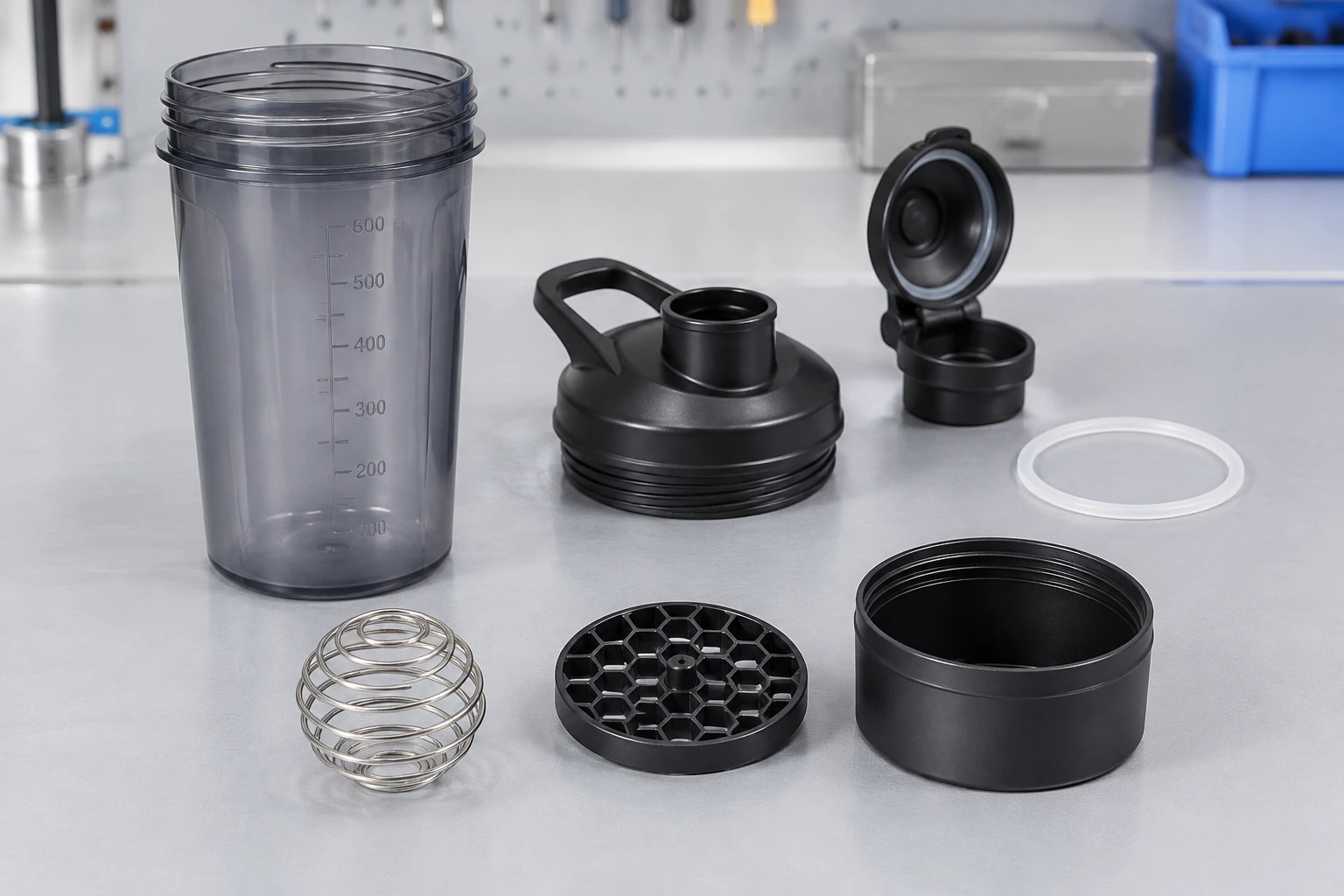
Why the Main Lid and Flip Cap Matter
A shaker normally has two potential leakage points: the connection between the bottle and its main lid, and the drinking opening.
The main lid needs suitable thread engagement and sealing contact.
The flip cap needs sufficient closure retention to remain shut during the product's intended use.
These are separate requirements. A tightly fitted main lid does not compensate for a drinking cap that opens too easily.
The sealing components must also tolerate repeated opening, closing, cleaning and reassembly.
Pressure Buildup and Flip-Cap Safety
A tightly closed shaker can retain internal pressure.
Warm or hot liquids may increase pressure in a sealed bottle. Certain ingredients can also generate gas or create conditions that increase pressure-related concerns. Foaming mixtures may increase the amount of liquid or foam expelled when the container is opened.
If pressure accumulates, the drinking cap may open unexpectedly, or liquid may spray when the user releases the closure.
This is particularly important because many consumers prepare powdered drinks using lukewarm water.
There is no universal safe temperature, such as 40°C or 50°C, that can be assumed for every shaker bottle.
For custom shaker development, buyers should distinguish between three different engineering requirements:
| Design Requirement |
What It Controls |
| Thread fit and main-lid sealing |
Connection and leakage at the bottle neck |
| Flip-cap retention |
Resistance to unintended opening during normal use |
| Pressure relief or venting |
A separately engineered method for managing internal pressure, when provided |
A stronger latch or a tighter thread does not automatically make a bottle safe for pressurized contents.
Likewise, a conventional flip cap should not be described as a pressure-release mechanism unless that function is specifically designed and validated.
If a product is intended for mixing warm beverages, the full assembly—including the material, seal, closure and any pressure-management feature—requires appropriate testing and clear use instructions.
For standard manual shakers, follow the manufacturer's restrictions and avoid shaking warm, hot or carbonated liquids.
4. Which Materials Are Used for Shaker Bottles?
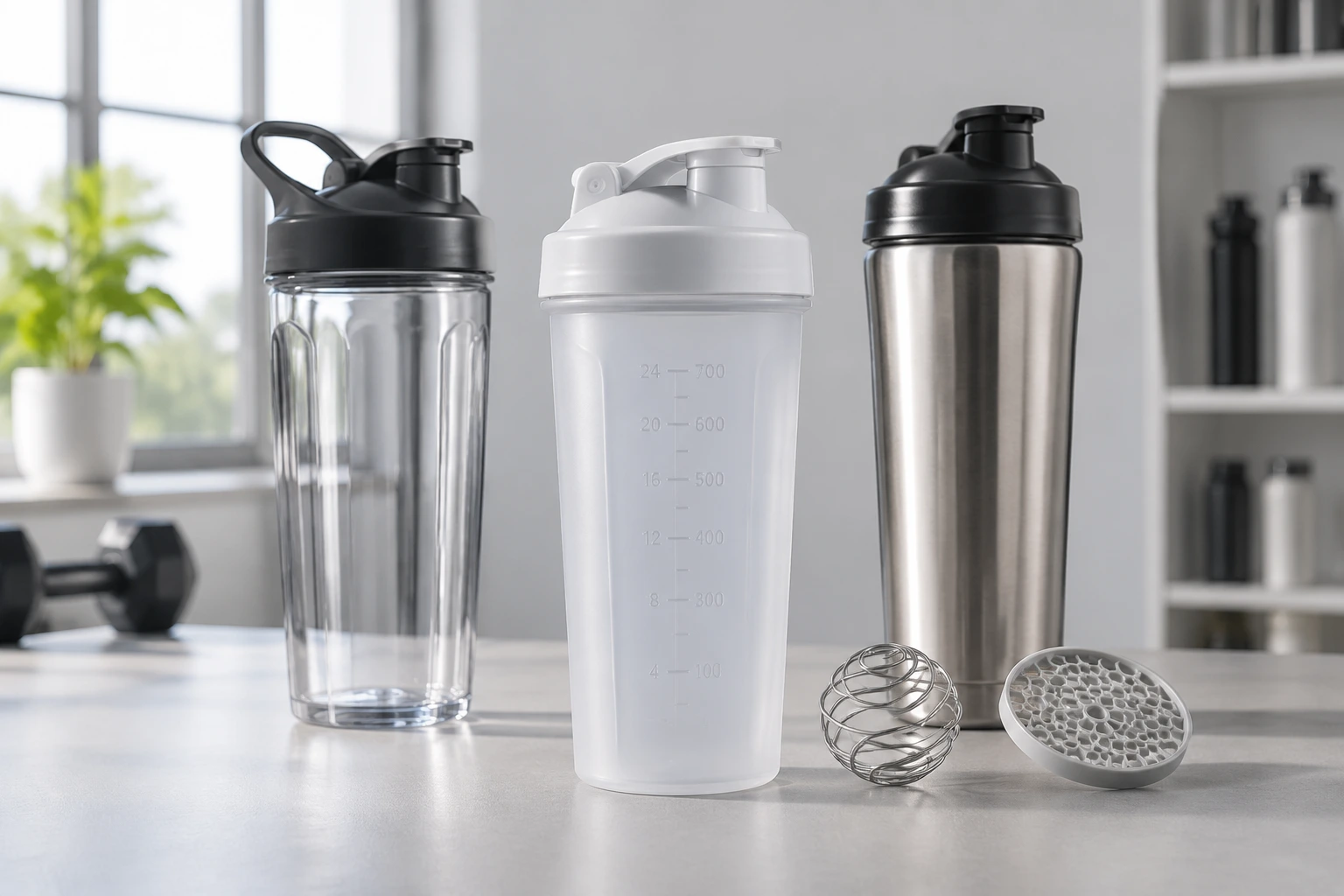
The most common materials for reusable shaker bottles include PP, suitable copolyesters and stainless steel.
Different components within the same shaker may use different materials.
| Material |
Common Applications |
Purchasing Considerations |
| Polypropylene (PP) |
Bottle bodies, lids and mixing accessories |
Resin grade, food-contact suitability, temperature and cleaning conditions |
| Tritan or other copolyester |
Selected transparent or rigid bottle bodies |
Actual material grade, documentation, care requirements |
| Stainless steel |
Premium bottle bodies and wire mixing balls |
Steel grade, surface finish, corrosion resistance and cleaning |
| Silicone or suitable elastomer |
Gaskets and flexible seals |
Material suitability, sealing performance and odor |
| Other selected polymers |
Spouts, accessories and components |
Specific application and food-contact requirements |
Polypropylene is commonly used for molded shaker bottles and lids.
It supports lightweight construction, different colors and a range of molded shapes.
However, PP is a material family rather than a guarantee of finished-product compliance.
A buyer should confirm the resin grade, components, permitted temperature range and applicable food-contact documents.
Tritan Shaker Bottles
Tritan is a specific Eastman copolyester brand.
It is used in selected transparent and impact-resistant drinkware products.
Not every clear bottle is made from Tritan. Buyers requesting genuine Tritan material should confirm the supplied grade and relevant documentation.
BPA-free also should not be treated as a substitute for full food-contact assessment.
Stainless Steel Shaker Bottles
Stainless steel provides a different finish, weight and feel from plastic.
It can be suitable for selected reusable or higher-positioned retail products.
However, an opaque metal body makes it harder to see liquid levels without a separate measuring system.
The grade and finish of the metal, as well as the plastic lid, seals and mixing accessories, must be considered.
If the bottle uses double-wall insulation, the overall construction requires separate evaluation.
Can Recycled Plastic Be Used?
Recycled materials used in bags and textiles are not automatically suitable for direct beverage contact.
Food-contact recycled plastics must meet the requirements applicable to their material, recycling process and intended use.
INITI owns a PET bottle recycling and processing facility supporting recycled-polyester material applications. That capability should not be confused with proof that its recovered PET is approved for food-contact shaker bodies.
Any recycled-content shaker project requires separate material selection and applicable regulatory verification.
5. Mixing Ball vs Mixing Grid: Which System Works Better?
The mixing mechanism is one of the main differences between shaker designs.
The best choice depends on the beverage formulation, bottle geometry and cleaning requirements.
| Mixing System |
How It Works |
Main Considerations |
| Stainless steel wire ball |
Moves freely through the liquid during shaking |
Agitation, movement, cleaning and wire finish |
| Plastic mixing ball |
Uses a shaped plastic component to agitate the liquid |
Geometry, movement and durability |
| Removable mixing grid |
Liquid passes through openings near the lid or inside the bottle |
Dispersion, residue accumulation and removal |
| Integrated mixing structure |
Internal geometry directs liquid movement |
Performance and cleaning access |
| Electric mixing system |
Powered component drives mixing |
Electrical requirements, sealing, charging and maintenance |
Stainless Steel Mixing Ball
The familiar wire whisk ball travels around the bottle during shaking.
Its open wire structure agitates the liquid and can help break up clumps of powder.
A buyer should check whether the ball has enough freedom to move, whether it can be removed easily and whether its surface finish is suitable for repeated beverage contact.
Mixing Grid or Strainer
A mixing grid is usually positioned inside the upper part of the bottle.
Liquid passes through its openings during shaking.
The grid may be easier to keep in position than a loose ball, but powder residue can collect on its surfaces.
Removable grids can be inspected and cleaned more easily than inaccessible internal structures.
Can Both Systems Be Combined?
Yes.
Some shaker designs include a loose mixing ball and a removable strainer.
Using both may suit a particular formulation or product configuration, but more components do not automatically produce better mixing.
Buyers should test the intended powder under repeatable conditions before making performance claims.
Electric Shakers
Motorized shakers are a different product category.
In addition to mixing performance, they introduce electrical components, batteries, charging systems and additional safety requirements.
For conventional manual fitness shakers, a ball or grid avoids those extra systems.
6. Does Shaker Bottle Capacity Affect Mixing?
A shaker needs enough volume for the intended drink and enough free space for liquid movement.
A bottle's total capacity and recommended mixing volume are not necessarily the same.
For example, filling a bottle to the very top can restrict movement and make leakage more likely during shaking.
Total Capacity vs Practical Mixing Volume
Total capacity refers to the container volume measured under a specified filling condition.
Practical mixing volume refers to the intended amount of liquid and powder that can be mixed under the product's operating conditions.
Buyers should define the serving volume and verify the recommended maximum fill level for the final design.
Why Measurement Markings Need Checking
Printed or molded mL and oz markings help users add measured quantities of liquid.
But markings can be affected by printing alignment, bottle geometry and manufacturing tolerances.
If measurement accuracy matters to the product, the scale should be checked using known liquid volumes and an agreed acceptance tolerance.
7. Common Shaker Bottle Problems: Leaks, Clumps and Odor
These issues have a direct effect on customer satisfaction and repeat orders.
Leakage During Shaking
A bottle may remain dry while standing upright and still leak when shaken.
Potential causes include:
- Poor main-lid thread engagement
- Damaged or incorrectly fitted seals
- A flip cap that is not fully closed
- Inconsistent molded parts
- Wear after repeated opening and cleaning
For sample testing, buyers should define the fill level, liquid temperature, shaking and inversion procedures, number of repetitions and acceptance criteria.
Any testing outside the approved temperature range should only be conducted under an appropriate controlled evaluation—not treated as normal consumer use.
Powder Clumps and Residue
Mixing performance varies with the formulation.
To compare two shaker designs fairly, use the same powder, liquid volume, temperature, shaking time and procedure.
Check the remaining clumps, sediment, accessory movement and ease of drinking.
A claim such as "completely lump-free in seconds" requires evidence from a reproducible test.
Odor and Cleaning
Protein and meal-replacement drinks can leave residue around:
- Lid threads
- Gaskets
- Flip-cap hinges
- Mixing grids
- Wire balls
- Storage-compartment connections
A cleaning-friendly design should minimize inaccessible areas and make removable components easy to handle.
Dishwasher-safe or heat-resistant claims must be confirmed for the actual product and its decorations, not assumed from the main material.
8. Food-Contact Safety and Market Requirements
A shaker bottle comes into direct contact with beverages.
Its materials, components and intended use therefore matter for regulatory compliance.
European Union
Relevant EU legislation includes:
- Regulation (EC) No 1935/2004: General requirements for food-contact materials.
- Regulation (EC) No 2023/2006: Good manufacturing practice.
- Regulation (EU) No 10/2011, as amended: Specific requirements for plastic food-contact materials and articles, including relevant migration limits and documentation.
- Regulation (EU) 2022/1616, as amended: Additional rules for applicable recycled plastic food-contact materials.
Applicable requirements should be checked against the current versions and the actual product design.
United States
The US FDA regulates food-contact substances through the applicable legal framework and authorizations.
The material grade, additives, intended beverage type, temperature and conditions of use need to be considered.
A BPA-free label alone does not prove that the assembled shaker complies with all applicable food-contact requirements.
What Documents Should Wholesale Buyers Request?
Depending on the destination market, buyers may need:
- Bottle-body resin specifications
- Lid, seal and accessory material information
- Applicable food-contact compliance documentation
- Relevant migration or other test reports
- Intended temperature and usage limitations
- Cleaning and care instructions
- Traceability and quality records where required
A declaration covering only the main bottle material should not automatically be extended to every component in the assembled product.
9. Choosing a Shaker Bottle for Different Buyers
Different customers need different levels of product complexity.
| Buyer |
Suitable Starting Design |
Main Concern |
| Protein and supplement brands |
Shaker with a verified mixing mechanism |
Powder dispersion and lid reliability |
| Gym chains |
Durable, easy-clean shaker |
Practicality, color and logo consistency |
| Sports retailers |
Shaker with selected accessories |
Product differentiation and retail presentation |
| Promotional buyers |
Simple branded shaker |
Useful features and controlled cost |
| Private-label brands |
Custom material and lid configuration |
Documentation, product consistency and branding |
| Fitness gift-set buyers |
Shaker with coordinated accessories |
Packaging and combination with other products |
The right configuration should reflect how the target customer prepares and consumes drinks.
Adding a removable powder compartment or extra strainer may improve a particular product, but it also adds parts to clean, assemble and inspect.
10. Shaker Bottle Design Examples from INITI
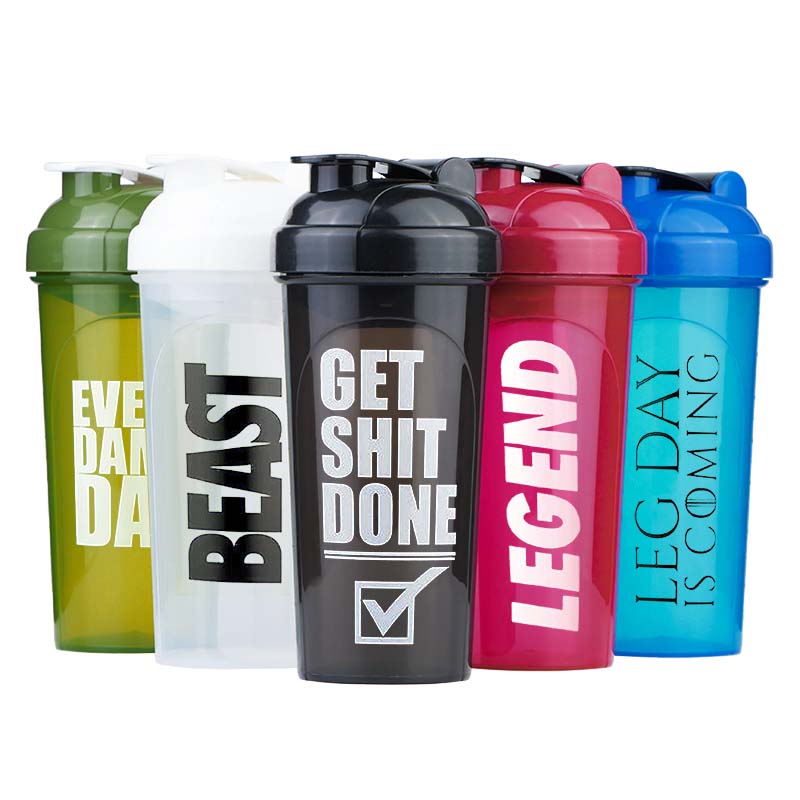
INITI's existing bottle range includes different structures that can serve as starting points for custom projects.
A Simple Shaker with a Mixing Ball
The Plastic Shaker Bottle with Mixing Ball uses a plastic body, flip-top lid and stainless steel wire mixing ball.
It demonstrates a basic manual mixing configuration for fitness merchandise and promotional drinkware.
Key checks include lid closure, mixing-ball movement, cleaning access and logo durability.
A Shaker with Measurement Markings and Carry Rope
The Custom Shaker Bottle with Mixing Ball combines a mixing ball, flip drinking lid, graduated scale and carry rope.
This design adds portability and liquid measurement to the basic mixing function.
For customization, buyers should check scale accuracy, attachment strength, component fit and printing.
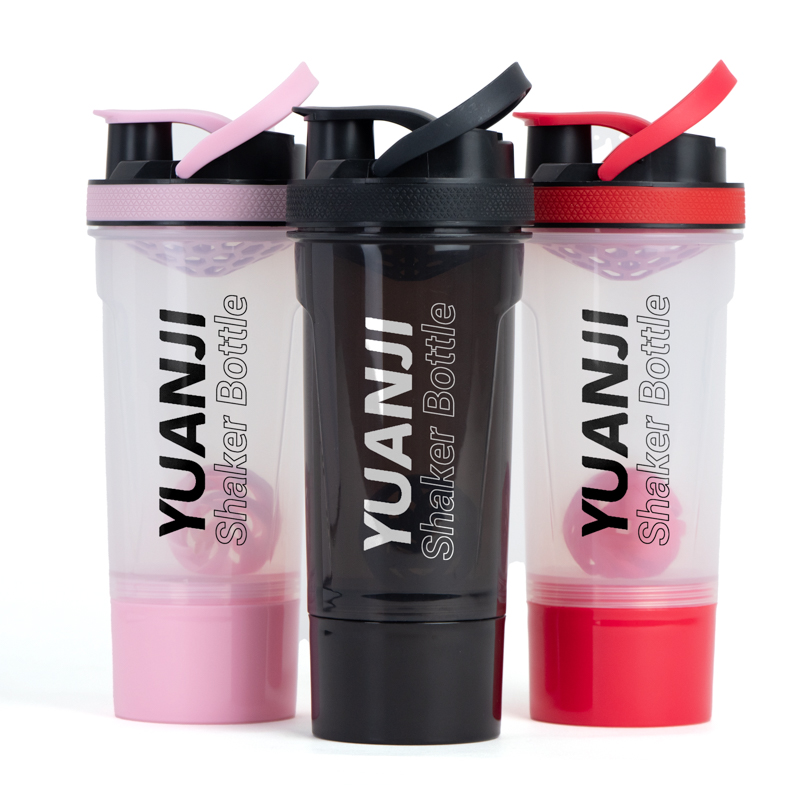
A Shaker with Strainer and Powder Storage
The Shaker Bottle with Storage Compartment includes a removable honeycomb-style strainer, separate mixing ball and detachable bottom storage compartment.
It allows dry ingredients to be carried separately until needed.
The extra components also introduce additional cleaning surfaces and assembly connections, which should be evaluated during sample development.
Additional drinkware designs are available in the INITI Bottle Collection.
11. Custom Shaker Bottle RFQ Checklist
An accurate wholesale quotation should be based on the intended product and its use conditions.
| RFQ Item |
Required Information |
| Target market |
Gym, supplement brand, retail, corporate gift or promotion |
| Drink formulation |
Protein powder, meal replacement, electrolyte or other mixture |
| Capacity |
Intended serving volume and maximum mixing fill |
| Bottle material |
PP, specified copolyester, stainless steel or other suitable option |
| Mixing mechanism |
Wire ball, plastic ball, strainer or other system |
| Lid and seal |
Main thread, flip cap, gasket and closure requirements |
| Temperature use |
Permitted liquid temperatures and relevant safety warnings |
| Pressure-related requirements |
Any specially intended pressure-management function and validation |
| Accessories |
Scale, carry loop, storage compartment |
| Branding |
Logo artwork, body and lid colors, printing |
| Compliance |
Destination market and food-contact documentation |
| Sample testing |
Leakage, mixing, closure cycles, cleaning and applicable material checks |
| Packaging |
Bulk, retail box, gift box or fitness set |
| Order details |
Estimated quantities, colors, SKUs and delivery |
Minimum order quantities and production arrangements depend on materials, tooling, component selection and customization.
Why Choose INITI for Custom Shaker Bottles?
Hangzhou INITI Imp&Exp Co., Ltd. has over 16 years of experience in custom bags, packaging and promotional product programs.
Our existing drinkware range includes shaker bottles with mixing balls, measurement markings, carry accessories and detachable storage compartments.
INITI supports OEM/ODM development, material and component selection, color and logo customization, sampling, quality-control coordination and export packaging.
For fitness and supplement brands, shaker bottles can also be developed as part of coordinated sets with gym bags, drawstring bags or branded gift packaging.
Food-contact documentation, approved temperature conditions, sealing requirements and product testing are confirmed according to the selected design and destination market.
We provide fast quotations and free design support for custom shaker bottle programs.
FAQ
1. What is a shaker bottle used for?
A shaker bottle is used to mix powdered ingredients with liquids. Common applications include protein shakes, meal replacements and electrolyte drinks. Most manual designs use a mixing ball, grid or another internal mixing system.
2. Why does a shaker bottle need a mixing ball or grid?
The mixing accessory helps move the liquid and break apart some powder clumps. Different mechanisms suit different formulations, and no design guarantees complete dissolution of every powder.
3. Is it safe to shake warm water in a protein shaker?
Do not assume so. Warm or hot liquids can create pressure-related hazards in a sealed shaker. Follow the manufacturer's permitted temperature instructions; conventional shakers should not be used for warm or hot mixing unless specifically designed and verified for it.
4. Which material is best for a shaker bottle?
PP, suitable copolyesters and stainless steel are common options. The choice depends on appearance, weight, intended use and applicable food-contact requirements. The actual material grade and finished components must be assessed.
5. Can INITI supply custom shaker bottles with logos?
Yes. INITI supports OEM/ODM shaker projects with selected materials, capacities, mixing accessories, lids, colors, logo methods and packaging. Product specifications and quantities are confirmed for each project.
Conclusion
A shaker bottle was developed to make powdered drinks easier to prepare without separate mixing equipment.
Its function depends on more than the mixing ball. The body, lid, seal, drinking spout and mixing system must work together during filling, shaking, drinking and cleaning.
For wholesale buyers, the most important considerations are whether the shaker mixes the intended drink, stays closed under approved conditions, can be cleaned properly and meets the required food-contact rules.
Additional accessories should be chosen for a defined purpose, not simply to increase the feature count.
Related Blog & Application Articles
Sports Squeeze Bottle vs Shaker Bottle: Which Product Fits Your Market?
Professional Shaker Bottle Manufacturer — Fitness and Nutrition Solutions
Inquiry Support
Developing custom protein shaker bottles for a supplement brand, fitness chain, sports retailer or promotional program?
Send us your intended capacity, bottle material, mixing system, lid structure, logo artwork, destination market, estimated quantity and packaging requirements.
Email us at [email protected] for a fast quotation, free design support and OEM/ODM shaker bottle development.




 Hot News