EU PPWR Compliance & Reusable Bag Standards: Sourcing Guide for European Importers 2026-2030
Updated: November 2026
European importers sourcing reusable shopping bags, retail carrier bags and branded packaging now face a more detailed set of packaging compliance requirements.
The EU Packaging and Packaging Waste Regulation, Regulation (EU) 2025/40, entered into force on 11 February 2025 and started applying on 12 August 2026. Other requirements will be introduced progressively through 2030 and beyond.
For importers purchasing PP woven bags, non-woven shopping bags, RPET totes or cotton carrier bags, the main challenge is not simply finding a product advertised as reusable or eco-friendly.
It is determining whether the bag is legally packaging, which requirements apply to its actual use, how to demonstrate performance and what documentation the supplier must provide.
This guide explains the PPWR provisions most relevant to reusable bag procurement, the implementation timeline and the questions European buyers should resolve before placing custom orders.
For the legislative background, see the European Commission's Packaging Waste overview.
1. Does PPWR Apply to Your Reusable Shopping Bag?
Before selecting materials or asking for a compliance certificate, determine how the bag will be supplied and used.
A shopping bag can function as packaging in one transaction and as a separately sold product in another.
The European Commission's 2026 PPWR implementation guidance — Notice C/2026/3084 clarifies that classification depends on the item's function, intended use and the circumstances in which it is placed on the market.
| Bag Application |
What Importers Should Check |
| Carrier bag provided at retail checkout |
Generally assess as service packaging used to handle and deliver purchases |
| Branded bag supplied with purchased goods |
Assess its packaging function and the way it is provided |
| Reusable shopping tote sold separately as merchandise |
May be a standalone product rather than packaging; assess its actual purpose |
| Promotional tote distributed at an event |
Classification depends on whether it performs a packaging function |
| Protective garment or dust bag supplied with a product |
May qualify as packaging when used for the product's presentation, handling or protection |
| Returnable bag circulating between retailers or logistics partners |
Assess both packaging classification and any applicable re-use system requirements |
The word “reusable” on a product label is not sufficient to determine its regulatory classification.
An independently sold tote may still have its own sales and transport packaging. Those packaging components must be evaluated separately.
For complex programs, importers should document the classification decision with their EU compliance team before confirming materials, labels and artwork.
2. PPWR Timeline: What Changes Between 2026 and 2030?
Not every PPWR requirement took effect on 12 August 2026.
Some obligations already apply, while others depend on later dates or the adoption of EU implementing or delegated acts.
| Date or Period |
Relevant Development |
Sourcing Implication |
| 11 February 2025 |
PPWR entered into force |
The regulation established its legal framework and transitional provisions |
| 12 August 2026 |
General application of PPWR |
Check applicable packaging requirements, supply-chain roles and conformity documentation |
| By 12 February 2027 |
Commission deadline to establish minimum rotations for commonly reused packaging formats under Article 11 |
Do not invent a universal mandatory number of reuse cycles |
| 12 August 2028 or later |
Harmonised material-sorting labels under Article 12(1), subject to the relevant implementing-act timing |
Reserve space and production flexibility for the applicable final label specifications |
| 12 February 2029 or later |
Reusable-packaging label and digital information requirements under Article 12(2), subject to the relevant implementing-act timing |
Review reusable-packaging identification and system-information requirements |
| 2030 or later, as specified |
Recyclability criteria, recycled-content obligations, packaging minimisation and selected format restrictions |
Review material composition, documentation and packaging design before long-term commitments |
The exact timing matters.
For example, Article 7's recycled-content requirement applies from 1 January 2030 or three years after the relevant implementing act enters into force, whichever is later.
Article 6's design-for-recycling requirements also depend on the corresponding delegated legislation.
For the latest implementation updates, buyers should consult the European Commission's PPWR Implementation and Secondary Legislation page, which provides guidance, FAQs and information about developing implementing measures.
Specifications intended for use through 2030 should be reviewed as the relevant legislation is finalised.
3. What Does “Reusable” Mean Under PPWR?
A bag marketed as a reusable shopping bag is not automatically compliant with the legal requirements for reusable packaging.
Under Article 11, reusable packaging must satisfy criteria addressing its design, intended multiple use, safety, ability to be reconditioned where appropriate and other relevant requirements.
Where a reusable packaging system is required, Articles 26–27 and Annex VI also address collection, return, reconditioning, circulation and management arrangements.
A Durable Bag Is Only Part of the Requirement
A well-constructed bag may be suitable for repeated shopping trips, but durability alone does not establish compliance with every PPWR re-use provision.
For packaging intended to circulate in a managed reuse system, buyers should consider:
- How used bags are collected or returned
- Who owns and manages the bags
- Whether cleaning or reconditioning is necessary
- How bags are inspected before reuse
- How completed rotations and rejected units are recorded
- What happens to the bags at the end of their useful life
A supermarket tote that consumers keep for personal shopping and a closed-loop bag circulating between retail distribution sites can have very different compliance and operational requirements.
Is There an EU-Mandated Number of Reuses?
There is no single PPWR reuse-cycle number that should be applied indiscriminately to every shopping bag.
Article 11 requires the Commission to establish minimum rotation numbers for frequently reused packaging formats through a delegated act, with a deadline of 12 February 2027.
Until the applicable format-specific requirements are established and verified, suppliers should not claim that a bag is PPWR-compliant merely because it passed an arbitrary 10-, 20- or 50-use test.
Buyers can still establish their own performance specifications for a commercial project.
For example, a retail chain may require repeated loaded-carrying tests under a defined load, provided the test method and acceptance criteria are documented.
4. Reusable Bag Standards: Which Tests Matter?
The PPWR is legislation. A packaging or bag testing standard provides a method for evaluating particular requirements.
They are not interchangeable.
| Standard or Requirement |
What It Addresses |
Practical Purchasing Use |
| Regulation (EU) 2025/40 |
Legal requirements for packaging placed on the EU market |
Establish which provisions apply |
| EN 13429:2004 |
Packaging reuse requirements |
Reference for evaluating reusable packaging alongside current PPWR requirements |
| ISO 18603:2013 |
Packaging and the environment — Reuse |
Framework for assessing reusable packaging and associated systems |
| EN 13590:2003 |
Flexible carrier bag volume and carrying-capacity testing |
Reference method for specified carrying-performance tests |
| Buyer-defined durability tests |
Handles, seams, folding, loading and repeated use |
Establish project-specific acceptance criteria |
The European Commission lists EN 13429 among the European packaging standards published under the former Packaging and Packaging Waste Directive. See its packaging standards reference page.
The ISO 18603:2013 standard covers packaging reuse assessment, including associated systems.
Using an existing standard does not automatically prove compliance with all updated PPWR requirements. Importers should check whether a particular standard provides a legally recognised presumption of conformity for the requirement being assessed.
What to Test on a Finished Shopping Bag
For a reusable retail bag, useful checks include:
- Finished dimensions and volume
- Handle attachment and seam strength
- Loaded carrying performance
- Failure or deformation after repeated handling
- Gusset and bottom construction
- Print durability and possible color transfer
- Cleaning compatibility, if washing is part of the program
Buyers should specify the actual load, test method, conditioning and pass/fail criteria.
Do not evaluate carrying capacity from fabric GSM alone. A heavy fabric with poorly constructed handles can still produce an unsuitable finished bag.
5. PP Woven, PP Non-Woven, RPET or Cotton: Which Material Should Importers Choose?
Material selection should follow the intended use and compliance classification, not the material's marketing reputation.
| Bag Material |
Typical Commercial Application |
Key Sourcing Considerations |
| PP Non-Woven |
Promotional bags, retail carry-out, cost-sensitive shopping programs |
GSM, handle construction, material identity, printing and actual durability |
| PP Woven |
Supermarket and larger-capacity reusable shoppers |
Lamination, seams, carrying capacity, material composition and end-of-life options |
| RPET Polyester |
Branded reusable totes, supermarket and recycled-material programs |
Recycled-content evidence, fiber composition, traceability and finished-bag performance |
| Cotton / Canvas |
Retail tote bags, merchandise and lifestyle programs |
Fabric weight, shrinkage, colorfastness, carrying performance and environmental claims |
PP Woven and Non-Woven Bags Are Plastic-Based
Polypropylene is a plastic polymer, even when the bag has a fabric-like appearance.
A PP woven shopping bag should not be called plastic-free simply because it resembles a textile tote.
For plastic carrier bags, Article 34 requires Member States to pursue sustained reductions in lightweight plastic carrier-bag consumption. The specific lightweight-bag category is defined using film thickness, and Member States may also adopt measures affecting other plastic carrier bags.
Importers should not assume that a PP woven or PP non-woven bag is automatically outside national plastic-bag rules because it is marketed as reusable.
National rules and the product's actual classification must be checked.
RPET Does Not Automatically Mean PPWR Compliance
RPET refers to recycled polyethylene terephthalate, generally used in bag production as recycled polyester.
A bag can contain RPET fabric while also using virgin polyester thread, PP handles, laminated films or other components.
A recycled-content claim therefore needs a clearly defined calculation basis and supporting evidence.
GRS or RCS certification may support recycled-material traceability where applicable, but GRS and RCS are not substitutes for PPWR conformity assessment.
For supplier evidence and certification procedures, see RPET Bag Certification Guide for B2B Buyers.
6. Will Plastic Shopping Bags Need 35% Recycled Content by 2030?
Not every reusable shopping bag is subject to a universal 35% recycled-content requirement.
Article 7 establishes minimum post-consumer recycled-content percentages for specified plastic packaging categories, subject to exemptions, calculation methodology and implementation dates.
| Plastic Packaging Category |
Article 7 Percentage for the Relevant 2030 Phase |
| Contact-sensitive packaging primarily made of PET, excluding specified beverage bottles |
30% |
| Other contact-sensitive plastic packaging, excluding specified beverage bottles |
10% |
| Single-use plastic beverage bottles |
30% |
| Other plastic packaging within the Article 7 scope |
35% |
These percentages are not a universal rule for every plastic product or separately sold tote bag.
The Article 7 methodology calculates compliance by packaging type and format as an average per manufacturing plant and year, rather than simply requiring every individual item to contain exactly the headline percentage.
Its application also depends on relevant exclusions and the later-of implementation date.
For a PP woven shopping bag or RPET tote that qualifies as packaging, importers should confirm whether Article 7 applies to that particular packaging type and whether any exemption is relevant.
The official source is Regulation (EU) 2025/40, Article 7.
What to Request from the Supplier
For projects requiring recycled content, obtain:
- Polymer and material identification for each relevant component
- Claimed recycled-content percentage and calculation basis
- Confirmation of post-consumer versus pre-consumer recycled material
- Traceability records and applicable certificates
- Actual production-batch or order references
- Evidence required under the applicable EU methodology
Do not place “PPWR compliant — 35% recycled” on artwork based only on a supplier's general material description.
7. Documentation, Declarations and EPR: What Must an Importer Check?
A frequent sourcing mistake is to ask a factory for a generic “EU PPWR certificate” without identifying which requirements apply and who carries the legal responsibility.
Conformity Documentation
The PPWR establishes conformity assessment and technical-documentation duties.
Depending on its legal role, the responsible manufacturer must prepare the relevant documentation and an EU declaration of conformity.
The Commission's 2026 implementation guidance explains that the PPWR manufacturer is not necessarily the factory physically producing the packaging. A company commissioning packaging under its own name or trademark may qualify as the manufacturer under the regulation.
European importers must identify their role rather than assume that the overseas supplier automatically carries every EU obligation.
A practical documentation file may include:
| Document or Record |
Purpose |
| Finished packaging specification |
Defines what is actually being imported |
| Component material and weight breakdown |
Supports packaging classification and data reporting |
| Applicable legal-requirements matrix |
Identifies the relevant PPWR articles |
| Test reports and calculation records |
Supports specified performance or composition claims |
| Recycled-content evidence |
Supports declared recycled-material information |
| Reuse-system documentation, if applicable |
Explains collection, circulation and reconditioning |
| EU declaration of conformity, where required |
Records the responsible manufacturer's conformity statement |
| Batch and supplier traceability |
Connects documents to actual supplied products |
Under Article 15, the relevant technical documentation and EU declaration of conformity must generally be retained for five years for single-use packaging and ten years for reusable packaging.
An EU declaration of conformity under PPWR is not the same as CE marking. Buyers should not accept a generic CE logo as proof of PPWR packaging compliance.
Extended Producer Responsibility
Extended Producer Responsibility (EPR) obligations depend on the way packaging is placed on the market and the relevant Member State.
Importers should check registration, reporting, producer identification and fee obligations in each destination country.
PPWR harmonises important parts of packaging legislation, but importers should not assume that one registration or reporting arrangement automatically covers every EU Member State.
For additional supplier data requirements, see Packaging Data Checklist for Custom Bag Importers.
8. EU Labelling, Recyclability and Other 2030 Design Issues
European bag projects planned for 2028–2030 should leave room for changes to labels and packaging specifications.
Harmonised Packaging Labels
Article 12 introduces harmonised packaging labels, with specific start dates linked to the relevant implementing acts.
For eligible reusable packaging, Article 12(2) includes identification of reusable status and additional information through a QR code or other digital data carrier, subject to the applicable timing and specified exceptions.
A printed recycling symbol, a self-designed green icon or the phrase “100% recyclable” is not a substitute for the required harmonised labelling.
Recyclability and Packaging Minimisation
From the relevant 2030 phase, Article 6 introduces detailed recyclability design requirements, while Article 10 requires packaging weight and volume to be minimised as far as necessary for functionality from 1 January 2030.
The detailed recyclability rules, exemptions and application dates must be checked for the particular packaging type.
For bag sourcing, this means reviewing:
- Whether coating or lamination is necessary
- Whether separate materials complicate recycling
- Whether unnecessary inserts or layers can be removed
- Whether the chosen bag is durable enough for its purpose
- Whether the retail and transport packaging is proportionate
The PPWR's 50% empty-space limit under Article 24 concerns specified grouped, transport and e-commerce packaging, subject to its scope, exceptions and implementation timetable.
It is not a rule that the inside of every shopping tote must be at least 50% full.
Export Cartons and Packaging Minimisation
Although the 50% empty-space limit is not a requirement for the internal capacity of every shopping tote, the export cartons used to transport bulk bag orders may qualify as transport packaging under the PPWR.
Importers should review carton dimensions, packing quantities, folded-bag volume and the amount of unnecessary void space.
Where applicable, Article 24 introduces a maximum 50% empty-space ratio for specified grouped, transport and e-commerce packaging. The requirement applies from 1 January 2030 or three years after the relevant implementing acts enter into force, whichever is later, subject to the final calculation methodology and applicable exceptions.
The requirement concerns the relevant operators filling those packaging formats. Not every export carton should automatically be treated as subject to the 50% rule without checking its legal role and use.
Optimising carton packing can also improve container utilisation and reduce unnecessary shipping volume.
Buyers should request:
- Export carton dimensions
- Pieces per carton
- Gross and net weights
- Total carton quantity
- Carton CBM
- Folded or flat-packed bag dimensions
- Protective packing requirements
Carton CBM = Length (m) × Width (m) × Height (m)
For example, changing the packing arrangement may reduce the number of cartons needed for the same order quantity. However, a smaller CBM does not automatically prove compliance with Article 24: the legal empty-space ratio must be assessed using the applicable EU calculation methodology.
Packing efficiency must still allow adequate product protection, safe handling and reliable delivery.
Food-Contact and Chemical Requirements
A bag carrying packaged groceries is not automatically food-contact packaging.
If a bag or liner is intended for direct contact with unpackaged food, assess the relevant EU food-contact material requirements separately.
Chemical compliance must also reflect applicable PPWR restrictions and other relevant EU requirements, including REACH where appropriate.
Importers should identify the actual application before requesting tests.
9. Recommended Reusable Bag Solutions for European Retail Programs
The correct sourcing solution depends on the buyer's distribution model, carrying requirements and intended product classification.
| Retail Program |
Recommended Product Direction |
Why It May Fit |
| Supermarket reusable shopping program |
Reinforced PP woven shopper |
Large capacity, structured body and handles |
| Retail brand requiring recycled material |
RPET stitch-bond tote |
Recycled polyester material option and custom branding |
| Cost-focused multi-store retail campaign |
PP non-woven shopping bag |
Simple construction and efficient bulk production |
| Premium lifestyle or merchandise program |
Cotton canvas tote |
Familiar textile appearance and retail presentation |
| Foldable carry-along shopping program |
Foldable polyester or RPET tote |
Compact storage between shopping trips |
Product Reference: Laminated PP Woven Shopping Tote
INITI's Large Laminated PP Woven Shopping Tote has an approximate 51 × 43 × 14 cm structure, with side gussets, long and short handles and a snap-button closure.
It can serve as a starting point for supermarket and multi-store shopping-bag projects.
Buyers should define required carrying performance, lamination composition, material breakdown, printing and packing before quotation.
Product Reference: RPET Stitch-Bond Shopping Bag
The Large Gusseted RPET Stitch-Bond Shopping Bag uses recycled-polyester-based stitch-bond fabric, a rectangular gusseted body, an open top and sewn fabric handles.
It can support retail projects requiring recycled-material options, subject to the actual recycled-content specification and supporting documents.
Explore More RPET and Cotton Bag Styles
European importers comparing reusable bag materials can also explore INITI's RPET Bag Collection and Cotton Canvas Tote Bag Collection to review additional constructions for retail and promotional programs.
These collections allow buyers to compare different tote structures, handle styles, fabrics, capacities and branding options before selecting a product for custom development.
The applicable PPWR requirements depend on each product's actual packaging function and specifications.
Other Custom Options
INITI also develops PP non-woven shopping bags and a wider custom tote bag range, including cotton, canvas, RPET and other materials.
No product should be described as PPWR-certified or legally compliant solely because it belongs to one of these material categories. The final specification and documentation must be assessed for its intended use and destination.
10. A Practical RFQ Checklist for EU Importers
Before asking suppliers for a price, establish the information needed for a comparable, technically usable quotation.
| RFQ Item |
Buyer Should Specify |
| Destination |
EU Member State or states where the bags will be supplied |
| Intended use |
Checkout carrier, retail packaging, separately sold tote or managed reusable packaging |
| Bag material |
PP woven, PP non-woven, RPET, cotton or another specified material |
| Construction |
Dimensions, gusset, handles, reinforcement, lamination and closure |
| Expected use |
Load, carrying conditions, return or reuse model |
| Branding |
Logo, artwork, labels, digital information area |
| Recycled content |
Required percentage, polymer, post-consumer basis and evidence |
| Testing |
Applicable standard and project-specific acceptance criteria |
| Documentation |
Material breakdown, test results and required traceability |
| Packaging |
Individual packing, export cartons, component weights, carton dimensions and CBM |
| Commercial details |
Quantity per variation, MOQ, delivery terms and destination |
For large European retail programs, request a sample and documentation review before mass production. Ensure the approved specification matches the product eventually supplied.
The importer should retain responsibility for determining its own applicable EU obligations, supported by the relevant supplier information and independent testing where necessary.
Why Choose INITI for European Reusable Bag Projects?
Hangzhou INITI Imp&Exp Co., Ltd. has more than 16 years of experience in custom bags and packaging, supported by two production facilities and OEM/ODM development capabilities.
Our product range includes PP woven shopping bags, non-woven retail bags, RPET totes, cotton canvas bags and other reusable carrying formats. European importers can develop specifications around intended load, construction, material composition, branding and distribution requirements.
INITI supports sample development, material and component information, relevant testing coordination, recycled-material sourcing options, quality inspection and export packing. Carton dimensions, packing quantities and CBM can also be reviewed as part of the export packaging specification.
Our experience includes SEDEX, Disney-related requirements, GRS, Higg assessments and ISO 9001. The availability and applicability of certificates or reports must be confirmed for the specific order.
Custom bag projects start from 500 pieces, with higher minimum quantities possible depending on material and design.
FAQ
Does PPWR apply to every reusable shopping bag sold in Europe?
Not necessarily. The bag's legal classification depends on how it is supplied and used. A carrier bag serving a packaging function may fall within PPWR, while a tote sold separately as merchandise may be classified as a product. Its own packaging still needs separate assessment.
Do all PP woven and RPET bags need 35% recycled content by 2030?
No. Article 7 applies to specified plastic packaging within its scope, with exemptions and timing conditions. The 35% figure applies to the relevant “other plastic packaging” category, not automatically to every reusable bag.
Is GRS certification enough to prove PPWR compliance?
No. GRS supports recycled-material certification and traceability where applicable. PPWR has separate legal requirements covering classification, documentation, packaging characteristics and other obligations.
How many times must a reusable bag be used to meet PPWR?
There is no universal number that can be applied to every bag. Applicable minimum rotations depend on the packaging format and relevant delegated requirements. Buyers should also establish practical carrying and reuse tests for their intended application.
Does the 50% empty-space rule apply to shopping bags and export cartons?
The rule is not a requirement that every shopping tote be at least half full. Certain grouped, transport and e-commerce packaging may fall within Article 24, subject to its scope, exceptions and implementation date. Bulk export cartons should be assessed based on their actual use and the applicable EU methodology.
Conclusion
For European importers, PPWR compliance is not a choice between PP woven, RPET and cotton.
The correct sequence is to classify the bag's use, identify applicable legal requirements, specify measurable product performance, obtain relevant supplier evidence and verify the final product before placing it on the market.
From 2026 to 2030, labelling, recycled-content and recyclability requirements will continue developing through EU secondary legislation. Importers planning repeat orders should establish a product specification and documentation process that can accommodate those changes.
Export packing should also be considered. Carton dimensions, packing quantities and CBM affect logistics efficiency, while applicable packaging-minimisation and empty-space rules require separate legal assessment.
A reusable shopping bag should be selected because it fits its commercial purpose and can be supported by appropriate evidence—not because it carries an unsupported environmental claim.
Inquiry Support
For a European reusable shopping-bag or retail packaging project, please provide:
- Target EU country or countries
- Whether the bag is used as packaging or sold separately
- Preferred PP woven, PP non-woven, RPET or cotton construction
- Size, carrying-load and handle requirements
- Custom branding and label requirements
- Recycled-content specification, if applicable
- Required testing and supporting documents
- Estimated quantity per design
- Export packing, carton and delivery requirements
Email [email protected] to discuss custom reusable bags, OEM development, sample requirements and wholesale quotations.
Related Products
Large Laminated PP Woven Shopping Tote
Large Gusseted RPET Stitch-Bond Shopping Bag
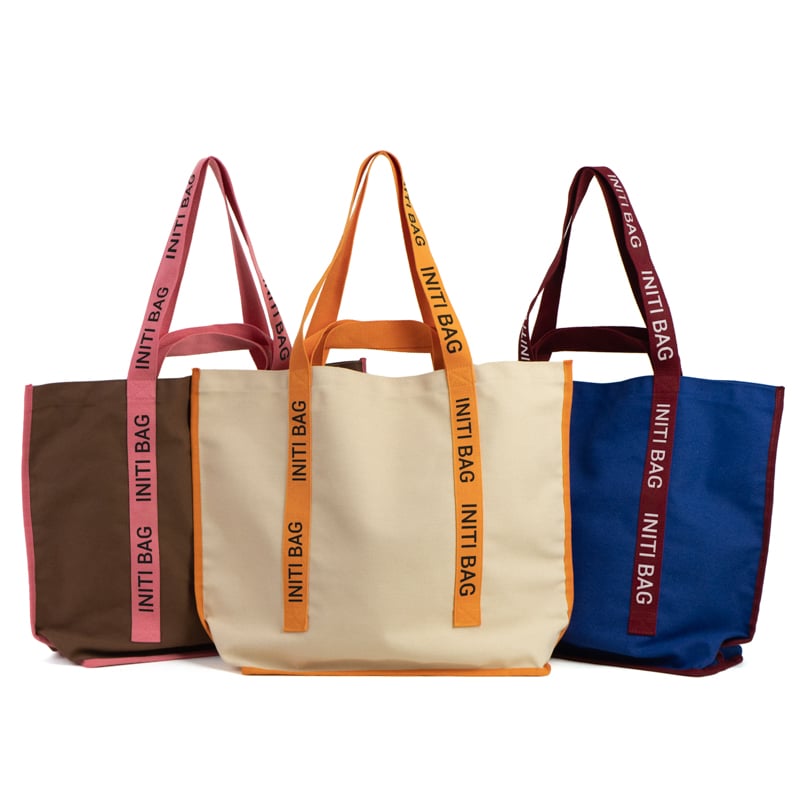
Printed PP Woven Tote with Branded Straps
RPET Bag Collection
Cotton Canvas Tote Bag Collection
Custom Tote Bag Collection
Related Blog Articles
Packaging Data Checklist for Custom Bag Importers
RPET Bag Certification Guide for B2B Buyers
Stitch-Bond Fabric for Reusable Shopping Bags
Non-Woven Shopping Bag Manufacturer
Non-Woven Bag Styles: D-Cut, W-Cut, Loop Handle & Box Bags
Official Regulatory References
Regulation (EU) 2025/40 — EU Packaging and Packaging Waste Regulation
Commission Notice C/2026/3084 — PPWR Implementation Guidance
European Commission — Packaging Waste Overview
European Commission — PPWR Implementation and Secondary Legislation
European Commission — PPWR Frequently Asked Questions



 Hot News