Choosing the right structure is an important part of developing a custom canvas tote bag. Two bags may use the same canvas fabric, have similar overall dimensions, and carry the same logo, yet offer very different user experiences because of how their bottoms and sides are constructed.
A flat canvas tote is often preferred for its simple appearance, lightweight construction, and easy storage. A gusseted canvas tote, on the other hand, provides additional depth and a more defined carrying space, making it suitable for products that need more room at the base or sides.
For procurement teams, retailers, promotional gift companies, and private-label brands, understanding these differences is particularly important when developing a tote bag for a specific product range or marketing campaign. A structure that works well for carrying brochures may not be suitable for boxed merchandise, apparel, or heavier retail products.
This guide compares flat bottom and gusseted canvas tote bags from a product development and sourcing perspective. It covers their construction, functional differences, dimensions, capacity, material considerations, sewing details, applications, and customization options to help buyers make more informed decisions before sampling and bulk production.
Flat vs. Gusseted Canvas Tote Bags: Quick Comparison
| Comparison Factor |
Flat Canvas Tote |
Gusseted Canvas Tote |
| Basic construction |
Two main body panels |
Body panels with additional gusset construction |
| Bottom depth |
No defined gusset depth |
Defined bottom depth when a bottom gusset is included |
| Side depth |
No separate side gusset |
Available depending on construction |
| Empty appearance |
Flat, rectangular profile |
More dimensional when opened |
| Filled appearance |
Front and back panels expand outward |
Contents sit within a more defined base and/or side structure |
| Usable capacity |
More limited for bulky products |
Generally better suited to products requiring depth |
| Material consumption |
Usually lower |
Usually higher |
| Sewing complexity |
Relatively simple |
More seams and alignment points |
| Storage |
Easy to fold and stack |
Depends on gusset depth and structure |
| Branding surface |
Broad, relatively flat front panel |
Broad front panel, with additional side and bottom areas |
| Typical applications |
Promotional totes, documents, brochures |
Retail merchandise, gift sets, shopping products |
| Cost considerations |
Generally economical |
May require additional fabric and sewing operations |
It is important to note that a gusseted bag is not automatically stronger than a flat tote. Its load performance depends on the canvas specification, handle attachment, seam construction, reinforcement, and the quality of the complete bag.
A deeper base provides more space, but it does not independently determine the weight the bag can safely carry.
What Is the Difference Between Flat and Gusseted Canvas Tote Bags?
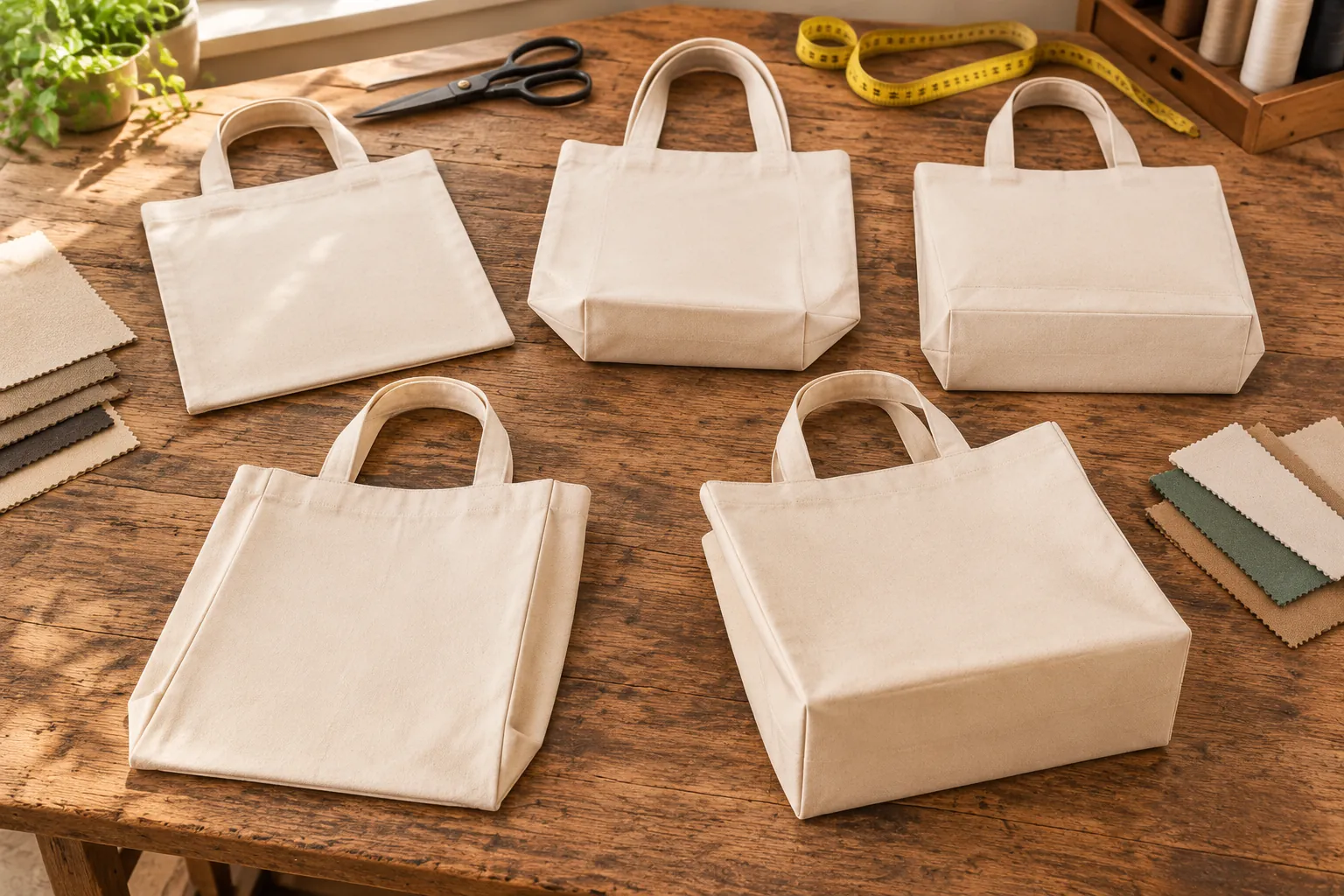
The main difference between flat and gusseted canvas tote bags is how the bag creates internal depth.
A flat tote generally uses two main body panels joined along the sides and bottom without a separately defined gusset. When the bag is empty and laid flat, it has a relatively simple rectangular profile.
A gusseted tote incorporates additional material or shaped construction at the bottom, sides, or both. This allows the bag to open into a three-dimensional form instead of relying entirely on the front and back panels to expand around the contents.
For buyers, the distinction is not simply about appearance. It affects how products sit inside the bag, how much usable space is available, and how the bag behaves when filled.
Flat Canvas Tote Bag
A flat canvas tote is generally made from two main fabric panels connected along the side and bottom seams. The top remains open or is finished with a folded hem, zipper, or another closure.
Because there is no defined bottom gusset, the bag does not have a built-in front-to-back base depth.
When empty, it usually looks like a flat rectangle. When filled with thicker items, the front and back panels move outward to accommodate the contents.
Its main characteristics include:
- Simple front and back panel construction.
- No separately defined bottom or side gusset.
- Relatively low material consumption.
- Lightweight and easy-to-store construction.
- A large, relatively uninterrupted front surface for branding.
- Limited natural depth compared with a gusseted design.
Gusseted Canvas Tote Bag
A gusseted canvas tote incorporates additional depth into its construction.
Depending on the design, the gusset may be positioned along the bottom, both sides, or the bottom and sides together.
This additional material allows the bag to open more fully when filled. Rather than having the front and back panels bulge around the contents, the bag can provide a more defined space for products.
Typical characteristics include:
- Additional depth created through gusset construction.
- More three-dimensional shape when opened.
- Greater suitability for bulky or irregularly shaped contents.
- More construction and sewing details to control.
- Potentially higher material consumption.
- More opportunities to customize the bag's proportions.
Understanding Different Gusseted Canvas Tote Bag Structures
Before comparing the advantages of each design, buyers should understand that gusseted tote bags are not all constructed in the same way.
The position of the gusset determines where additional space is created and how the bag looks when opened.
For custom canvas tote development, three common configurations are particularly relevant: bottom gusset, side gusset, and full gusset.
Bottom-Gusset Canvas Tote
A bottom-gusset tote has additional depth at the base while its main side edges remain relatively simple.
Depending on the pattern, the base may be formed using a separate bottom panel, folded fabric, or boxed-corner construction.
The main benefit is the creation of a wider front-to-back base. This provides more space for products with thickness, such as folded clothing, packaged gifts, and retail merchandise.
For example, a tote measuring 40 cm wide × 35 cm high with a 10 cm bottom gusset provides a nominal base depth of approximately 10 cm when fully opened.
The bag does not necessarily have a rigid rectangular shape. Its canvas remains flexible, and the sides can still move depending on the contents.
Main characteristics:
- Additional depth concentrated at the bottom.
- Relatively simple side profile.
- A more defined base than a flat tote.
- Suitable for products that need to sit across the bottom.
- Can be developed with shallow or deeper base dimensions.
One detail buyers should check is whether the bottom gusset is formed by folding the main body or by attaching a separate bottom panel. These approaches can produce different appearances and sewing requirements.
Side-Gusset Canvas Tote
A side-gusset tote incorporates additional fabric along both sides of the bag.
When opened, these panels create front-to-back depth and allow the bag to expand around its contents.
Unlike a basic flat tote, the side gussets provide a more defined three-dimensional body.
This construction can be useful for retail packaging and merchandise bags that need more internal room but do not necessarily require a separately reinforced base.
Main characteristics:
- Additional panels or shaped folds along both sides.
- Greater depth through the side construction.
- More dimensional appearance when opened.
- Additional side seams and sewing operations.
- Potential for printing or branding on the gusset panels.
A side-gusset design should be evaluated carefully if the bag needs to stand upright. Side depth alone does not guarantee a stable base. The bottom construction and material stiffness also influence how the bag sits when filled.
Full-Gusset Canvas Tote
A full-gusset tote combines bottom and side gusset construction.
This produces a more complete three-dimensional shape, with depth along the base and both sides.
Compared with a flat tote or a tote with only a bottom gusset, a full-gusset design generally provides more flexibility for accommodating bulky products.
It is particularly useful when the bag needs to carry several items together or when the contents have a more substantial volume.
Main characteristics:
- Defined depth along the bottom and sides.
- More box-like appearance when filled.
- Greater potential for accommodating bulky products.
- More fabric components and seam intersections.
- More demanding pattern alignment and sewing consistency.
For example, a retail tote measuring 42 cm wide × 35 cm high × 12 cm deep can provide a practical structure for packaged merchandise, clothing, and promotional gift sets.
However, the additional construction should be justified by the intended use. A full gusset may add unnecessary material and sewing cost to a bag designed primarily for brochures or flat promotional materials.
Boxed Corners(T-Gusset)vs. Separate Gusset Panels
Another point that often creates confusion is the difference between boxed corners and gusset panels.
Both can create depth, but they are not necessarily the same construction method.
Boxed corners are commonly formed by folding the lower corners of a sewn bag body, aligning the side and bottom seams, and stitching across the corner to create a flat base section.
The process can create a bottom depth without requiring a completely separate bottom panel.
Separate gusset panels use additional fabric pieces that are cut to the required dimensions and sewn into the main body.
These panels can be used to create bottom depth, side depth, or both.
The choice depends on the desired bag profile, production method, and finishing requirements.
| Construction Method |
How It Creates Depth |
Main Advantages |
Points to Consider |
| Flat construction |
No additional depth section |
Simple, economical, easy to store |
Limited space for bulky contents |
| Boxed corners |
Folded lower corners are stitched into a base |
Relatively simple way to create a defined bottom |
Corner alignment and finished dimensions need checking |
| Bottom gusset panel |
Separate or defined bottom section |
More controlled base dimensions |
Additional panel and seam operations |
| Side gusset panels |
Additional fabric along both sides |
Creates side depth and expansion space |
Side seams require consistent alignment |
| Full gusset |
Bottom and both sides incorporate depth |
More complete three-dimensional shape |
Higher construction complexity |
For buyers, the most reliable way to communicate a preferred construction is to provide a reference image, a side-view drawing, and the required finished dimensions rather than relying on the term "gusseted" alone.
How Does Construction Affect the Shape and Appearance of a Canvas Tote?
The structural difference becomes more noticeable when a bag is filled.
A flat tote and a gusseted tote may look similar when viewed from the front, especially when both are made from the same canvas fabric. However, their profiles and proportions can change significantly once products are placed inside.
Appearance of an Empty Bag
A flat canvas tote usually has a simple, clean silhouette.
The front and back panels lie close together, making the bag easy to fold and store. This appearance is useful for promotional products where a minimal design is preferred.
A gusseted tote may show additional folds or panels along the base and sides. Depending on its depth, it can look more substantial even when empty.
A shallow bottom gusset may create only a subtle difference, while a deeper full gusset produces a more pronounced three-dimensional profile.
Appearance When Filled
The differences become clearer when the bags carry products.
A flat tote accommodates thicker contents by allowing its front and back panels to move outward. This can produce a rounded or curved body, particularly when the contents are concentrated in the middle.
A bottom-gusseted tote provides a defined base area. Products can sit across the bottom instead of forcing the entire front and back panels to bulge outward.
A full-gusset tote provides depth along the sides as well, allowing the body to expand into a more box-like form.
Flat vs. Gusseted Canvas Tote Bags: Which Offers More Usable Capacity?
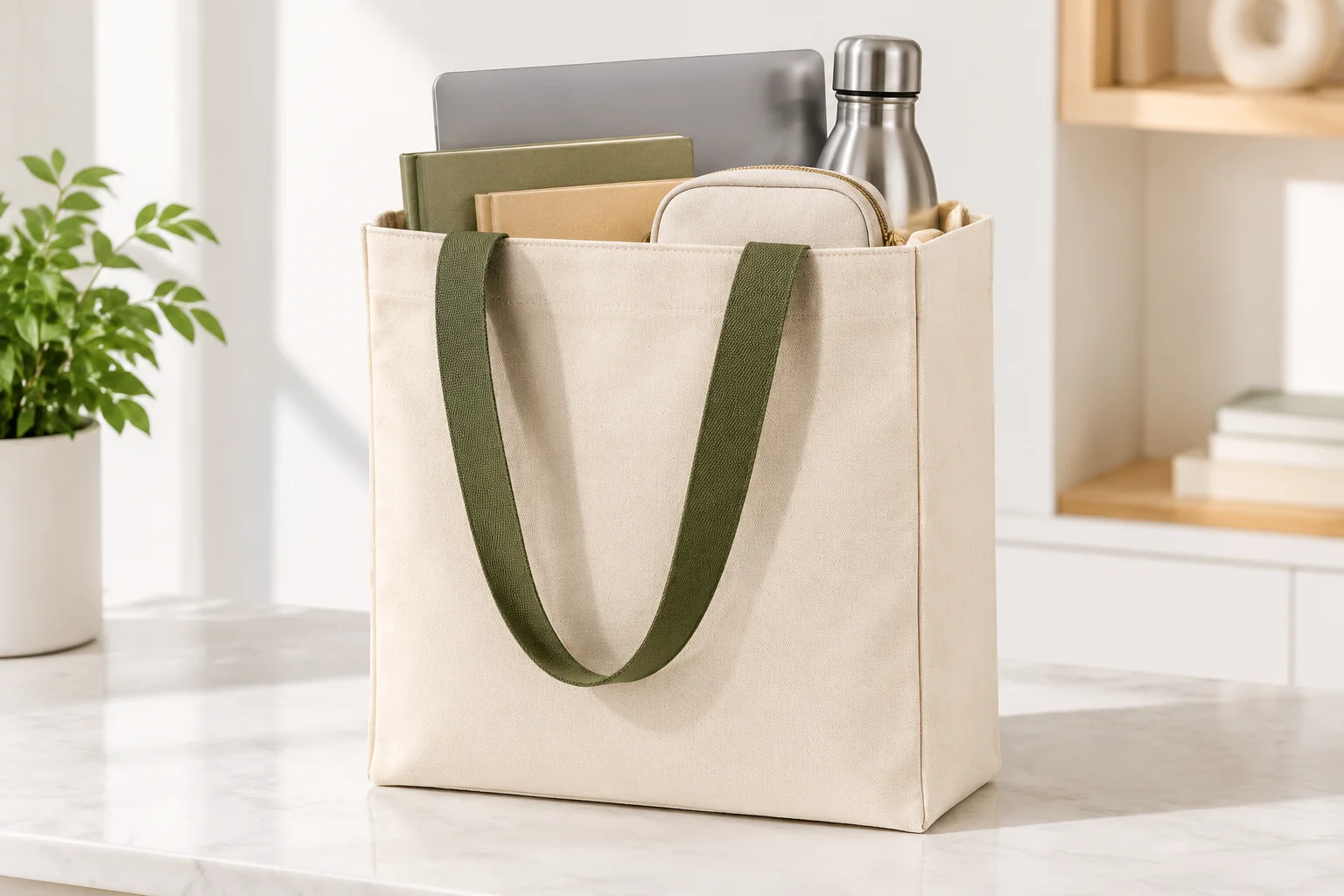
Capacity is one of the most important reasons buyers consider a gusseted construction.
However, it is important to distinguish between external dimensions, theoretical volume, and actual usable capacity.
A bag may have a large stated width and height but still be unsuitable for a particular product if it lacks sufficient depth.
Why Base Depth Dictates Load Geometry
When evaluating internal space, the baseline comparison is between a 2D Envelope (Flat) and a 3D Prismatic Base (Gusseted):
-
Flat Tote (e,g,, 40cm W × 35cm H): Operates on tension displacement. When a solid object with depth is inserted, the front and back panels pull inward. Rule of Thumb: Every 5 cm of product thickness reduces the effective flat width by approximately 4 cm and shortens the usable height by 2.5 cm.
-
Bottom Gusset Tote (e,g,, 40cm W × 35cm H × 10cm D): Features a dedicated base panel (or folded boxed corners). The 10 cm base absorbs product depth without pulling the side seams inward, keeping the front graphic print flat and visible.
Engineering Capacity: Theoretical Volume vs. Usable Capacity
While standard geometric volume is W×H×D, woven cotton canvas behaves dynamically:
Theoretical Volume=40 cm×35 cm×10 cm=14,000 cm3 (14 Liters)
In real-world B2B sourcing, apply a Usability Factor of 80%–85% to account for:
-
Top Hem Allowance & Closure Loss: The top 3–5 cm of the bag cannot be packed without obstructing the handle clearance or zipper closure.
-
Internal Seam Margins: Overlock or French seams consume 1.2–2.0 cm of internal perimeter.
-
Fabric Rigidity: Heavier canvas (12–16 oz) resists outward bulging, maintaining defined corners but reducing stretch capacity compared to lightweight 6–8 oz cotton.
Usable Benchmark: A 14L theoretical tote delivers ≈11.2L−11.9L of practical, non-distorted storage space.
Common Reference Dimensions
The following dimensions can serve as initial references for custom canvas tote development.
| Intended Merchandise / Contents |
Representative Dimensions (W×H×D)
|
Minimum Required Bag Structure |
Structural Justification |
| Catalogues / Event Brochures |
|
Flat Tote |
Keeps paper documents vertical and prevents corner bending without excess bulk. |
| Apparel (Folded Hoodies / T-Shirts) |
28×32×6 cm (Stack of 2)
|
T-Bottom Gusset (6–8 cm)
|
Bottom expansion accommodates folded height while maintaining slim side profiles. |
| Footwear / Shoe Boxes |
|
Full 3-Panel Gusset (12-14cm)
|
Rectangular base prevents edge blowout and maintains structural balance when carried. |
| Cosmetic / Retail Gift Boxes |
24×18×8 cm
|
Bottom / Full Gusset (10cm)
|
Prevents deformation of rigid packaging corners. |
| Grocery / Supermarket Loads |
Multi-item irregular loads |
Full Box Gusset (15–18 cm) |
Maximizes cubic volume and distributes heavy point-loads across base seams. |
A bag may have a 12 cm bottom gusset but still be unsuitable for a wide merchandise box if its top opening is too narrow.
Circumference Check for Boxed Items:
Minimum Flat Top Opening Width≥Box Width+Box Depth+3 cm (Clearance) Example: For a box 28 cm wide×8 cm deep, the minimum flat top opening must be at least 39 cm (28+8+3=39 cm).
Closure Reductions:
- Open Top: 100% of nominal width available.
-
Magnetic Snap: Reduces usable opening entry height by 2.5 cm.
-
Recessed Zipper Top: Reduces usable lateral entry width by 3–5 cm due to end-stop tab stitching.
The Clearance Buffer Rule (Tolerance Sizing)
When calculating finished dimensions from target merchandise:
- Finished Bag Width=Product Width+2.0–3.0 cm
- Finished Bag Height=Product Height+4.0–6.0 cm (Allows for handle roll and closure)
- Finished Gusset Depth=Product Depth+1.5–2.5 cm (Prevents seam tension stretching)
The final dimension should be confirmed using a physical sample rather than relying only on a calculation.
How to Choose the Right Dimensions for Flat and Gusseted Canvas Totes
Common Reference Dimensions
The following dimensions can serve as initial references for custom canvas tote development.
| Bag Type |
Illustrative Finished Dimensions (W × H × D) |
Typical Direction |
| Small flat promotional tote |
28 × 30 cm |
Lightweight gifts and event materials |
| Medium flat tote |
35 × 40 cm |
Brochures, documents, and lightweight merchandise |
| Shallow bottom-gusset tote |
38 × 40 × 5 cm |
Small retail products and gift packaging |
| Medium bottom-gusset tote |
40 × 35 × 10 cm |
Folded apparel and merchandise |
| Medium full-gusset tote |
42 × 35 × 12 cm |
Retail shopping and gift sets |
| Large full-gusset tote |
48 × 40 × 15 cm |
Larger shopping and lifestyle products |
These are illustrative development dimensions, not fixed industry standards or guaranteed capacities.
The final dimensions should be adjusted according to the products the bag will carry.
Critical Dimension Checkpoints by Construction Type
Flat Totes (2-Panel Construction)
- Finished Width: Measured seam-to-seam across the middle.
- Finished Height: Measured from top opening rim to bottom folded/stitched edge.
-
Print Window Clearance: Minimum 5 cm margin from all outer seams and top hem to ensure screen print/embroidery hooping clearance.
Bottom Gusset Totes (Pinch / T-Bottom)
- Lay-Flat Width: Top rim measurement when pressed flat.
-
Base Width: Actual standing base width (Lay-Flat Width−Gusset Depth).
-
Gusset Cutout Depth: Corner cut dimension (5×5 cm cut yields a 10 cm expanded bottom).
Full 3-Panel Gusset Totes (Front + Back + Continuous Side/Bottom Band)
- Top Width = Bottom Width: Equal rectangle structure.
- Side Panel Width: Must match base panel width exactly across all join seams.
How to Confirm Measurements With a Supplier
Before sampling, buyers should confirm the measurement method.
For example, a specification reading 40 × 35 × 10 cm may be interpreted differently if the supplier does not know whether the measurements refer to the external dimensions, internal dimensions, or finished dimensions after sewing.
A useful specification should include:
- Finished top width.
- Finished height.
- Finished bottom width, if applicable.
- Bottom gusset depth.
- Side gusset depth, if applicable.
- Handle length and handle drop.
- Top hem allowance.
- Whether the measurements are taken with the bag laid flat or opened.
It is also useful to provide a simple front-view and side-view drawing.
A side-view drawing is particularly important because it shows the intended depth more clearly than a front-facing product image.
How Does Gusset Construction Affect Canvas Fabric Consumption and Cost?
The structure of a canvas tote affects not only its appearance and capacity but also the amount of material and labor required during production.
For buyers working with a target unit price, understanding these differences helps explain why two bags with similar external dimensions may receive different quotations.
Fabric Consumption
A basic flat tote generally uses two main body panels, together with fabric for handles and the top finishing.
A gusseted tote may require additional fabric for the bottom, sides, or both.
For example:
- A flat tote requires front and back panels.
- A bottom-gusset tote may require additional material for the base or extra fabric to form the bottom structure.
- A side-gusset tote requires additional side material.
- A full-gusset tote may require bottom and side panels or a continuous gusset component.
The actual material consumption depends on the pattern and production method.
It is not accurate to assume that every gusseted tote uses a separate fabric piece for every gusset. Some designs create depth through folding and shaping the main body fabric.
Sewing Labor and Production Complexity
Additional fabric panels usually create more sewing operations.
For example, a full-gusset tote may require the manufacturer to:
- Cut the front and back panels.
- Cut the side and bottom gusset components.
- Align the panels according to the pattern.
- Sew the side and bottom connections.
- Finish the seam allowances.
- Check the bag's symmetry and dimensions.
Compared with a simple flat tote, this creates more opportunities for sewing variation.
The bottom corners and side-to-bottom intersections deserve particular attention because uneven sewing can affect the final shape.
Main Cost Differences
| Cost Factor |
Flat Tote |
Gusseted Tote |
| Main body fabric |
Generally lower consumption |
Additional fabric may be required |
| Pattern components |
Relatively simple |
More components depending on design |
| Cutting |
Fewer main panels |
Additional panel cutting or shaping |
| Sewing operations |
Generally fewer |
More seams and alignment operations |
| Seam finishing |
Fewer structural intersections |
More corners and connection points |
| Production time |
Usually shorter |
May require additional sewing time |
| Quality inspection |
Basic shape and seam checks |
Additional depth, corner, and panel checks |
| Overall cost |
Generally more economical |
Depends on gusset type and reinforcement requirements |
The price difference is not always significant for every design.
A simple boxed-corner tote may require only a modest increase in production operations, while a fully gusseted bag with lining, reinforced base, and additional finishing can involve a much more substantial change.
Does a Gusseted Tote Always Cost More?
Usually, a gusseted design requires more material or construction work, but the final price depends on the complete specification.
A shallow gusset formed through boxed corners may have a relatively small impact on production cost.
A full-gusset tote with a separate bottom panel, lining, reinforced seams, and additional hardware will generally involve more manufacturing work.
When comparing supplier quotations, buyers should avoid comparing only the finished dimensions.
A more accurate comparison should include:
- Canvas weight and composition.
- Gusset type and dimensions.
- Number of fabric panels.
- Single-layer or double-layer bottom.
- Handle material and attachment method.
- Lining requirements.
- Printing or embroidery.
- Packaging and order quantity.
This helps determine whether a price difference comes from the structure itself or from other design specifications.
Does a Gusseted Canvas Tote Have Better Load-Bearing Performance?
From a structural engineering standpoint, a gusset does not automatically increase the ultimate tensile strength of canvas, but it fundamentally improves load distribution.
In a flat tote, rigid or heavy contents create concentrated point-loads and lateral peeling stress along the side seams. In a gusseted tote, the expanded base converts point-loads into planar surface distribution, reducing seam stress concentration by up to 35%—provided the load chain (base seam → fabric → handle anchors) is properly engineered.
The Role of the Bottom Structure
The bottom construction dictates how gravitational force is transferred across the lower panel:
- Boxed corners / T-Gusset: Uses a continuous bottom fabric fold with angled corner seams. Best for distributed soft loads (apparel, groceries) up to 10 kg. Avoid sharp-edged rigid boxes, which exert cutting pressure on the single-layer corner folds.
- 3-Panel Continuous Gusset (Stitched Base): Uses a dedicated bottom/side strip joined by reinforced seams. Handles heavier loads up to 18 kg if sewn with a 5-thread safety stitch or bound lap seam.
Base Reinforcement Engineering Matrix
| Reinforcement Method |
Technical Construction |
Load Capacity Upgrade |
Best Use Case |
| Standard Single-Ply |
Base fabric matching the body (10–14 oz)
|
Baseline (
|
Standard retail & lifestyle merchandise |
| Double-Layer Base (2-Ply) |
2× layer canvas folded across the bottom
|
+40% puncture & abrasion resistance
|
Heavy bottles, canned goods, metal items |
| Removable PE/PP Base Board |
1.2–1.5 mm extruded plastic board wrapped in lining
|
Prevents base sagging; maintains rigid rectangular shape |
Wine totes, multi-tier cosmetic sets, tool carriers |
| Continuous Webbing Cradle |
Handle webbing runs down both sides and wraps under the base |
+100% (Bypasses fabric shear load; load hangs on webbing) |
Heavy-duty grocery & industrial tool bags (20 kg+)
|
Handle Attachment Is Still Critical
A tote bag's carrying load is transferred through the handles and their attachment points into the main body structure.
This means that adding a gusset does not eliminate the need for appropriate handle reinforcement.
For example, a large gusseted tote made with heavy canvas may still develop problems if its handles are attached with insufficient stitching or poorly positioned reinforcement.
Buyers should pay attention to:
- Handle width and thickness.
- Handle material.
- Handle attachment length.
- Stitching pattern.
- Reinforcement patch dimensions.
- Distance between the handle attachment points.
- Whether the handles are attached through the main body or connected to reinforced sections.
For a more detailed comparison of handle reinforcement methods, buyers can refer to the separate guide on tote bag load capacity and stitching methods.
Fabric Weight and Bag Structure Work Together
Canvas weight is another important consideration.
A heavier canvas may provide more body and resistance to deformation, but it does not automatically produce a stronger finished bag.
The final performance also depends on the yarn, fabric construction, seam quality, handle design, and reinforcement.
The following table is only for selection reference and is not a fixed load-bearing level.
| Fabric Weight |
Fabric Density / Yarn Count |
Tensile Strength (Warp × Weft) |
Safe Working Load (SWL) |
Recommended Seam Type |
| 8 oz (270 GSM) |
10s/2 × 10s/2 |
≥ 600 N × 450 N |
4–6 kg (9–13 lbs) |
4-Thread Overlock |
| 10 oz (340 GSM) |
10s/2 × 10s/3 |
≥ 850 N × 650 N |
8–10 kg (17–22 lbs) |
Overlock with Topstitch |
| 12 oz (410 GSM) |
10s/3 × 10s/3 |
≥ 1100 N × 900 N |
12–15 kg (26–33 lbs) |
Bound Seam / Flat-Fell |
| 16 oz (540 GSM) |
10s/4 × 10s/4 |
≥ 1500 N × 1200 N |
18–22 kg (40–48 lbs) |
Double Flat-Fell Seam |
Note: Safe Working Load (SWL) represents continuous dynamic carrying capacity without seam elongation or distortion.
How Should Buyers Test Load Performance?
Instead of relying on the fabric weight or gusset dimensions alone, buyers should evaluate the finished sample under a defined test procedure.
A practical evaluation can include:
| Test Item |
What to Check |
Why It Matters |
| Static load test |
Whether the bag can hold the agreed test weight |
Evaluates basic carrying performance |
| Handle attachment |
Whether the attachment points show excessive stretching or damage |
Identifies potential handle failure |
| Bottom seam |
Whether the bottom seams remain intact under load |
Checks the main load-supporting area |
| Corner inspection |
Whether gusset corners show opening or distortion |
Evaluates high-stress connection points |
| Repeated carrying |
Whether the bag develops damage after repeated use |
Provides insight into everyday durability |
| Filled-shape inspection |
Whether the bag remains reasonably balanced |
Evaluates practical usability |
There is no universal safe load rating based solely on canvas weight or gusset depth.
If a project requires a specific carrying capacity, buyers should agree on the test weight, loading method, test duration, and acceptance criteria with the supplier before bulk production.
Which Canvas Tote Structure Is Better for Printing and Branding?
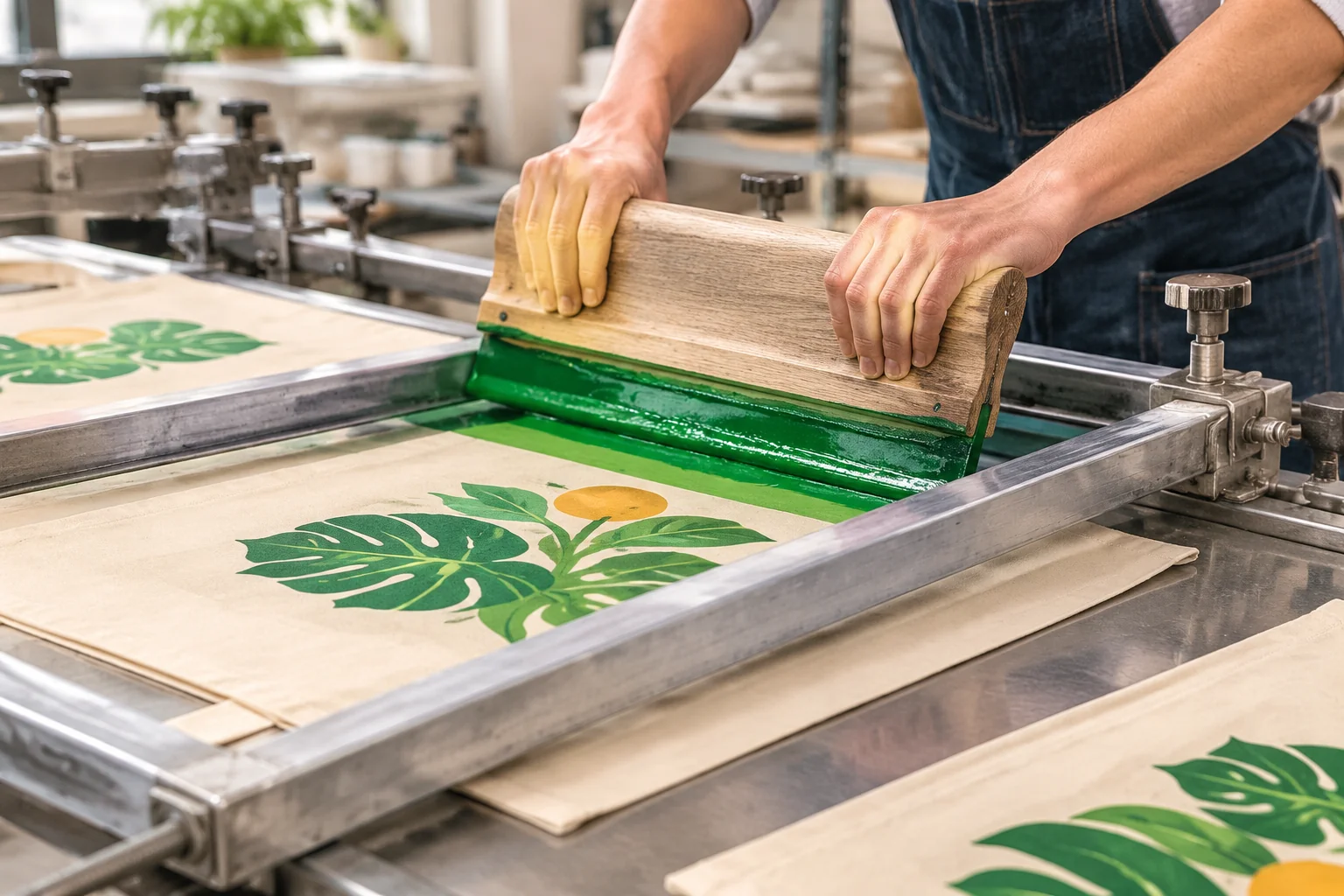
For promotional gift companies and private-label brands, the available branding area can influence the choice of bag construction.
Both flat and gusseted canvas totes offer customization opportunities, but the placement and presentation of the logo may differ.
Flat Tote: A Large, Uninterrupted Front Surface
One advantage of a flat tote is its relatively simple front panel.
Because there are no additional side gusset panels, the front surface provides a straightforward area for printing.
This is useful for:
- Large brand logos.
- Event graphics.
- Promotional messages.
- Illustrations.
- Repeated patterns.
- Large-format screen printing.
The simple silhouette can also help reduce the visual complexity of the finished product.
For campaigns where the printed design is the main selling point, a flat tote can be a practical option.
Gusseted Totes: Multi-Panel Branding & Structural Balance
Gusseted constructions reduce front-panel barrel distortion by absorbing depth at the base, while introducing supplementary surface touchpoints for premium retail branding.
Multi-Touchpoint Branding Architecture:
- Primary Face (Front): Core brand artwork & campaign visual
- Secondary Face (Back): Secondary logo, slogan, or minimalist QR badge
- Side Gusset Bands: Vertical typographic branding, website URLs, or coordinates
- Base Exterior: Subtle embossed silicone print or screen-printed brand mantra
- Side/Top Seam Insertions: Woven damask tags, Tyvek labels, or silicone pinch tabs
The Seam Misalignment Trap (Wrap-Around Artwork): In cut-and-sew manufacturing, standard manual stitching tolerance is ±2–3 mm. Continuous artwork wrapping across the front panel onto the side gusset carries a high risk of pattern misalignment at the join seam. Isolate graphics on individual panels with a minimum 15 mm clear margin from all edge seams, rather than attempting continuous multi-panel registration.
Printing Position and Seam Allowances
To prevent graphic cutoff during sewing, embroidery hooping, and handle attachment, enforce the following minimum clearance specifications in your Tech Pack:
Top Rim Clearance: Minimum 6.0 cm below top edge (Clears 3.5 cm internal hem fold + 1.5 cm handle Box-X stitch overlap + 1.0 cm safety buffer).
Lateral Seam Clearance: Minimum 3.0 cm from side edges (Prevents print distortion inside overlock / French seam bite).
Bottom Gusset Clearance:
- Flat Tote: Minimum 3.0 cm from bottom fold.
- T-Gusset: Minimum 4.0 cm above the apex of the corner cutout seam.
- Full 3-Panel Gusset: Minimum 3.5 cm from the base join seam.
Handle Gap Alignment: Center artwork precisely between handle drop anchor spans (Standard: 12–15 cm gap).
Sourcing Strategy: Cut-Piece Printing vs. Post-Assembly Printing
When negotiating with OEM/ODM suppliers, the printing stage dictates setup cost, moq and print precision:
| Manufacturing Method |
Process Flow |
Minimum Order Quantity (MOQ) |
Registration Accuracy |
Maximum Print Coverage |
Cost Impact |
| Post-Assembly Printing (Finished Bag) |
Blank bags stitched → Screen printed on manual/automatic platen carousel |
Low |
Standard (±3.0 mm) |
Limited to center chest area (<60% surface) |
Lowest setup cost; fast turnaround; limited print placement flexibility. |
| Cut-Piece Printing (Pre-Assembly) |
Fabric cut into flat panels → Printed flat on table → Stitched into bag |
High |
High (±0.8 mm) |
Full bleed / edge-to-edge / multi-panel printing |
Higher setup / mold cost; eliminates hoop marks and seam collision risks. |
Which Structure Is Better for Different B2B Applications?
The best structure depends on the products the bag needs to carry and the experience the end customer should receive.
A flat tote is not automatically a budget alternative, and a gusseted tote is not automatically a premium option.
Each construction serves a different purpose.
Promotional Event and Trade Show Bags
Flat canvas totes are often suitable for promotional events, conferences, exhibitions, and trade shows.
These bags commonly carry:
- Brochures.
- Catalogs.
- Flyers.
- Notebooks.
- Lightweight samples.
- Event materials.
The simple structure offers a relatively large front printing area and is easy to distribute in bulk.
For event programs with a limited budget and lightweight contents, flat totes can be an efficient option.
However, if exhibitors intend to include boxed samples, bottles, or multiple promotional products, a shallow gusset may provide a more practical carrying space.
Suggested direction: Flat tote for paper-based materials; shallow or bottom-gusset tote for mixed promotional merchandise.
Retail Shopping Bags
Retail bags often need to carry products with different dimensions and packaging shapes.
A flat tote may work for clothing or lightweight products, but it may be less convenient when customers purchase several items together.
A gusseted tote provides more room for products with thickness and can make the bag easier to load.
For retail programs, the choice should consider:
- Typical product dimensions.
- Number of products per purchase.
- Packaging thickness.
- Expected carrying frequency.
- Handle comfort.
- Shelf and storage requirements.
Suggested direction: Bottom-gusset or full-gusset construction, depending on the products and required capacity.
Gift Sets and Corporate Merchandise
Gift sets often include several items packed together, such as notebooks, stationery, drinkware, accessories, or boxed products.
The packaging dimensions are usually fixed, making it easier to design the bag around the complete gift set.
A gusseted tote can accommodate the depth of the packaged products and create a more substantial presentation.
For premium corporate gifts, buyers may also consider a lined interior, a reinforced base, or a closure.
However, the bag should not be unnecessarily oversized. Excessive empty space can cause the contents to move around and may make the gift presentation less attractive.
Suggested direction: Bottom-gusset or full-gusset tote matched to the dimensions of the complete gift set.
Apparel and Fashion Retail
Apparel is a flexible product category, so both structures can be suitable.
A flat tote works well for folded T-shirts, lightweight clothing, and simple merchandise packaging.
A gusseted tote is more useful when the bag needs to carry several clothing items, thicker garments, or products packed in boxes.
For fashion brands, the silhouette may be just as important as capacity.
A flat tote can create a minimal, casual appearance, while a deeper gusseted tote can provide a more substantial retail look.
Suggested direction: Flat tote for lightweight apparel; bottom-gusset or full-gusset tote for multiple garments or boxed products.
Grocery and Daily Shopping
Grocery products vary significantly in shape and weight.
A tote used for groceries may need to carry packaged food, containers, bottles, and irregularly shaped products.
A flat tote may be suitable for a few lightweight items, but a gusseted design generally provides a more practical base for larger shopping loads.
The bottom and handle construction should be evaluated together.
If the bag is intended for repeated shopping use, buyers should also consider reinforced seams and a suitable fabric specification.
Suggested direction: Full-gusset construction for larger or mixed grocery loads; bottom gusset for simpler shopping applications.
Bookstores and Stationery Retail
Books and stationery products can be relatively flat, but their weight should not be overlooked.
A flat tote can be suitable for one or two books, notebooks, and folders, particularly when the bag's width and height are appropriately selected.
A bottom gusset becomes more useful when the bag needs to hold several books, stationery sets, or packaged products.
For this category, the handle attachment and bottom seam may deserve more attention than simply increasing the gusset depth.
Suggested direction: Flat tote for light document and stationery use; bottom-gusset tote for multiple books and mixed merchandise.
Premium Promotional and Private-Label Collections
Private-label products often need to balance appearance, usability, and brand positioning.
A flat tote can work well for minimalist branding and lightweight merchandise.
A gusseted tote provides more opportunities for additional design details, such as:
- Contrast bottom panels.
- Side branding.
- Interior pockets.
- Reinforced base construction.
- Coordinated webbing handles.
- Decorative labels.
- Lining and closure options.
The important point is to select features that support the product's purpose rather than adding details without a clear functional reason.
Suggested direction: Either construction can work; select based on the desired silhouette, product dimensions, and overall design specification.
Application Comparison
| B2B Application |
Recommended Structure |
Main Reason |
| Trade show giveaways |
Flat |
Simple, economical, and suitable for printed materials |
| Promotional merchandise sets |
Bottom gusset |
Provides room for products with some thickness |
| Retail clothing |
Flat or bottom gusset |
Depends on whether garments are folded or boxed |
| Grocery shopping |
Bottom or full gusset |
Provides a more useful base |
| Gift packaging |
Bottom or full gusset |
Accommodates packaged products |
| Bookstore merchandise |
Flat or bottom gusset |
Depends on the number and thickness of books |
| Premium retail collections |
Bottom or full gusset |
Offers more structural and customization options |
| Lightweight brand merchandise |
Flat |
Maintains a simple silhouette and easy storage |
Customization Options for Flat and Gusseted Canvas Tote Bags
Once the basic structure has been selected, buyers can customize the other elements to match the product requirements and brand identity.
The key is to consider the complete design rather than treating each component as an isolated choice.
Canvas Fabric Weight
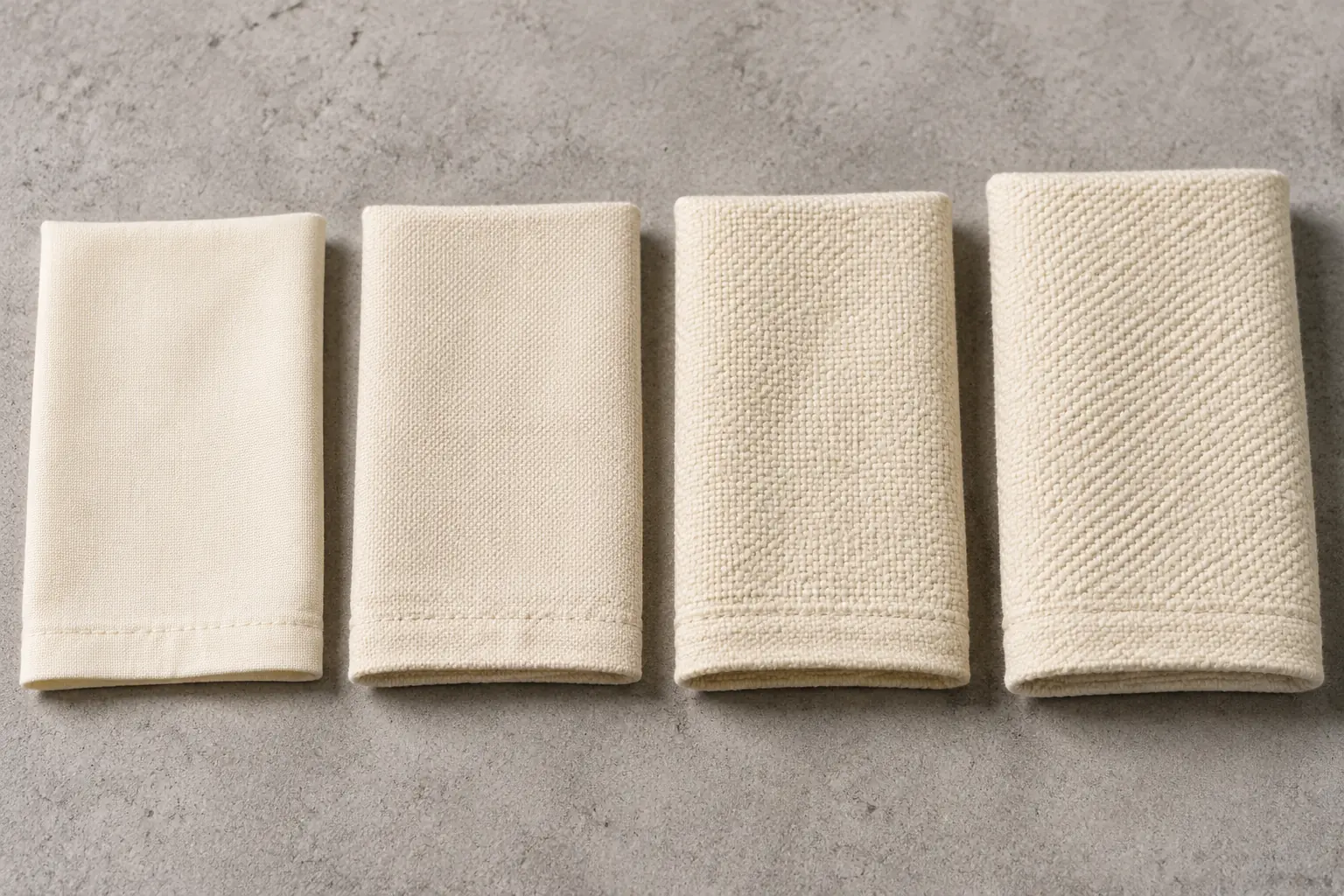
Canvas weight influences the appearance, hand feel, flexibility, and overall body of the tote.
Common reference directions include:
| Canvas Weight |
General Characteristics |
Possible Applications |
| 6–8 oz |
Relatively lightweight and flexible |
Promotional totes and lightweight giveaways |
| 10 oz |
Moderate body and everyday flexibility |
General retail and branded tote bags |
| 12 oz |
More substantial hand feel |
Shopping totes and merchandise bags |
| 14 oz |
Heavier and more structured |
Premium or larger canvas totes |
| 16 oz and above |
Heavy construction with a more substantial feel |
Specialized heavy-duty designs |
These ranges are general development references. Actual fabric performance also depends on the weave, yarn, finishing, and supplier specification.
A heavier fabric is not necessarily required for every gusseted tote. Buyers should select the canvas according to the intended load, appearance, and handling requirements.
Bottom Reinforcement
A gusseted tote can be developed with different bottom reinforcement options.
Single-layer bottom: Uses the main fabric construction without an additional reinforcement layer. It can be suitable for lightweight applications.
Double-layer bottom: Adds another layer of fabric to the base. This may improve resistance to surface wear and provide a more substantial feel.
Separate bottom insert: A removable or fixed insert can help the base maintain a flatter shape when the bag is filled.
The insert material and thickness should be selected according to the intended flexibility and storage requirements.
For example, a foldable promotional tote may not benefit from a rigid bottom insert because it can make the bag harder to store.
Handle Options
Handle design should match the bag's dimensions and carrying purpose.
Common options include:
- Self-fabric canvas handles.
- Cotton webbing handles.
- Polyester webbing handles.
- Short handles for hand carrying.
- Longer handles for shoulder carrying.
- Wider handles for larger bags.
For a gusseted tote, the handle position should be checked with the bag fully opened and loaded.
If the base becomes wider, the bag's balance may change when carried. Handle spacing and drop length should therefore be reviewed on the sample.
Lining and Interior Finishing
A lining can improve the interior appearance and provide additional opportunities for customization.
Possible options include:
- Unlined construction.
- Cotton lining.
- Polyester lining.
- Internal pockets.
- Zipper pockets.
- Divided compartments.
However, lining should not be added automatically.
It increases material consumption and sewing operations, and it may affect the bag's flexibility and finished weight.
For simple promotional totes, an unlined construction may be sufficient. For premium retail or private-label bags, a lining may be justified by the intended product positioning.
Closures and Additional Details
Both flat and gusseted canvas totes can incorporate different closure systems.
| Customization |
Potential Benefit |
Design Consideration |
| Open top |
Easy access and simple construction |
Contents remain exposed |
| Magnetic snap |
Convenient closure |
Requires suitable attachment positioning |
| Button closure |
Simple and decorative |
Check fastening strength and usability |
| Zipper |
Helps secure contents |
Requires additional top-edge construction |
| Inner pocket |
Separates small items |
Uses additional fabric and sewing |
| Woven label |
Adds brand identification |
Confirm placement and dimensions |
| Contrast bottom panel |
Creates a visual design feature |
Check fabric compatibility and seam alignment |
The final combination should reflect the target product and budget.
A basic promotional tote does not need the same finishing details as a premium branded shopping bag.
FAQ
1. What is the main difference between a flat canvas tote and a gusseted canvas tote?
A flat canvas tote generally has no defined bottom or side gusset, while a gusseted tote incorporates additional material or shaped construction to create depth. Flat totes are suitable for relatively thin contents, whereas gusseted totes are often more practical for products with thickness or bulk.
2. Is a bottom-gusset tote better than a flat tote?
Neither is universally better. A bottom-gusset tote is more suitable when products need a defined base or additional front-to-back depth. A flat tote is often preferable for lightweight promotional materials, documents, and projects where a simple silhouette is important.
3. What is the difference between a bottom gusset and a full gusset?
A bottom gusset creates depth at the base of the bag, while a full gusset incorporates depth along the bottom and both sides. A full-gusset tote generally has a more complete three-dimensional shape.
4. Are boxed corners the same as gussets?
Not exactly. Boxed corners are generally created by folding and stitching the lower corners of a bag body to form a base. A gusset can be created through additional fabric panels or other shaped construction methods. Both can create depth, but their pattern and sewing methods differ.
5. Can a flat canvas tote be customized with pockets and a zipper?
Yes. Flat totes can incorporate internal pockets, external pockets, zippers, magnetic snaps, and other features. However, additional components may change the bag's thickness, construction complexity, and finished appearance. The pattern should account for these details before production.
Conclusion
Choosing between a flat canvas tote bag and a gusseted canvas tote bag is not simply a matter of appearance. The more important consideration is how the bag will be used, what it needs to carry, and what level of structure the project requires.
A flat canvas tote bag has no separate bottom gusset or built-in bottom depth. Its front and back panels are joined along the bottom and sides, creating a simple, lightweight construction. This design works well for lightweight promotional materials, documents, brochures, and other relatively flat items. It is also a practical option for projects where easy storage, straightforward production, and a clean printing surface are priorities.
A gusseted canvas tote bag, by comparison, includes additional fabric at the bottom, sides, or both, creating more usable internal depth. A bottom gusset provides a wider base, while side gussets allow the bag to expand across its width. Full-gusset designs combine both features to create a more structured shape. These constructions are generally more suitable for carrying bulkier products, retail purchases, packaged goods, and heavier everyday items, provided that the fabric and reinforcement specifications are appropriate.
At INITI, we understand that different promotional, retail, and private-label projects require different bag constructions. When developing custom canvas tote bags, buyers can consider variations in bag dimensions, gusset depth, canvas weight, handle specifications, stitching, and printing methods to match their intended applications. Defining these details early helps make sample evaluation, supplier communication, and bulk production more consistent.
Ultimately, the right canvas tote bag structure is the one that balances functionality, appearance, durability, and budget. Whether your project calls for a simple flat tote or a more spacious gusseted design, a clearly defined specification is the starting point for developing a bag that meets your product and business requirements.
Related Products
Related Blog & Application Articles



 Hot News