A canvas tote bag is often designed with a simple main compartment, but adding well-planned pockets can make it considerably more functional. For retailers, promotional product companies, corporate gift suppliers, and private-label brands, pockets are not simply decorative details. They influence how users organize belongings, access frequently used items, and interact with the bag in everyday situations.
However, adding pockets to a canvas tote requires more than attaching extra pieces of fabric to the front or inside of the bag. Pocket size, depth, opening direction, placement, fabric compatibility, stitching, and reinforcement all affect the finished product. A pocket that looks attractive in a product drawing may turn out to be difficult to access, too shallow for its intended contents, or inconvenient when the main compartment is fully loaded.
For B2B buyers developing custom canvas tote bags, understanding these design and construction details is important before approving a sample or placing a bulk order.
This guide explores different canvas tote bag pocket designs, their practical applications, construction methods, material considerations, customization possibilities, and quality inspection requirements. It also explains how buyers can develop a pocket configuration that balances functionality, appearance, production complexity, and target cost.
Why Add Pockets to a Canvas Tote Bag?
Traditional canvas tote bags are known for their straightforward structure. Most designs feature a large central compartment with an open top, providing enough space for shopping products, books, documents, promotional materials, or everyday belongings.
Although this simple design works for many applications, it does not always provide enough organization.
When several small items are placed inside one large compartment, users may need to search through the contents to find their phones, keys, cards, pens, or other frequently used belongings. This becomes particularly inconvenient when the bag is relatively deep or contains several larger products.
Pockets help address this problem by creating separate storage areas without necessarily changing the overall silhouette of the tote.
Improve Everyday Organization
One of the main purposes of adding pockets is to separate small belongings from the main contents.
For example, an internal slip pocket can hold a smartphone, while a smaller compartment can accommodate keys or business cards. A larger main compartment remains available for notebooks, clothing, shopping items, or other products.
This arrangement is useful for work totes, shopping bags, university bags, and everyday carry bags.
For buyers, the important consideration is not simply how many pockets the bag has, but whether each pocket has a clearly defined function.
A tote with two appropriately sized compartments may provide a better user experience than one with six small pockets that are difficult to use.
Make Frequently Used Items Easier to Access
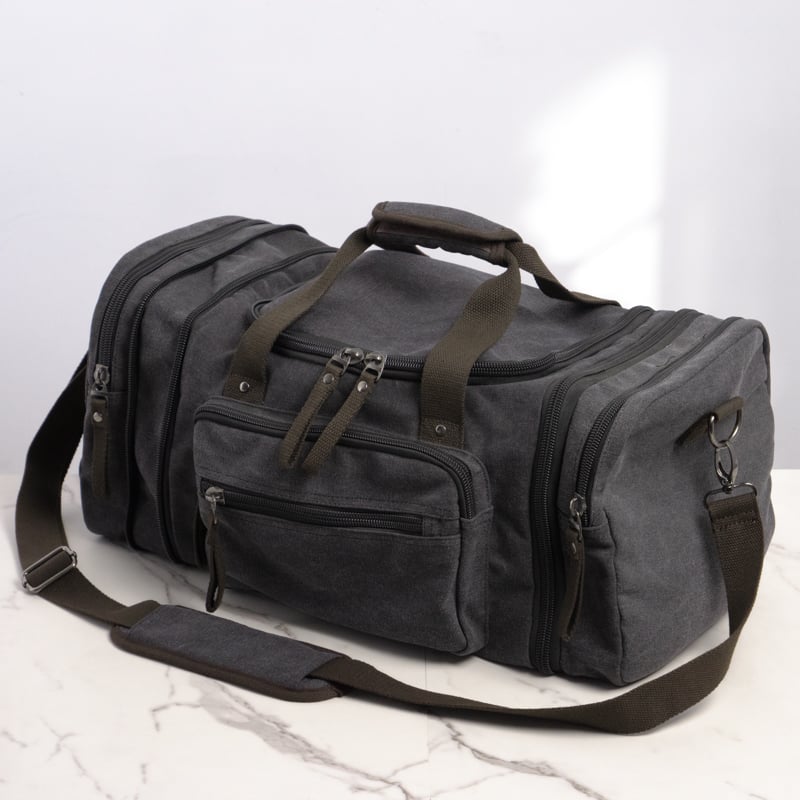
External pockets provide convenient access without requiring users to open the main compartment.
A front slip pocket, for example, can hold a phone, shopping list, transit card, or small notebook. A side pocket can provide a separate location for a reusable bottle or compact umbrella.
These features are particularly useful for bags used during shopping, commuting, exhibitions, and promotional events.
Increase Product Functionality and Retail Appeal
For retailers and private-label brands, a pocket configuration can help distinguish one canvas tote from another.
Two products may have similar dimensions, materials, and colors, but their storage arrangements can create different product identities.
Pocket design can be part of product positioning rather than an isolated construction feature.
Create Additional Branding Opportunities
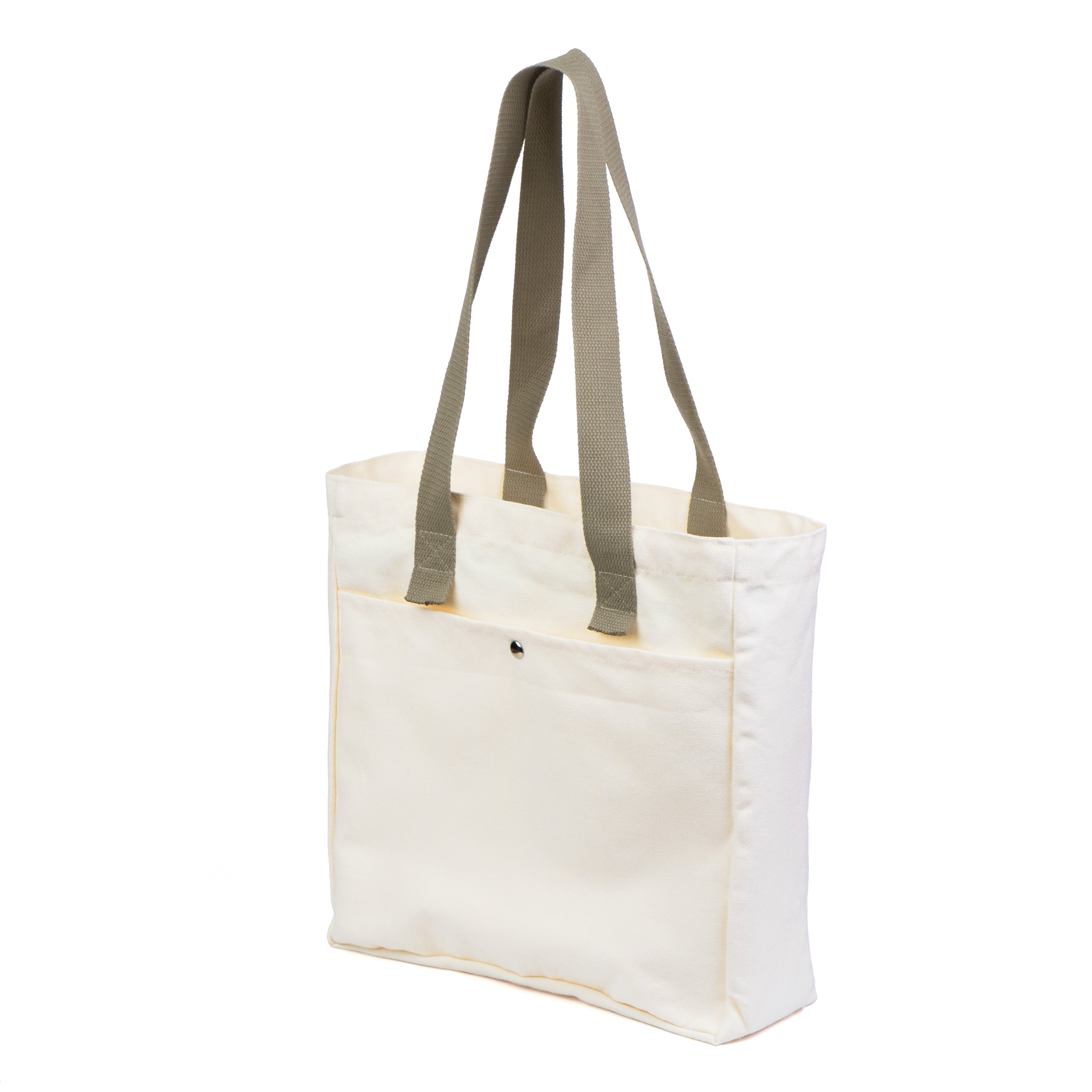
An exterior pocket can also become a separate visual area for branding.
A contrasting pocket panel, embroidered logo, woven label, or printed graphic can add visual interest without requiring complicated changes to the main bag body.
For promotional products companies, this can be useful when developing bags for conferences, retail campaigns, membership programs, or corporate gifting.
Nevertheless, buyers should balance branding and functionality. A large printed pocket may look attractive, but the artwork should not interfere with the pocket opening, stitching lines, or usable storage space.
Support Different End-User Applications
The ideal pocket arrangement depends heavily on what the bag is expected to carry.
A tote designed for retail merchandise does not need the same storage system as a work bag or a travel tote.
| Application |
Recommended Pocket Configuration |
Main Design Priority |
| Shopping tote |
One front slip pocket |
Quick access to small items |
| Work tote |
Internal slip pockets and one zipper pocket |
Organization and security |
| Promotional tote |
Front patch pocket or simple internal pocket |
Branding and practical storage |
| Travel tote |
Internal zipper pocket and exterior access pocket |
Separation and convenience |
| University tote |
Internal organizer pockets |
Documents, stationery, and personal items |
| Retail gift tote |
One or two simple pockets |
Appearance and cost control |
| Beach tote |
Exterior slip pocket and optional internal pocket |
Easy access to personal belongings |
| Multi-purpose tote |
Combination of slip and secure pockets |
Flexible everyday organization |
The main objective is to identify the intended use before selecting the pocket construction. This prevents unnecessary features from increasing the cost without providing meaningful functional value.
Pocket Classification Matrix: Exterior vs. Interior Architecture
Pockets in a canvas tote bag serve two distinct operational zones: Exterior Rapid-Access Zones (tactical, high-frequency, weather-exposed) and Interior Secure-Organization Zones (protected, compartmentalized, load-bearing).
Understanding the structural mechanics of each pocket type allows product development teams to select the exact design matching their target user persona—whether for commuter daily carry, grocery retail, outdoor utility, or corporate merchandise.
Exterior Pockets
- Flat Patch Pockets: Single-layer, multi-divided, or dual-layer configurations.
- 3D Bellows / Box-Pleat Pockets: Expanding side and bottom volume for dimensional objects.
- Front Slit / Inset Welt Pockets: Flush, streamlined entry with concealed zipper pouches.
- Exterior Cylindrical Drink Pockets: Elasticized or gusseted side sleeves for tumblers.
- Luggage Trolley Pass-Through Sleeve: Dual-purpose rear panel with top/bottom zipper access.
Advantages
Exterior pockets provide direct access without requiring users to open the main compartment.
They can also create additional visual interest through contrasting fabrics, different pocket shapes, or decorative stitching.
For promotional and retail products, exterior pockets provide another potential branding area.
Potential limitations
Exterior pockets may affect the visual balance of the bag.
Their contents can also be more exposed to weather, dirt, and accidental contact than items stored inside the main compartment.
In addition, pocket placement must be coordinated with handle attachments, logos, and other exterior details.
Interior Pockets
- Floating Hanging Drop Pockets: Unlined mouth attachment hanging inside main cavity.
- Wall-Mounted Lining Slip Pockets: Single or multi-tier flat organizers sewn to interior lining.
- Inset Security Zipper Pockets: Single-welt or double-welt concealed zip compartments.
- Suspended Padded Laptop/Tablet Compartments: Shock-absorbent EVA floating base sleeves.
- Internal Elasticized Bottle/Umbrella Cradles: Vertical side-gusset retaining rings.
- Modular Snap-Off Utility Pouches: Removable cosmetic clutches and tethered key leashes.
Advantages
First, interior pockets keep smaller belongings away from the external surface, reducing their exposure to accidental contact and making the outside of the tote look cleaner.
Second, they do not take up additional space on the exterior body panel.
Third, they can be arranged in different configurations without significantly changing the bag's overall appearance.
Potential limitations
Interior pockets are less convenient when users need frequent access without opening the bag.
They can also become difficult to reach if they are positioned too low or placed behind bulky contents.
For this reason, the upper interior area is often a practical location for small-item storage.
Interior vs. Exterior Pocket Comparison
| Evaluation Factor |
Interior Pocket |
Exterior Pocket |
| Accessibility |
Requires access to the main compartment |
Usually faster to access |
| Appearance |
Maintains a cleaner exterior |
Adds visible design details |
| Privacy |
Contents are less visible |
Contents may be more exposed |
| Branding |
Limited exterior impact |
Can provide an additional branding surface |
| Construction |
Often attached to lining or inner panel |
Attached directly to exterior panels |
| Suitable Contents |
Keys, wallet, phone, small valuables |
Shopping lists, cards, bottles, frequently used items |
| Design Flexibility |
Can be arranged in several internal sections |
Placement depends on exterior panel space |
Exterior Pocket Design Options & Construction Mechanics
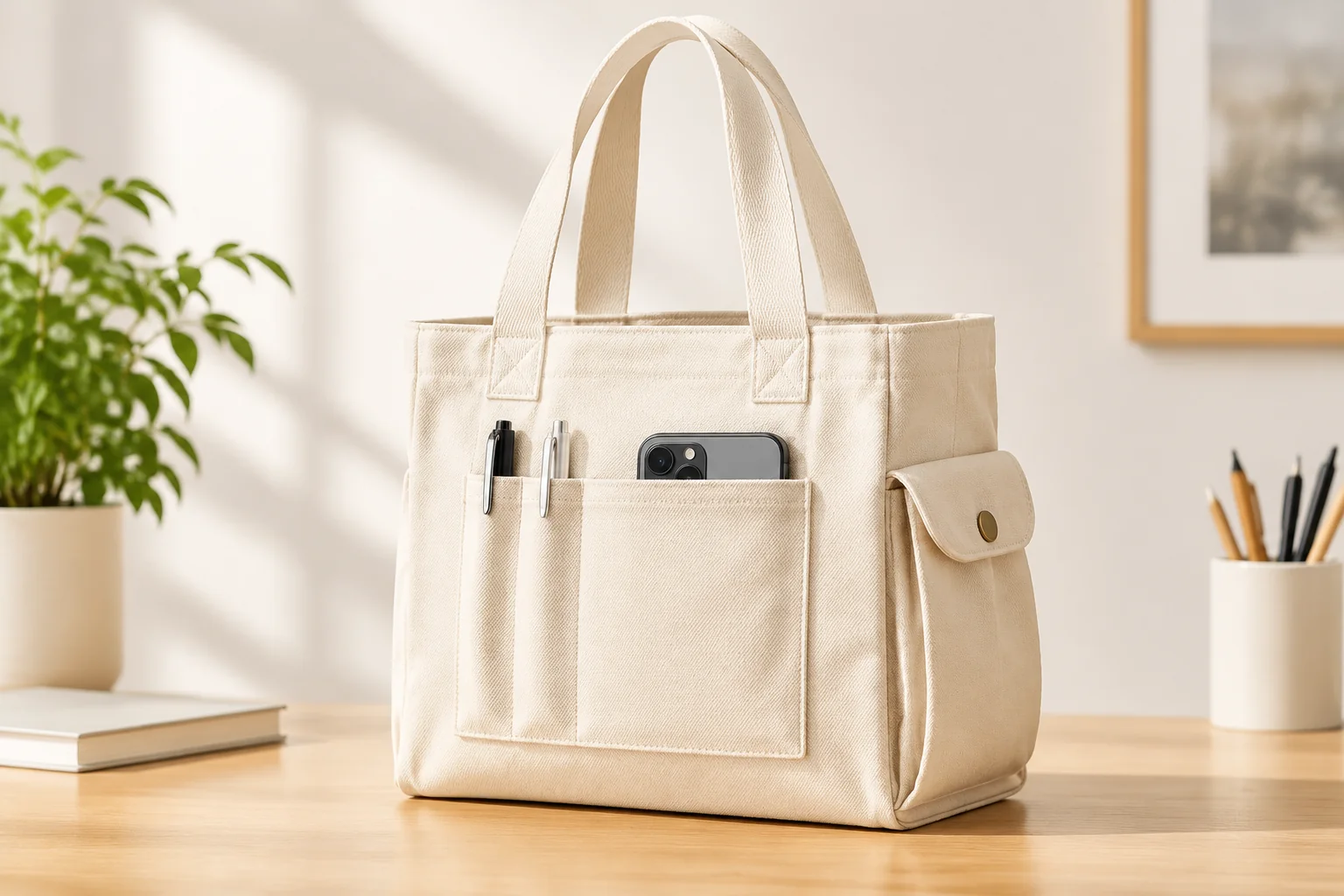
Exterior pockets must withstand active friction, outward tensile pull when overstuffed, and direct environmental exposure. Below are the five primary commercial exterior pocket constructions, analyzed through pattern engineering and sewing assembly.
1. Flat Canvas Patch Pockets (Single & Multi-Slot Dividers)
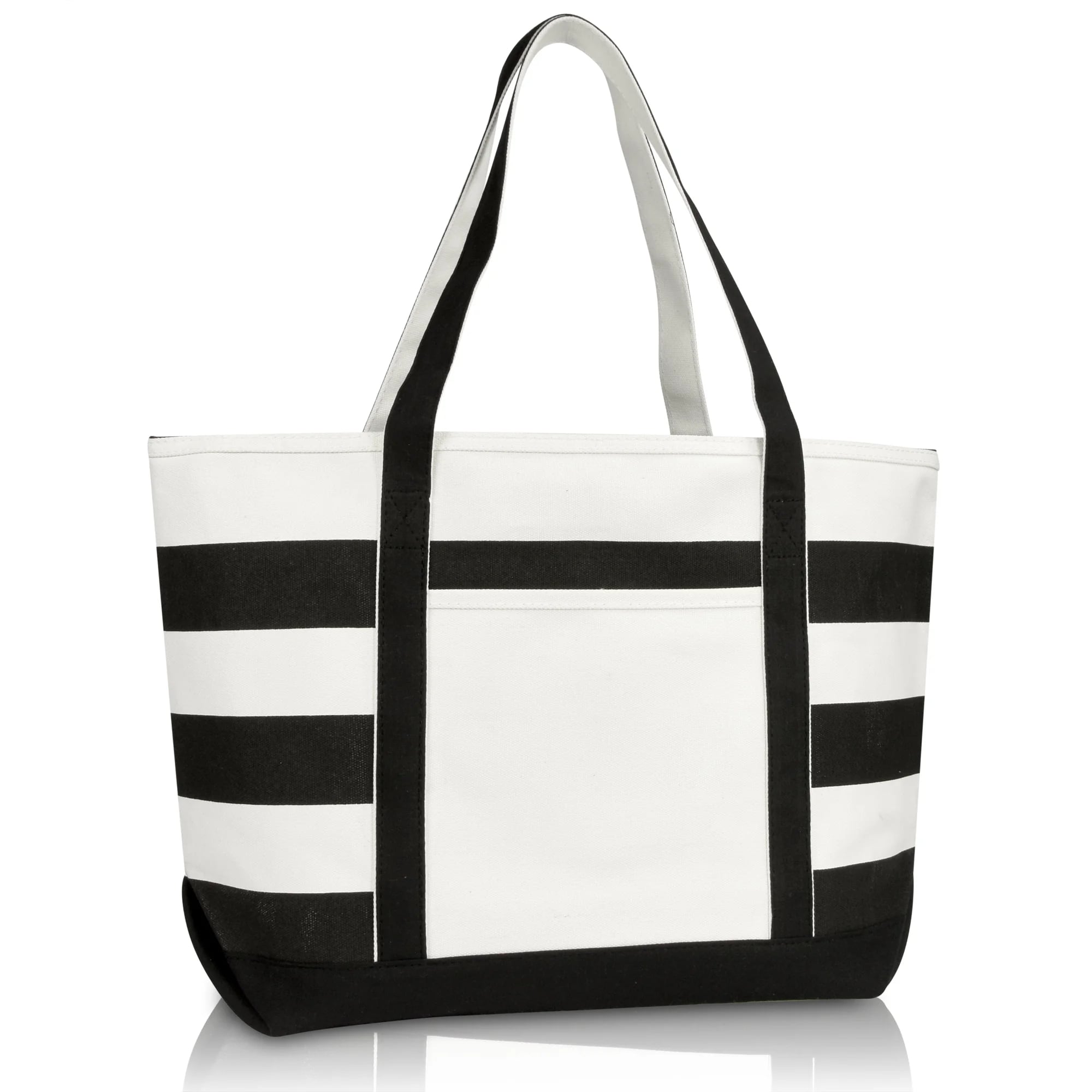
The flat patch pocket is the most widely specified exterior pocket in promotional, lifestyle, and retail bookstore tote bags. A pre-cut canvas panel is top-stitched directly onto the front or back shell panel before the bag's side seams are joined.
Pattern & Edge Preparation:
- Top Opening Hem: The top edge must be folded twice (double-turn hem, typically 20 mm to 25 mm width) and secured with a clean single-needle or double-needle lockstitch (ISO 4915 Type 301). A single-turn raw folded hem will fray after laundering or extensive friction.
- Side & Bottom Seam Allowances: Folded inward by 10 mm to 12 mm using a heated iron press jig before sewing to ensure crisp 90-degree corners.
- Divided Multi-Slot Construction: When a wide front patch pocket is subdivided into phone, pen, and notebook slots, vertical separation stitches are sewn from the bottom seam up to the top hem.
The Critical Stress Point:
The top corners where the pocket mouth meets the bag body absorb 80% of all user pull force. A standard straight stitch will tear through the canvas weave within weeks. Every commercial patch pocket can specify a 7 mm–10 mm triangle backtack, a box-and-cross (Box-X) reinforcement stitch, or a 42-stitch bar-tack.
2. 3D Bellows / Gusseted Box-Pleat Pockets
Flat patch pockets are limited because they rob volume directly from the main bag compartment when stuffed with bulky items (like chargers, sunglasses cases, or compact cameras). A 3D bellows pocket incorporates side and bottom pleats or an independent 3-piece perimeter gusset band (depth ranging from 25 mm to 50 mm).
- Inverted Box Pleat: Built into a single cut panel. Center pleats expand outward when loaded, maintaining a slim, tailored profile when empty.
- 3-Piece Perimeter Gusset: A flat face panel joined to a continuous U-shaped gusset strip. This construction delivers maximum structural rigidity and is standard on heavy-duty work totes, military-style canvas bags, and garden tool totes.
- Flap Integration: Bellows pockets are almost always paired with an overhanging flap (lined or unlined) secured via a magnetic snap, metal press stud, or horn button to prevent items from falling out during transit.
3. Inset / Slit Welt Pockets (Flush Exterior Design)
For minimalist, high-end designer totes and executive business canvas bags, external bulky patch pockets compromise the sleek exterior aesthetic. Inset welt pockets provide functional storage by cutting an opening directly into the main canvas shell.
- Single-Welt vs. Double-Welt: A fabric welt (15 mm to 20 mm wide) covers the pocket entry slit, hiding a zipper chain underneath.
- Internal Pocket Bag Construction: A separate fabric pouch (made of lighter 8 oz cotton sheeting or 210D polyester lining) is joined to the welt interior, hanging freely on the inside of the bag.
- Manufacturing Challenge: Cutting the welt slit in heavy 16 oz or 18 oz canvas requires precision die-cutting or laser cutting. Inaccurate corner clipping will cause puckering and frayed corner holes that cannot be repaired once sewn.
4. Exterior Cylindrical Bottle & Umbrella Pockets
Positioned on the side gussets of wide-bottom totes, these specialized pockets carry water bottles, vacuum tumblers, or wet umbrellas without taking up interior space.
- Elasticized Gathered Top: Elastic webbing (15 mm–20 mm width, 180% stretch recovery) is encased inside the top hem tunnel. This pulls the pocket mouth tightly against the bottle to prevent slippage.
- Base Drainage Eyelets: Heavy-duty canvas totes designed for outdoor or commuter use often incorporate a #2 or #3 brass drainage grommet/eyelet at the bottom seam to release condensation moisture.
- Gusset Darting: Bottom corners feature 15 mm sewn darts to create an anatomical cylindrical curvature rather than a flat, constricted shape.
5. Rear Trolley Pass-Through Sleeve with Concealed Pocket
Essential for executive travel and commuter totes, this design features a horizontal canvas band sewn across the back panel, allowing the tote to slide over the telescopic handle of a rolling suitcase.
- Dual-Function Construction: By adding a horizontal zipper along the bottom edge of the sleeve, the panel functions as a secure exterior zip pocket for passports and boarding passes during daily use. When unzipped, it converts instantly into a luggage trolley sleeve.
- Reinforcement Protocol: Because the luggage handle exerts high shear stress during airport transit, the vertical side seams of the trolley sleeve can be reinforced with heavy Tex 80 nylon thread and triple-stitch backtacks.
Engineering Comparison: Exterior Pocket Types
| Pocket Type |
Aesthetic Profile |
Usable Volume |
Pattern Complexity |
Seam Stress Risk |
Typical Bag Applications |
| Flat Patch Pocket |
Casual, Classic, Utility |
Flat to Low |
Low (1 cut piece) |
High at top corners |
Promotional, Retail, Books, Everyday |
| Divided Multi-Slot |
Organizer, Tool, Craft |
Low (Segmented) |
Low-Medium (1 piece + lines) |
High at every partition top |
Craft bags, Teacher totes, Garden bags |
| 3D Bellows / Box |
Rugged, Industrial, Tactical |
High (Independent 3D) |
High (3–4 cut pieces + flap) |
Medium (Distributed along gusset) |
Heavy tool totes, Outdoor, Military |
| Inset Slit / Welt |
Executive, Minimalist, Sleek |
Medium (Internal pouch) |
Very High (Precision welt) |
Medium-High (Slit corner cuts) |
Luxury canvas, Commuter business totes |
| Side Bottle Pocket |
Functional, Ergonomic |
High (Cylindrical) |
Medium (Gusset + elastic) |
Medium at side seam join |
Travel, Gym, Commuter, Diaper bags |
| Trolley Zip Sleeve |
Modern Travel, Executive |
Medium (Dual-purpose) |
High (2 zippers / open base) |
Very High (Handle shear pull) |
Airport travel, Weekend duffels, Work |
Interior Pocket Architecture & Organization Systems
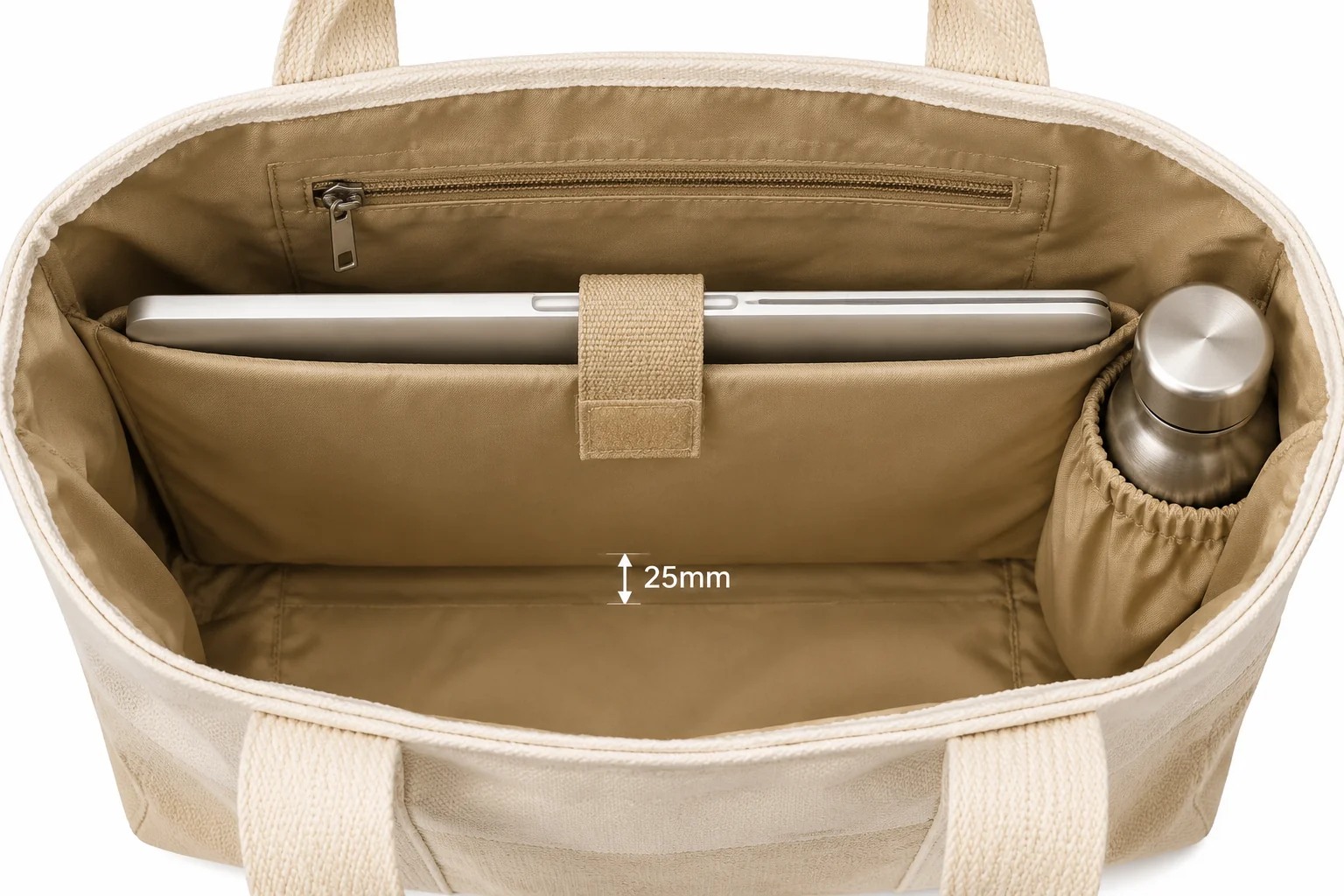
A cluttered, bottomless tote bag frustrates consumers. Premium brands differentiate their canvas bags by engineering sophisticated internal pocket architectures that secure valuables, protect electronics, and separate wet or delicate items.
1. Floating Hanging Drop Pockets (Unlined Bag Architecture)
In unlined, single-layer canvas tote bags, adding an interior pocket is challenging because stitching through the bag wall leaves exposed thread lines on the exterior. The standard industrial solution is the Hanging Drop Pocket.
Hanging Drop Pocket Attachment Mechanics
- Top Mouth Facing Integration: The top mouth edge of the bag uses a folded canvas hem or a separate 25 mm–35 mm facing strip.
- Tab Insertion: The top raw edge of the pocket pouch (or hanging tab) is sandwiched directly between the main shell hem and the interior facing.
- Continuous Topstitching: The final topstitch (ISO 4915 Type 301 lockstitch, 8 SPI) penetrates all three layers simultaneously, permanently securing the pocket without any visible stitching lines on the exterior bag face below the rim.
- Suspension Clearance: The pocket pouch body hangs suspended 50 mm to 80 mm below the top rim, ensuring the pocket mouth remains easily accessible while remaining hidden from outside view. Standard finished pouch dimensions measure 200 mm width × 160 mm height.
Attachment Method: The top edge of the pocket pouch is sandwiched inside the top mouth facing or folded hem before the final mouth topstitch is run. The pocket pouch hangs down freely inside the main cavity.
Configuration Options:
- Open Drop Pocket: Dual-slot pouch for keys and smartphones.
- Zippered Drop Pocket: Fitted with a #3 nylon coil zipper across the top edge for coins, passports, and cards.
Limitation: Because the bottom of the pocket is unanchored, heavy items (such as a large set of keys or a metal power bank) will pull the top mouth of the tote inward, causing the bag rim to sag and deform.
2. Wall-Mounted Lining Slip Pockets
When a tote bag features a full internal lining (such as 210D polyester, 8 oz cotton sheeting, or TC 65/35 canvas), slip pockets are sewn directly onto the lining fabric before the lining bag is closed.
- Double-Layer Folded Edge: The pocket panel is cut at double height, folded horizontally in half, pressed, and top-stitched along the top fold. This creates a clean, self-lined, tear-resistant top edge without visible raw seams.
- Elasticized Pocket Rim: In diaper totes and technical utility bags, a 10 mm internal elastic band is threaded through the top hem, gathering the pocket mouth so items do not spill out when the bag tilts horizontally.
- Edge Reinforcement: The side and bottom raw edges of the pocket are captured cleanly within the lining's vertical side seams and base seams, eliminating the need for exposed overlock serging.
3. Inset Lining Zipper Pockets (Concealed Security Compartment)
The hallmark of a retail-ready, premium tote bag is a concealed security pocket on the back interior wall.
Window-Box (Single-Welt) Construction:
- A rectangular window (standard size: 180 mm wide × 12 mm high) is stitched between a facing piece and the lining panel.
- The window is slit along the center, diagonally clipped into all four corners, and turned inside out to form a razor-sharp opening.
- A #3 or #5 nylon coil zipper is centered behind the window and top-stitched into place.
- The upper and lower pocket bag panels are closed and overlocked together on the blind side.
Zipper Clear Opening Calculation:
A 180 mm window opening yields a usable entry of approximately 160 mm once the zipper slider stops and corner turns are accounted for. This accommodates a standard 6.7-inch smartphone (such as an iPhone Pro Max, approx. 161 mm × 78 mm) with ease.
4. Suspended Padded Laptop & Tablet Sleeves
Modern work totes require dedicated, shock-resistant electronic protection. Designing an effective canvas laptop compartment requires addressing three critical engineering challenges:
Bottom Drop Suspension (The "Floating Base"):
If the laptop sleeve touches the very bottom of the bag, the laptop takes direct impact shock every time the user drops the bag onto a hard floor. An engineered laptop sleeve must terminate 20 mm to 30 mm above the bag's bottom seam, suspended from the side seams or top facing.
Foam Cushioning Specification:
High-density EVA foam or semi-rigid EPE foam (thickness: 4 mm to 6 mm; density: 35 kg/m³–45 kg/m³) provides superior shock absorption without adding bulk or excessive weight. Open-cell PU sponge should be avoided as it collapses permanently under compression.
Restraining Tab & Closure:
A 25 mm–30 mm wide woven cotton or nylon webbing strap featuring a 40 mm hook-and-loop (Velcro) patch or an ultra-flat magnetic snap holds the device securely inside the compartment during aggressive motion.
5. Internal Cylindrical Tumbler / Umbrella Cradles
Placing a heavy water bottle loose inside a tote causes the bag to tilt sideways and risks leakage over laptops or paperwork.
Floating Fabric Ring: A circular fabric cylinder (diameter: 80 mm–90 mm; height: 140 mm–160 mm) sewn into the interior side gusset seam.
Elastic Strap Cradle: A 38 mm-wide heavy elastic webbing strap sewn into the side seam in a pleated U-shape. When not holding a bottle, it collapses flat against the side wall, preserving interior volume.
Waterproof Isolation Lining: In premium cooler or commuter totes, internal bottle pockets are lined with heat-welded, leak-proof PEVA or TPU fabric to isolate condensation moisture from the main dry compartment.
Should a Canvas Tote Have Both Interior and Exterior Pockets?
For many projects, combining interior and exterior pockets provides a practical solution.
For example, a medium-sized canvas tote could include:
- One front exterior slip pocket.
- One internal zipper pocket.
- One internal open-top compartment.
Each pocket serves a different purpose.
The exterior pocket provides quick access, the zipper pocket offers a more secure place for small belongings, and the open-top compartment separates frequently used items from the main storage area.
However, buyers should avoid adding pockets without a clear functional reason.
A complicated arrangement can increase the number of sewing operations, consume more material, add weight, and make production inspection more demanding.
The objective should be to create an organized storage system rather than maximize the pocket count.
Pocket Closures, Fasteners & Hardware Engineering
Choosing the correct closure mechanism directly impacts the ease of use, security, and tactile value of the bag. A pocket closure must be matched to the weight of the canvas, the frequency of access, and the target cost profile.
Pocket Hardware Specification Selection Matrix
| Fastener Type |
Standard Commercial Sizes |
Pull Force / Mechanical Specs |
Best Pocket Applications |
| Nylon Coil Zipper |
#3 (Lightweight), #5 (Standard) |
Closed-End, Auto-lock slider |
Interior zip pockets, Inset welt openings |
| Metal Tooth Zipper |
#4.5, #5 (Brass, Gunmetal, Nickel) |
Non-Lock, Custom alloy puller |
Heritage exterior patch pockets, Top closures |
| Vislon / Plastic Teeth |
#5 Molded Polyacetal |
Corrosion-proof, high tensile |
Outdoor bags, Marine totes, Beach bags |
| Magnetic Button Snap |
14 mm, 18 mm (Thin / Thick profile) |
1.5 kg to 3.0 kg magnetic pull |
Exterior pocket flaps, Quick-drop pockets |
| Concealed Neodymium Disc |
12 mm × 2 mm Disc in PVC casing |
Silent self-locating attraction |
Minimalist designer flaps, Hidden security |
| Metal Press Studs |
#201, #203 Ring Snaps |
15 N to 25 N snap engagement |
Heavy workwear bellows pockets, Tool bags |
| Hook-and-Loop (Velcro) |
20 mm, 25 mm, 38 mm Widths |
100% Woven Nylon (10,000 cycles) |
Laptop sleeve restraining straps, Organizers |
Zipper Mechanics: Coil vs. Metal vs. Molded Plastic
- #3 Nylon Coil Zipper: The industry standard for interior lining pockets and hanging drop pouches. Flexible, smooth-gliding, low-profile (teeth width approx. 4.2 mm), and cost-effective. Does not scratch phone screens or leather wallets.
- #5 Nylon Coil Zipper: Specified for heavy exterior patch pockets and large laptop compartments. Provides high burst strength (cross-chain tensile strength 500 N) while maintaining flexibility across curved seams.
- #5 Metal Zipper (Brass, Antique Copper, Gunmetal): Standard for vintage, heritage, and heavy workwear canvas totes (#10 to #6 duck canvas). Adds significant tactile weight and premium retail appeal. However, metal teeth can be abrasive against delicate hands or knitwear.
- Slider & Puller Specifications: Auto-lock sliders are necessary for pockets subject to internal outward pressure (such as tight front pockets). Die-cast zinc-alloy pullers can be customized with engraved logos, or fitted with full-grain leather tabs or folded canvas tape pullers for an organic aesthetic.
Magnetic Snap Fasteners (Exposed vs. Concealed Neodymium)
- Exposed Metal Rivet Magnetic Snaps: The male and female halves are punched through the pocket fabric using prong washers.
Critical Engineering Note: Installing a magnetic snap directly into a single layer of canvas will cause the fabric around the prongs to rip out after repeated pulling. A 25 mm × 25 mm reinforcement patch of rigid non-woven board (salpa/microfiber) or 0.8 mm PVC backing must be sandwiched behind the canvas.
- Concealed / Hidden Neodymium Magnets: Ultra-strong thin neodymium disc magnets (e.g., 14 mm diameter × 2 mm thickness) heat-sealed inside waterproof PVC casing pouches. The magnet is sewn between the shell canvas and lining layer, remaining completely invisible from both exterior and interior surfaces while providing a silent, self-locating magnetic snap.
Metal Press Studs / Snap Buttons
- Spring Snaps (#201) & Ring Snaps (#203): Provide a firm, audible mechanical lock ideal for heavy canvas flaps, workwear utility totes, and tool organizers.
- Pull Force Testing: Must be calibrated between 15 N and 25 N (approx. 1.5 kg–2.5 kg-force). Snaps below 10 N pop open under light load; snaps exceeding 35 N cause fabric tearing during disengagement.
Fabric Weight, Shell-to-Pocket Pairing & Lining Architecture
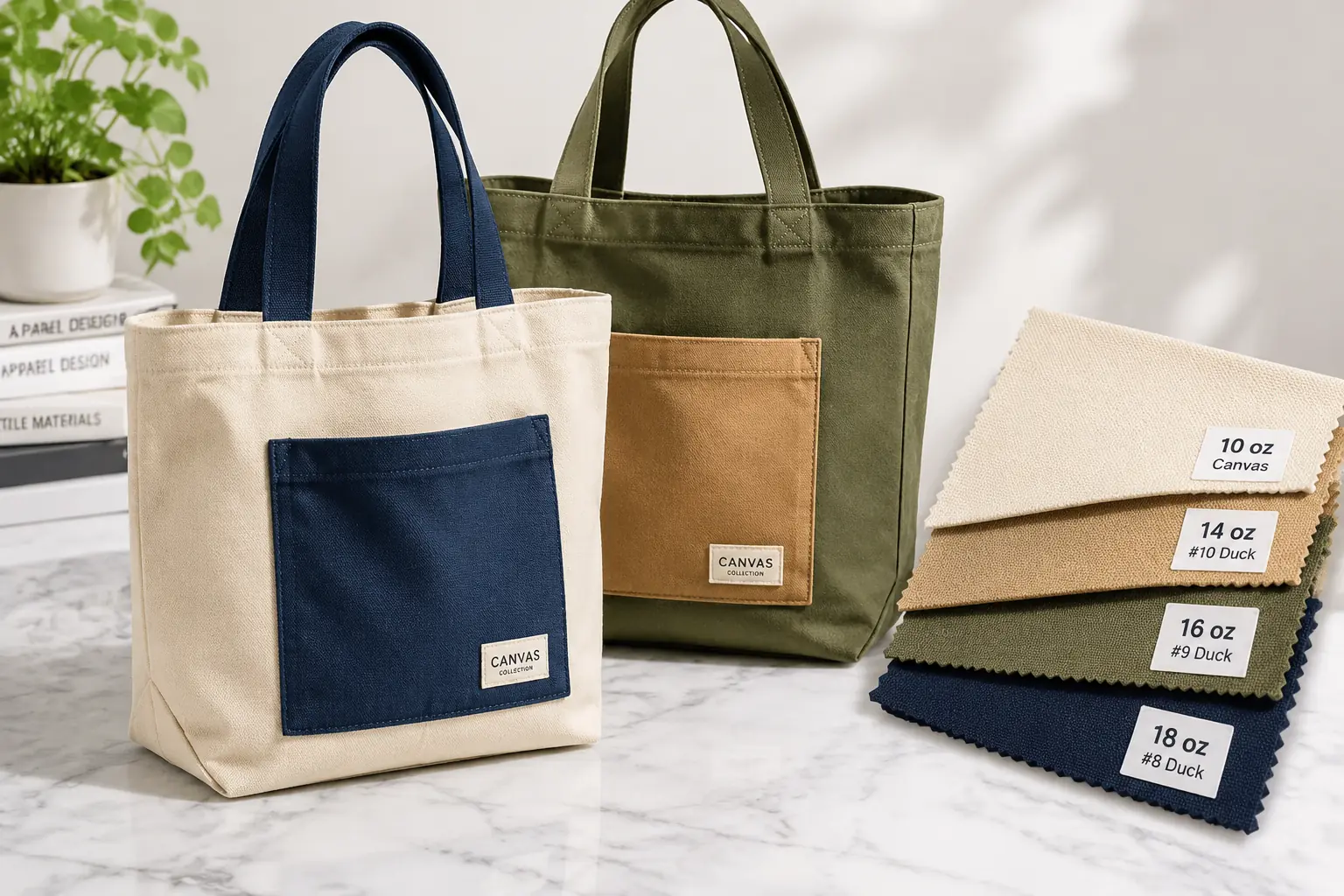
The main body fabric and pocket fabric do not always need to be identical.
Although using the same canvas throughout the bag creates a consistent appearance, different materials can be selected for specific pocket functions.
For example, a canvas tote may use a cotton canvas exterior with a lighter polyester lining, a mesh side pocket, or a contrasting canvas front pocket.
The important point is to ensure that the selected materials work together in terms of appearance, thickness, sewing compatibility, and intended use.
Matching the Main Body and Pocket Fabric (Self-Fabric Construction)
Using the same canvas for the body and pockets offers several advantages:
- Consistent texture and appearance.
- Easier color coordination.
- Similar material behavior during sewing.
- A more integrated product design.
This approach is suitable for basic shopping totes, promotional bags, and classic retail designs.
However, a pocket made from the same fabric may add noticeable thickness when several layers overlap.
For example, a double-layer patch pocket attached to a multi-layer body panel can create a bulky sewing area.
The manufacturer should evaluate the combined thickness before mass production.
Using Contrasting Canvas
A contrasting pocket uses a different color from the main body.
This is a simple way to create visual distinction without changing the overall bag structure.
Common combinations include:
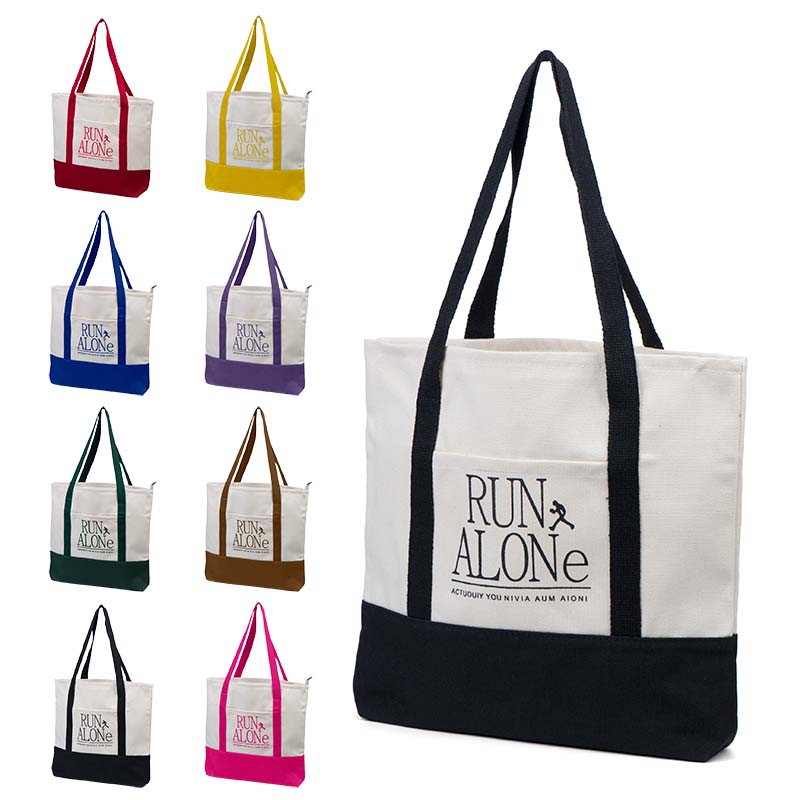
- Natural canvas with navy pockets.
- Beige canvas with black pockets.
- White canvas with colored pocket panels.
- Neutral body fabric with printed pockets.
Contrasting pockets are particularly useful for promotional products and private-label collections because they allow the bag's appearance to be customized while retaining a familiar tote silhouette.
For consistent production, buyers should confirm the body and pocket colors using approved color references or physical samples.
Using Lighter Fabric for Internal Pockets & Dividers
Internal organization pockets do not require the heavy abrasion resistance of the exterior shell. Replacing heavy shell canvas with a lighter, high-density secondary fabric inside the bag optimizes ergonomics and manufacturing economics.
Structural & Commercial Benefits:
- Eliminates Seam Bulk: Flattens attachment seam allowances where pocket walls meet interior lining side seams.
- Reduces Total Product Weight: A 16 oz heavy work tote with 4 internal pockets made of 8 oz cotton drill weighs approx. 120 g less than an all-16 oz construction.
- Cost Optimization: Reduces yield consumption of expensive heavy numbered duck canvas, replacing it with economical cotton sheeting or 210D polyester.
- Easier Turning & Pressing: Lighter pocket bags turn right-side out with razor-sharp corners and press flat effortlessly.
Mesh, TPU, and Specialized Technical Materials
Modern lifestyle and commuter tote bags frequently integrate technical non-canvas materials into pocket assemblies for specialized functional performance:
Polyester Sandwich Mesh (Air Mesh / Hex Mesh):
- Function: Provides immediate content visibility and rapid airflow.
- Best Applications: Exterior side water bottle sleeves, gym clothes separation pockets, and interior tech cord organizers.
- Edge Finishing: Mesh raw edges fray aggressively; they must be bound with 20 mm double-folded polyester binding tape or elastic spandex binding.
TPU / Wipe-Clean Coated Fabrics:
- Function: Impermeable barrier against wet umbrellas, leaking cosmetics, or damp gym gear.
- Best Applications: Thermal insulated bottle sleeves and leak-proof interior utility zip pockets.
Heavy-Duty Elastic Webbing (Spandex / Polyester Blends):
- Function: Self-adjusting retention loops (widths: 25 mm, 38 mm, 50 mm) for cylindrical thermoses, umbrellas, and bicycle pump slots.
Fabric Compatibility Considerations
When combining materials, buyers should pay attention to:
- Thickness differences: Large differences in thickness can make folded edges and sewing intersections uneven.
- Stretch behavior: A stretchable pocket attached to a non-stretch canvas body may deform if the materials are not matched properly.
- Color transfer: Dark or strongly dyed materials should be evaluated for colorfastness, especially when used alongside light-colored canvas.
- Shrinkage: Materials with different shrinkage behavior may cause the pocket to wrinkle or distort after cleaning.
- Surface texture: A rough or heavily textured material may create friction when users insert or remove belongings.
- Edge finishing: Mesh, coated fabrics, and lightweight linings may require different finishing methods from ordinary canvas.
A sample should be evaluated as a complete product because the interaction between materials can only be fully understood after assembly.
Lining Integration Architectures: Unlined vs. Semi-Lined vs. Fully-Lined
The overall interior lining architecture dictates how pocket assemblies are anchored into the bag:
| Architecture |
Structural Characteristics |
Seam Finishing Method |
Pocket Assembly Workflow |
| 1. Unlined (Raw / Bound Seams) |
Lowest unit cost, lightest weight, authentic raw canvas interior. |
Interior seams finished with 4-thread overlock serging or 20 mm cotton bias binding tape. |
Pockets must be topstitched directly to the outer shell or suspended as hanging drop pouches from the mouth hem. |
| 2. Semi-Lined (Facing Bands) |
Partial lining covering upper mouth facing (100 mm–150 mm) and reinforced base panel. |
Top facing conceals zipper tape and pocket suspension tabs; lower body remains raw canvas. |
Inset zipper pockets attach cleanly to top facing; exterior stitches remain hidden above the facing line. |
| 3. Fully-Lined (Clean Sewn Bag) |
Independent interior bag sewn, turned, and joined to shell at the top mouth rim. |
Zero exposed raw seams; completely covers all interlining, foam padding, and magnetic backings. |
All pockets attach directly to the lining cloth; exterior canvas shell remains completely unpierced and pristine. |
Master Fabric & Pocket Component Compatibility Matrix
| Main Shell Fabric |
Recommended Pocket Construction |
Recommended Pocket Fabric |
Interfacing / Reinforcement |
Lining Recommendation |
| 8 oz Canvas (270 GSM) |
Simple Flat Patch / Hanging Drop |
Self-fabric (8 oz) |
None |
Unlined or 75D Poly |
| 10 oz Canvas (340 GSM) |
Flat Patch / Divided / Drop Zip |
Self-fabric (10 oz) or 8 oz |
50 GSM non-woven on flaps |
Unlined or 150D Oxford |
| 12 oz (#12 Duck / 410 GSM) |
Full Suite: Patch, Welt, Bottle |
Self-fabric (12 oz) or 10 oz |
80 GSM fusible interlining |
210D Poly / 8 oz Sheeting |
| 14 oz (#10 Duck / 475 GSM) |
Patch, 3D Bellows, Laptop Sleeve |
10 oz Canvas / 210D Poly |
100 GSM woven interlining |
210D Poly / TC 65/35 Canvas |
| 16 oz (#8 Duck / 540 GSM) |
3D Bellows, Inset, Padded Laptop |
10 oz Canvas (Contrast/Matching) |
EVA Foam + Rigid snap backing |
Full 210D / 8 oz Sheeting |
| 18–24 oz (#6–#4 Duck) |
Heavy Bellows / External Sleeve |
10–12 oz Canvas / Cotton Twill |
1.2 mm Salpa Board at base |
Full Lined or Bound Unlined |
Note:This table is for reference only. Final construction shall be subject to the approved pre-production sample.
How to Choose the Right Pocket Size and Dimensions
Pocket dimensions are among the most important specifications to confirm during product development.
A pocket should be designed around the objects it needs to hold, not simply assigned a convenient width and height.
An improperly sized pocket results in user dissatisfaction: smartphones poke out and fall onto subway tracks, water bottles tip horizontally, and laptops get wedged tightly inside unyielding canvas sleeves.
Pocket Width
Pocket width determines which items can fit through the opening and how much horizontal storage space is available.
For example, a pocket intended for a smartphone should accommodate the device's width together with its protective case.
A pocket for business cards or receipts can be narrower, while a pocket for a notebook needs more horizontal space.
When selecting the width, buyers should consider:
- Maximum item width.
- Whether the pocket is intended for one or multiple items.
- The shape of the pocket opening.
- Whether the opening has elastic or a closure.
- Whether the pocket is divided into smaller sections.
The finished internal width is more important than the cut fabric width.
Pocket Height and Depth
Pocket height determines how much of an item is supported vertically.
A shallow pocket may be sufficient for cards or small accessories, but it may not securely hold a smartphone or larger object.
A deeper pocket provides more coverage but can make smaller belongings harder to retrieve.
The ideal depth therefore depends on the size and shape of the intended contents.
For exterior pockets, buyers should also consider the bag's overall height. A pocket placed too close to the bottom may be inconvenient to access, particularly when the bag is carried over the shoulder.
Pocket Opening Width
The opening width may differ from the overall pocket width.
For example, a pocket with a wide body and a narrow opening may provide sufficient storage space but still be inconvenient when inserting larger items.
This is particularly relevant for:
- Zipper pockets.
- Elastic-top pockets.
- Gusseted pockets.
The opening should be large enough for the intended contents while still providing the required level of retention.
Practical Pocket Dimension Reference
The following measurements are preliminary design references for common canvas tote applications. They are not universal industry standards and should be adjusted according to the actual contents, finished bag size, and pocket construction.
| Pocket Application |
Suggested Finished Width |
Suggested Finished Height / Depth |
Design Purpose |
| Business card pocket |
9–11 cm |
7–9 cm |
Cards and small documents |
| Small accessory pocket |
10–14 cm |
9–12 cm |
Keys and compact accessories |
| Smartphone pocket |
10–13 cm |
15–19 cm |
Phones with protective cases |
| Notebook pocket |
18–23 cm |
18–24 cm |
Small notebooks and planners |
| Large front patch pocket |
18–25 cm |
16–22 cm |
Everyday small belongings |
| Internal zipper pocket |
16–22 cm |
12–16 cm |
Wallets and personal valuables |
| Side bottle pocket |
10–13 cm |
17–23 cm |
Reusable bottles |
| Divided organizer pocket |
18–25 cm overall |
12–18 cm |
Multiple small accessories |
These dimensions should be treated as starting points rather than fixed specifications.
For example, smartphone dimensions vary significantly between models. A pocket designed for one phone size may not accommodate a larger device with a protective case.
Likewise, a bottle pocket should be evaluated using the actual bottle diameter and height.
Before confirming the pattern, buyers should provide representative product dimensions or physical samples whenever possible.
Finished Dimensions vs. Cutting Dimensions
One common specification mistake is confusing the fabric cutting dimensions with the final usable pocket dimensions.
The cut panel needs additional fabric for:
- Top-edge folding.
- Side seam allowances.
- Bottom seam allowances.
- Gusset formation, where applicable.
- Additional construction details.
As a result, the finished pocket will be smaller than the original cut panel.
For example, a rectangular pocket panel may be cut wider and taller than its required finished dimensions to accommodate the folded edges and attachment seams.
The exact allowance depends on the selected construction method and factory pattern.
For accurate sampling, buyers should request the finished pocket dimensions rather than relying only on the cutting measurements.
Sewing Mechanics, SPI Standards & Stress Reinforcement Protocols
The longevity of a pocketed canvas tote is determined on the sewing line. The interaction between needle size, thread composition, stitch density, and corner backtacks governs whether a pocket will hold 15 kg of payload or fail at the retail checkout counter.
Sewing Reinforcement Protocols at Stress Concentration Points
Pocket Top Corners:
- Box-and-X Stitch: A 20 mm × 20 mm square perimeter with diagonal intersecting stitches, distributing peel stress across 80 mm of thread line.
- 42-Stitch Bar-Tack: A high-density automated zigzag lock stitch (width: 2.0 mm, length: 10 mm) placed perpendicular to the pocket hem.
Handle & Pocket Intersection:
- Handle webbing runs vertically down the bag face, overlapping the outer edge of the patch pocket.
- A continuous double-needle lockstitch or heavy Box-X stitch passes through both the webbing and pocket layers simultaneously, anchoring the pocket into the bag's primary load-bearing skeleton.
Pocket Base Corners:
- A 12 mm double-folded seam allowance sewn with 8 to 10 SPI lockstitching, preventing corner seam blowout when carrying heavy, angular objects.
Stitch Density (Stitches Per Inch - SPI)
Stitch density is an essential technical parameter in technical packs:
Standard Canvas Stitching Range: 7 to 9 SPI (approx. 3.0 mm to 3.5 mm stitch length).
- Why Not Higher (12–14 SPI)? In heavy, dense canvas fabrics (#10 to #6 duck), punching too many needle holes close together cuts the structural warp and weft yarns, creating a perforation line (the "postage stamp effect"). Under heavy load, the canvas will tear cleanly along the stitch line.
- Why Not Lower (4–5 SPI)? Low stitch density leaves long thread spans on the fabric surface, which catch on external objects, abrade rapidly, and allow seam gap opening under lateral tension.
Lining & Fine Pocket Stitching Range: 9 to 11 SPI for lightweight 210D polyester or cotton sheeting lining panels.
Industrial Sewing Thread Engineering
- Main Shell & Exterior Pocket Seaming: Tex 60 to Tex 80 (Bonded Nylon or Core-Spun Polyester/Cotton). Core-spun thread combines a high-tenacity polyester filament core (for tensile strength) with a cotton cotton wrap (which swells slightly when wet, sealing needle punctures against water entry).
- Interior Lining & Drop Pockets: Tex 40 to Tex 45 Polyester Filament Thread. Provides smooth feed through small-eye needles (Needle size Metric 90/14 to 100/16) without puckering lightweight lining cloth.
Seam Classifications for Pocket Assemblies (ISO 4916 Reference)
- Superimposed Seams (Class SS): Used for joining pocket bag panels and attaching lining walls.
- Lapped Seams (Class LS / Flat-Felled): The gold standard for attaching flat patch pockets and exterior utility panels to heavy canvas shells. Double-needle lapped construction (LSq-2) encases all raw fabric edges inside the fold, providing double seam shear strength and preventing edge fraying.
- Bound Seams (Class BS): Used in high-end unlined totes. Raw pocket seam allowances are encased in 100% cotton herringbone bias binding tape (20 mm to 25 mm width).
Pocket Corner Reinforcement: The 4 Factory Standards
A pocket may carry less weight than the main compartment, but its attachment points can still experience repeated stress.
For example, users may pull on the pocket opening when inserting a phone or wallet. A side pocket holding a bottle may also experience additional downward force as the bag moves.
The reinforcement method should therefore match the pocket's size, location, and intended contents.
- Single-Line Stitching:Single-line stitching is commonly used for attaching simple pockets.It provides a clean appearance and is generally sufficient for lightweight pockets carrying small belongings.However, the stitching should be appropriate for the material thickness and expected use.A single row of stitching should not automatically be assumed to be sufficient for every pocket application.
- Double-Line Stitching:Double-line stitching uses two parallel rows of stitches to secure a pocket.It can improve attachment stability and create a more substantial visual finish.This method may be considered for larger exterior patch pockets or pockets that are expected to experience repeated pulling.The spacing between the rows should be consistent, and both lines should remain parallel to the pocket edges.
- Bartack Reinforcement:Bartacks are short, dense reinforcement stitches used at selected stress points.They are often used near the upper corners of pockets, particularly where repeated pulling may concentrate stress.For a wide patch pocket, bartacks can be added at the two upper corners.For a gusseted or elastic pocket, reinforcement may be required at additional attachment points depending on the construction.However, reinforcement should not be added indiscriminately. Excessive stitching can create unnecessary bulk or affect the appearance of the finished product.
- Reinforcement Patches:A reinforcement patch is an additional piece of fabric positioned behind or around a stress area.It can help distribute pulling force across a larger section of material.For example, a side pocket intended to hold a relatively heavy bottle may require additional support around its attachment area.The reinforcement material should be compatible with the main body fabric and should not create an excessively thick sewing intersection.
Pocket Corners and Stress Areas
The upper corners of an open pocket are particularly important because they are frequently pulled during use.
Other areas requiring attention include:
- Lower pocket corners.
- Gusset attachment points.
- Zipper ends.
- Elastic attachment sections.
- Divider junctions.
During sample inspection, buyers should examine these areas closely for skipped stitches, loose threads, uneven reinforcement, and visible fabric distortion.
Pocket Configuration Ideas for Different Canvas Tote Bag Applications
The best pocket configuration depends on the bag's intended market and the type of products it needs to carry.
Instead of using the same pocket layout for every tote, buyers can develop different arrangements for different customer groups.
| Tote Application |
Suggested Pocket Layout |
Main Benefit |
Features to Avoid Unless Needed |
| Promotional tote |
One exterior patch pocket |
Additional storage and branding |
Multiple complicated compartments |
| Work tote |
Internal zipper and slip pockets |
Better organization |
Unnecessary decorative pockets |
| Shopping tote |
Front slip pocket |
Quick access |
Large internal organizers |
| Travel tote |
Internal zipper and exterior access pocket |
Convenient separation |
Poorly secured open pockets for valuables |
| University tote |
Divided organizer panel |
Stationery and accessory organization |
Compartments that reduce main capacity |
| Beach tote |
Mesh, slip, and zipper pockets |
Flexible storage |
Materials difficult to clean or dry |
| Retail gift tote |
One or two coordinated pockets |
Appearance and practical value |
Excessive hardware and bulky construction |
These configurations are examples rather than fixed requirements. Buyers should adapt the arrangement to their target users, product dimensions, and budget.
Customization Options for Canvas Tote Bags with Pockets
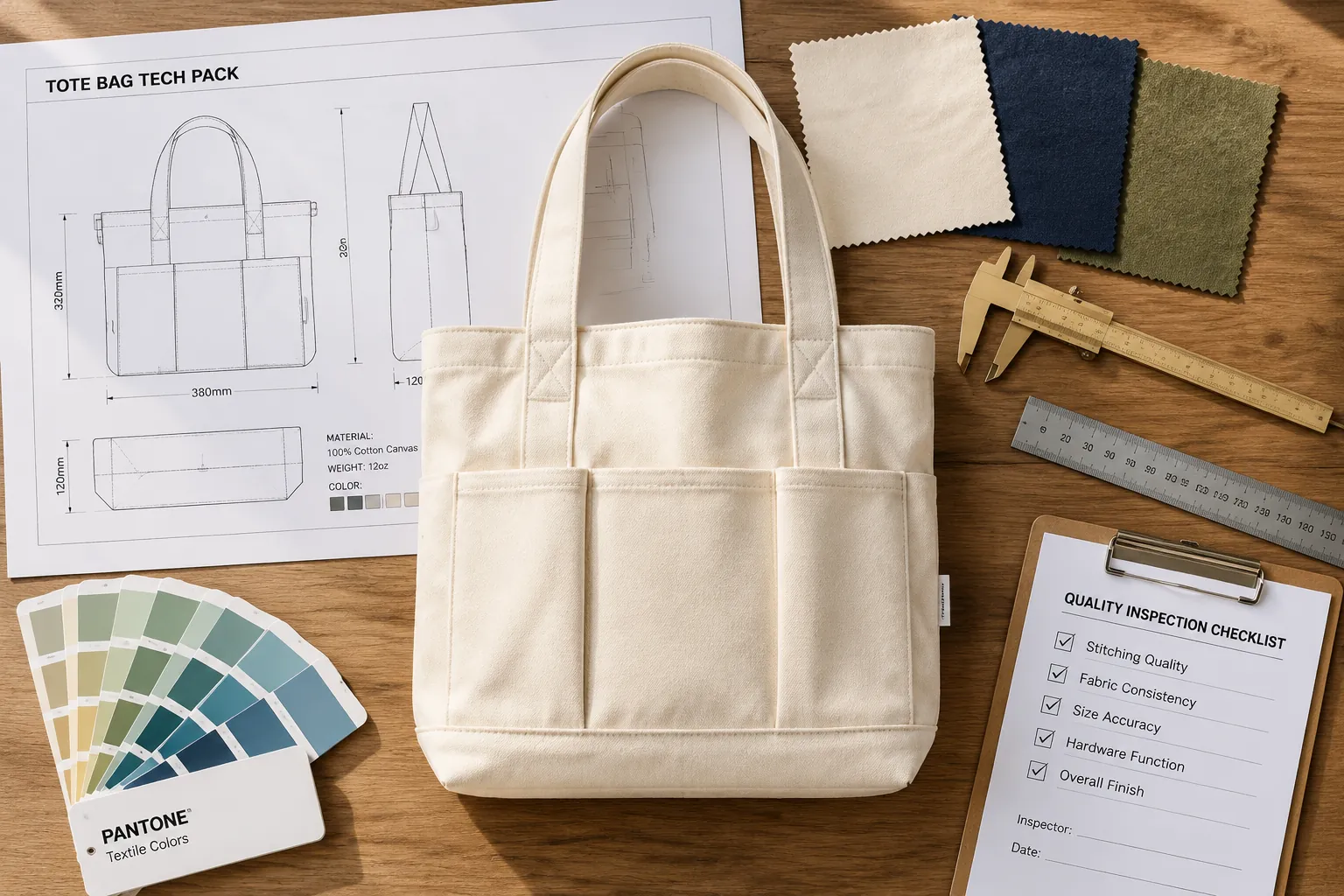
Pocket design provides several opportunities for product customization.
For brands and wholesalers, customization should be considered as a coordinated product-development process rather than a collection of unrelated options.
Pocket Size and Shape
Pocket dimensions can be adjusted according to the intended contents and overall bag proportions.
Common shapes include:
- Rectangular pockets.
- Square pockets.
- Rounded-bottom pockets.
- Angled pockets.
- Divided organizer pockets.
- Gusseted pockets.
The selected shape should be practical to manufacture and compatible with the main body design.
Pocket Quantity
Buyers can choose between one large pocket and multiple smaller compartments.
A single large pocket is often easier to use when storage requirements are relatively general.
Multiple compartments are more suitable when the bag needs to organize different types of items.
The ideal number should be based on actual usage rather than the assumption that more pockets always increase product value.
Pocket Color
Pocket color can match the main body or create a contrasting visual feature.
Possible customization approaches include:
- Same-color pocket and body.
- Contrast-color front pocket.
- Printed pocket panel.
- Two-tone pocket construction.
- Different interior and exterior pocket colors.
For large orders, color consistency should be checked across the main fabric, pocket panels, handles, and other visible components.
Pocket Material
Depending on the intended use, buyers can select different materials for the pocket.
Options may include:
- Cotton canvas.
- Polyester fabric.
- Lightweight cotton lining.
- Mesh fabric.
- Elastic materials.
- Compatible coated fabrics.
Material selection should consider the pocket's intended contents, appearance, cleaning requirements, and sewing compatibility.
Pocket Closures
Possible closure options include:
- Open-top construction.
- Zipper closure.
- Magnetic snap.
- Button closure.
- Hook-and-loop fastener.
- Elastic opening.
- Fabric flap.
Each closure offers a different balance between convenience, security, appearance, and production complexity.
For example, an open slip pocket provides quick access, while a zipper pocket offers more secure storage.
Logo Placement on Pockets
A pocket can be used as a separate branding area.
Common options include:
- Screen-printed logo.
- Embroidered logo.
- Heat-transfer artwork.
- Woven label.
- Printed pocket panel.
- Custom patch label.
The logo should be positioned so that it does not interfere with the pocket opening or reduce the usable storage space.
For a pocket with a narrow upper hem, the artwork should also leave sufficient clearance from the stitching line.
Handle and Pocket Coordination
Handles and pockets should be developed together.
For example, a front pocket should not be hidden behind a handle or interrupted by the handle attachment stitching.
The handle width, attachment position, and pocket outline should be shown on the same product drawing.
This helps reduce unnecessary pattern adjustments during sample development.
Interior Lining and Pocket Integration
A lining can create a cleaner interior appearance and provide a convenient surface for attaching internal pockets.
Buyers may choose:
- Unlined construction with directly attached pockets.
- Partial lining with selected organizer sections.
- Full lining with integrated slip and zipper pockets.
The appropriate choice depends on the intended retail positioning, desired finish, weight, and target cost.
A lining is not automatically necessary for every pocketed tote. A simpler unlined design may be more suitable for promotional products where lightweight construction and cost efficiency are priorities.
How Pocket Design Influences Manufacturing Cost
Adding pockets increases manufacturing requirements, but the exact cost impact depends on the pocket type, number, material, dimensions, and assembly method.
For B2B buyers, it is important to understand which design decisions are likely to affect the quotation.
Additional Fabric Consumption
Each pocket requires additional material.
The amount depends on its finished dimensions and construction.
A small internal slip pocket uses relatively little fabric, while a large gusseted exterior pocket may require several panels.
If the pocket uses a contrasting color or a different material, it may also introduce additional material sourcing and cutting requirements.
Additional Cutting Operations
Different pocket configurations require different pattern pieces.
A simple patch pocket may need only one main panel, while a zipper or gusseted pocket requires additional components.
More pattern pieces can increase cutting preparation and fabric handling.
For complex designs, the manufacturer also needs to maintain accurate positioning and consistent dimensions.
Additional Sewing Operations
Pocket construction involves preparation, edge finishing, attachment, and sometimes closure installation.
A simple slip pocket may require only a few sewing steps.
A zipper pocket requires additional operations to prepare the opening, attach the zipper, assemble the pocket bag, and finish the edges.
A gusseted pocket may require several separate fabric panels and additional seam connections.
These differences influence production time and labor requirements.
Hardware and Accessories
A pocket with a zipper, snap, button, or other closure introduces additional components.
Buyers should consider:
- Hardware material.
- Size.
- Color.
- Surface finish.
- Supplier availability.
- Compatibility with the selected canvas.
- Required testing and inspection.
The hardware specification should be confirmed before the sample is approved.
Quality Control Requirements
Every additional pocket creates more points that need to be inspected.
For example, a zipper pocket needs checks for zipper alignment and smooth operation.
A divided pocket requires consistent compartment widths.
A gusseted pocket needs checks for depth, symmetry, and corner finishing.
As the pocket configuration becomes more complicated, the quality inspection process should become more detailed.
Pocket Complexity Comparison
| Design |
Additional Components |
Production Considerations |
Relative Complexity |
| Simple slip pocket |
Pocket panel |
Edge finishing and attachment |
Low |
| Patch pocket |
Pocket panel |
Positioning and perimeter stitching |
Low |
| Divided pocket |
Pocket panel and divider seams |
Accurate compartment spacing |
Low to medium |
| Internal zipper pocket |
Zipper and pocket bag |
Zipper installation and alignment |
Medium |
| Flap pocket |
Pocket panel and flap |
Flap positioning and optional hardware |
Medium |
| Mesh pocket |
Mesh panel and edge finishing |
Material compatibility |
Low to medium |
| Elastic-top pocket |
Elastic and pocket panel |
Elastic tension and recovery |
Medium |
| Gusseted pocket |
Multiple panels |
Additional seams and dimensional accuracy |
High |
| Welt pocket |
Pocket bag and welt components |
Precise cutting and opening construction |
High |
These are relative comparisons, not fixed production-cost quotations. Actual costs vary according to the factory's equipment, order quantity, material specifications, and construction process.
How to Control Pocket-Related Costs
Buyers can control costs without sacrificing important functionality.
- Prioritize essential pockets: Identify the pockets that provide clear value and remove unnecessary compartments.
- Use standard construction where possible: A conventional patch pocket may achieve the required function without the additional work involved in a complicated welt or gusseted design.
- Coordinate materials: Using compatible materials already included in the bag's construction may simplify sourcing and production.
- Avoid unnecessary hardware: A slip pocket may be sufficient when the contents do not require a closure.
- Confirm the pocket layout before sampling: Late changes to pocket dimensions and positions can require pattern adjustments and additional sample development.The best approach is to establish the pocket configuration before finalizing the product specification.
Quality Inspection Checklist for Canvas Tote Bags with Pockets
Before approving mass production, buyers should inspect the pocket design as part of the complete bag rather than treating it as a separate decorative feature.
A structured inspection can help identify problems in appearance, functionality, and construction consistency.
| Inspection Item |
What Buyers Should Confirm |
| Pocket dimensions |
Finished width, depth, and opening match specifications |
| Pocket position |
Correct alignment with body panels and other components |
| Edge finishing |
Clean and even folded or bound edges |
| Stitching |
Consistent lines without skipped stitches or loose threads |
| Corner reinforcement |
Reinforcement present at specified stress points |
| Zipper operation |
Smooth opening and closing |
| Closure attachment |
Snaps, buttons, or other hardware securely installed |
| Material consistency |
Pocket fabric matches approved specifications |
| Color consistency |
Body and pocket colors match approved references |
| Functional capacity |
Intended contents fit and remain accessible |
| Overall appearance |
No distortion, excessive bulk, or uneven pocket placement |
For bulk production, buyers should establish acceptable measurement tolerances and inspection requirements before manufacturing begins.
FAQ
Are interior or exterior pockets better for canvas tote bags?
Neither is universally better.Interior pockets are useful for organizing small belongings and keeping them separate from the main compartment. Exterior pockets provide quicker access and can also create additional branding opportunities.
For some applications, combining both types offers the most practical arrangement.
How many pockets should a canvas tote bag have?
The appropriate number depends on the intended application.A promotional tote may only need one exterior pocket, while a work tote may benefit from several internal compartments.Buyers should prioritize useful storage functions instead of adding pockets simply to increase the feature count.
Can we print or embroider across an exterior patch pocket?
Yes, but the decoration must be executed on the cut pocket panel before the pocket is stitched onto the bag body. Attempting to screen print or embroider onto a pocket after the bag is fully assembled is extremely difficult: embroidery frames cannot enter the closed pocket without stitching the pocket shut, and screen printing pallets cannot maintain flat surface tension. Always finalize artwork placement during the flat-panel pattern stage.
How do we prevent exterior patch pockets from sagging outward when the bag is carried?
Pocket sagging is caused by fabric grain misalignment and lack of rim tension. Ensure the pocket pattern is cut parallel to the fabric warp (lengthwise grain), double-fold the top mouth hem to at least 25 mm width, and consider adding a center snap closure or concealed magnetic button to keep the pocket mouth flush against the bag wall.
Can a canvas tote bag have a waterproof pocket?
A water-resistant or waterproof pocket can be developed using a suitable coated or laminated material.However, the level of protection depends on the fabric, seams, zipper construction, and overall assembly.A coated pocket alone does not make the entire canvas tote waterproof.
Conclusion
A well-designed canvas tote bag with pockets should provide more than additional storage space. Its pocket configuration should make the bag easier to use, improve organization, and support the product's intended application without creating unnecessary manufacturing complexity.
For buyers, the most important decisions involve selecting suitable pocket types, confirming finished dimensions, choosing appropriate locations, and ensuring that each pocket is compatible with the main bag structure.
A simple promotional tote may only require one exterior patch pocket, while a work or travel tote may benefit from a combination of internal slip and zipper pockets. The right solution depends on the end user's requirements rather than the number of features included.
Construction details also deserve attention. Pocket openings, attachment seams, reinforcement points, material thickness, and closure installation all influence the finished product. These elements should be evaluated during sample development and confirmed before bulk production.
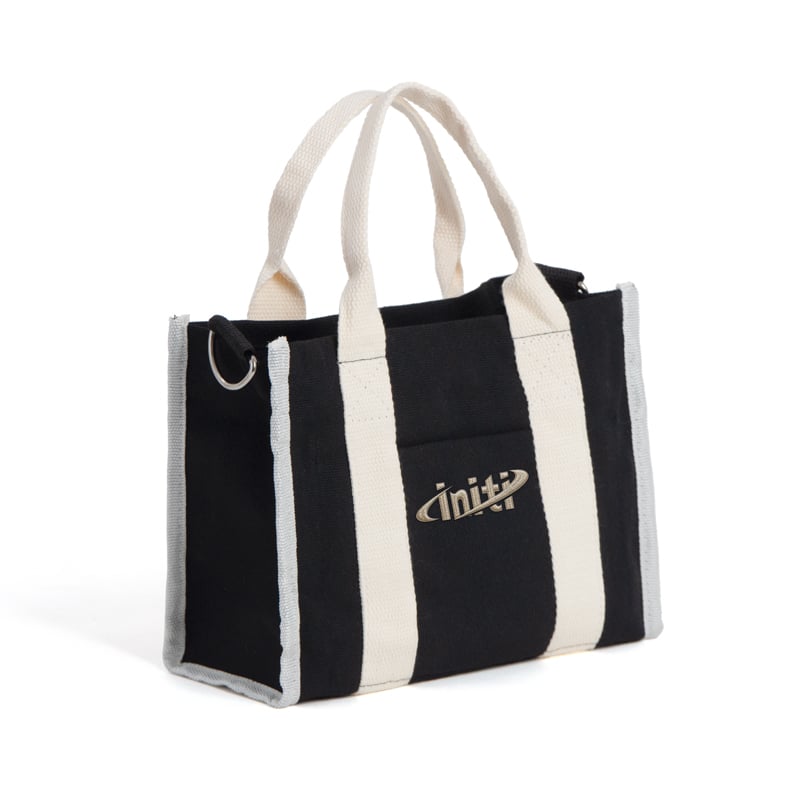
At INITI, custom canvas tote bag development can incorporate different pocket configurations, materials, colors, dimensions, logo applications, and finishing details according to individual project requirements.
Whether you are developing promotional totes, retail shopping bags, corporate gift bags, or private-label canvas collections, a clear pocket specification helps turn a basic tote design into a more functional product.
If you are planning a custom canvas tote bag with pockets, you can share your reference images, intended application, preferred dimensions, pocket layout, and estimated order quantity with INITI to discuss a suitable design and production solution.
Related Products
Related Blog & Application Articles


 Hot News