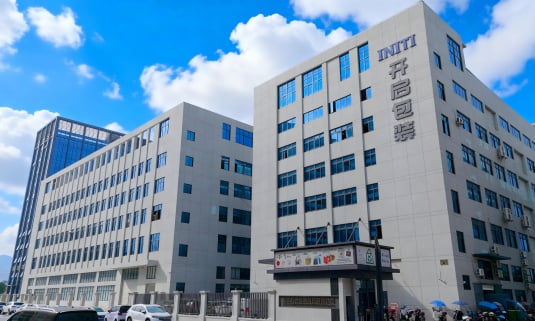
Wholesale Custom Eco-Friendly Bags
Wholesale custom eco-friendly bags have become an important purchasing category for supermarkets, retail chains, promotional distributors and international brands.
But choosing the right reusable shopping bag is no longer just about selecting cotton, RPET or another material and printing a logo.
Buyers increasingly need to consider the source of the material, the durability of the finished bag, environmental documentation, destination-market regulations and the manufacturer's ability to deliver consistent bulk orders.
At INITI, our custom bag manufacturing operations are supported by our own PET bottle recycling and processing facility, which processes recovered PET bottles into recycled materials for downstream polyester applications. We also have relevant environmental certifications and testing reports to support applicable customer requirements.
These capabilities help buyers connect recycled-material sourcing with custom bag development, manufacturing and quality control.
This guide explains why demand for reusable and recycled bags is growing, what credible environmental claims look like, how to select suitable materials and what to verify before placing a wholesale order.
1. Why Is Demand for Eco-Friendly Bags Growing?
The shift toward reusable and recycled-material bags is driven by several connected developments: efforts to reduce unnecessary waste, stricter scrutiny of environmental claims and changing sourcing requirements among retailers and international brands.
Waste Reduction and the Circular Economy
Traditional single-use shopping bags can create unnecessary waste when they are quickly discarded.
Governments, retailers and consumers are increasingly interested in reducing avoidable packaging, encouraging suitable reuse systems and supporting the recovery of materials.
For bag buyers, this has increased interest in durable reusable carriers and materials containing verified recycled content.
However, replacing a disposable bag with a heavier reusable bag does not automatically reduce every environmental impact. The outcome depends on the materials, manufacturing, expected number of uses and end-of-life conditions.
Regulations Are Changing Purchasing Requirements
Several major markets have introduced or strengthened rules covering packaging, waste and environmental marketing claims.
In the European Union, the Packaging and Packaging Waste Regulation (EU) 2025/40, commonly called the PPWR, began applying on 12 August 2026, with further provisions phased in over time.
The regulation addresses packaging waste and circularity. Whether a particular shopping bag is legally treated as packaging depends on its function and the applicable provisions.
Separately, Directive (EU) 2024/825 strengthened consumer protection against misleading environmental marketing, with Member States required to apply implementing measures from 27 September 2026. These include restrictions on certain generic environmental claims that cannot meet the relevant substantiation requirements.
For businesses selling reusable bags, product labels and marketing language therefore deserve as much attention as the material specification.
Brands Want Better Supply-Chain Evidence
Major retailers and private-label buyers may request more than a material declaration.
For recycled-material bag programs, purchasing documents can include:
- Defined recycled-content requirements
- Relevant certificates and transaction records
- Material composition and testing reports
- Approved product specifications
- Quality inspection requirements
- Repeat-order traceability and SKU controls
These requirements vary by buyer and market, but they have made documented material sourcing and reliable manufacturing increasingly important.
2. Which Markets Pay More Attention to Environmental Claims?
There is no single objective ranking of countries that “care most” about environmentally responsible bags.
For wholesale sourcing, the more useful distinction is which target markets have established regulatory requirements or active scrutiny of environmental claims.
| Market |
Main Regulatory or Commercial Focus |
What Bag Buyers Should Prepare |
| European Union |
Packaging and circularity rules, restrictions on misleading green claims, national implementation requirements |
Defined material attributes, appropriate documentation, careful packaging and labeling claims |
| United Kingdom |
Competition and Markets Authority Green Claims Code and supply-chain responsibility |
Evidence for material composition, supplier statements and consumer-facing claims |
| United States |
FTC Green Guides and applicable state requirements |
Specific, supportable recycled, recyclable or other environmental claims |
| Canada |
Competition Act rules against false or misleading environmental claims |
Appropriate substantiation for claims about products or business activities |
| Australia |
Australian Consumer Law and ACCC guidance on environmental claims |
Accurate material information, qualified claims and appropriate supporting evidence |
For INITI's wholesale bag customers, the European Union, United Kingdom and United States are particularly relevant markets to address in sourcing discussions because buyers may require detailed product specifications and claim-related evidence.
Canada and Australia also warrant attention when preparing consumer-facing packaging or promotional messages.
The applicable obligations depend on the product, how it is marketed and where it is sold. Requirements should be reviewed for the actual destination rather than assuming that one document is sufficient worldwide.
3. What Makes a Bag Genuinely More Environmentally Responsible?
There is no universal material or certificate that makes every bag environmentally superior in all circumstances.
For buyers, a credible product should be evaluated against specific environmental attributes and its intended function.
Verified Material Attributes
If a bag is marketed as containing recycled polyester, the relevant recycled-content percentage and scope of that claim should be clear.
For example, “Main fabric contains a specified percentage of verified recycled PET” is more meaningful than claiming that the whole bag is “100% eco-friendly.”
A claim about the main fabric should not automatically be extended to zippers, handles, labels, coatings or the entire finished product.
Practical Durability and Reuse
A reusable bag must be suitable for its intended repeated use.
Important factors include:
- Adequate load capacity
- Secure handle attachments
- Durable seams
- Functional dimensions
- Suitable cleaning and storage
- Acceptable performance over the expected usage period
A bag that fails prematurely may undermine the intended benefit of a reusable-bag program.
Realistic End-of-Life Claims
Recycled content, recyclability, biodegradability and compostability are different properties.
A bag made from recycled plastic is not automatically biodegradable.
A natural-fiber bag with synthetic coatings, linings or decorations should not automatically be described as fully compostable.
Likewise, recyclability depends not only on material composition but also on collection and processing options in the relevant market.
Evidence for Overall Environmental Comparisons
Claims such as “lower carbon footprint” or “better for the environment than conventional bags” require a defined comparison and adequate evidence.
Depending on the claim, this may involve product-life assumptions, functional performance and life-cycle assessment.
A specific, verifiable environmental claim is generally more useful than an unsupported statement that a bag is entirely green.
4. How Can Wholesale Buyers Recognize Greenwashing?
Greenwashing occurs when environmental marketing creates a misleading impression about a product, material or business.
In the bag industry, problems can arise from inaccurate statements, missing qualifications or misuse of certification information.
| Potentially Misleading Claim |
Why It Is Problematic |
Better Purchasing Approach |
| “100% eco-friendly bag” |
Does not identify a measurable environmental attribute |
Specify verified recycled content, durability or another supported property |
| “All our RPET bags are GRS-certified” |
A facility certificate alone does not certify every shipment |
Verify the relevant certification scope and transaction evidence |
| “Recycled plastic is biodegradable” |
Recycling and biodegradation describe different characteristics |
Check the actual material and relevant test evidence |
| “Natural cotton is always greener” |
Overall impact depends on production, use and disposal |
Avoid universal claims without a defined comparison |
| “This bag is fully recyclable” |
Coatings, accessories and local recycling access may affect the claim |
Review the finished construction and destination-market systems |
| “Reusable means zero environmental impact” |
Reusable products still consume materials and resources |
Describe the intended reuse function accurately |
Green colors, leaf symbols or recycling icons do not replace evidence.
Buyers should also check whether a claim applies to the entire finished bag or only to a particular component.
The US Federal Trade Commission's Green Guides caution against broad, unqualified claims such as “green” and “eco-friendly.” The UK Competition and Markets Authority also expects businesses across the supply chain to help substantiate relevant environmental claims.
For manufacturers and suppliers, accurate information should be part of the quotation and specification process—not added only after the finished bags are ready for shipment.
5. Which Materials Should Wholesale Buyers Choose?
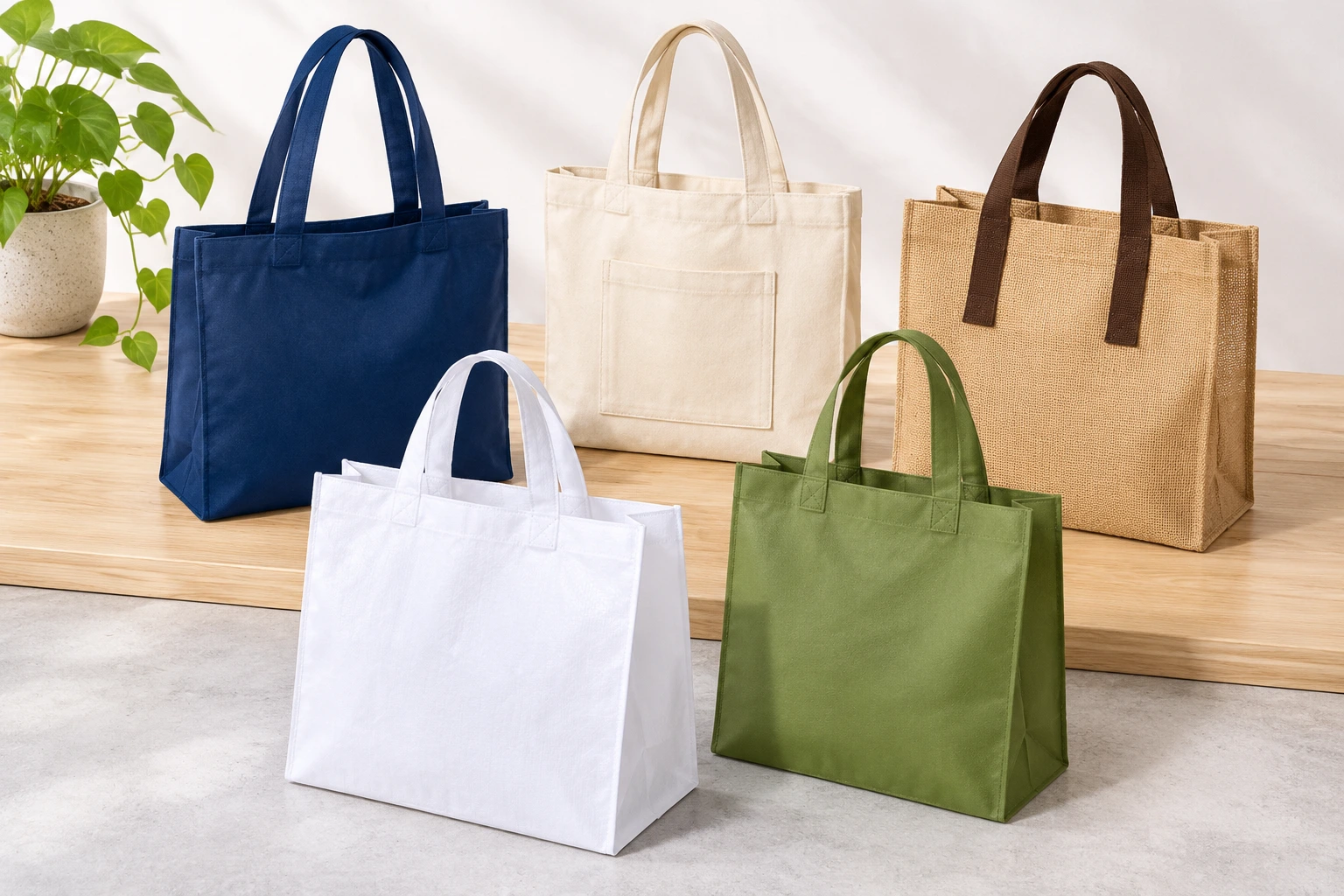
Different reusable-bag materials provide different manufacturing, functional and commercial options.
The following comparison is a purchasing guide, not an environmental ranking.
| Material |
Main Characteristics |
Common Applications |
What Buyers Should Verify |
| RPET polyester |
Recycled-material options and varied fabric constructions |
Supermarkets, retail promotions, custom shopping bags |
Recycled content, fabric weight, construction and documents |
| Cotton and canvas |
Textile texture, flexible design and branding surface |
Fashion retail, books, merchandise and promotions |
Weight, shrinkage, colorfastness and handle attachment |
| Jute and burlap |
Natural woven appearance and structured texture |
Gifts, lifestyle retail and grocery promotions |
Fiber shedding, odor, moisture behavior and linings |
| PP non-woven fabric |
Lightweight construction and practical bulk production |
Promotional events, giveaways and retail |
Fabric weight, seams, bonding and handles |
| PP woven fabric |
Suitable for large gusseted bags and substantial print areas |
Supermarkets and high-capacity shopping |
Weave, lamination, seams and loaded performance |
RPET Shopping Bags
RPET is recycled polyethylene terephthalate.
Recycled PET can be processed into polyester fibers and fabrics used for custom reusable bags. These fabrics may have different woven, non-woven or stitch-bond constructions.
For an RPET bag order, buyers should confirm the recycled-content percentage, fabric construction, printing compatibility, expected carrying load and applicable certification requirements.
Explore Custom RPET Bags.
Cotton Canvas Tote Bags
Cotton canvas bags are widely used by fashion retailers, bookstores, museums and promotional brands.
Their main advantages include a familiar textile appearance and a broad surface for custom logos.
However, fabric weight alone does not determine bag strength, and natural cotton appearance does not establish organic certification or overall environmental superiority.
Explore Cotton Canvas Tote Bags.
Jute and Burlap Bags
Jute bags are frequently selected for their distinctive fiber texture and retail presentation.
For wholesale production, buyers should assess handle construction, fiber shedding, edge finishing, moisture behavior and any synthetic lining or lamination.
Explore Jute and Burlap Bags.
PP Non-Woven and PP Woven Bags
Both options can be used for reusable retail and promotional bags.
PP non-woven fabric and PP woven tape structures differ in appearance, manufacturing and performance.
Both are polypropylene-based plastics. Their reusable design does not make them plastic-free or automatically biodegradable.
For additional information, see Non-Woven Shopping Bags Manufacturer.
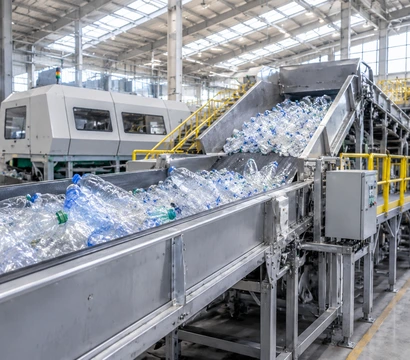
6. INITI's Own PET Bottle Recycling and Processing Facility
A key part of INITI's recycled-material supply capability is our company-owned PET bottle recycling and processing facility.
INITI is involved not only in custom bag manufacturing but also in upstream processing of recovered PET bottles for recycled-material applications.
From Recovered PET Bottles to RPET Bag Materials
PET bottle recycling can involve sorting, cleaning, size reduction and further processing to produce reusable PET feedstock.
That material can subsequently enter polyester fiber and fabric production, depending on the selected process and intended product.
A simplified material pathway is:
Recovered PET bottles → Recycling and processing → Recycled PET feedstock → Polyester fibers and fabrics → Custom RPET bags
Our own PET processing facility supports the upstream recycled-material stage, while our OEM/ODM bag operations support pattern development, printing, assembly and finished-bag quality control.
The precise processing route and manufacturing locations for subsequent fiber and fabric stages depend on the specific supply chain and order.
Why Does an Owned Recycling Facility Matter?
For wholesale buyers, direct involvement in upstream PET processing provides several practical advantages.
Material sourcing coordination: Recycled-material requirements can be discussed alongside finished-bag specifications.
Product development: Material selection can be matched with bag construction, handle reinforcement, printing and intended use.
Documentation support: Relevant material records, certificates and testing requirements can be coordinated for the project.
Order planning: Material preparation and finished-product production requirements can be considered together.
Supplier evaluation: Buyers can review a manufacturer with direct ownership of a relevant recycling and processing asset.
These capabilities strengthen procurement support. However, ownership of a recycling facility does not mean every downstream process is carried out in-house, or that every RPET bag automatically qualifies for a specific certification claim.
7. Environmental Certifications, Testing Reports and Traceability
INITI holds relevant environmental certifications and has material or product testing reports that support applicable customer requirements.
For overseas buyers, these documents are important because environmental sourcing involves more than choosing a fabric described as recycled.
GRS and Recycled-Content Verification
For projects requiring the Global Recycled Standard (GRS), the applicable certification scope and supply-chain documentation should be confirmed.
| Document |
What It Helps Verify |
| Scope Certificate (SC) |
The certified organization's eligible scope |
| Transaction Certificate (TC) |
Certification information for qualifying transactions and goods |
| Material composition records |
The specified material components and recycled-content information |
| Testing reports |
The properties or requirements actually tested |
| Product claim or label approval |
The eligibility of the specific finished-product claim, where applicable |
An SC is not automatically proof that every shipment is certified.
For certified-material programs, relevant transactions and product claims must follow the applicable certification rules.
Buyers can read GRS Transaction Certificates: Step-by-Step Verification for RPET Bags for a more detailed purchasing workflow.
Material and Finished-Product Testing
Depending on the target market and the project's specifications, buyers may require testing covering:
- Fiber or material composition
- Restricted substances
- Colorfastness
- Fabric and seam performance
- Handle strength
- Printing durability
- Other relevant finished-product requirements
Reports should be reviewed for test methods, sample identification, validity and relevance to the specific product.
A supplier's environmental credentials can support sourcing discussions, but individual product claims should remain aligned with the actual order and available evidence.
8. Match the Bag to the Wholesale Application
The right material is only one part of product selection.
A reusable bag must also fit the intended products and purchasing program.
| Buyer Type |
Suggested Starting Options |
Main Procurement Priority |
| Supermarket chain |
RPET or suitable PP woven/non-woven shopping bags |
Capacity, handles, carton efficiency and store allocation |
| Fashion retailer |
Cotton canvas, RPET or jute totes |
Appearance, printing and customer use |
| Promotional distributor |
Cotton, RPET or PP non-woven bags |
Brand visibility, price and delivery |
| Bookstore or museum |
Suitable canvas or reinforced textile totes |
Book weight, size and handle strength |
| Gift and corporate buyer |
Jute, cotton or selected mixed-material designs |
Presentation and product fit |
| Private-label importer |
Multiple styles and materials |
Documentation, differentiation and repeat-order consistency |
Design for Real Use
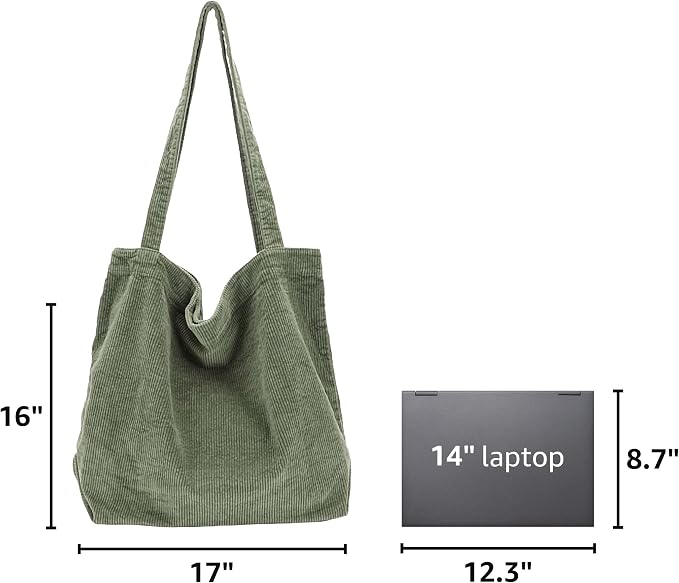
Buyers should measure the products the bag will carry before deciding its dimensions.
Flat bags may work for brochures and lightweight merchandise. Groceries and boxed products may benefit from side or bottom gussets.
For frequent carrying, specify appropriate handle width, length, attachment and reinforcement.
The finished bag should be evaluated with representative contents under agreed loading conditions.
Design Branding Around the Material
Common customization options include screen printing, suitable heat transfers, woven labels, embroidery on compatible fabrics and printed laminated panels.
The selected process should suit the actual fabric and required durability.
Avoid adding unnecessary linings, hardware or decorative elements if they do not improve the intended function.
For more technical guidance, see How to Choose Tote Bag Size and Fabric Weight.
9. What Determines the Cost of Wholesale Custom Eco-Friendly Bags?
There is no universal price ranking in which cotton, RPET, jute or PP bags are always the cheapest.
Wholesale cost depends on the actual specification.
| Cost Driver |
What Buyers Should Compare |
| Material |
Composition, GSM, finish, recycled content and availability |
| Dimensions |
Width, height, gusset and fabric consumption |
| Structure |
Handles, seams, reinforcement and optional compartments |
| Branding |
Artwork size, print method, color count and setup |
| Accessories |
Linings, labels, closures and hardware |
| Testing and certification |
Applicable requirements and documentation |
| Order configuration |
Quantities by style, color and artwork version |
| Packaging |
Folding method, unit packing and carton quantities |
| Freight |
Carton volume, weight, destination and agreed Incoterm |
Compare Total Cost, Not Only Unit Price
A lower factory unit price may not produce the lowest total purchasing cost.
Carton volume, printing setup, inspection, transportation and the cost of quality failures can affect the final result.
For a multi-store retail program, packing accuracy and distribution efficiency are important parts of the quotation.
Avoid Unnecessary Features
Extra-heavy fabric, additional linings, elaborate printing and complex hardware should be selected only when they serve a defined purpose.
The best specification balances functional performance, material requirements, brand appearance and total order cost.
10. How Should Buyers Control Bulk Production?
A successful wholesale order requires a clear specification, approved sample and consistent execution.
Step 1: Define the Purchasing Program
Confirm the intended application, destination markets, target products, estimated quantities, colors, SKUs and delivery requirements.
Step 2: Confirm Materials and Environmental Requirements
Specify the fabric construction and any required recycled-content or certification claim.
Identify the documents needed before sample approval and production.
Step 3: Approve a Representative Sample
Check:
- Finished dimensions and usable capacity
- Handle attachment and carrying comfort
- Seam construction
- Loaded deformation
- Logo quality and color
- Applicable cleaning or care performance
- Packaging and labeling
Agree on relevant test conditions and acceptance criteria.
Step 4: Control Production and Inspection
The approved specification should include materials, construction, artwork, components and packing.
Material changes that affect performance or environmental claims should require approval.
A practical production control plan can include incoming material inspection, first-piece approval, in-process checks and final inspection.
Where appropriate, buyers and suppliers may agree on an attribute-sampling plan using ISO 2859-1:2026.
Such sampling does not guarantee that every item is defect-free and does not replace specific material or performance tests.
Step 5: Manage Multi-SKU and Multi-Store Delivery
Large buyers should verify:
- Correct bag style and artwork
- Quantity by SKU
- Carton identification
- Store or destination allocation
- Shipment documents
- Applicable certification and testing records
A reliable manufacturer should be able to reproduce the approved product and fulfill the required order configuration.
11. INITI Custom Bag Product References
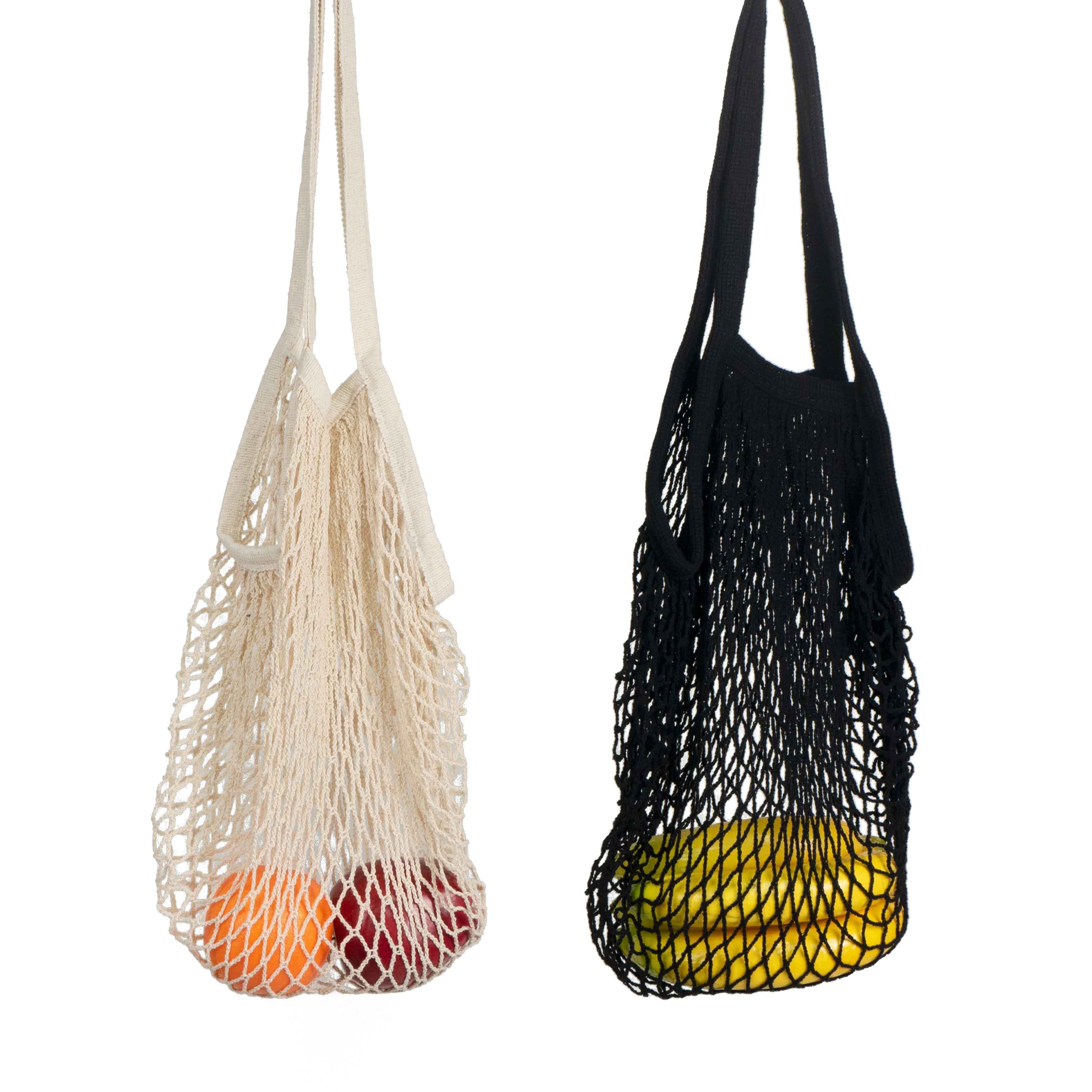
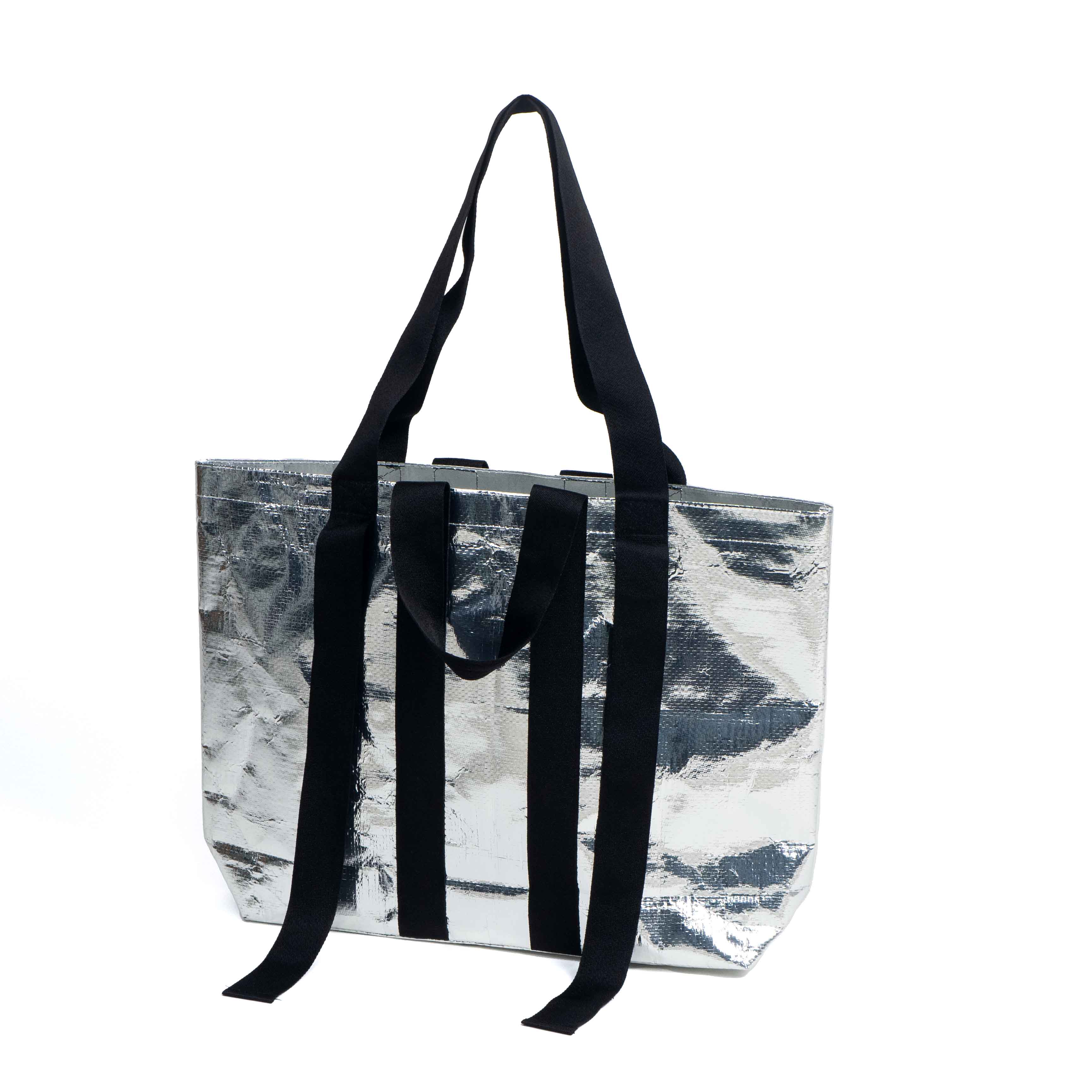
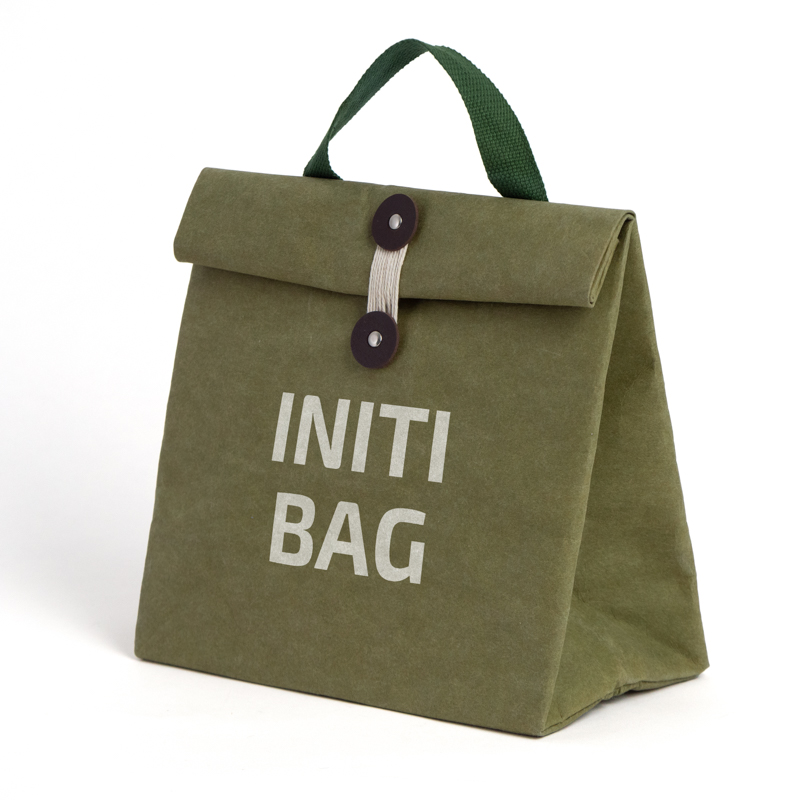
INITI offers several existing product designs that can be used as starting points for wholesale customization.
Materials, dimensions, logos, reinforcements and packing can be discussed according to the project.
Specific recycled-content requirements and finished-product claims should be confirmed before production.
12. Wholesale Custom Bag RFQ Checklist
A complete inquiry helps the manufacturer recommend the correct design and prepare a comparable quotation.
| RFQ Item |
Information to Provide |
| Application |
Supermarket, retail, promotion, gift or distribution |
| Bag type |
Tote, gusseted shopping bag, foldable bag or other |
| Material |
Cotton, canvas, RPET, jute, PP non-woven or PP woven |
| Environmental requirements |
Recycled-content specification, certification and evidence |
| Size |
Width, height, gusset and handle dimensions |
| Carrying requirements |
Intended contents and expected load |
| Branding |
Logo artwork, dimensions, printing method and colors |
| Quality |
Required performance tests and inspection criteria |
| Order breakdown |
Estimated quantities by style, color and SKU |
| Packing |
Folding, unit packing, carton labeling and allocation |
| Delivery |
Destination, Incoterm and target schedule |
Production requirements and minimum quantities depend on the material, customization and order configuration.
Why Choose INITI for Wholesale Custom Eco-Friendly Bags?
Hangzhou INITI Imp&Exp Co., Ltd. has over 16 years of experience in custom bags and packaging, with established OEM/ODM manufacturing and product development capabilities.
INITI owns a dedicated PET bottle recycling and processing facility, giving us direct involvement in the upstream processing of recovered PET materials for recycled-polyester applications.
We also hold relevant environmental certifications and have testing reports to support applicable material, product-quality and destination-market requirements.
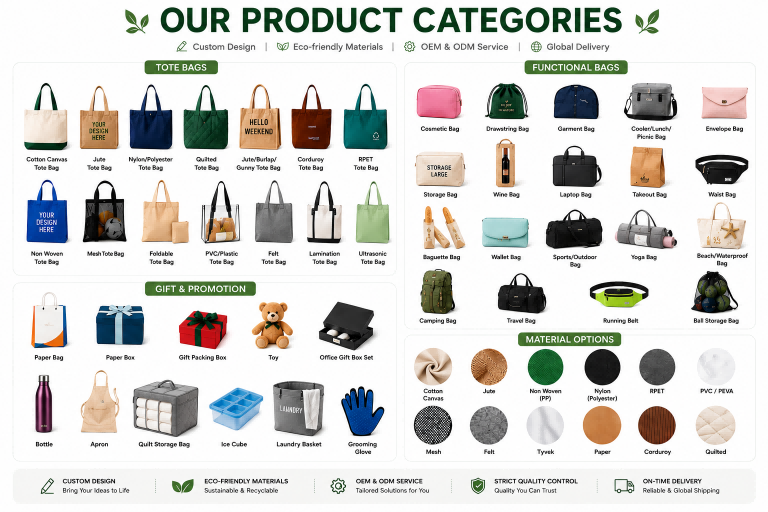
Our custom product range includes RPET shopping bags, cotton canvas totes, jute bags, non-woven shopping bags and PP woven bags.
For wholesale and large retail programs, INITI supports material selection, custom design, sampling, printing, structural reinforcement, quality inspection, multiple SKUs and export packing.
Our recycled-material processing capability, manufacturing experience and documentation support help buyers develop products around clear specifications and verifiable environmental attributes.
We provide fast quotations and free design support for custom bag projects.
FAQ
1. What is the best material for wholesale eco-friendly bags?
There is no universal best material. RPET, cotton canvas, jute and suitable reusable polypropylene bags serve different applications. Buyers should evaluate actual performance, environmental evidence, branding and cost.
2. Does INITI own a PET bottle recycling factory?
Yes. INITI owns a dedicated PET bottle recycling and processing facility, supporting recycled PET material applications alongside our custom bag manufacturing operations.
3. Can INITI provide environmental certificates and testing reports?
Yes. INITI has relevant environmental certifications and testing reports. The applicable documents and product scope are confirmed according to the materials, destination market and specific order requirements.
4. Are RPET bags automatically GRS-certified or biodegradable?
No. RPET refers to recycled PET material. GRS certification requires the applicable certified supply chain and documentation. Recycled PET is not automatically biodegradable.
5. Can INITI manufacture custom reusable bags for large retail orders?
Yes. INITI supports OEM/ODM customization, multi-SKU programs, material selection, printing, production quality control and export packing. Specifications and minimum quantities are confirmed for each project.
Conclusion
The growing demand for wholesale custom eco-friendly bags reflects changes in waste reduction policies, environmental marketing requirements and international purchasing practices.
For buyers, the important question is not which material sounds the greenest. It is which product meets the intended purpose and which environmental attributes can be verified.
Reliable procurement requires suitable material selection, durable construction, accurate product claims, relevant certification evidence and consistent manufacturing.
INITI combines custom bag production with its own PET bottle recycling and processing facility, relevant environmental certifications and testing-report support.
This enables buyers to develop reusable bags with practical specifications, documented material requirements and reliable bulk-order execution.
Inquiry Support
Looking for a wholesale manufacturer of custom RPET bags, cotton canvas totes, jute shopping bags or reusable promotional bags?
Send us your intended use, preferred material, dimensions, logo artwork, estimated quantity, destination market, certification requirements and packing details.
Email us at [email protected] for a fast quotation, free design support and OEM/ODM custom bag development.
Related Products
Custom Cotton Canvas Tote Bag with Front Pocket
Large Gusseted RPET Stitch-Bond Shopping Bag
Printed RPET Open-Top Tote Bag
Contrast Webbing Jute Tote Bag
Large Laminated PP Woven Shopping Tote
Related Blog & Application Articles
Sustainable Bag Solutions for International Retailers
RPET Bag Material Guide: What Buyers Should Know
GRS Transaction Certificates: Step-by-Step Verification for RPET Bags
How to Choose Tote Bag Size and Fabric Weight
Non-Woven Shopping Bags Manufacturer
EU PPWR Compliance & Reusable Bag Standards
Technical and Regulatory References
European Commission — Packaging Waste and PPWR
European Union — Directive (EU) 2024/825
US Federal Trade Commission — Environmental Claims: Green Guides Summary
UK Competition and Markets Authority — Making Green Claims Across the Supply Chain
Canadian Competition Bureau — Environmental Claims and Greenwashing
Australian Competition and Consumer Commission — Environmental Claims Guide
Textile Exchange — Standards FAQs


 Hot News